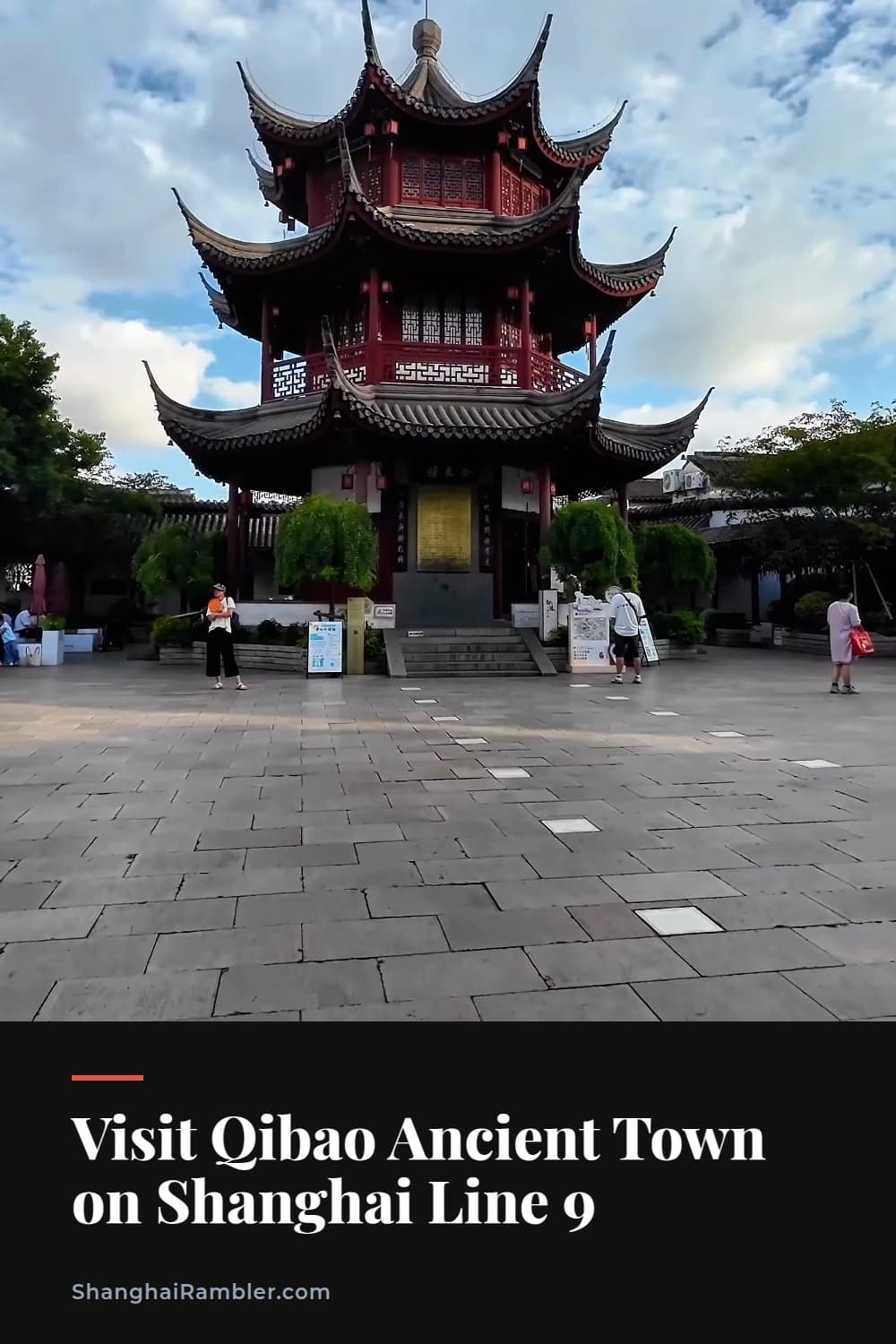
Located in Minhang District (on the west side of Shanghai), Qibao Ancient Town are around 40 minutes out of center on Metro Line 9. Get off at Qibao station, and in less than five minutes, you’ll be standing outside entrance to an operating water town. Narrow canals snakes through old shophouse street.
Tour groups line up for sticky rice cakes, and it’s popular with local weekenders. It is touristy, in the sense that most preserved old quarters eventually get, but it is quite manageable as a half-day trip if you’d like to see some traditional Jiangnan architecture without venturing far from the city. There is temple halls, arched bridges, lots of snack stall and you will not run out of things to look at.
Some of the shops sells good local pastries; others sells the usual souvenir tat. There will be crowds (particularly at lunchtimes). This is what a visit look like.
Things to See and Do in Qibao Ancient Town
Qibao Old Street
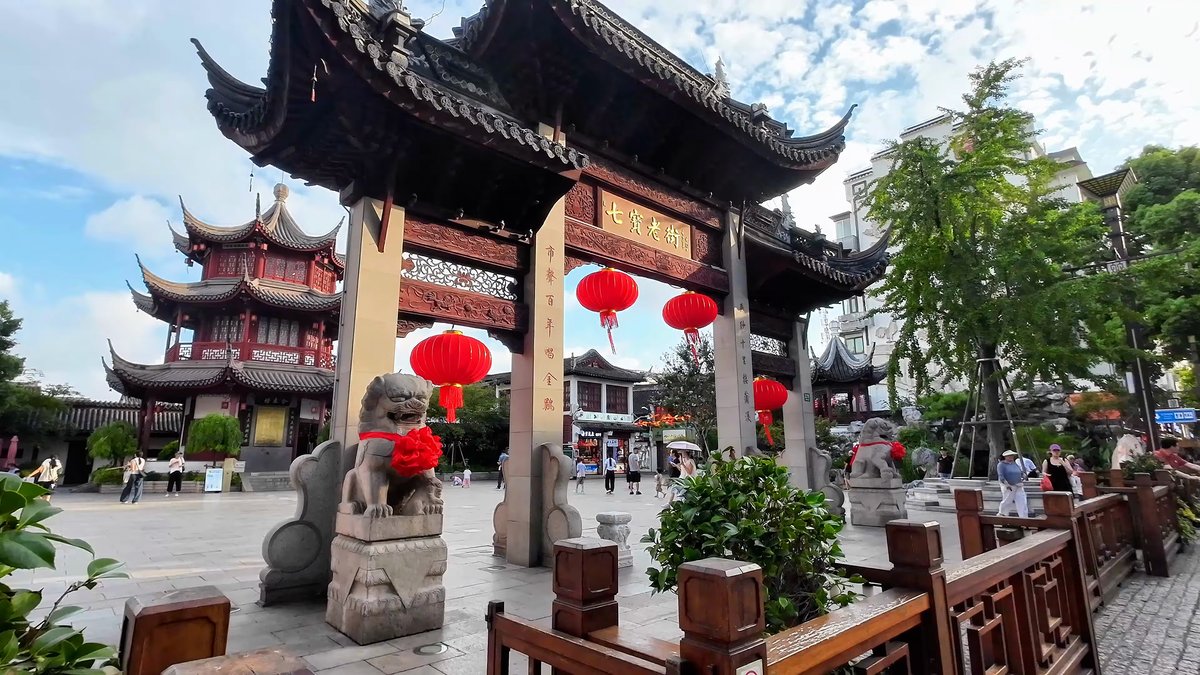
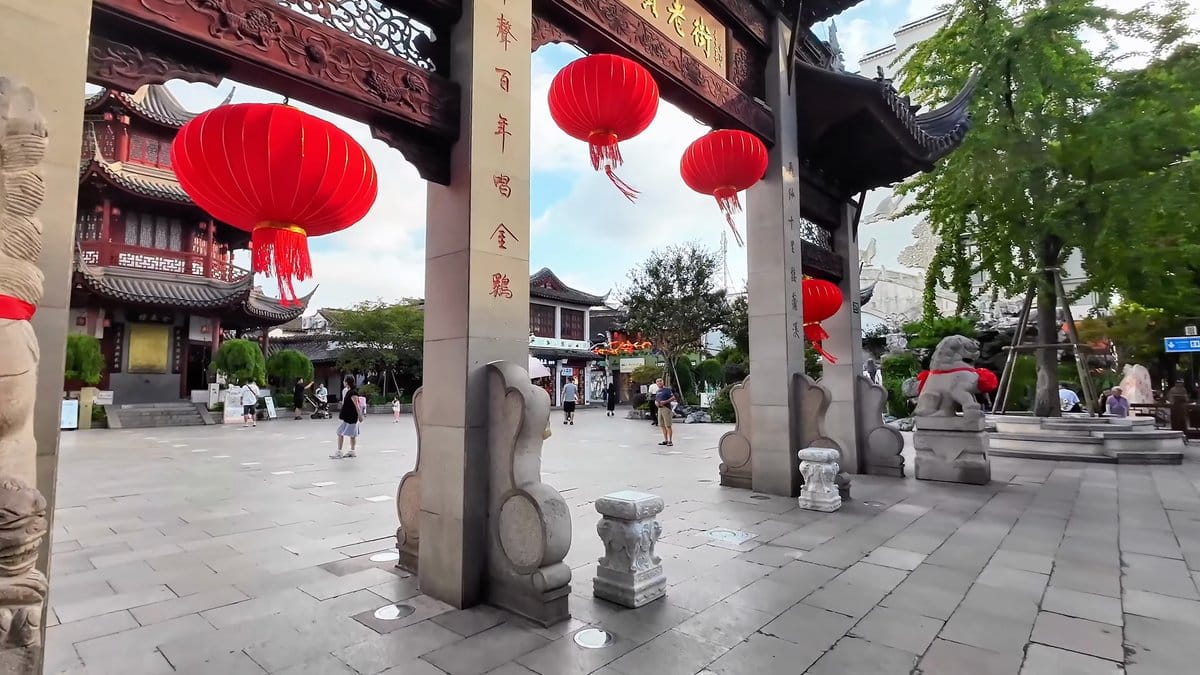
And then there’s that entrance archway, setting the tone by being wide enough for the tourist traffic, and covered with not too subtle decoration overhead. Cross it and you’re out on a street where some old timber shopfronts has been restored while others is new but done up in similar style. The town’s name, Qibao, meaning seven treasures (is linked to local folklore); today, the true treasures is the vendors grilling pork skewer and frying dough over charcoal.
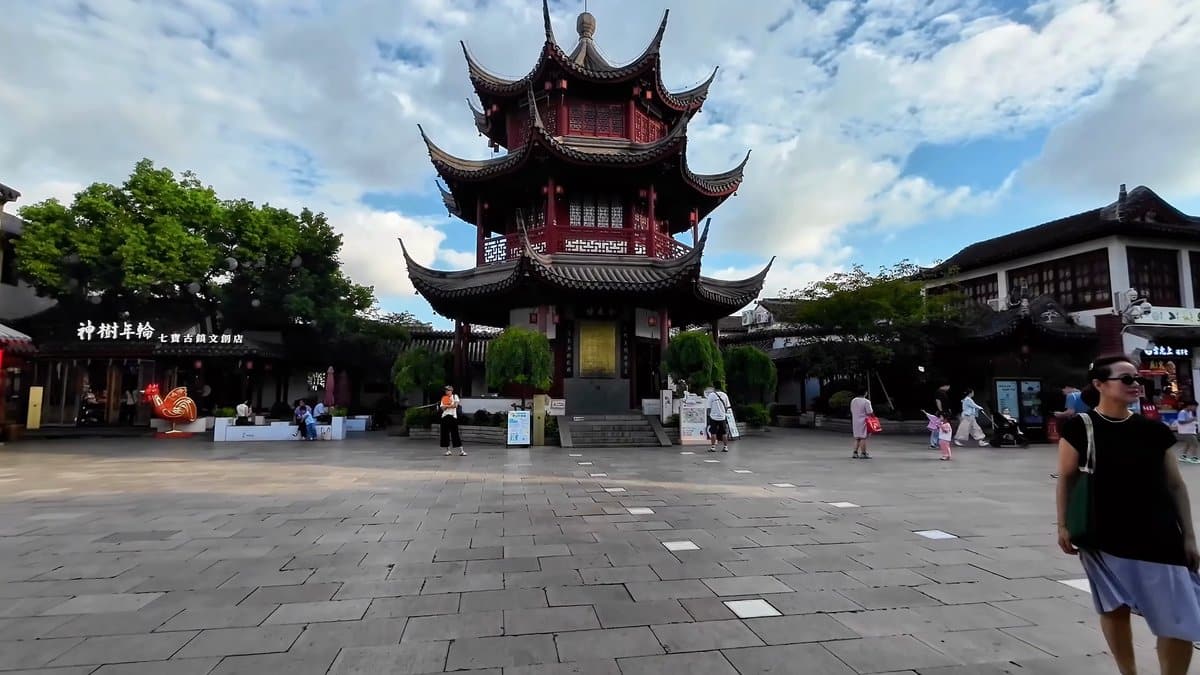
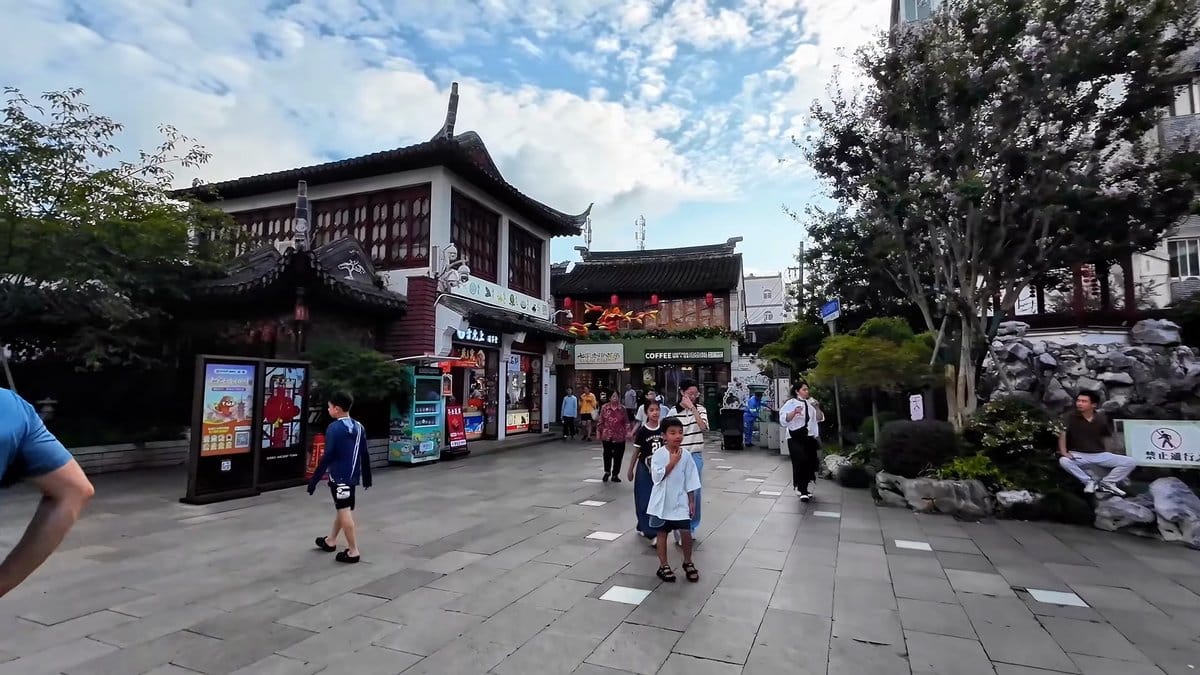
Some of these more ancient buildings is still in use as places of worship or other communal purposes, and you can go inside (for a small admission fee). The ones that aren’t has traditional halls topped by upswept eaves. Shopping lanes is broken up by courtyards featuring whitewashed walls and rockeries.
When the main drag gets shoulder-to-shoulder, they’re worth ducking into.
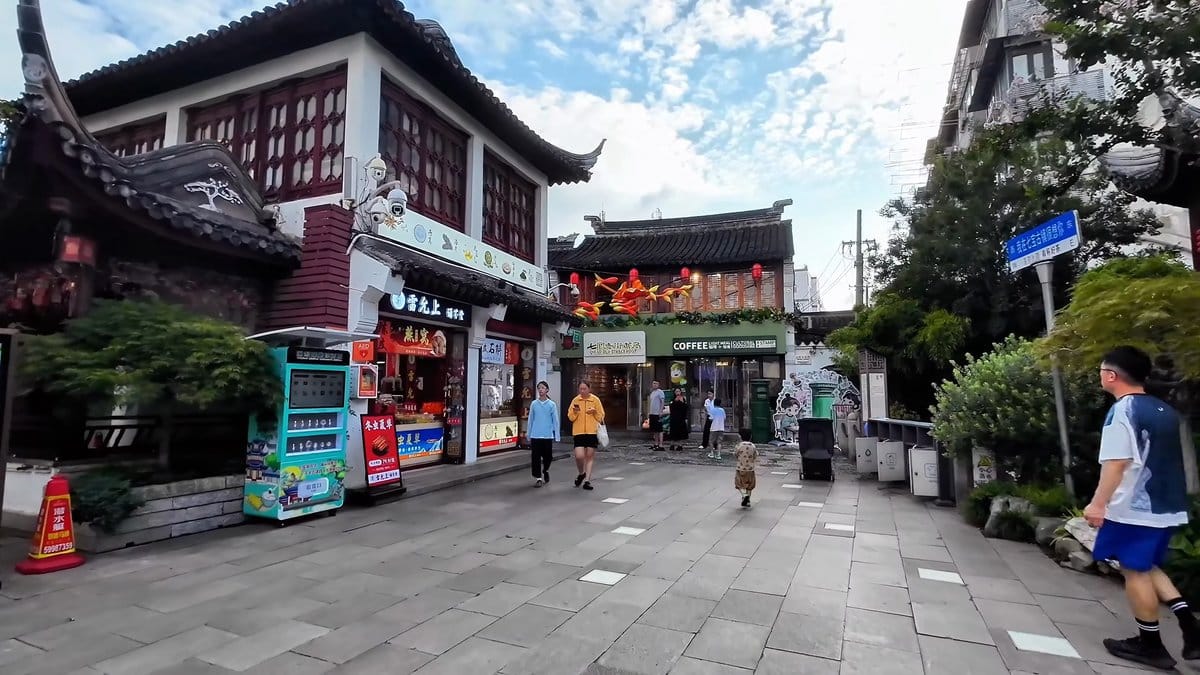
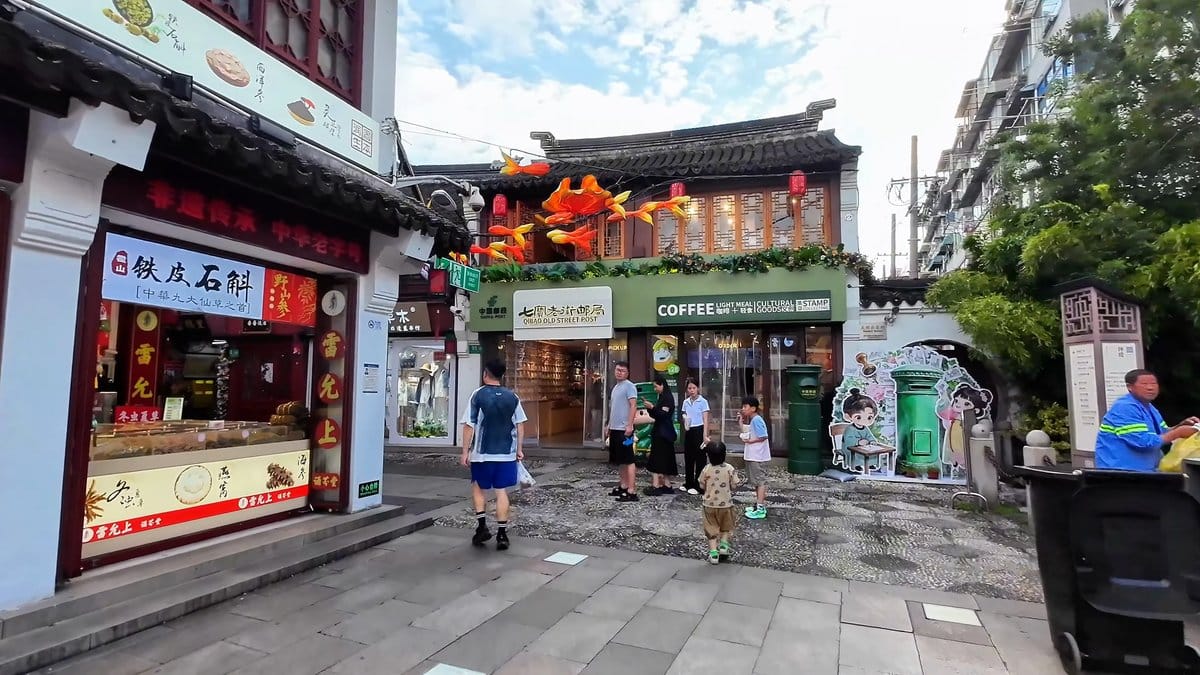
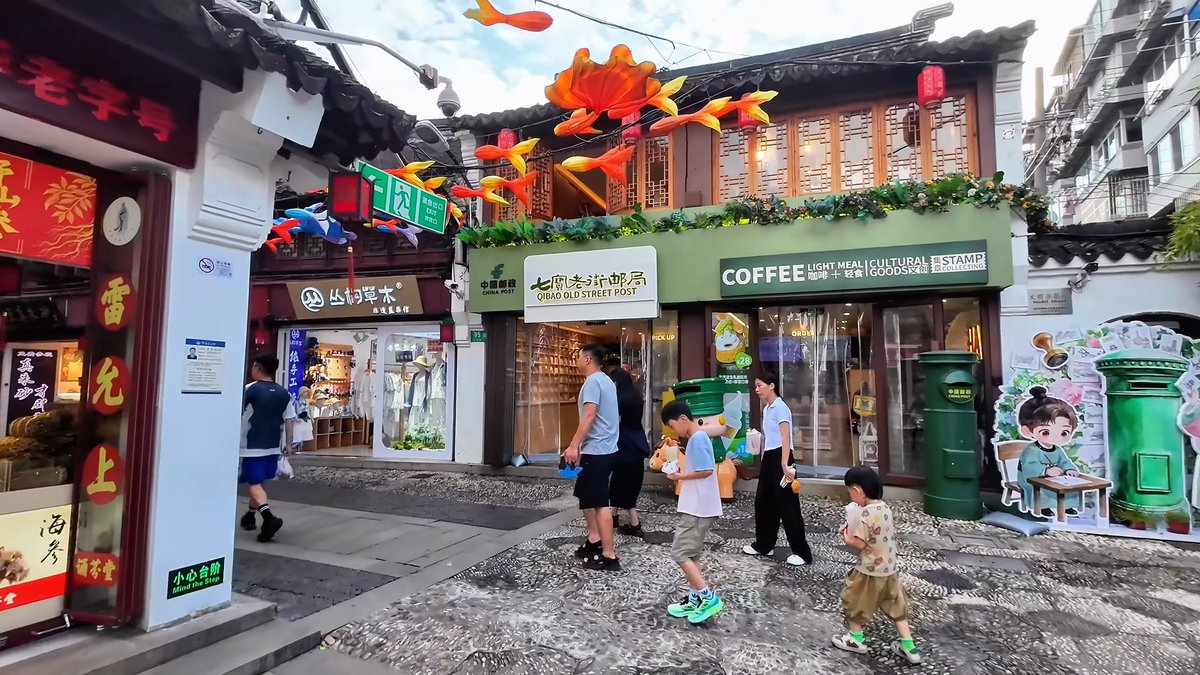
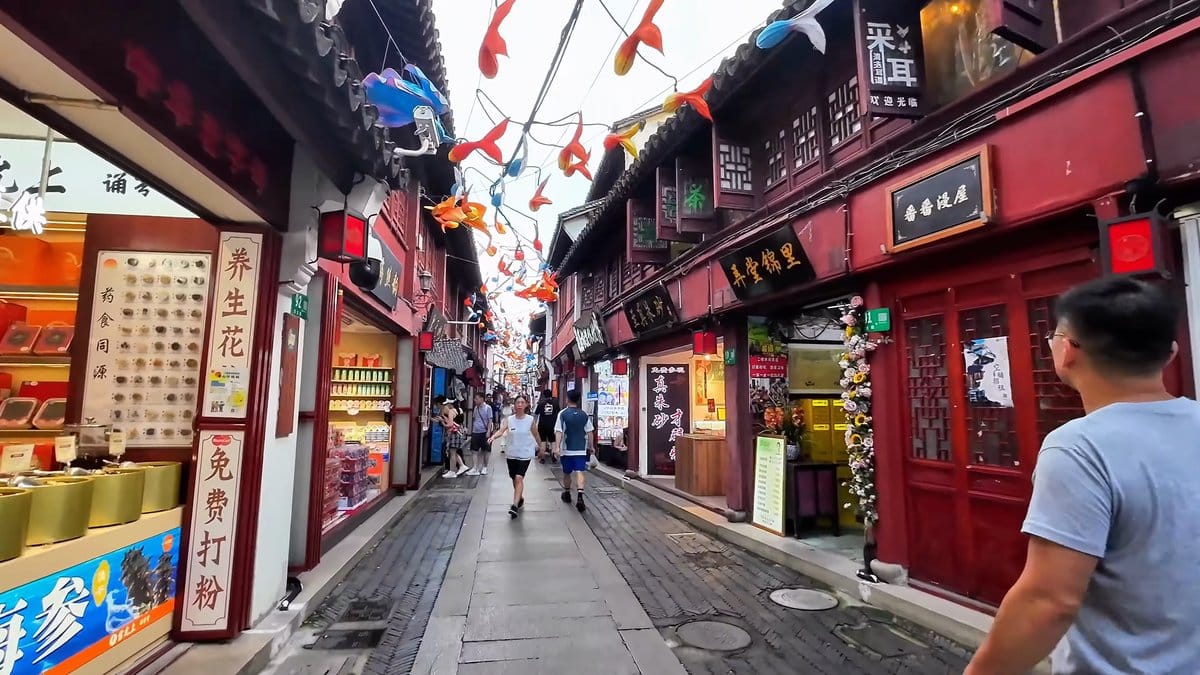
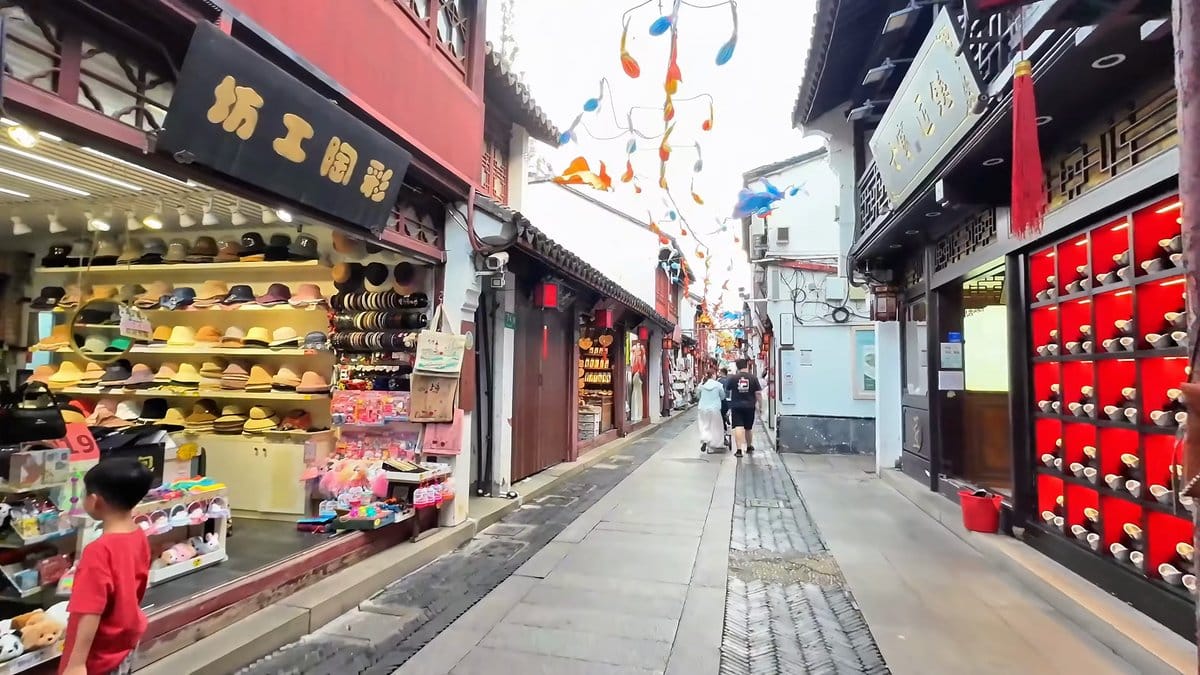
The main street is lined on either side with shopfronts in various states of repair. A few corners has been taken over by coffee shops with terrace table (a nod to contemporary taste that’s a little strange, but it means you can sit down). At regular intervals, narrow timber-panelled alleyways forks off, crammed with tiny store selling anything from fried tofu to hand fans.
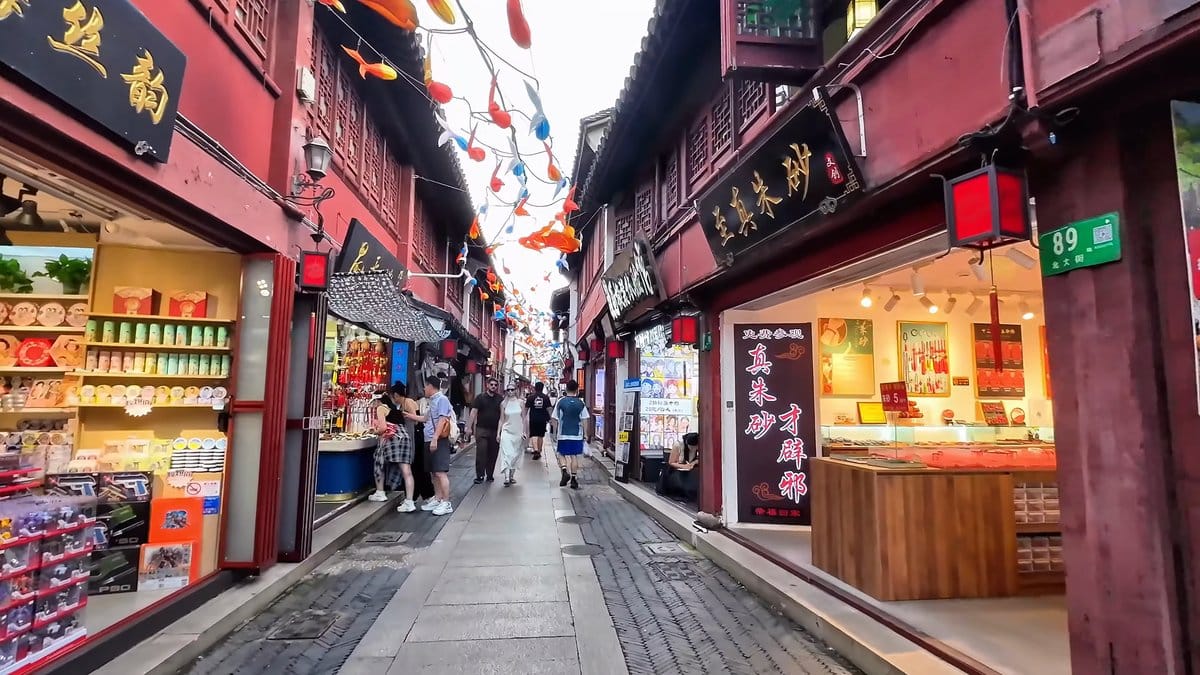
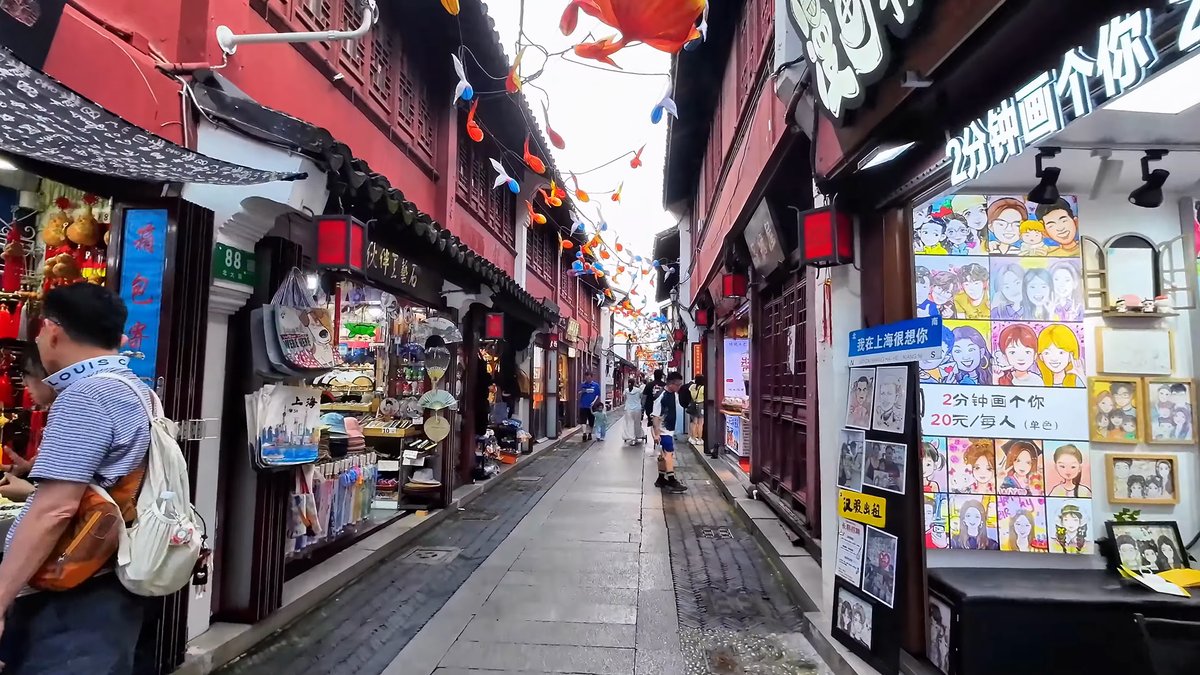
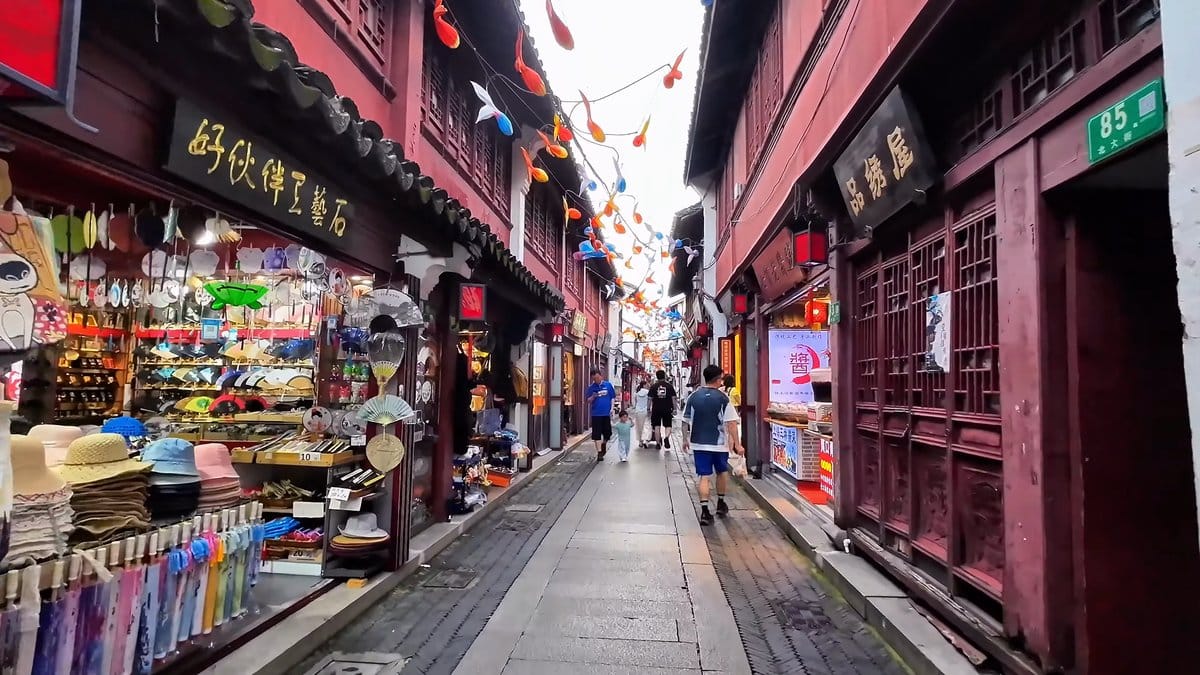
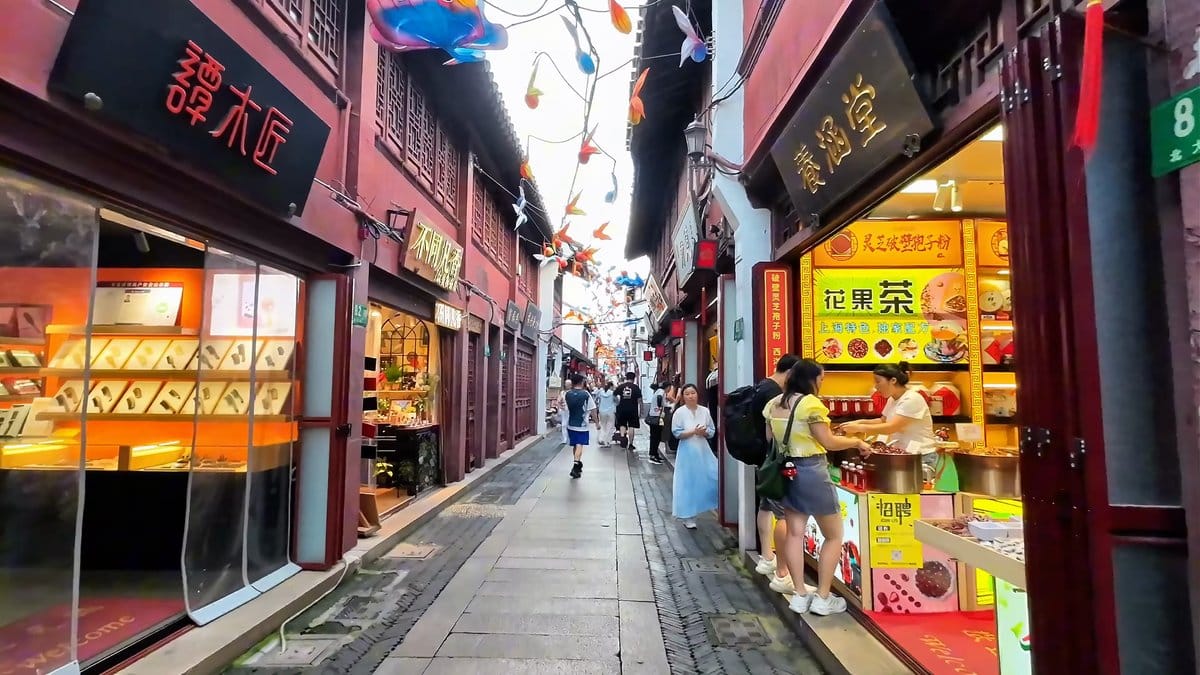
The food shops has their wares on display in the window: rows of pickled vegetables in jars, boxes of sesame candy, vacuum-sealed smoked fish. The souvenir stalls sells what you’d expect: cheap toys, embroidered slippers, phone cases featuring cartoon pandas. Craft shops pile painted fans and bracelets into bins.
Further into the quarter, the crowds thin out a little, but the dark timber storefronts keeps coming.
Rows and rows of newly prepared pastries sits on bakery trays: glutinous rice balls dusted with peanut powder, sesame rounds, flaky cakes filled with red bean paste. Grab a few to eat as you walk. Each one cost roughly ten to fifteen yuan.
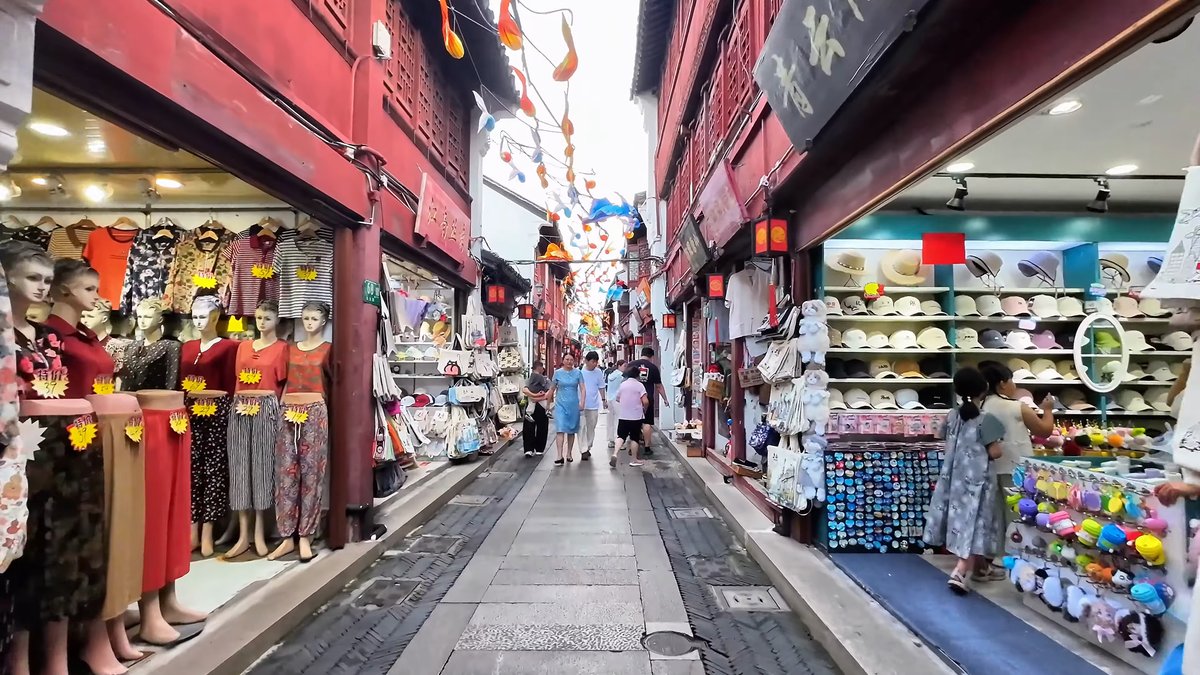
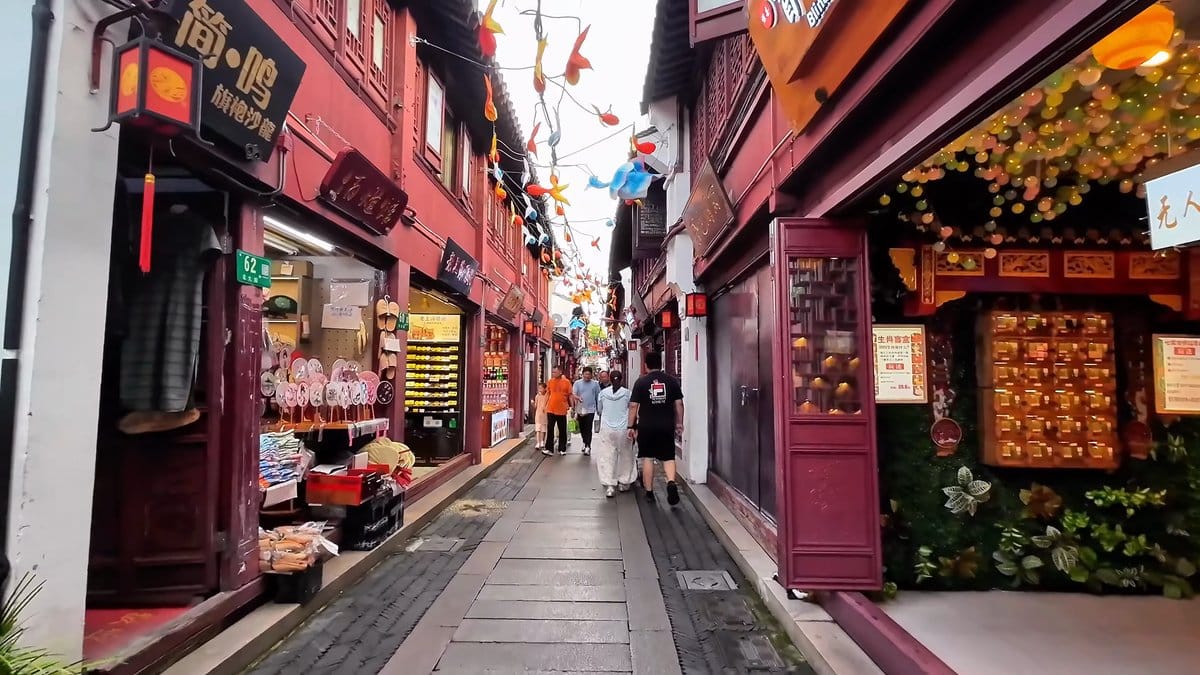
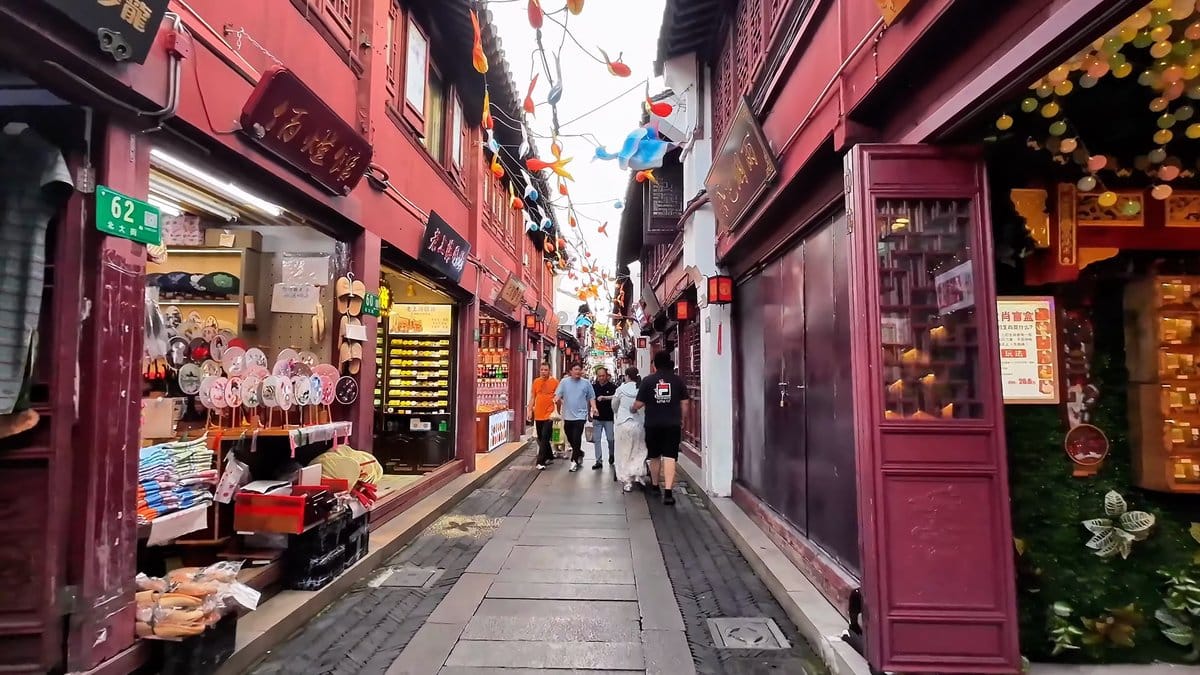
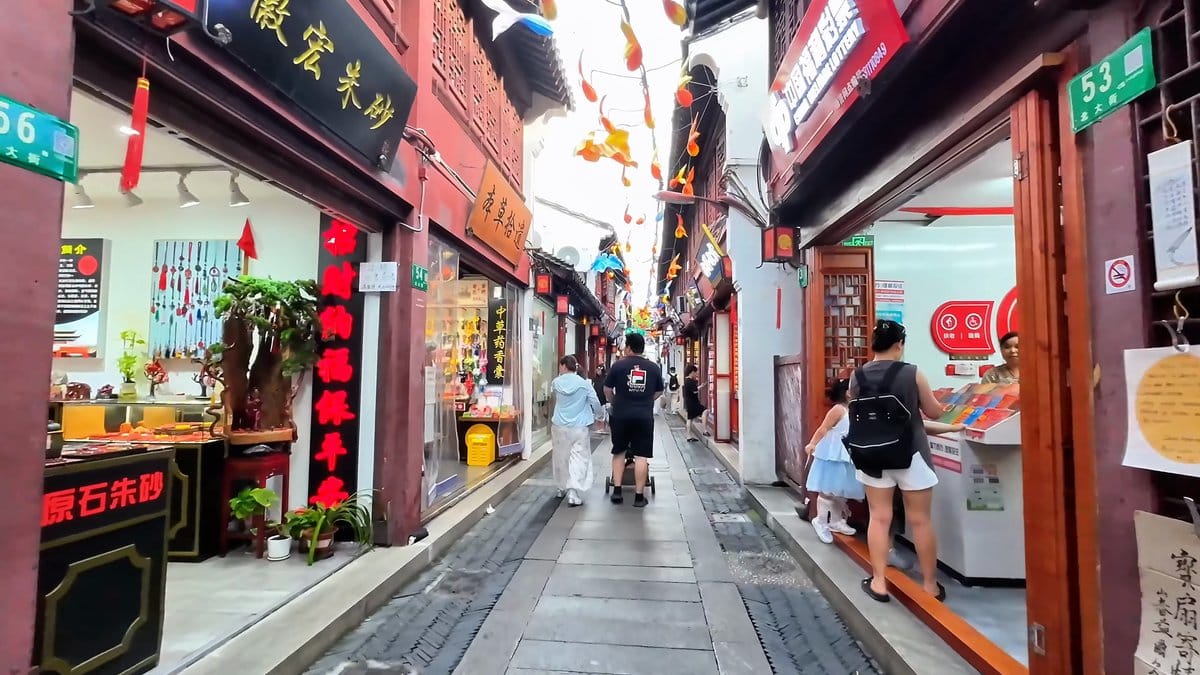
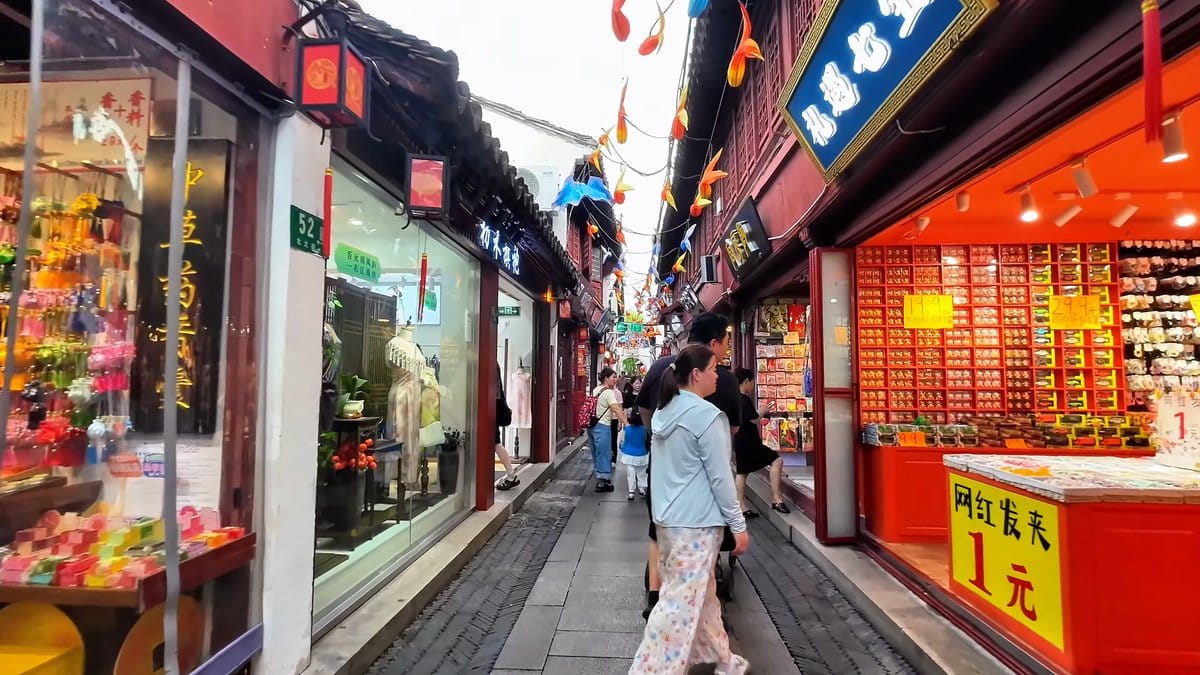
Mannequins in clothing stores is dressed in patterned dresses, designed to be snapped on by tourists who want to wear “traditional” dress for a picture. Tea sets, household goods, bags is sold in other shops. Bunting hangs, sagging in the humidity, as the lanes double back on themselves and twist around again.
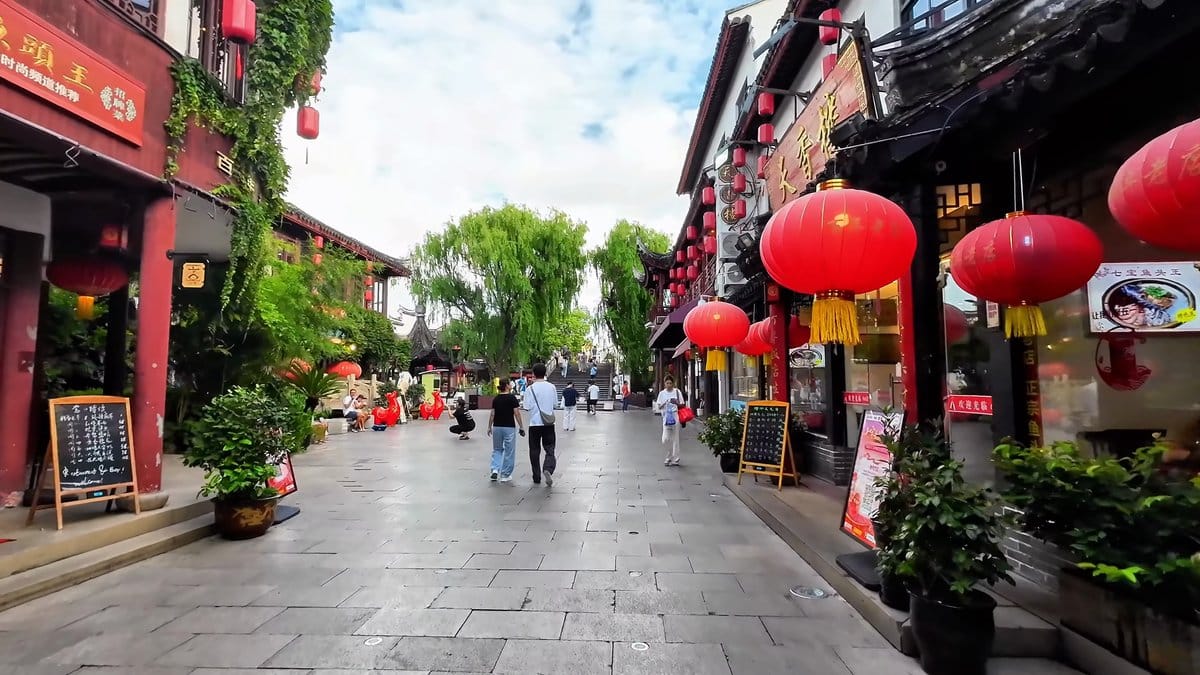
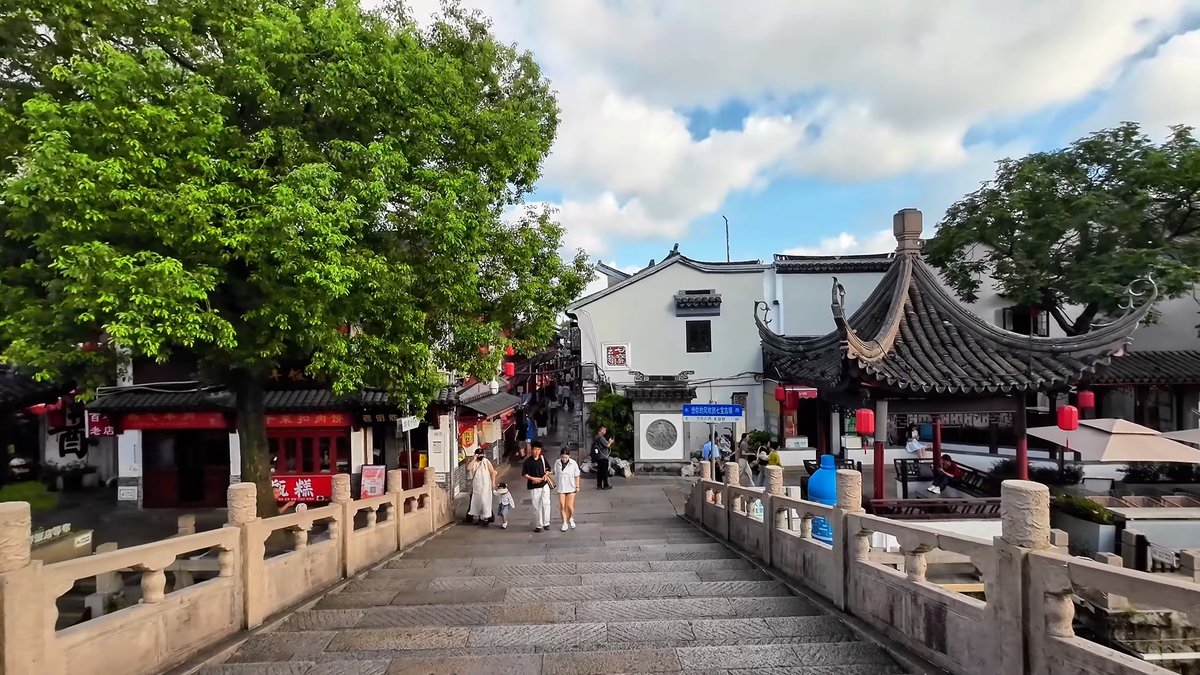
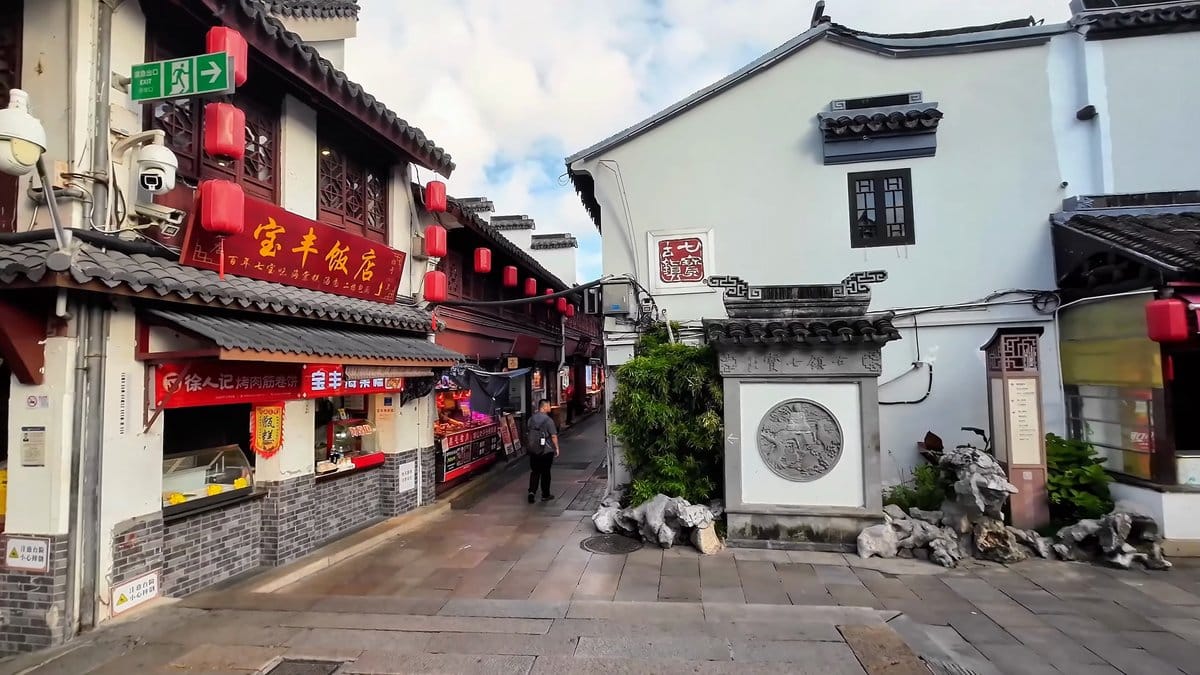
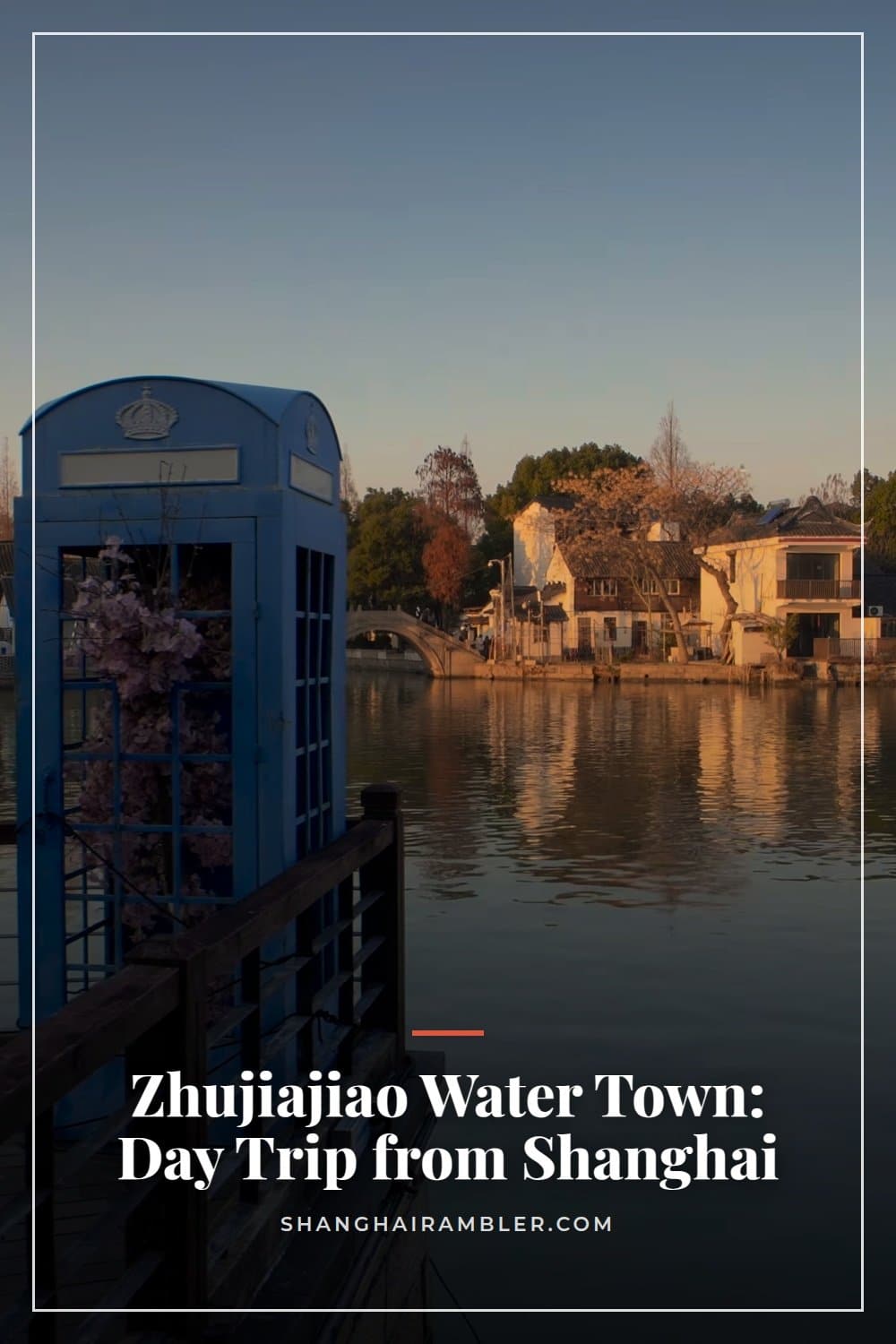
The main street parallels a canal, whose banks is draped in willow trees. Two stone arch bridge link them together, their surfaces eroded smooth by foot traffic. In between, the water is a murky green.
It always seems to be filled with tiny tour boat, which take visitors on canal trips for about fifty yuan each. Along the waterfront, buildings sports the traditional Jiangnan profile: dark tiled roofs, whitewashed walls, narrow windows.
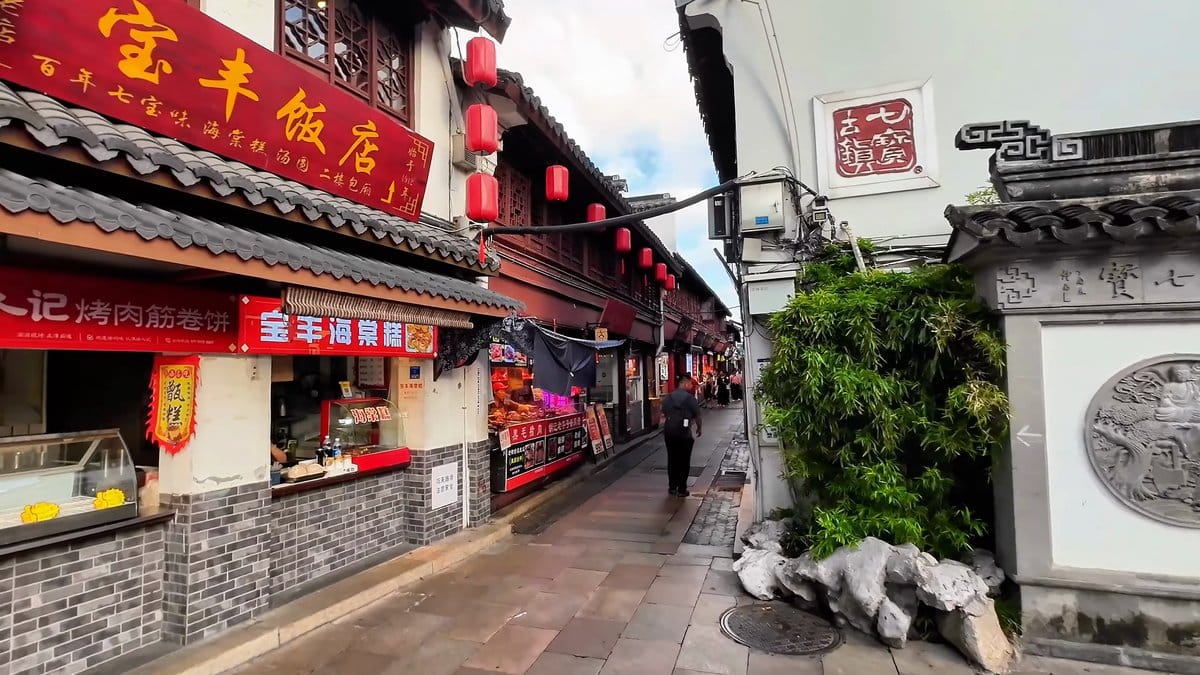
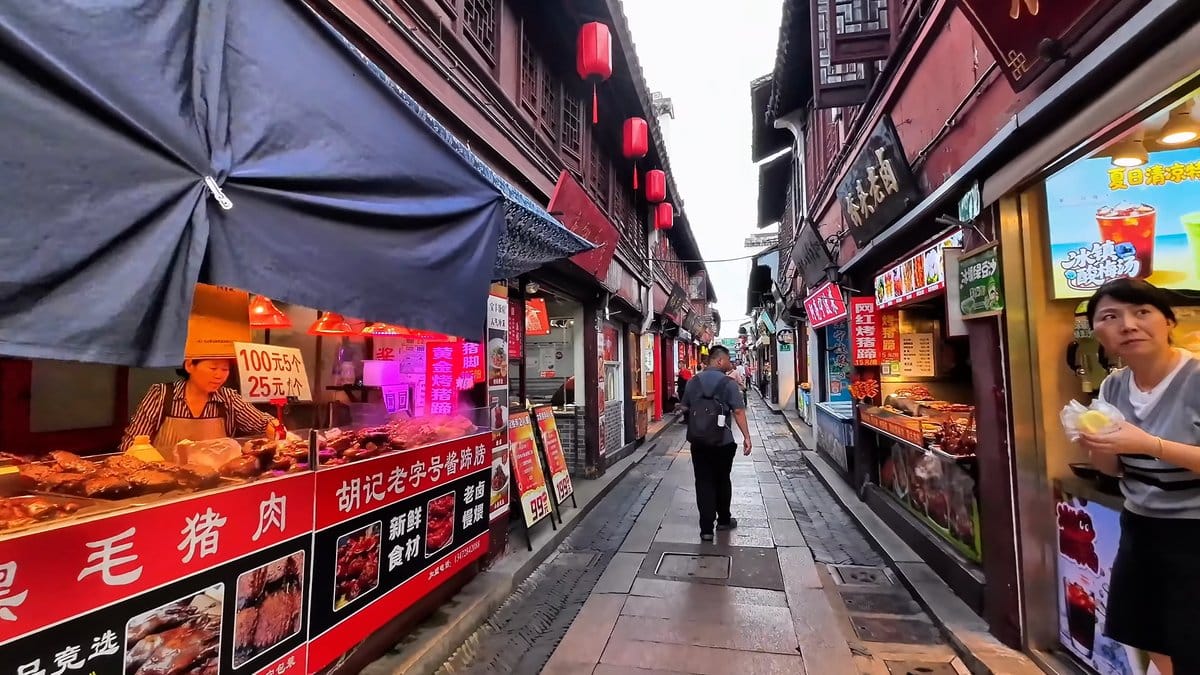
Local snacks to try include Haitang cake. The shop on the main strip will have a queue. These is small cakes baked in flower-shaped moulds, stuffed with either savoury or sweet fillings.
Nearby, braised pork is grilled until it shines and is sold in little paper bowl over rice, or on sticks from stalls, also glazed and shining. It’s salty and tender but after you’ve grazed your way down the street it might be a bit much.
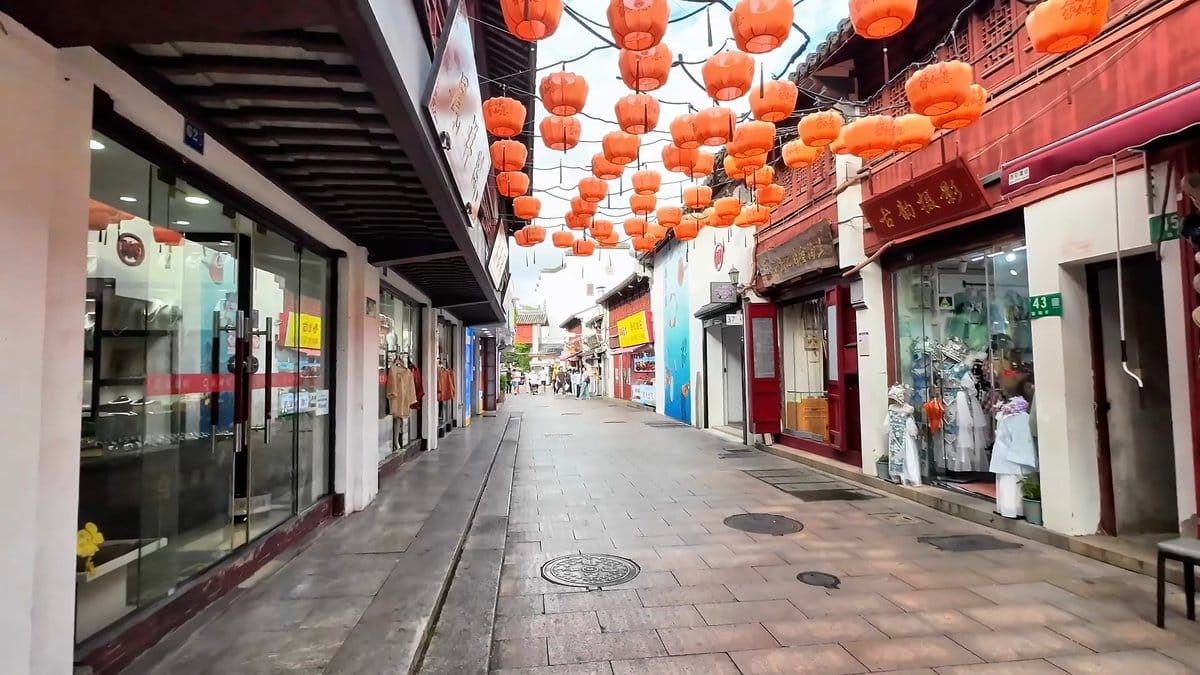
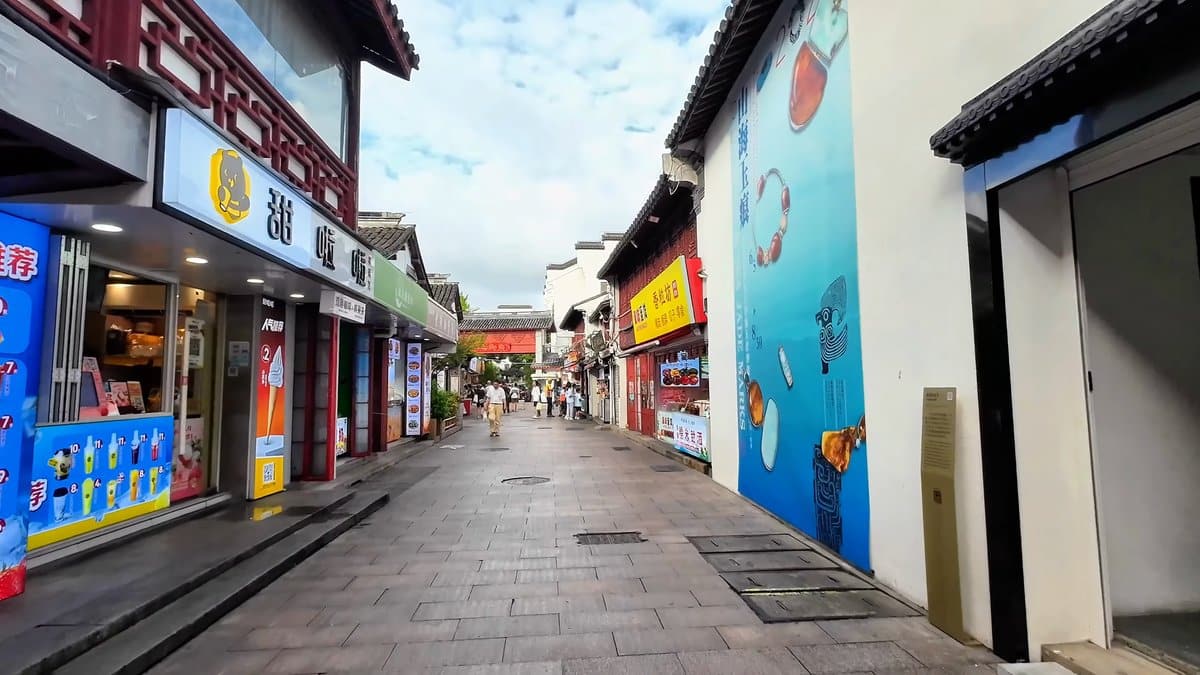
The parts most often photographed are those with dense rows of hanging lanterns overhead, giving them the classic old town feel. As you move toward the edges, though, the preservation effort taper off and you’re back to everyday businesses and moddern shopfronts. It’s an abrupt but honest contrast…
Qibao isn’t a museum; it’s a working neighbourhood that just happens to double as a tourist attraction. If you are visiting Shanghai, you might not want to commit to a whole day trip to Tongli or Zhujiajiao. If you still want to visit a water town, Qibao Ancient Town is an easy option.
It’s close, doable, and loaded with snacks. Go on a weekday though if possible. Have you been to any of the old water towns in Shanghai?
What was your favorite?