In Shanghai, glass and steel tower over the city as the skyline soars upwards at breakneck speed. But then there’s Jin Mao Tower. Its stepped facade remind people of a pagoda, which is a nod to tradition.
Yet, the building pushes 420 metres high into the air (built in 1999). Though newer neighbours may rise taller, Jin Mao stand on its own two feet thanks to a thoughtful design and sheer beauty that repay a second glance. Not only does it look cool from the ground, but it’s also open to visitors so they can enjoy the inside as well.
The entire experience doesn’t feel quite as much like a conveyor belt as some of the other Lujiazui tower. The atrium at the Grand Hyatt turn into an attraction in its own right, and there’s an observation deck on the 88th floor that opens up to the view. Here’s why Jin Mao is worth your time.
Where Jin Mao makes its name is on the outside.
What to See at Jin Mao Tower
Jin Mao Tower
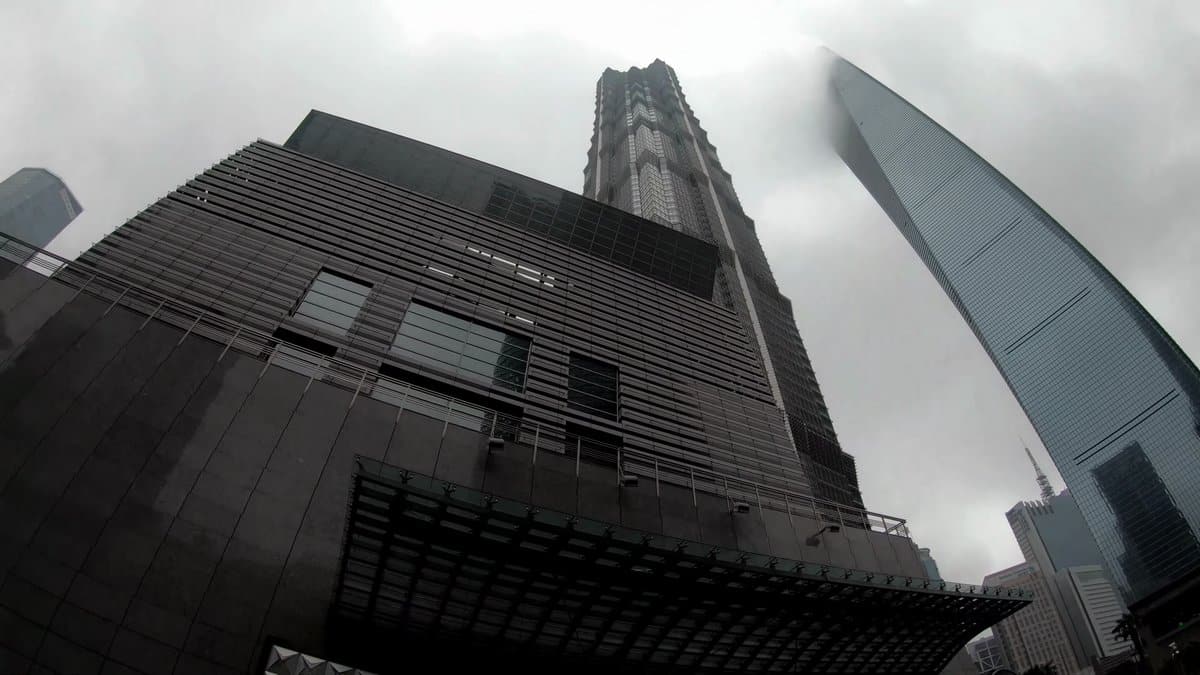
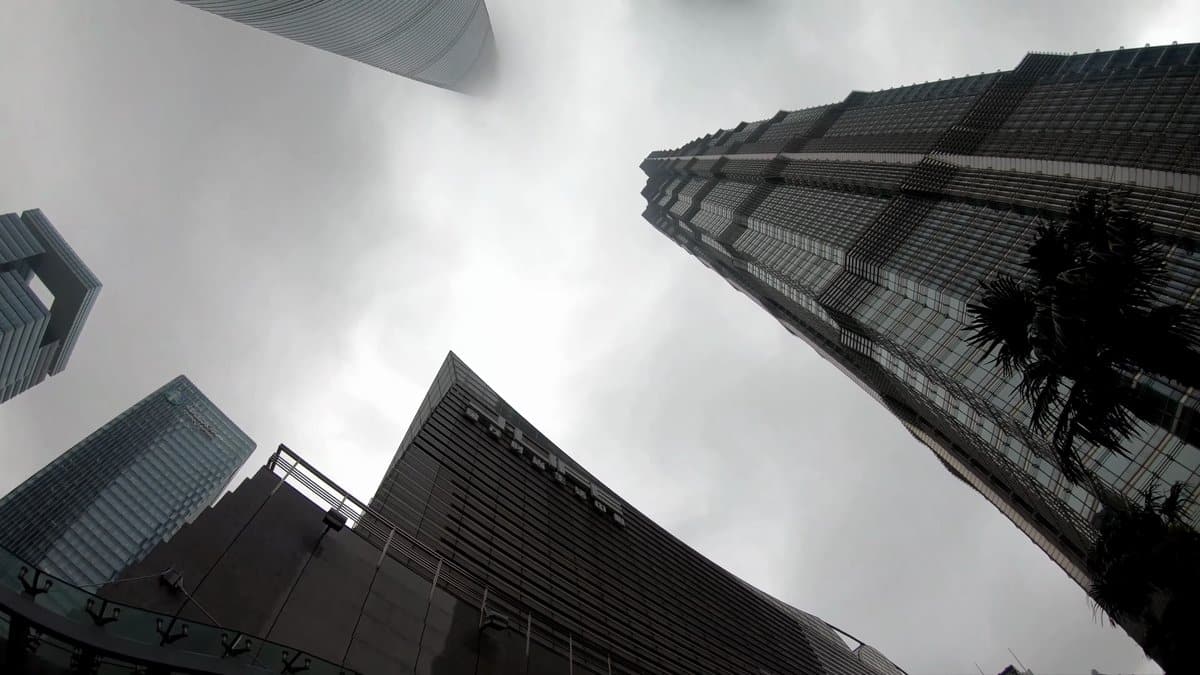
It’s a tower with a rhythm. Thirteen stories step back one tier at a time, each smaller than the next. This rhythm come from classical Chinese architecture but is made here in steel and moddern reflective cladding.
From the plaza below you stand, it seem almost deliberate how the building frames itself against the sky. And it works.
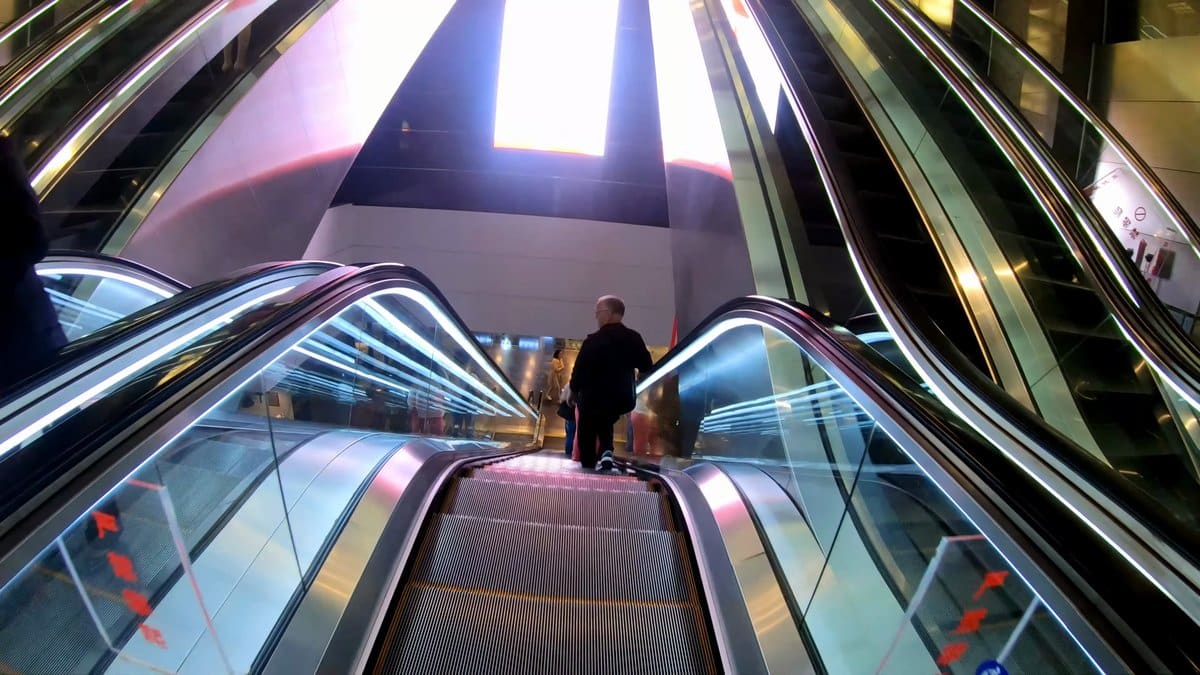
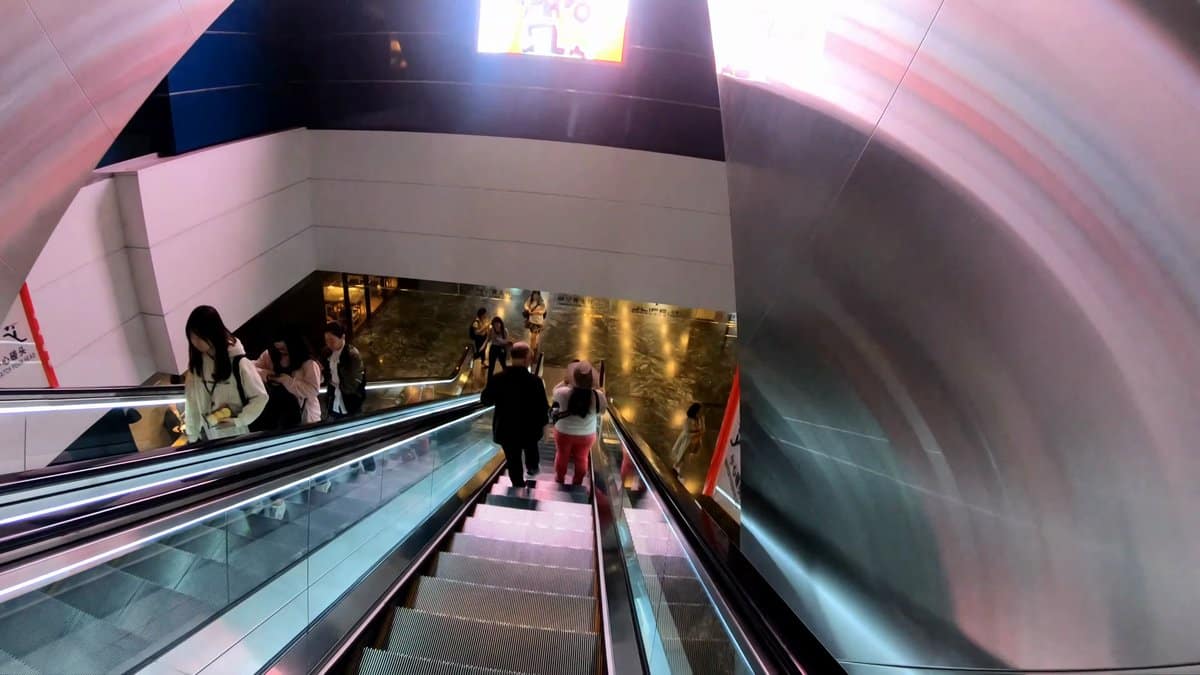
Before reaching the express lift lobby, however, go inside and you’ll find yourself on escalators that take you down to the lower levels. The descent, along with the modern finishes and curving walls, set the tone. This is not a stripped-back office tower, but a space designed to be experienced.
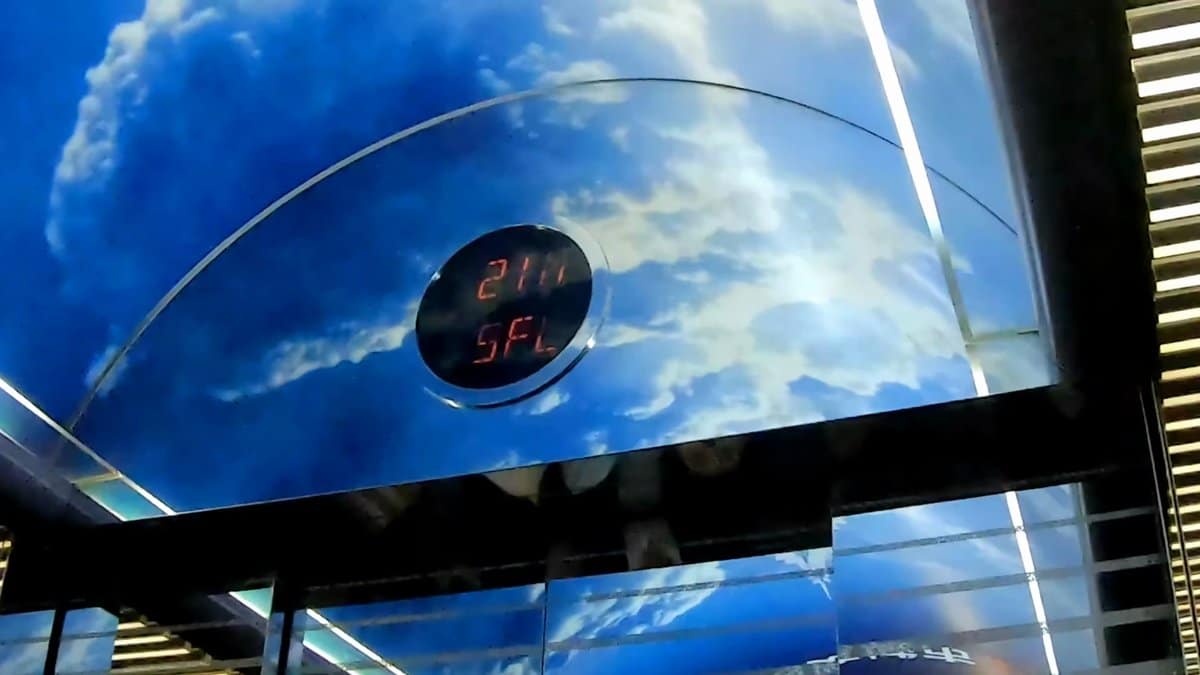
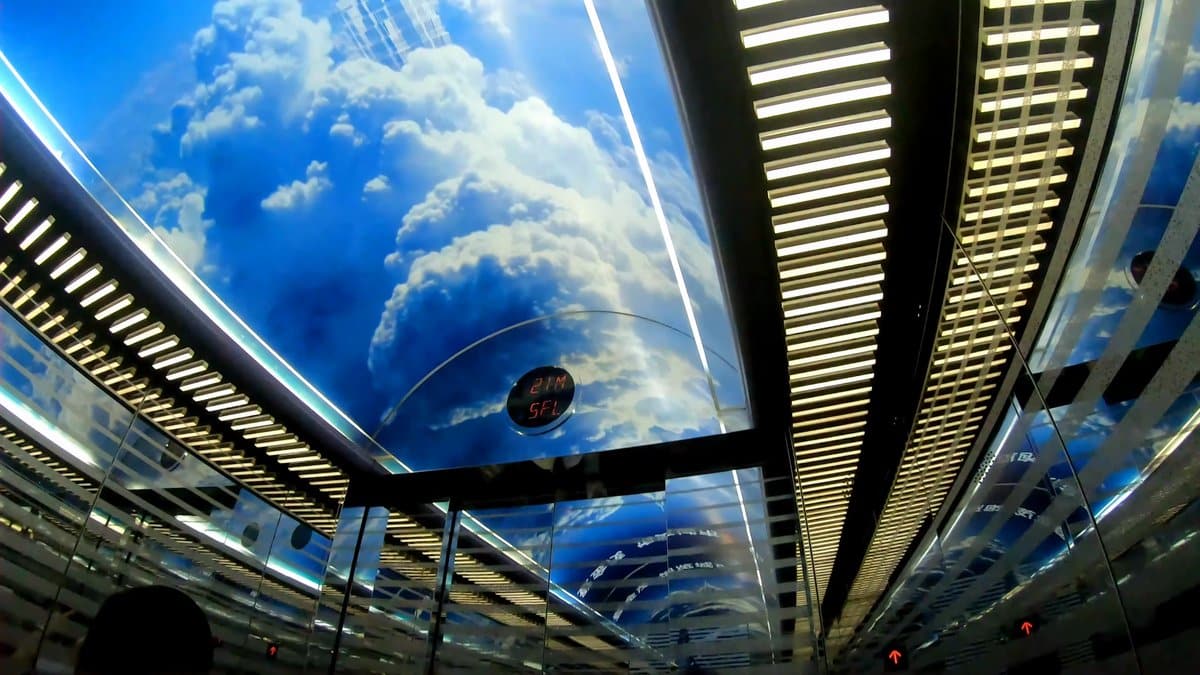
Within minutes (the express lifts shoot you up to the 88th floor in under a minute), you’re here. The speed make your ears pop, the ceilings is made to look like clouds, and the walls shimmer. It’s a neat bit of theatre that’s brief but memorable, ahead of the main event.
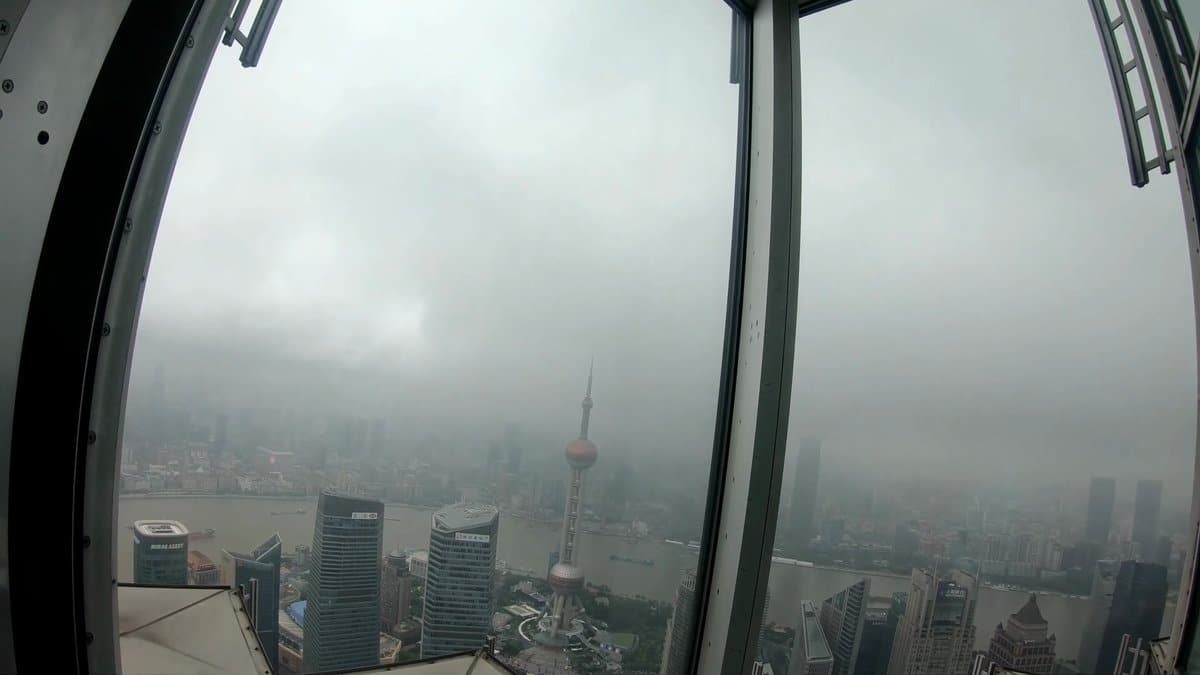
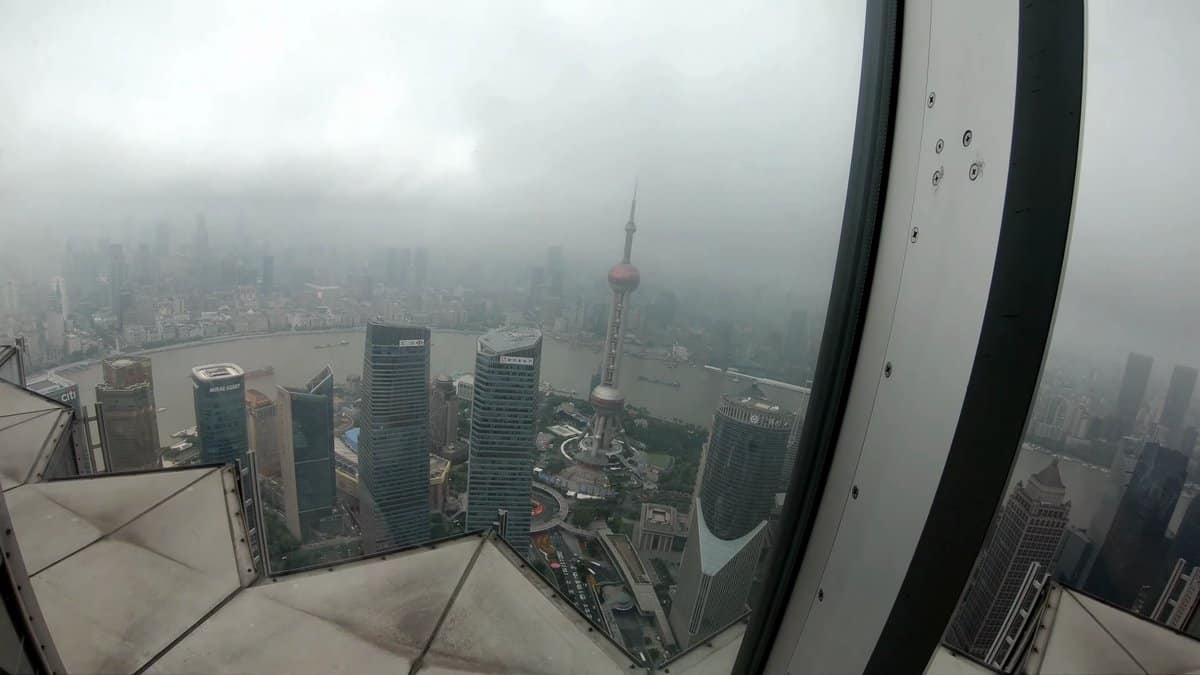
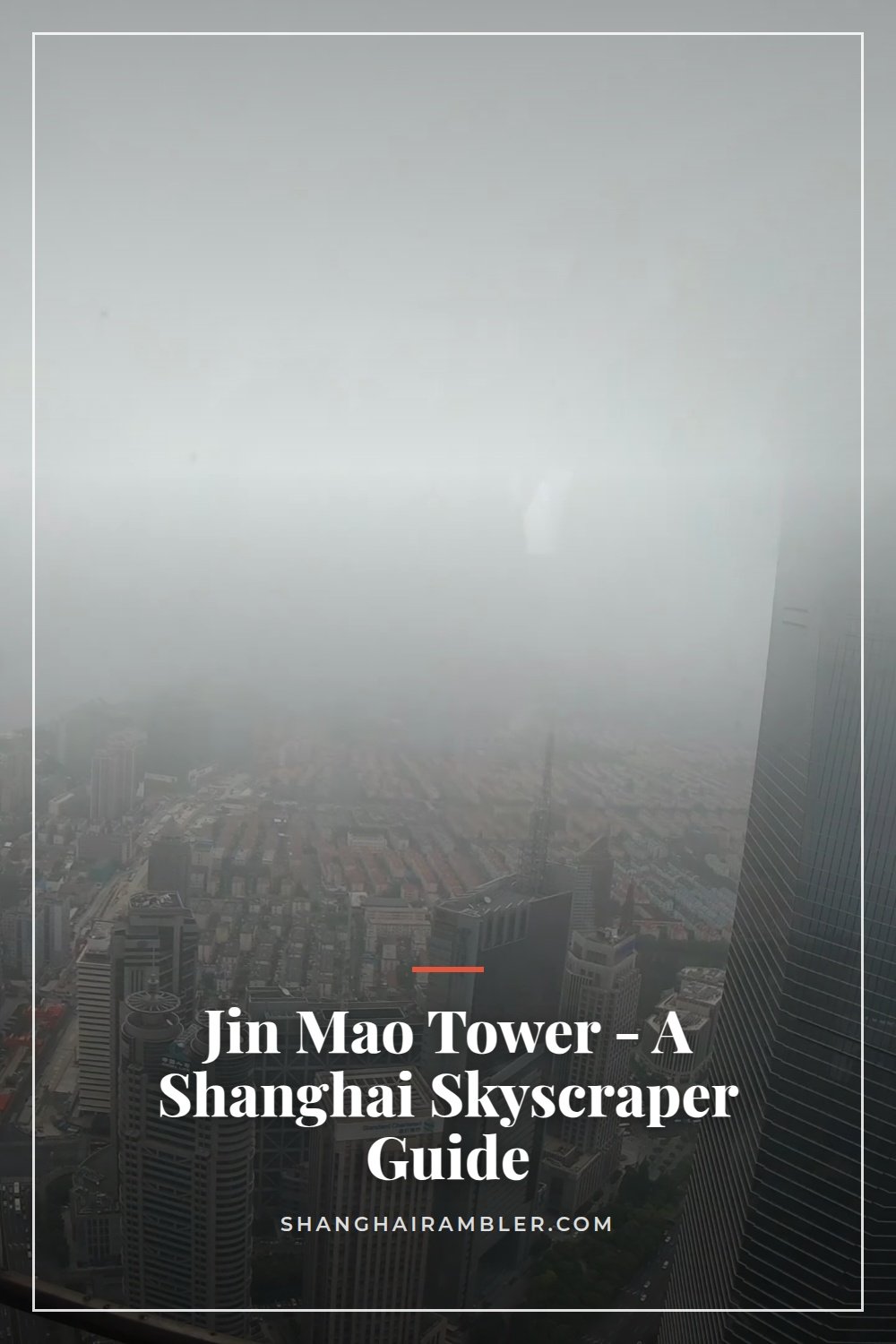
Walk through to the observation deck and all of Lujiazui is laid out before you. To the east, the Oriental Pearl Tower looms large, its spheres almost at eye level. Cast your eyes downwards and the vertigo sets in…
The windows frame a drop with Jin Mao’s setbacks and ledges receding below. This is high up.
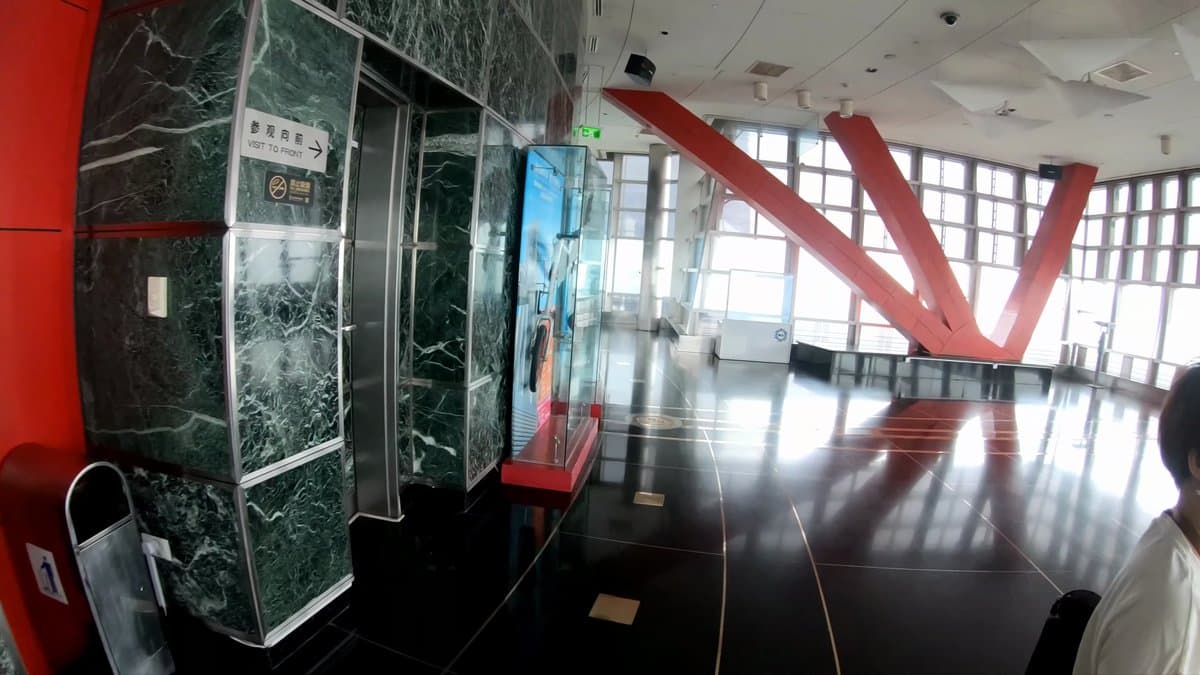
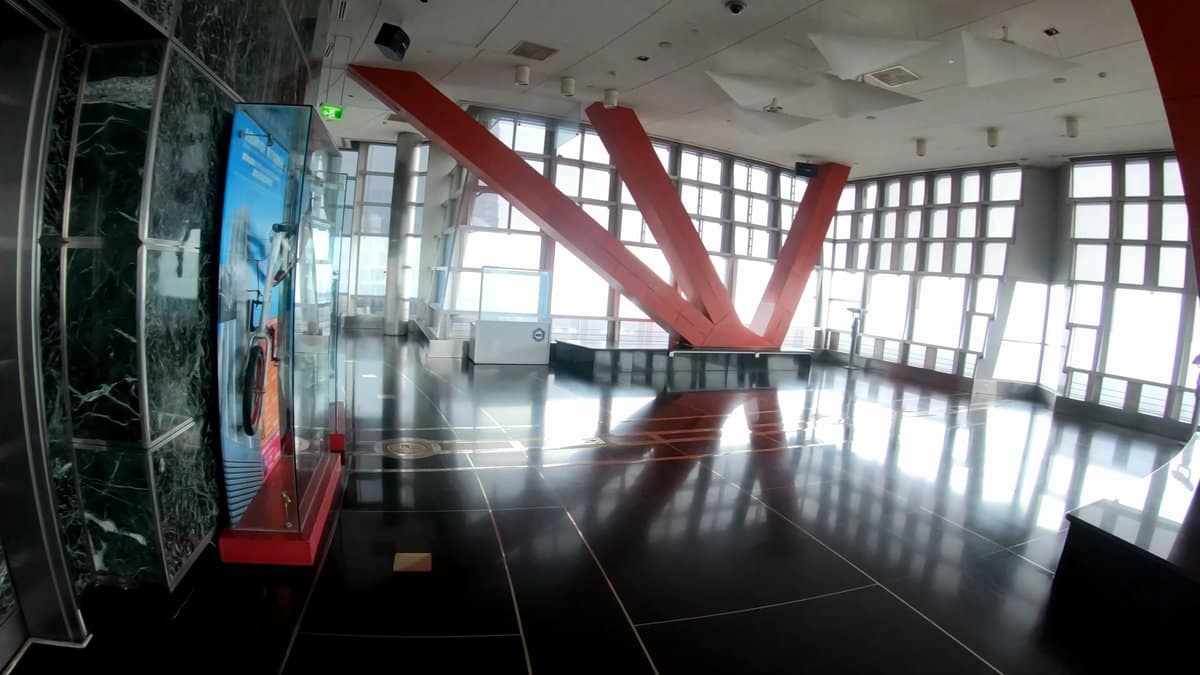
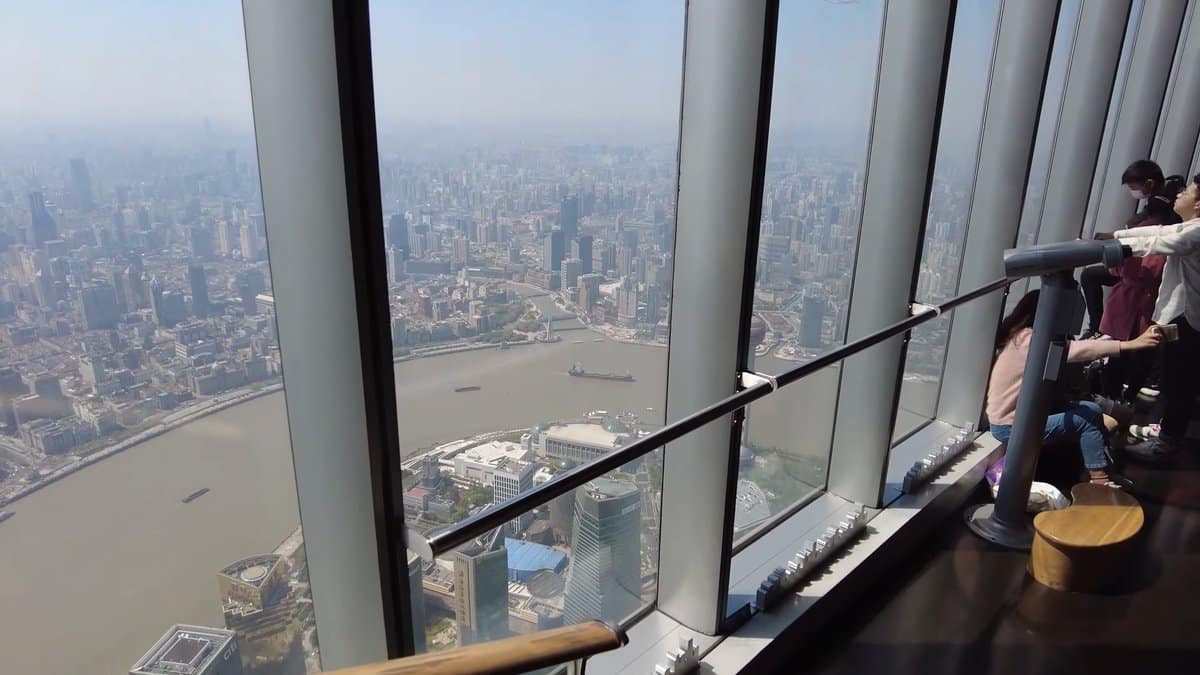
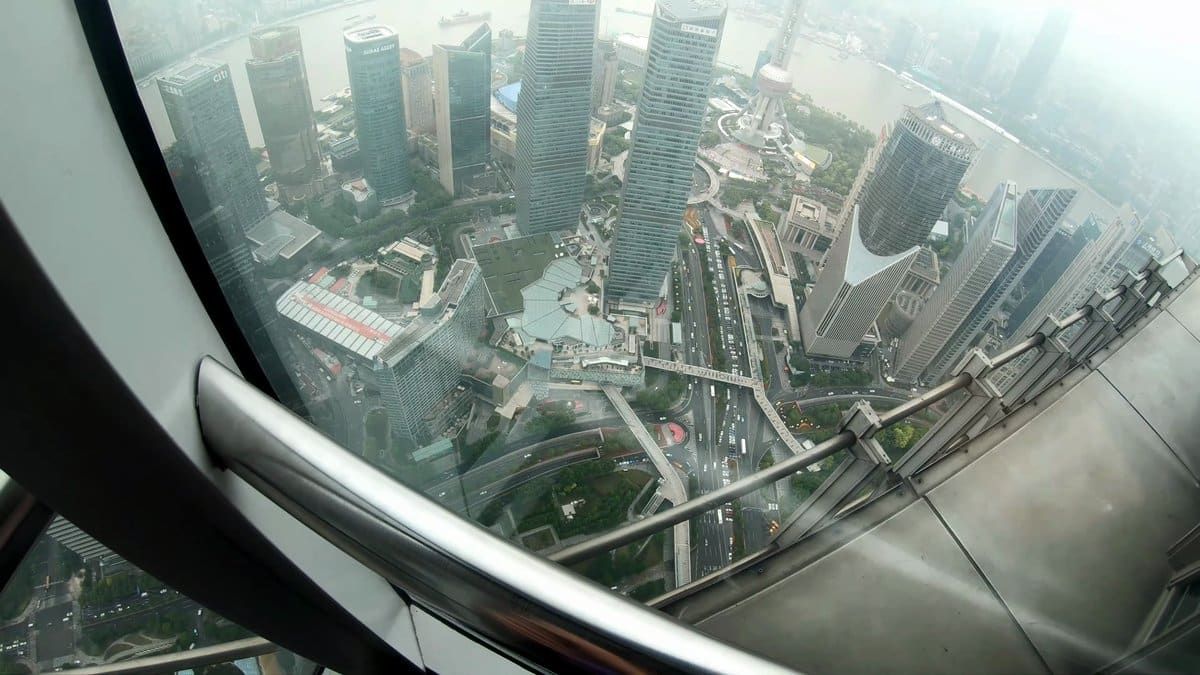
The huge, light-filled hall are paved in gleaming stone and is dominated by the deck itself, which is supported by crossed beams above. The sides is lined with windows from floor to ceiling, and on a sunny day you can see all the way over to Puxi and Pudong and follow the bend of the Huangpu River, picking out specific buildings. It gets crowded (particularly at weekends), but there’s plenty of room here so you’ll be able to get a quiet spot to stay a while.
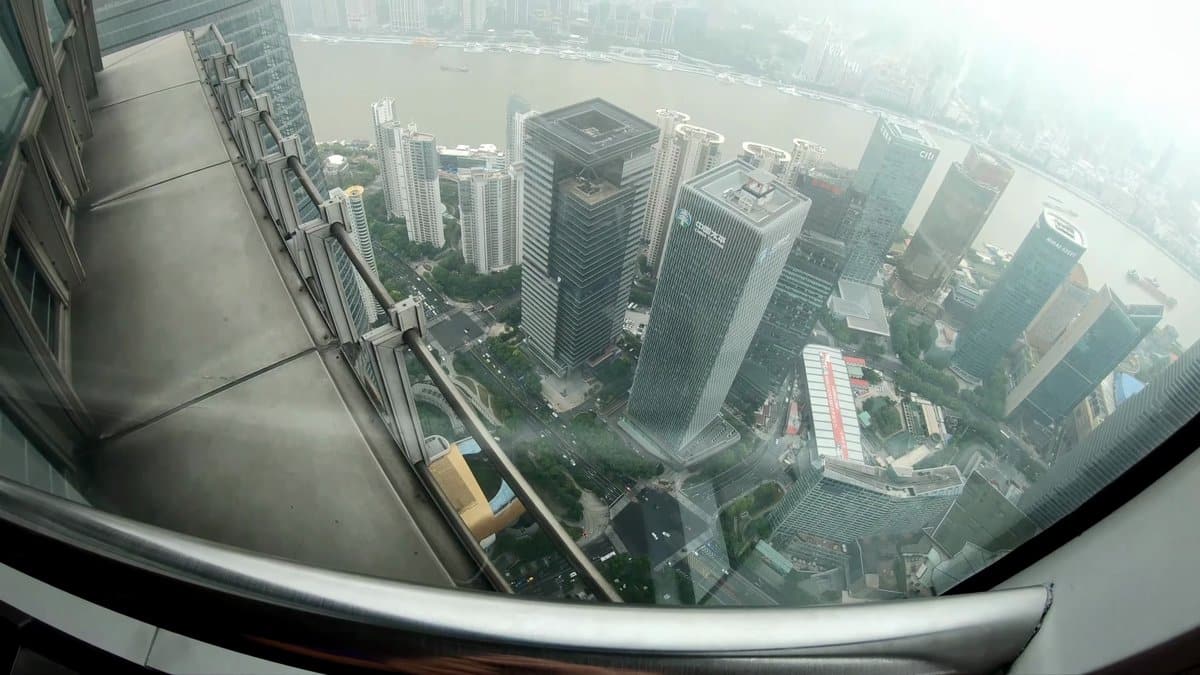
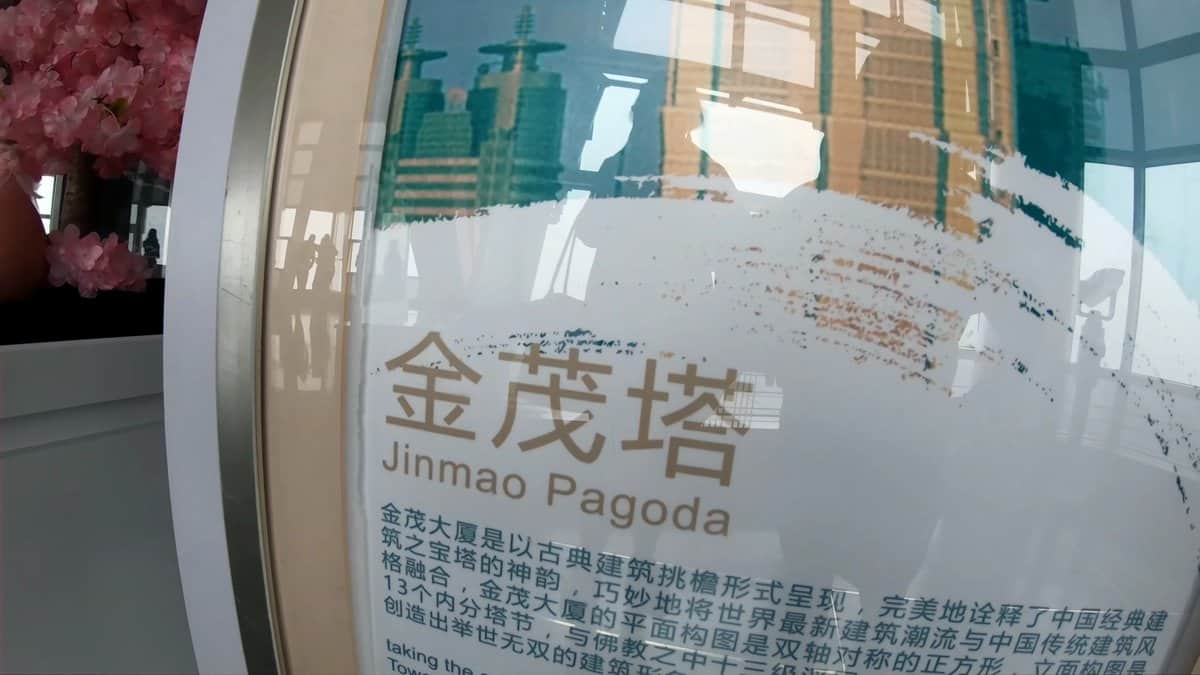
The deck is littered with interpretive panels that describe the pagoda-influenced architecture. They also describes the numerology in the building’s structure. The number eight keep popping up, such as in the 88 stories and the proportions based on eights.
This refers to its lucky meaning in Chinese culture. It is not too much, just enough to get your attention and make you notice the patterns.
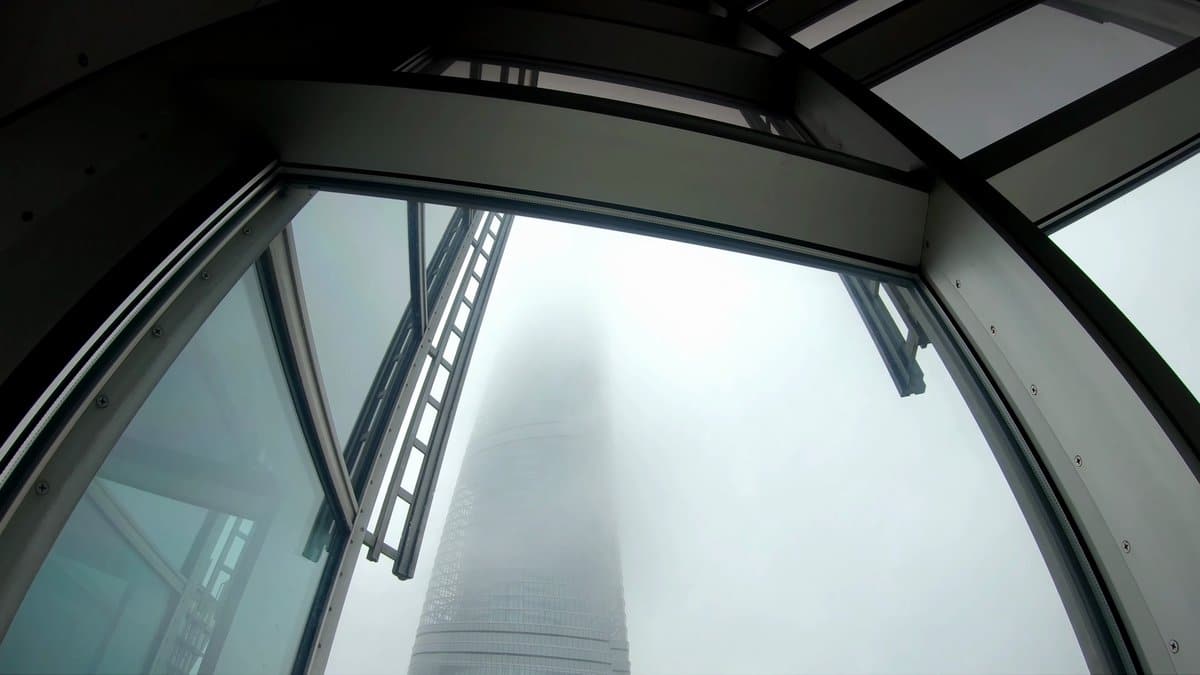
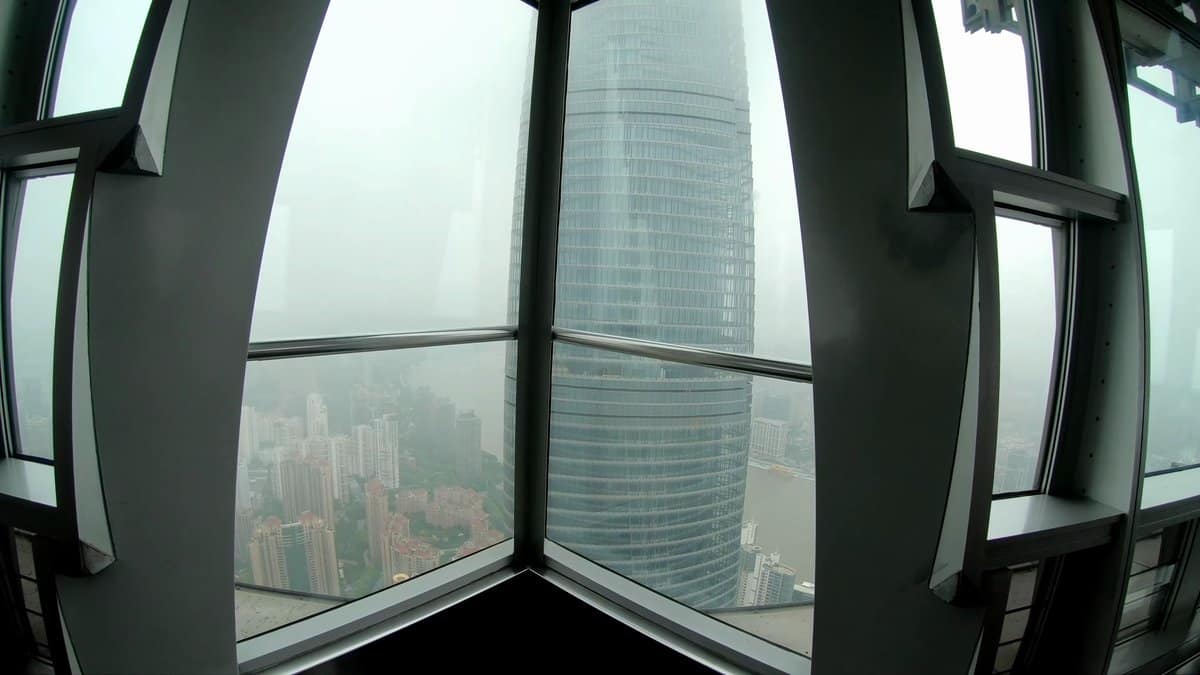
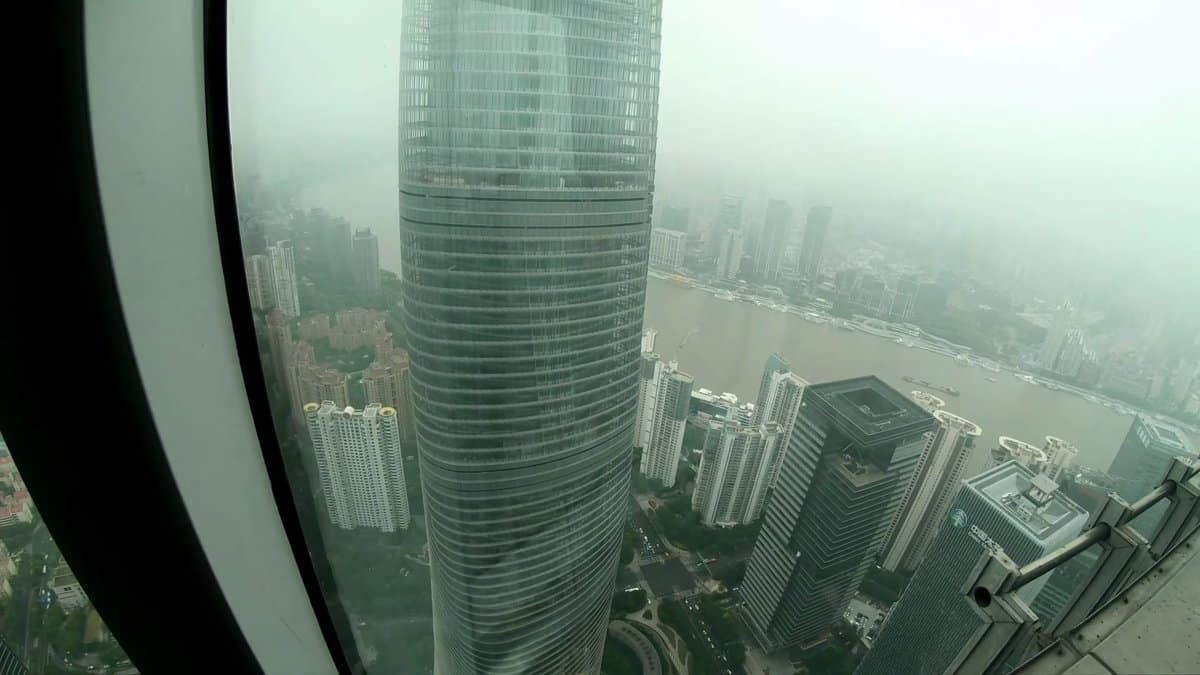
Next door is Shanghai Tower: tall, twisty, looming. It dissapears into the cloud base on overcast days, but even then it’s impressive, seen from the windows of Jin Mao. Jin Mao has its own look; its symmetry and cleaner lines gives it an edge over its new neighbour.
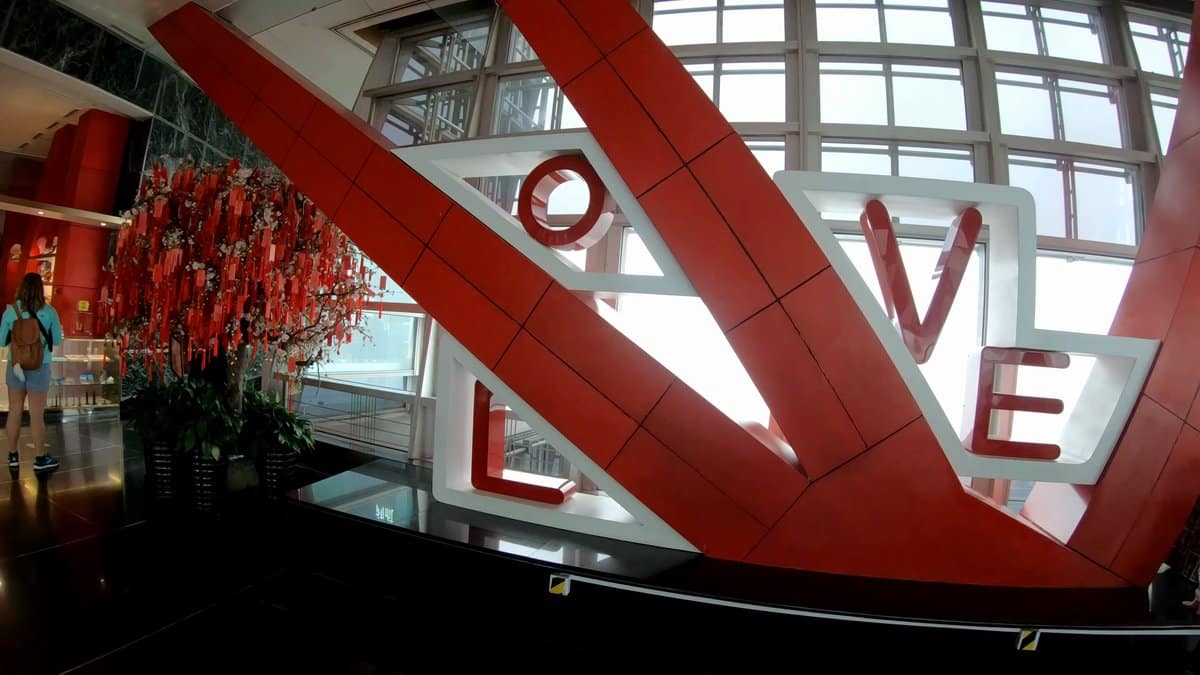
There is a small sculpture nearby the windows that provides a photo opportunity for anyone looking for a keepsake. To be honest, the views do all the work here.
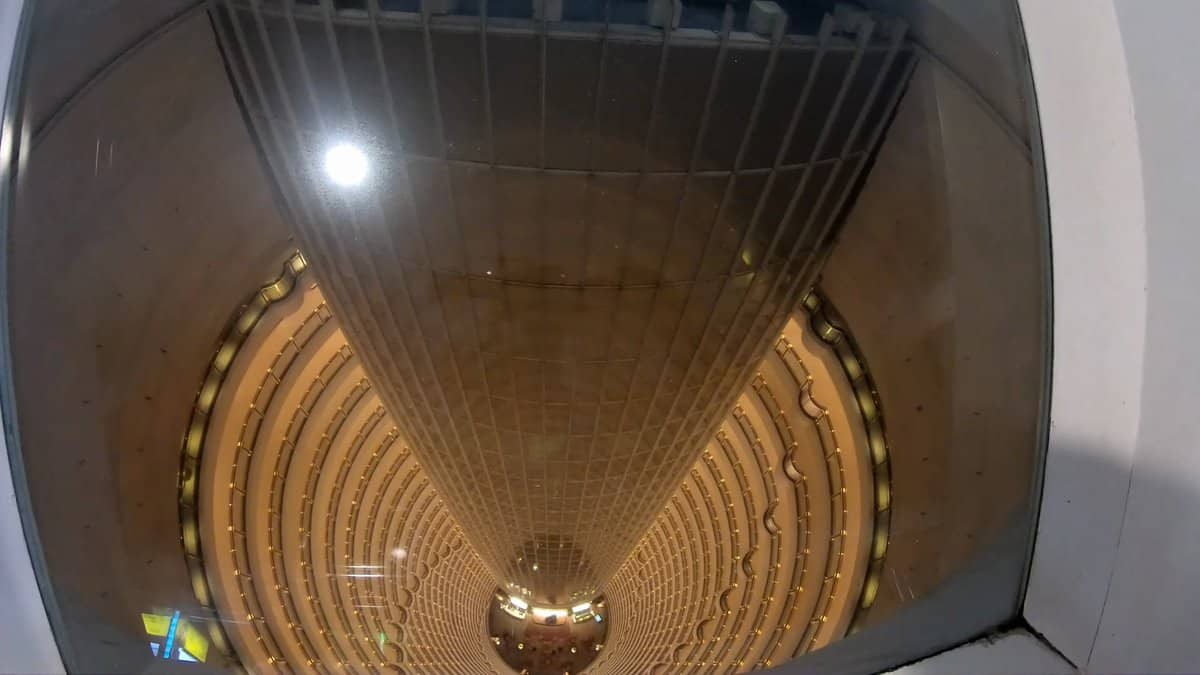
Back down in the tower, the Grand Hyatt take up floors 53 to 87, but even if you aren’t spending the night, you should of take a detour through their atrium. Curved-inwards balconies ring this dizzying hollow core, which spirals upwards. Get to the bottom, look up, and the geometry will start to hypnotize: a vortex of ever-repeating arcs and light.
It’s one of the world’s tallest hotel atriums, and it’s better experienced than photographed.
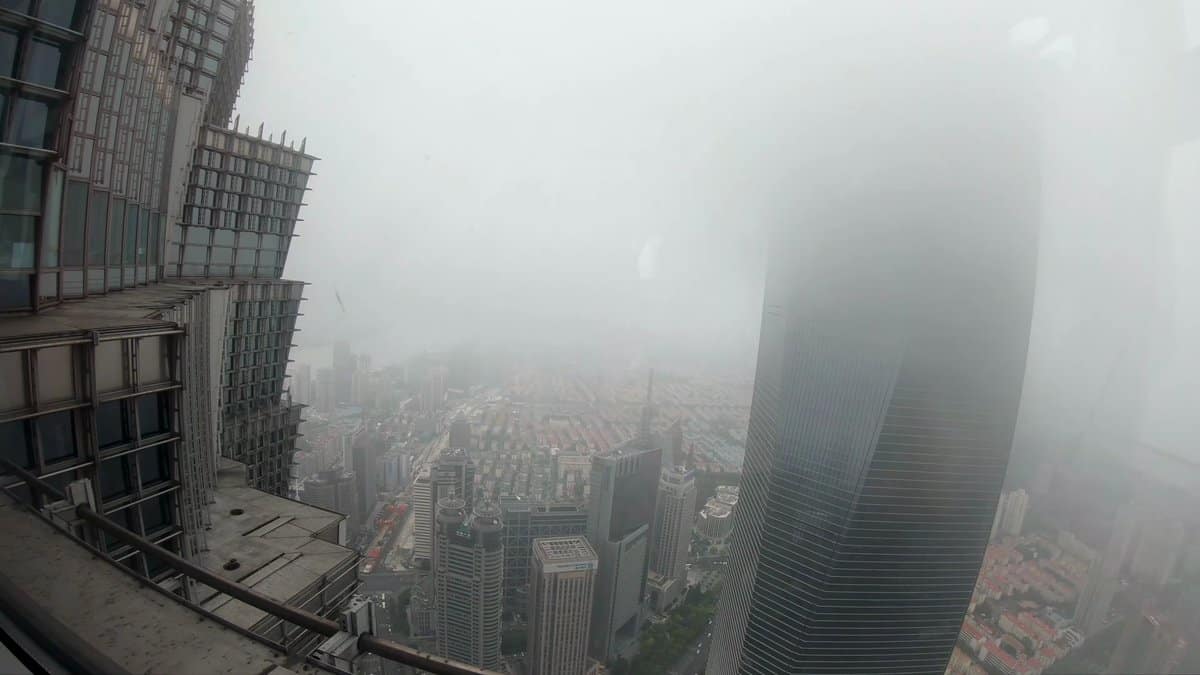
If you get outside at just the right angle, you’ll be able to appreciate how the smooth twist of Shanghai Tower beside it play off Jin Mao’s setbacks. The contrast emphasize what makes Jin Mao special: restraint, rhythm, a refusal to shout for attention. There are no attempts at being the flashiest, or the tallest.
Instead, Jin Mao Tower has the balance just right. It combine traditional form with modern function and has remained fresh looking more than two decades since opening. From street level, or up on the observation deck, it is a building that rewards your attention.
Do you have a favourite skyscraper in Shanghai? Or maybe you’ve been up Jin Mao Tower? Drop a comment below.