Until fairly recently, the area was a series of rail sidings and wharves on the south-western edge of the Huangpu River… A working coal terminal and port for Shanghai. Over the last ten years, it has been redeveloped and transformed into something much less expected.
It is now a public waterfront lined with galleries, museums and green space along several kilometres of riverfront promenade known collectively as West Bund. Without ever crossing a road you can cycle or walk its full length. Here’s a run-through of the zone from one end to the other.
It includes the architecture, the industrial remains, and the unexpectedly relaxed open space that now fills what used to be the docklands.
A Walk Along the River with Museums and Green Space
West Bund Shanghai
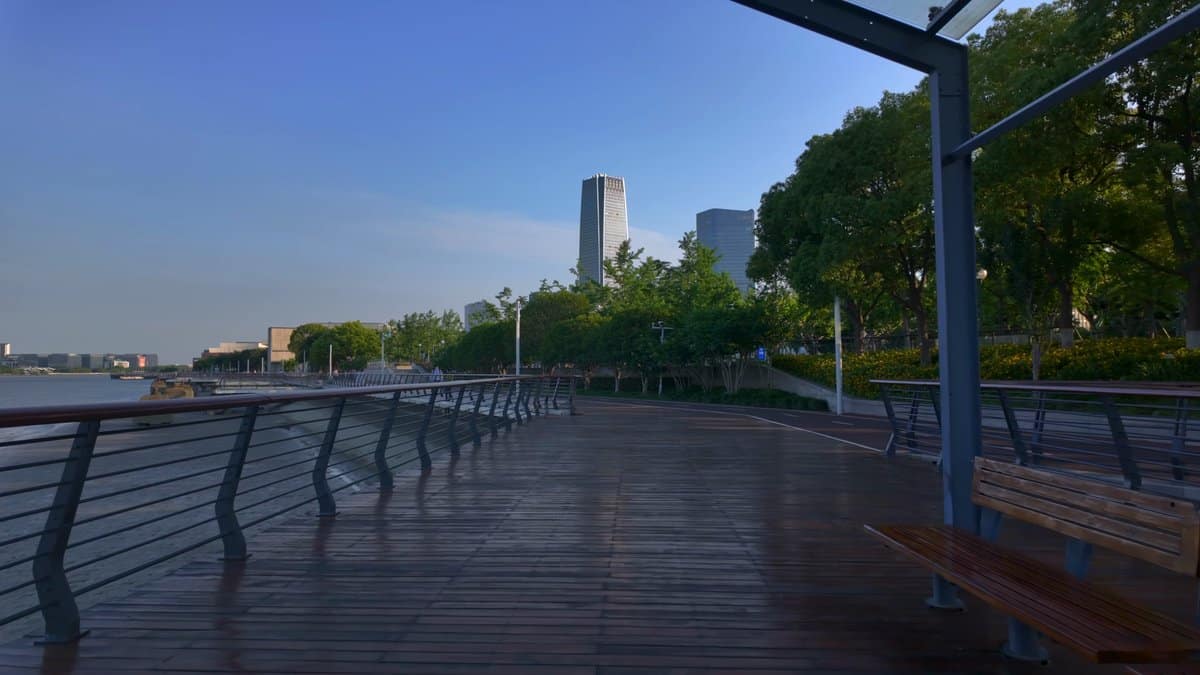
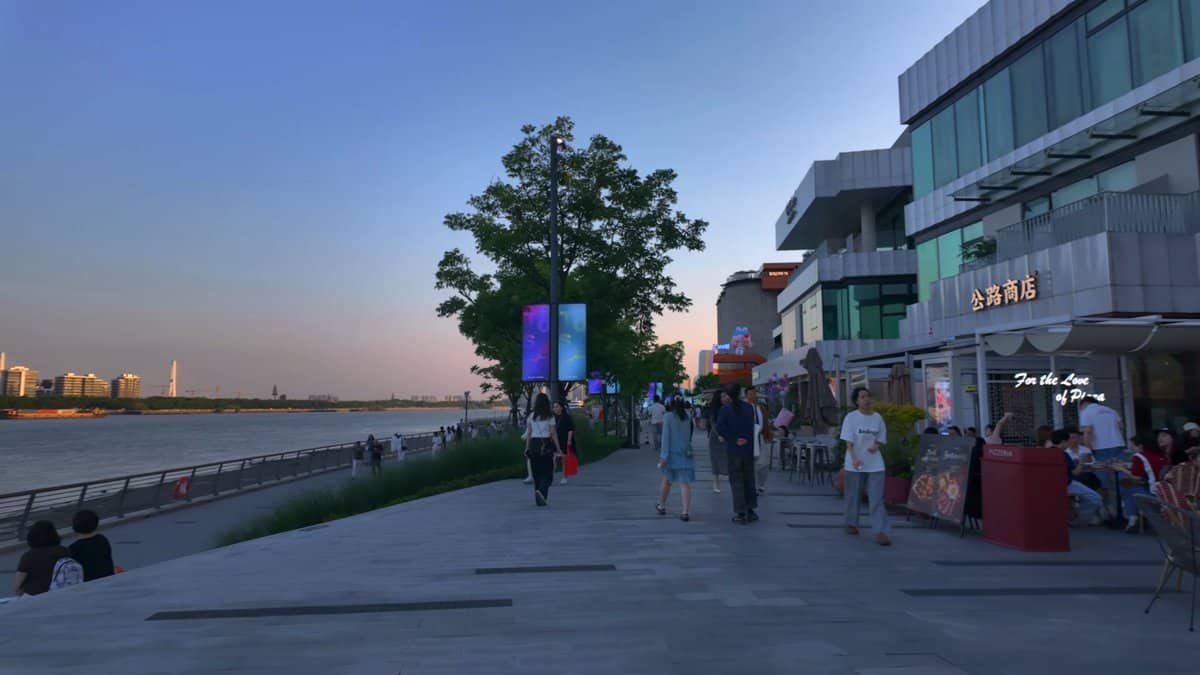
The boardwalk stretch across most of the development, with timber decking winding between plantings and lawns that open up to views over the water. Cyclists thread their way through and late afternoon light bounces off the planks.
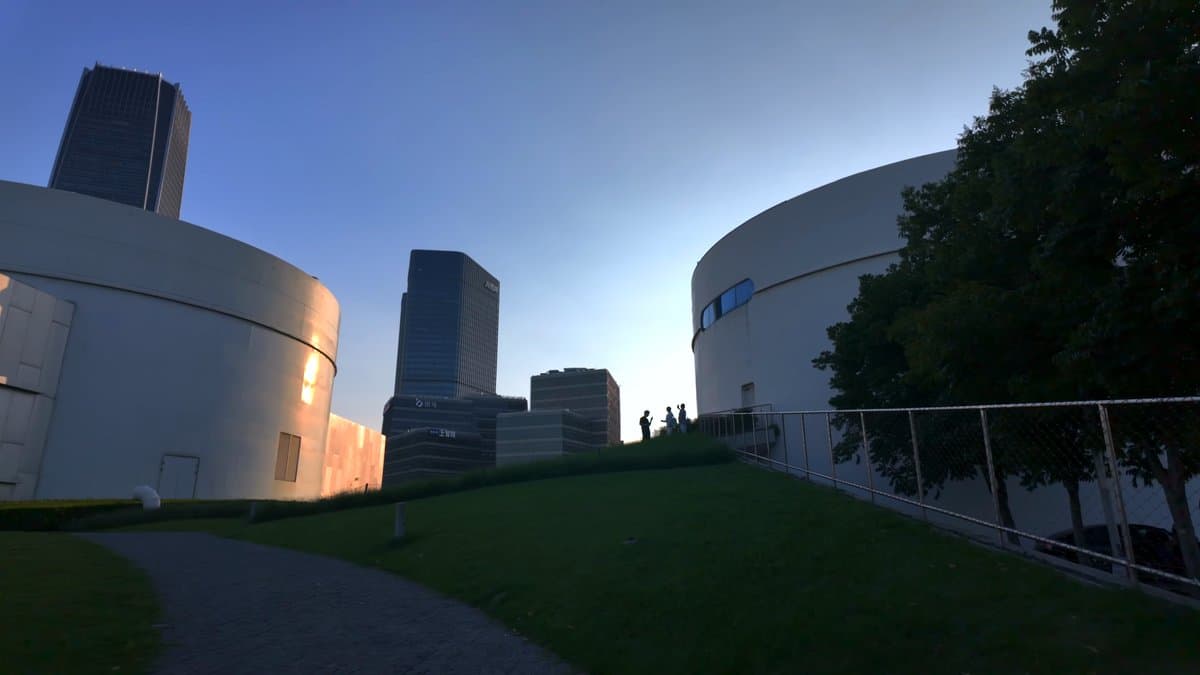
The route is anchored by museums. Each has its own piece of lawn to provide space from the water, and several is set back from it on landscaped plots. From brutalist concrete to curving pavilions, there’s a range of architecture, and if the weather gets bad, you can while away a whole day sifting through their permanent collections.
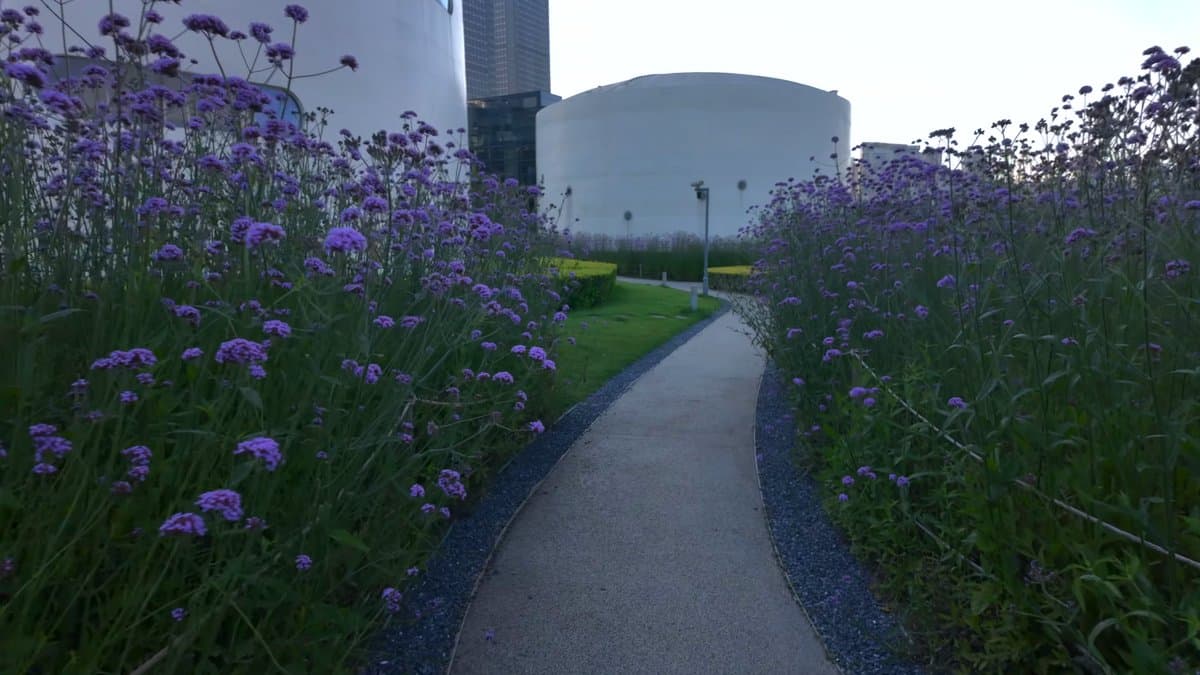
Branching paths lead inward to individual galleries. The buildings tends to be honest about their ambitions, with planting softening the approach. Some venues require advance booking (particularly at the weekend) and charge admission fees.
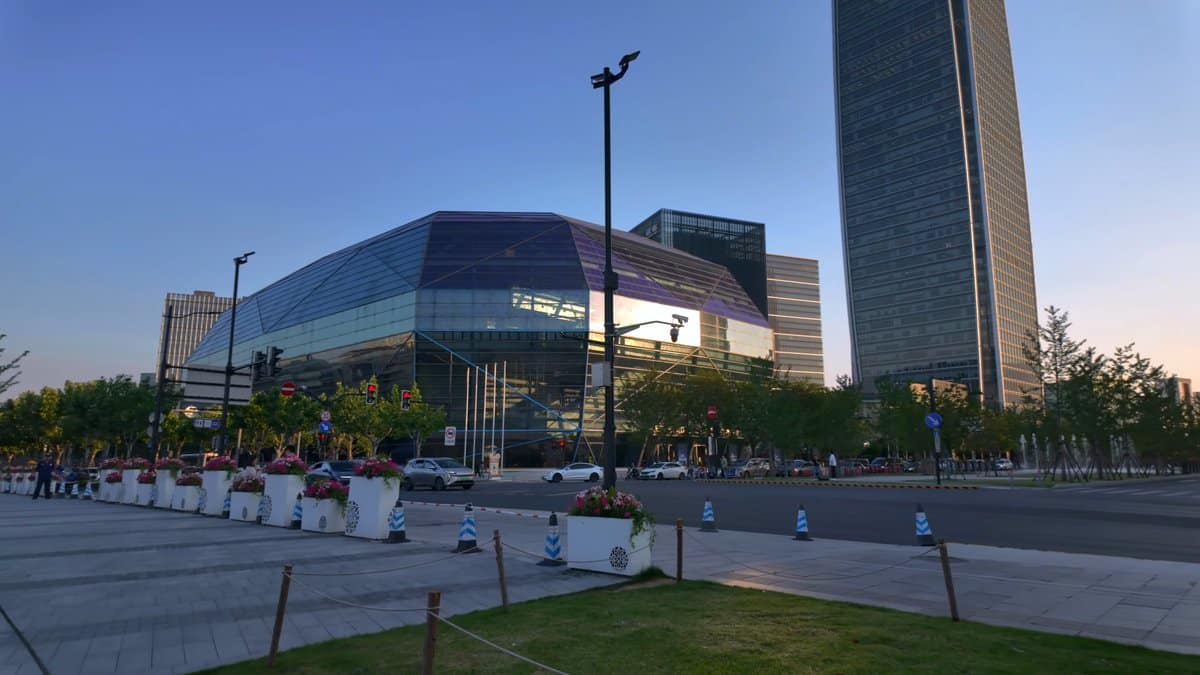
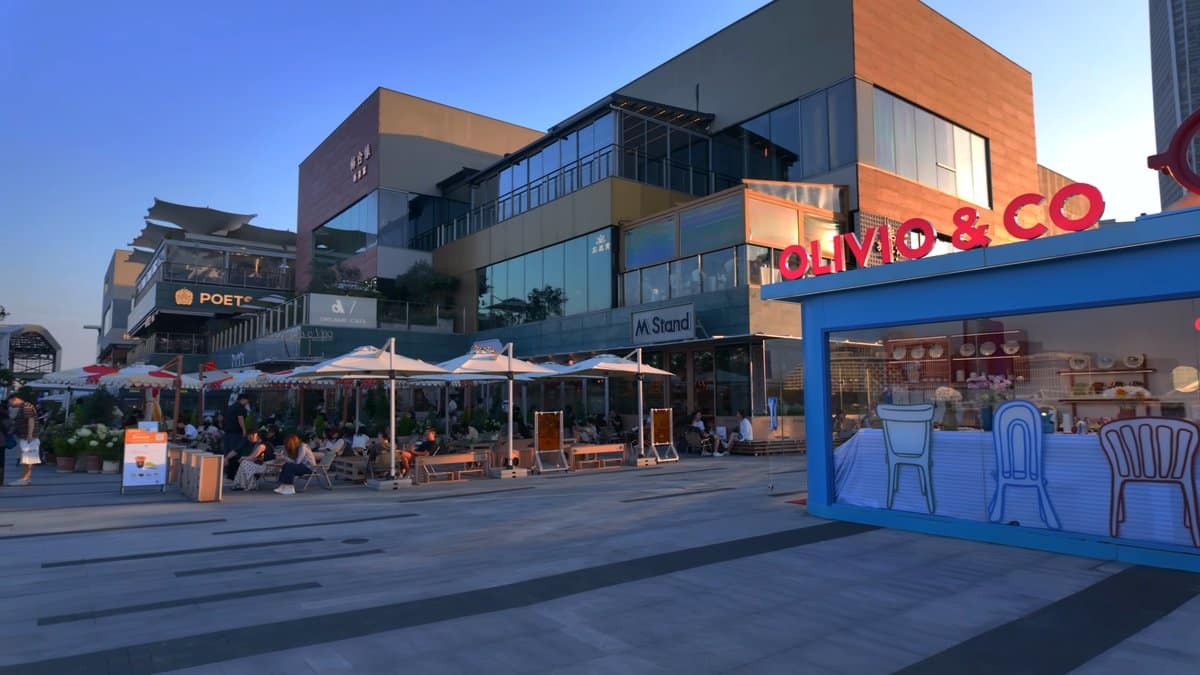
The inland side of the development is marked by office towers and retail terraces behind the waterfront strip and the museums. The office worker come out and the lights go up at dusk. There are no destination restaurant here, dining tends to lean casual and chain; but there’s good coffee and some brewery outlets with outdoor seating.
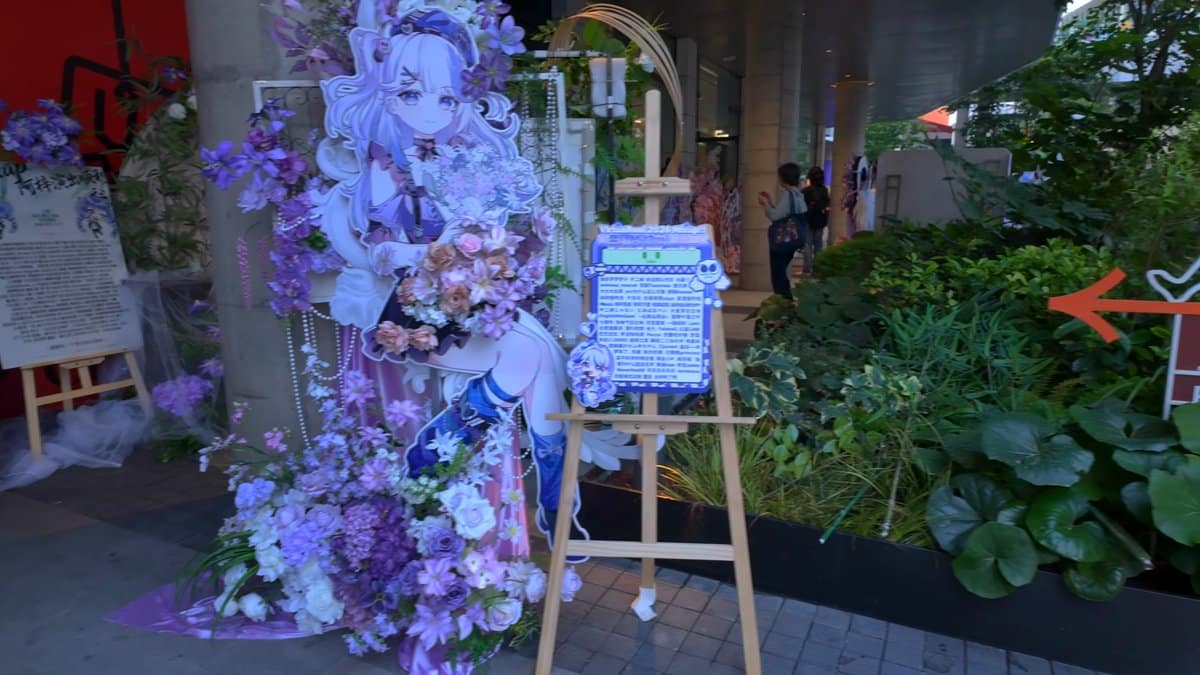
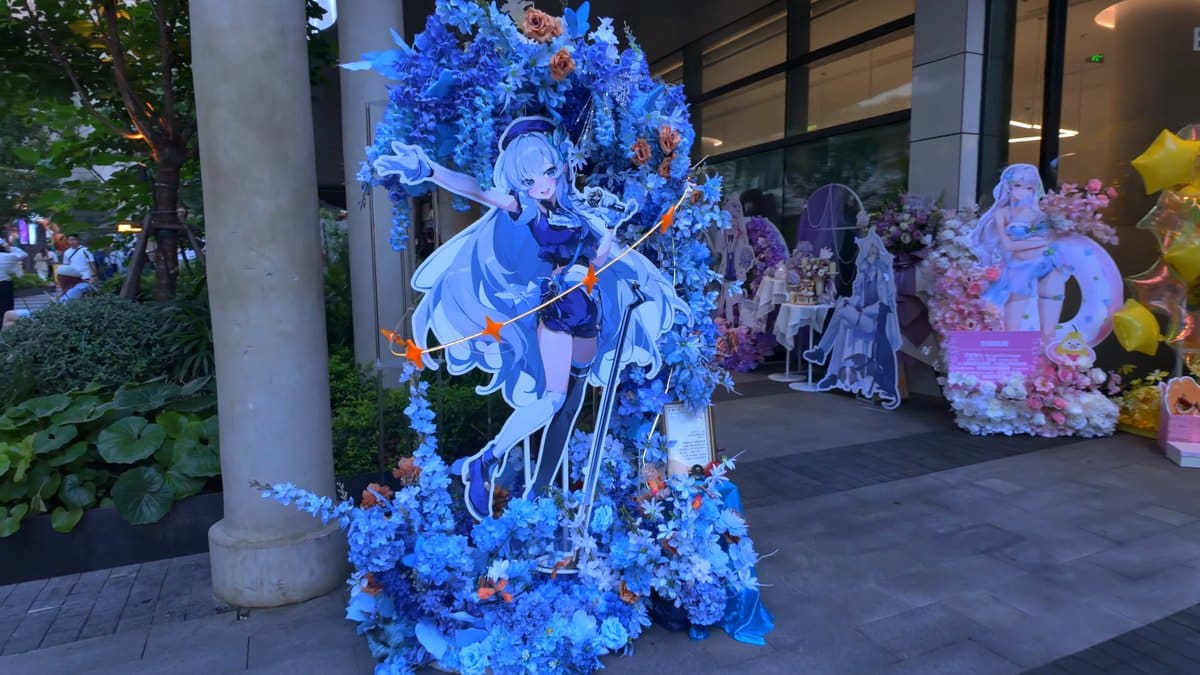
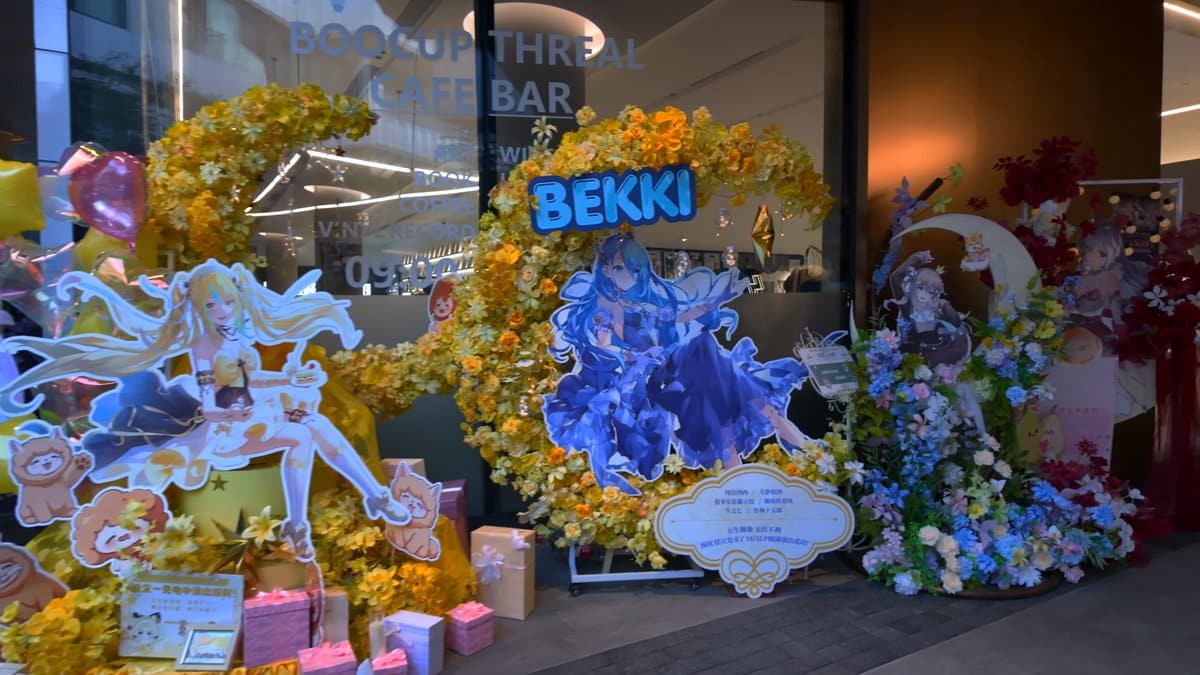
The plazas has seasonal displays, usually tied to public holidays or shopping festivals. , which rotate out every few weeks.
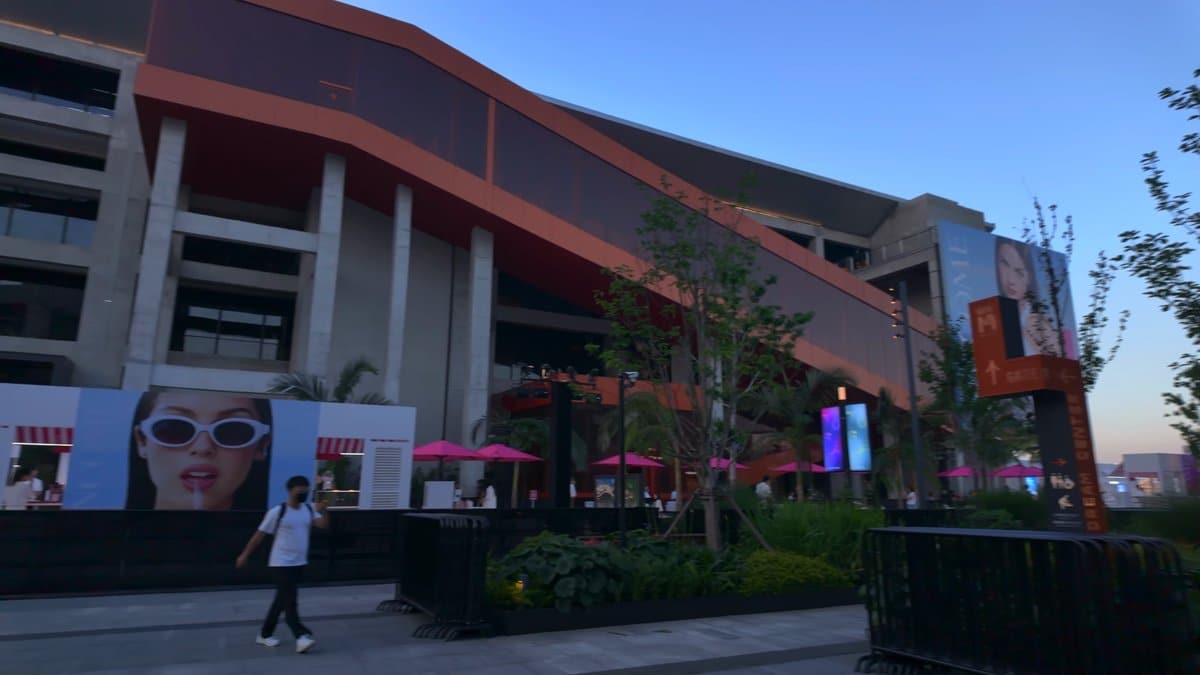
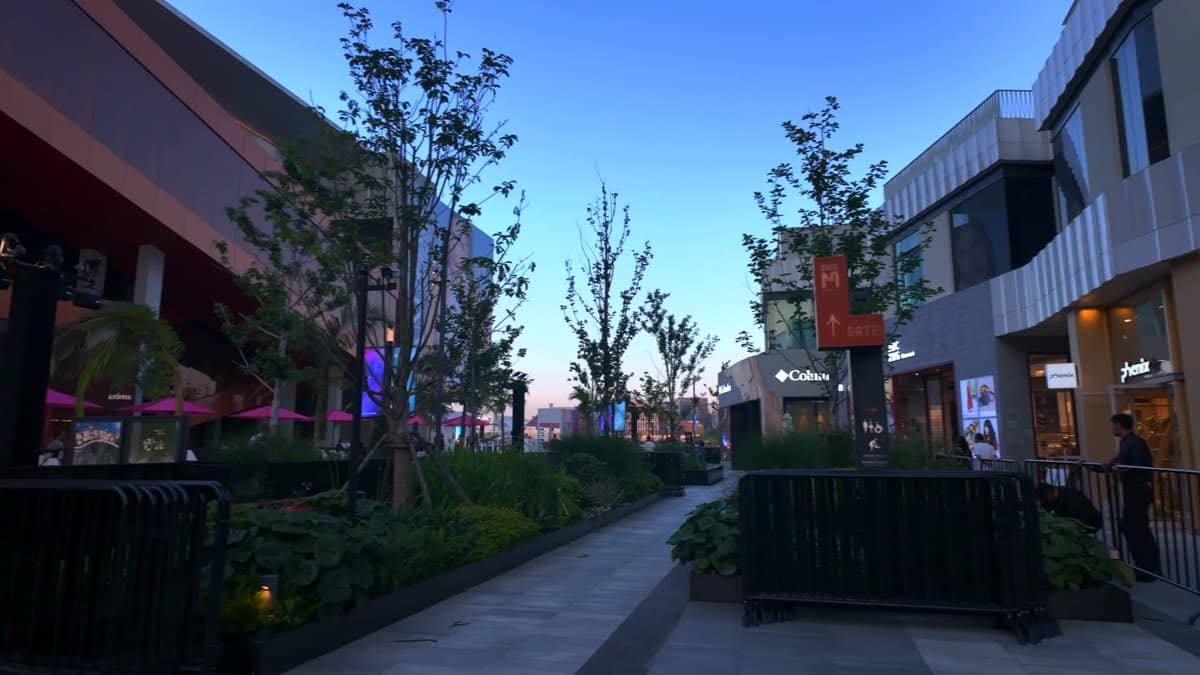
In one section, there’s an open-air retail strip running parallel to the water, with low-rise pavilions housing cafes and boutiques. Evening brings a bit more life to the area, though it rarely feels crowded. Weekday afternoons can be quite quiet.
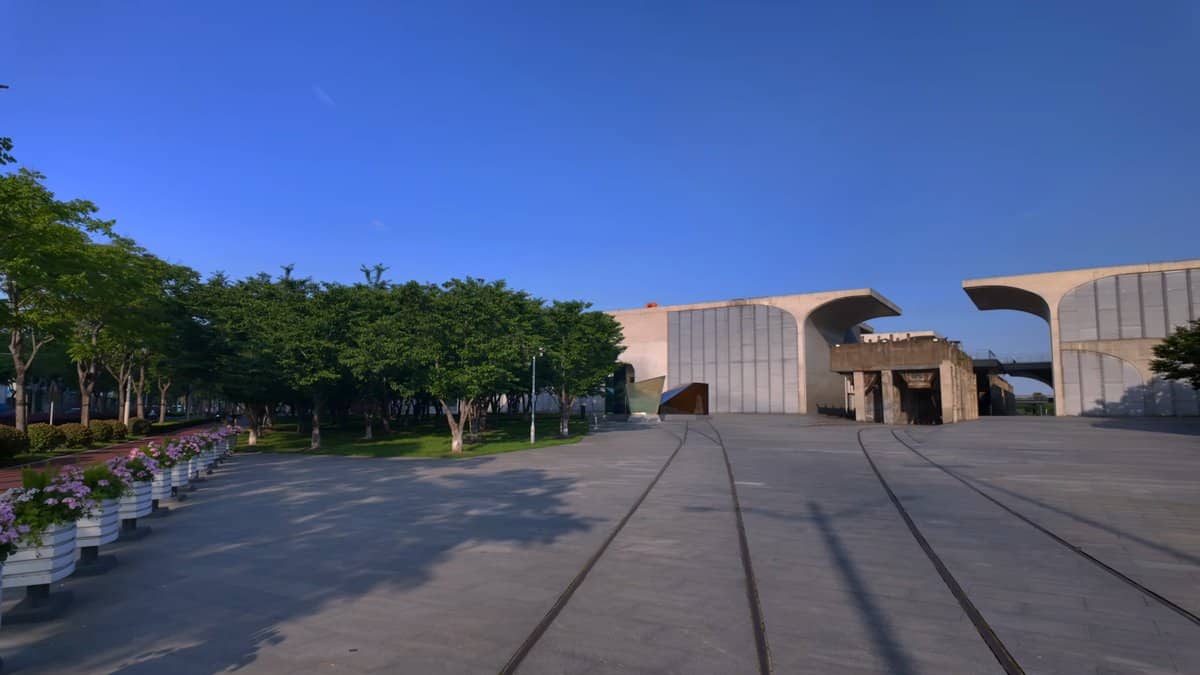
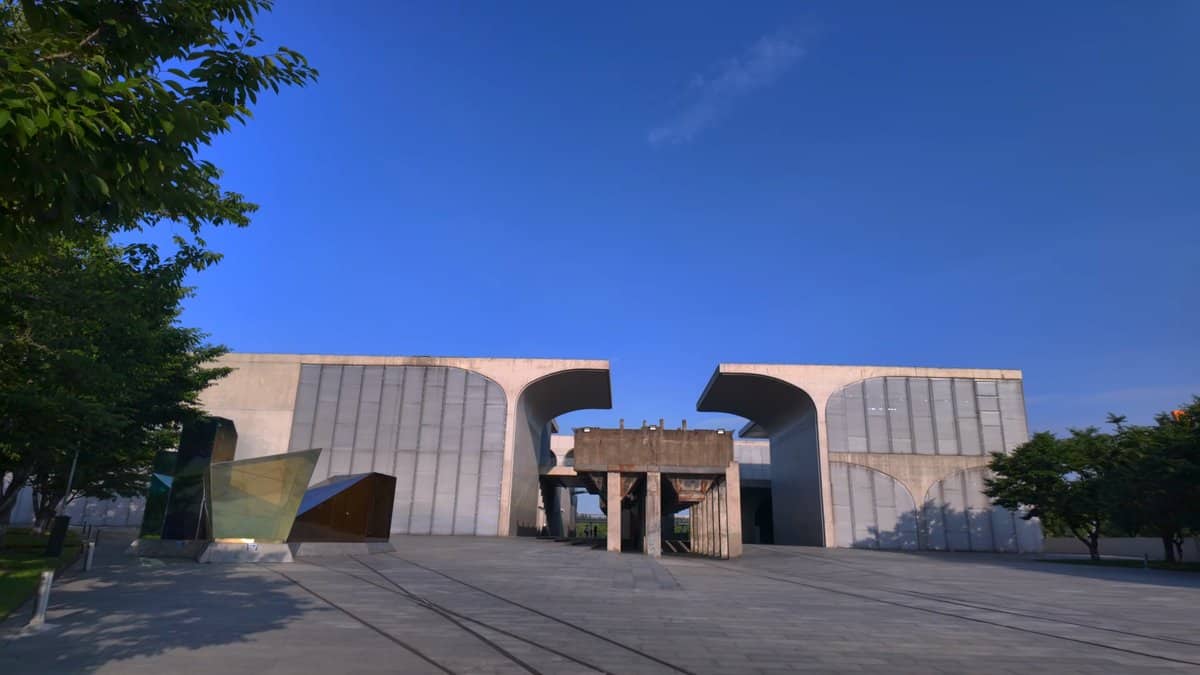
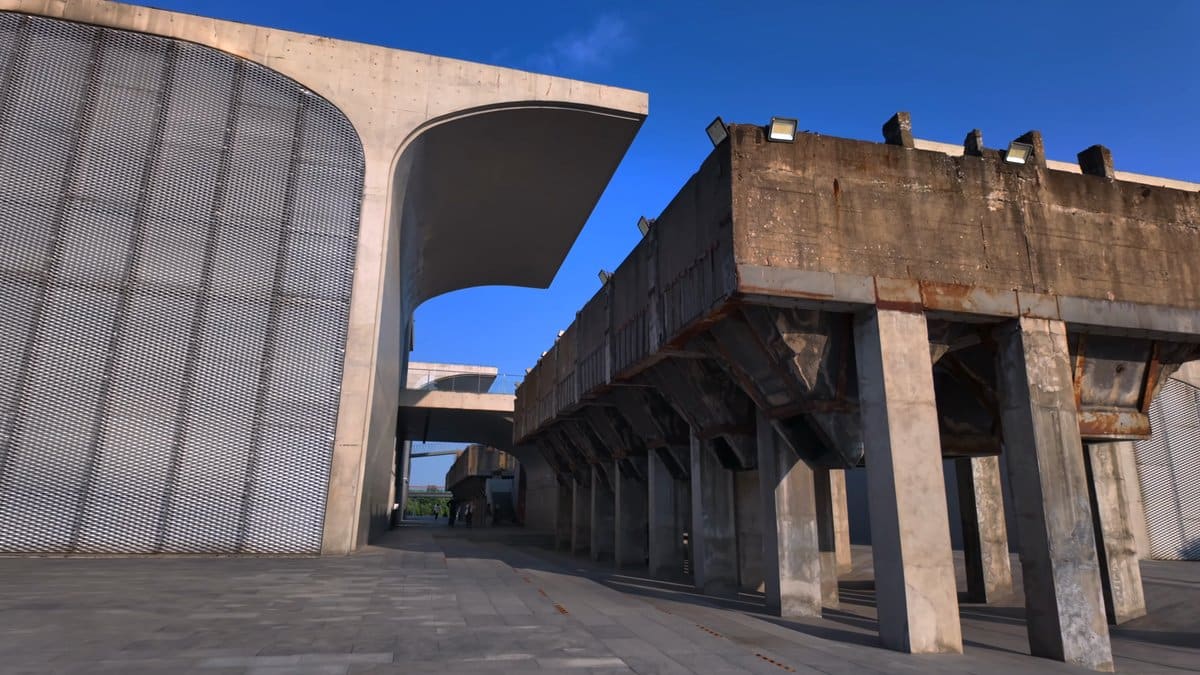
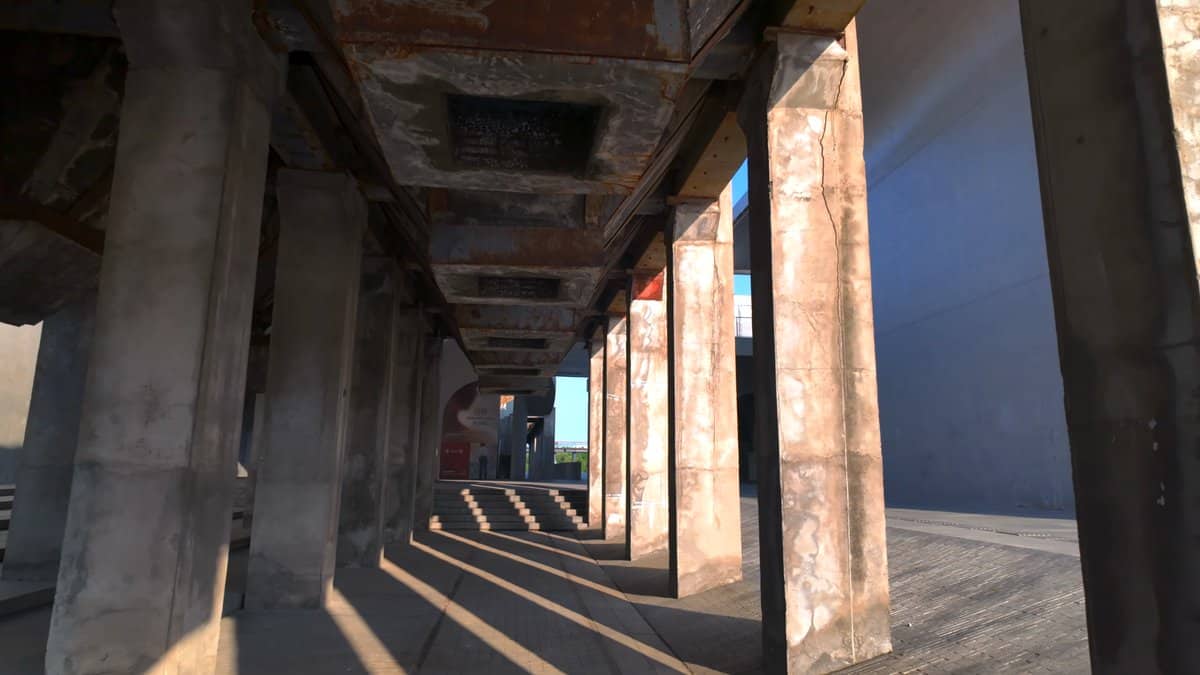
You can still see the industrial bones of it all. Parts of the original rail and elevated hoppers was left in place as part of the art museum’s campus.
Now rusted-steel bridges and concrete vaults enclose contemporary art. There is no effort to smooth over the past; it’s a blunt layering of old and new.
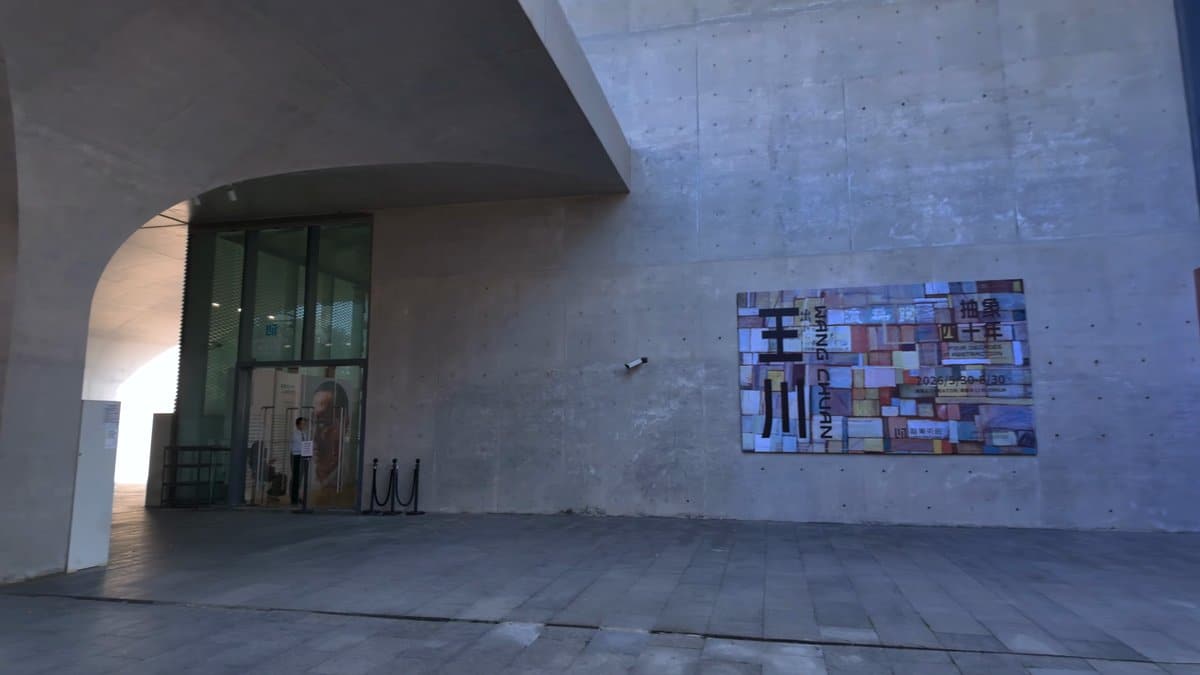
Sometimes exhibitions spill outside, individual pieces placed along the preserved rail lines or against bare concrete.
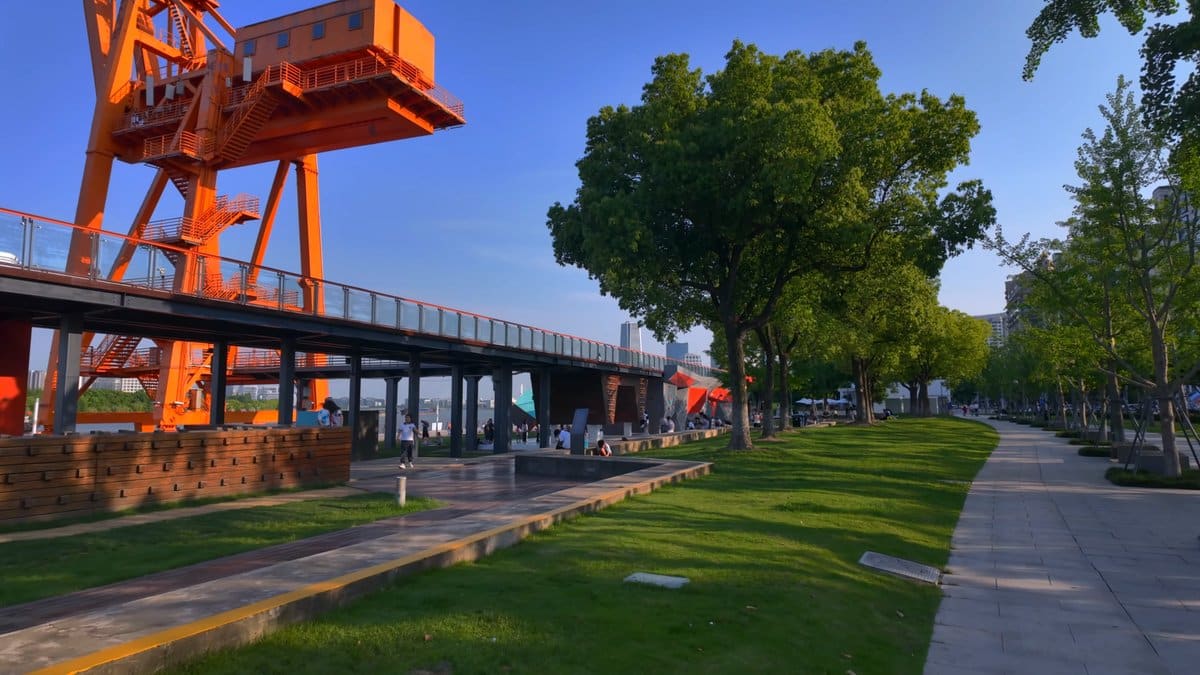
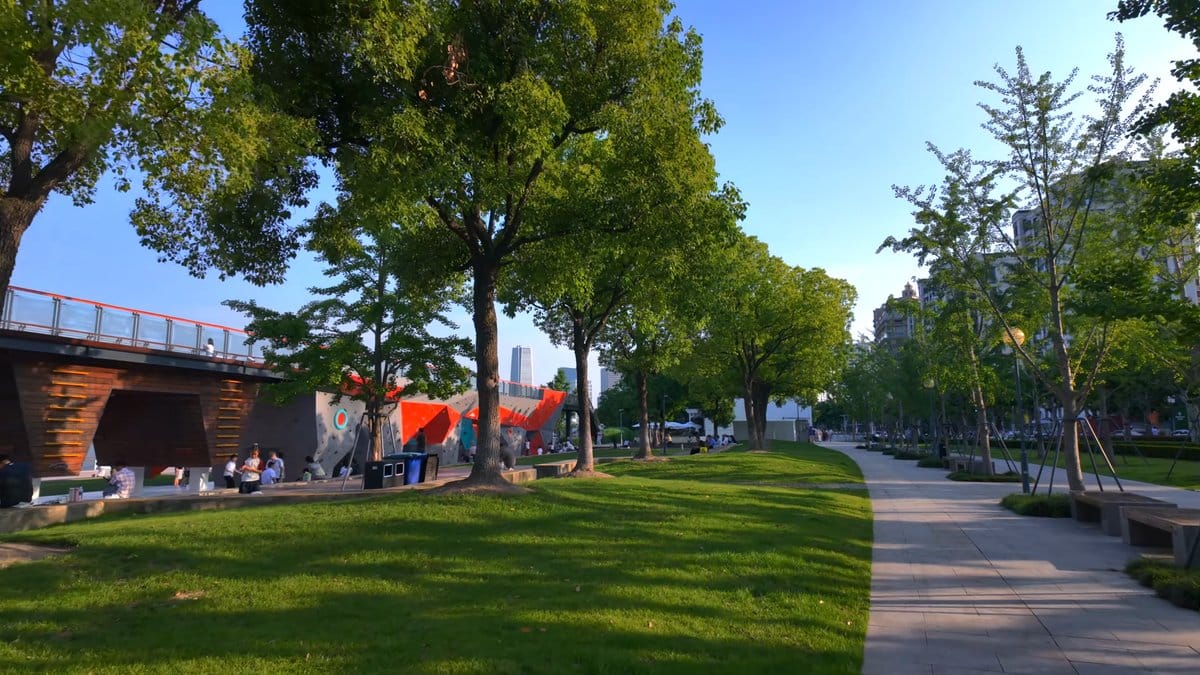
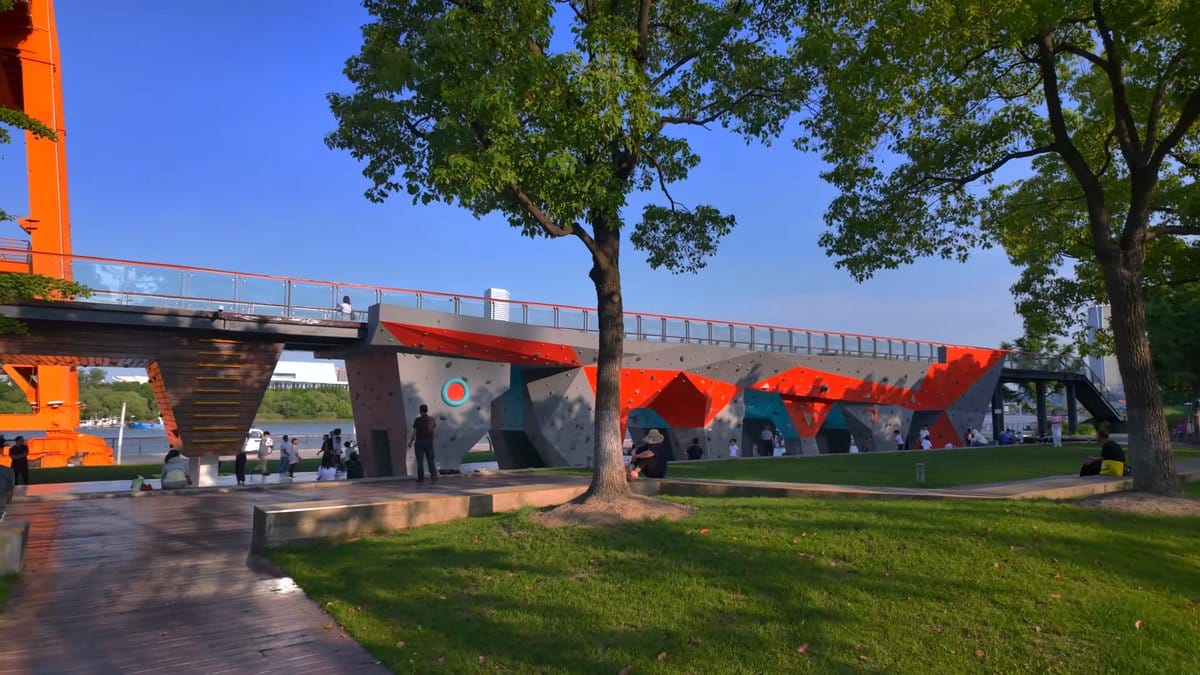
One of its bigger lawns features a preserved gantry crane, which has been stabilised and painted, but otherwise left standing. Now it’s the most recognisable landmark along the strip. On weekends, runners and families take to the lawn; picnic tables and parasols gather under the crane.
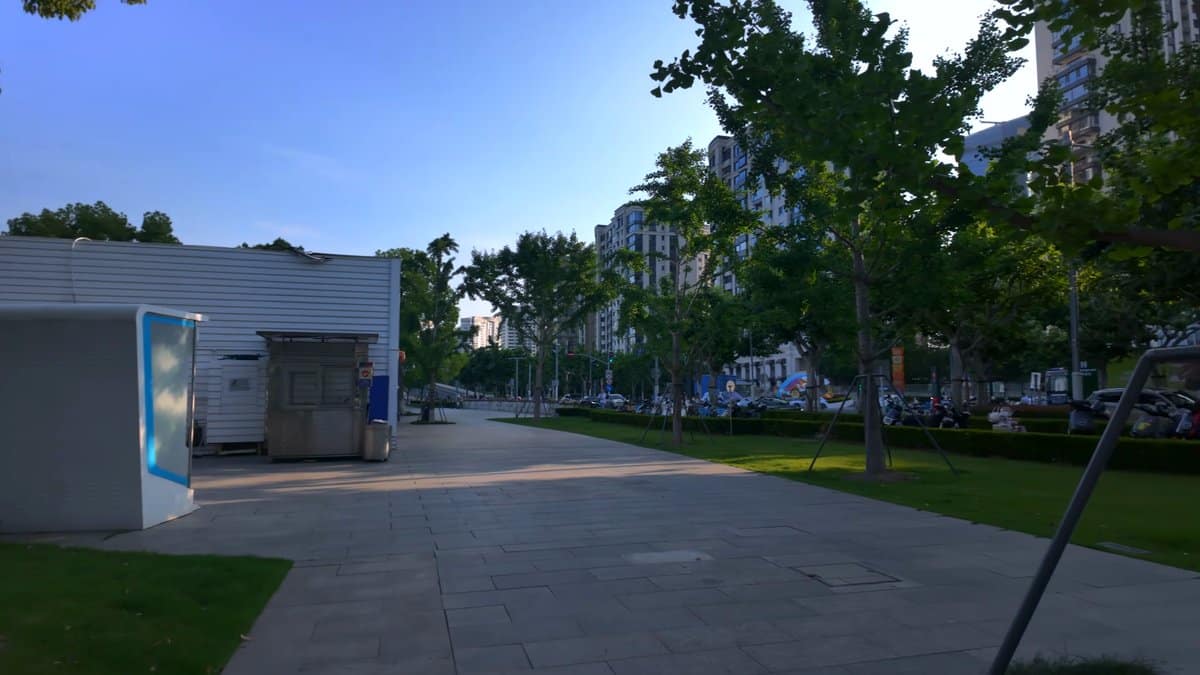
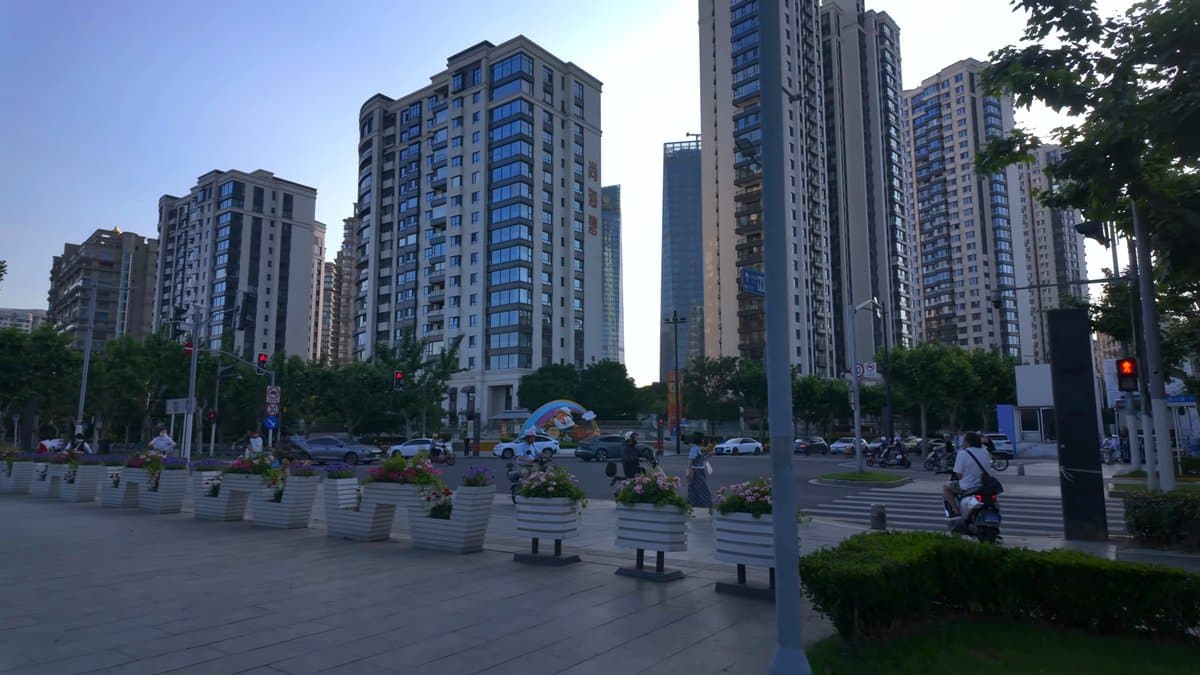
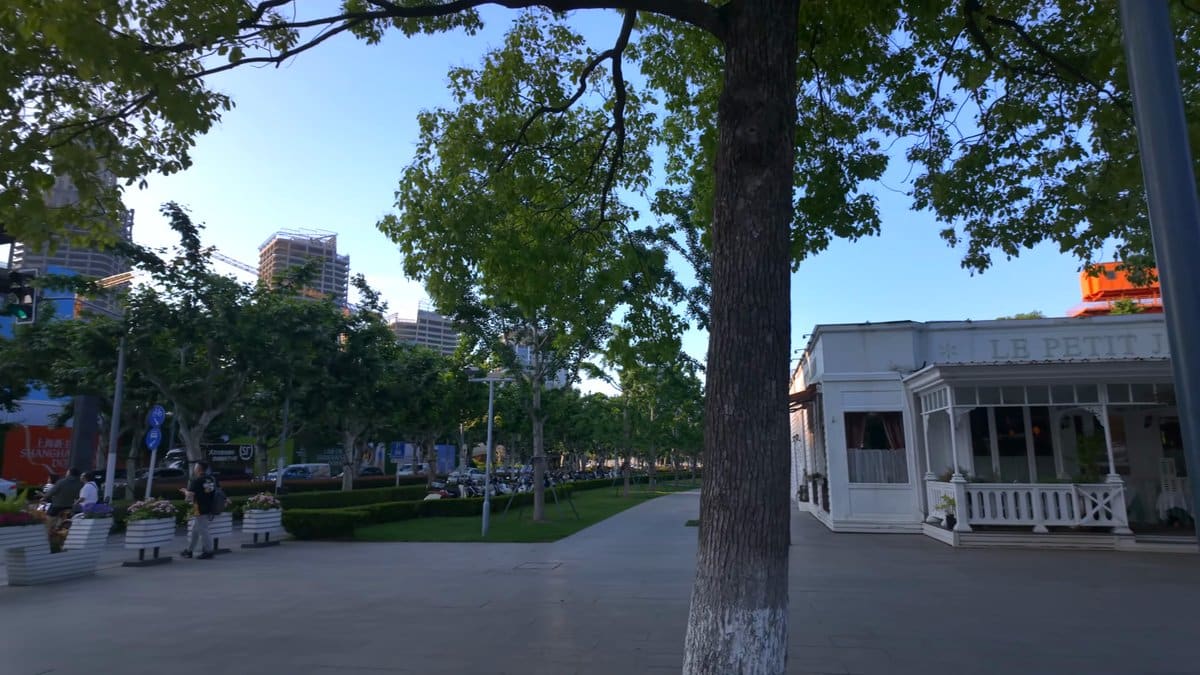
Pop-up events and markets is held here too. The green expanses is broken by paved plazas. And beyond them stand residential towers, a reminder that the West Bund isn’t only a cultural zone anymore, but also a neighbourhood.
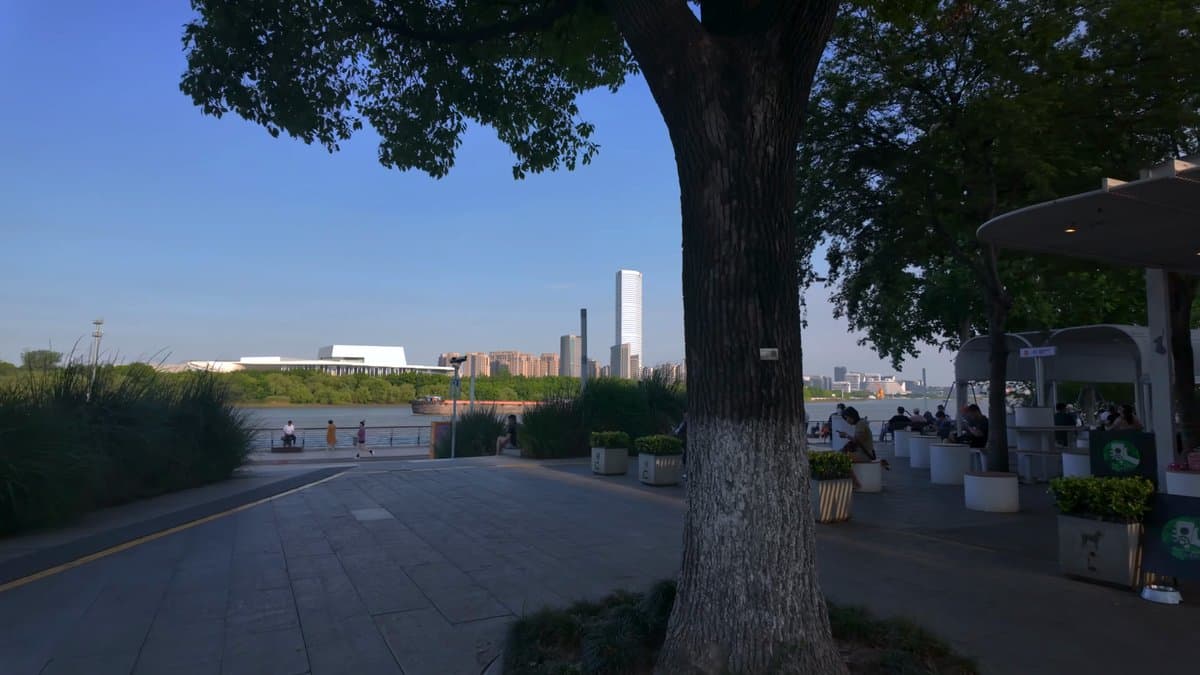
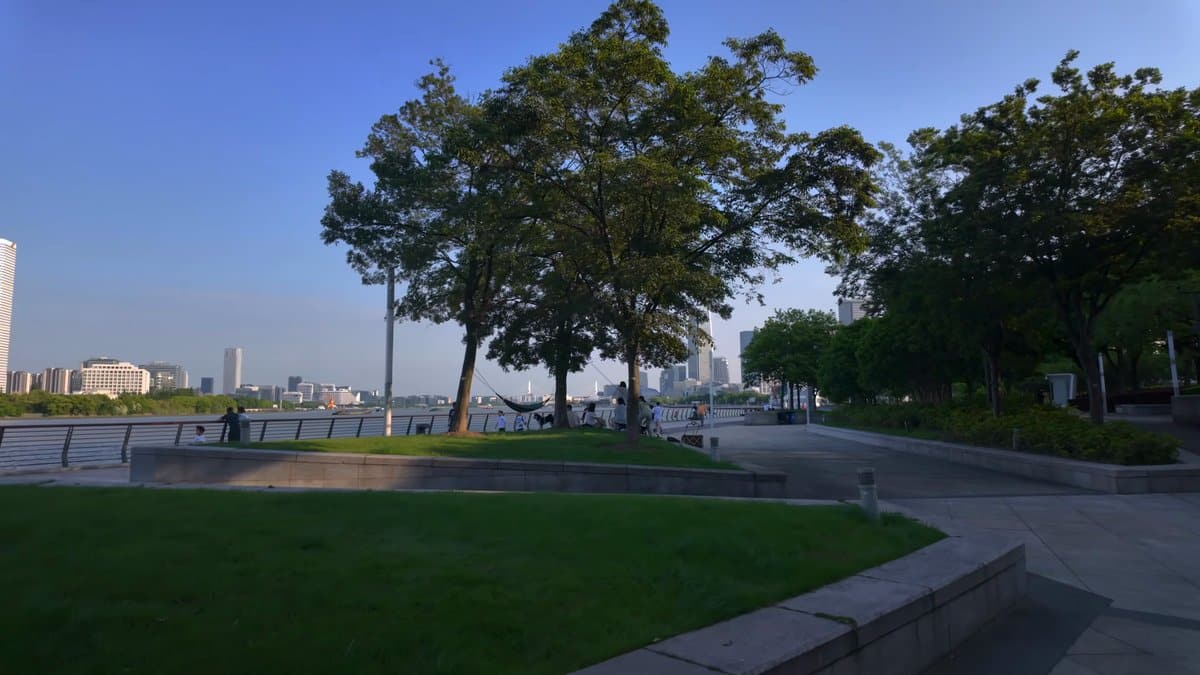
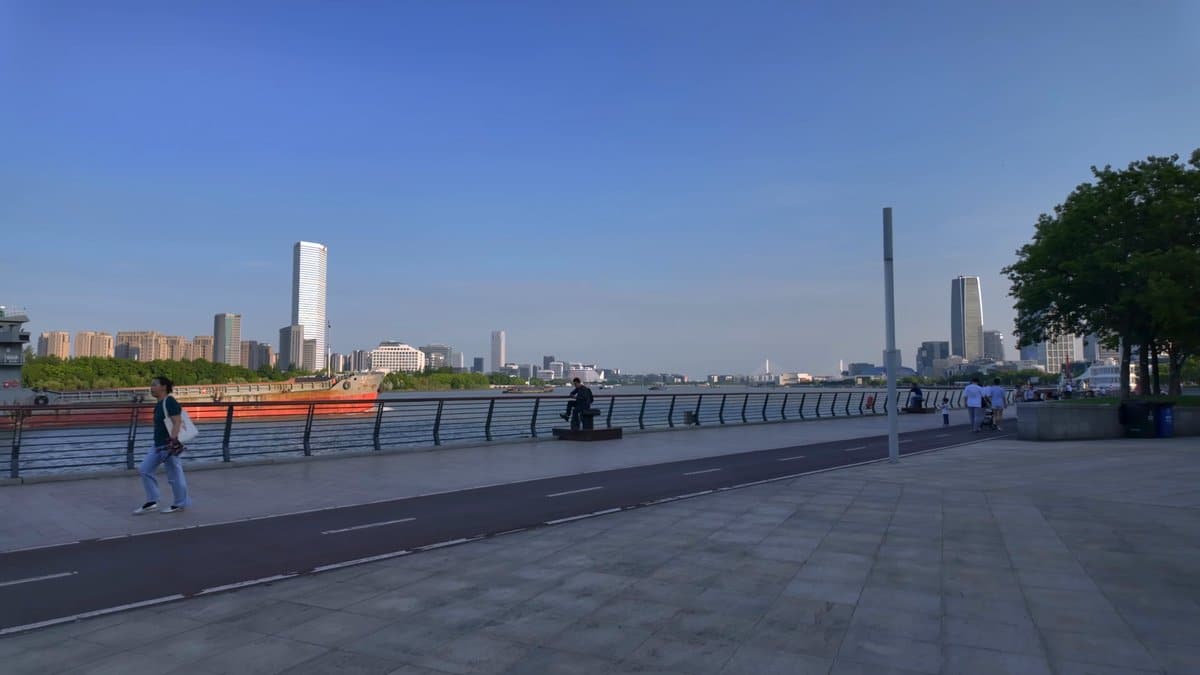
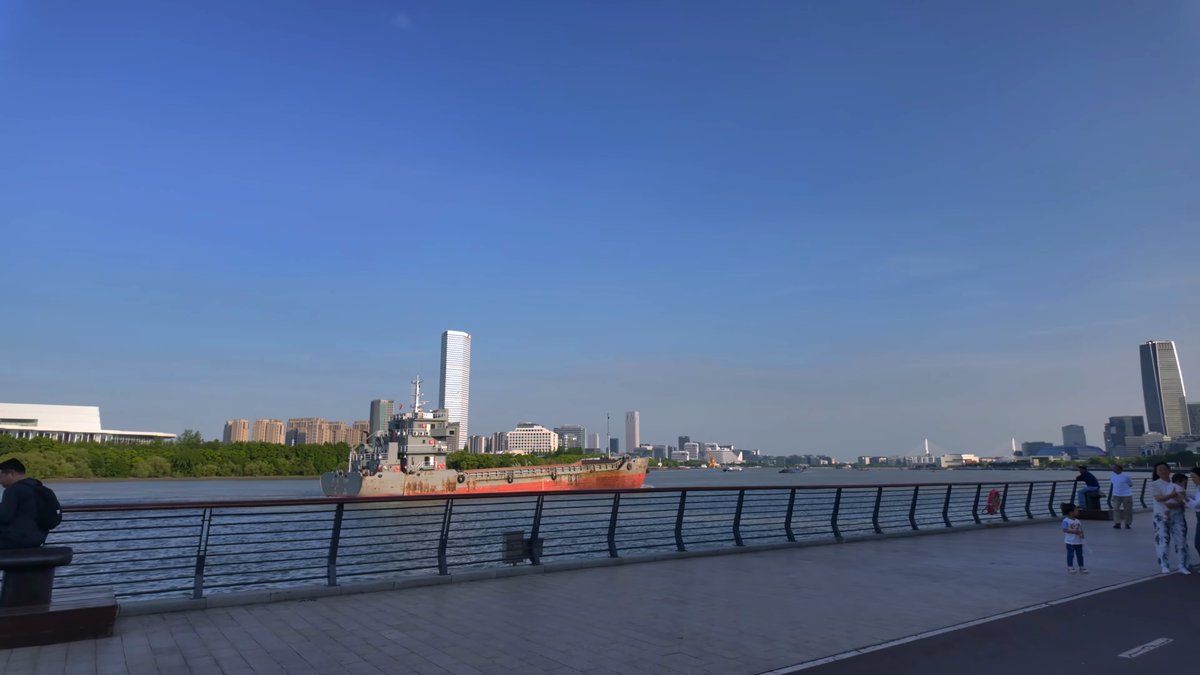
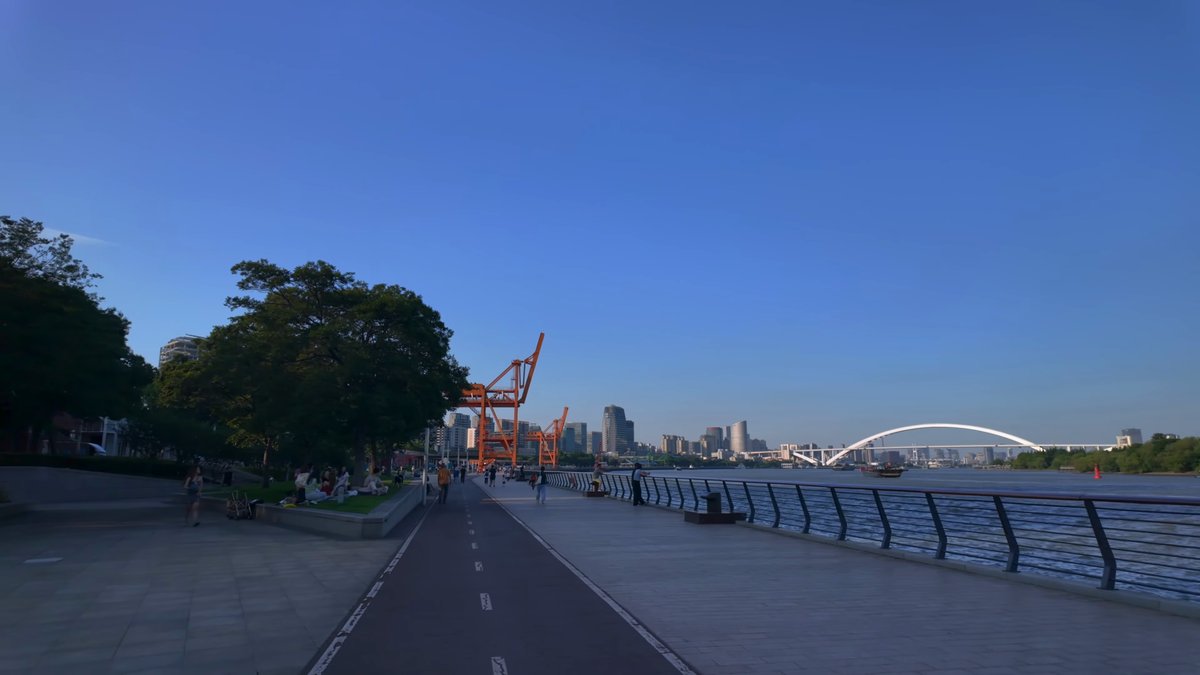
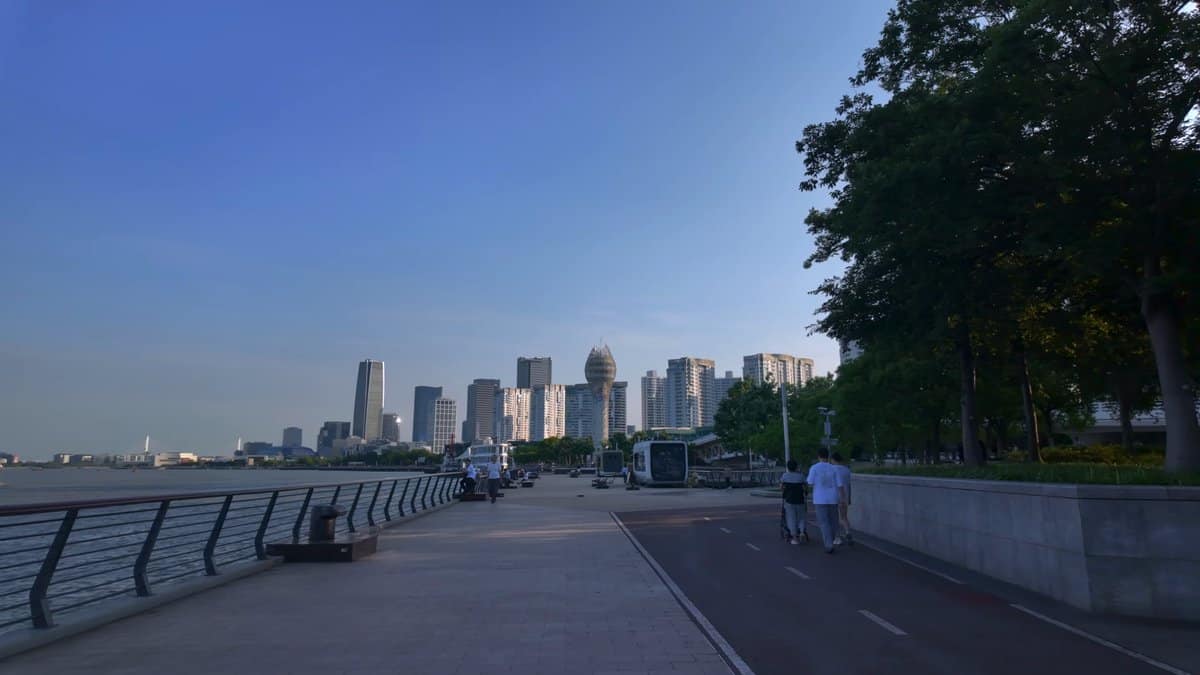
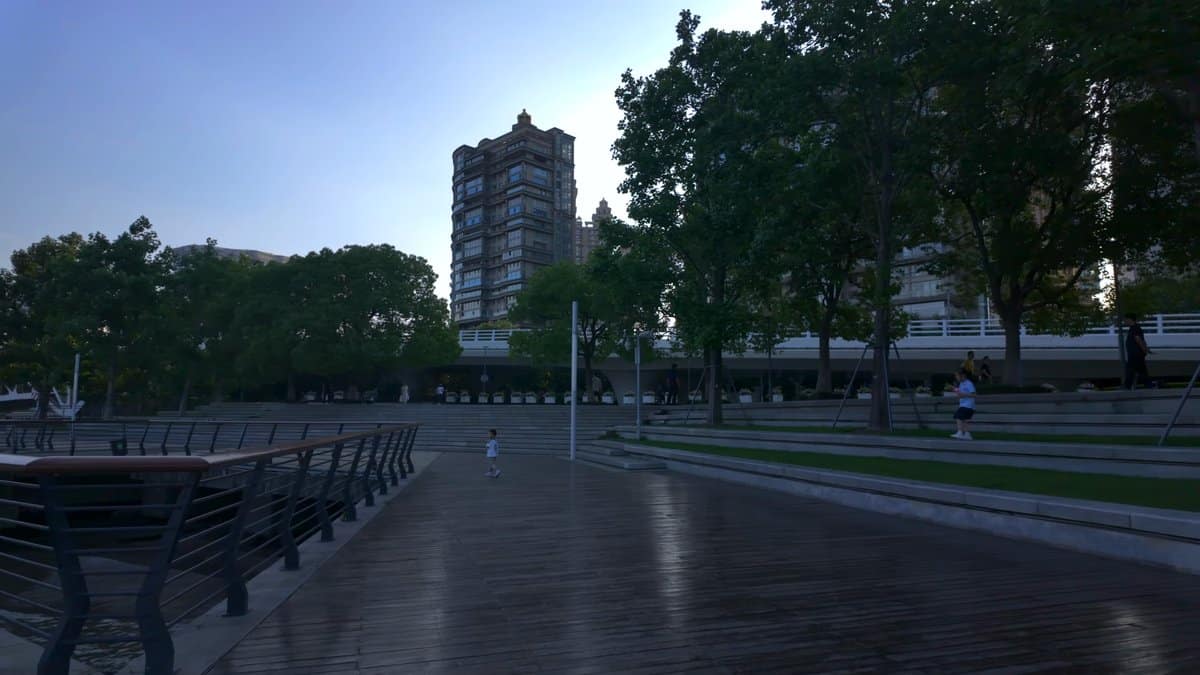
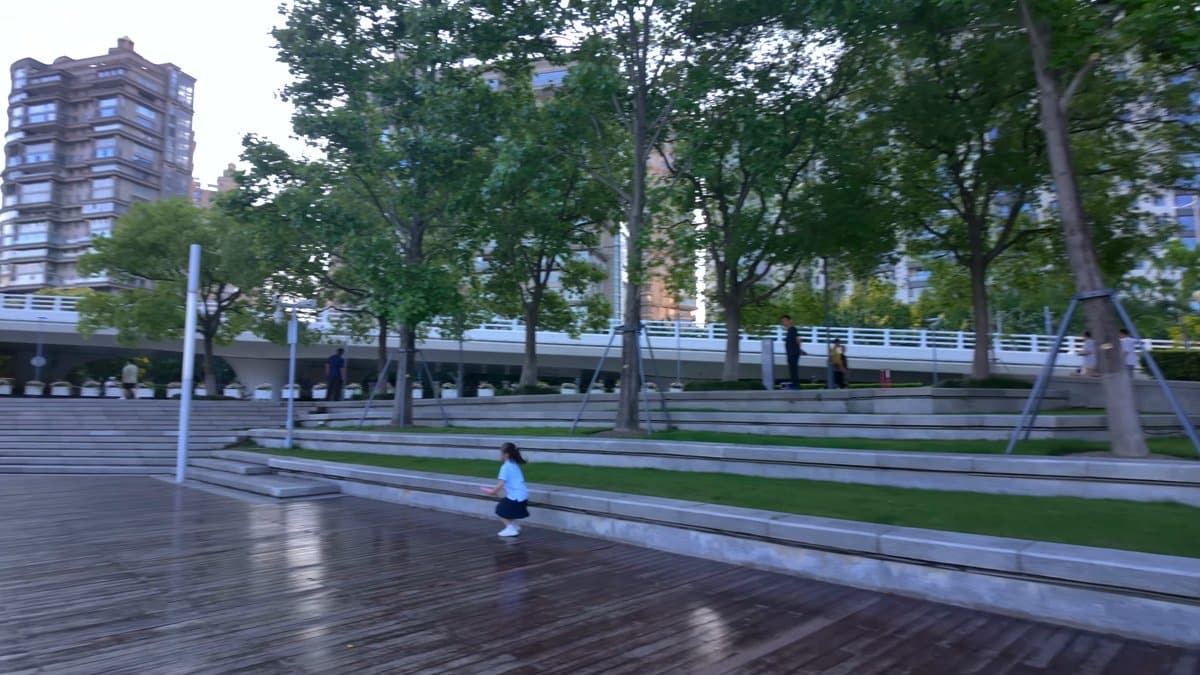
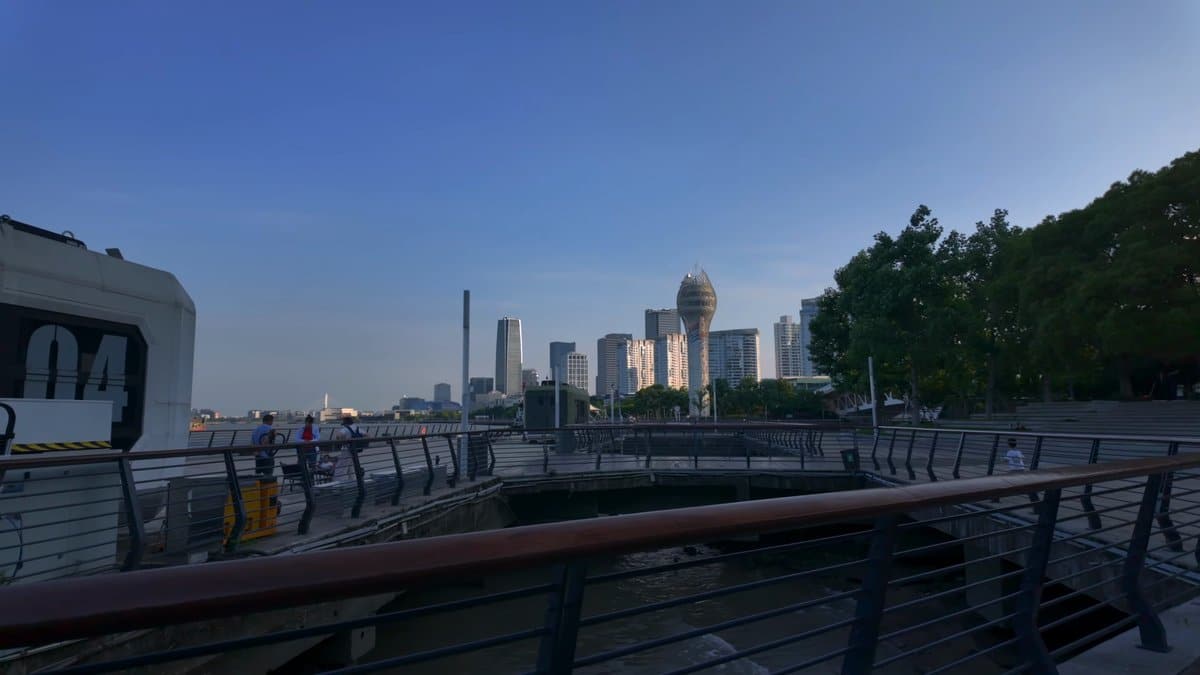
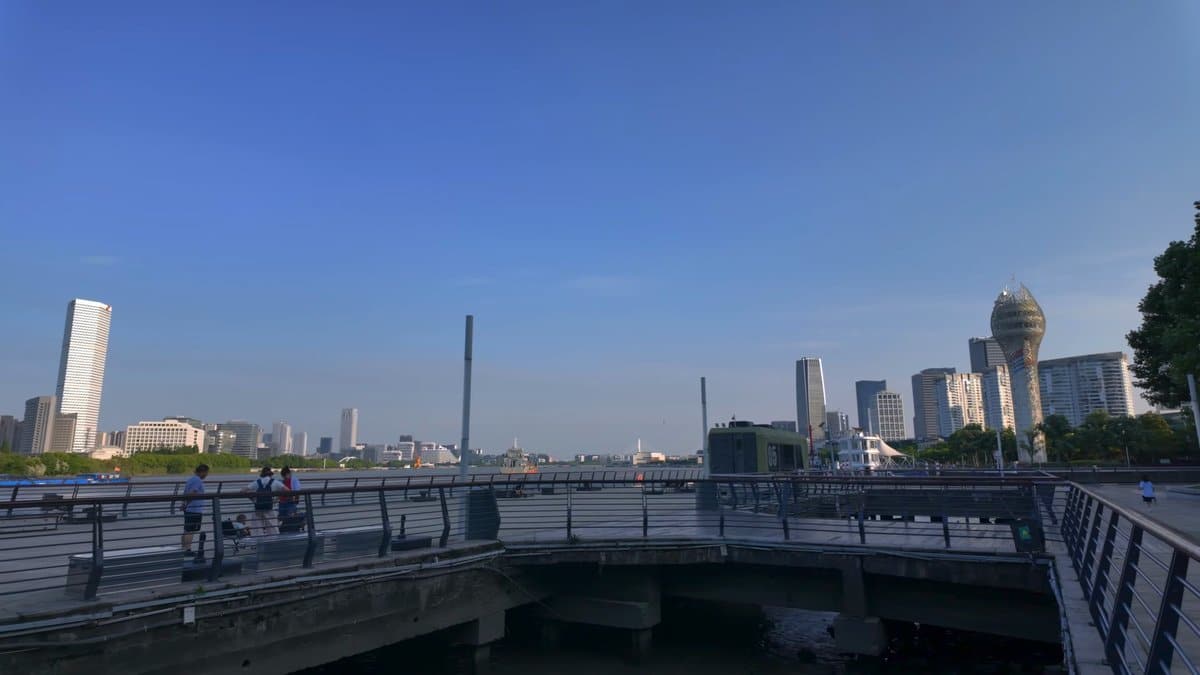
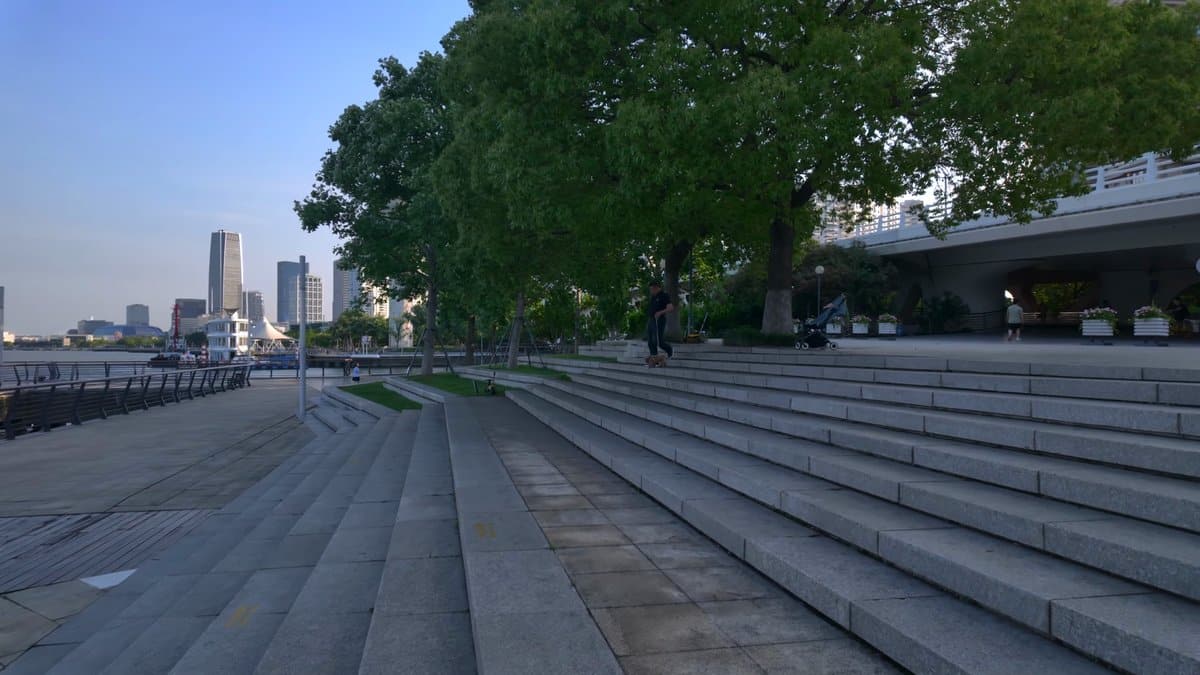
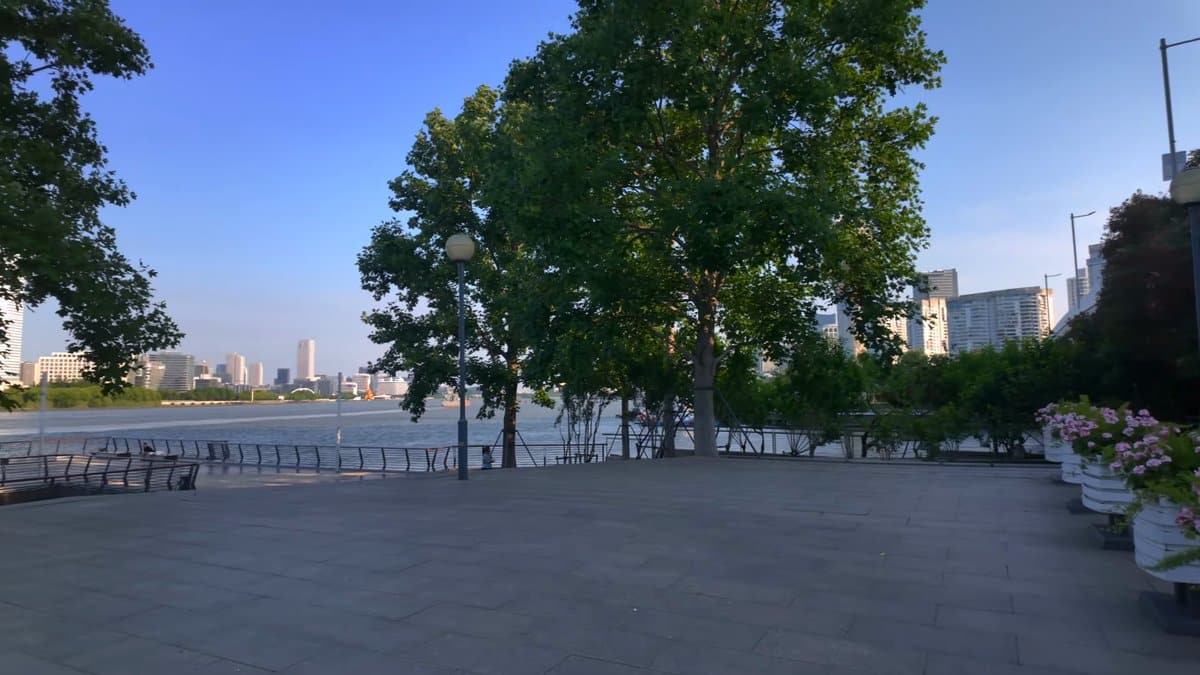
But the waterfront itself has more variety than you’d think, along with shade and seating. There are wide decked areas and jetties looking out over the water. There are spots where it drops away in stepped terraces.
There are places where it just fades into grass. People walk, skaters and cyclists use it too, and it all feels really public, not policed. Every so often benches face out onto the water, and you can sit here awhile without someone telling you to move along.
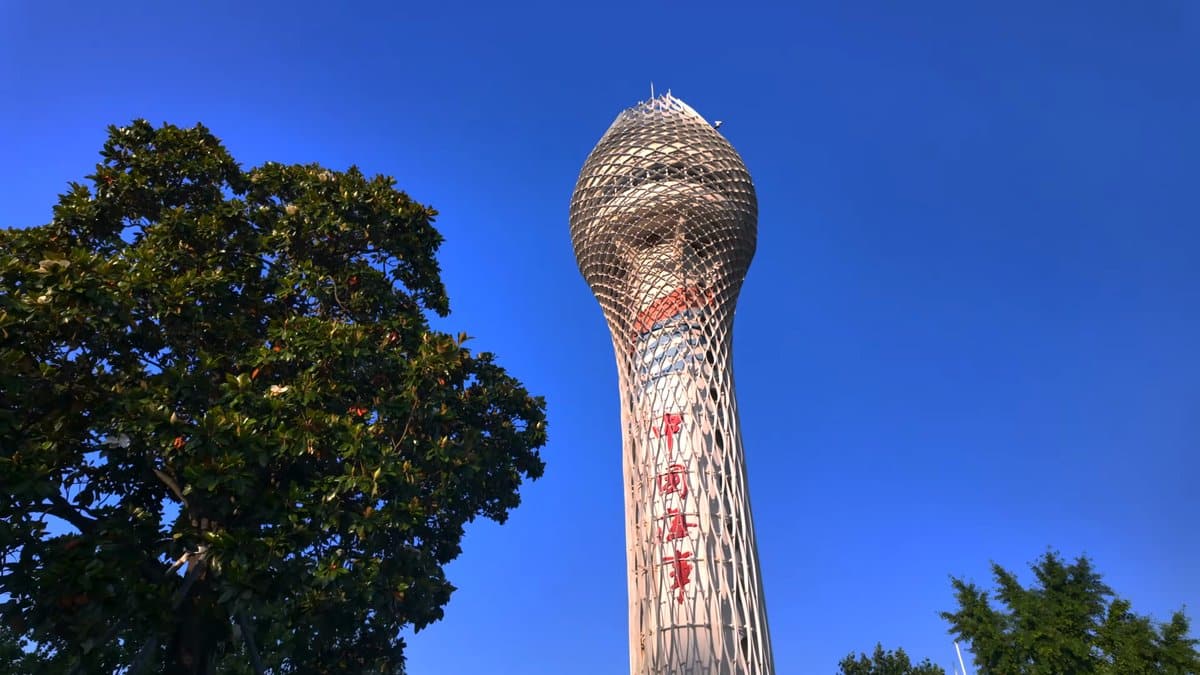
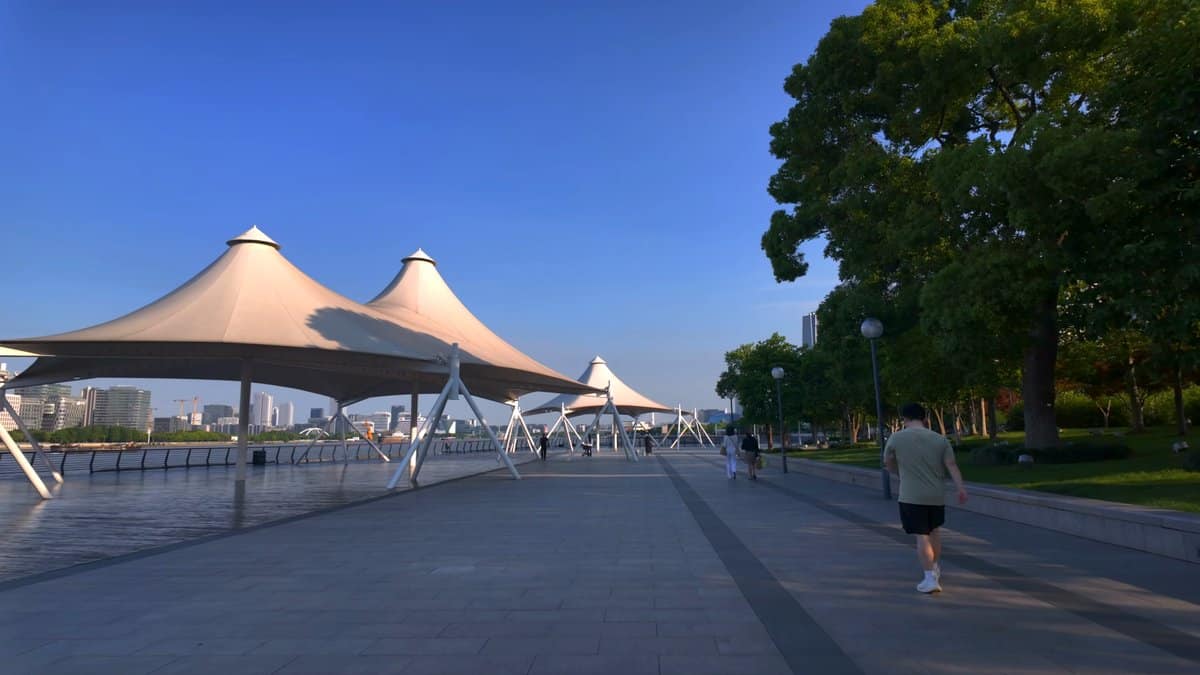
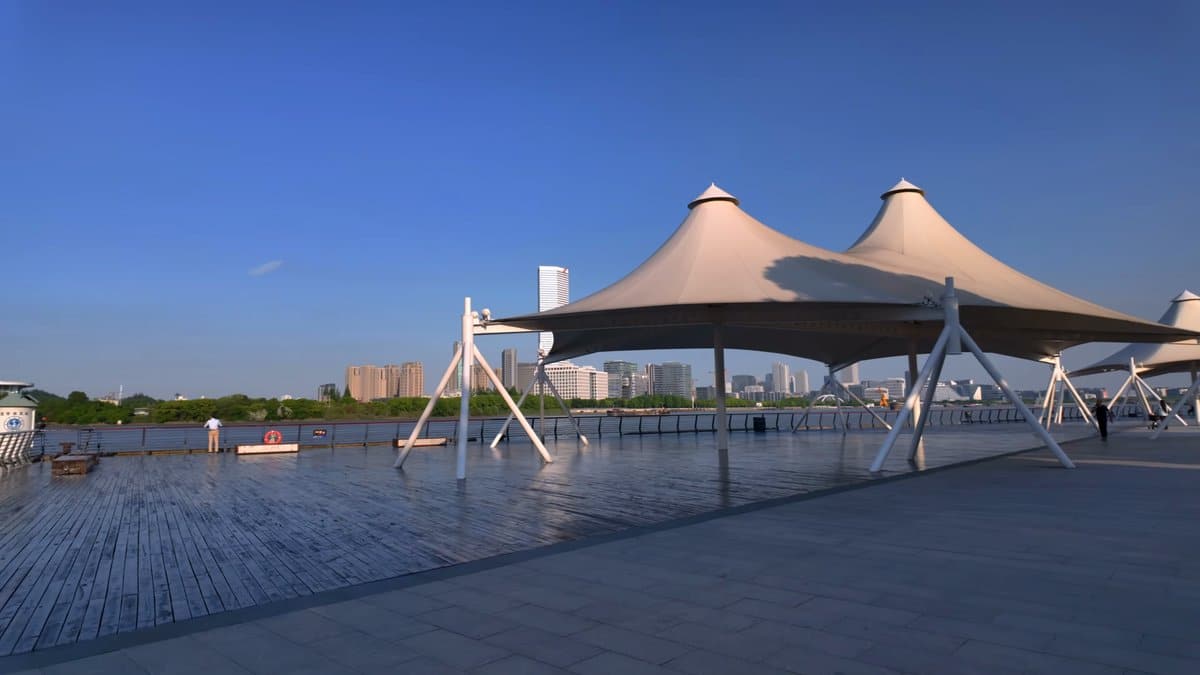
Along some stretches, canopy structures pop up, offering shade in the summer months in the form of steel latticework or stretched fabric. While design standards are high, some of these installations feel a little showy for an otherwise simple riverside pathway.
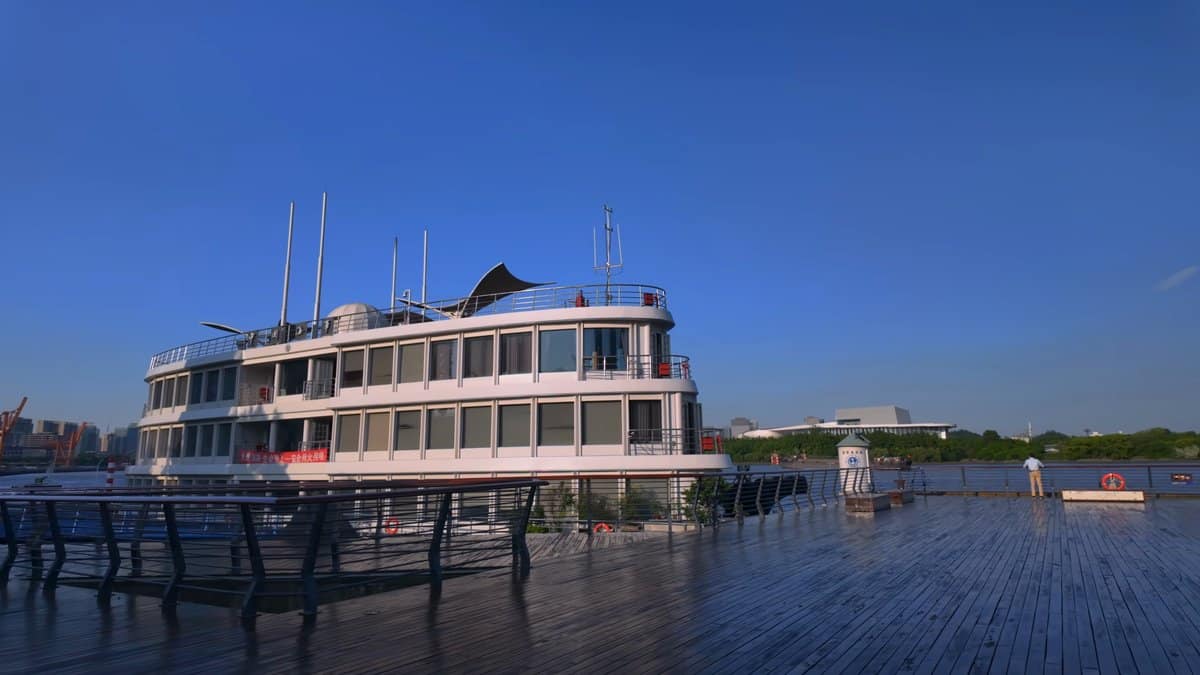
One pier features a converted boat moored here that has been turned into either a cafe or a venue, depending on the season. Whether anything is open when you visit will determine what you can access.
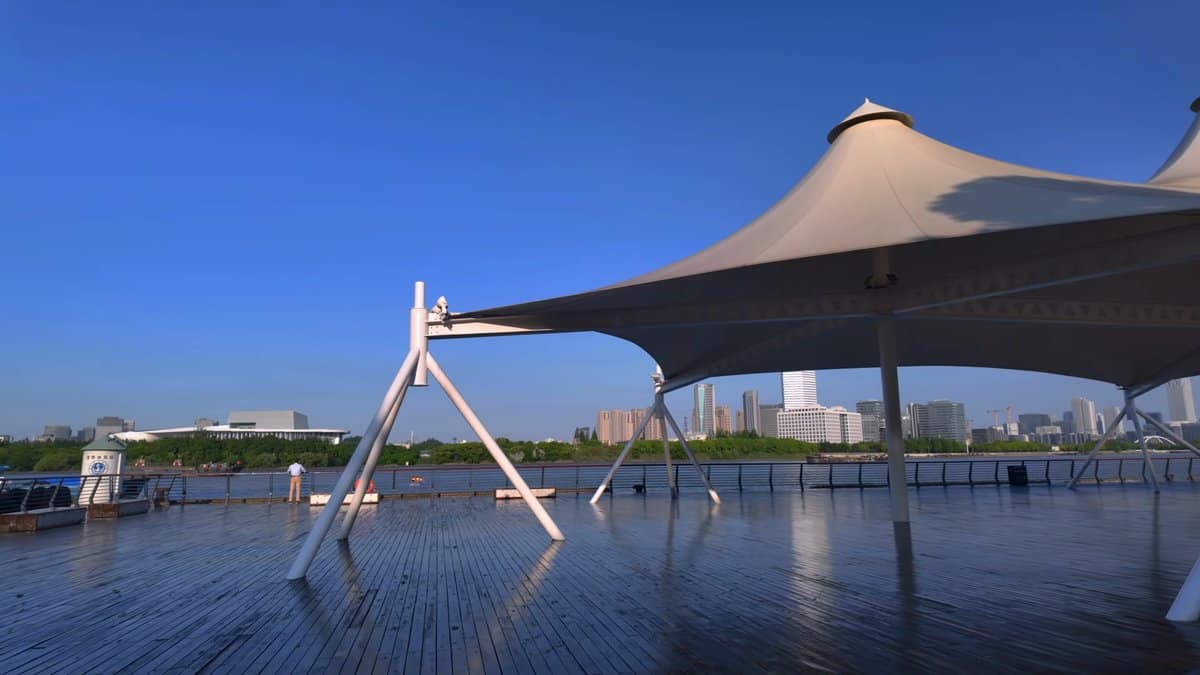
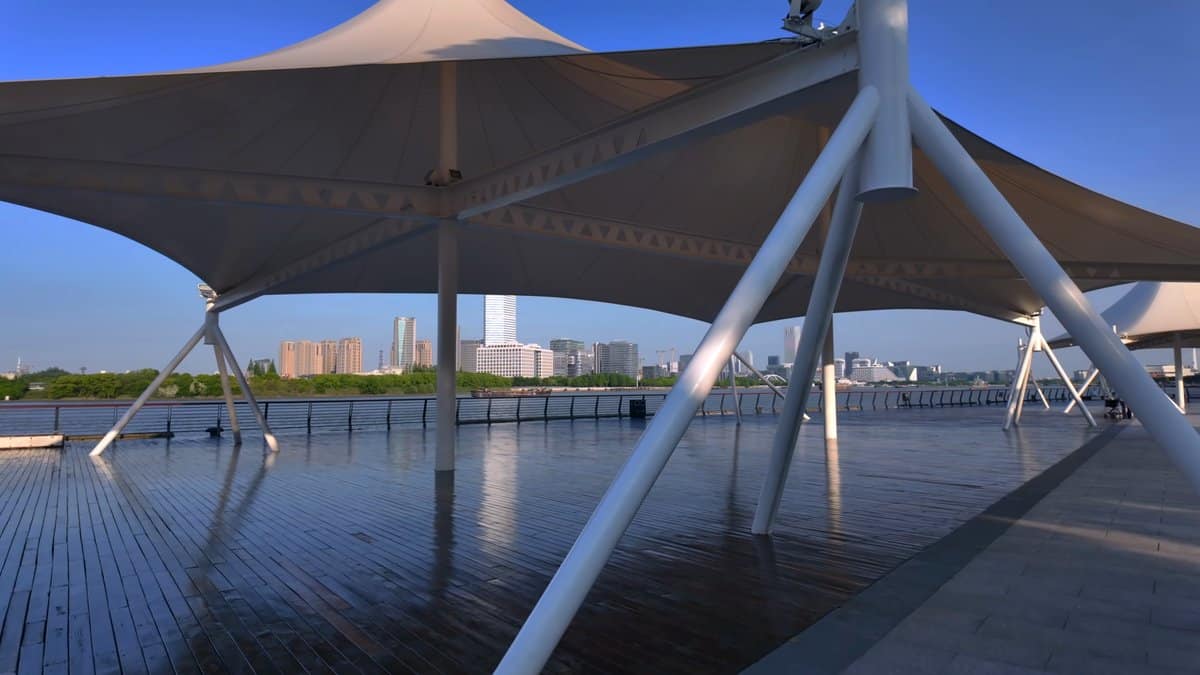
Views of the river extend to the old parts of town, called Puxi, and other parts of the city. Traffic on the water includes barges and things like that. The opposite bank is dotted with mid-rise buildings.
They are nothing terribly exciting, but they are enough to frame the horizon.
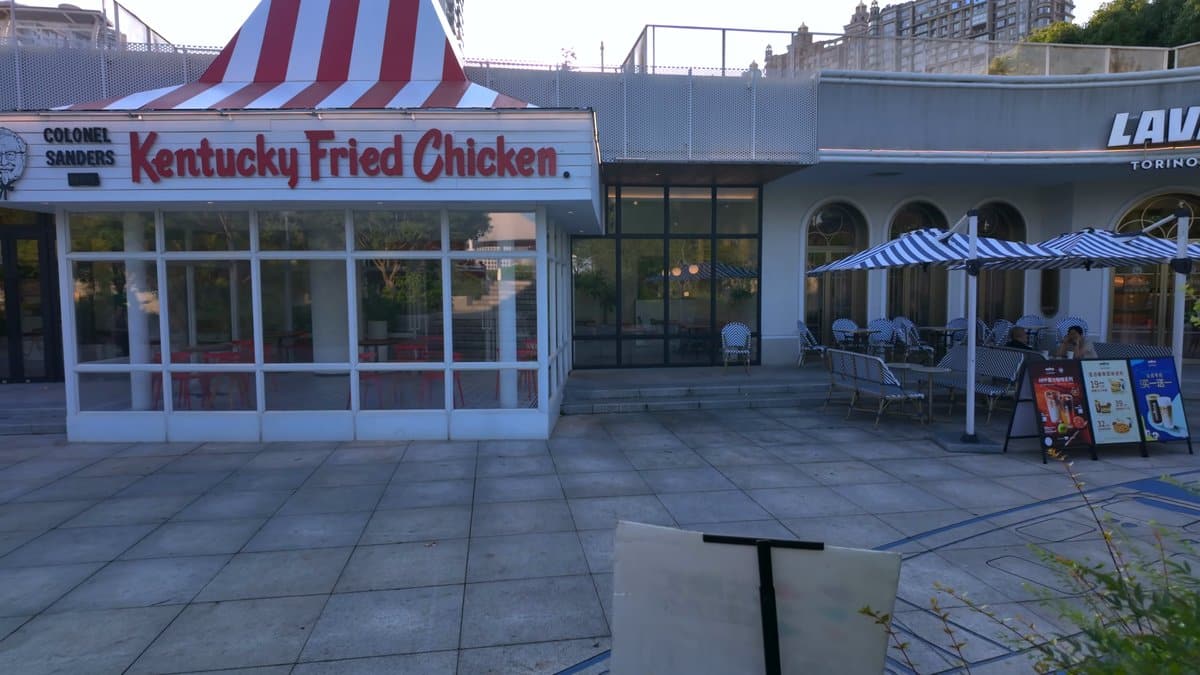
Familiar names crop up along the way, like a KFC nestled beneath one of the canopy structures. It is not picturesque, but it is there if you want or need it.
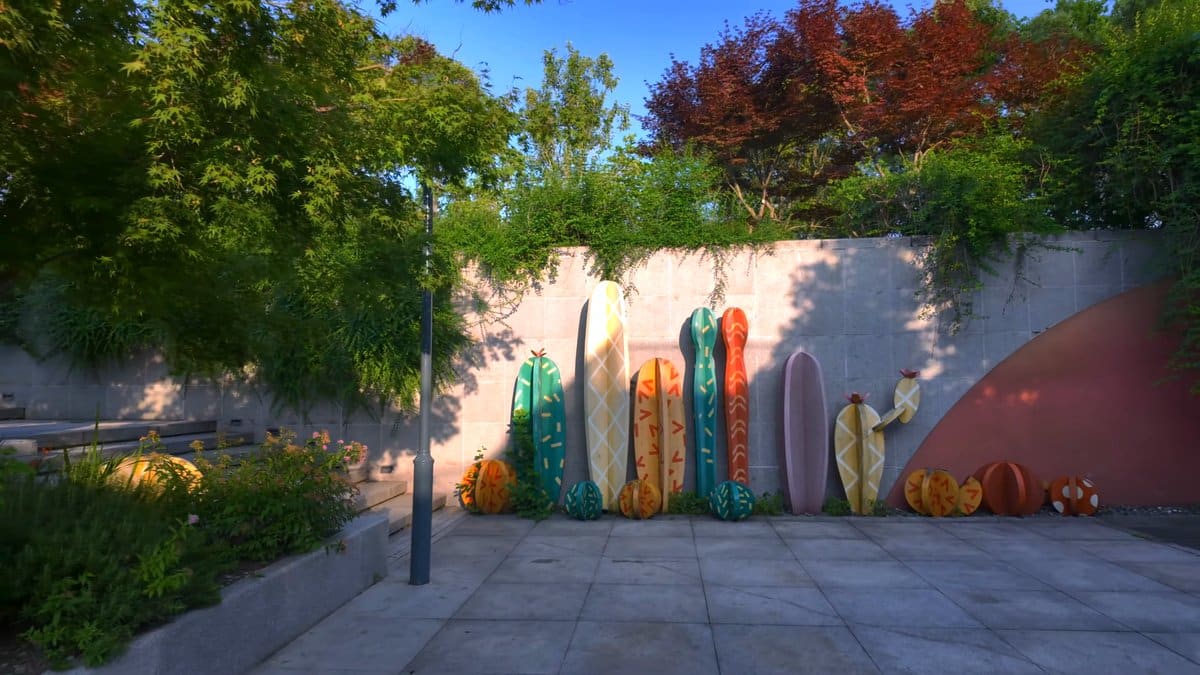
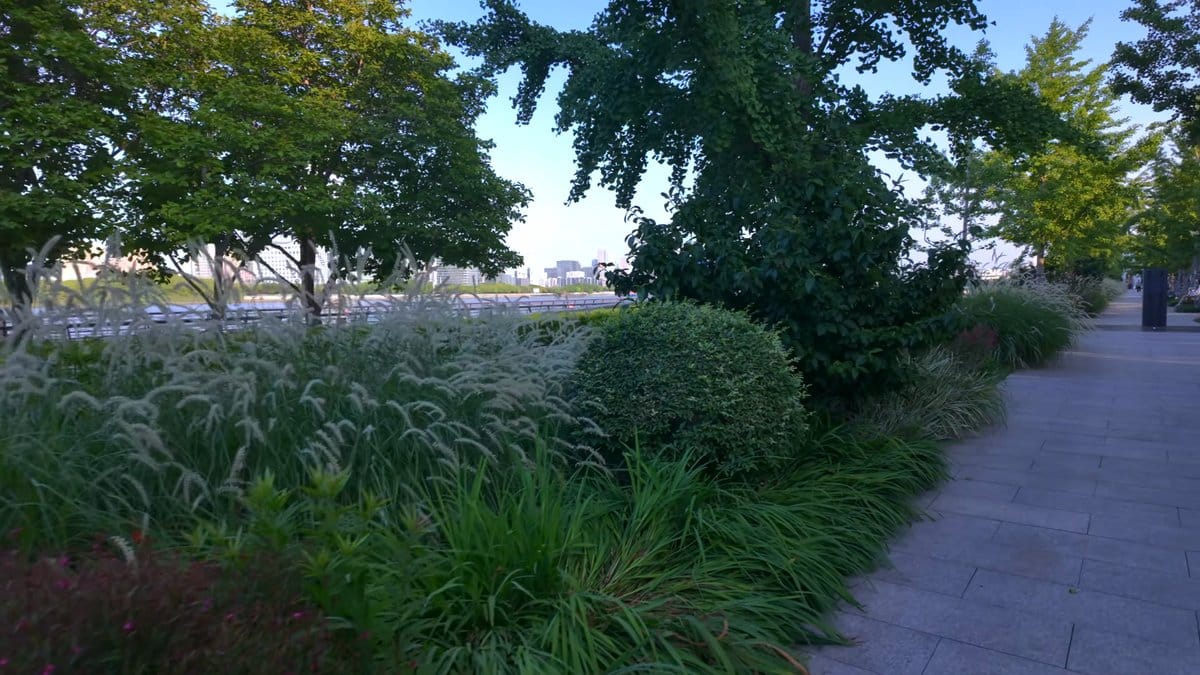
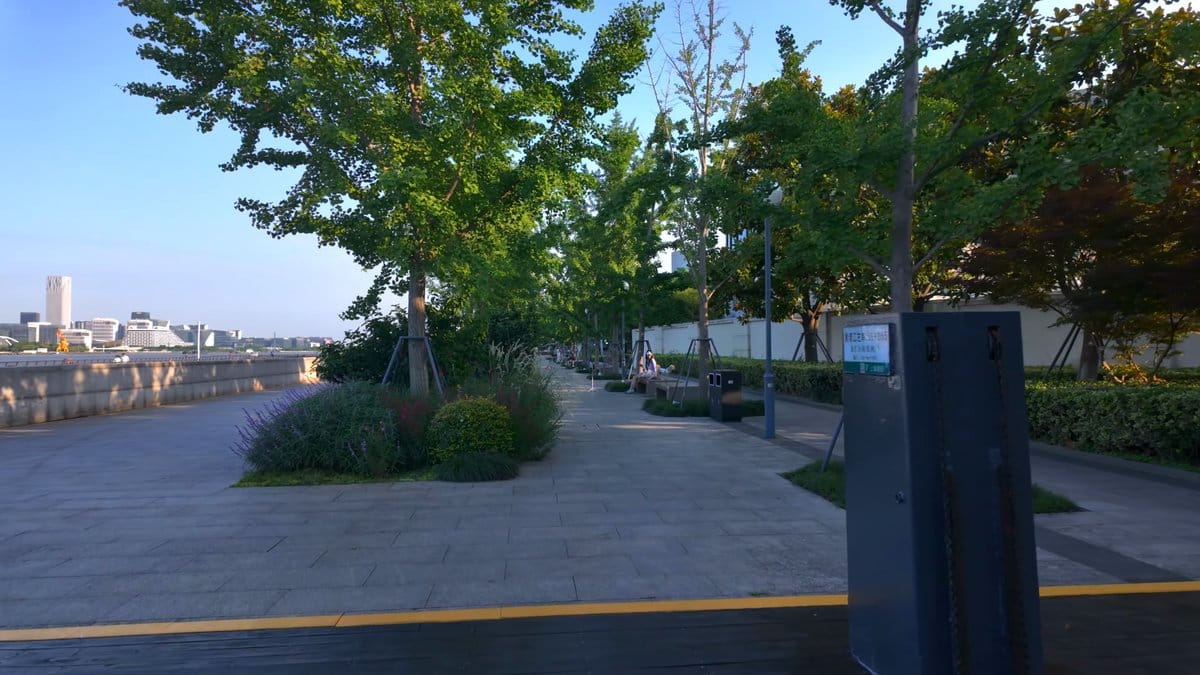
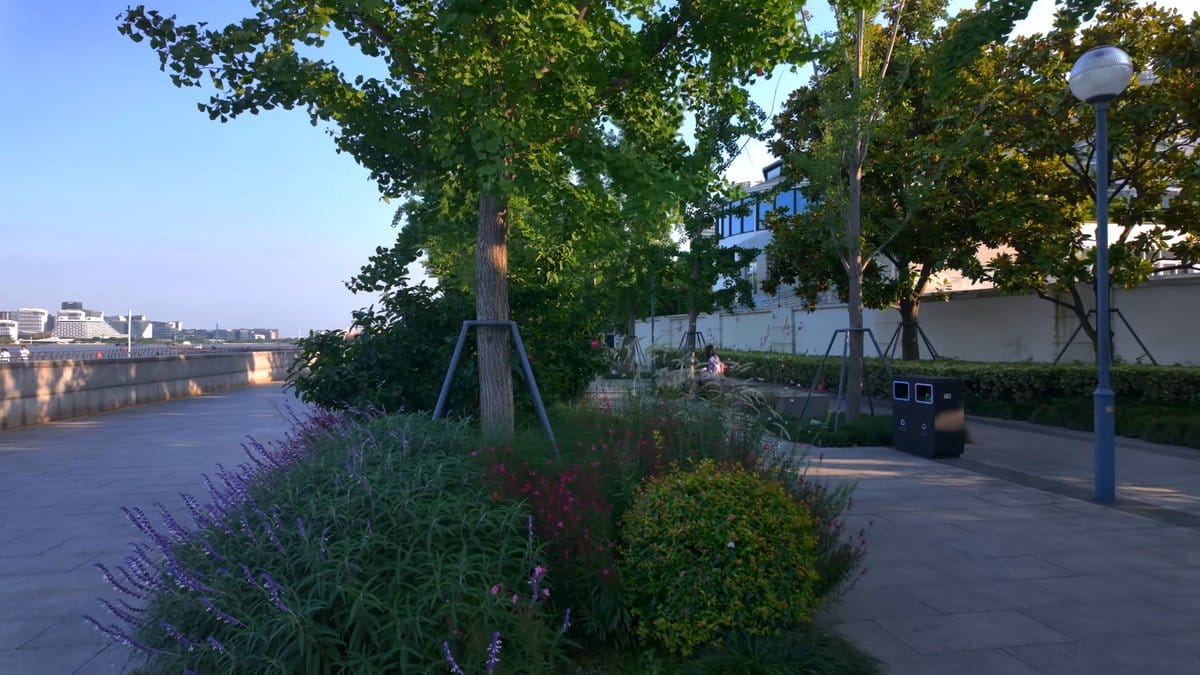
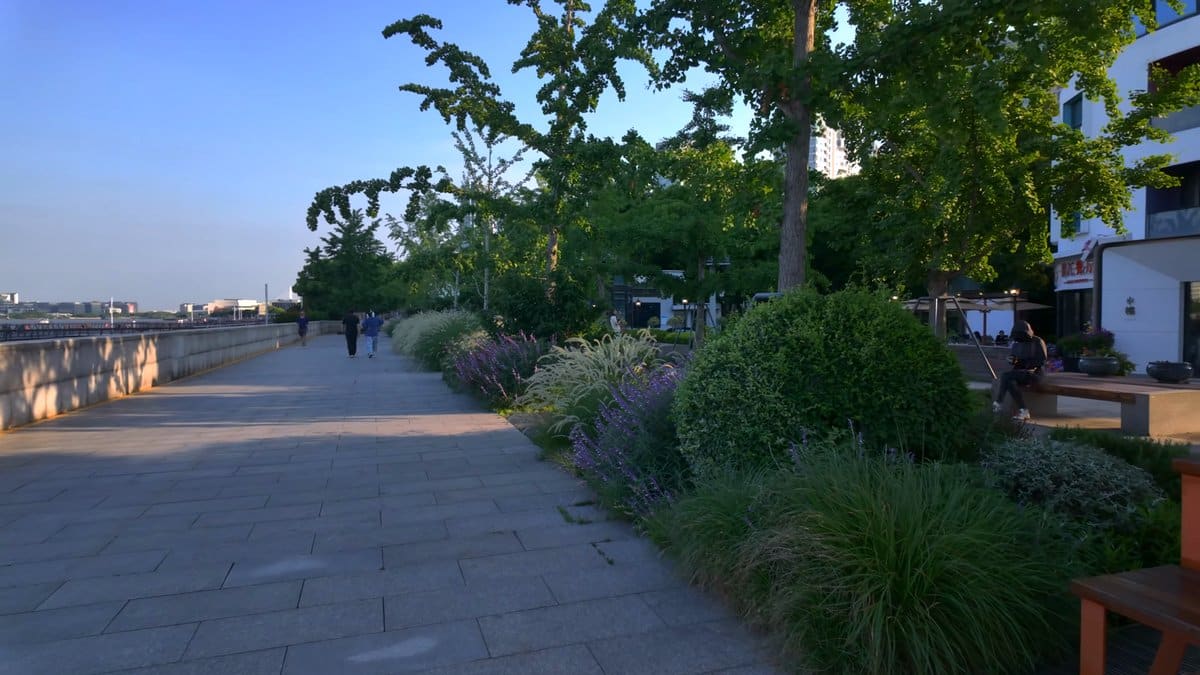
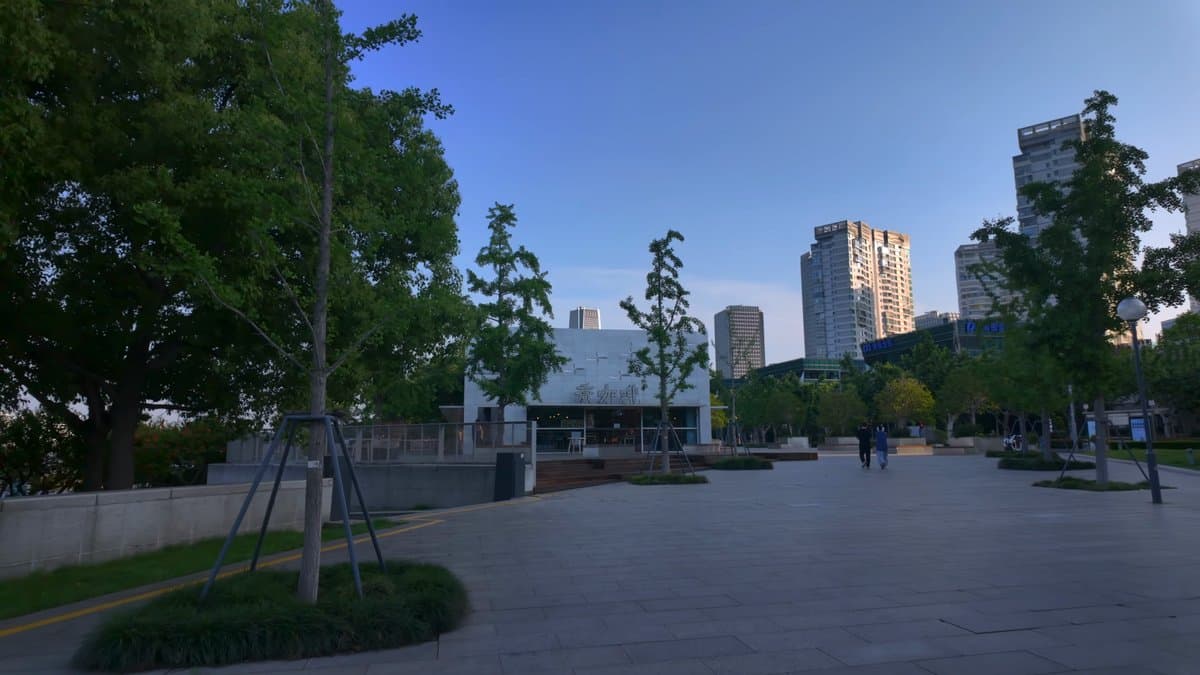
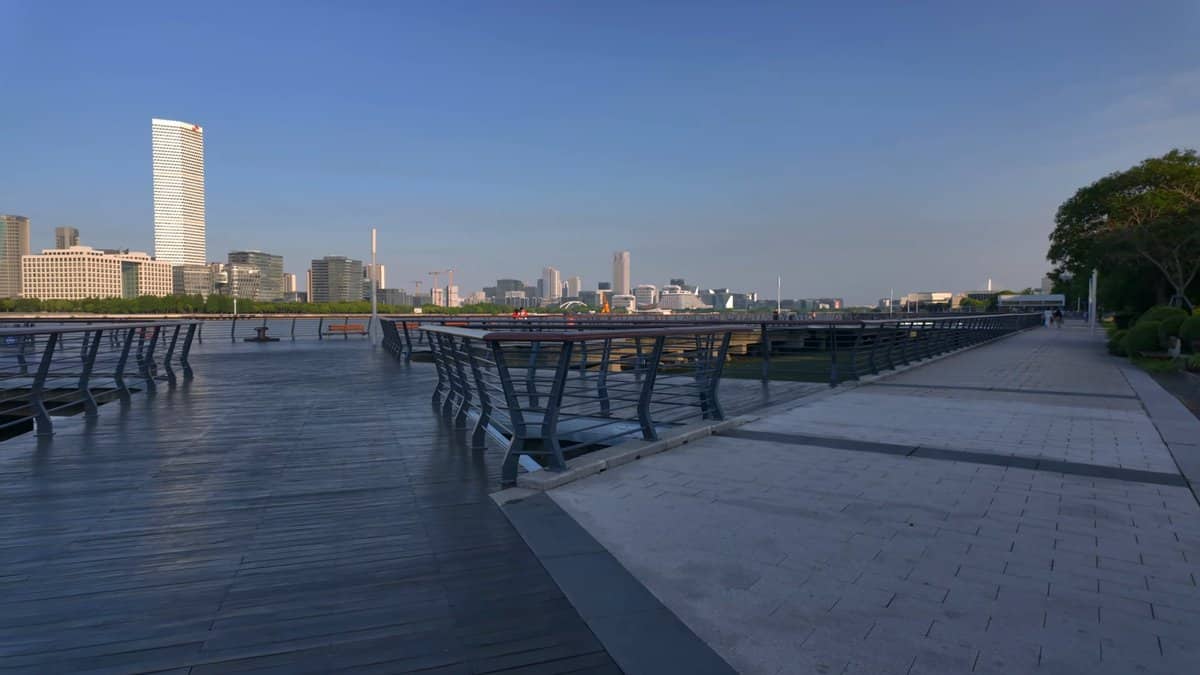
Greenery comes in the form of planted shrub beds, established trees and even decorative grasses, which help to soften the hard surfaces of the promenade. Some bits of it rely more on landscaping, while others are more practical. Overall, the effect is uneven but pleasant enough.
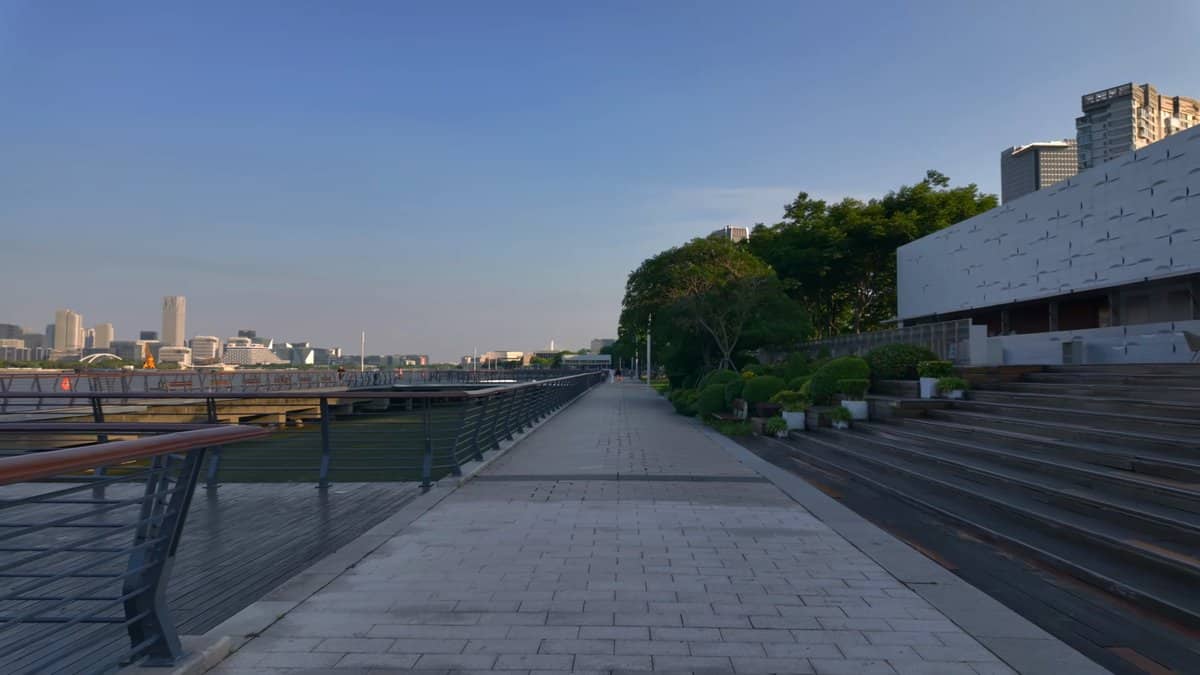
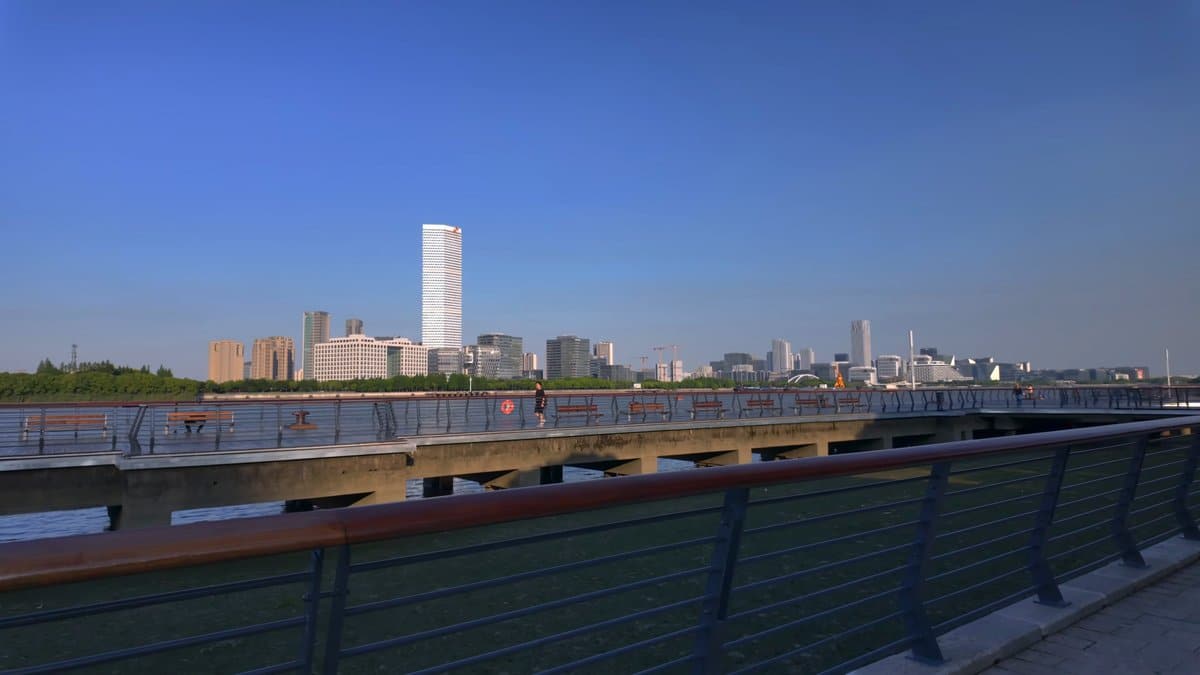
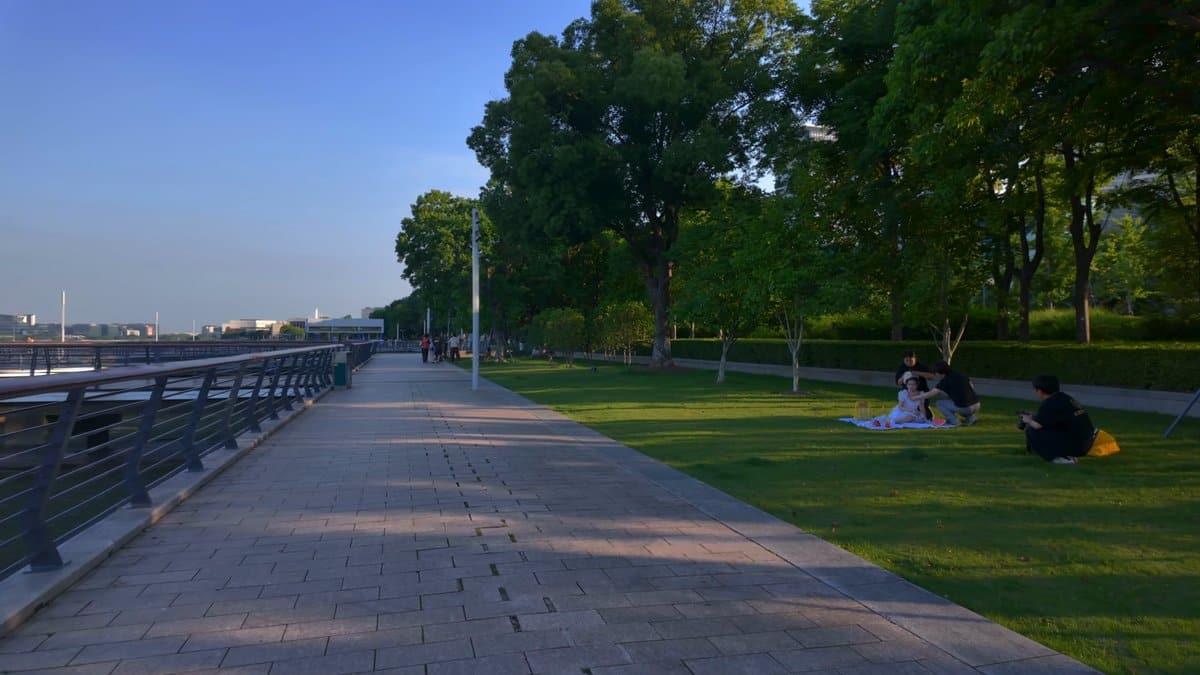
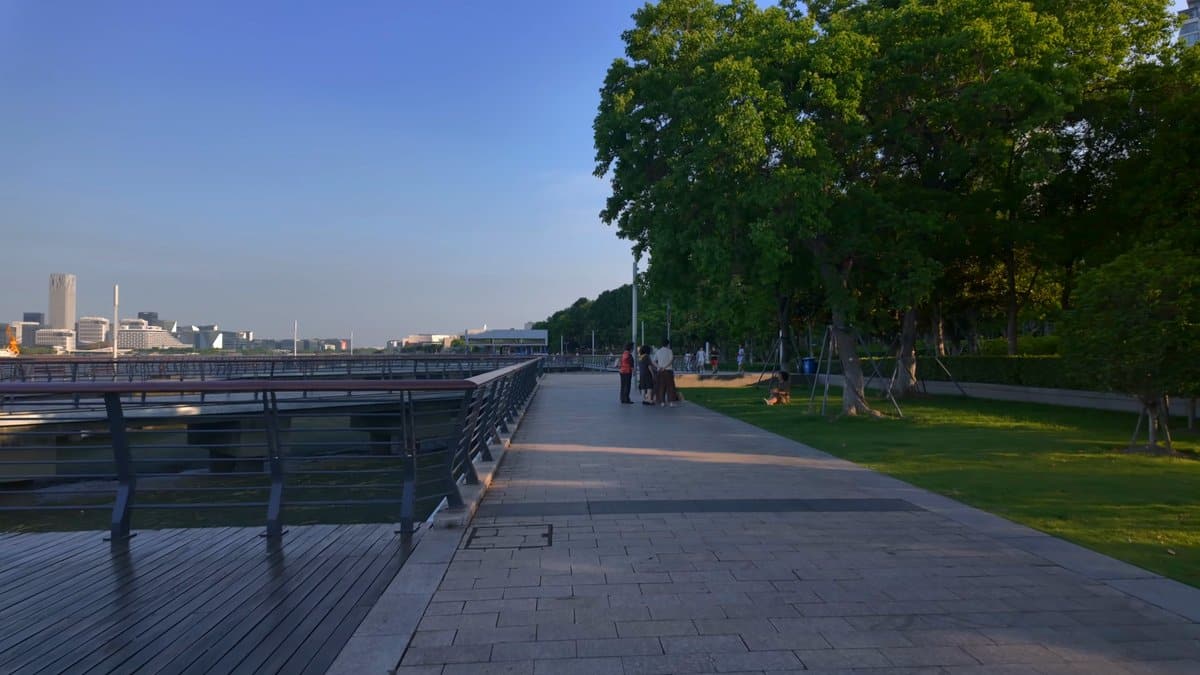
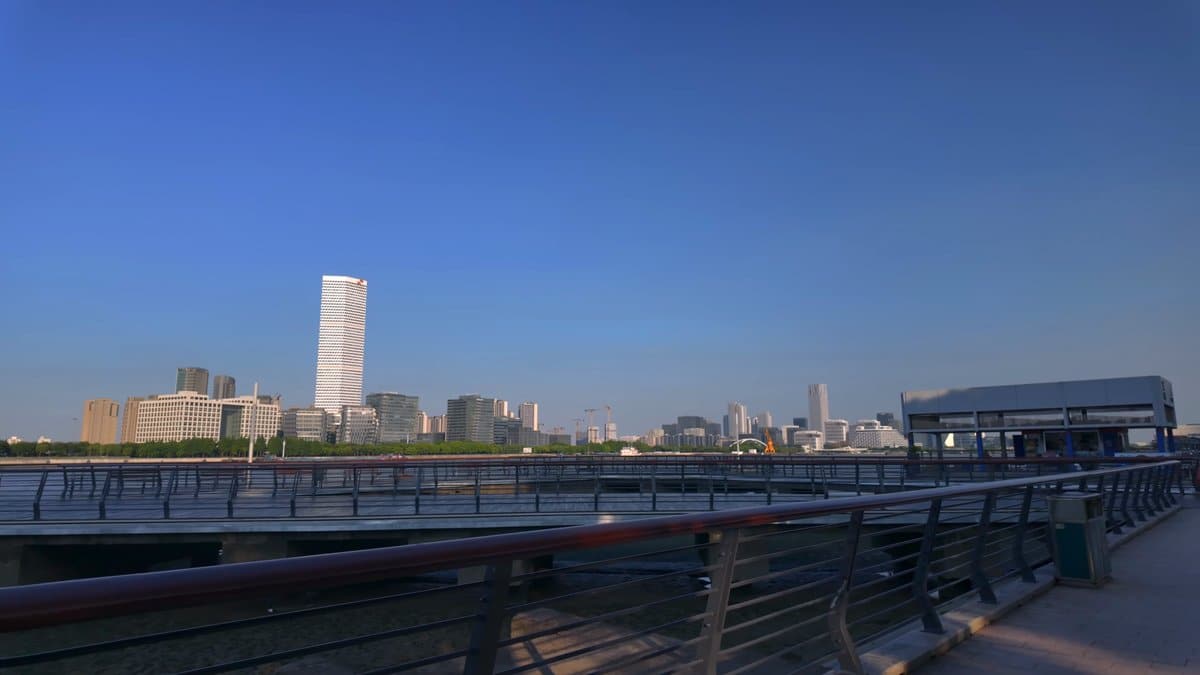
At dusk, it changes. The towers on the other side of the water start to light up. The light gets softer.
The promenade clears out a little. If you prefer cooler air and fewer people, this is a great time for a stroll along the route.
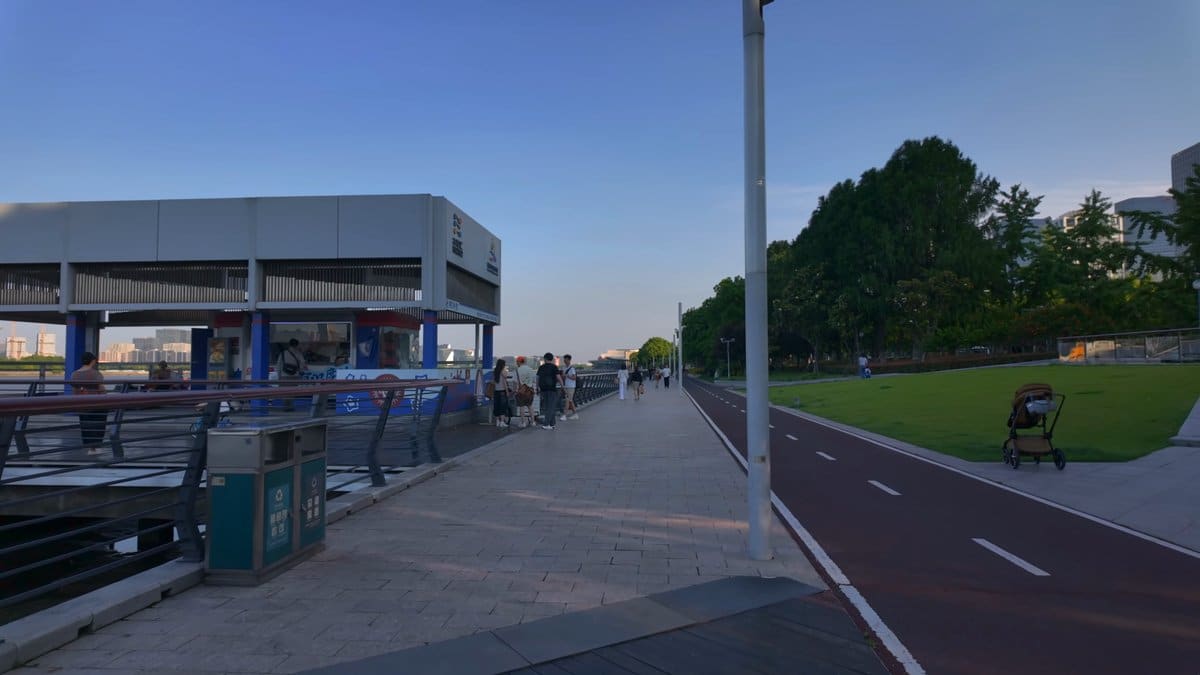
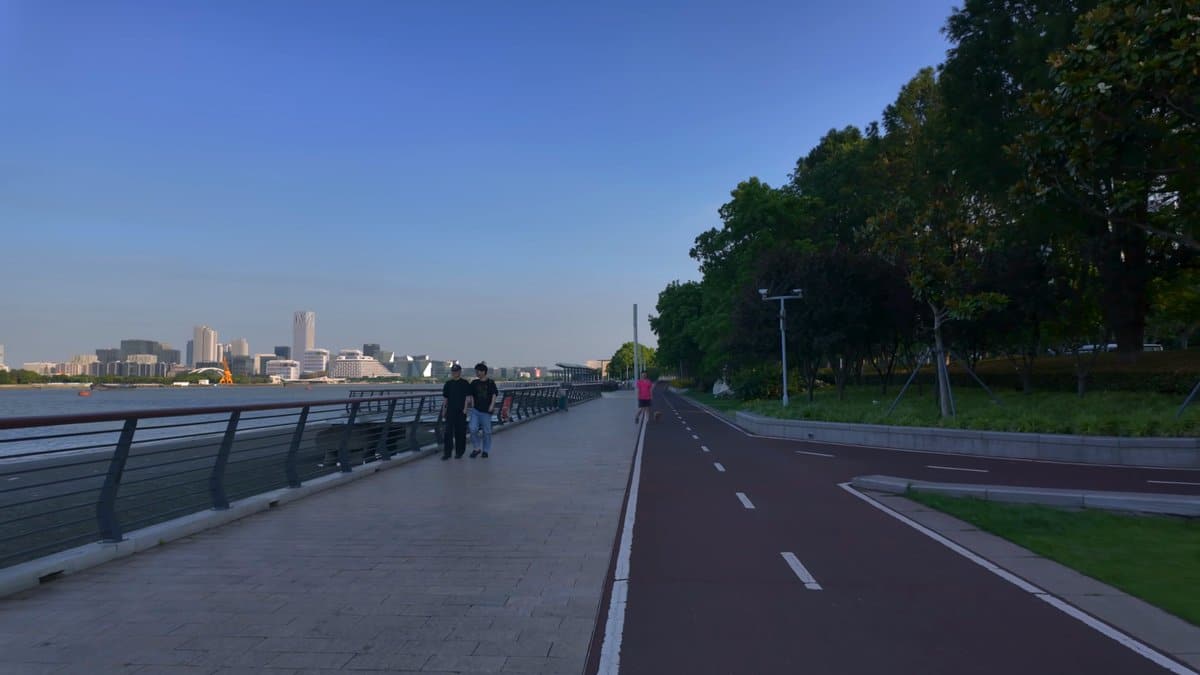
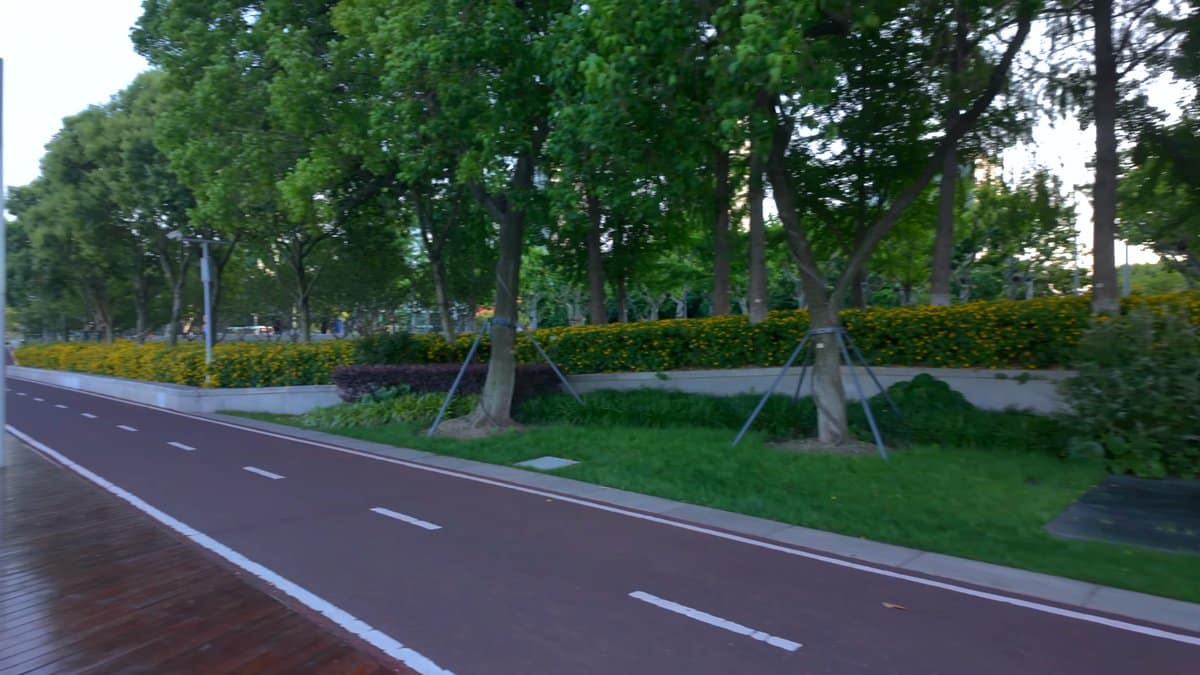
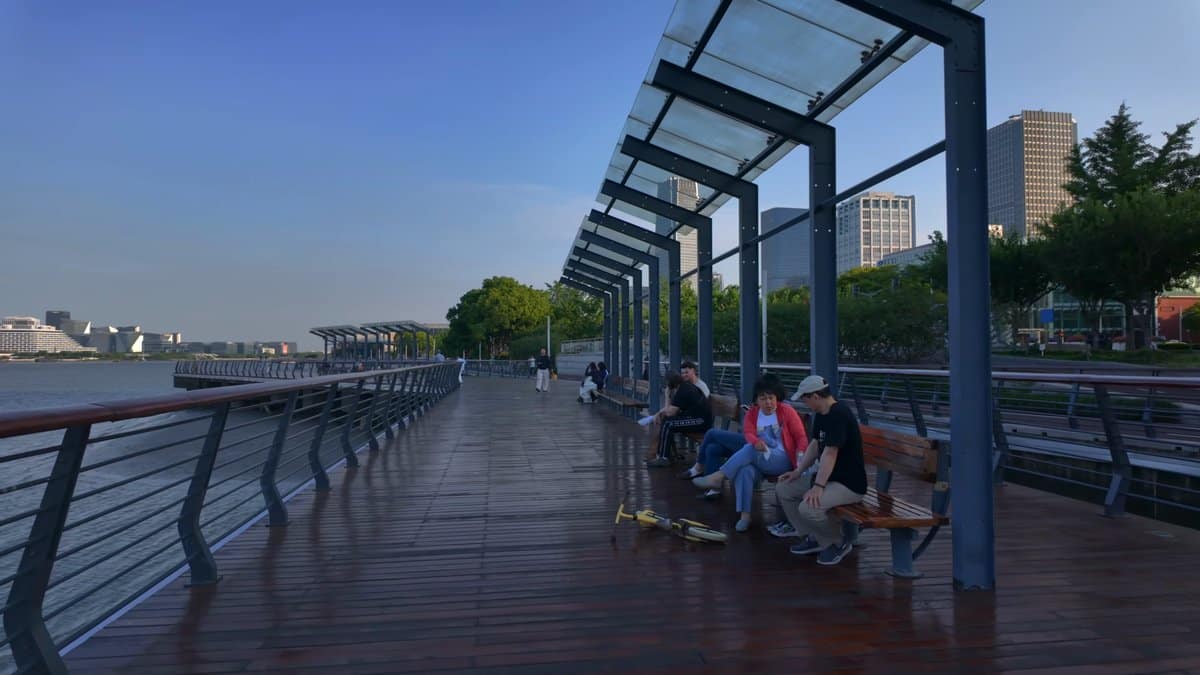
Parts of it are marked with running tracks and cycle lanes. There are pavilions and rest stops, and you’ll encounter both casual strollers and some serious runners doing laps.
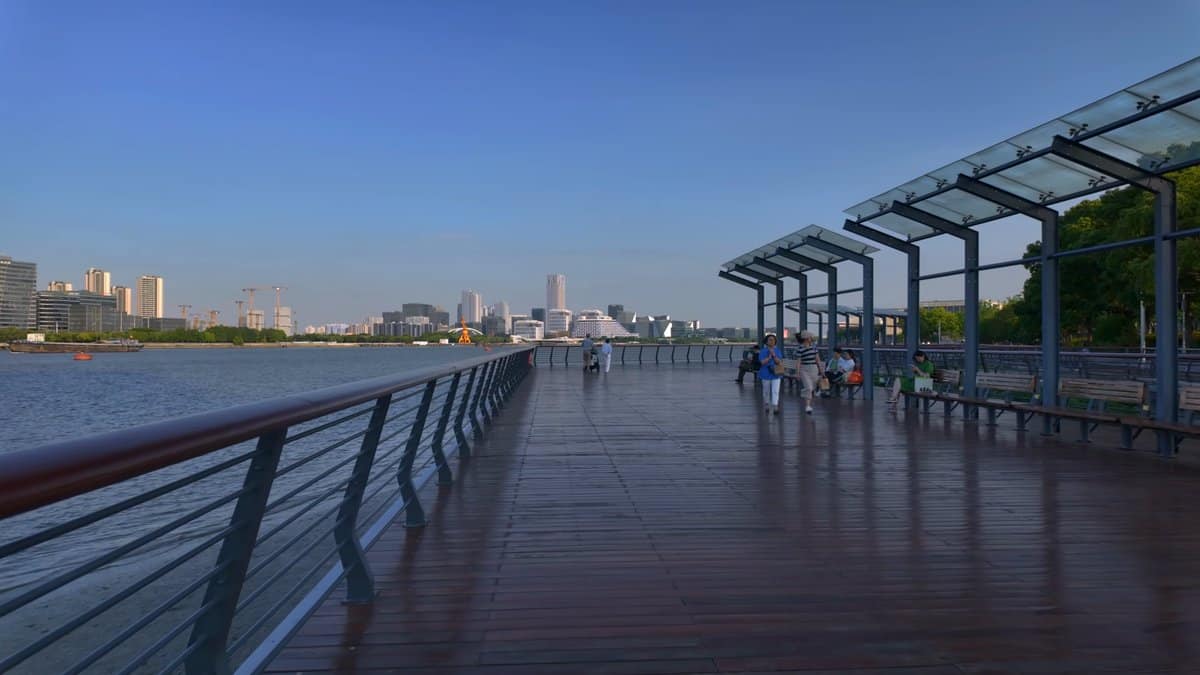
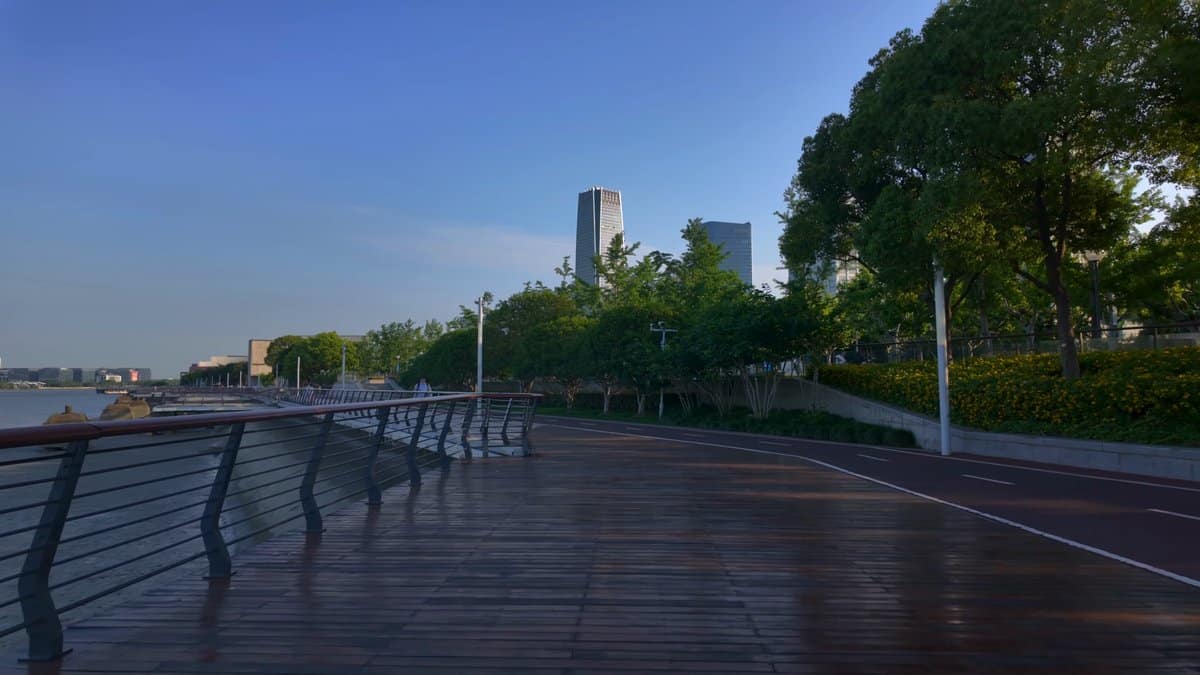
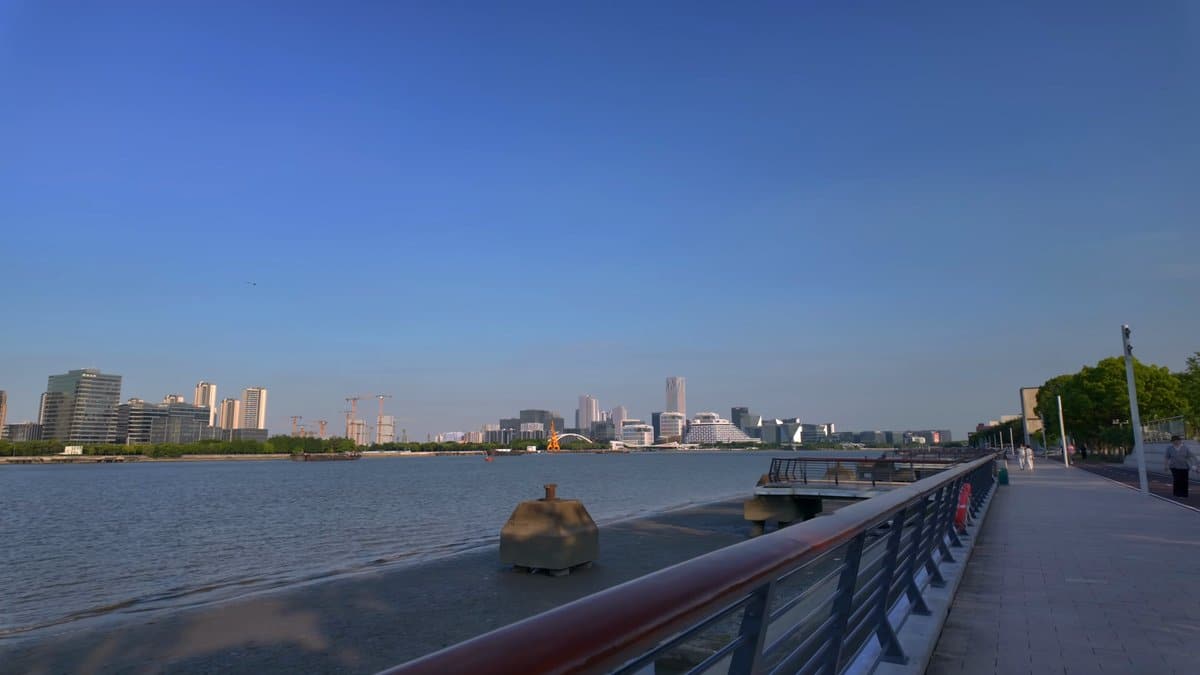
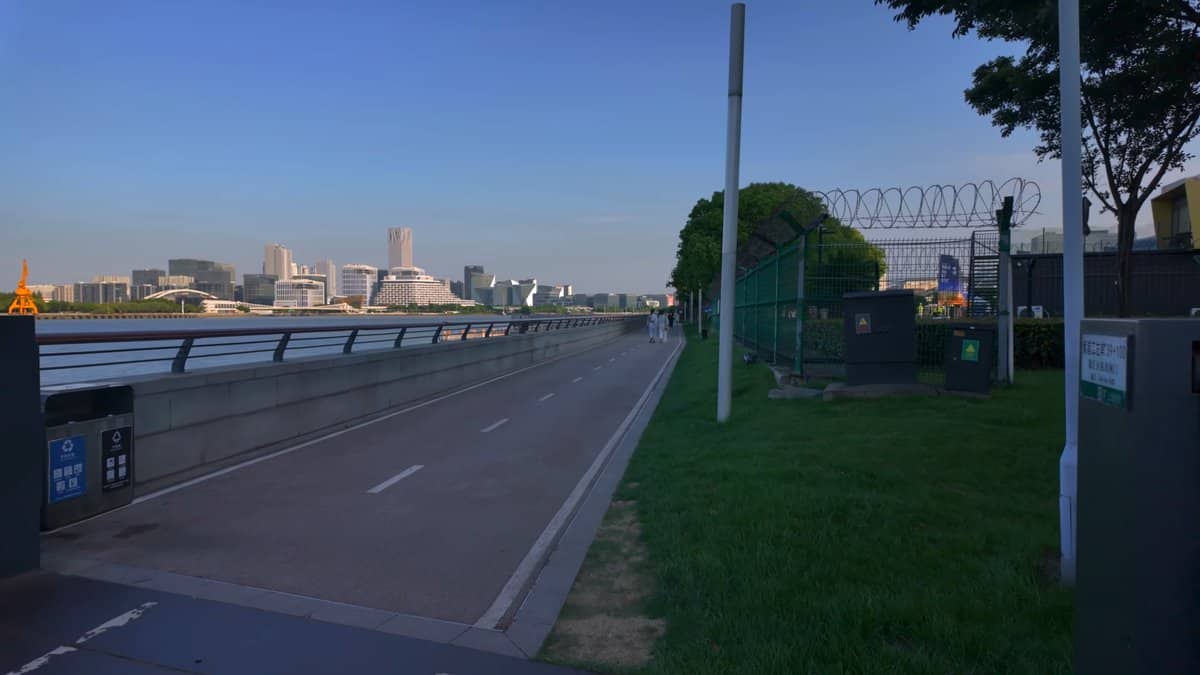
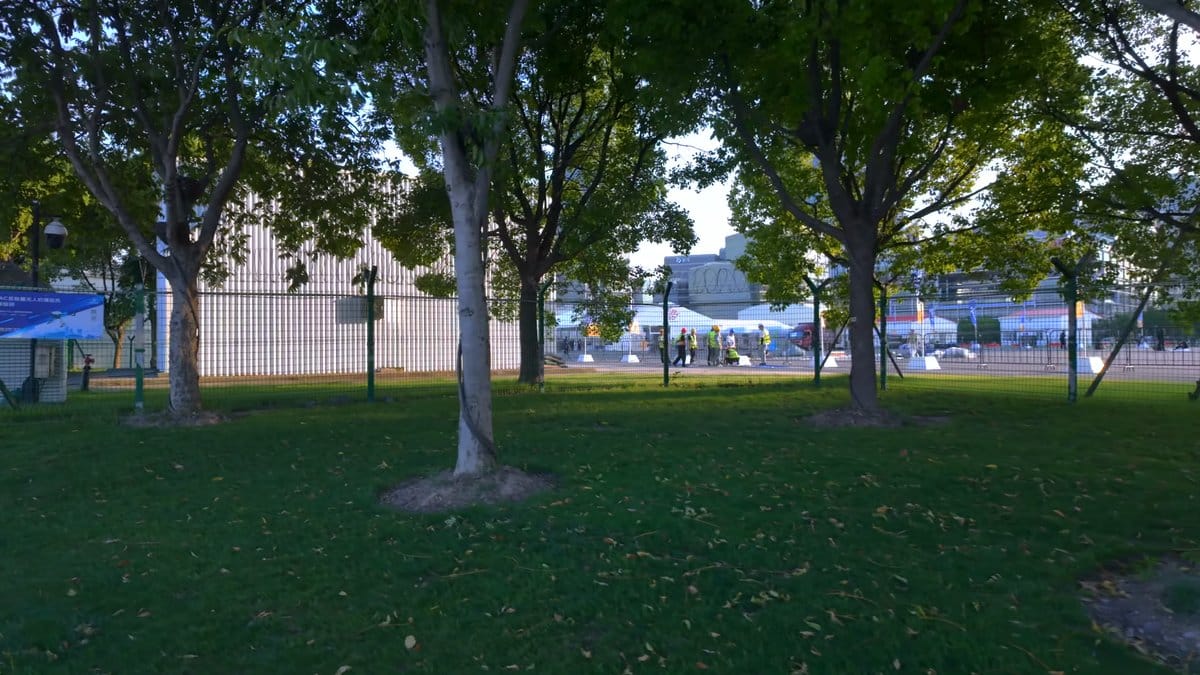
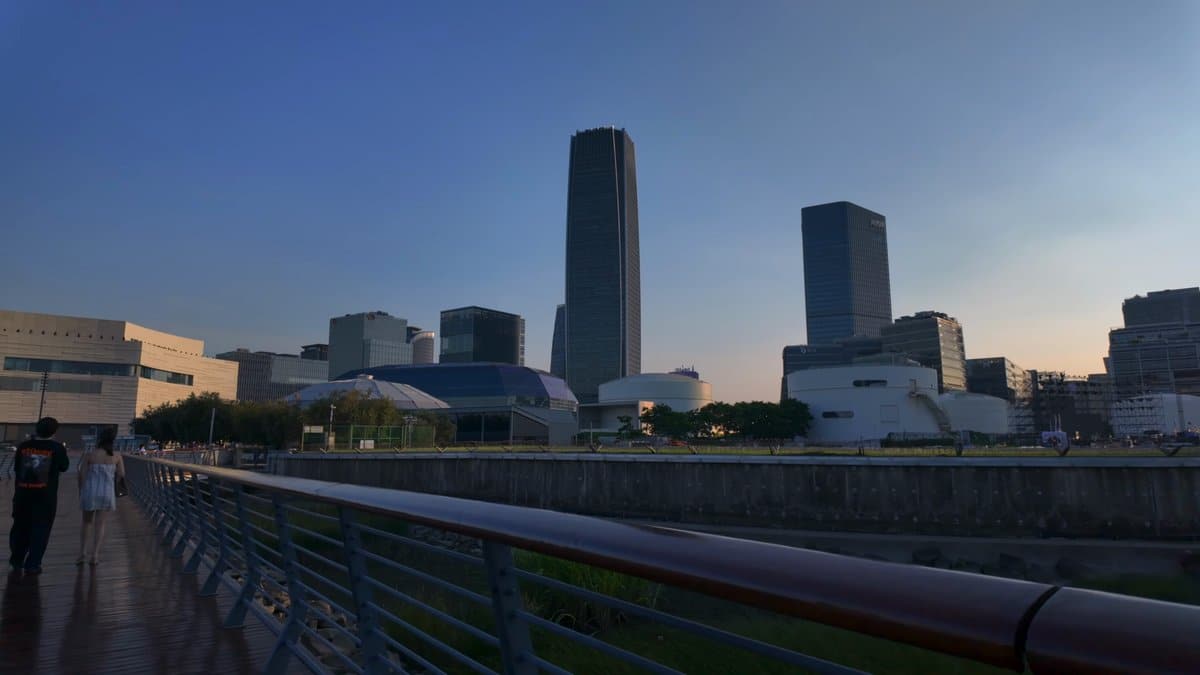
It’s generally flat, the surface is well kept, and there are only brief interruptions where it passes underneath raised roadways or next to fenced-in infrastructure. None of these parts are charming, but they are all short.
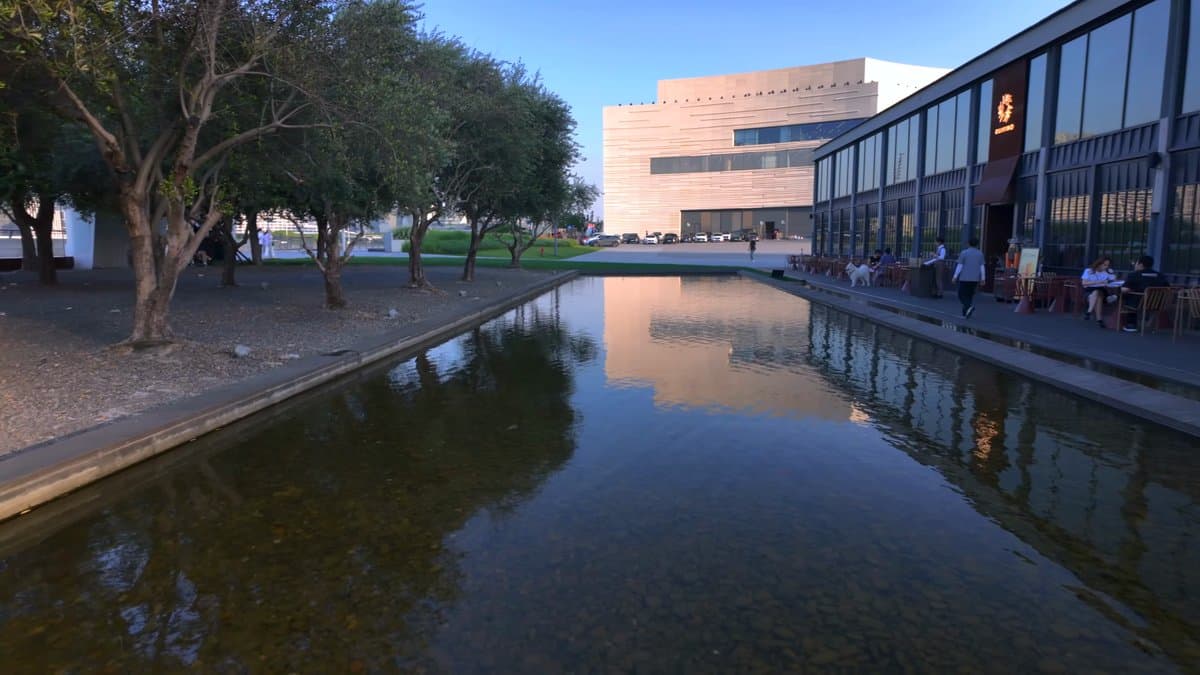
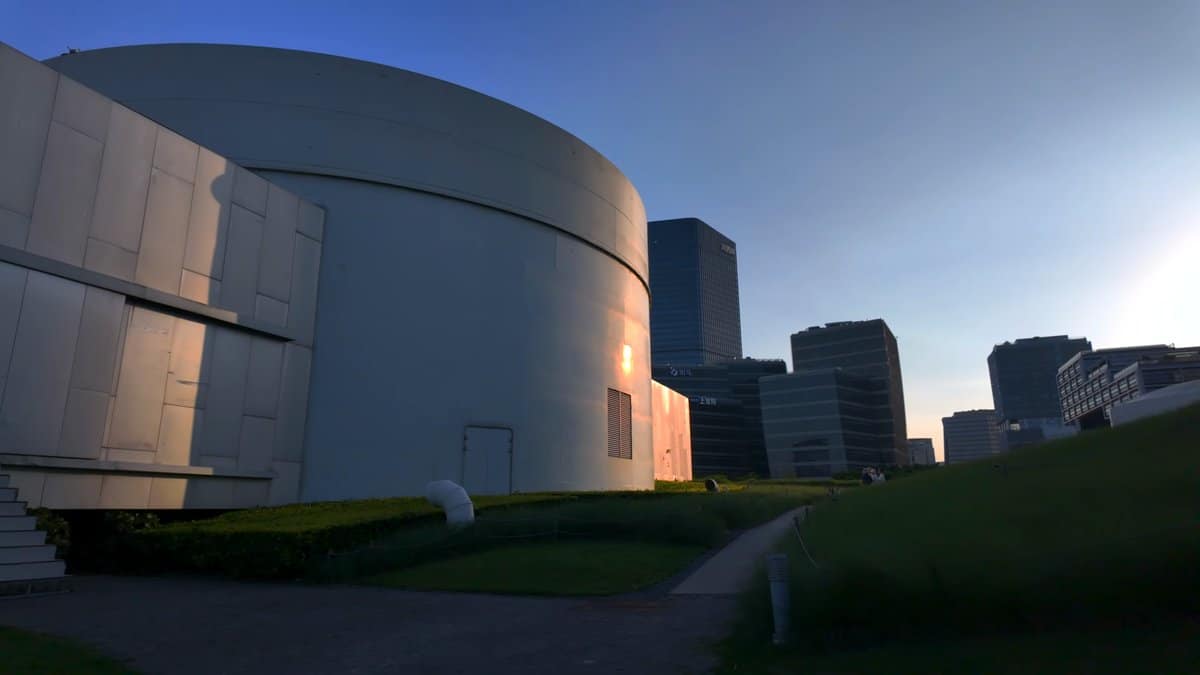
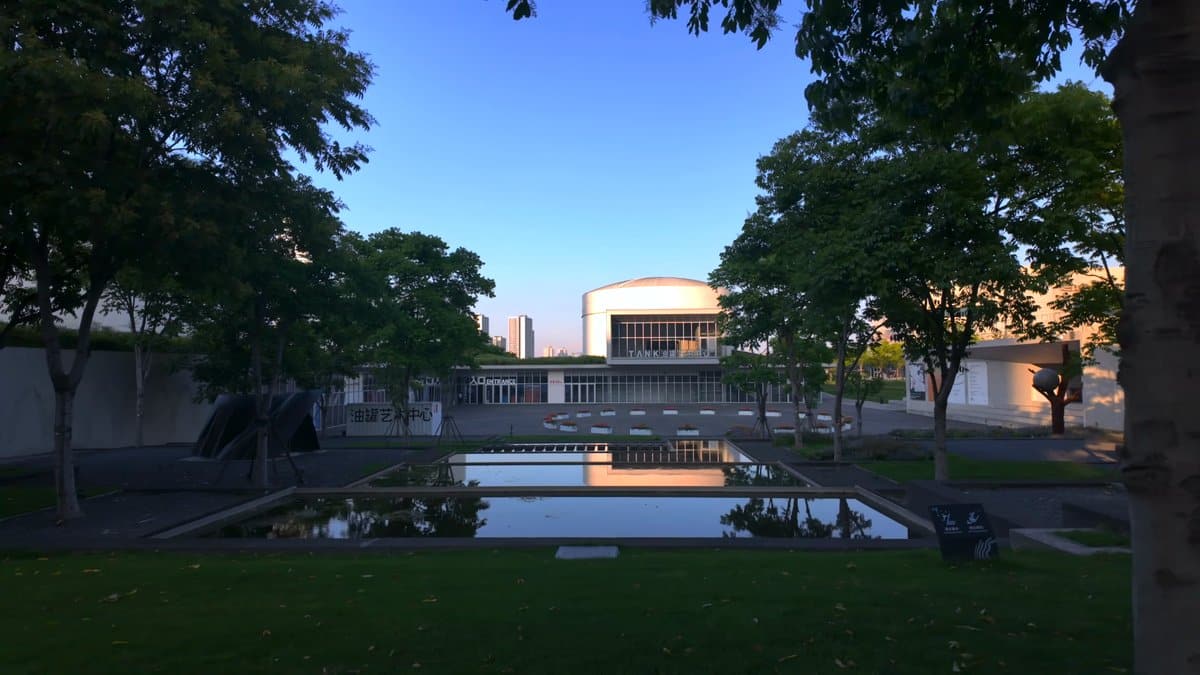
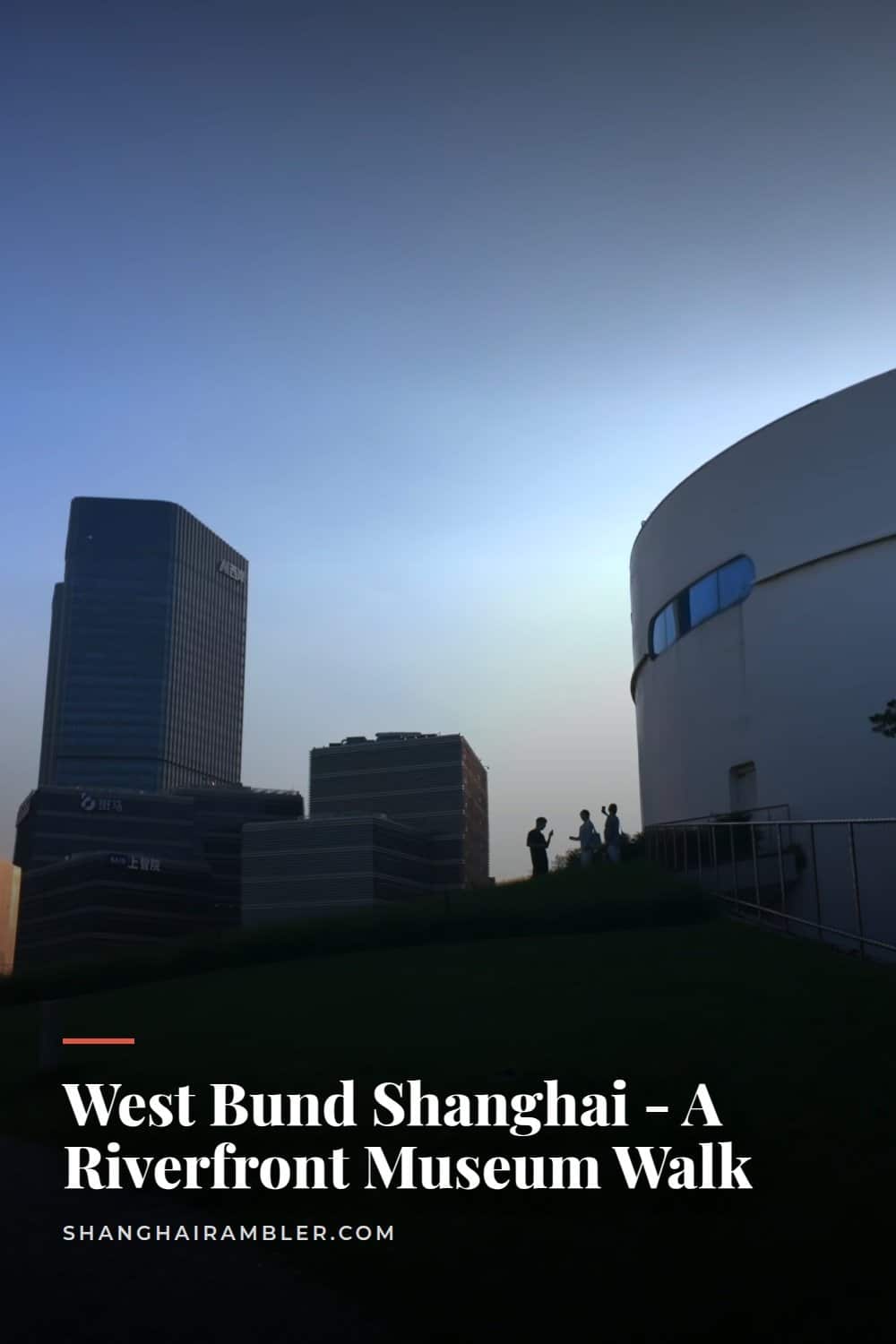
At night, reflecting pools alongside some of the museum buildings double the architecture and add a little drama to what would otherwise be fairly straightforward pavilions. From various locations around the route, you’ll see the most distinctive structure: the drum-shaped museum.
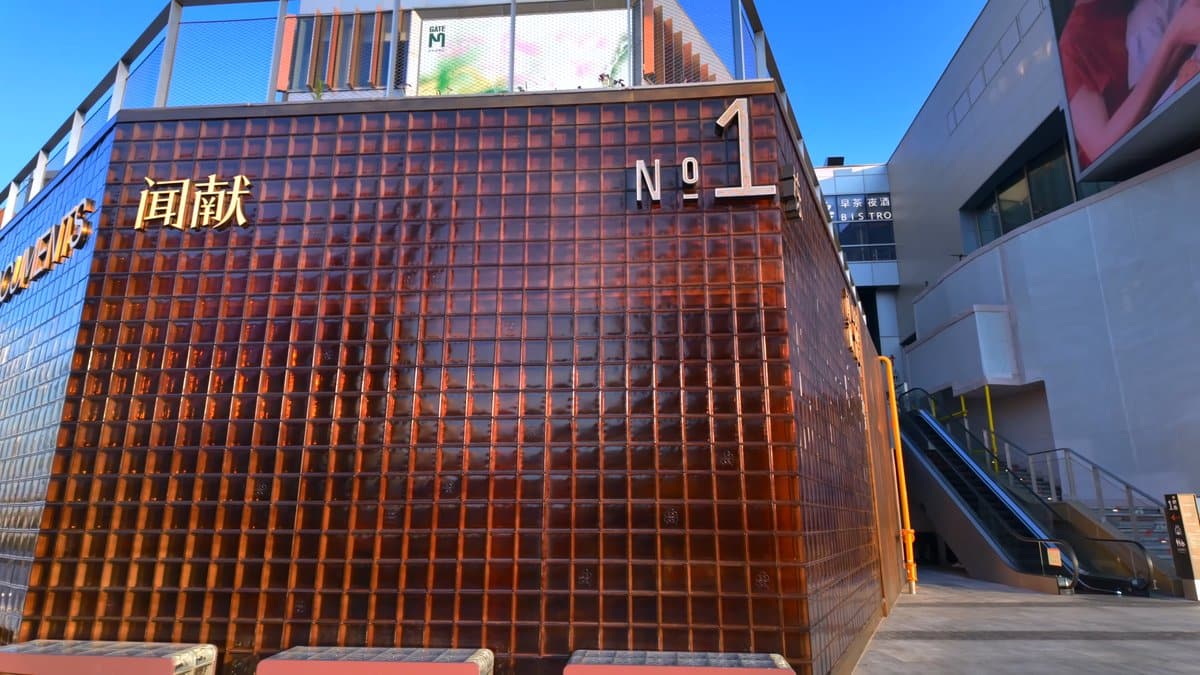
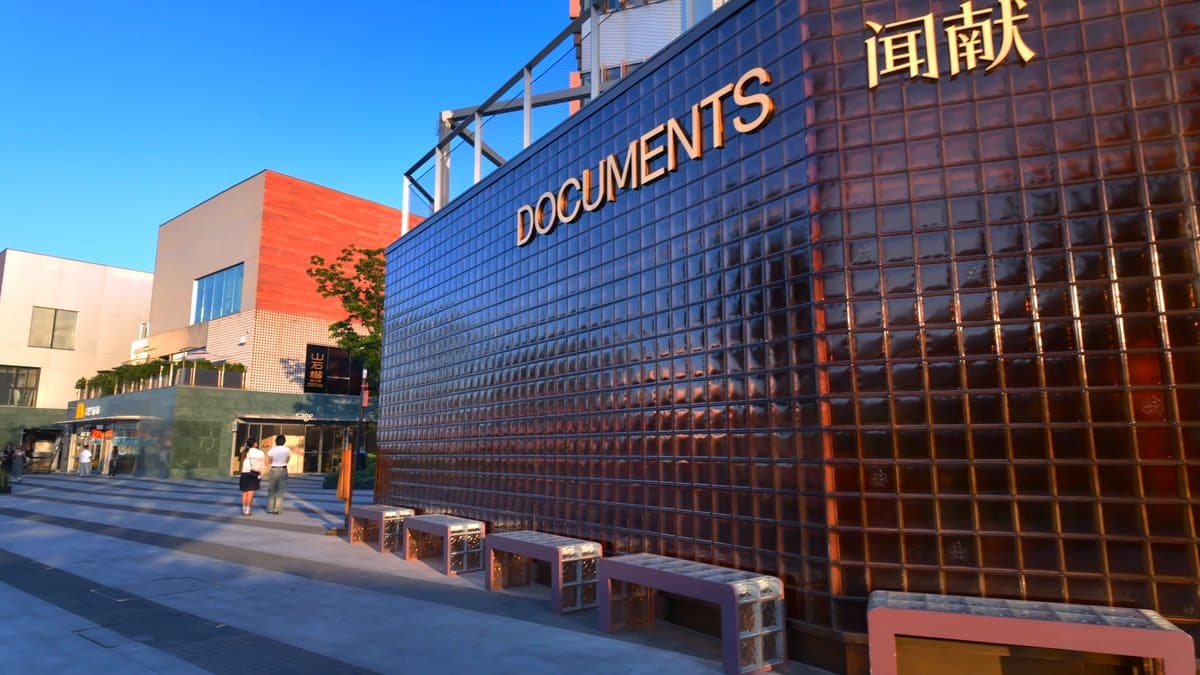
Documents West Bund, a privately run art space, occupies a striking building clad in weathering copper and glass block. Exhibitions rotate frequently; entry is by ticket. Even if you don’t go inside, the facade alone is worth a look.
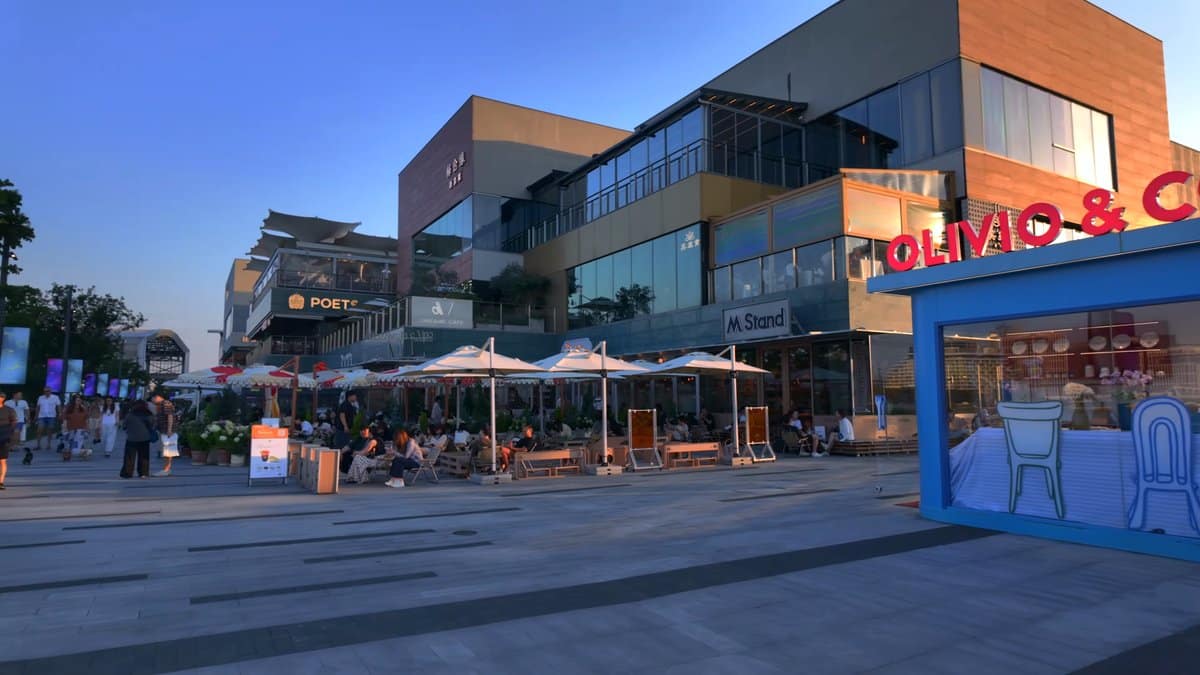
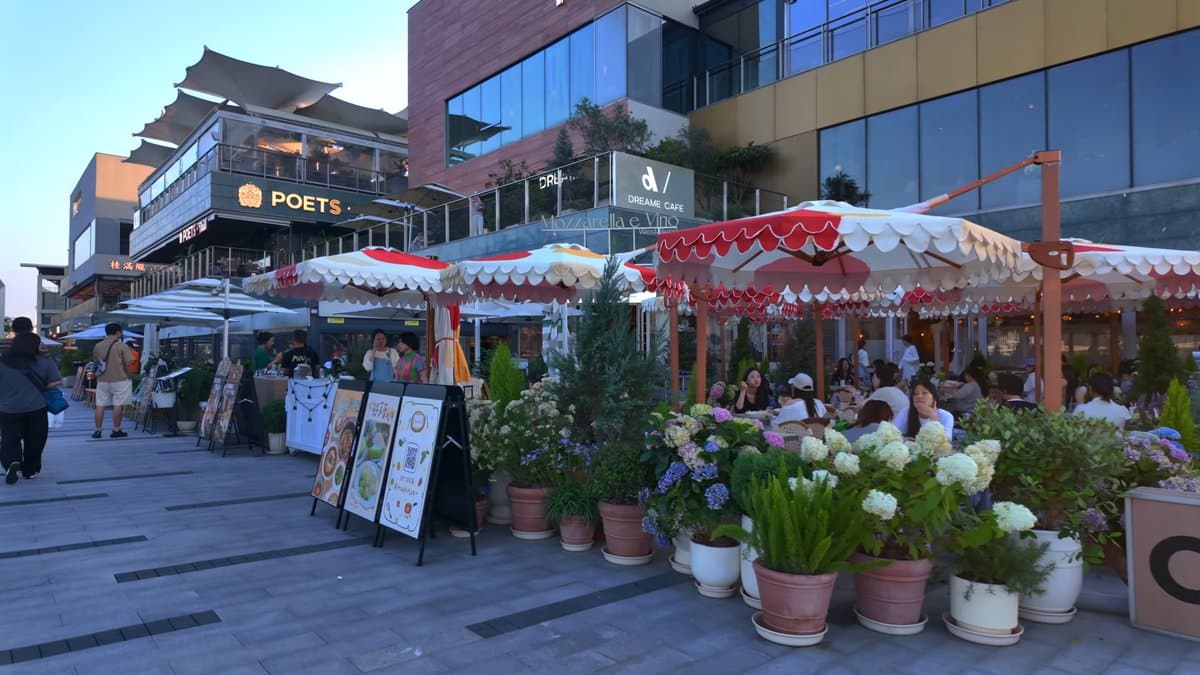
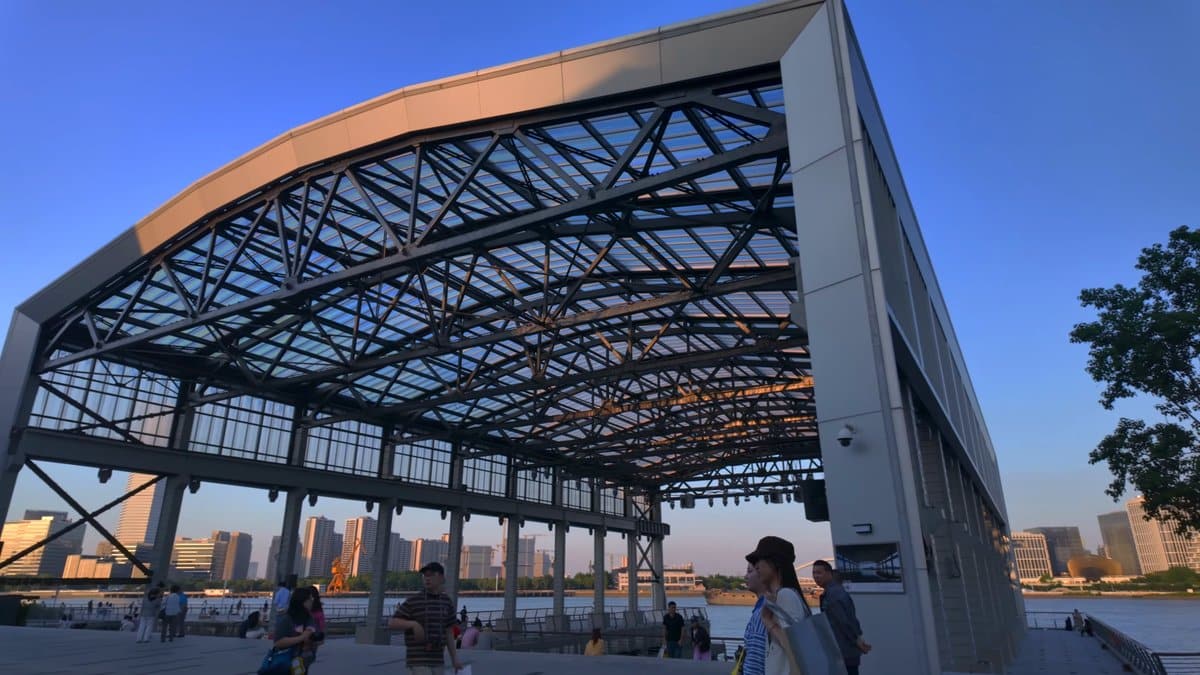
In the evenings, the area around the southern end of the development comes alive as retail plazas fill with tables spreading out underneath parasols and the canopy lights up above the water. On weekend nights in high season, this is where crowds is thickest.
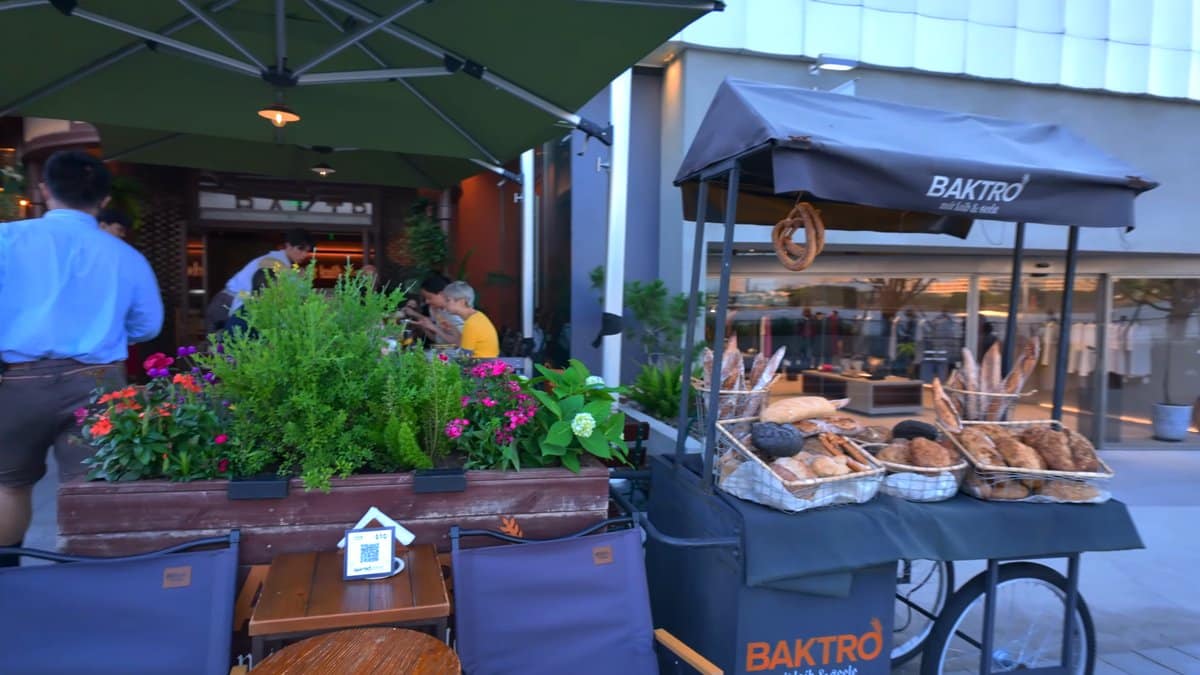
Pop-up stalls and bakery carts sets up shop in the plazas, typically selling coffee and simple pastries. Quality is hit or miss.
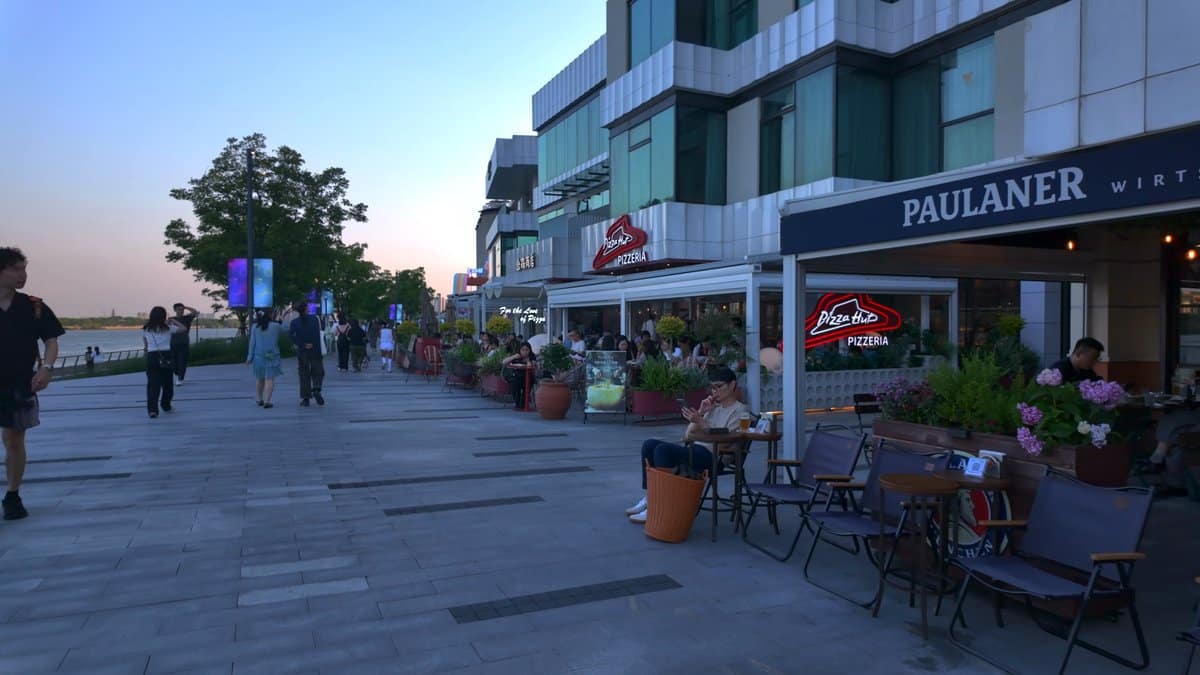
One of the more reliable places for a spot and a drink is Paulaner‘s brewery terrace along the waterfront, whose tables stretch out toward the river. Service can be slow when busy, but it’s one of the better places for a beer.
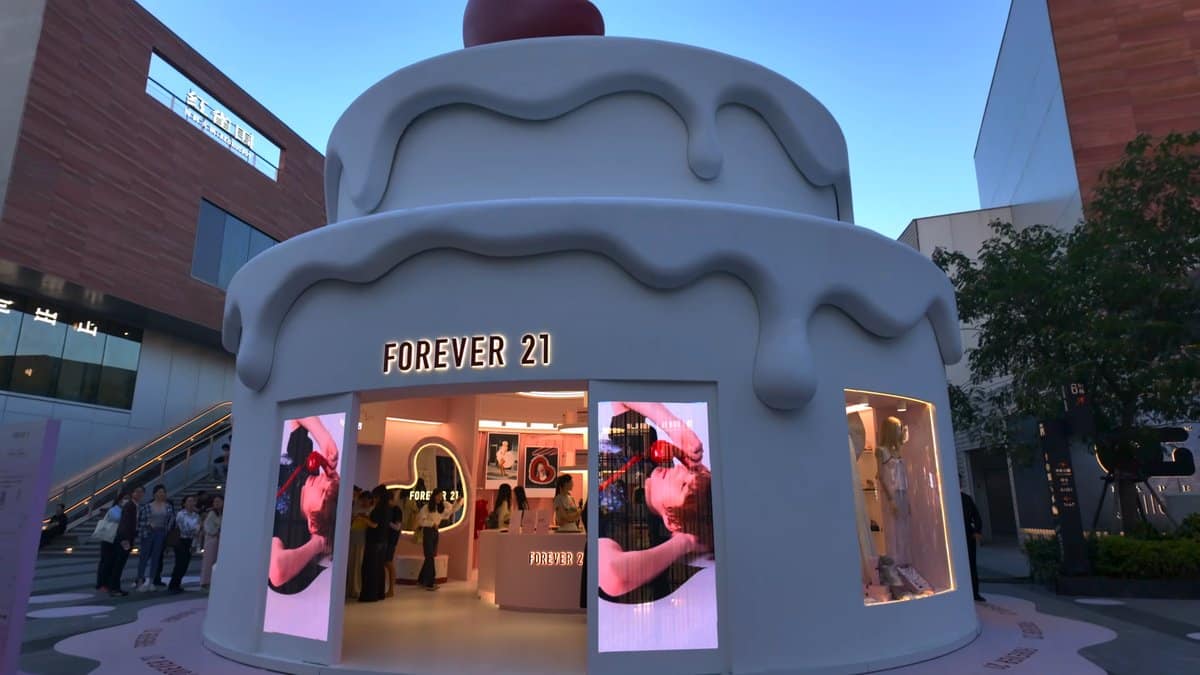
Shopping-wise, chain retail dominates the offerings, including a Forever 21 outlet located in a building that looks like a layered cake. The architecture here leans into unusual territory, but it anchors the southern plaza and brings in foot traffic.
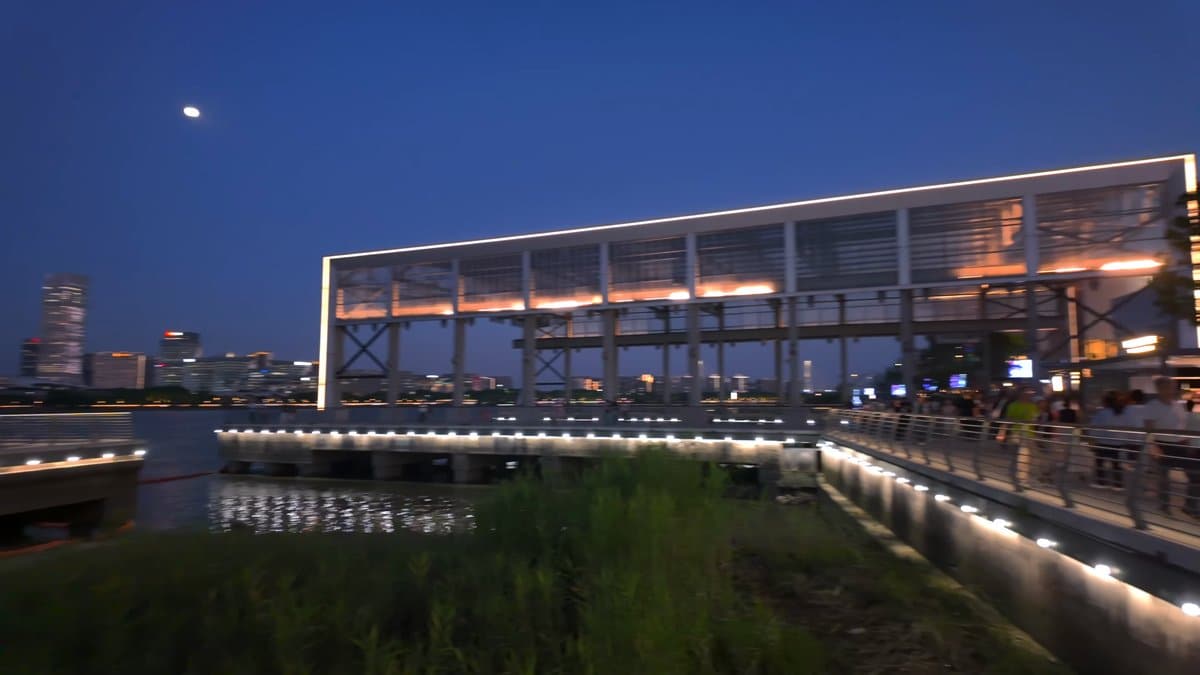
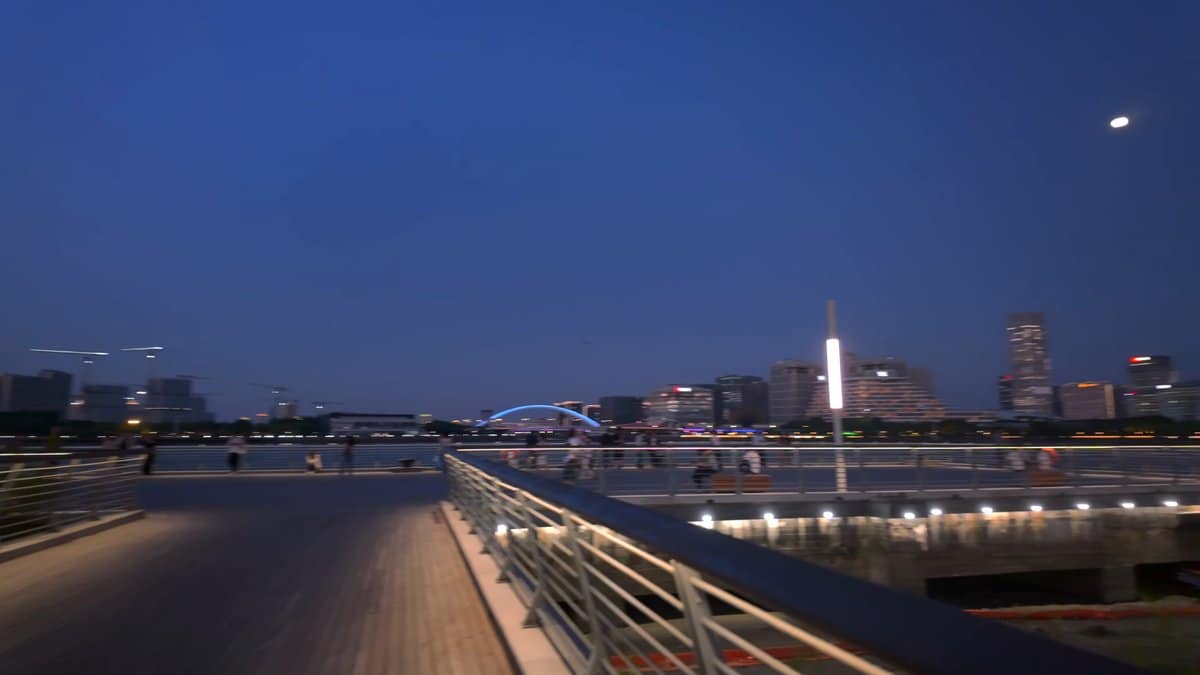
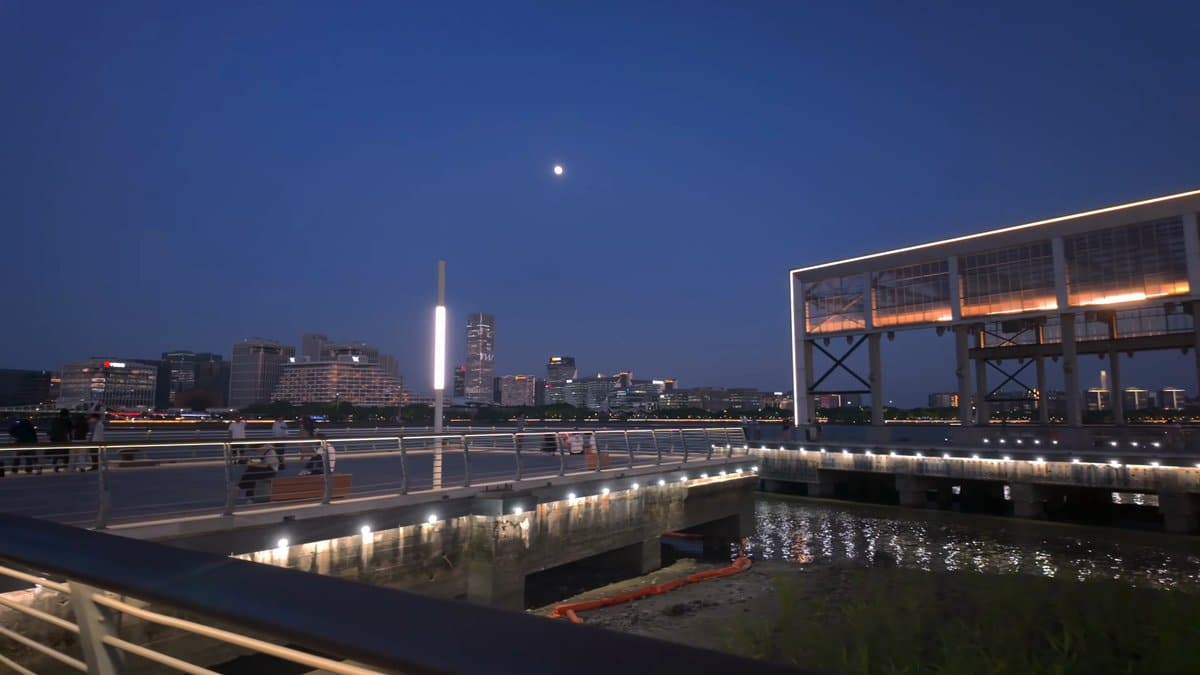
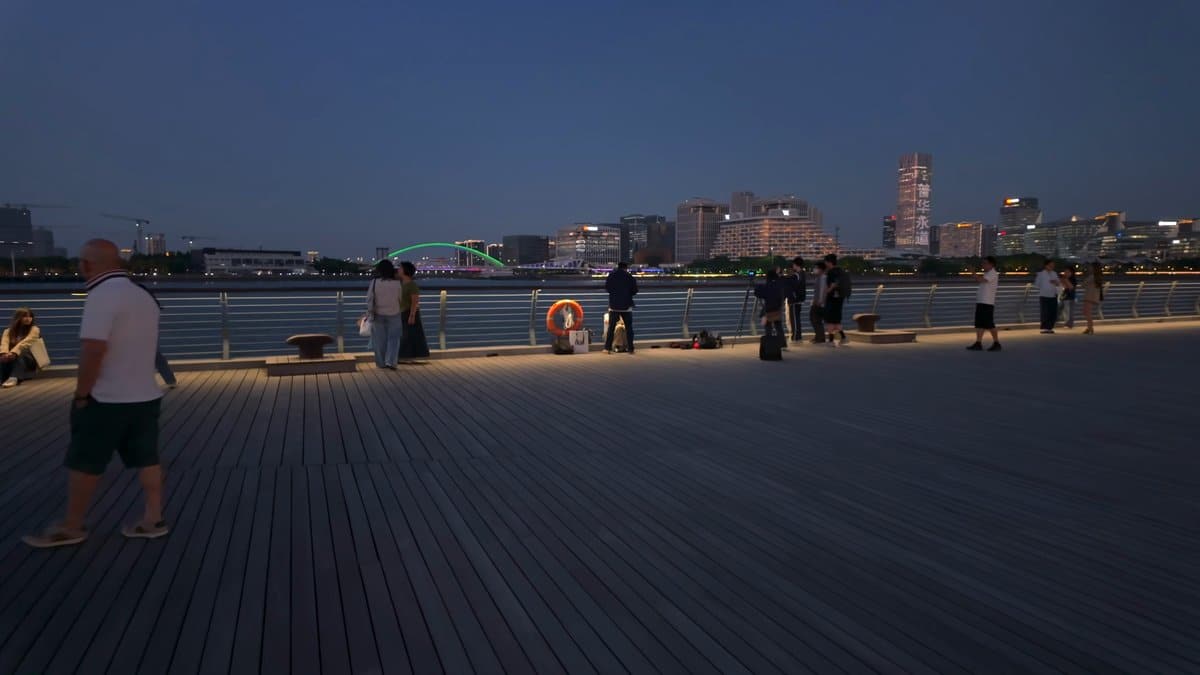
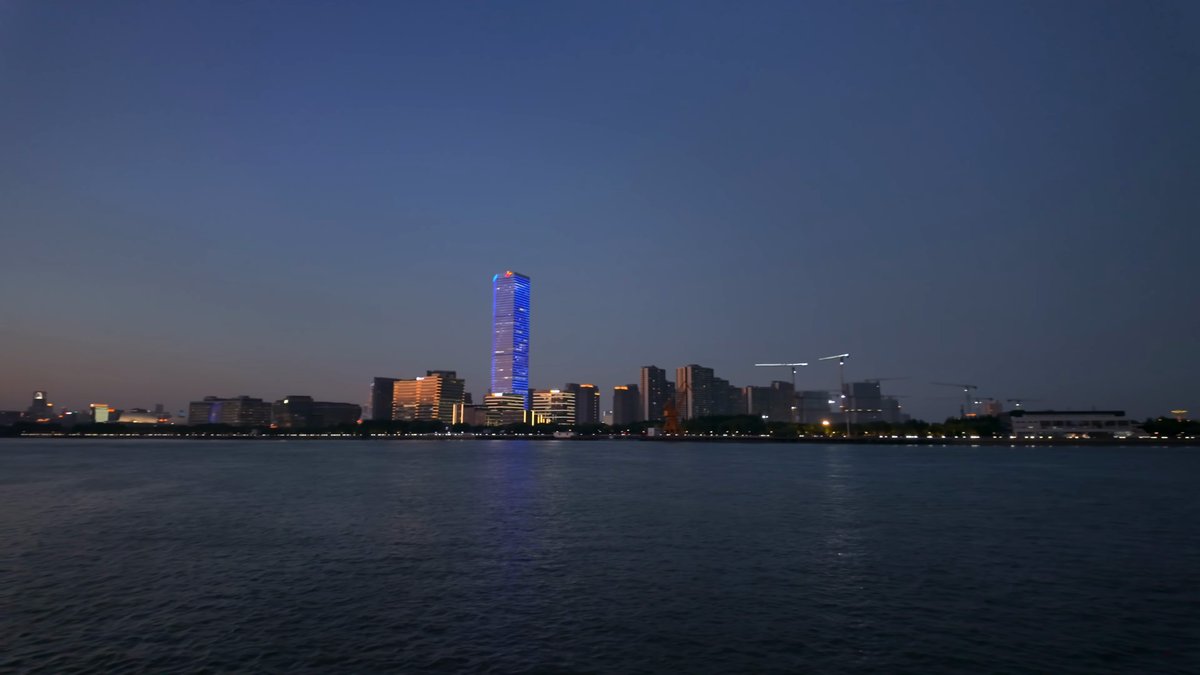
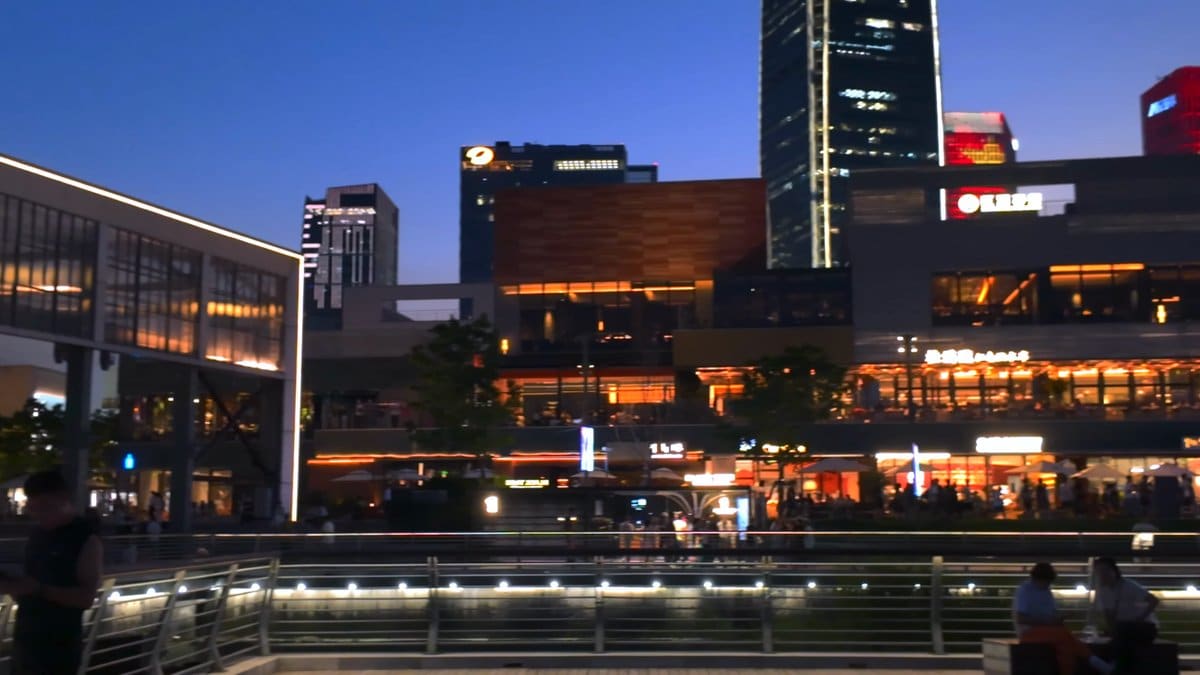
At night it all changes. Pavilions shine in the darkness, the lights run along the railings and reflect off the water, and the buildings on the other side of the river become sharper and more defined. Even at night, the area remains well lit and safe, and the boardwalk never closes.
It’s quieter than walking around during the day. It is more atmospheric. Every once in a while, you can see the moon over the towers.
To get the most out of West Bund, you should of planned to spend at least a few hours here and avoid rushing (the museums deserve time, as does the waterfront). The combination of new development and old infrastructure is far more interesting in person than on paper. What’s your favorite museum on the West Bund?
Or have you walked along the West Bund promenade yet?