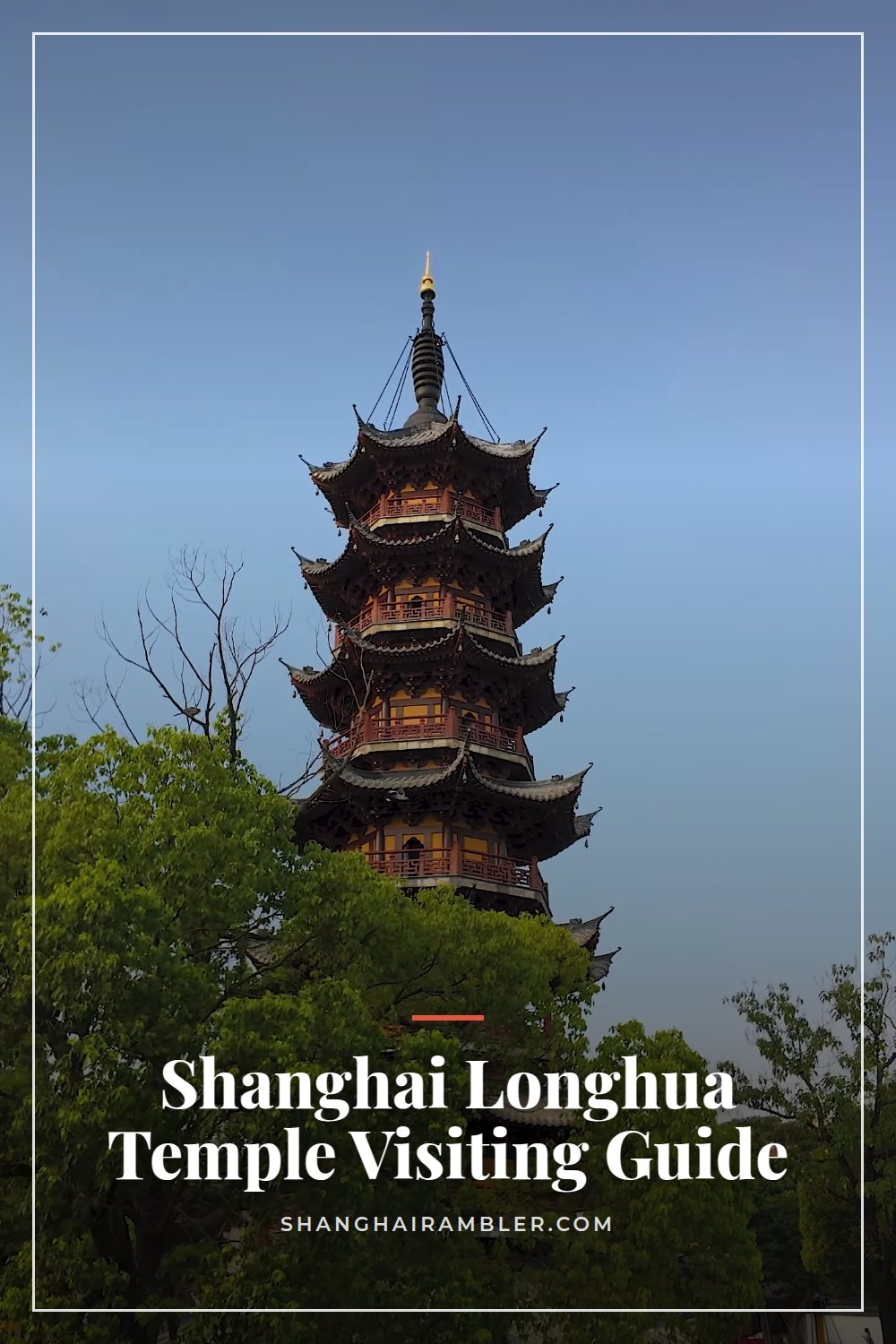
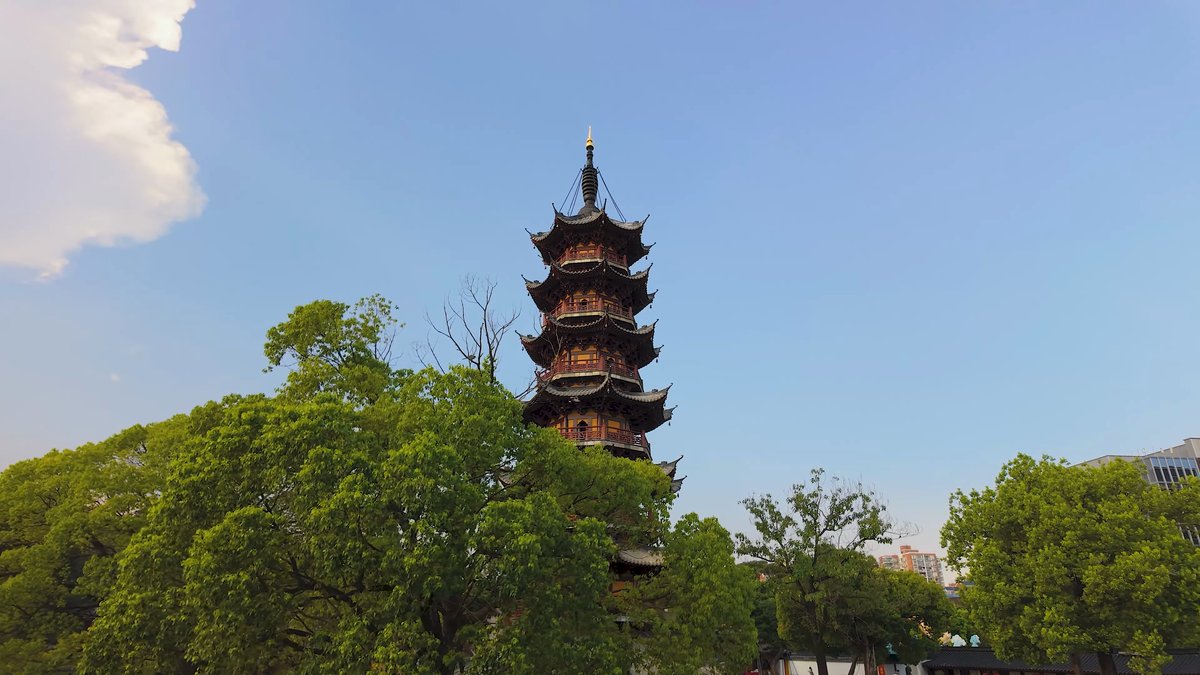
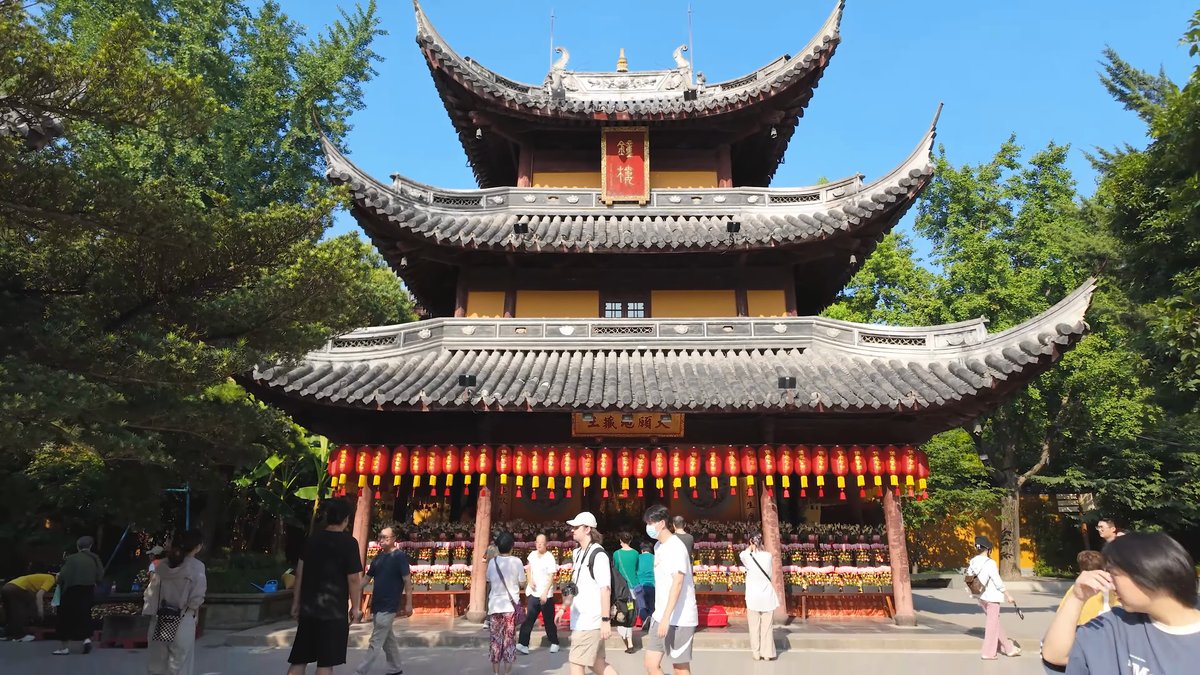
Longhua Temple, Shanghai‘s oldest and largest Buddhist temple, doesn’t seem that old, perhaps because it’s still a place of life in its courtyards. In fact, this temple has been standing since 242 CE (though the present buildings is from the Song dynasty and subsequent renovations). Next door, the seven-tier pagoda is even older at the bottom: It’s been built up over the centuries but retains its original shape.
All those tiers is stacked in that classic tapered shape that took architects centuries to perfect, making the pagoda dominate the skyline for blocks around. The main halls and the pagoda are what most people visit for; and why not? That’s fine.
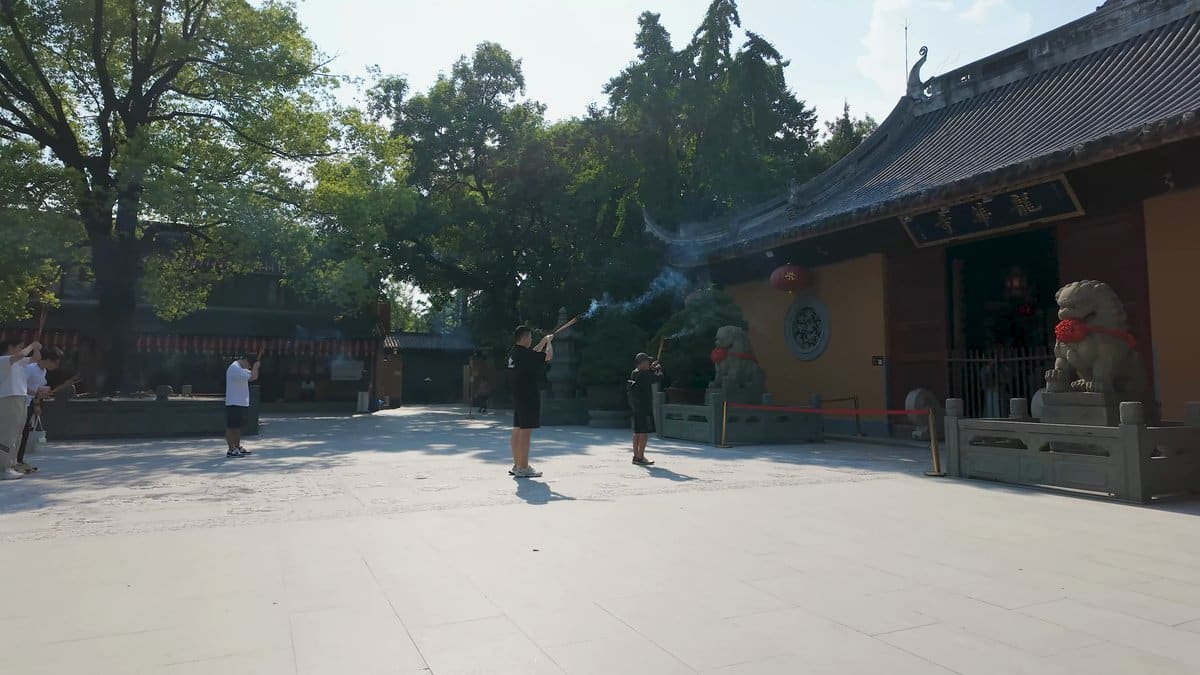
It’s more fun, though, to wander through the quieter parts of the temple, where locals drops in during their lunch break to light some incense and monks continue to go about their business. Admission is roughly 10 yuan depending on the time of year, and if you want to see it at its quietest, get there early so you can watch the morning prayers.
Walking Through Longhua Temple’s Courtyards
Longhua Temple
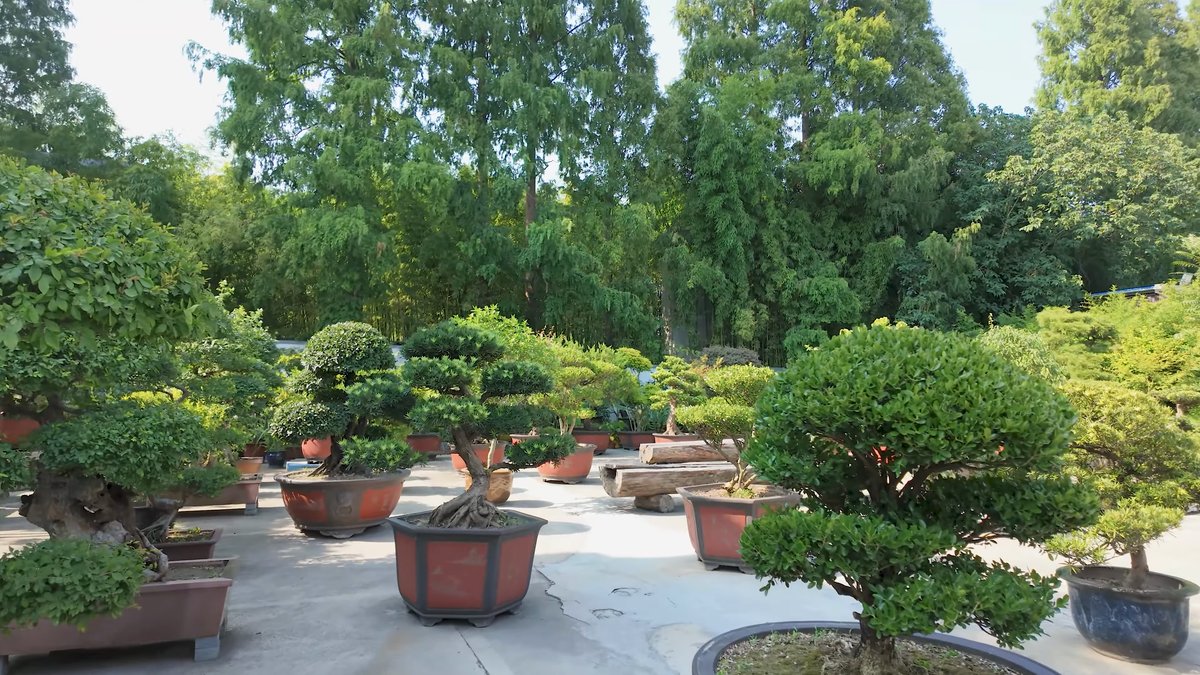
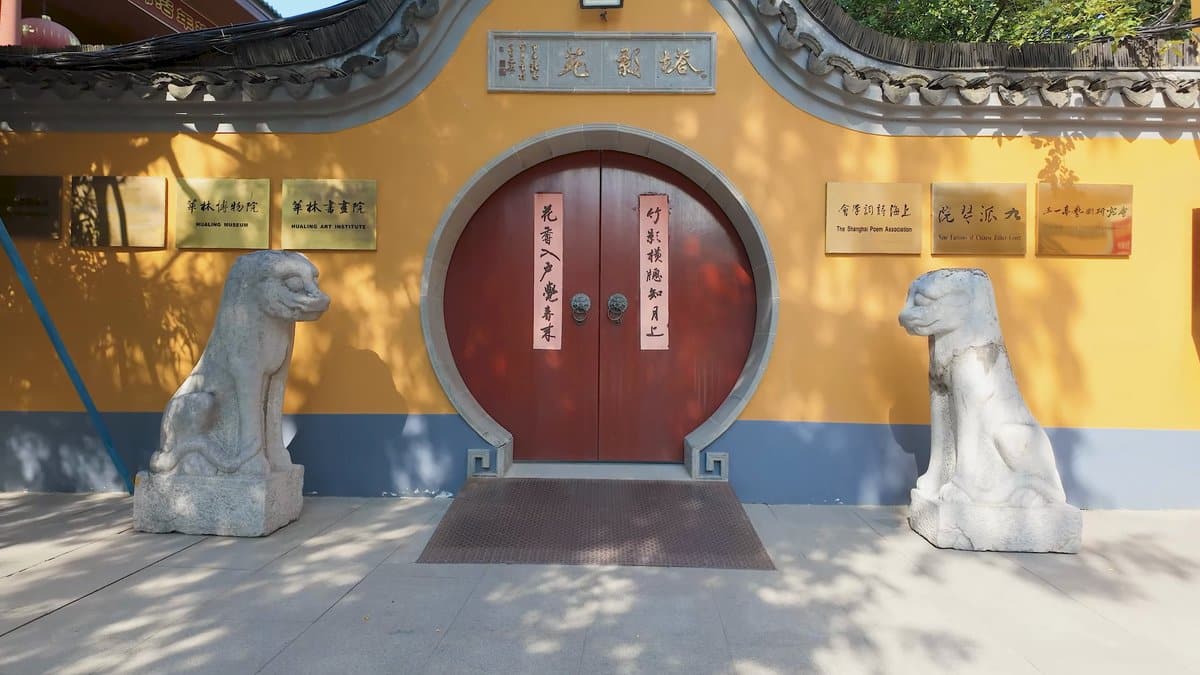
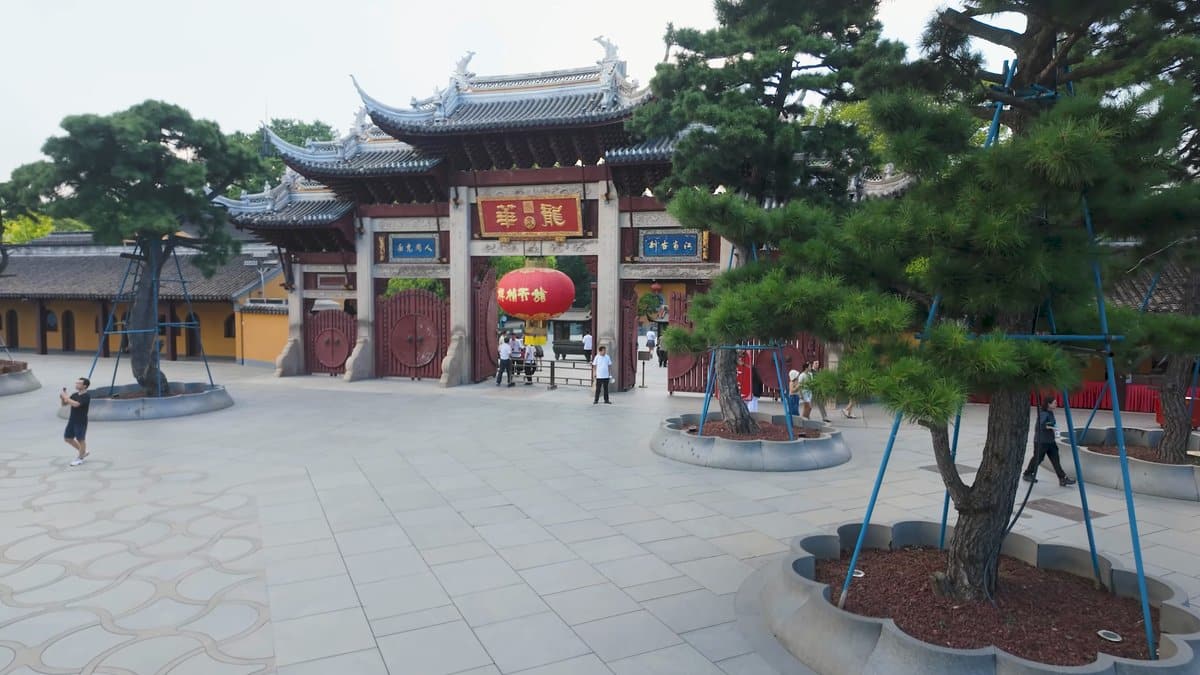
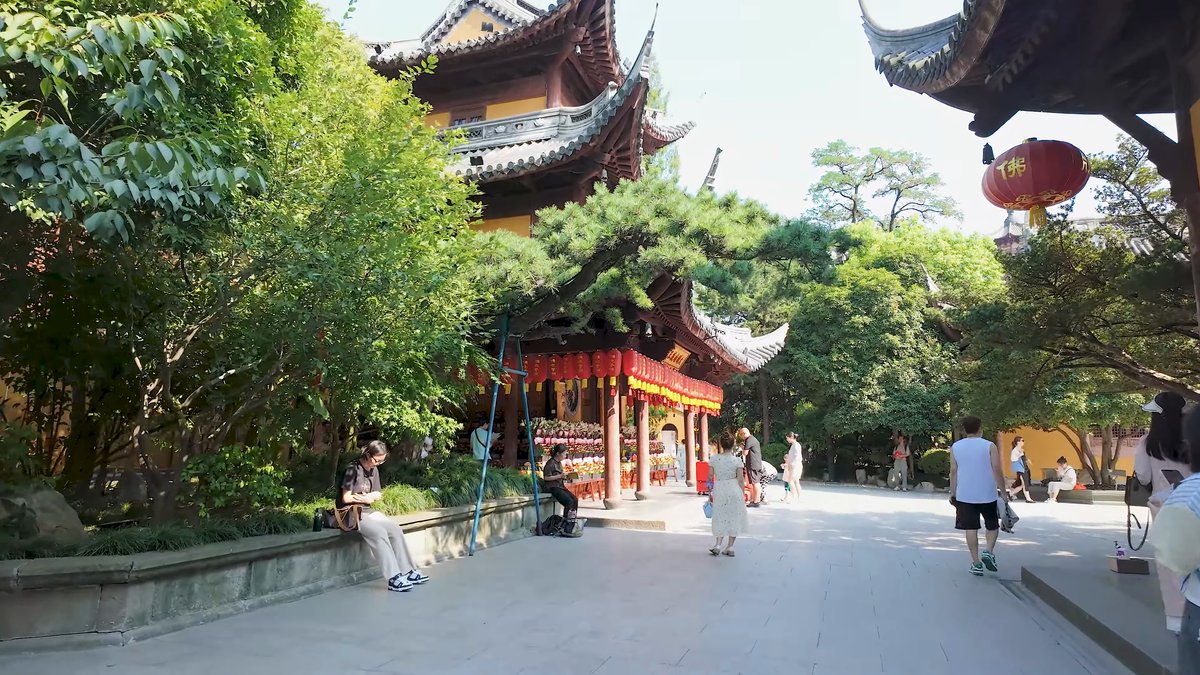
Beyond the gate, courtyards open up in succession. Stone plinths holds potted pines whose limbs are trained into shapes that seem purposely arranged yet also naturaly. Yellow walls feature moon gates, which slice through to reveal vistas of more tile roofs or the next courtyard.
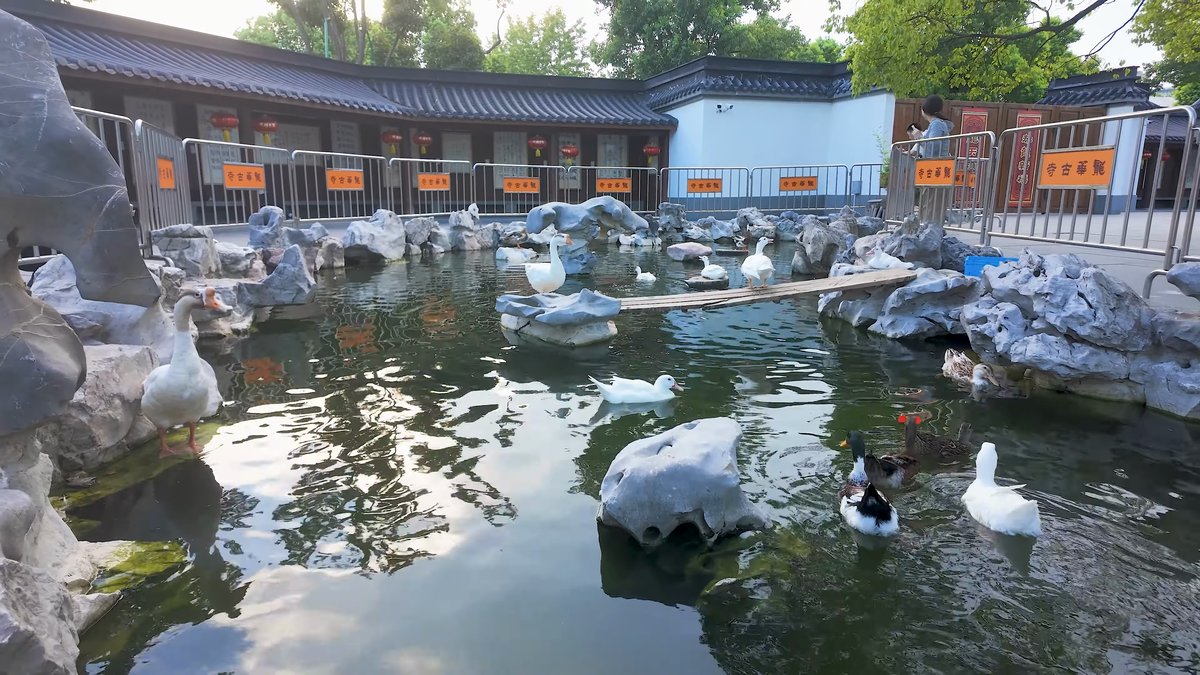
On the east side is a pond surrounded by rocks where ducks paddle between the stones and a wooden footbridge crosses the shallow water. Between those small pavilion, with their upswept eaves, there’s a bench or two but not much else. It’s quiet out here, and this is where the temple scatters its bonsai collection instead of putting them all into one formal garden.
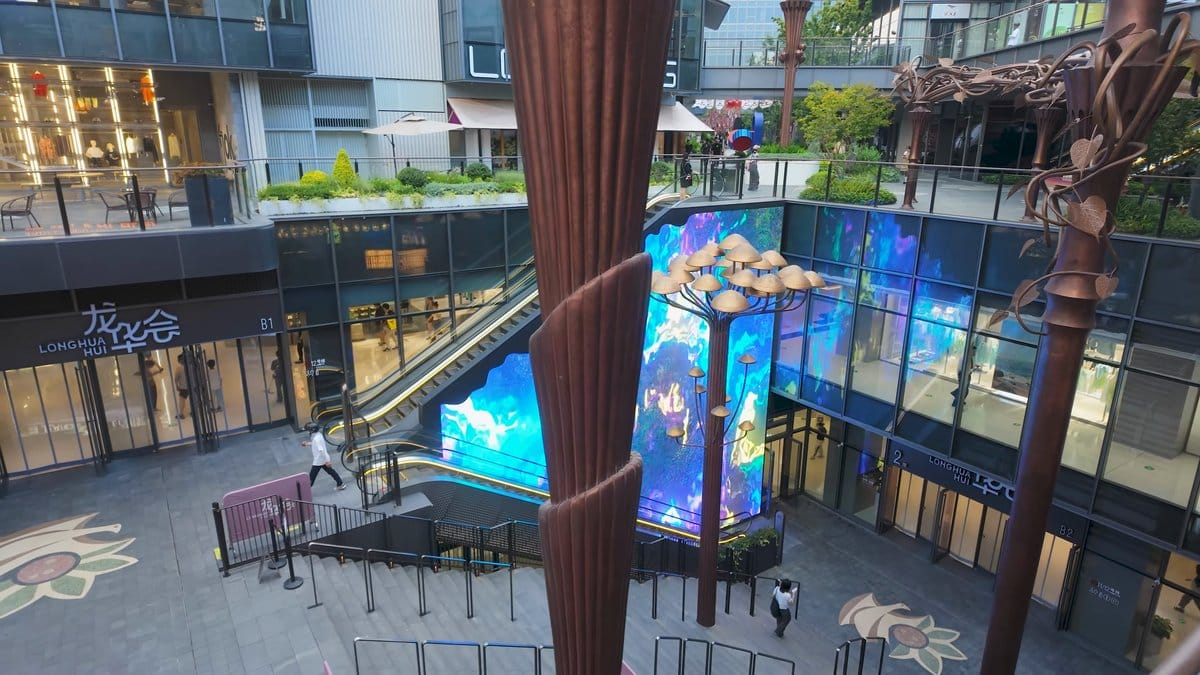
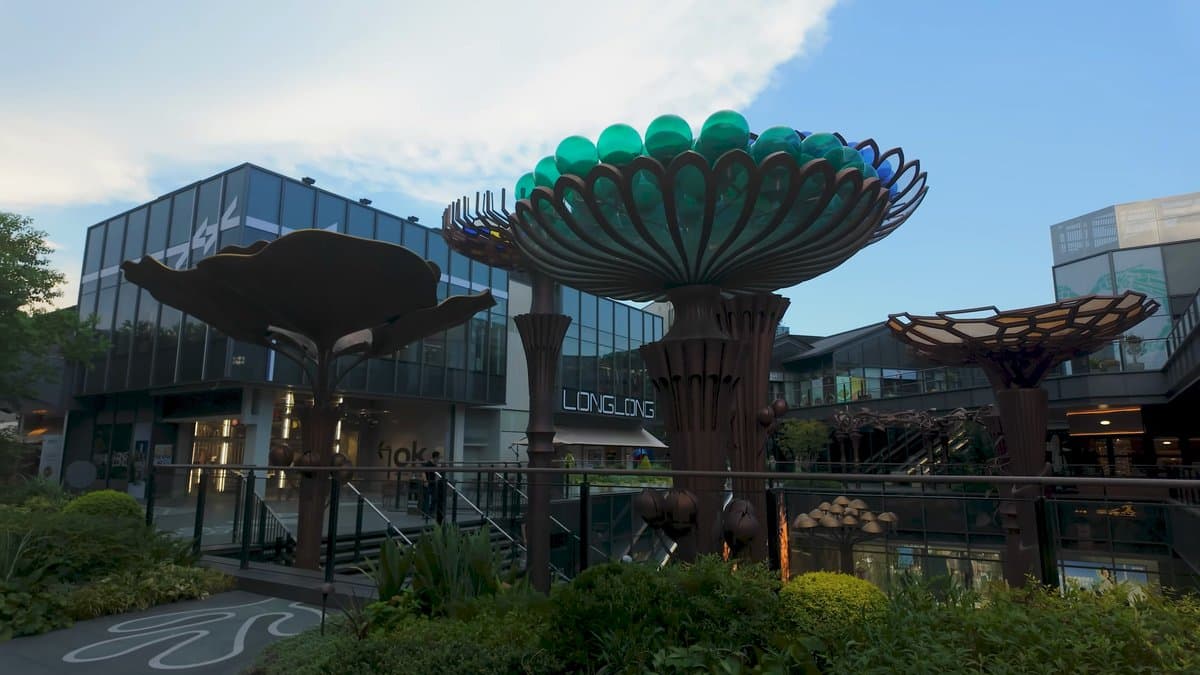
A moddern mall with mushroom-like canopy architecture has sprung up right beside the temple walls. It’s jarring, and typical of Shanghai, where centuries-old architecture gets shoved up against whatever went up last year.
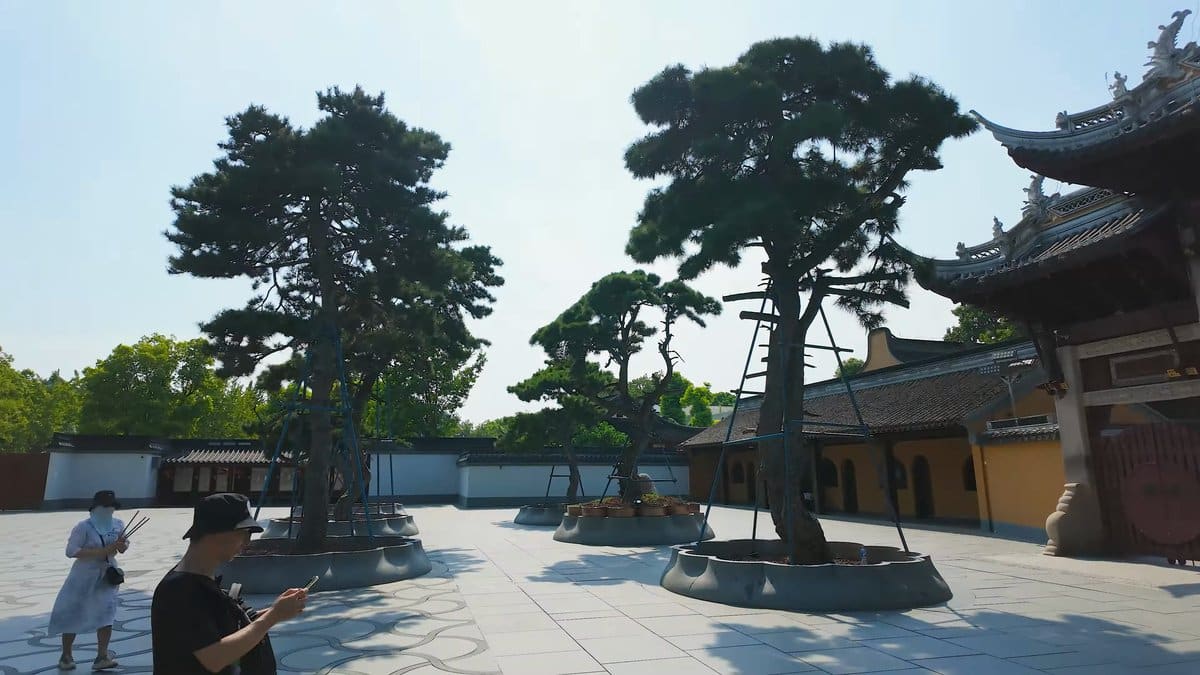
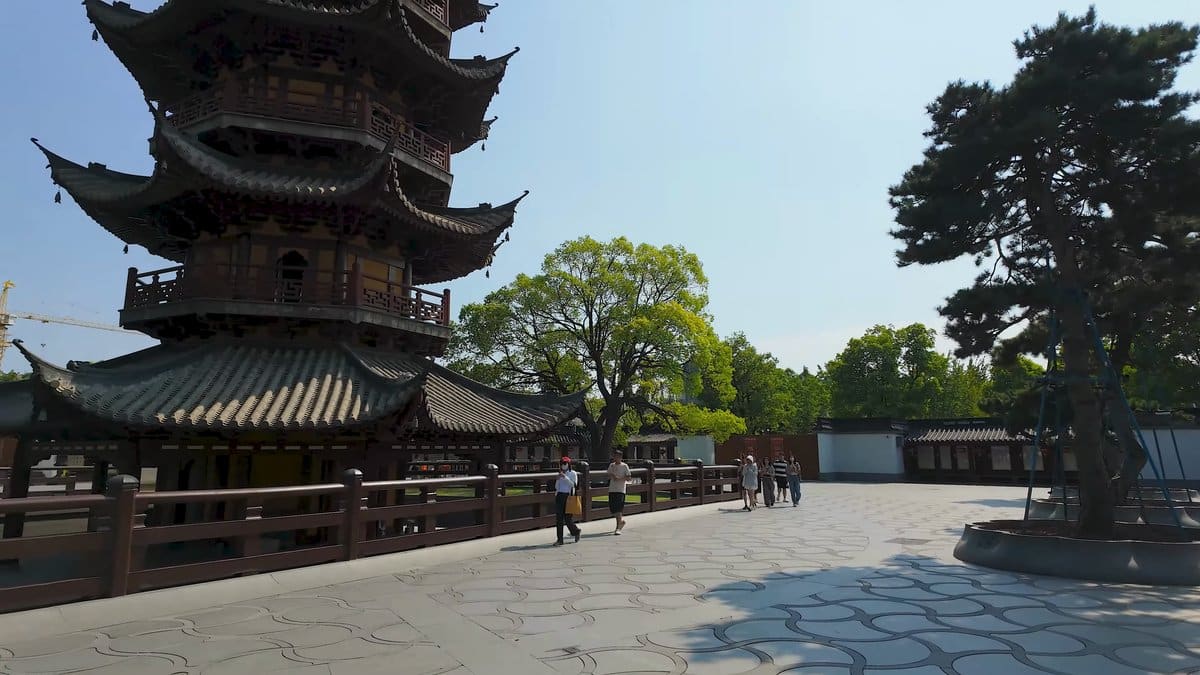
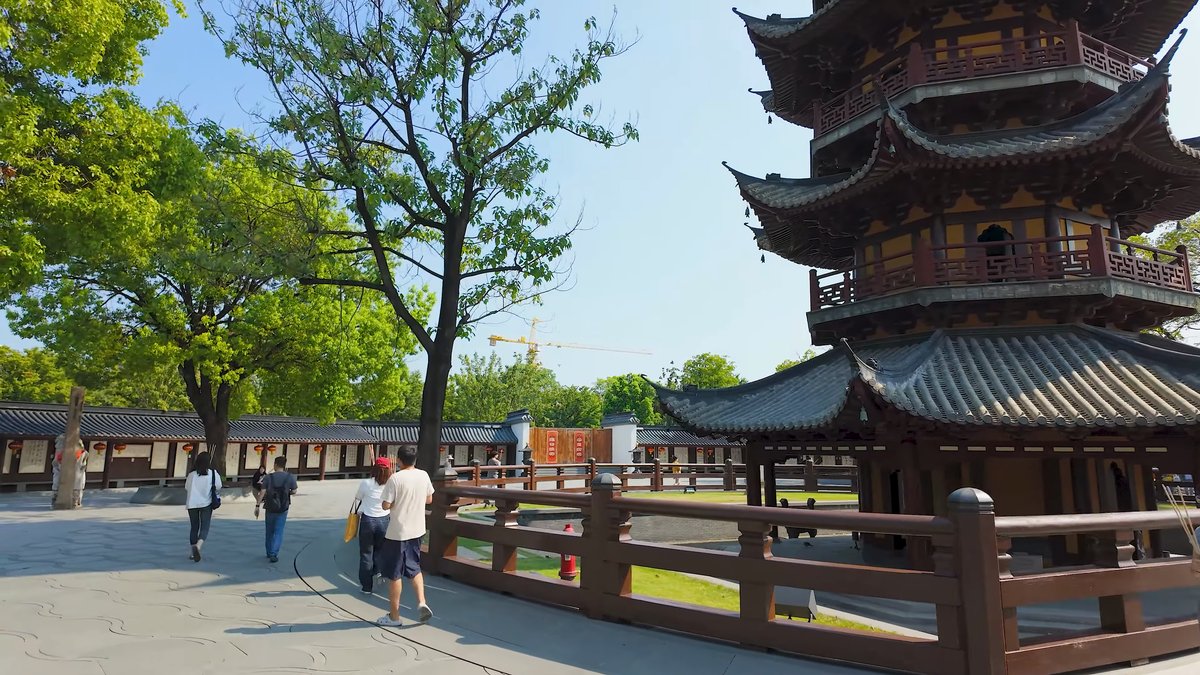
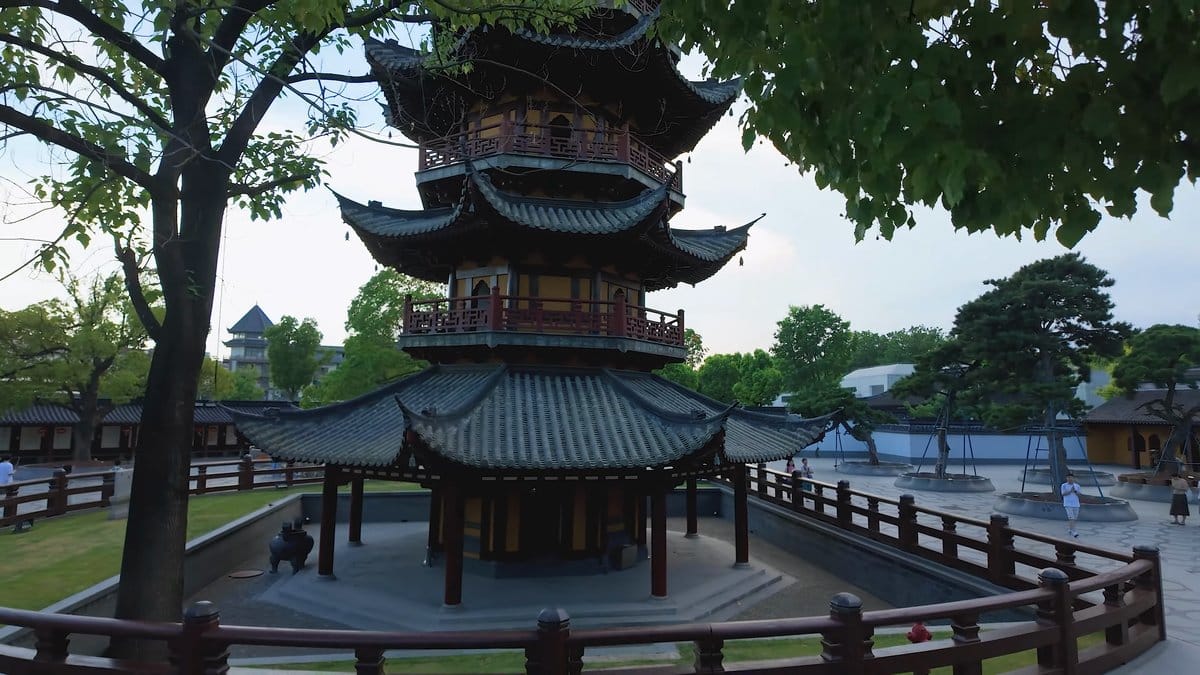
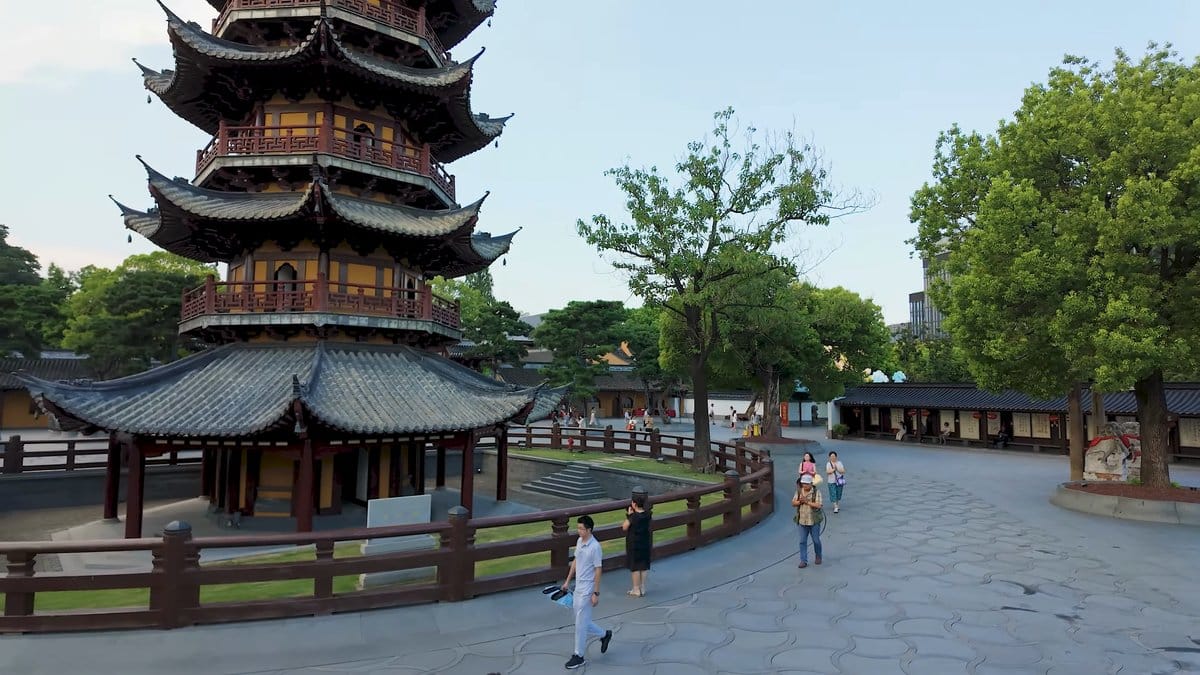
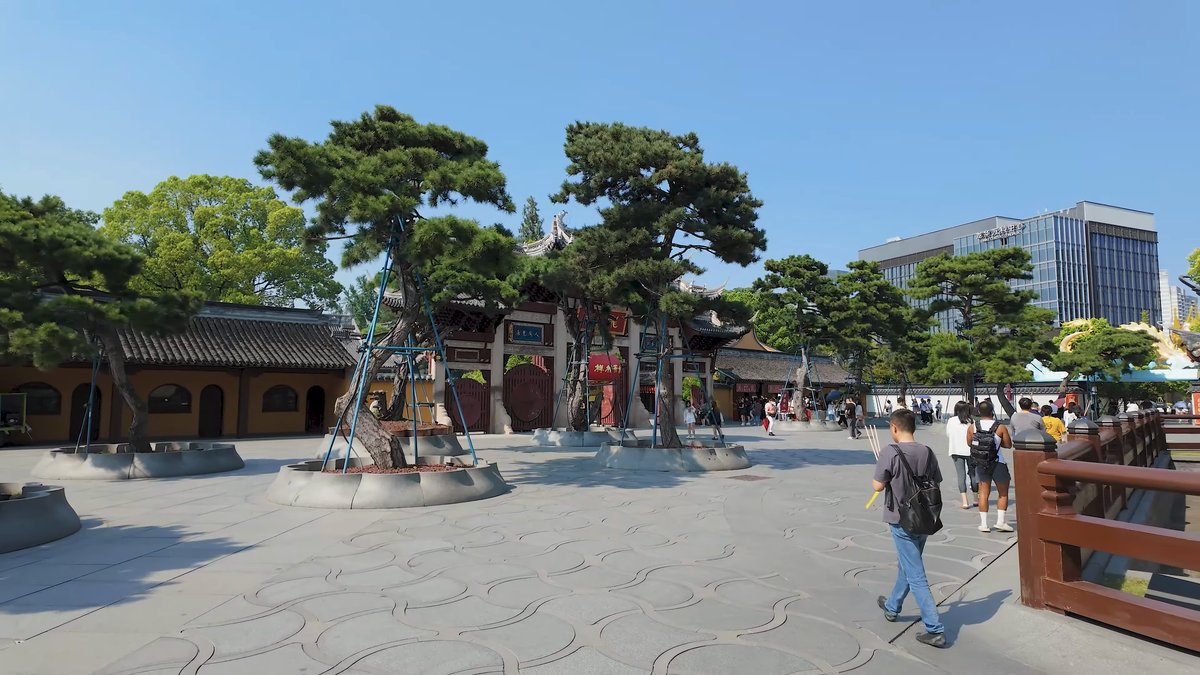
Most of the foot traffic is at the pagoda plaza. Visitors circle its base, craning their necks as they try to count the tiers or get a photo past the pine branches. These days you can’t actually climb up into the pagoda, though it disappoints some, it probably saves the ancient structure.
Above the balustrade are seven tiers, each a little smaller than the next. Sculpted pines dot the perimeter of the surprisingly spacious paved plaza.
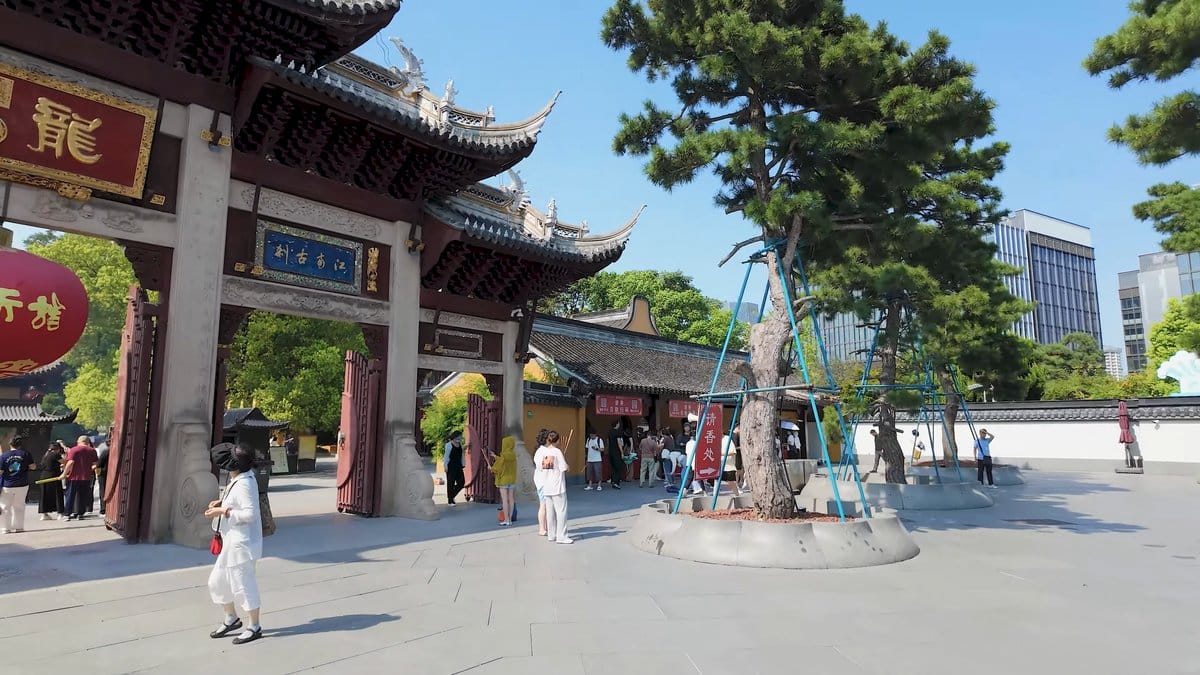
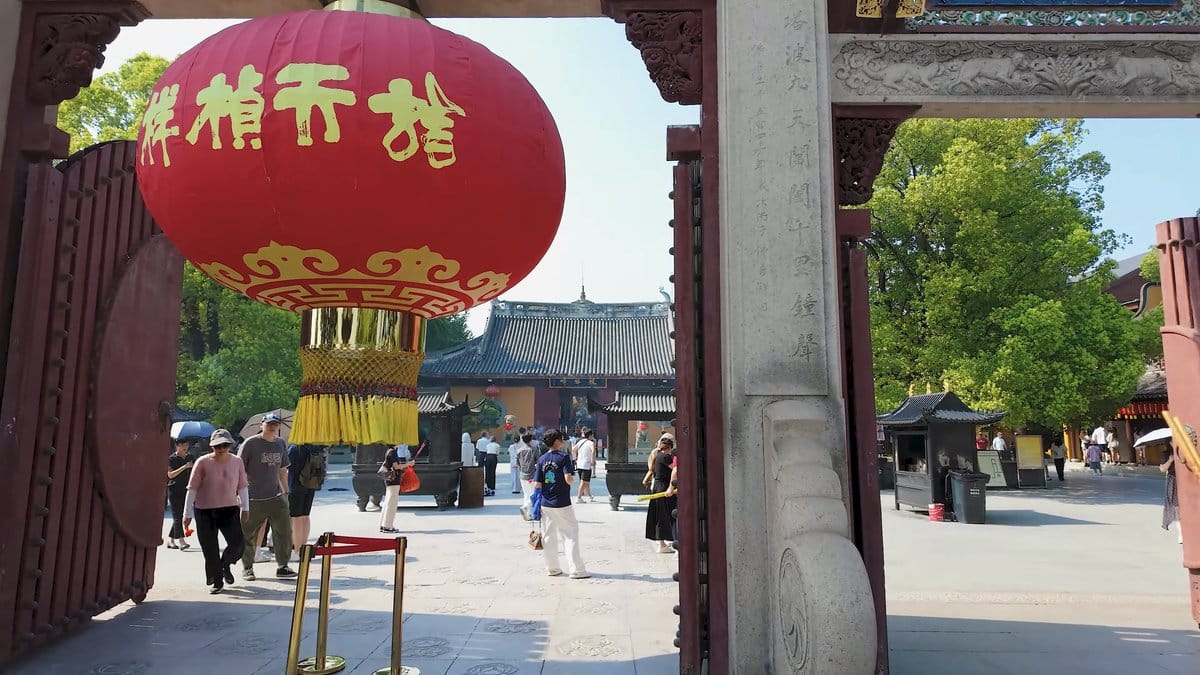
The gateways between the halls display intricate carvings, such as dragons curling around the lintels. In every doorway there is lanterns, some inscribed with the name of the donor.
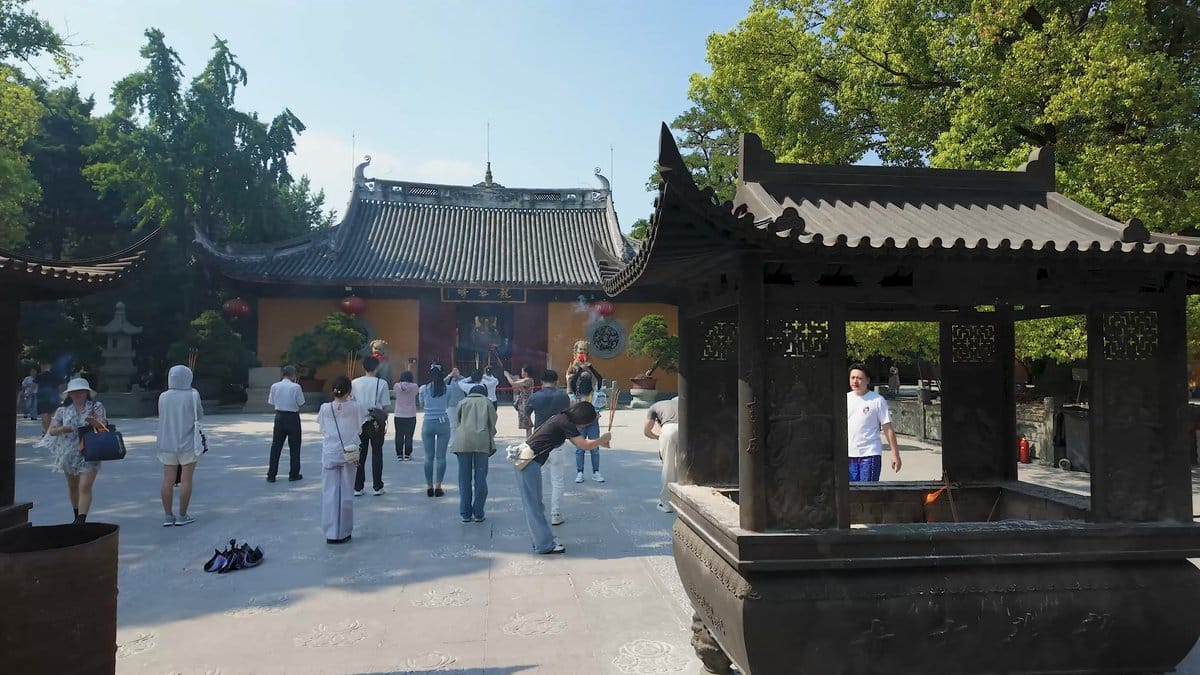
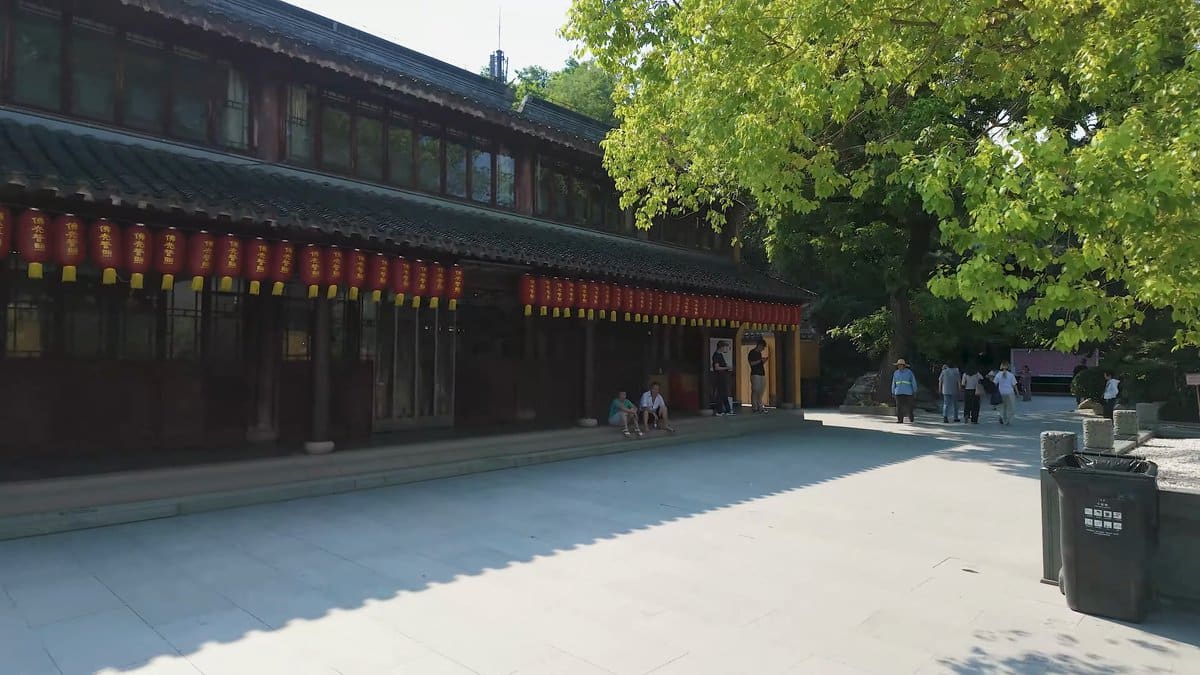
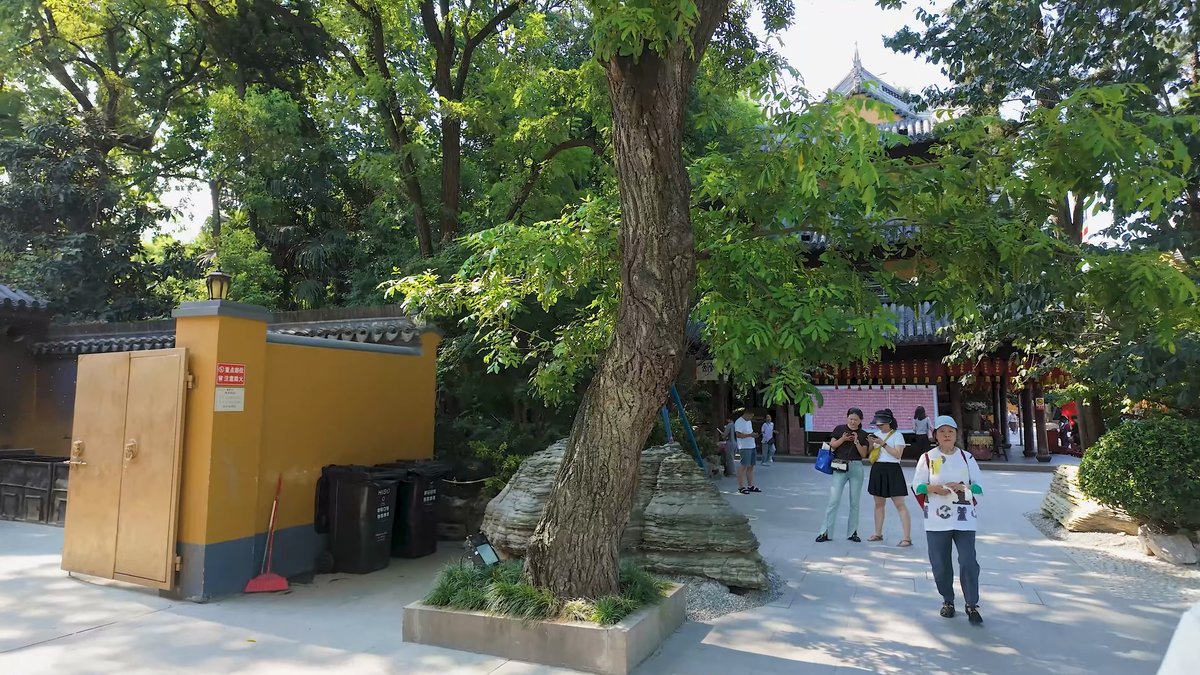
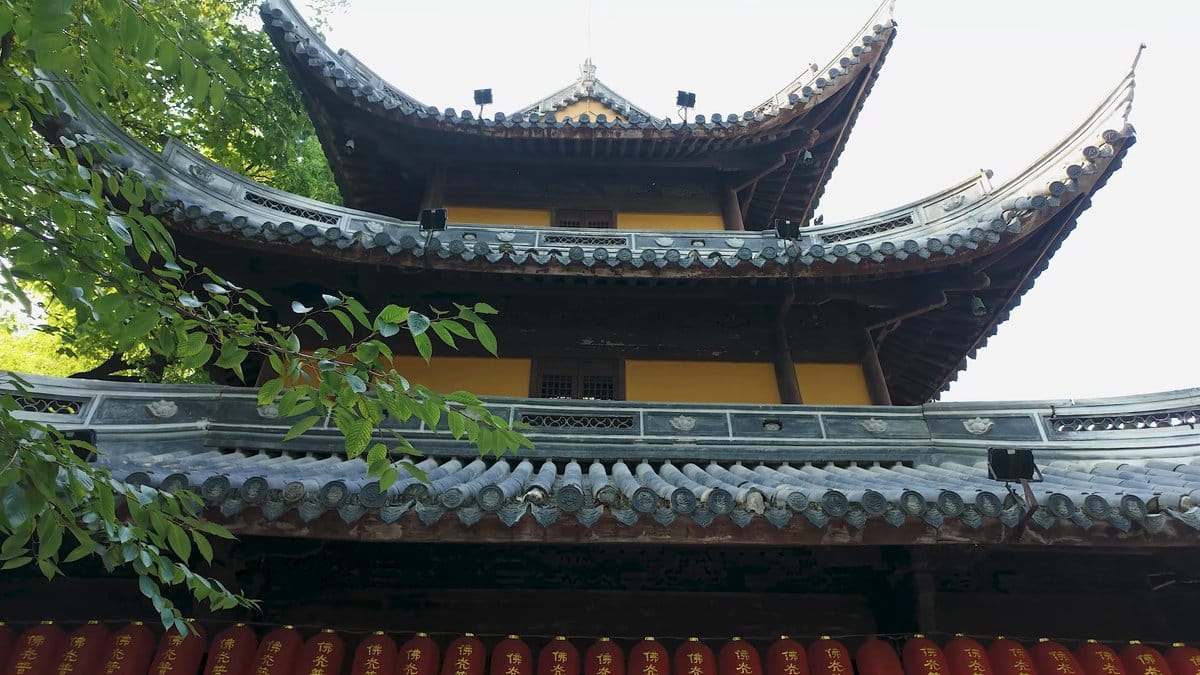
There is also at least one incense burner in each courtyard, typically a waist-high bronze structure that puffs smoke all day long (and which becomes so thick with it during festival times as people crowd in, shoulder-to-shoulder). The courtyards’ edges are lined by colonnades whose columns is painted the same color that temple builders have used for hundreds of years. The roofs of the main halls rise over the walls, and small kiosks provides shade from the sun.
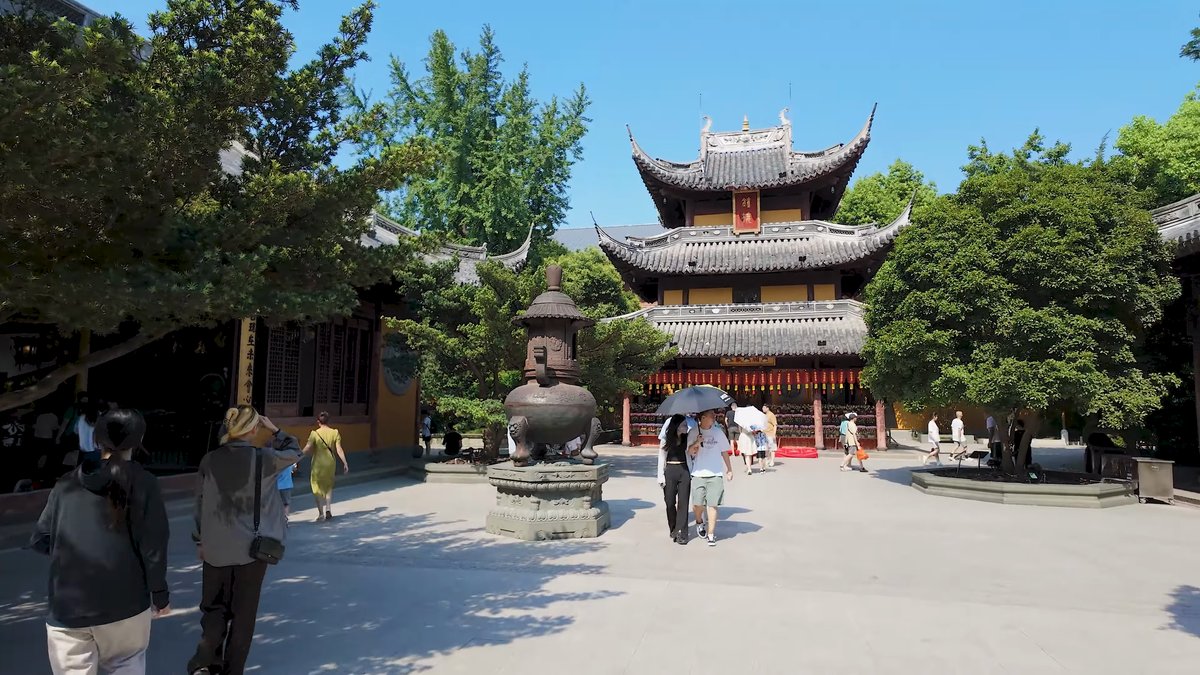
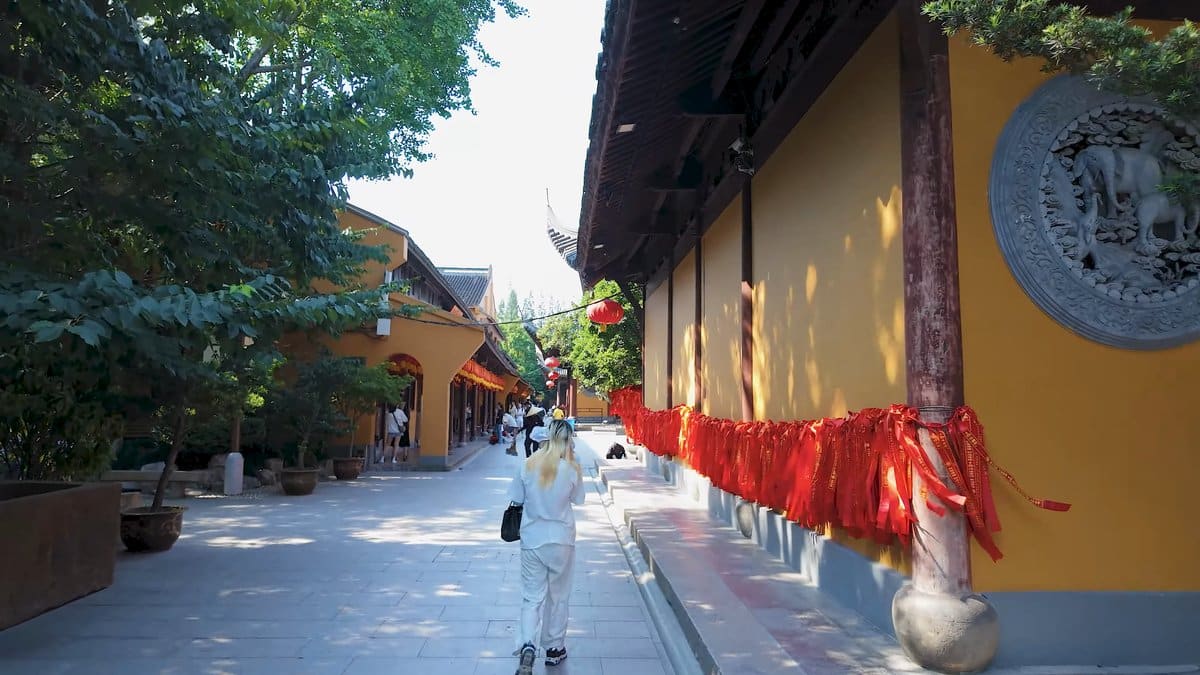
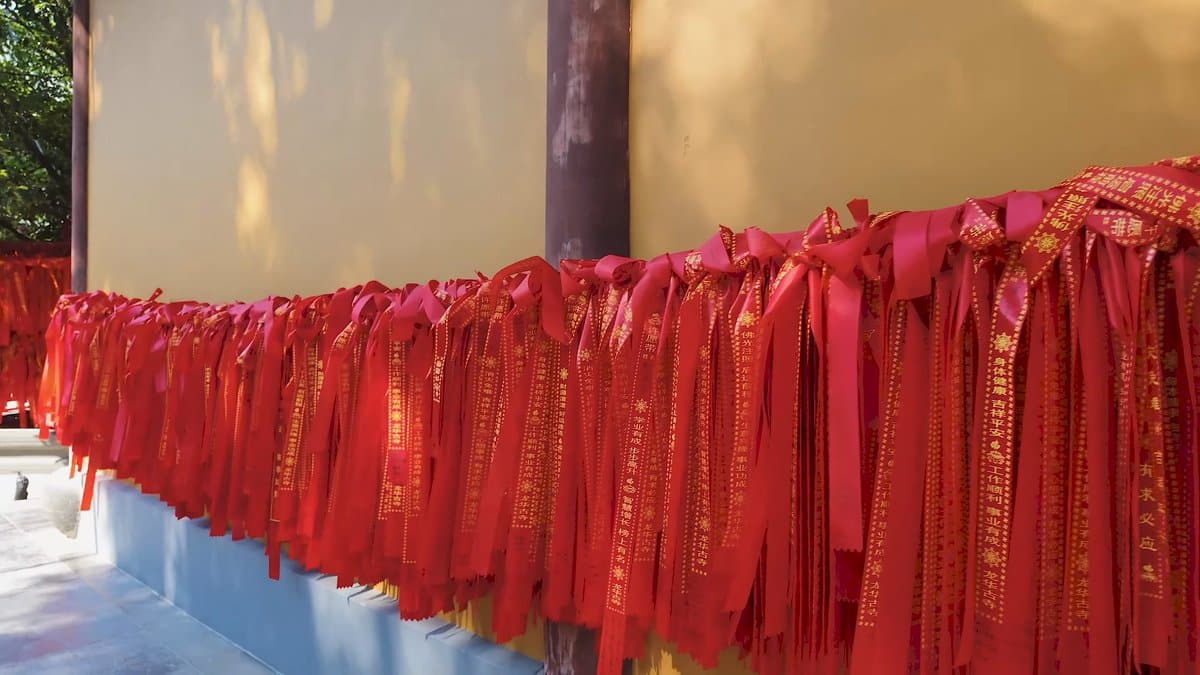
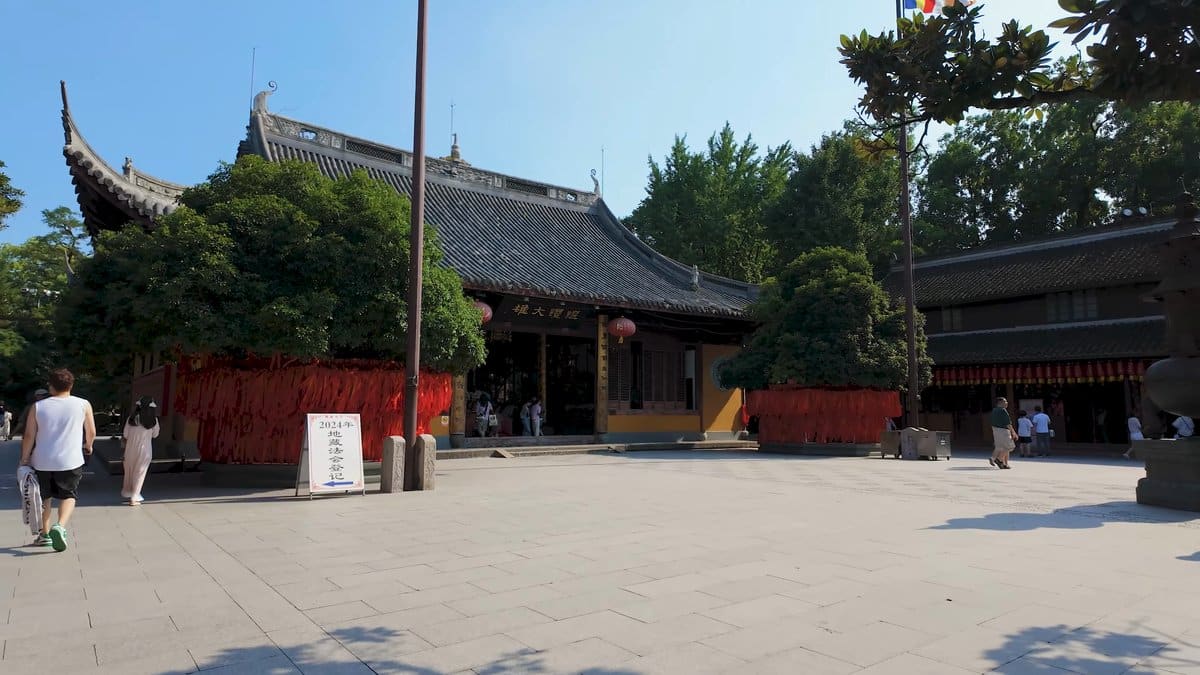
In the center of the compound is a large bronze incense tower, large enough to walk underneath its billowing smoke. The walls nearby are lined with prayer ribbons; some are tied one by one, others in thick bundles that ripple and sway as the wind catches them.
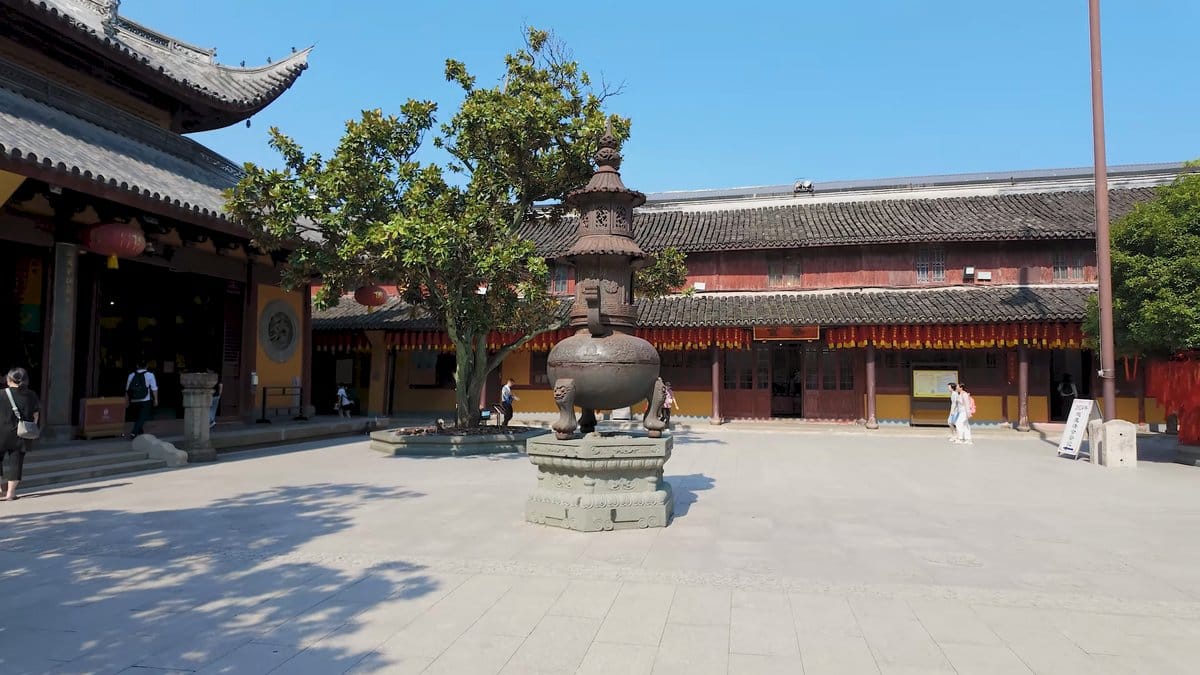
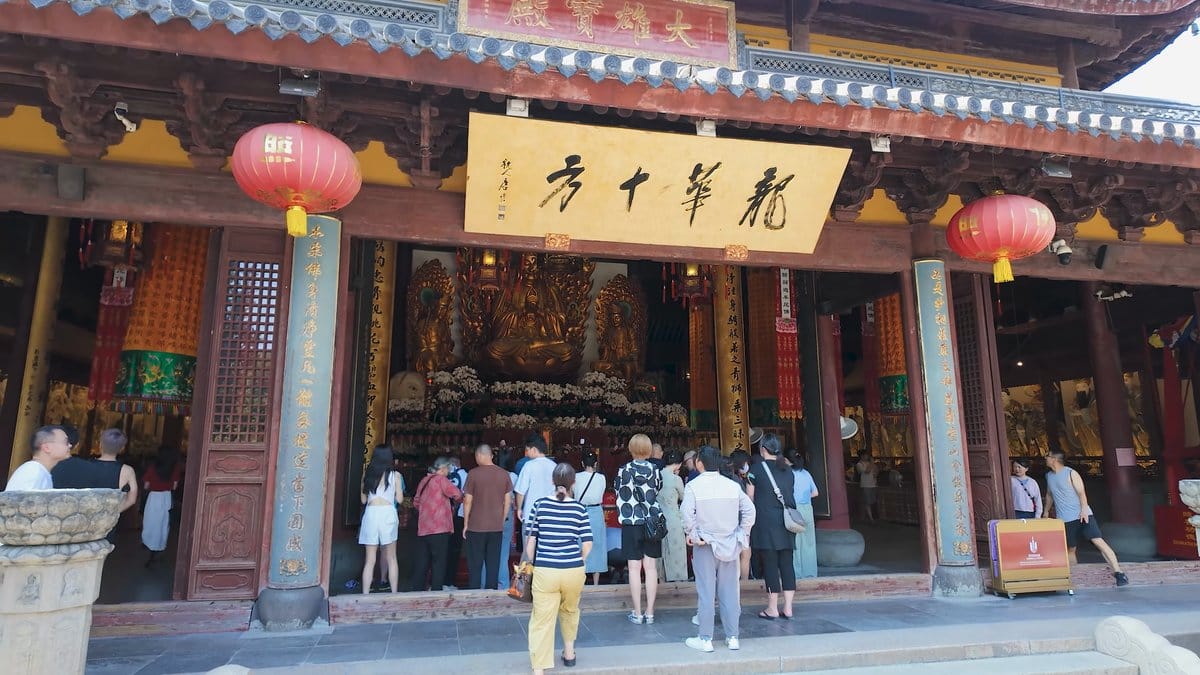
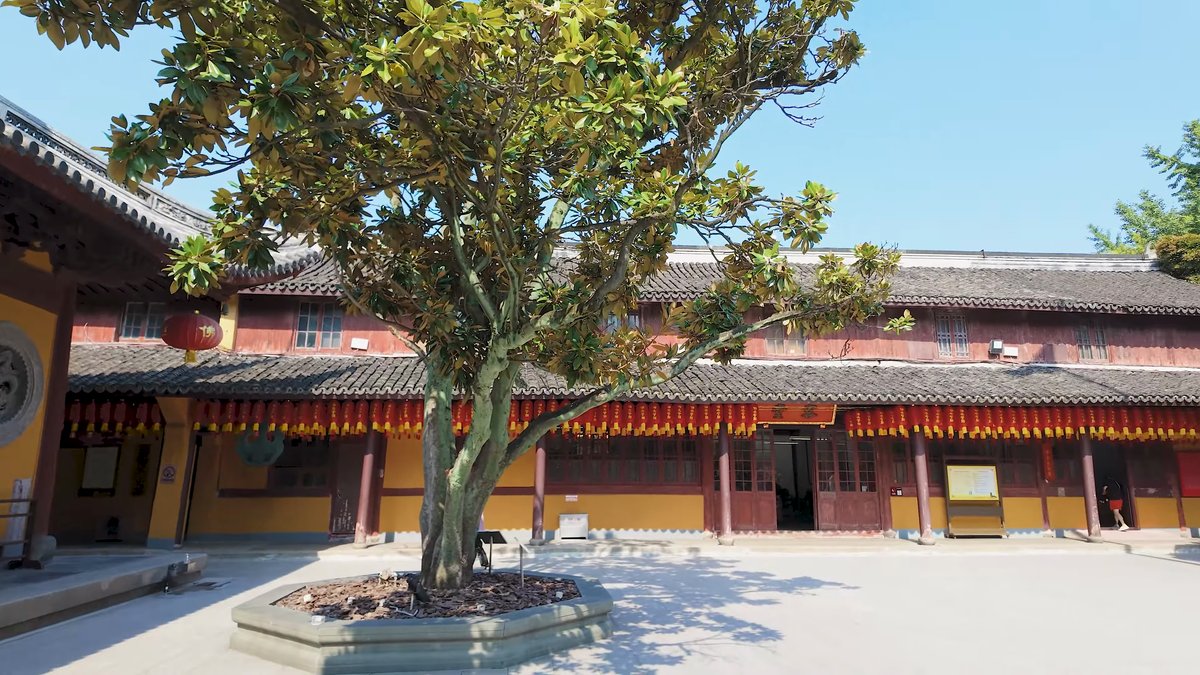
Halls surrounds the incense tower on three sides. The central hall of worship, called Mahavira Hall, is where worshippers constantly line up to kneel on cushions. One of the wooden galleries is propped up by supports as an ancient tree leans against it; it’s been propped up but is still very much alive.
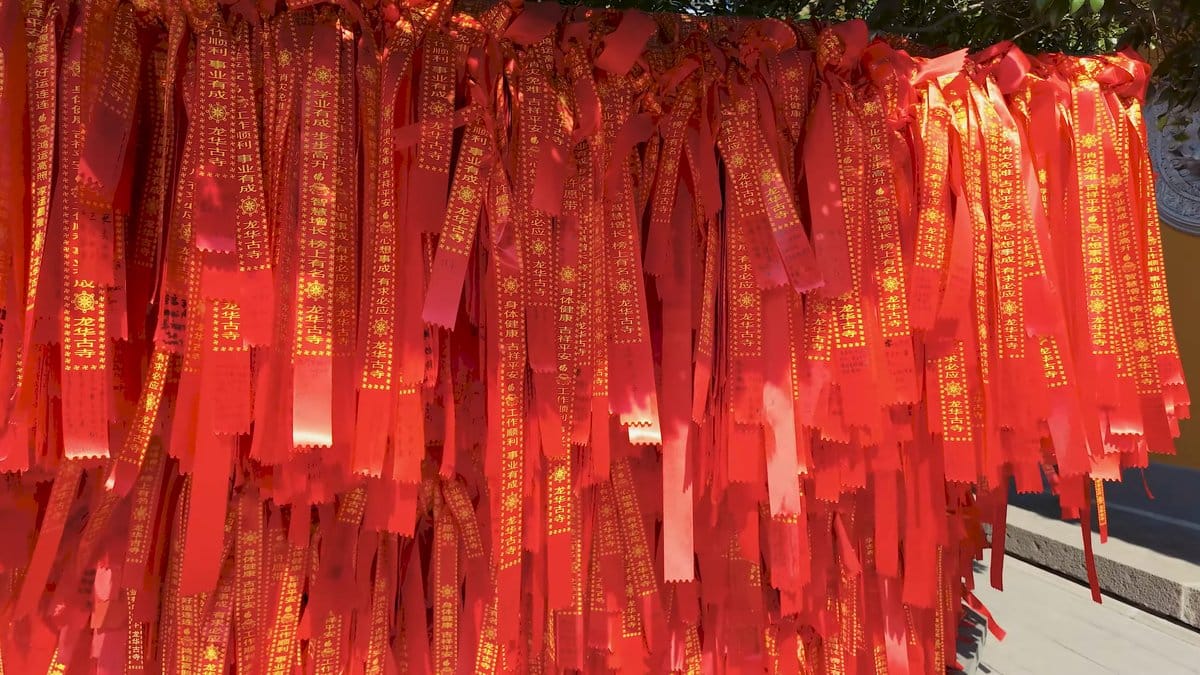
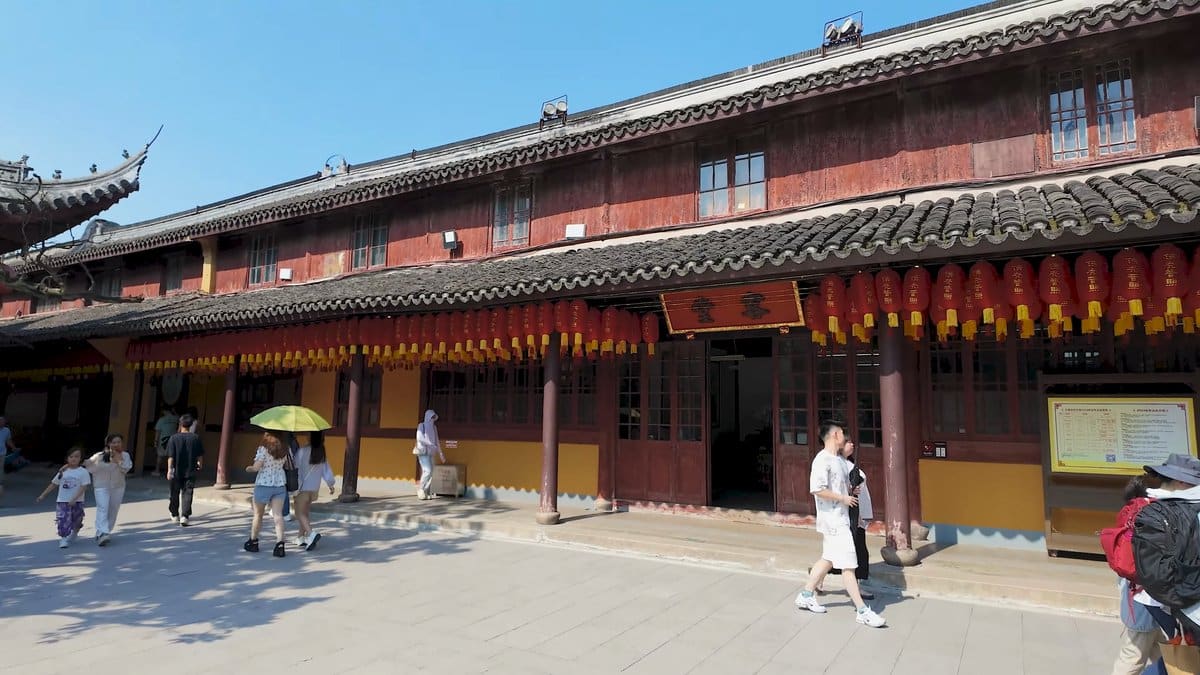
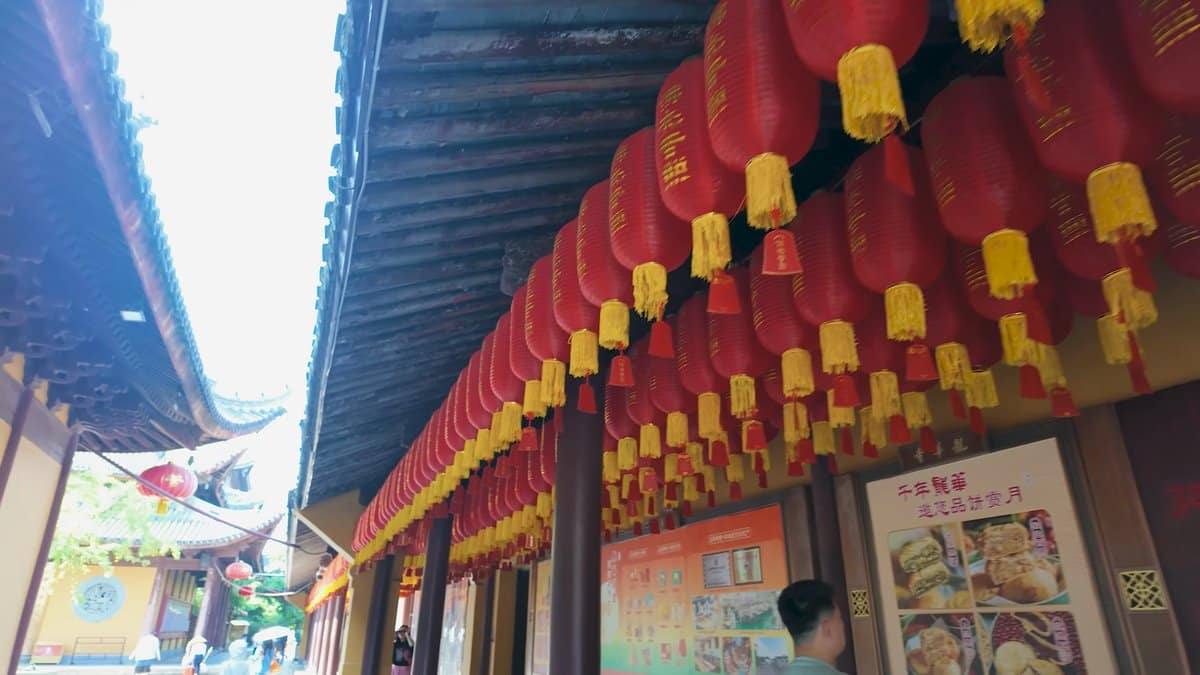
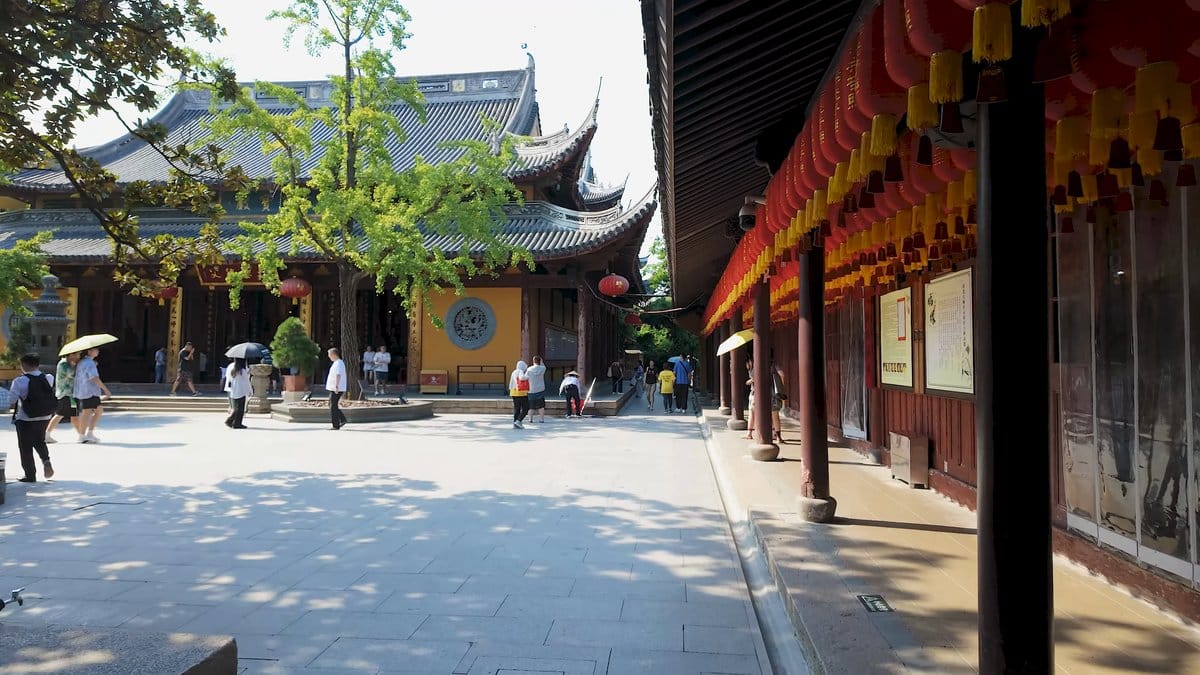
Some doors has prayer ribbons hanging from them like curtains, printed with blessings. In the courtyards, people carry parasols around on hot days (and even string them up under the eaves to create some shade for themselves if they stay near the walls).
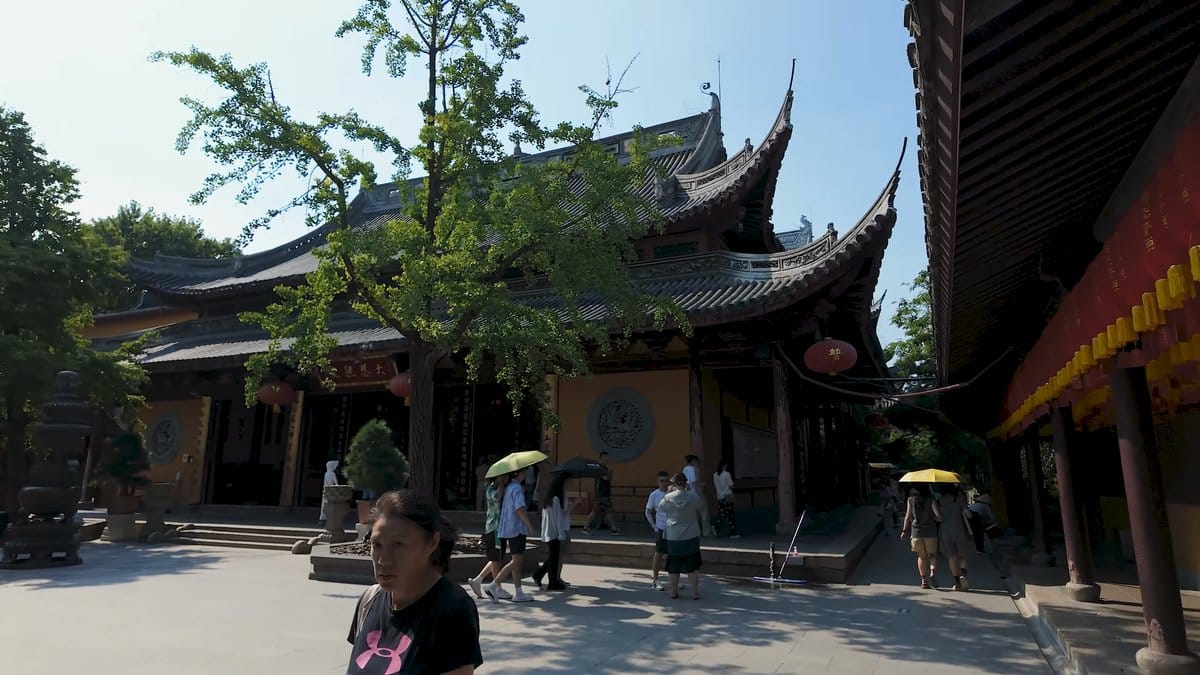
During the summer months, when the sun beats down on the open courtyards, pilgrims will often bring their own parasol and set it up next to them as they pray.
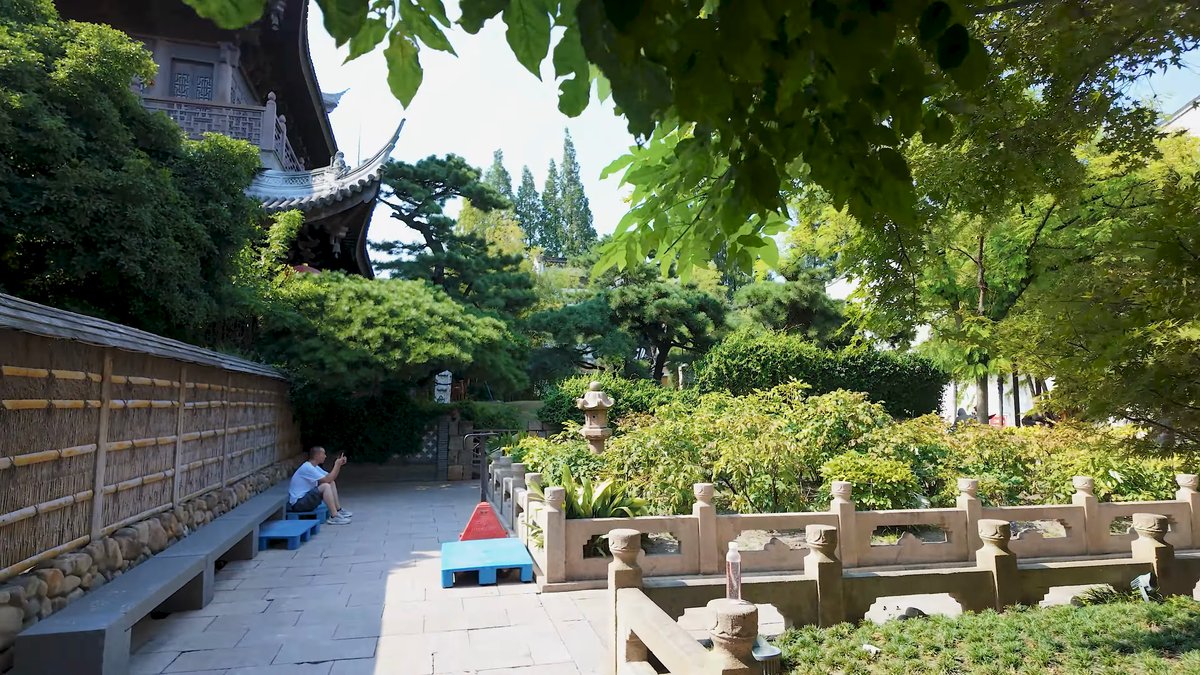
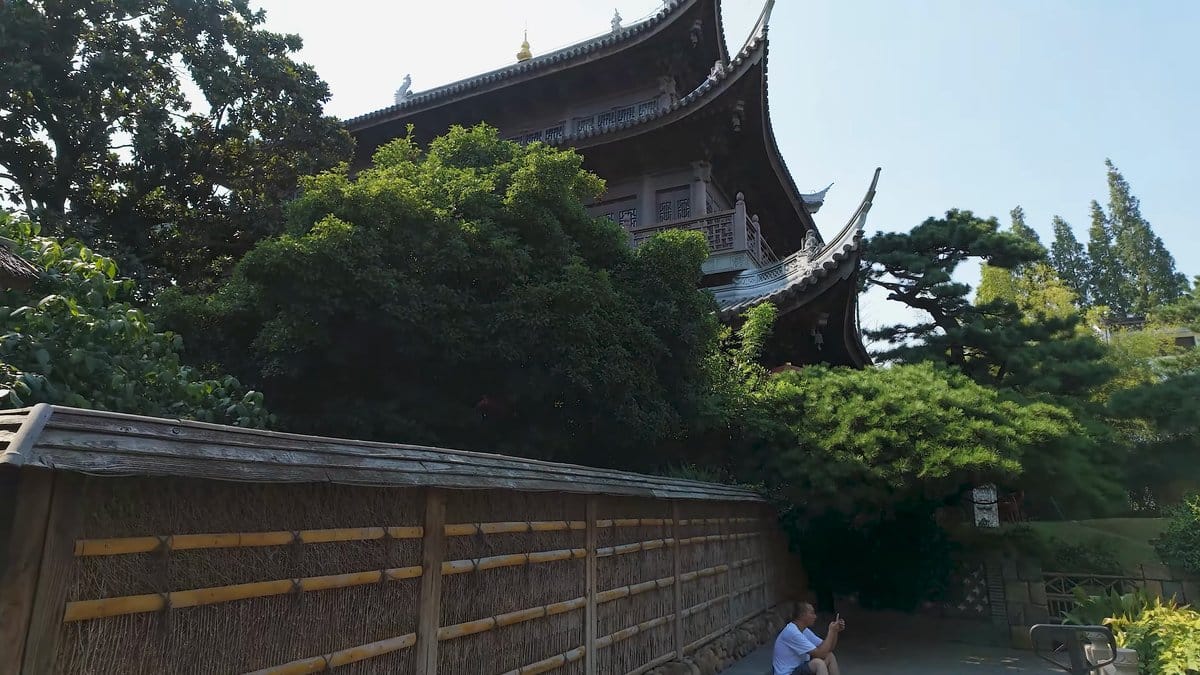
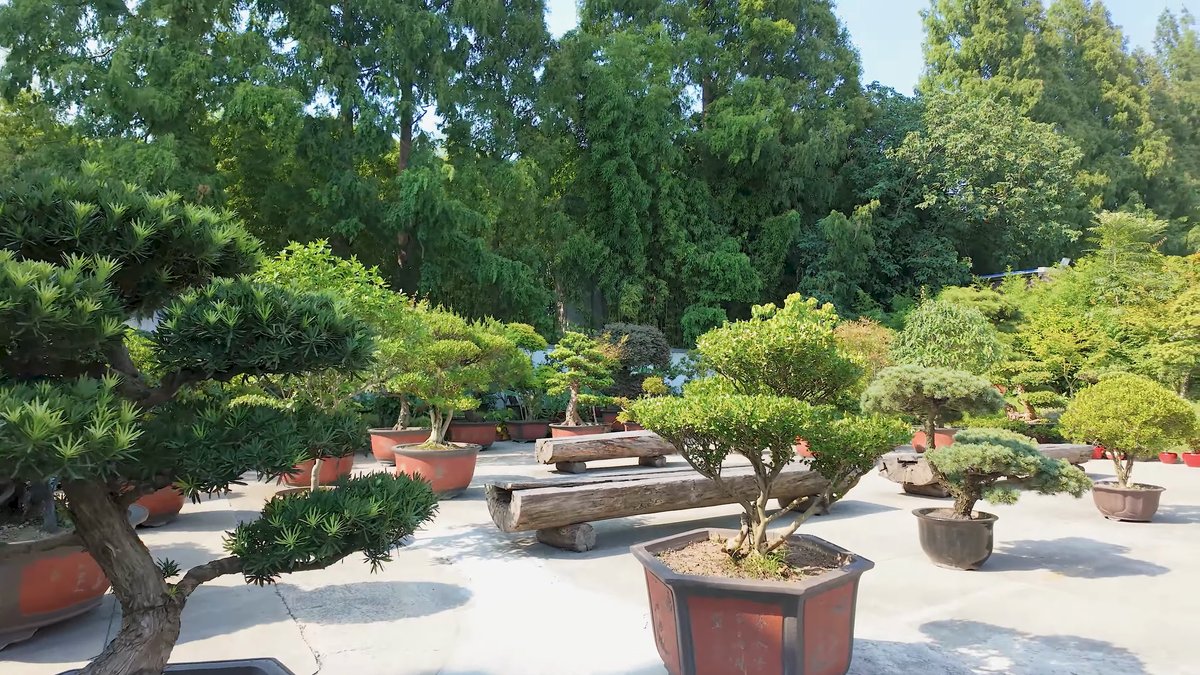
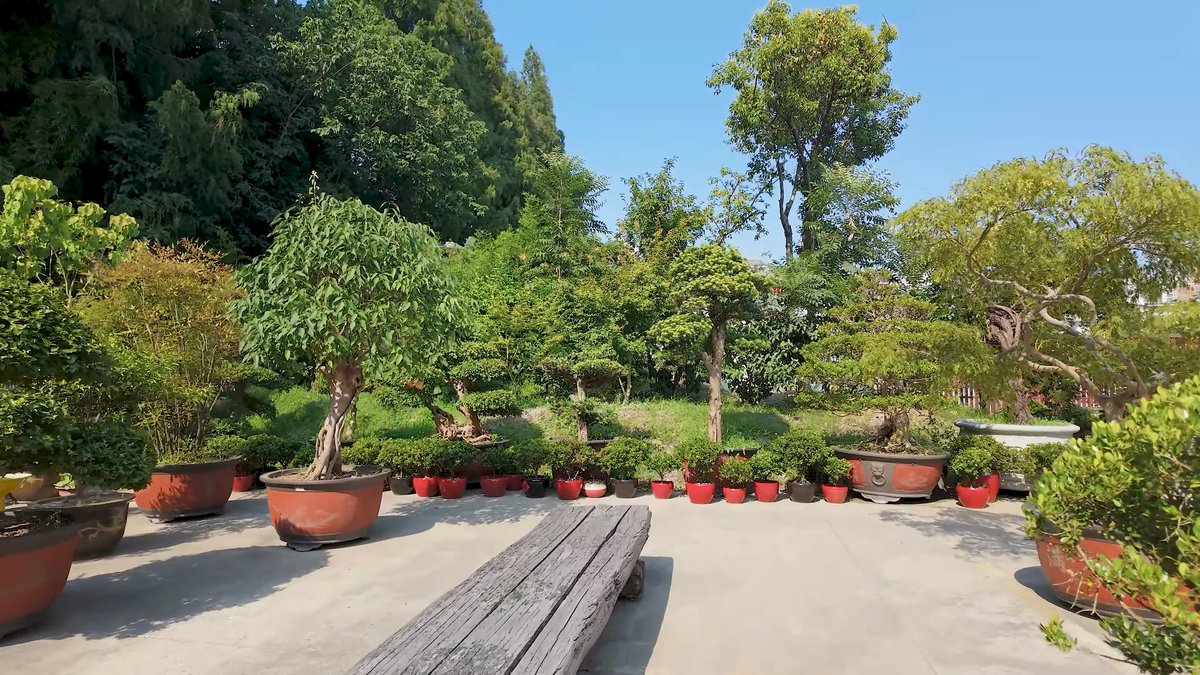
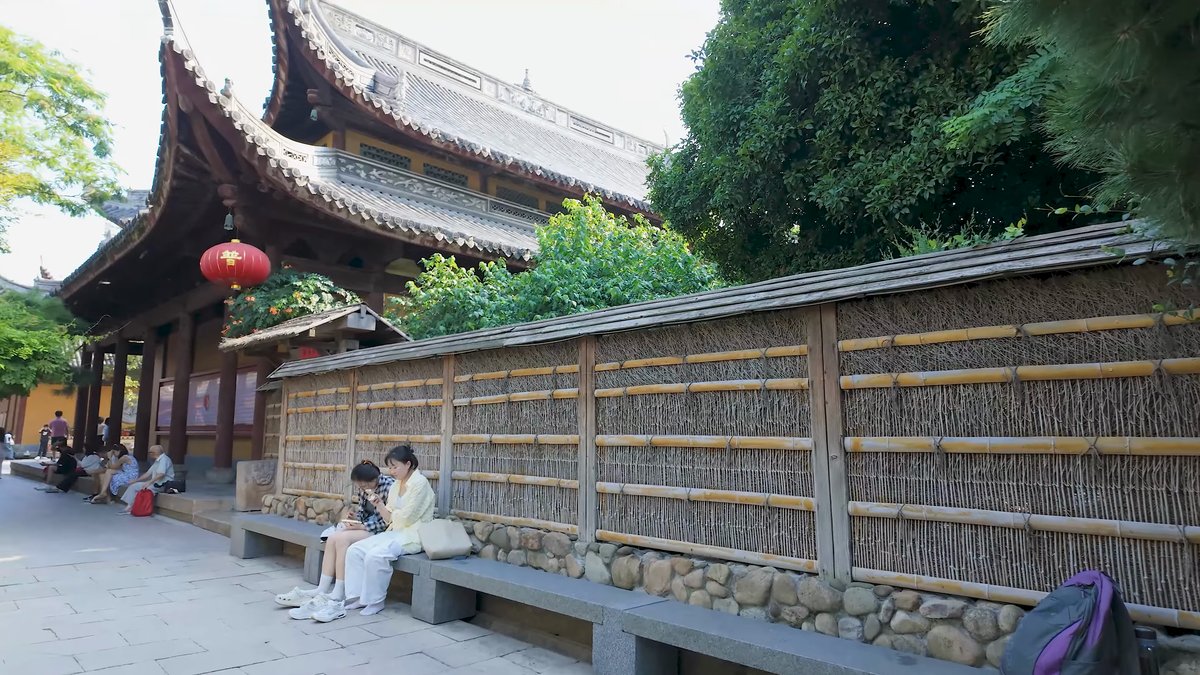
Bamboo fences screen off meditation areas in garden corners hidden behind the main halls. There are stone railings and rows of benches set out among bonsai pines, so you can sit in the shade without being in someone’s way.
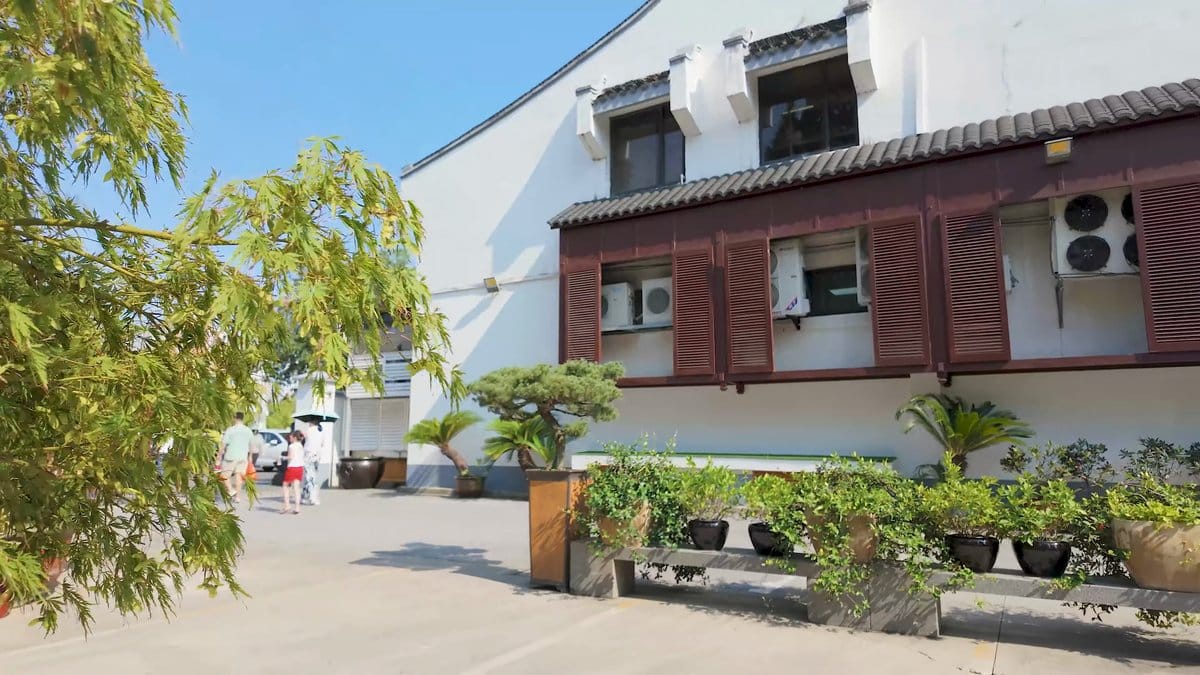
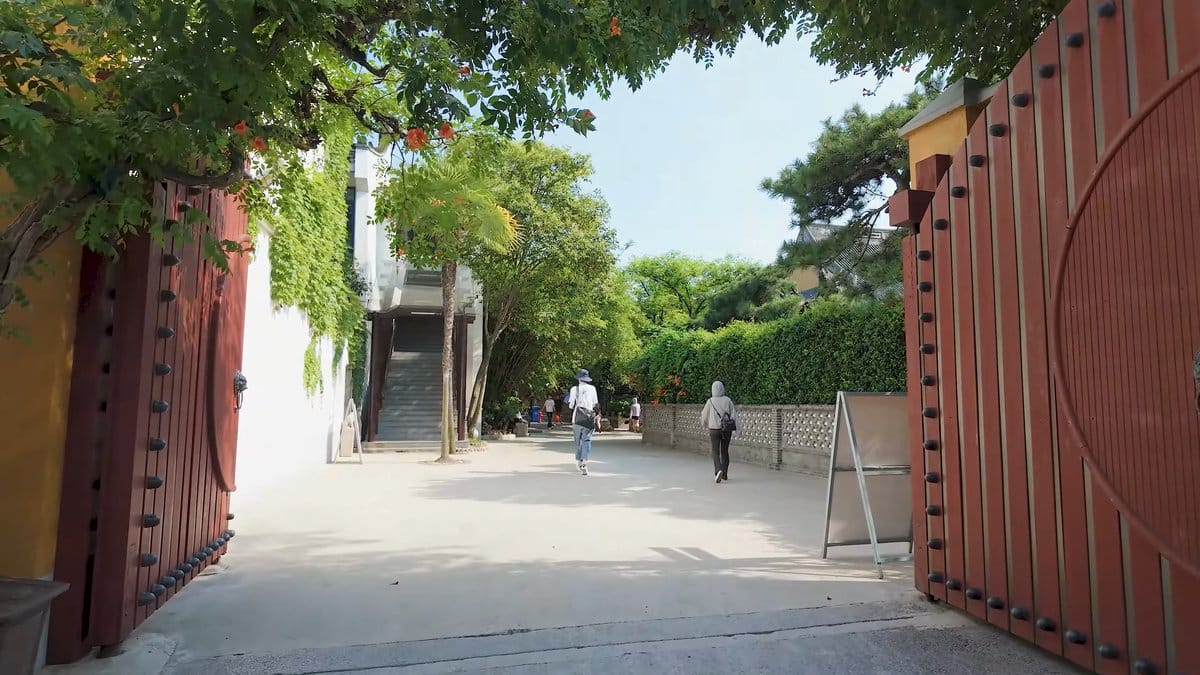
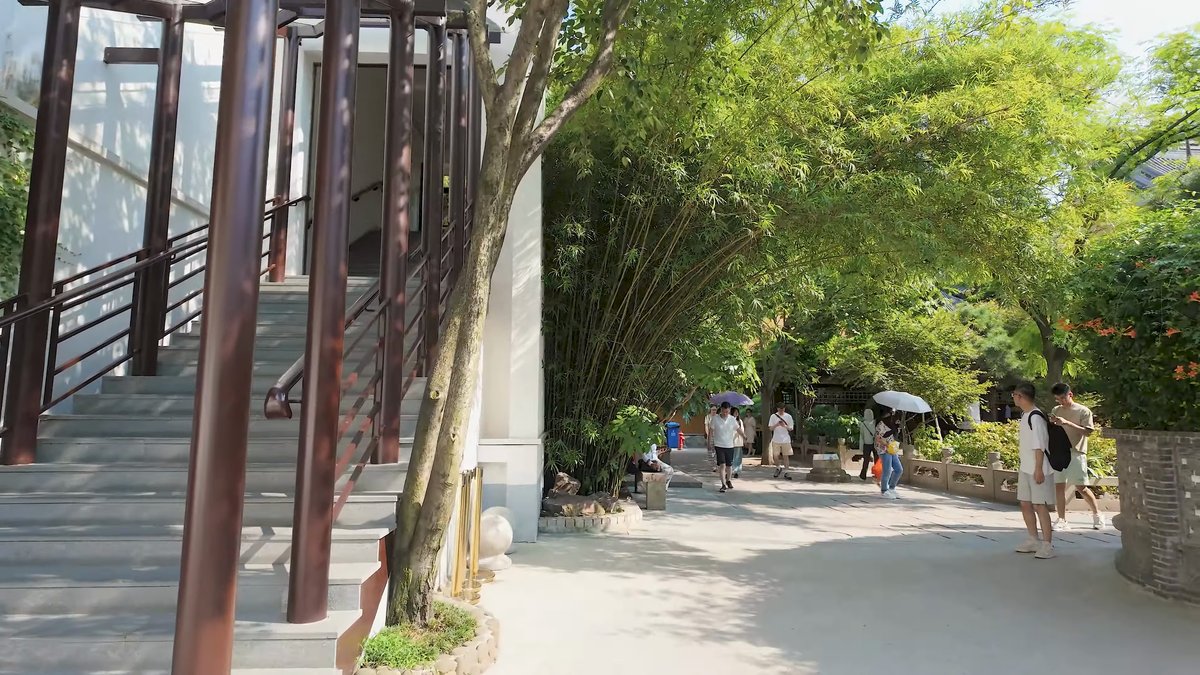
A timber gallery runs up one building on the upper floor. Timber paths wind between walls to halls that cannot be seen from the entrance. Timber walkways also skirts stands of bamboo so thick they block the view.
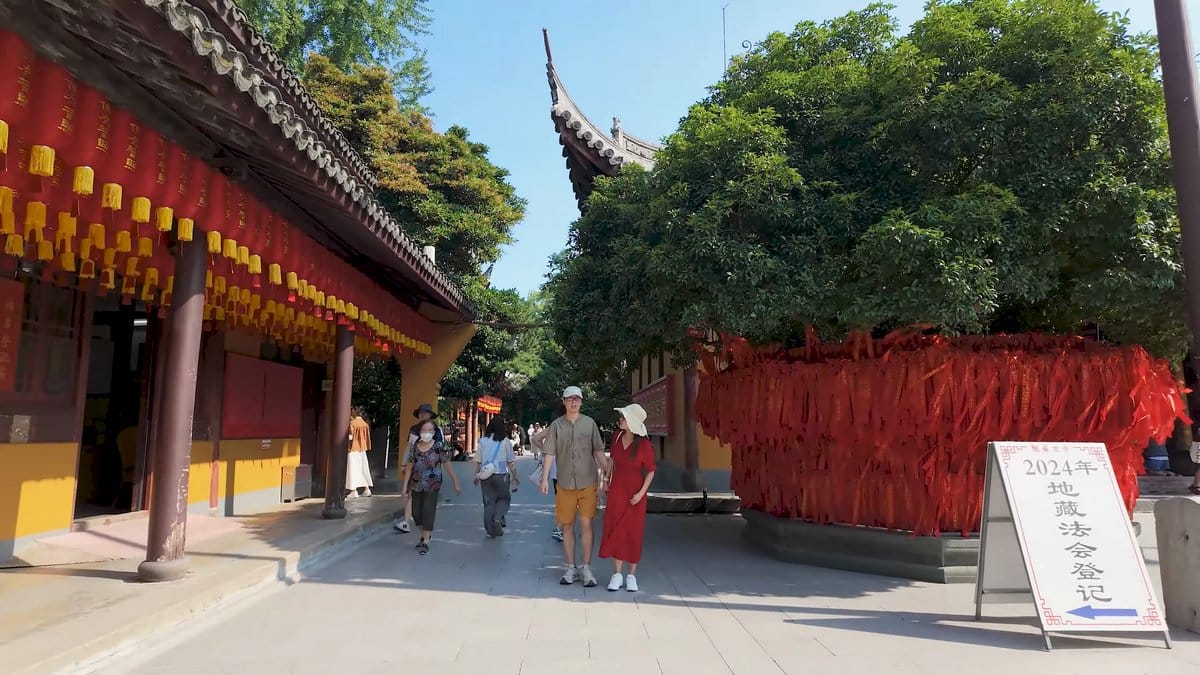
In one alcove, an entire wall is covered by prayer tablets, wooden plaques with wishes and names written out. Notice boards is put up around the halls where people stop and check the service times or find out what’s happening at the temple. As the day wears on, the afternoon light softens the courtyards.
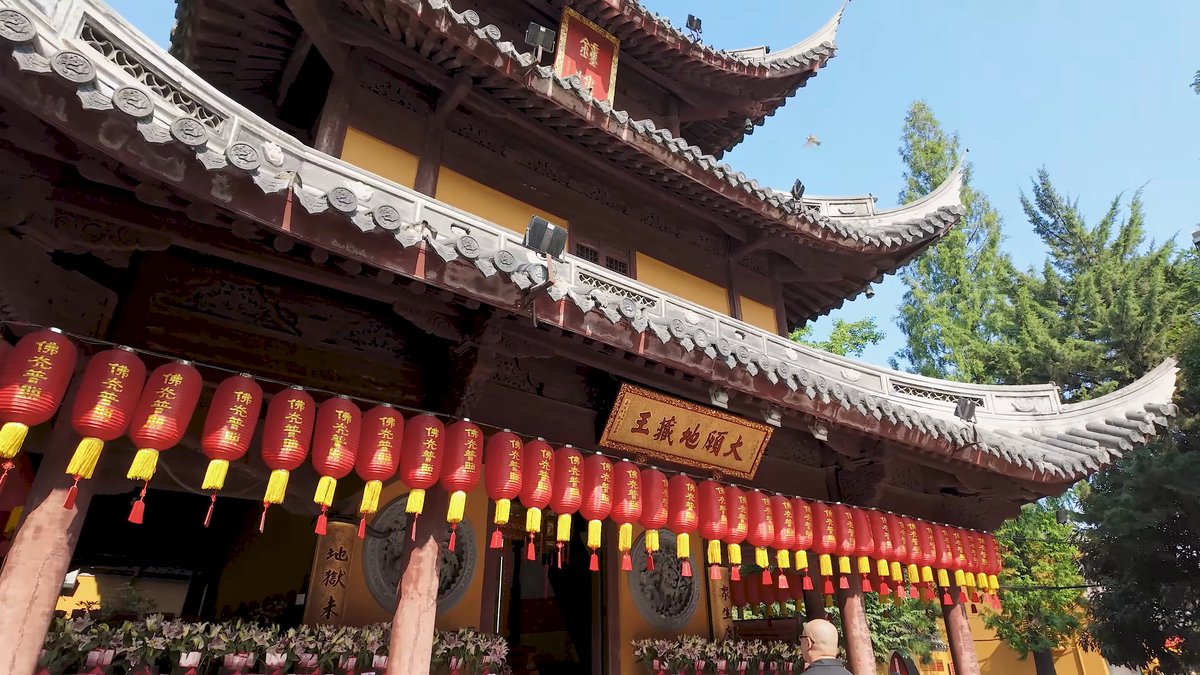
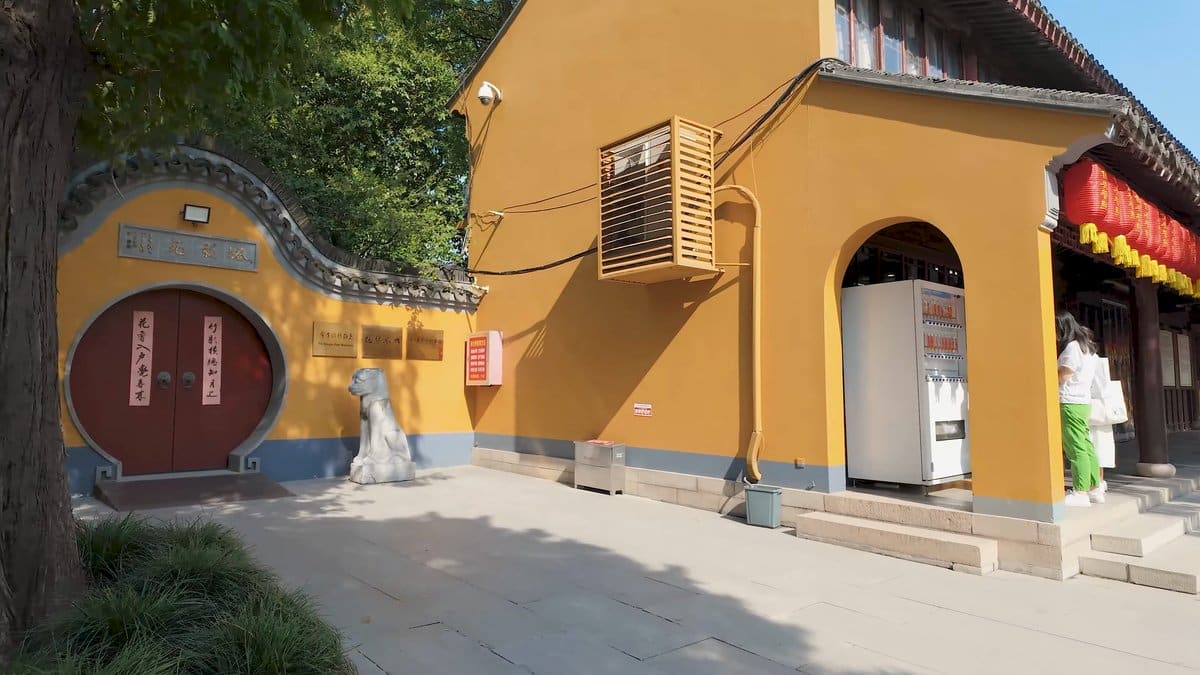
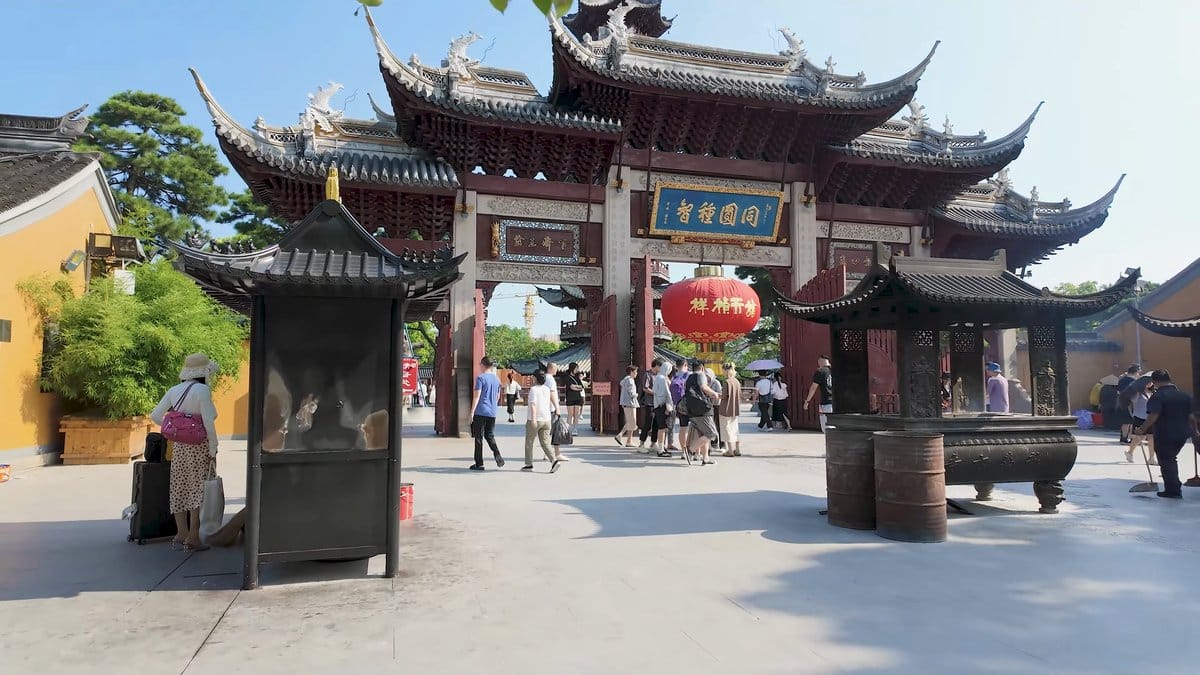
The lanterns is hung low here, literally at head height (or higher) if you’re a tall person! The yellow walls feature round doorways opening onto side gardens. Each doorway is marked by at least one red lantern to show the entrance to each gateway.
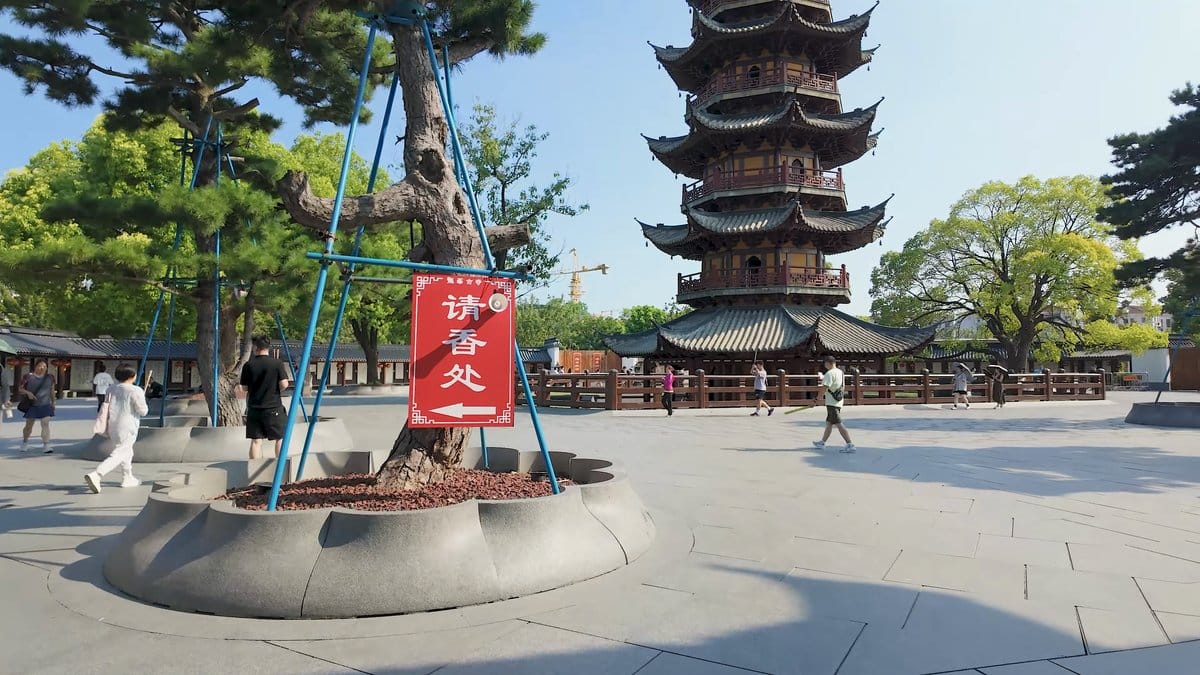
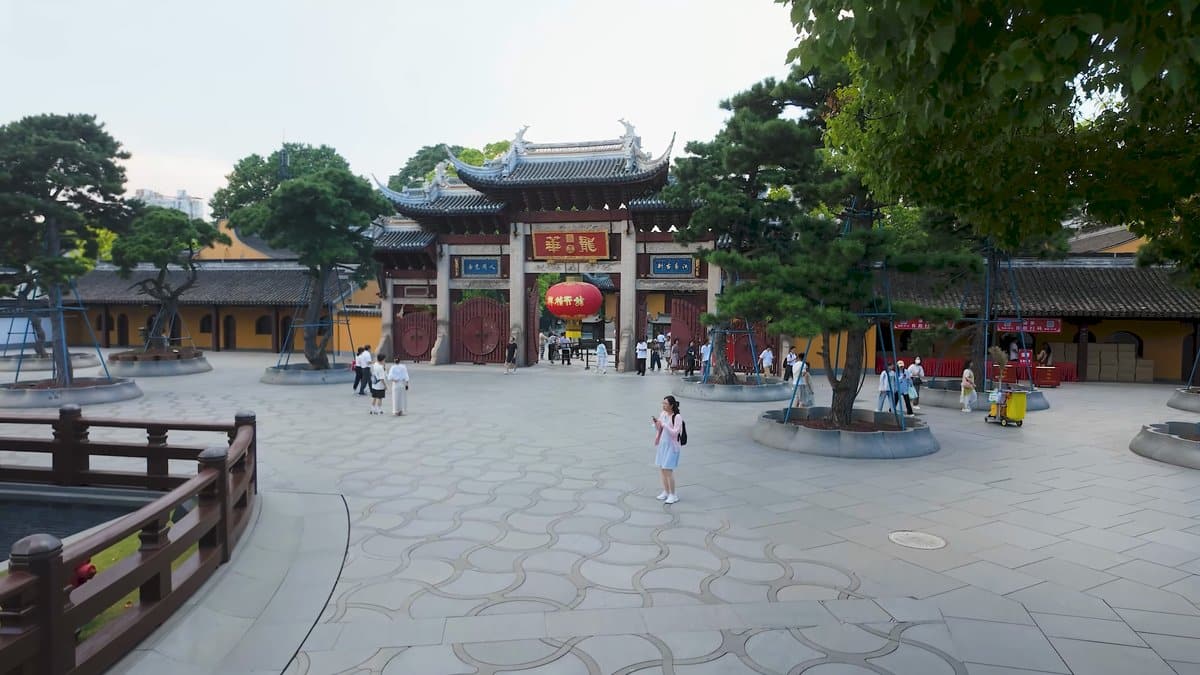
As you wind your way around the temples, more and more of the pagoda appears, peeking out from behind the structures, or set against a perfectly placed pine tree. Finally, at the end, the last courtyard is enclosed by the final gateway leading out. It is lined with pines like a proper farewell.
A temple is one place where a slower pace pays off over just circling around: Rush through Longhua Temple and it’ll take you twenty minutes to see the main temples and pagoda; spend an hour or two there and you can discover some of the quieter gardens, watch how local people use this place as a part of their day-to-day life instead of just a stop on the tourism trail. Have you been to any working temples where worship creates the atmosphere? How was that different than visiting a historical temple that has become nothing more than a museum?