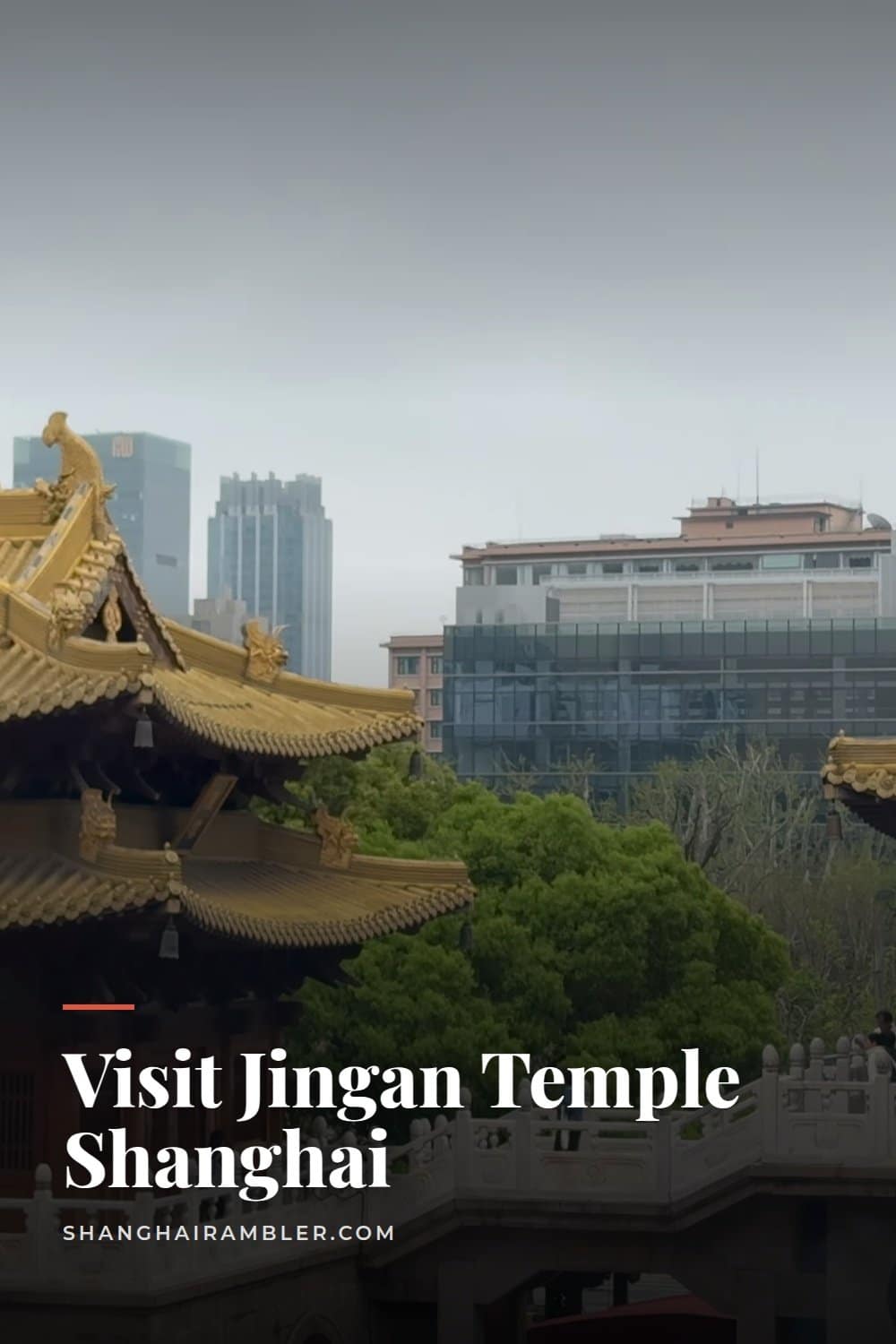
This is the most famous temple in Shanghai. It is located on a busy Shanghai intersection with office towers and shopping malls all around it and the rumble of metro trains below. But Jing’an Temple doesn’t pretend that the skyscrapers don’t exist or try to hide from the moddern city.
That’s the point: the contrast. You get a functioning Buddhist temple with clouds of incense smoke curling around glass and steel, stone lion, and gilded roofs. It’s packed with thousands of visitor and devotees every day.
There is a admission fee, and it gets overcrowded during festivals, yet it still feel both ancient and completely modern. If you find yourself in the neighbourhood, it is worth a visit.
Jing’an Temple: An Ancient Spot in a Modern City
Jing’an Temple Shanghai
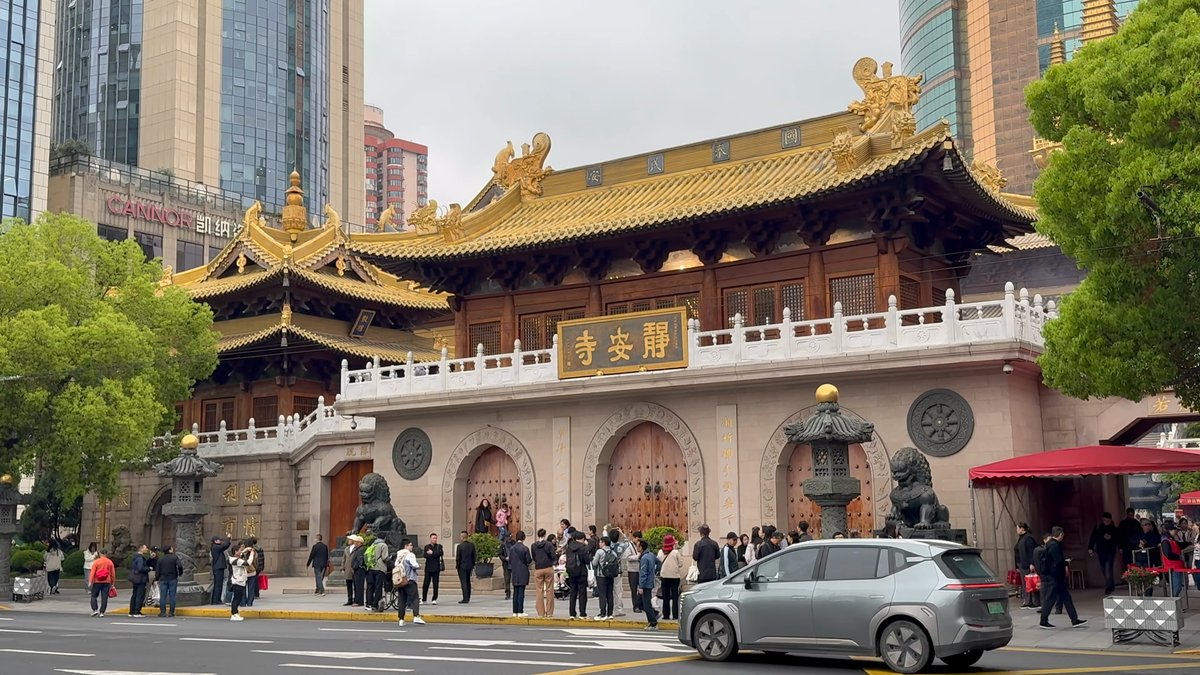
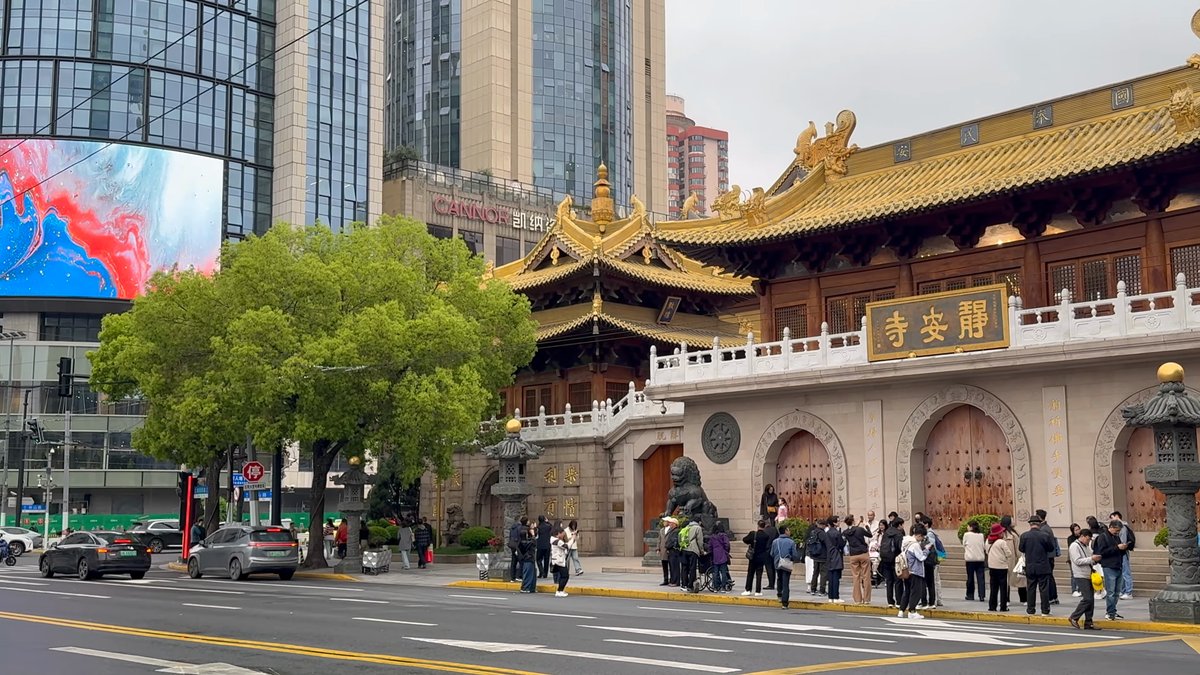
The temple is hard to miss; even from a distance. Its roofs reflect sunlight from blocks away; they’re low and wide against all the buildings that rise fifty storeys around them. Wedged into the space between the luxurius retail district and the metro station, the temple compound occupy far more real estate than you’d expect in center of Shanghai.
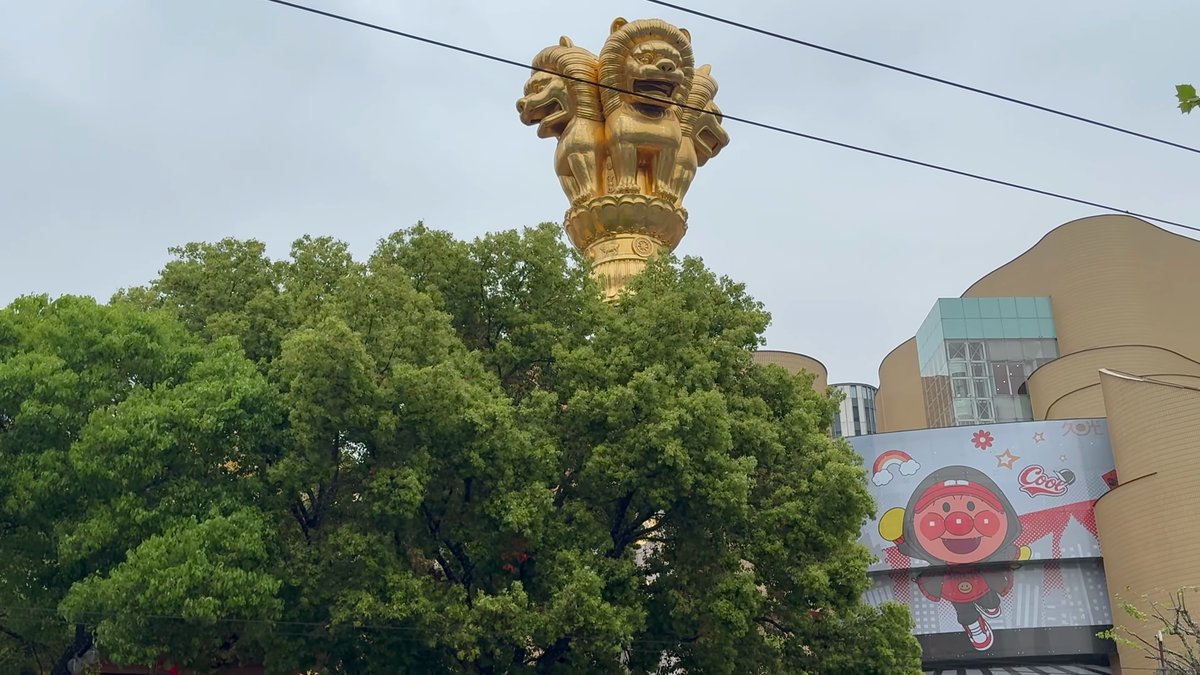
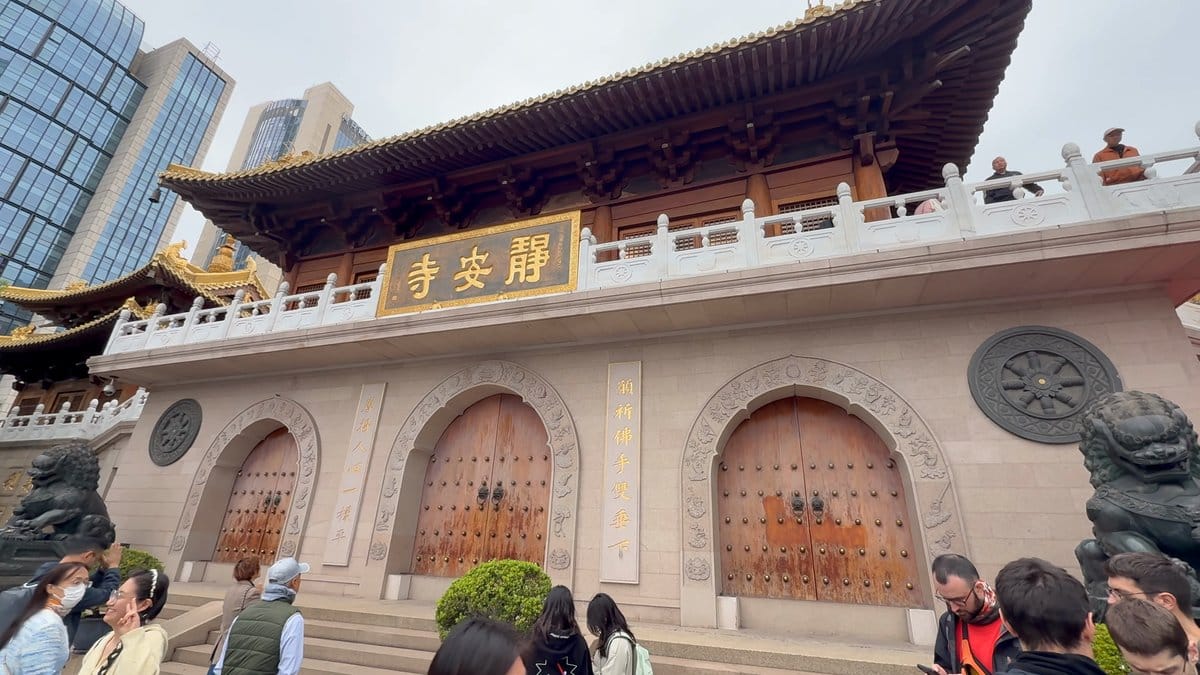
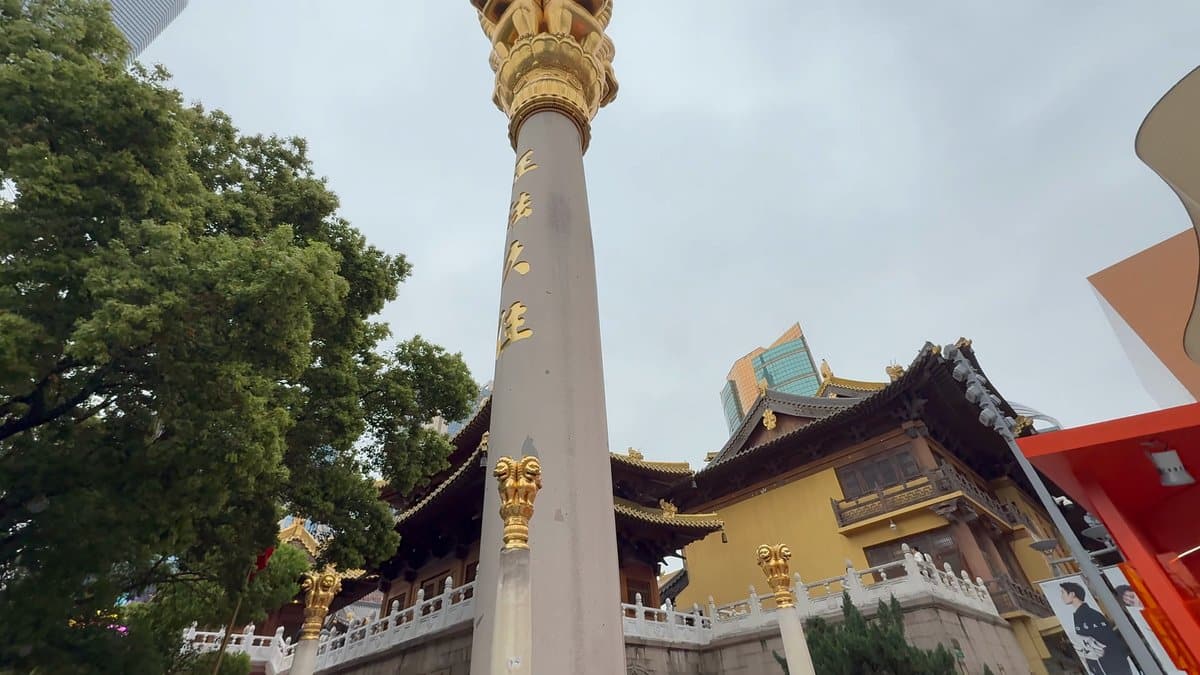
The entrance is framed by stone columns, complete with carved beast guarding the gates. Just inside is the ticket booth (it’ll cost you roughly 50 yuan to get in). It is clear that this is not a place of quiet retreat.
Locals drop by to pray, tour group shuffle through, and monks carry on doing whatever they do.
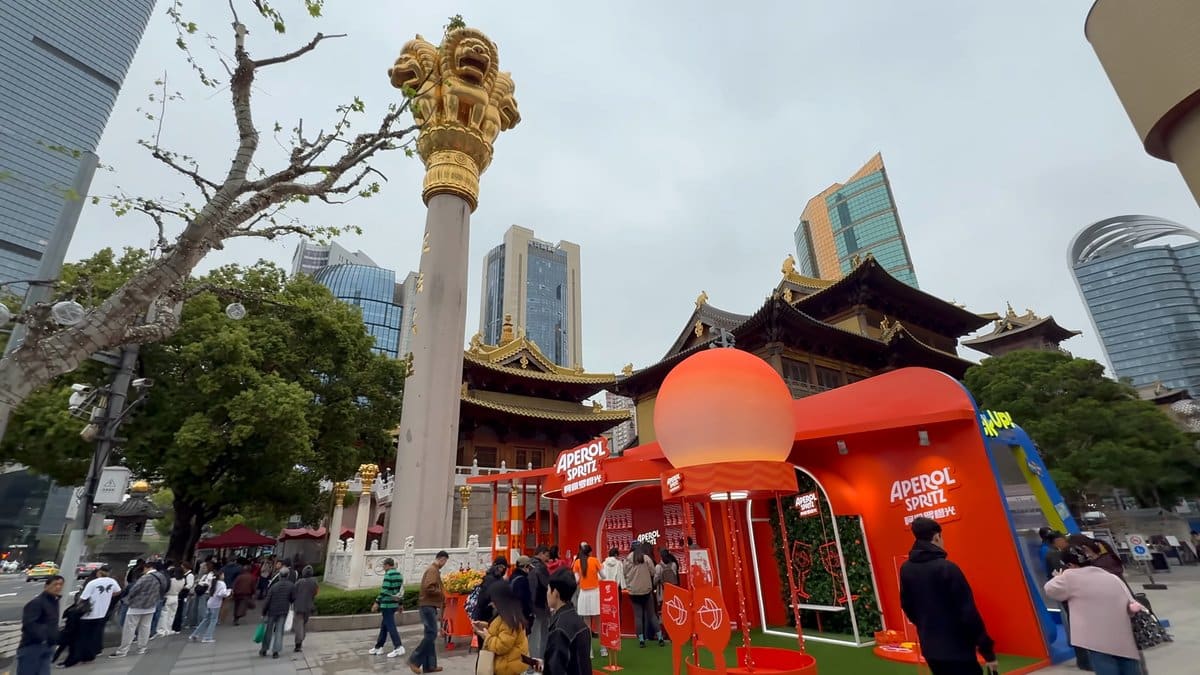
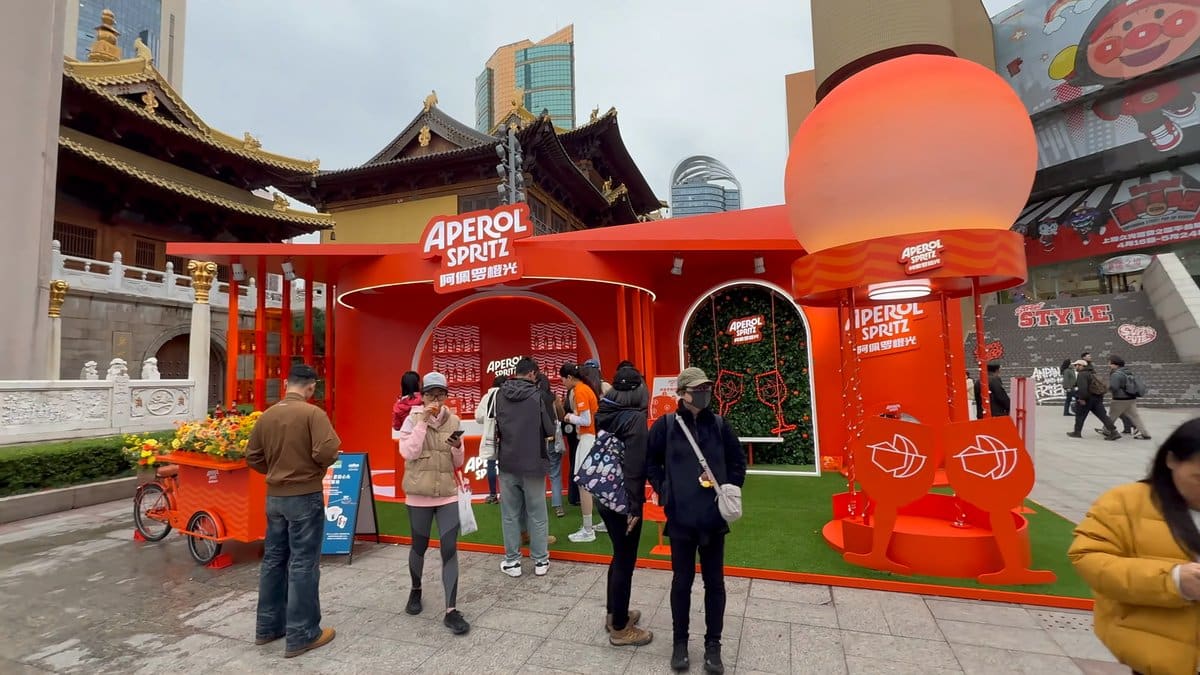
The area surrounding the temple is trendy. On one occasion there was a Aperol Spritz pop-up bar set up practically on the temple doorstep, orange drinks and all. This kind of collision happens all the time here.
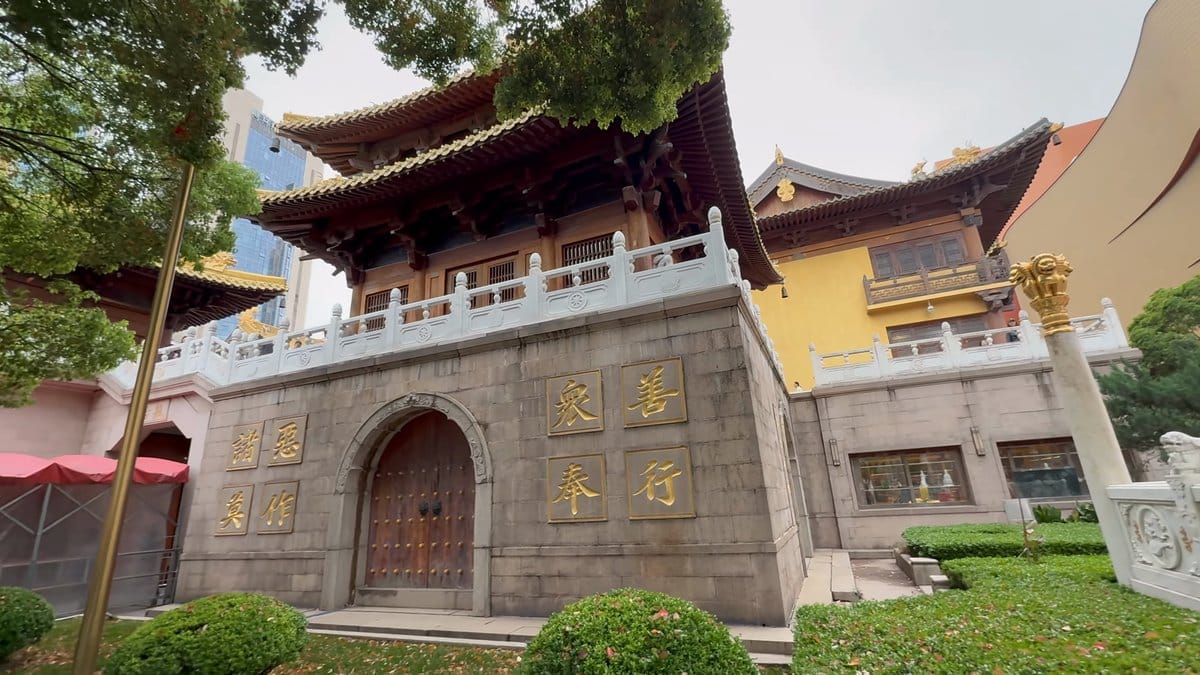
Heavy timber doors open into the main courtyard beyond the outer gates. It’s laid out according to traditional Buddhist temple design: a central plaza surrounded by halls, with side gallery running along the length of the compound. A giant bronze incense pagoda anchor the space, lined with potted pines and stone paving.
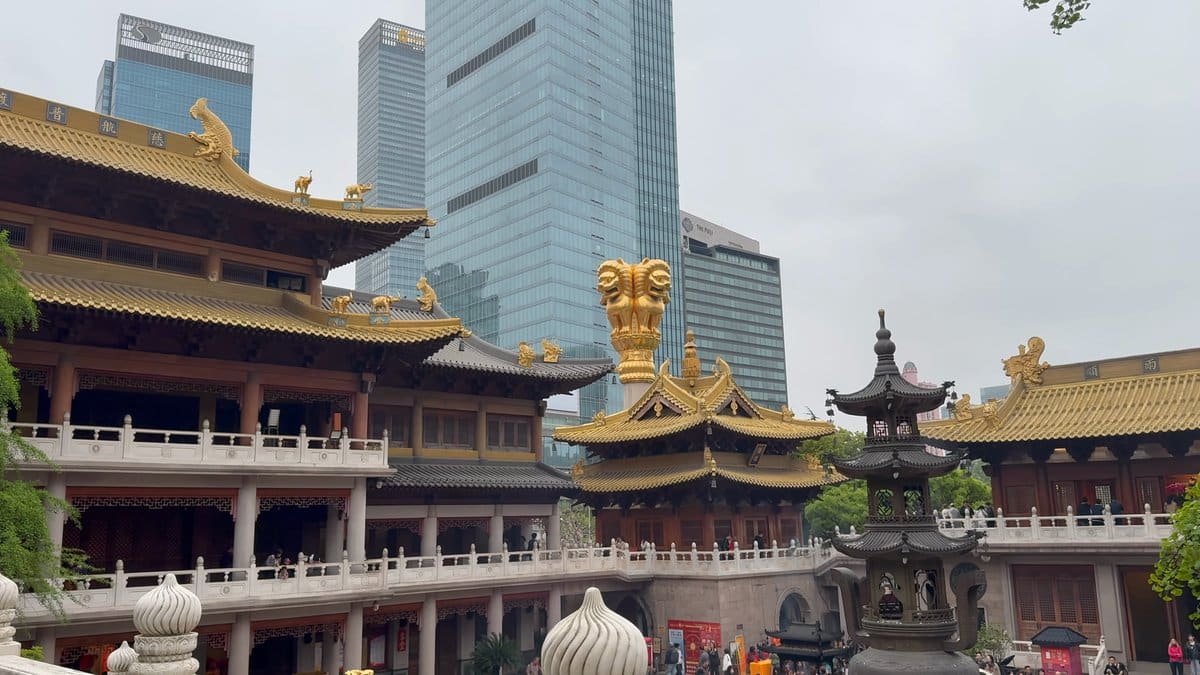
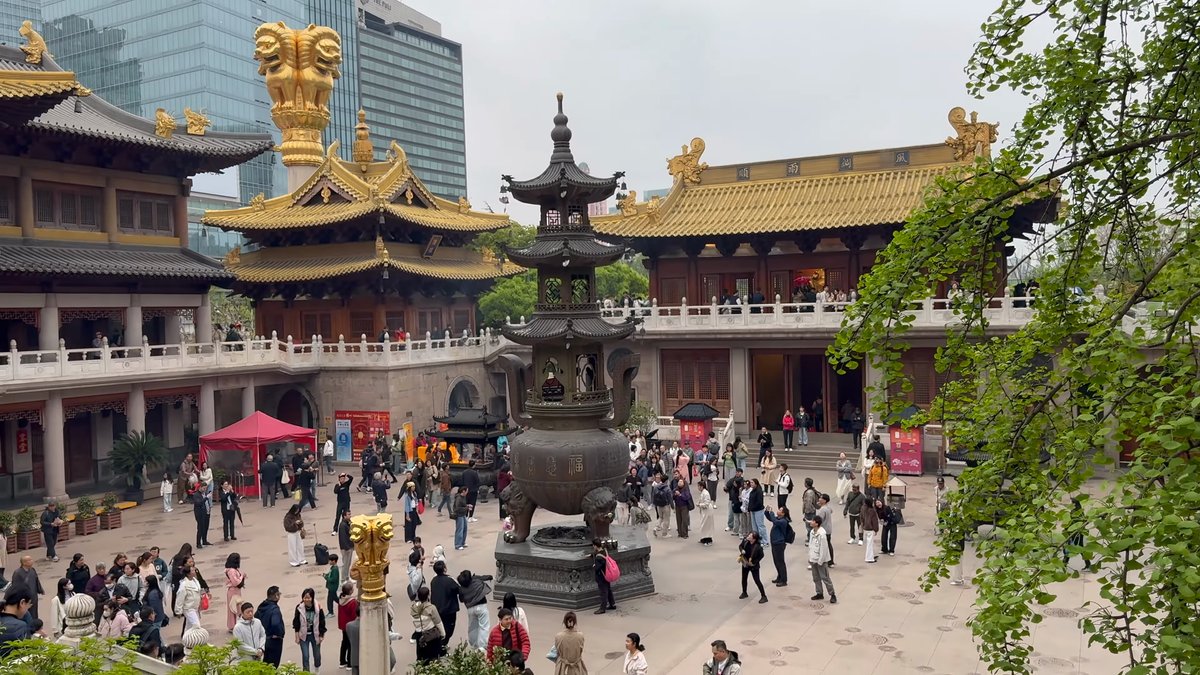
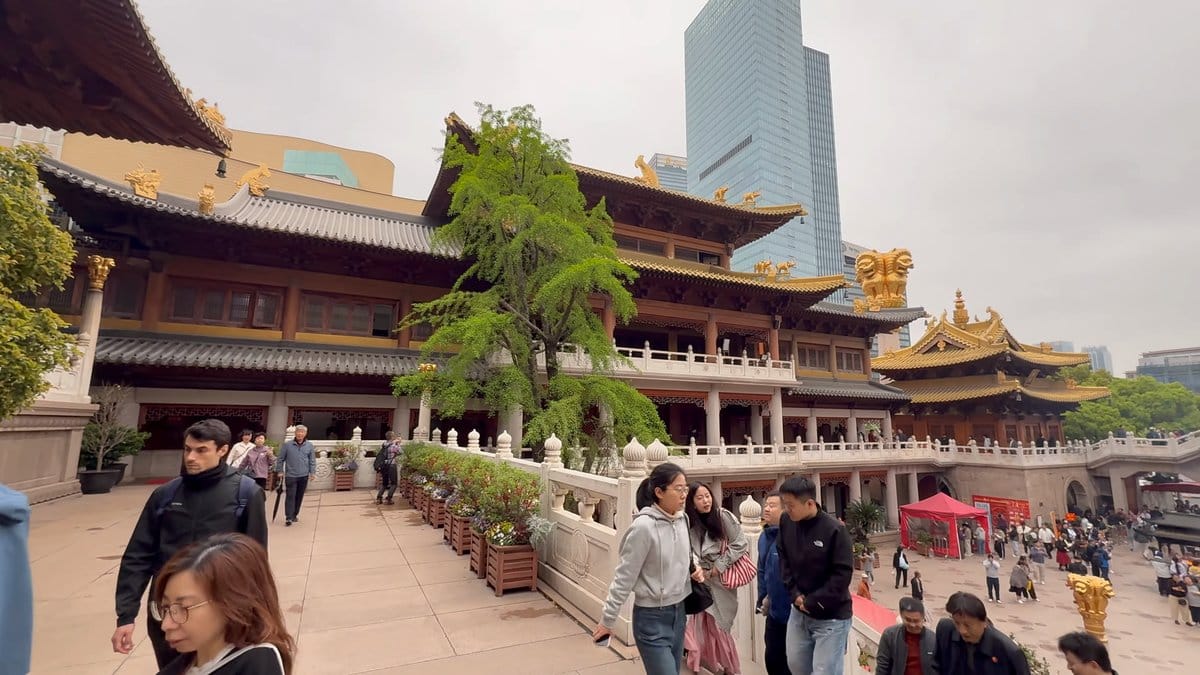
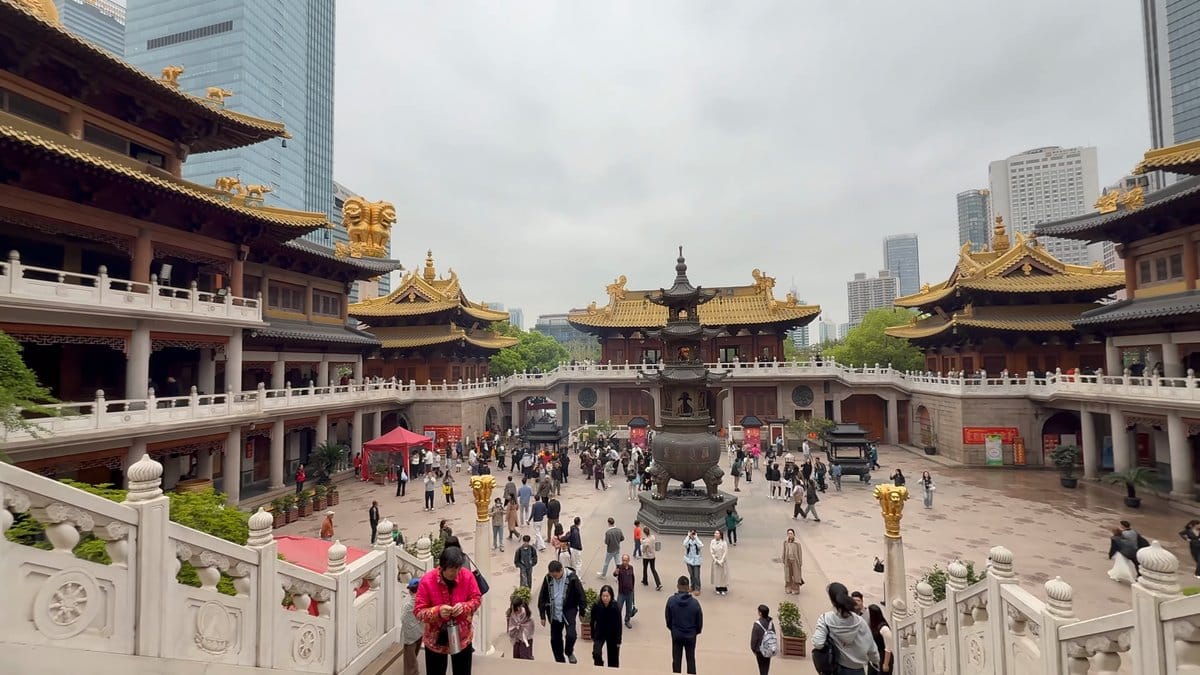
It gets very crowded here, particularly at weekends and holidays, with visitors crossing from hall to hall; some come to worship, others simply to gawk. Smoke rise through the many levels of the bronze incense tower, which is several metres taller than most people. From the upper terrace, you can see the whole plaza spread out below, the movement of the crowd, and the pines in their pots.
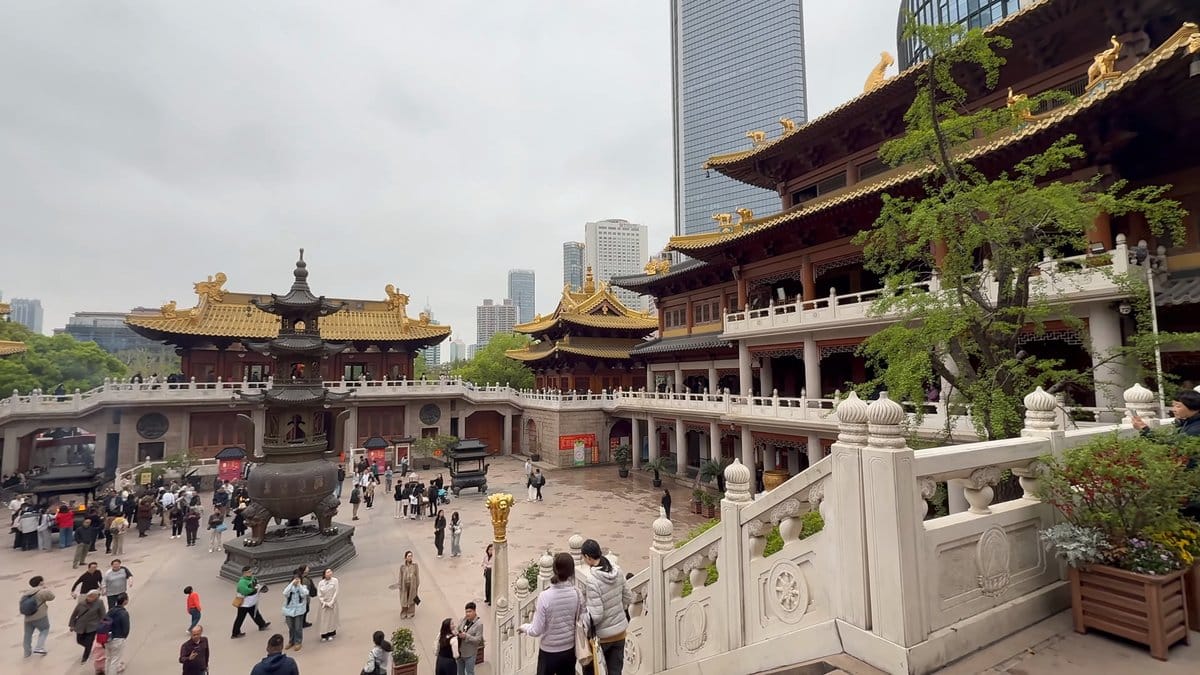
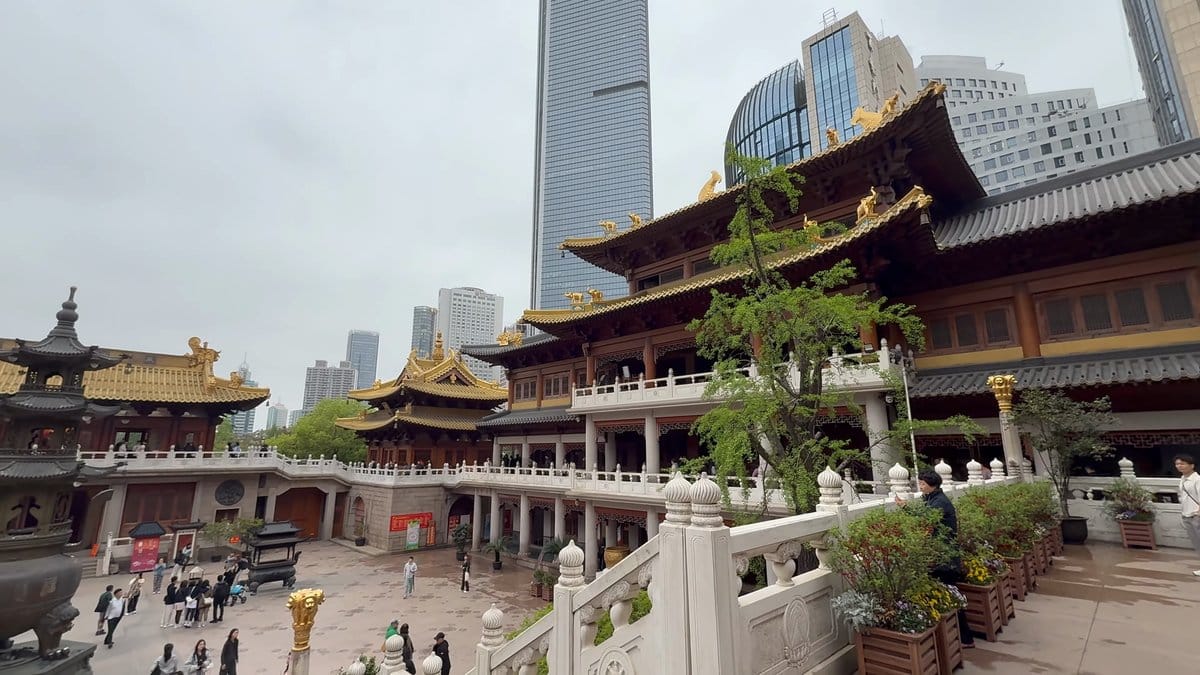
Terraces is edged by carved balustrades. In the middle, the incense pagoda dominates, its bronze dark on the paving. People gather around it, lighting their sticks and bowing down.
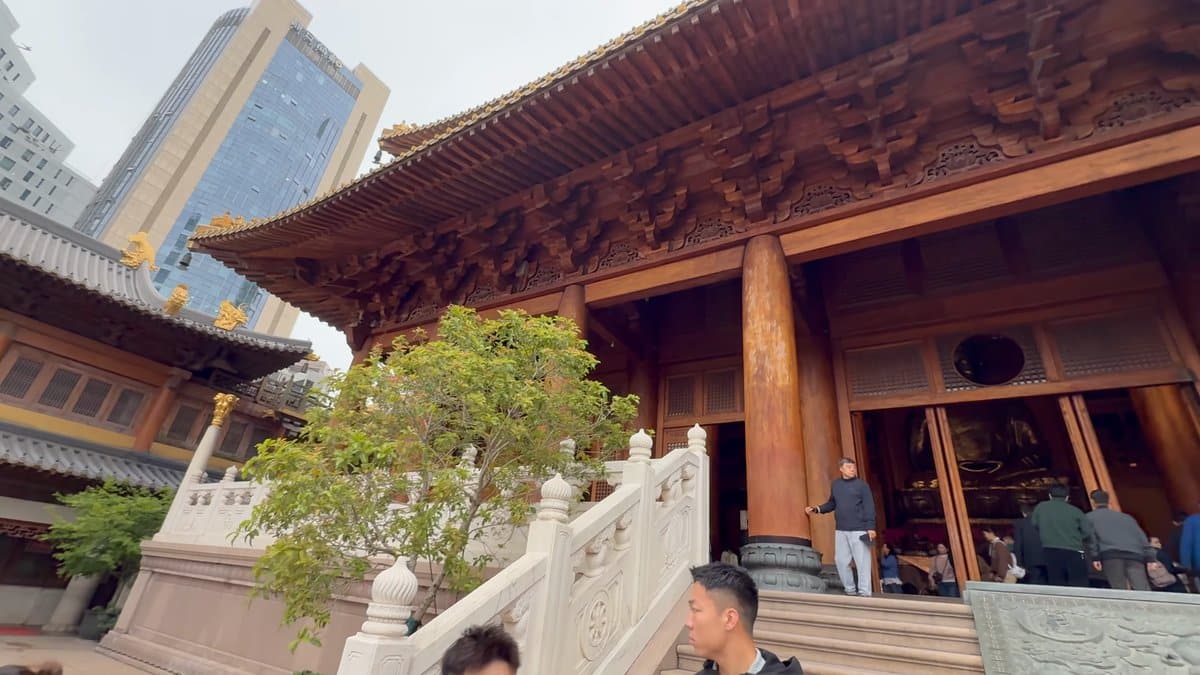
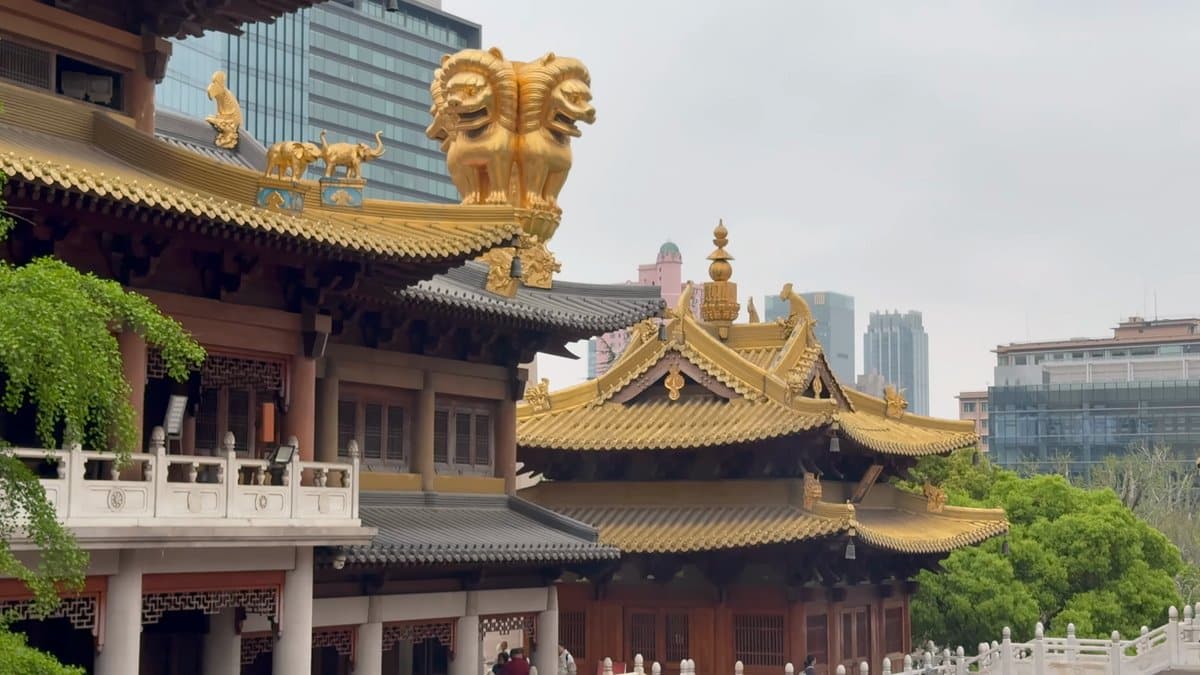
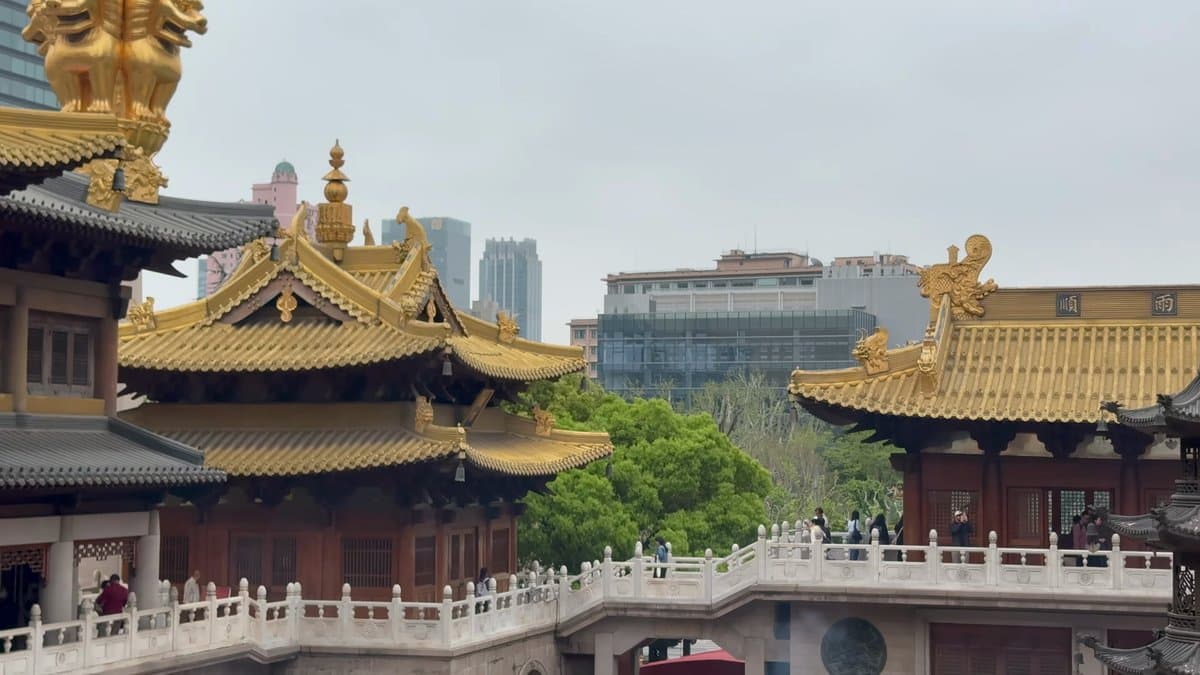
The roof ornaments up close are impossibly detailed. Timber carvings adorn all the entrances to hall. But step back and it’s the roofline against the skyline that registers.
The architecture look both smaller and somehow more impressive at once with office blocks looming behind the temple.
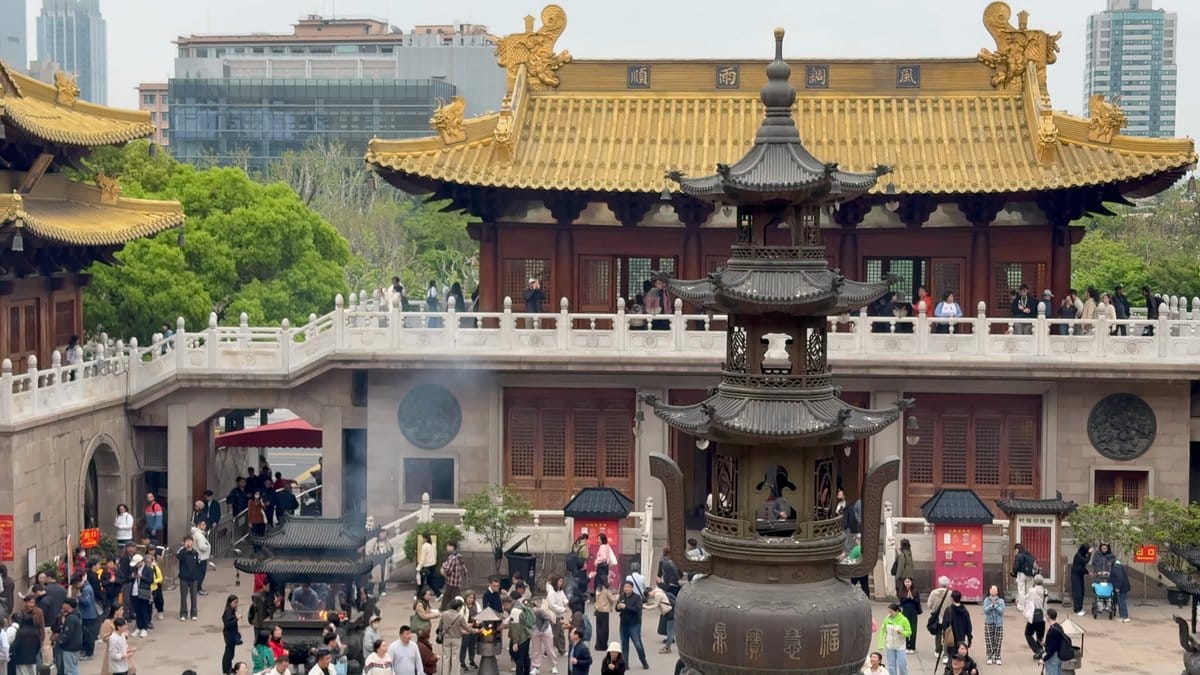
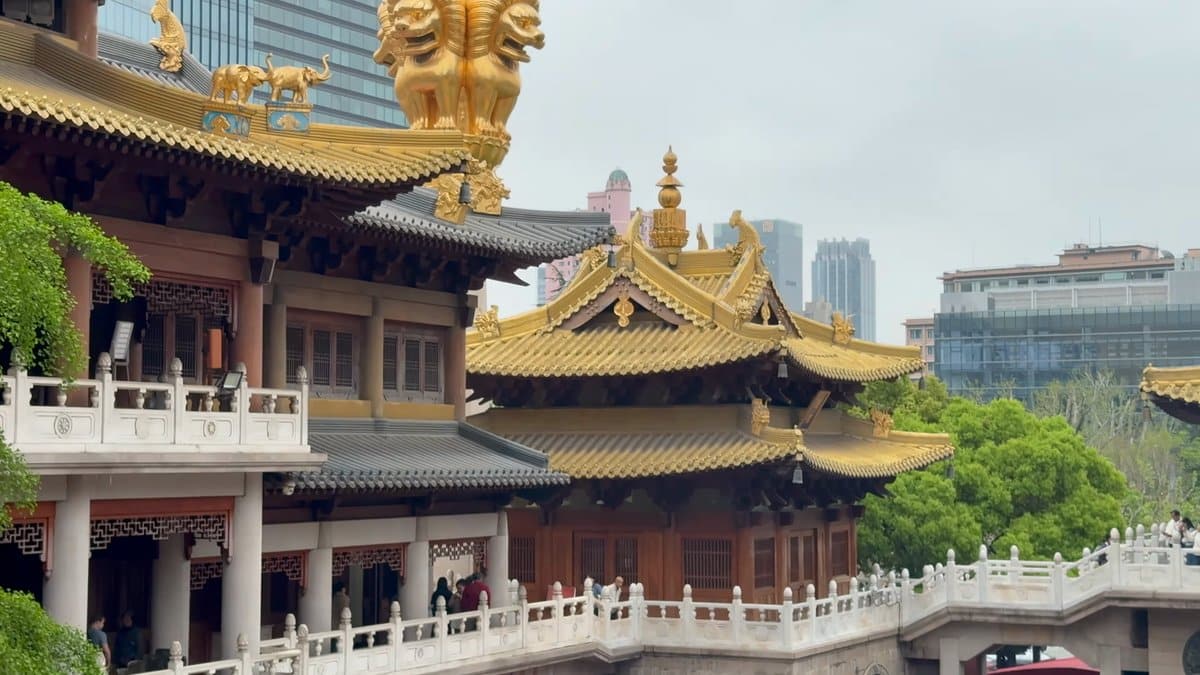
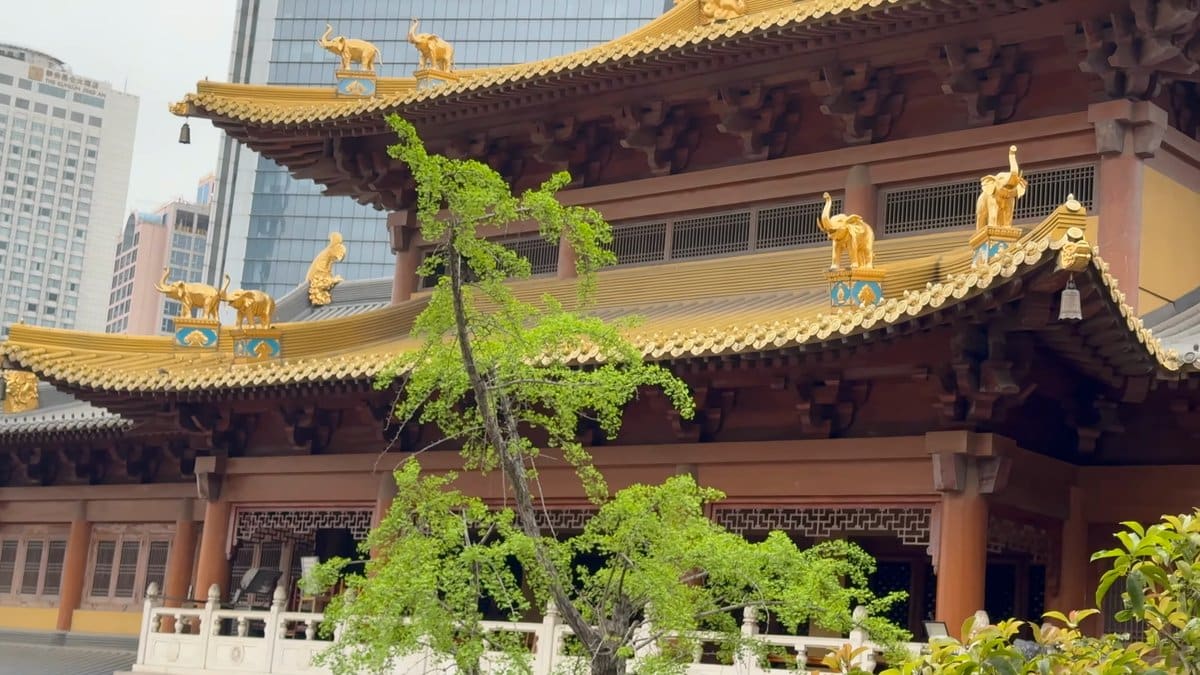
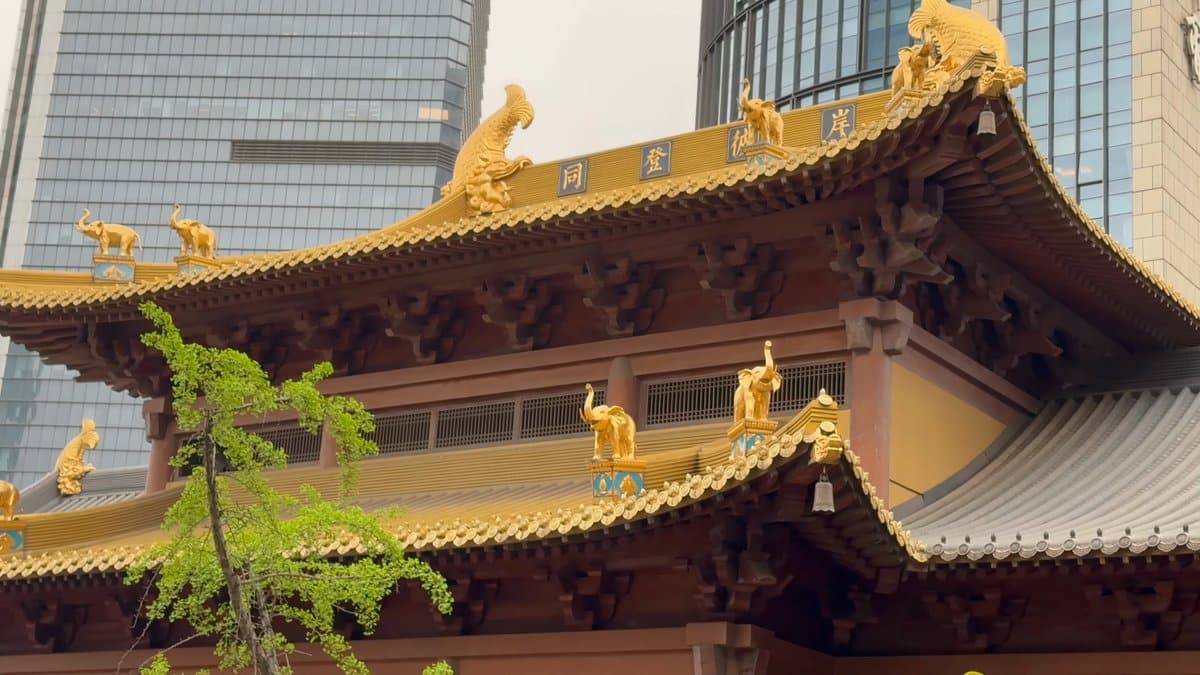
But you notice the roofs: the way they catch sunlight by different hours; how animal decoration march up the ridges. At the edges of the courtyards, a few old pine soften things, their branches framing the halls.
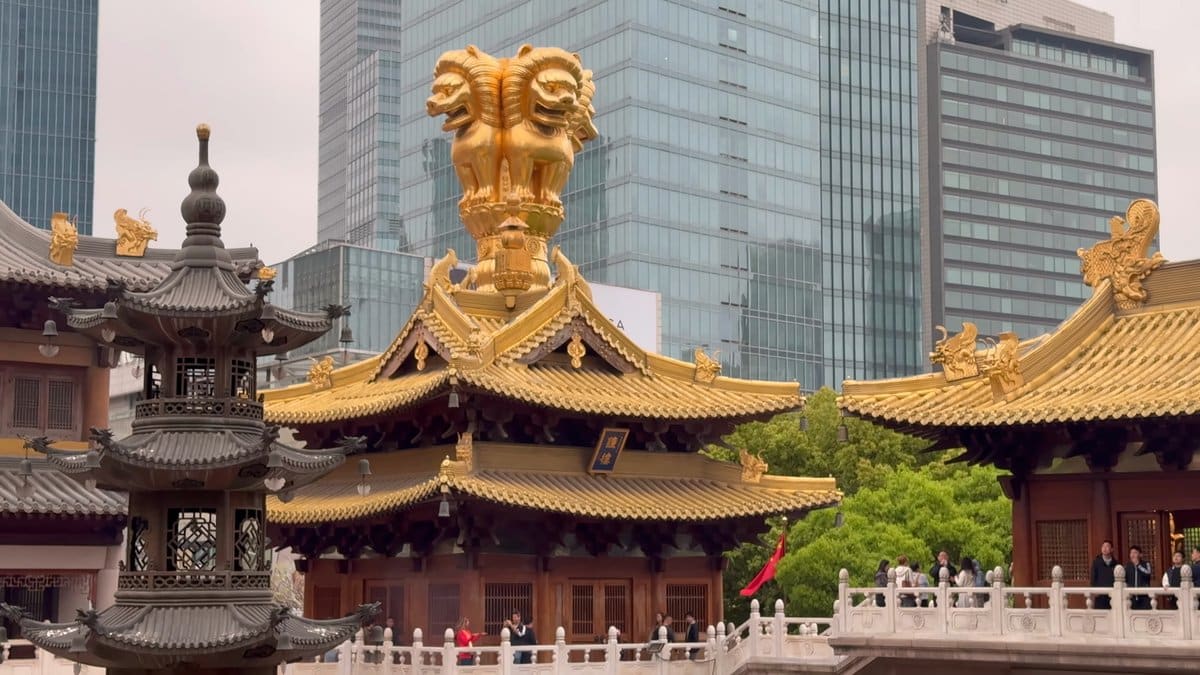
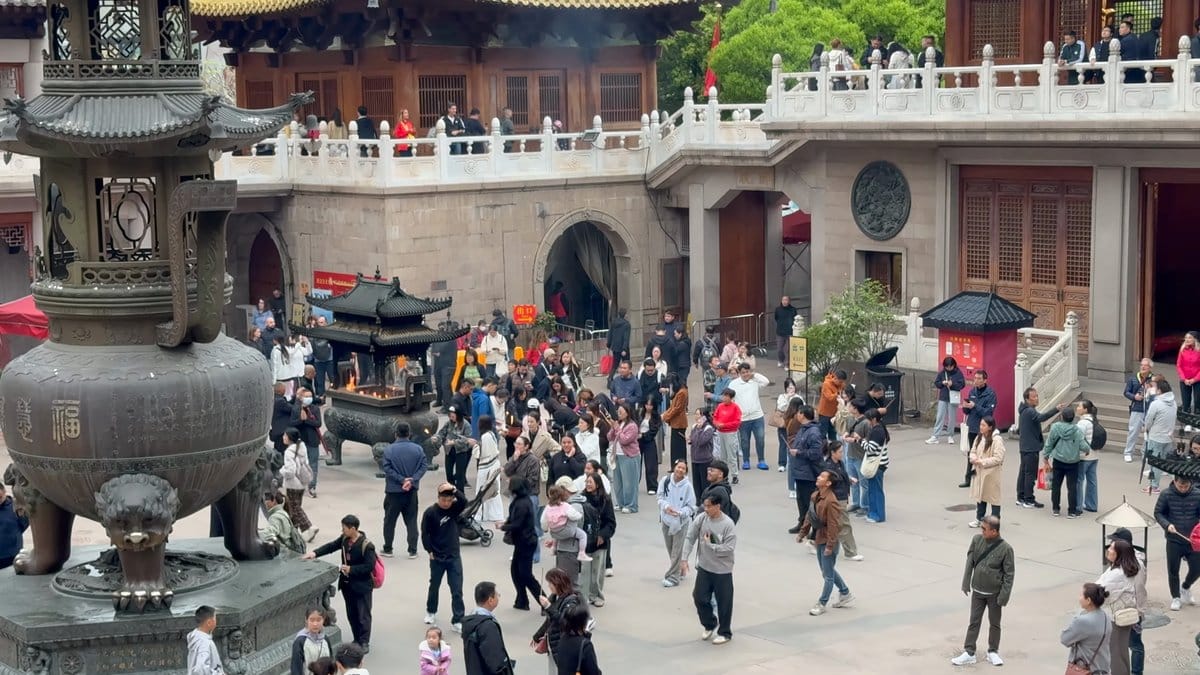
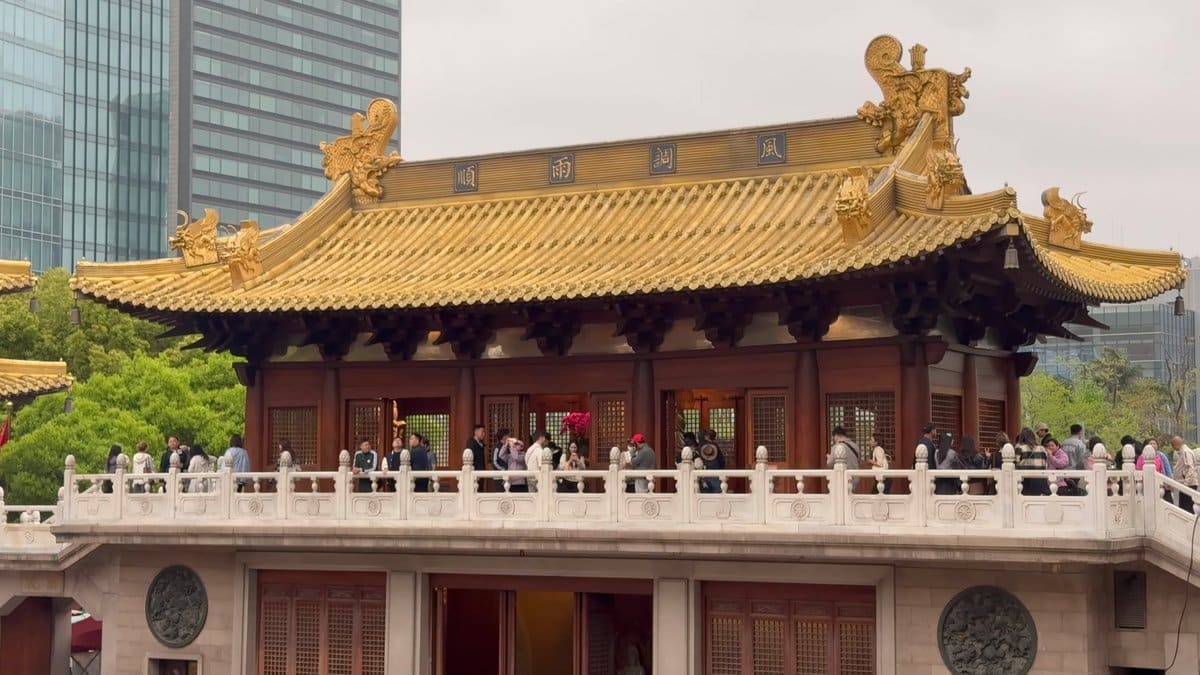
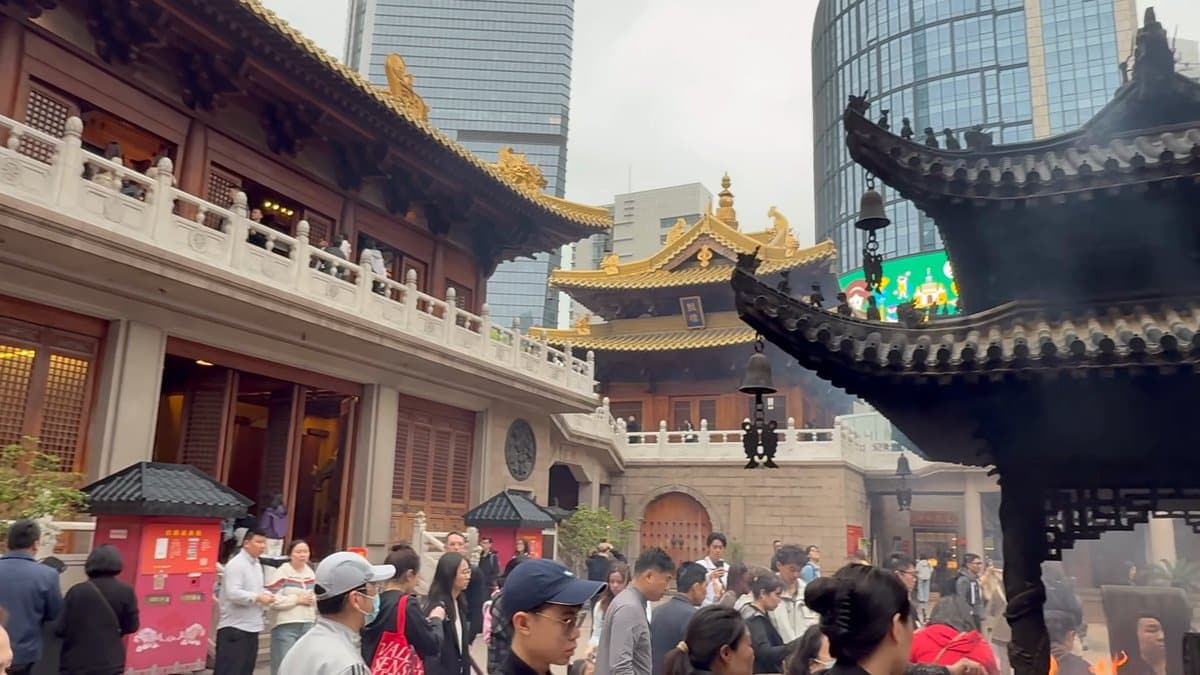
The burners puff out steady columns of smoke. On busy days, the incense becomes so thick that the courtyard is full of people and smoke. A raised terrace hold the main hall.
Stone steps lead up to it.
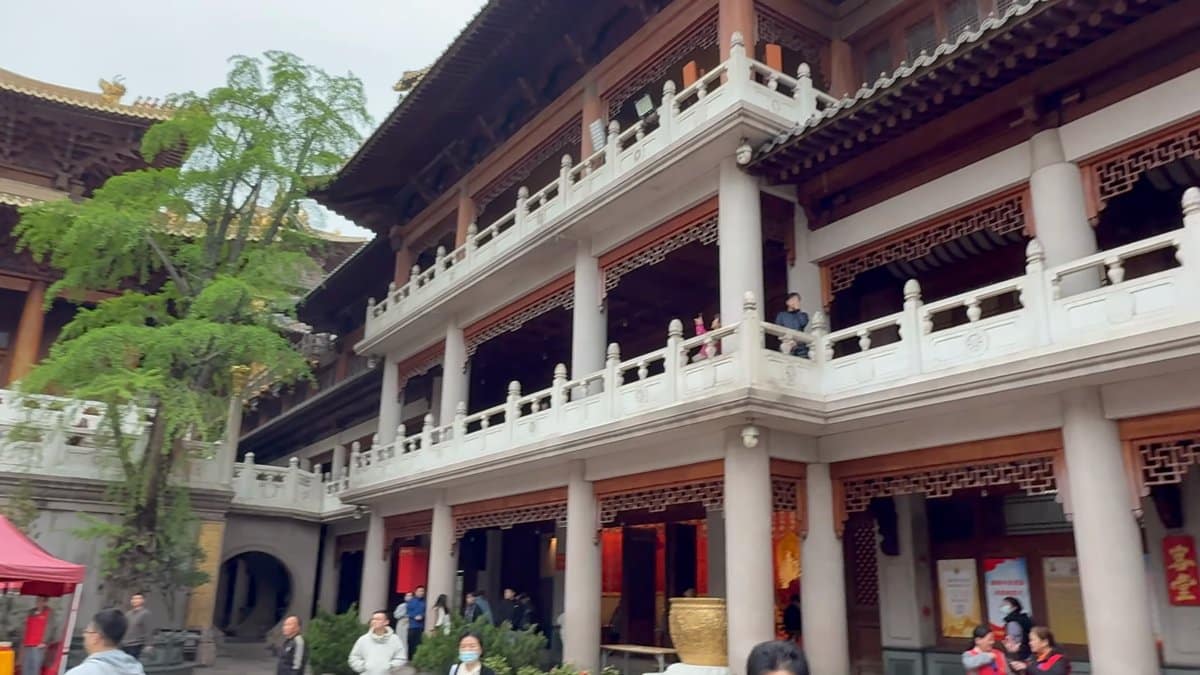
At each corner are staircases leading to the two-storey gallery that encircle the courtyard. These provide a new perspective on the layout and allow you an escape from the most crowded areas for a few minutes.
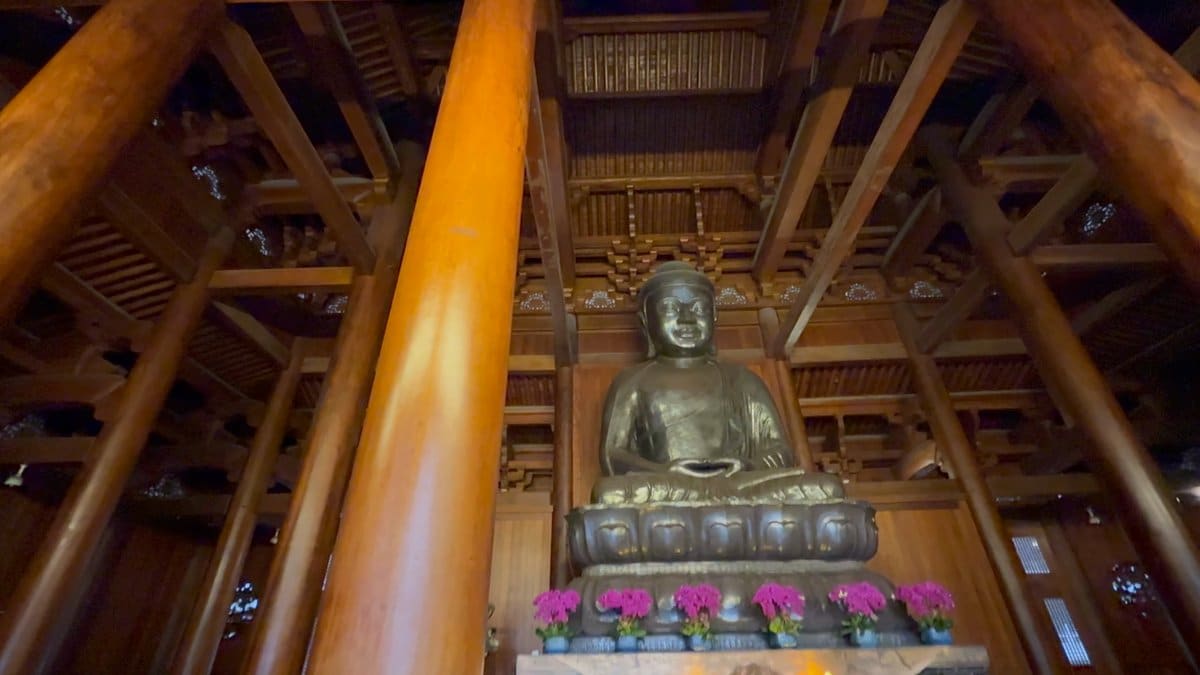
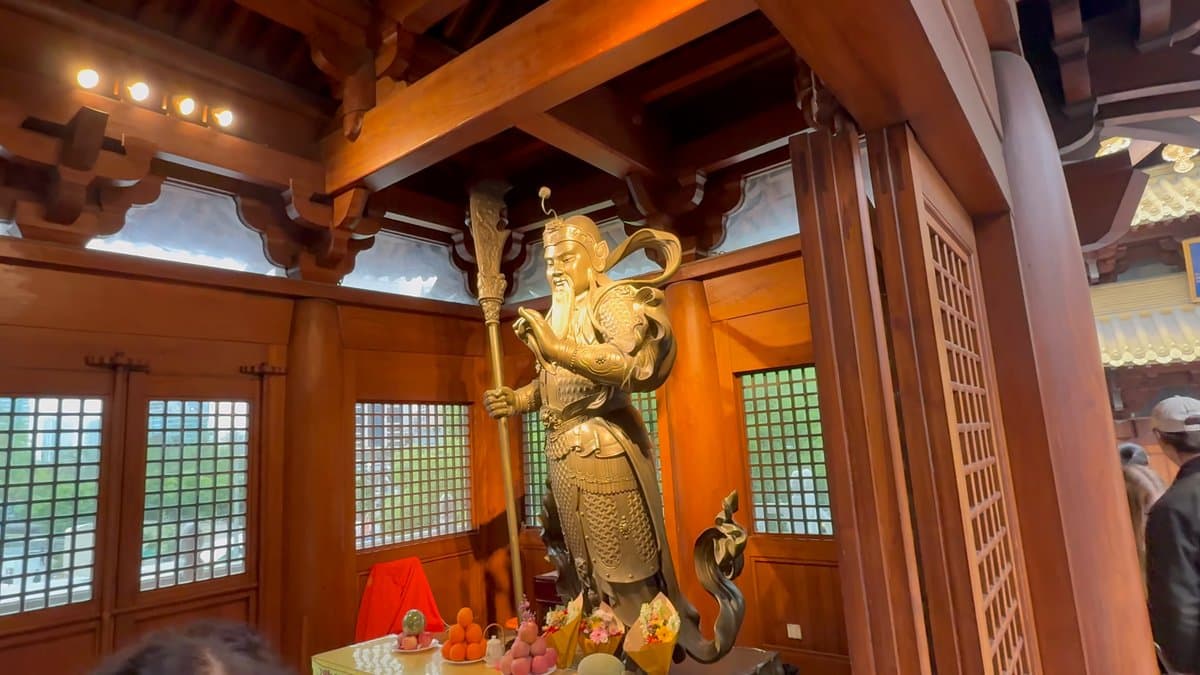
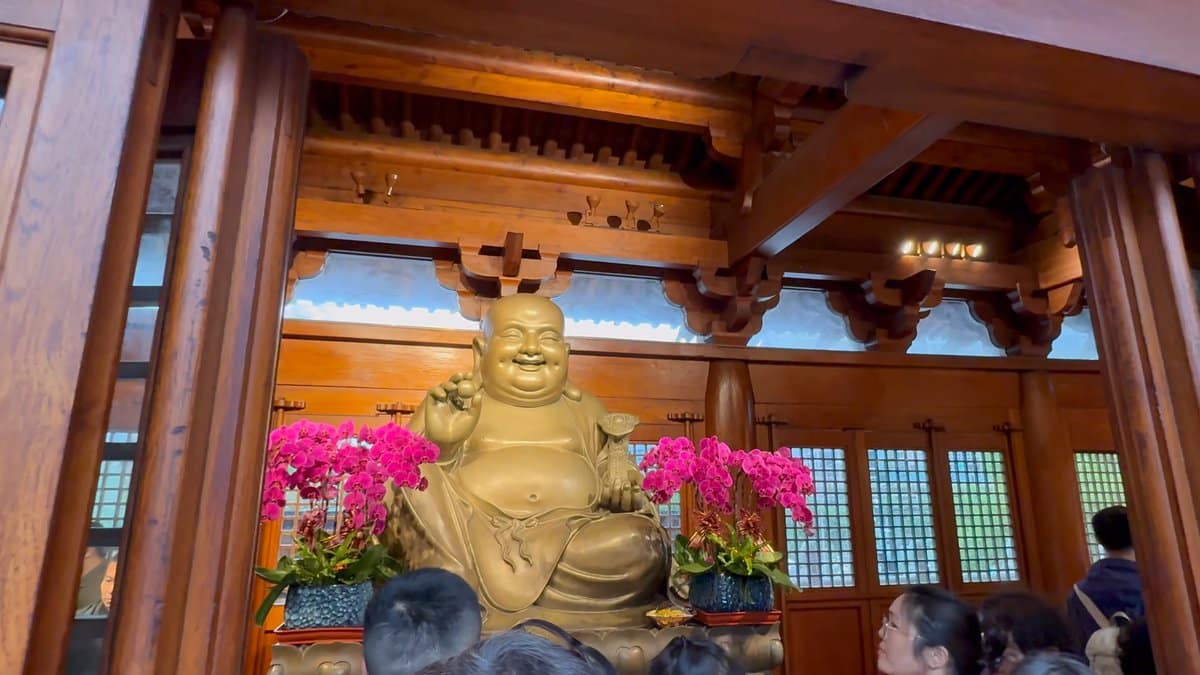
Gilded statues of Buddhas is everywhere: in shrines, on altars, lining the walls inside. One is a seated Buddha; another guard warriors; another is the laughing Maitreya figure with an offering of orchids around him. There are no windows here, only lamps and candles that keep the halls dim all day long.
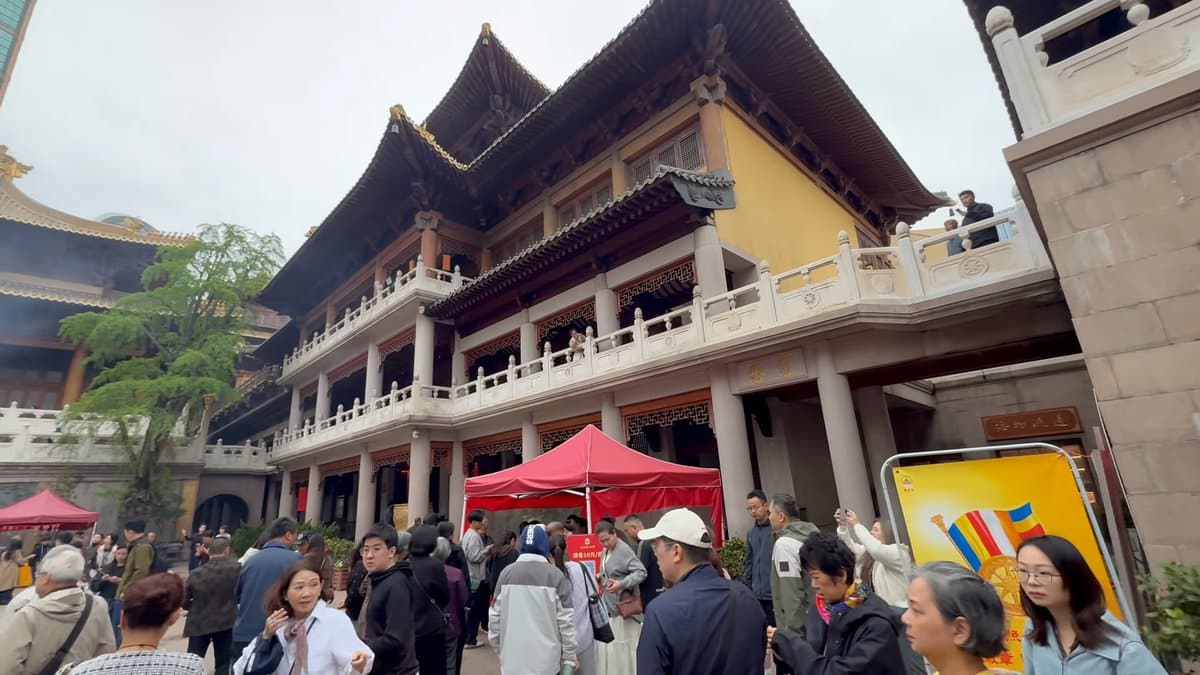
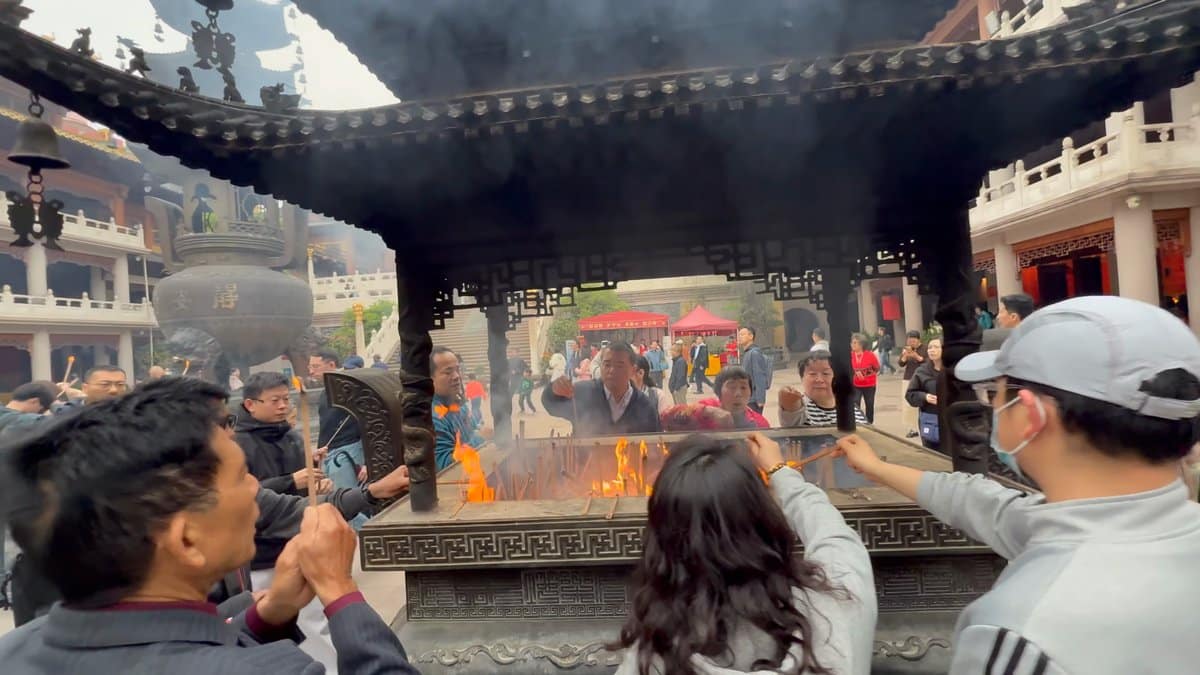
On festival days, the temple is packed far beyond comfortable capacity. People comes to light incense, their motions practiced and fast. They move through the gates, pause at the burners, then continue onward, the crowd shifting constantly as worshippers enter and exit.
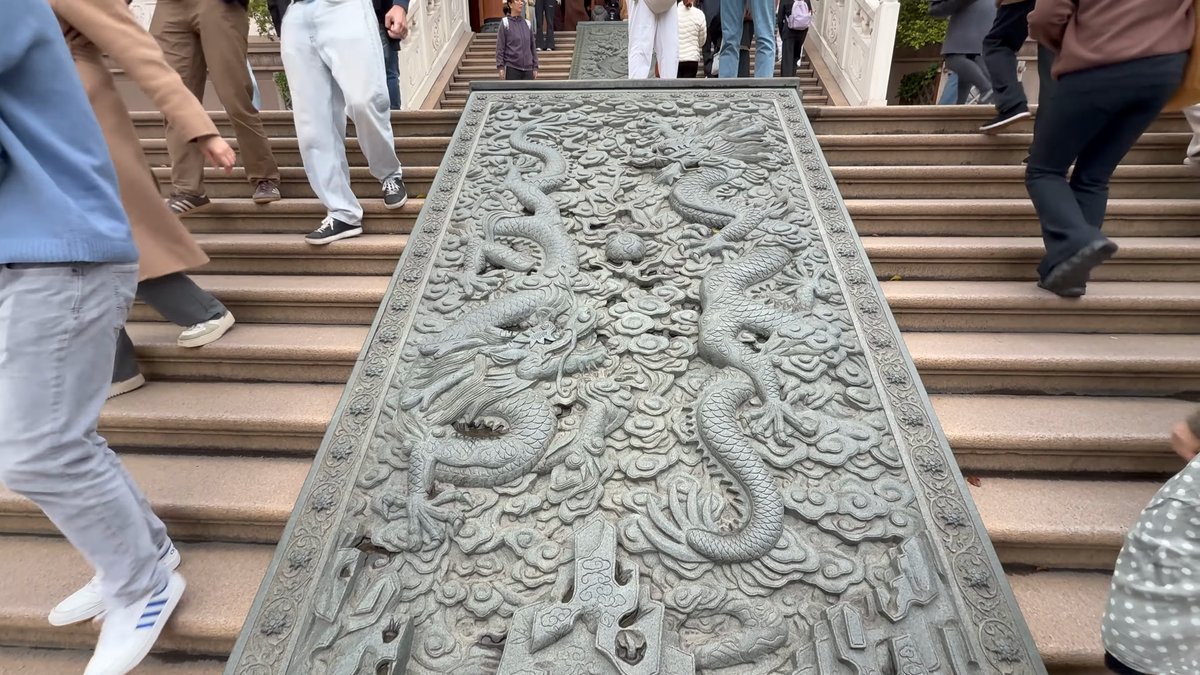
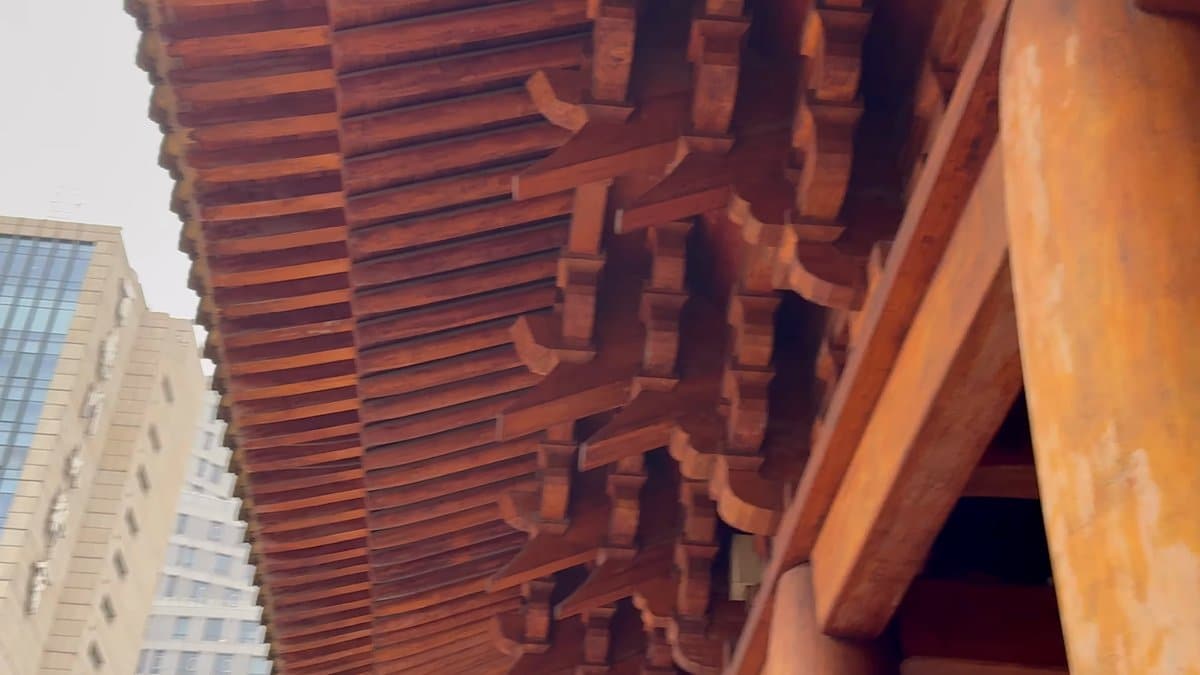
Timber roof brackets above are layer upon layer of interlocking beams, all painted and nailed together in the old-fashioned way. Dragons coil around the stone staircases that lead down through the balustrades. And while the current temple is a reconstruction, the level of craftsmanship is real.
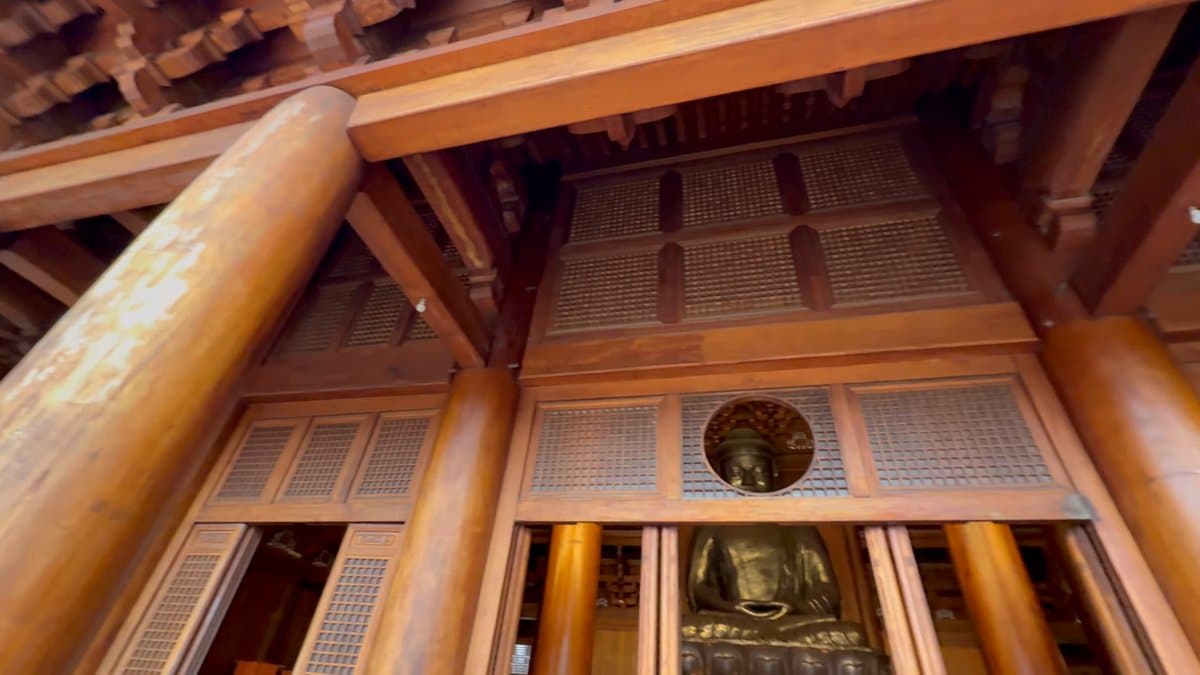
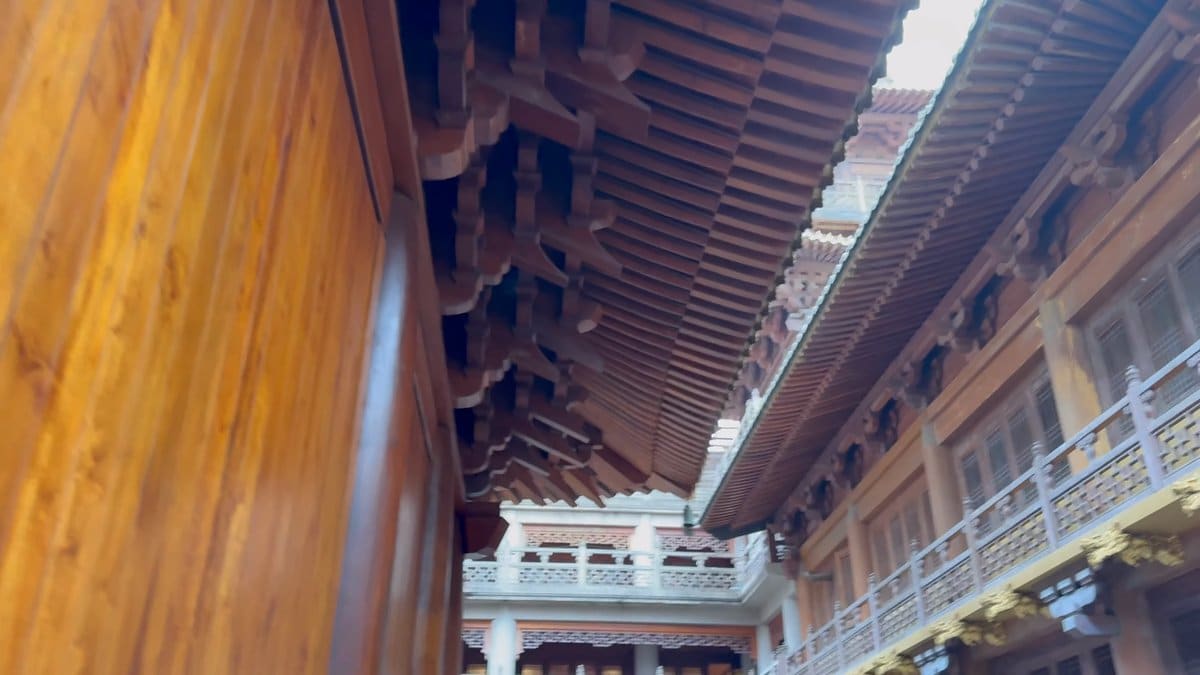
The paint is faded in patches on the dark timber roof. Hall ceilings has recessed panels, with layers rising above you. Buddha figure sit in the middle of each shrine, surrounded by offerings.
The structure is honest, with layers of eaves held up by columns.
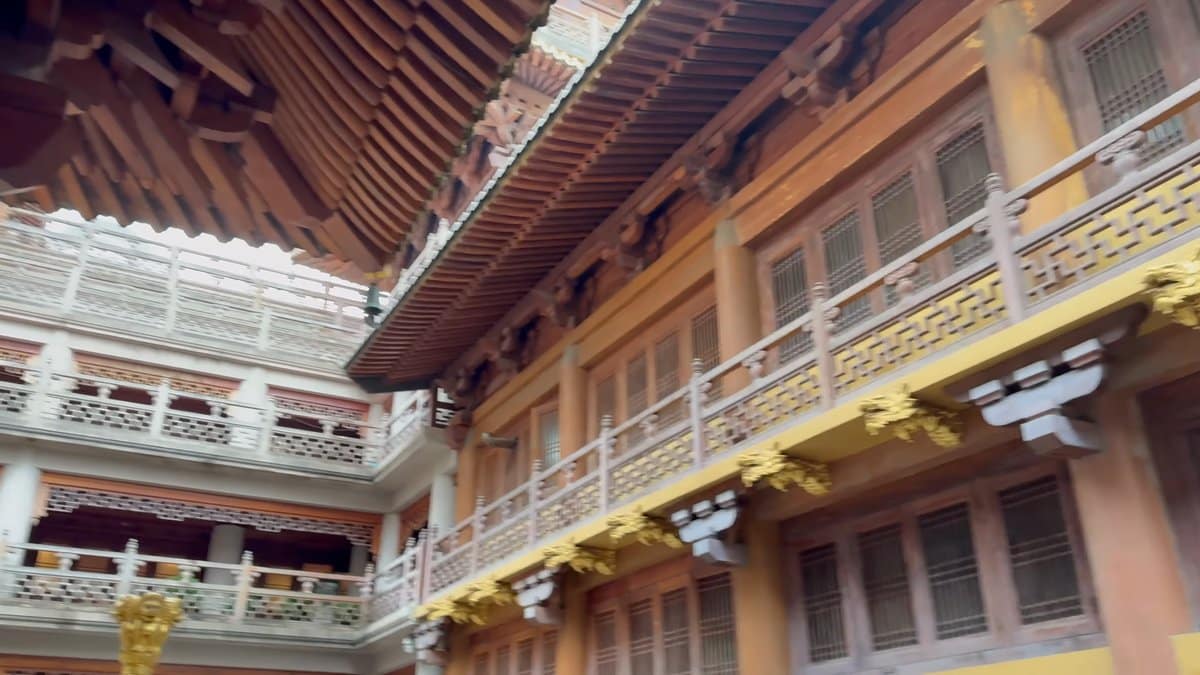
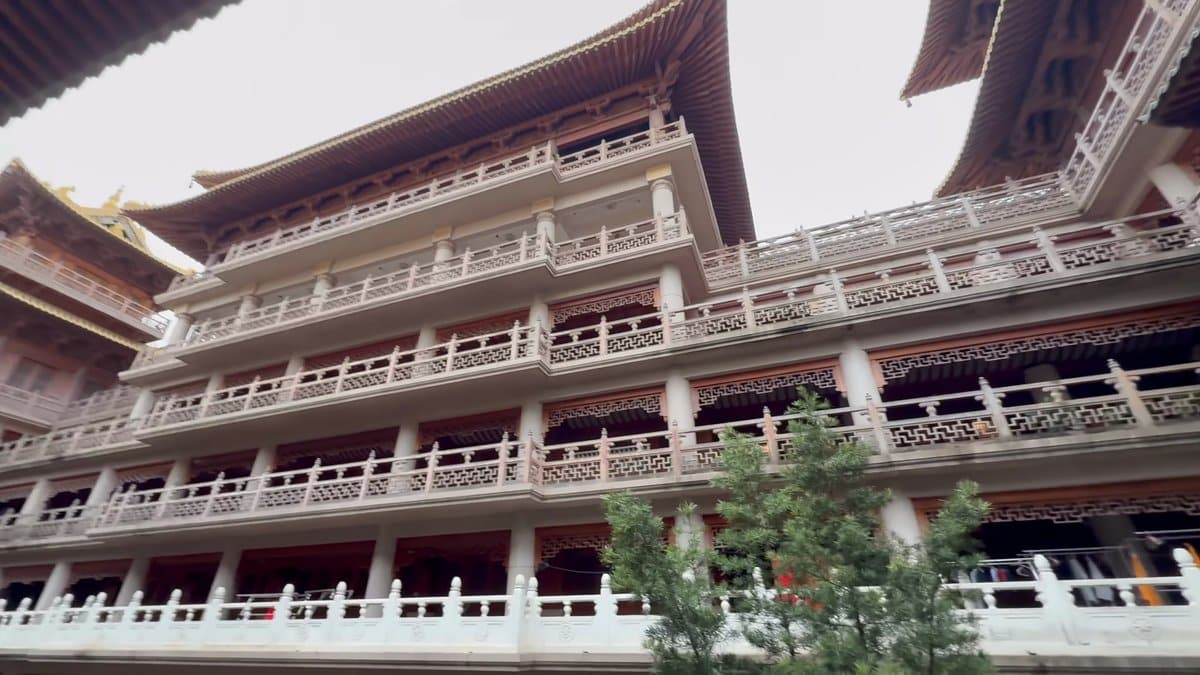
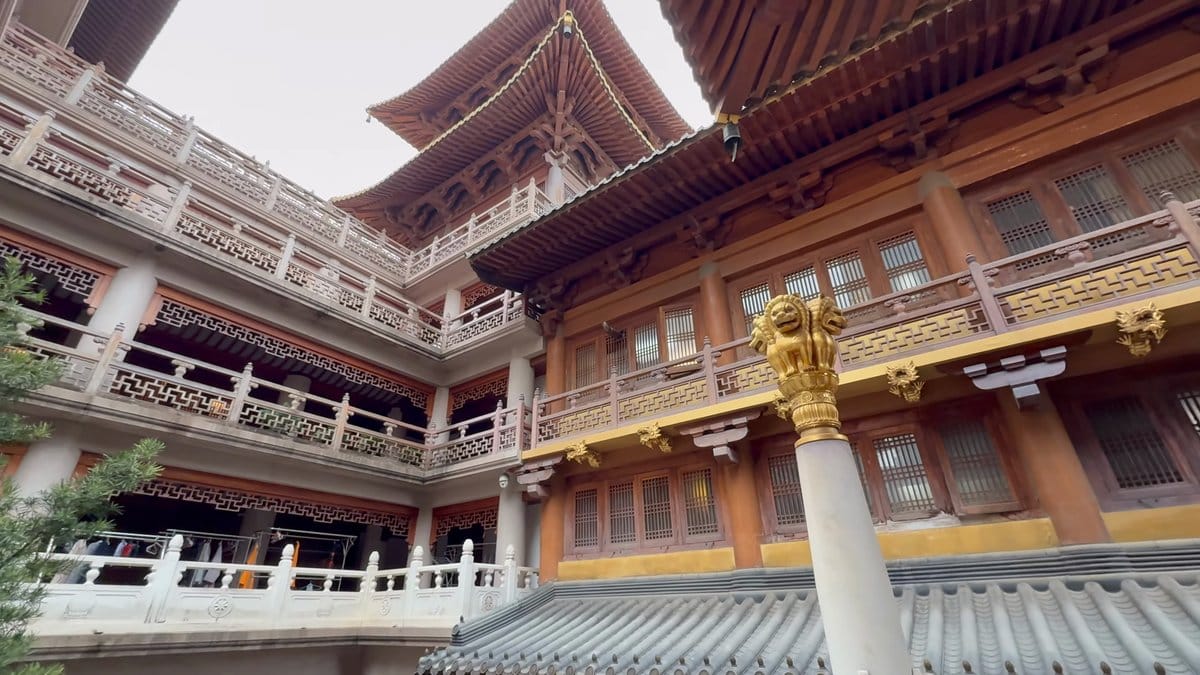
There’s shade and circulation around the courtyard in the galleries. Two levels of walkways are stacked and connected, with timber frames and white stone balustrades. You could circle the whole courtyard without stepping into the centre, keeping to the edges to watch what’s going on.
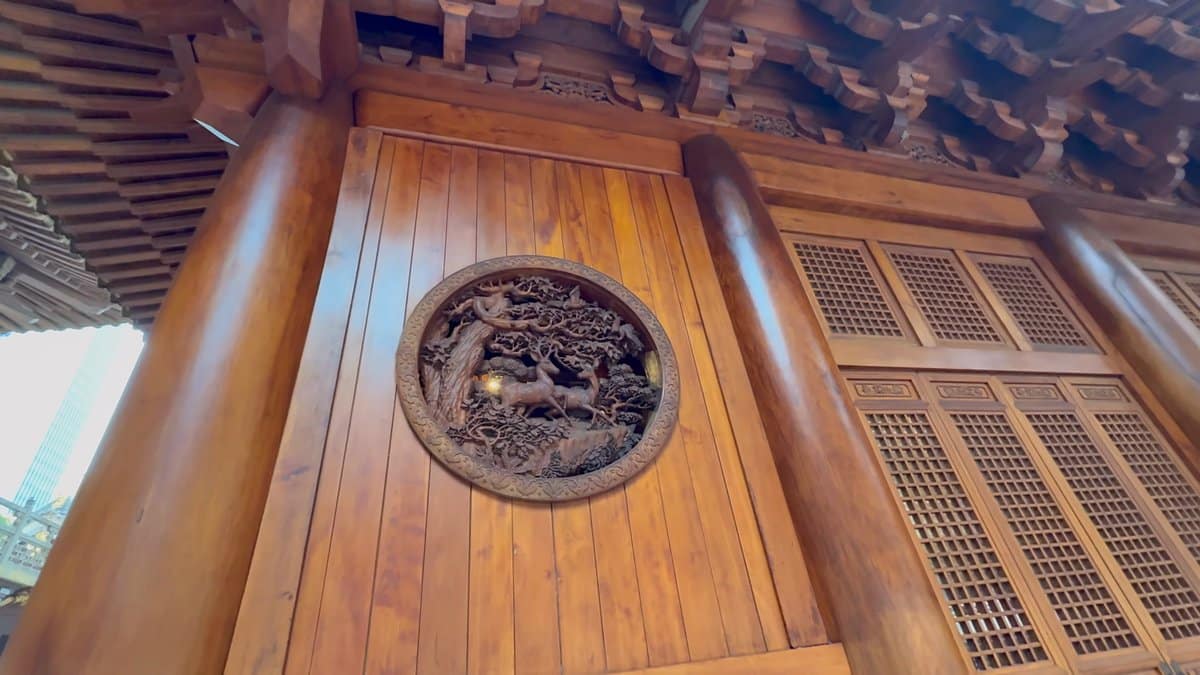
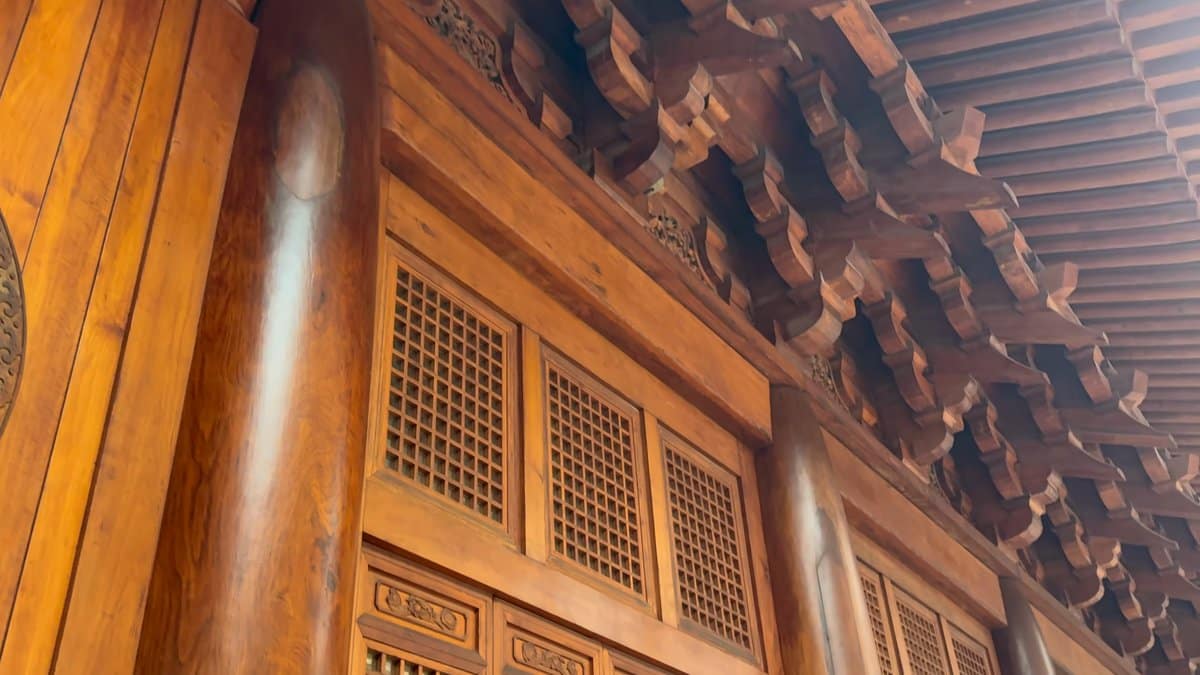
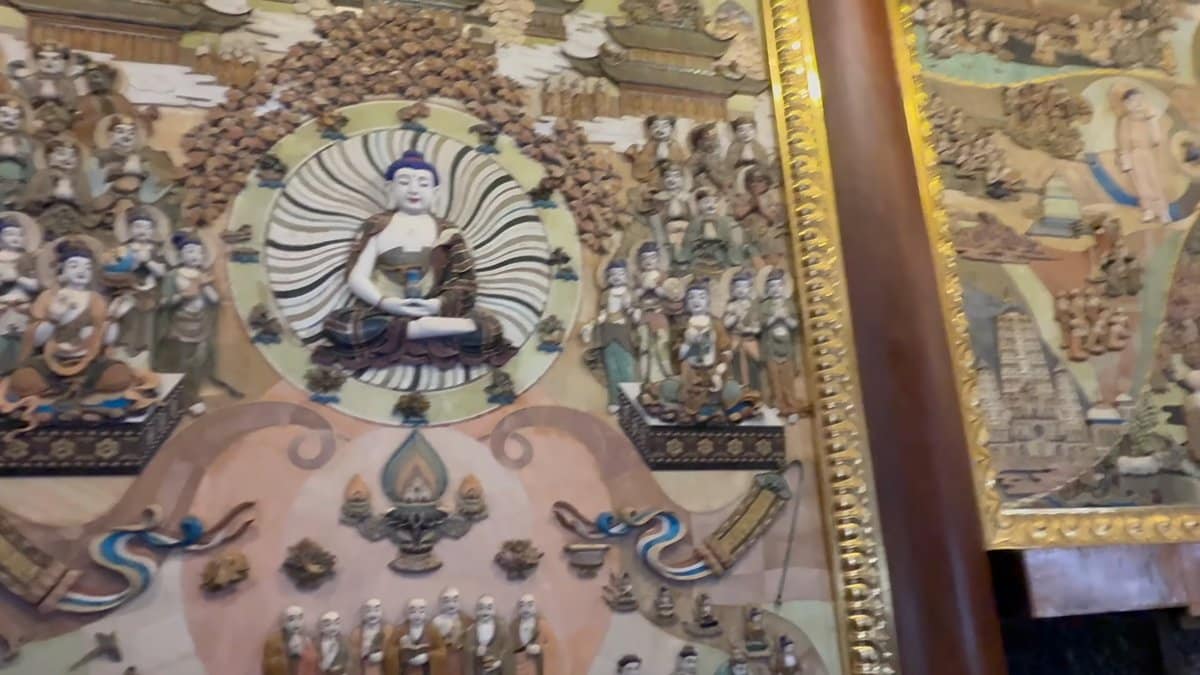
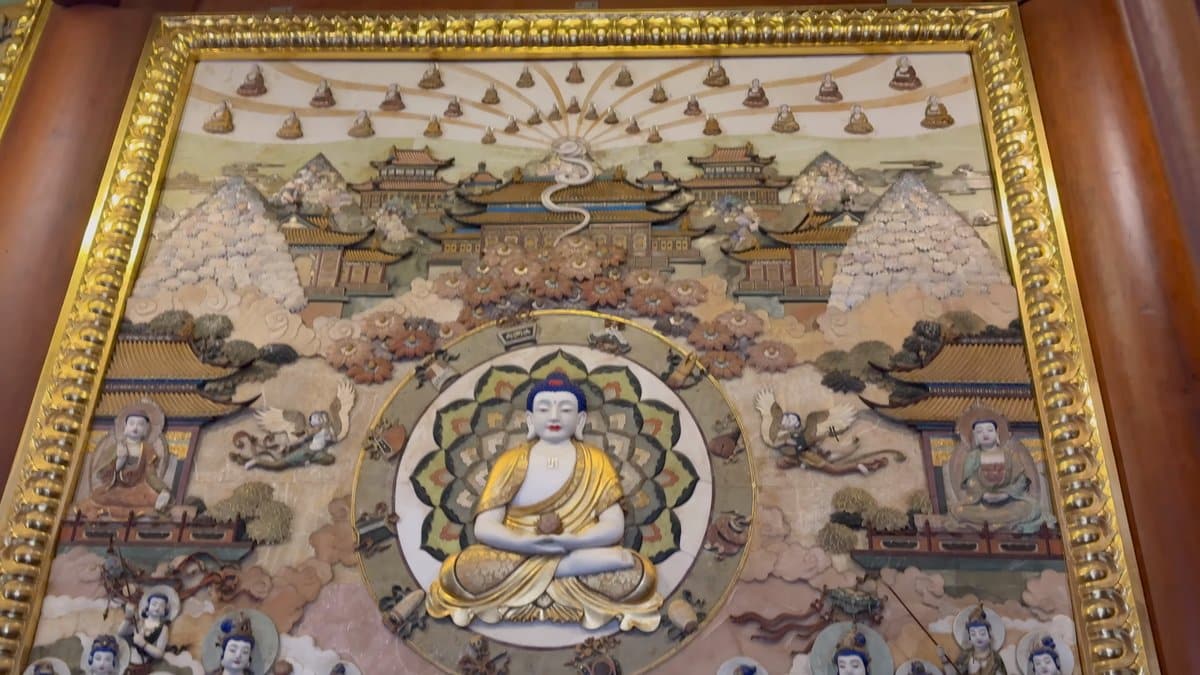
Lattice screens filter light into the corridor-like galleries, and the timber walls has been decorated with carved medallions. Panels of relief show Buddha figures in different poses: some gilded, others left plain. It all adds up but doesn’t seem cluttered.
Everything has its place.
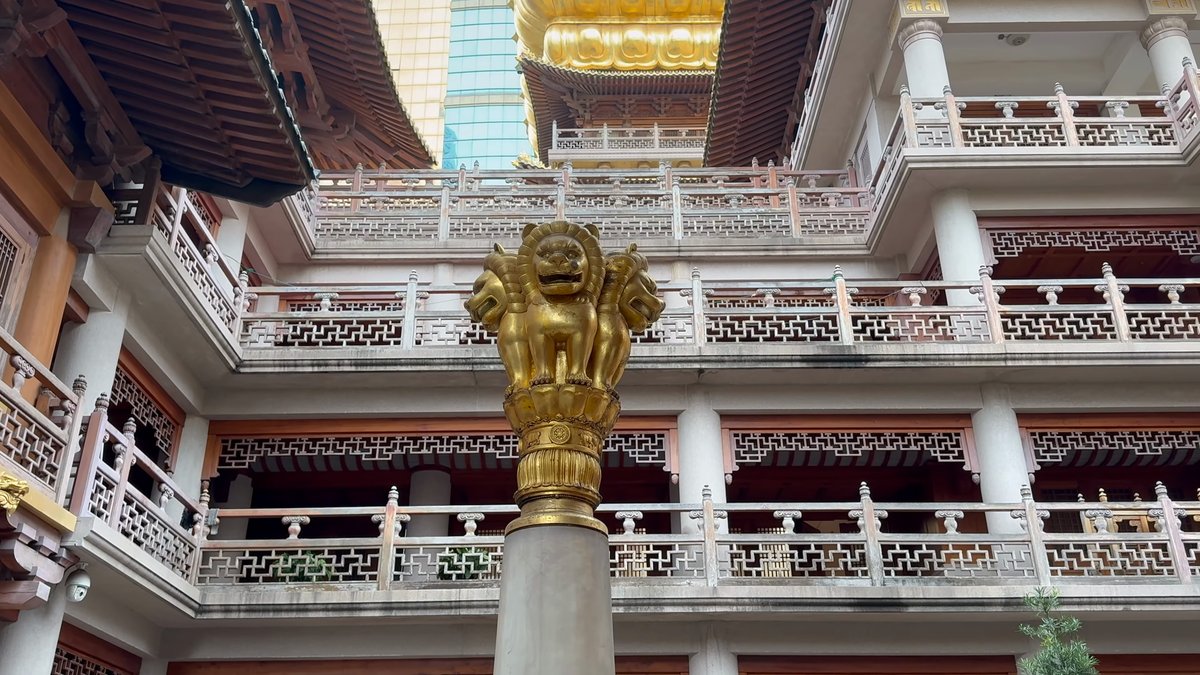
Looking up from the upper gallery, columns and roofs frame slices of sky. Most people hurry past here, but the architecture reward careful looking. You’re unlikely to get quiet contemplation at Jing’an Temple (not with the crowds going round and round and the metro rumbling beneath).
But what you’ll find is something more particular (and stranger)… Than that: a working temple which doesn’t want to become a museum, right here where the city wants to build higher and denser. The skyscrapers press in on all sides.
The smoke still rises. The people still pray. Have you visited any urban temples where the city has built up around them?
What did you think about the contrast?