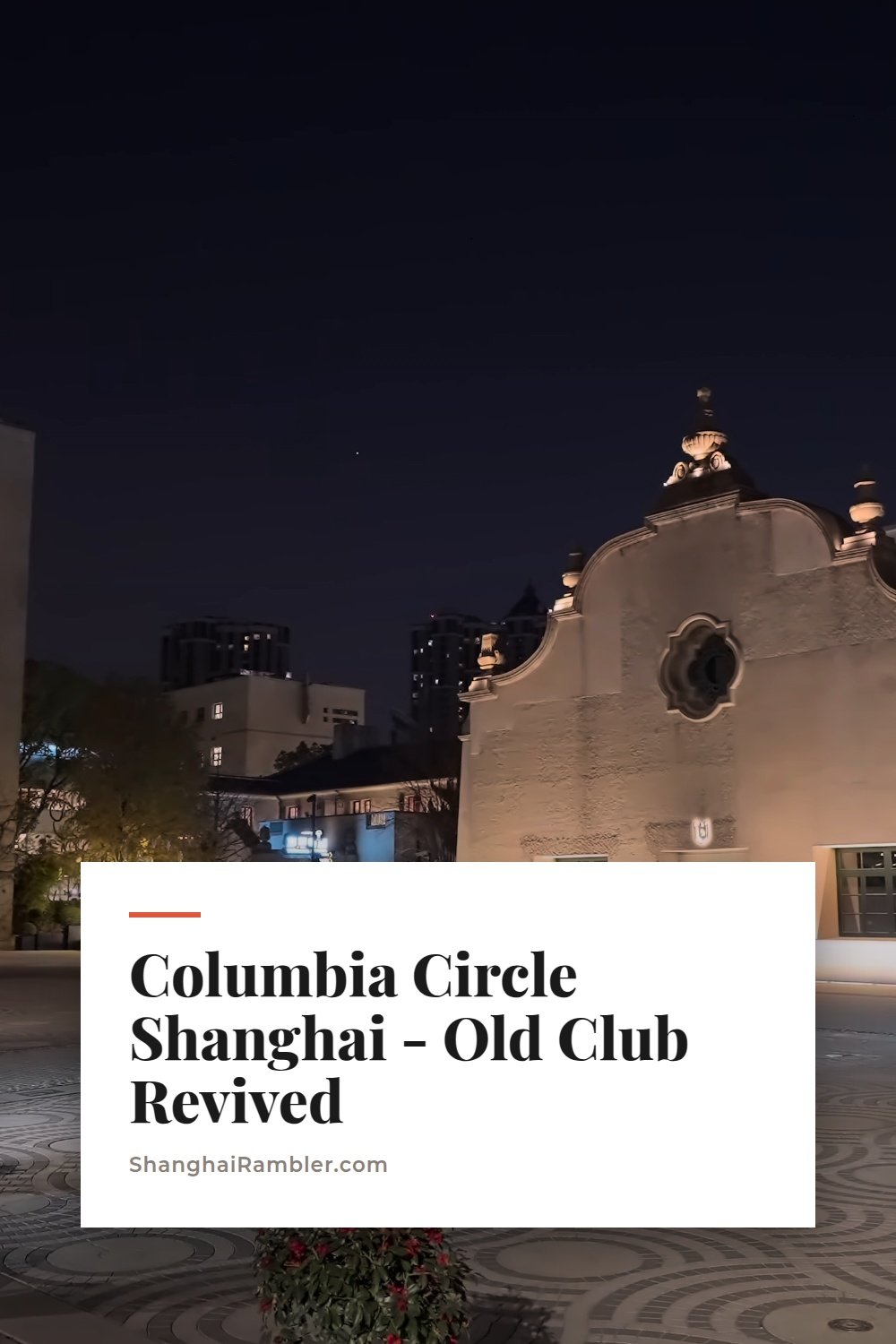
Now called Columbia Circle, this property occupy the land of a former American country club, the Columbia Country Club, which catered to Shanghai’s expat sportsmen and there families in the 1920s. Almost a hundred years later, its pool and buildings remain, though everything else is different. The gabled mission-style clubhouse now serve as the centerpiece for an eat-and-shop complex, housing a Starbucks, specialty shops, cafés, and Tsutaya books. Inside the historic shell, new tenants has moved in.
If possible, go by night. Then all the trees lining the lanes are wrapped in fairy lights. There is light installations on the lawns and plazas.
The old swimming pool, with its arched colonnades, glows beneath floodlights, still open to the sky. It’s that combination of preserved buildings and contemporary shopping that often fails to work, yet here it does, it feels coherent, not forced.
Why Visit Columbia Circle Shanghai
Columbia Circle Shanghai
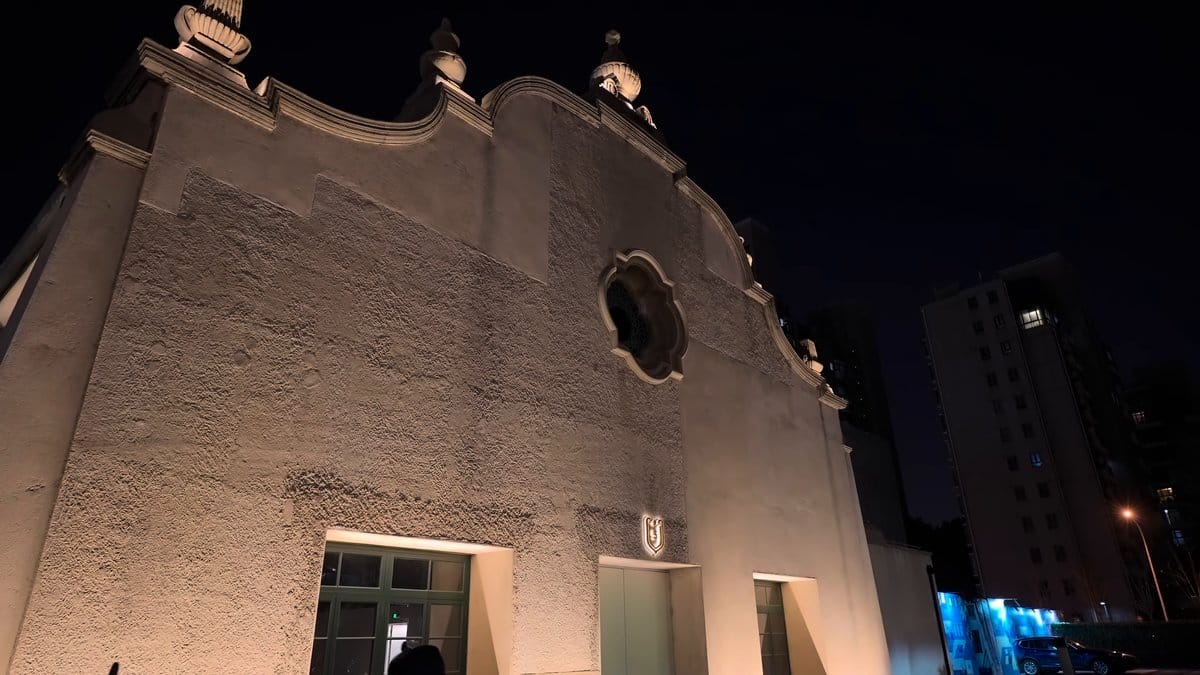
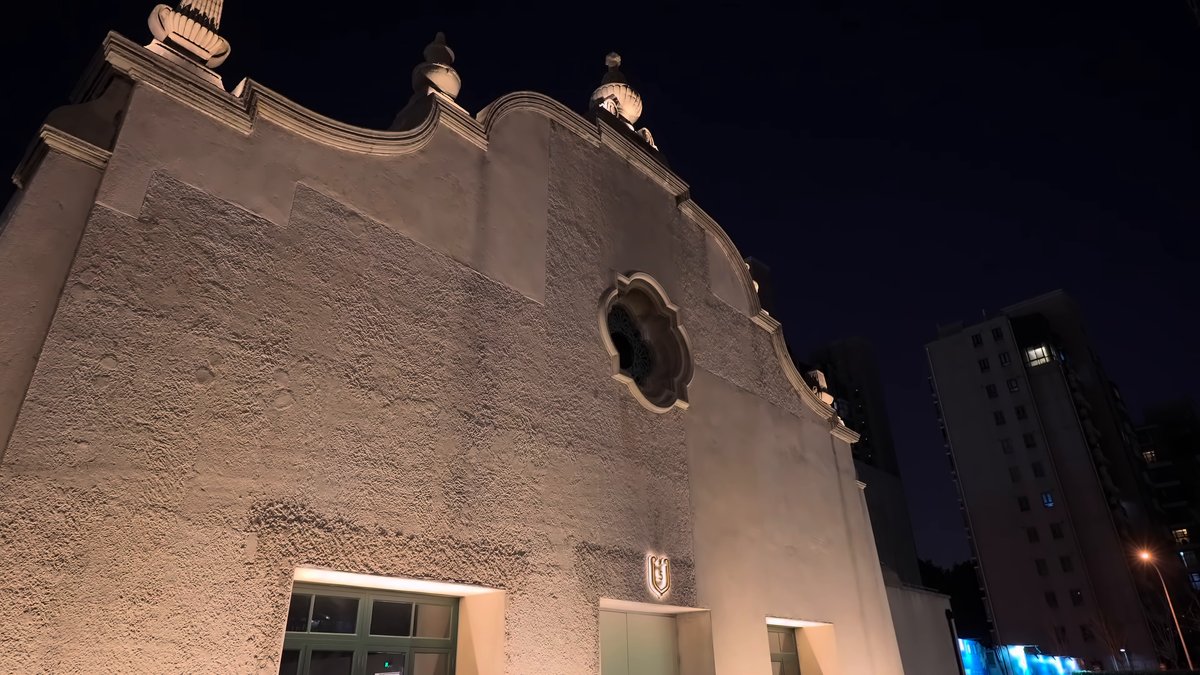
Whatever direction you come from, it’s hard not to be dominated by the clubhouse itself. Hoardings and scaffolding surrounds sections of the complex, but the building itself looks every inch its age: white stucco walls and clay-tile gables. A remnant of the original club is the crest above the central window.
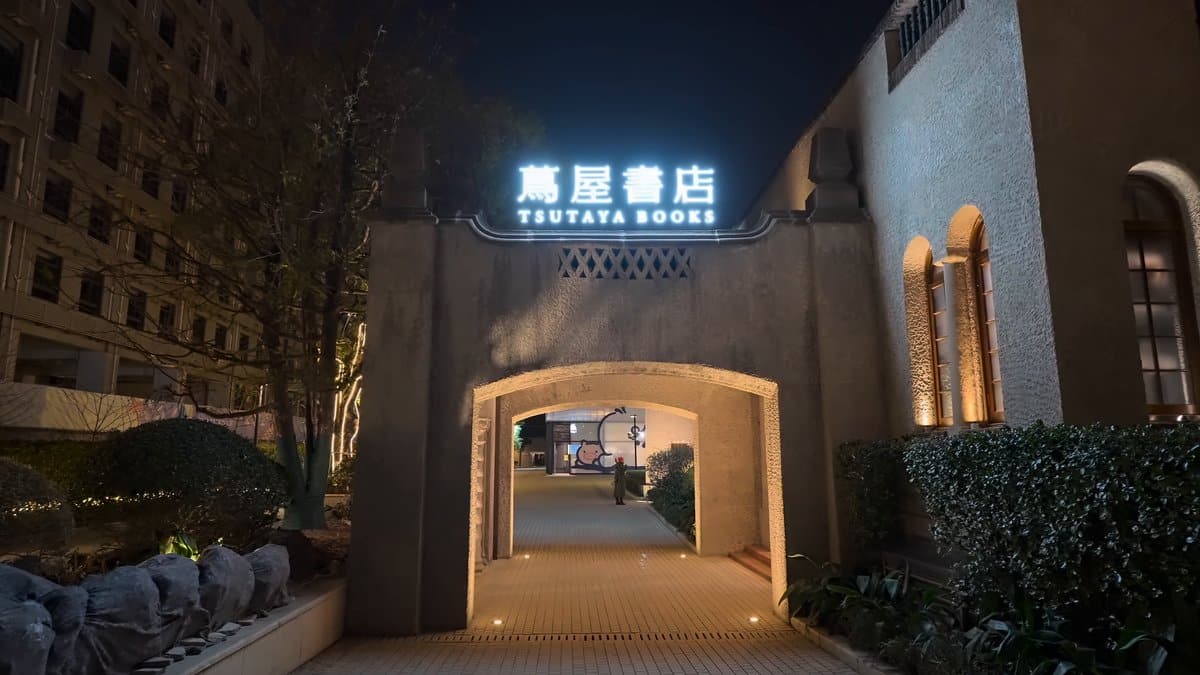
Through arches you pass into other tenants.
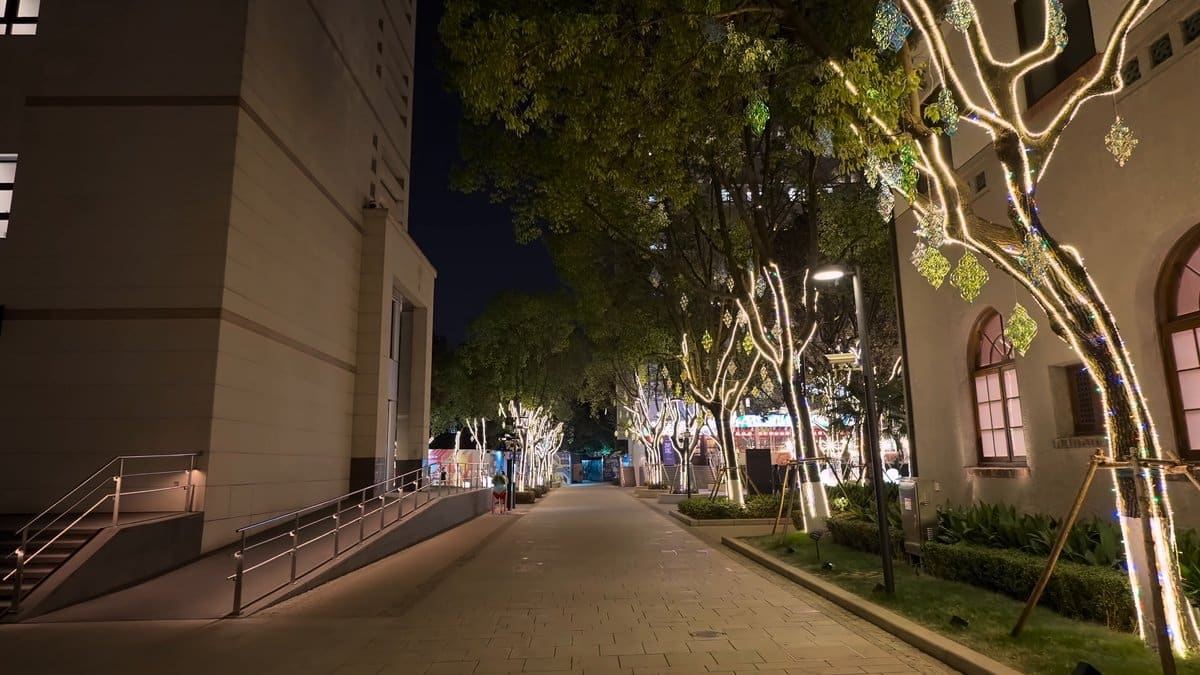
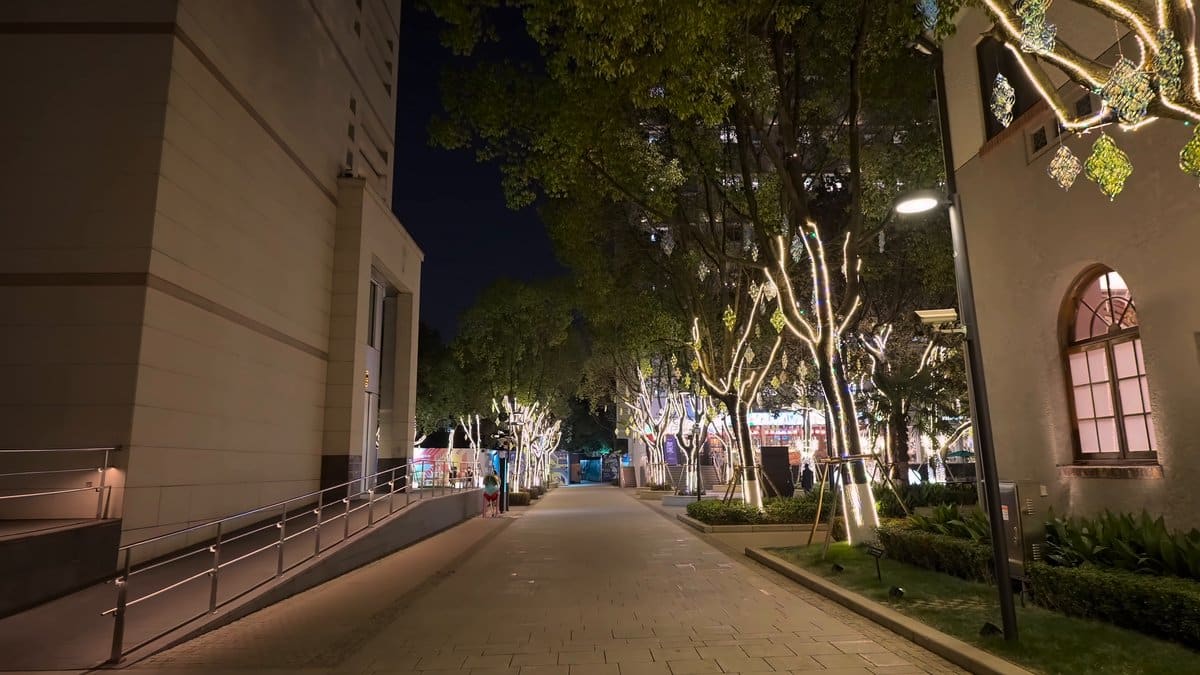
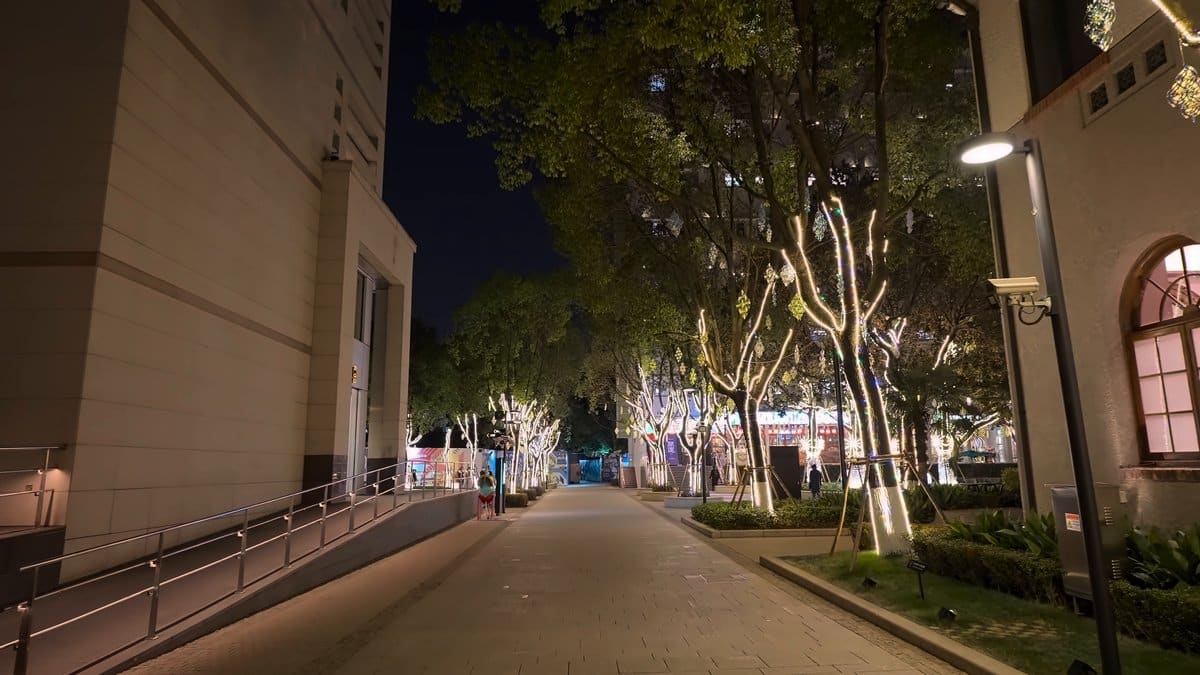
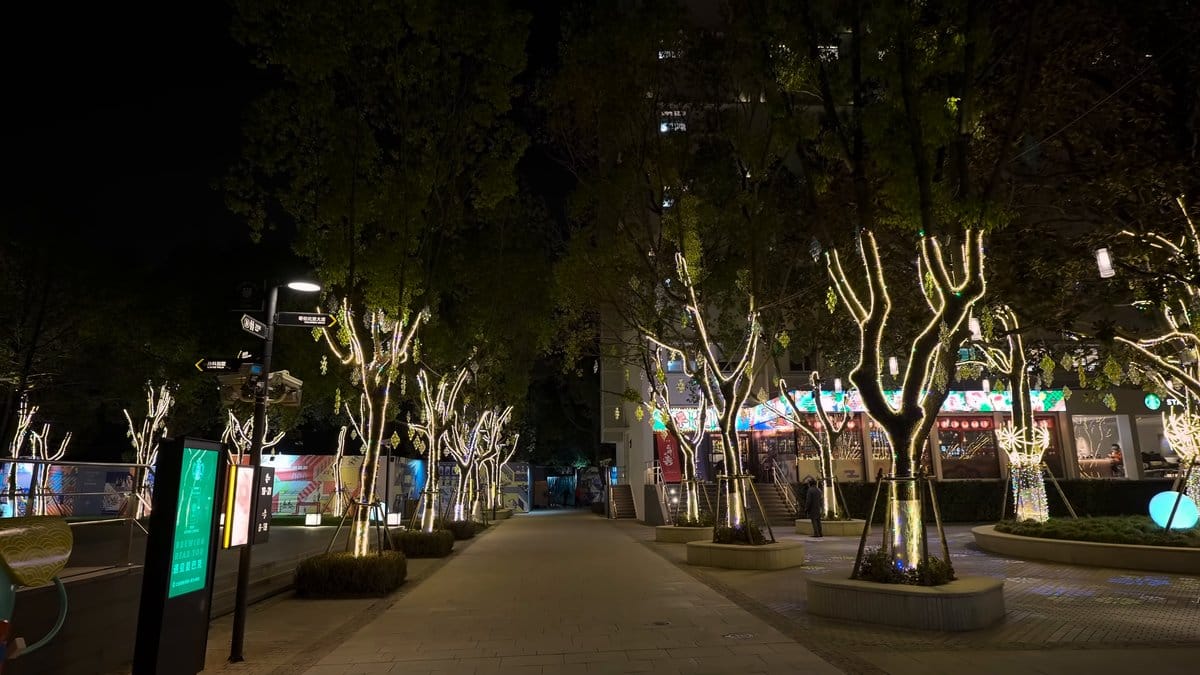
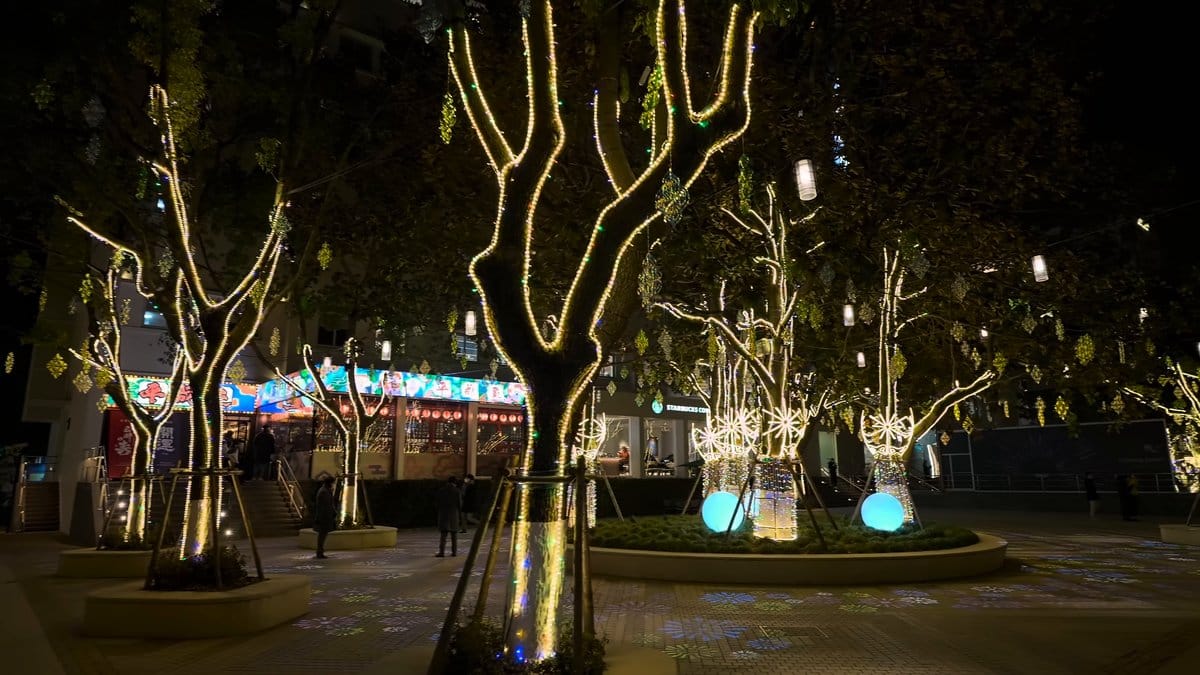
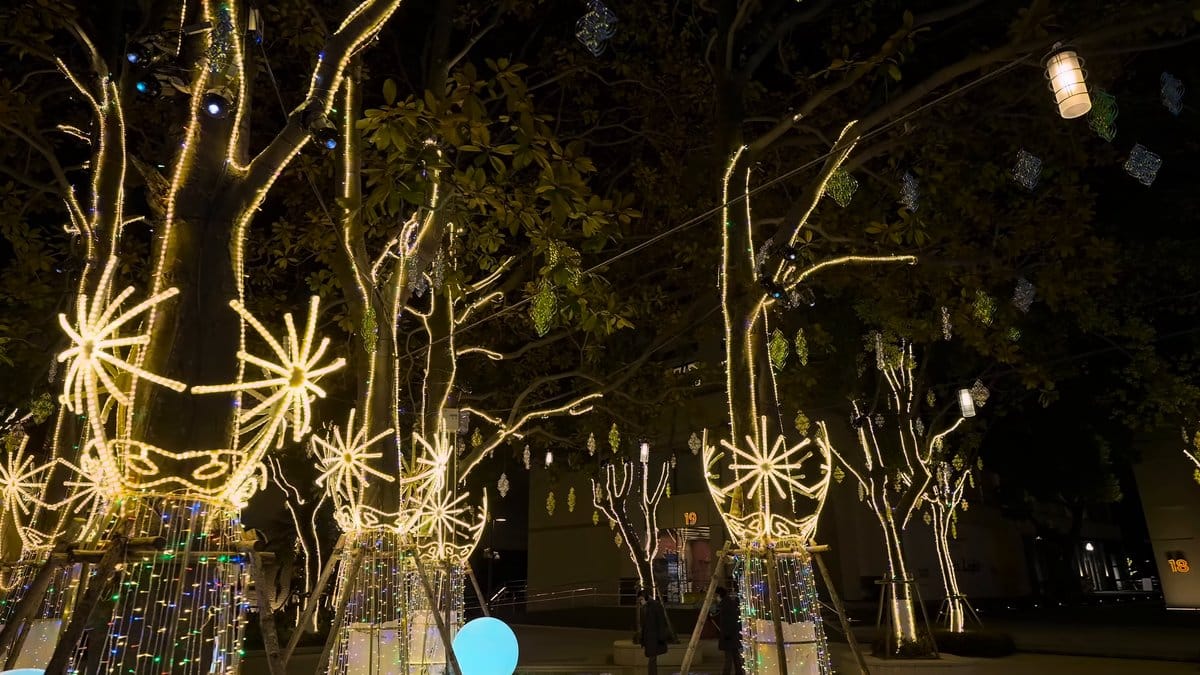
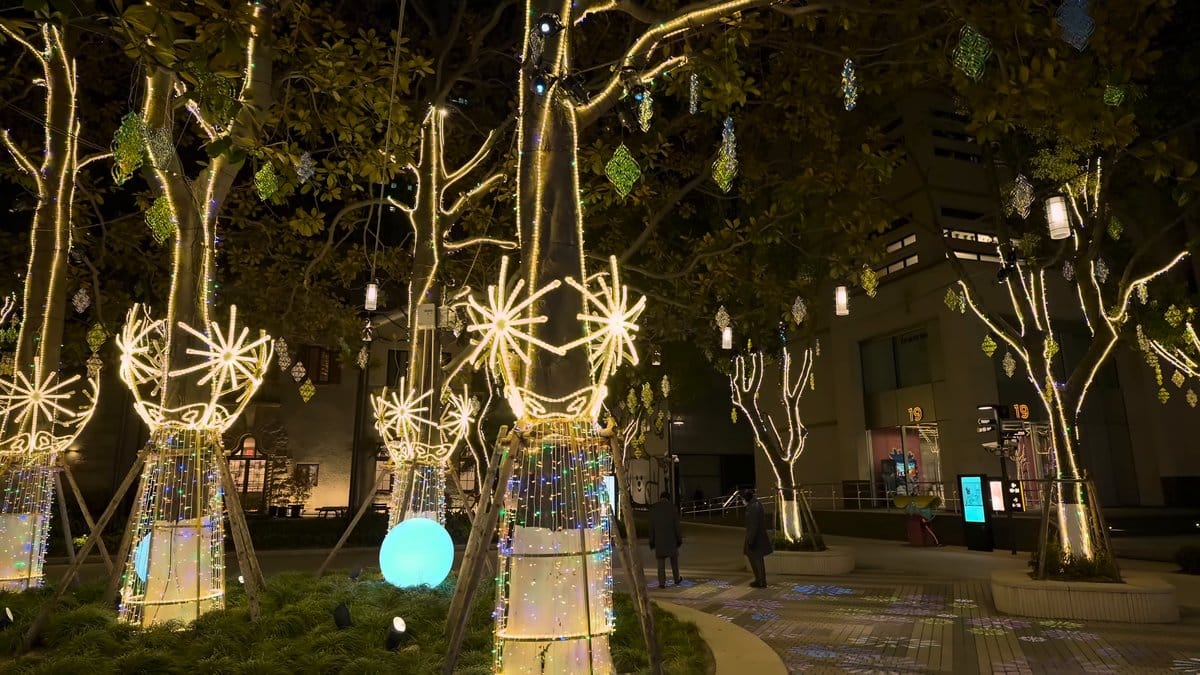
From trunk to crown, the plane trees that line the paths is wrapped in strings of little lights. Walk along at night and you’re passing down lit-up tree-lined corridors. It’s not only during the festival season but all year round, and some of the courtyards have had more trees added especially for the lighting.
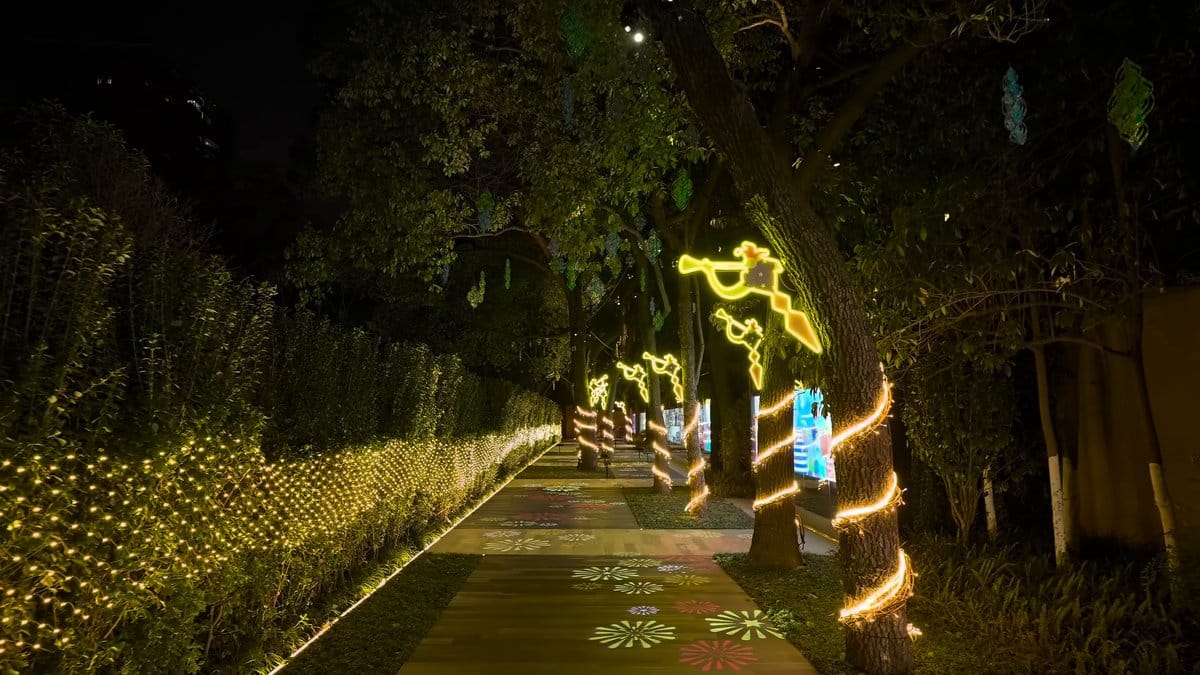
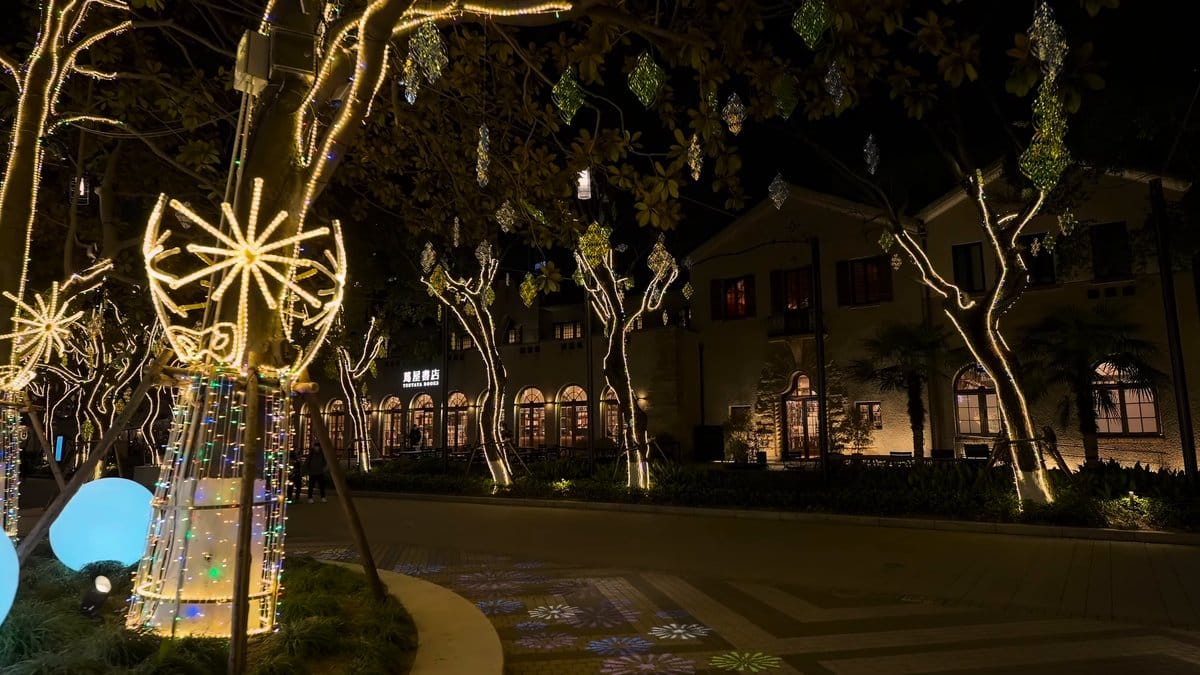
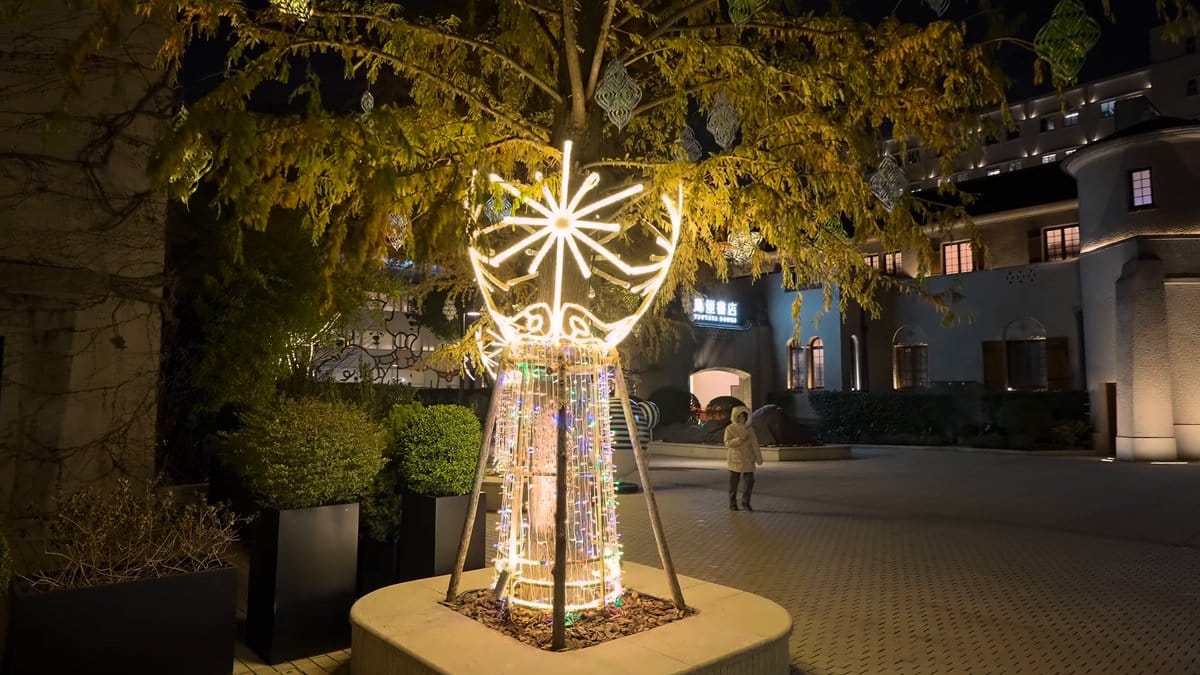
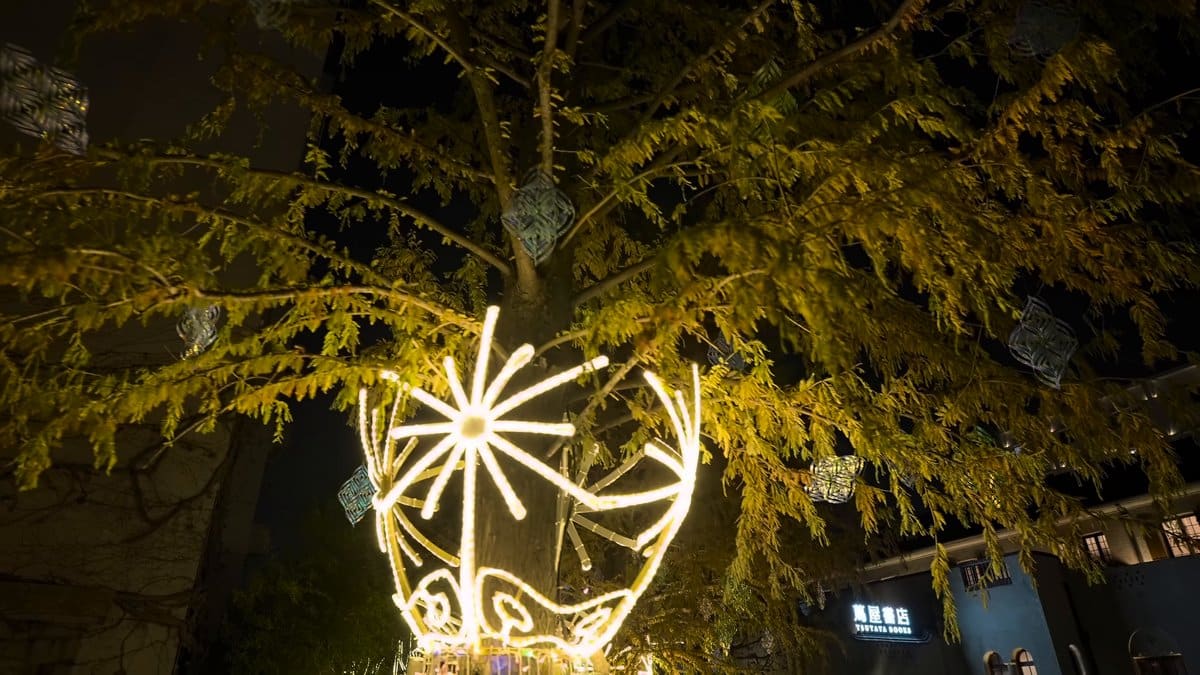
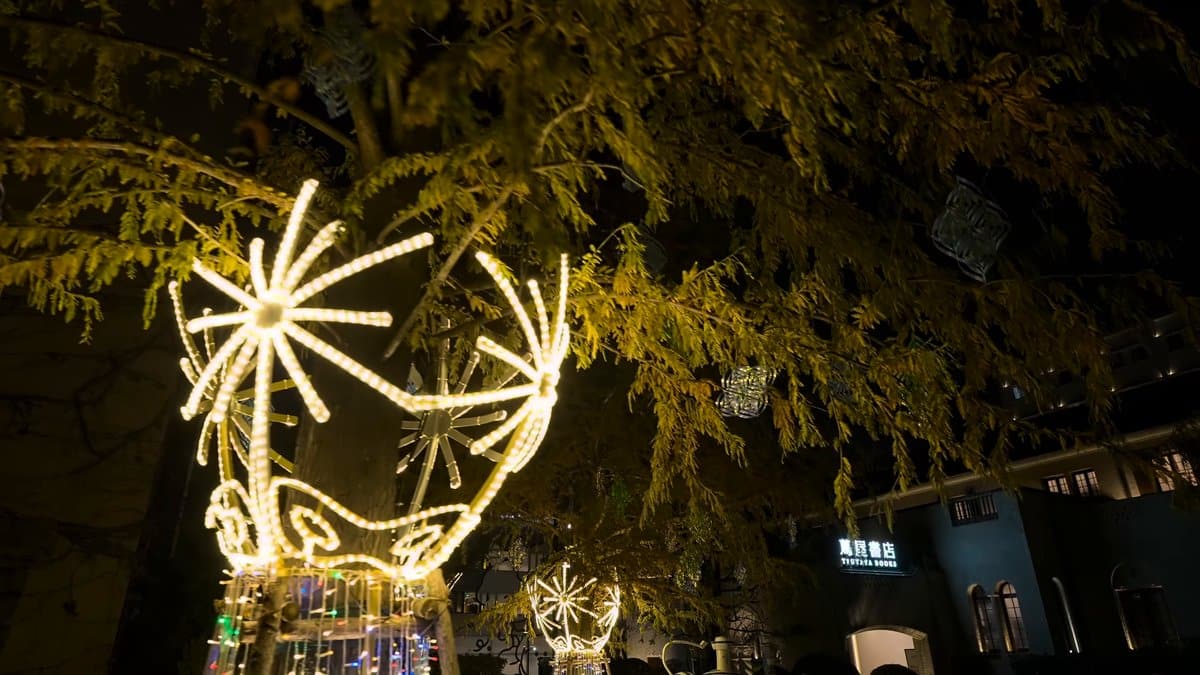
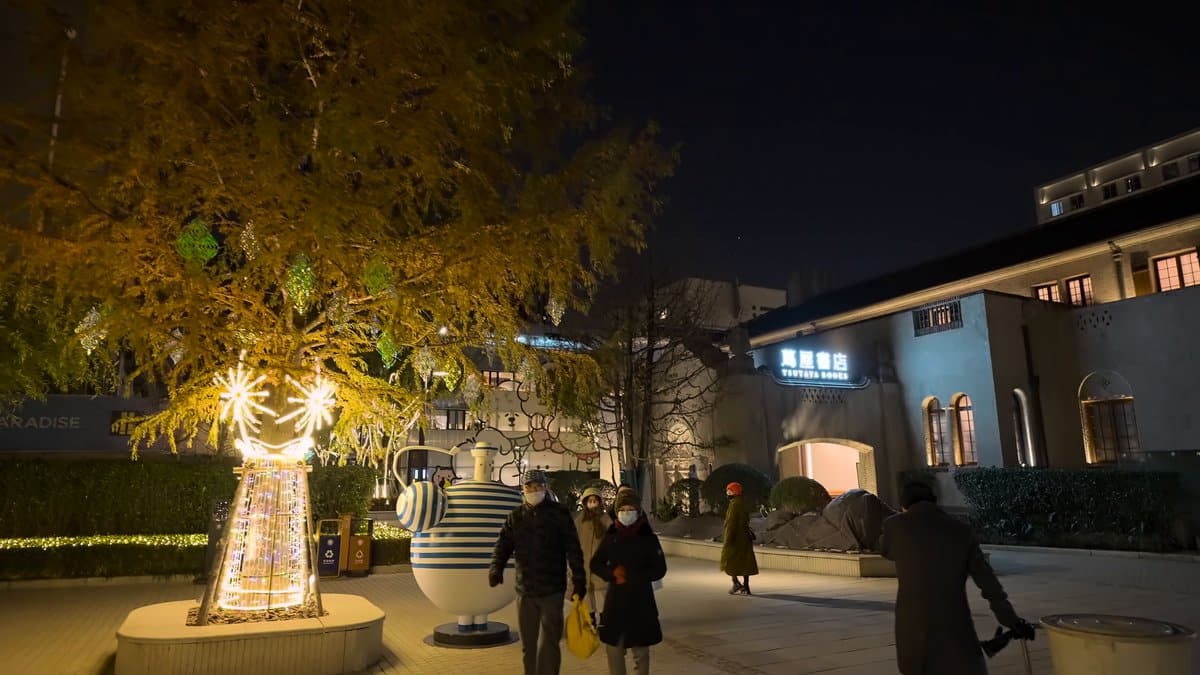
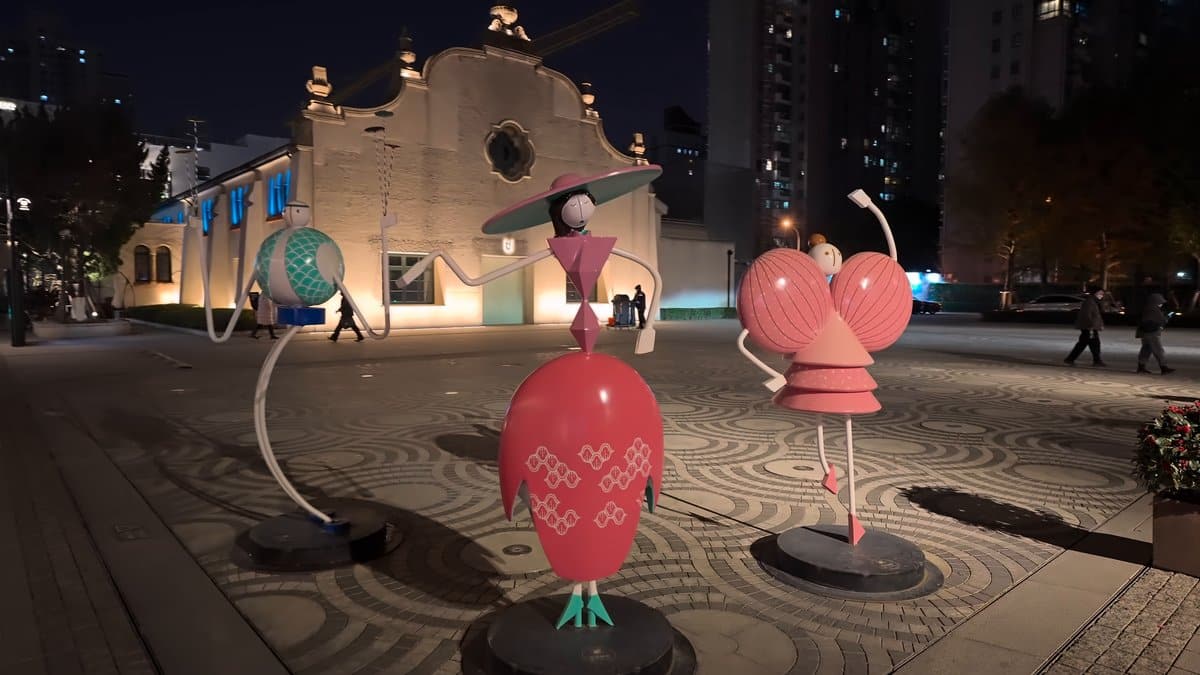
A selection of light sculptures is also scattered around the plazas and lawns. These tend to be abstract spirals or starburst shapes. They look good in photographs and many people stops for selfies with them.
The sculptural installations rotate regularly, which means that the set-up will depend on your dates of visit.
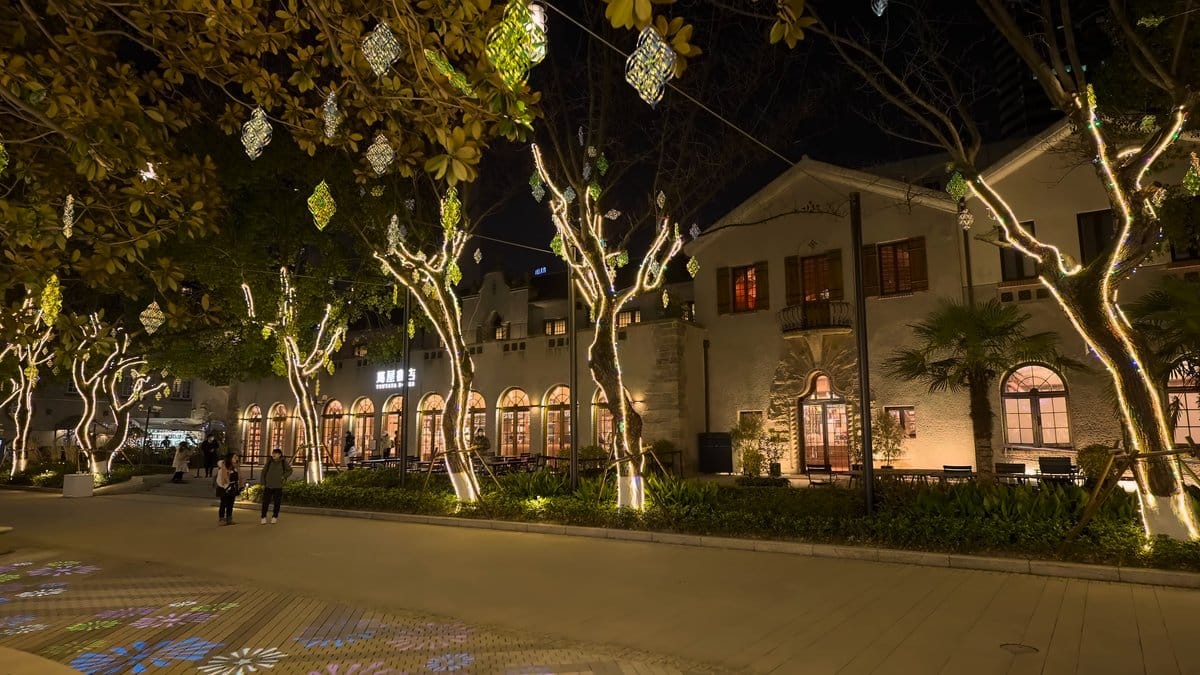
Behind the lines of illuminated trees, shopfronts are all aglow. The shopping mix is more boutique fashion, homeware, and specialist food shops than big chain stores. When these photos was taken, some places were not yet fitted out.
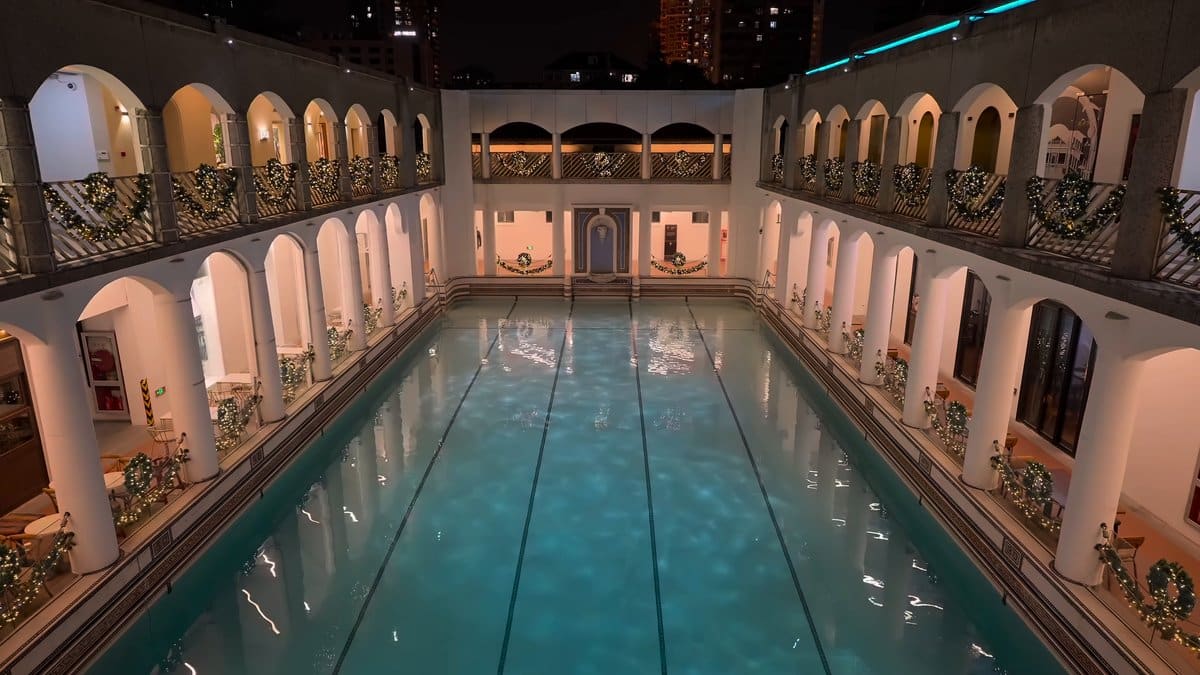
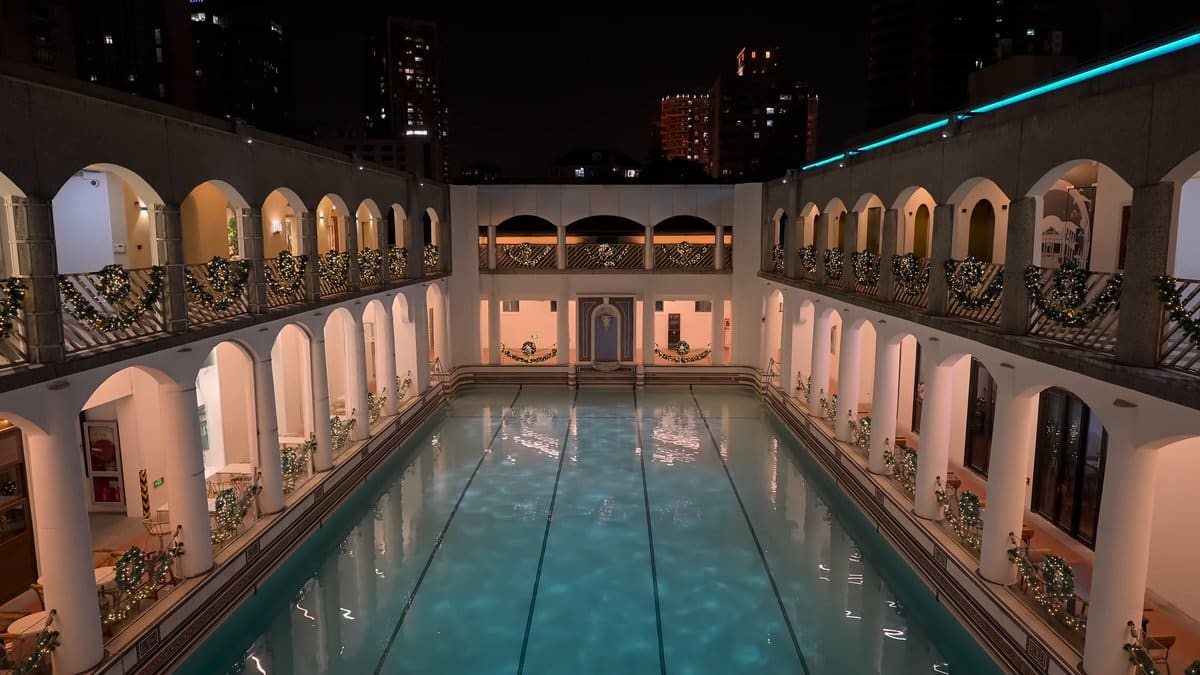
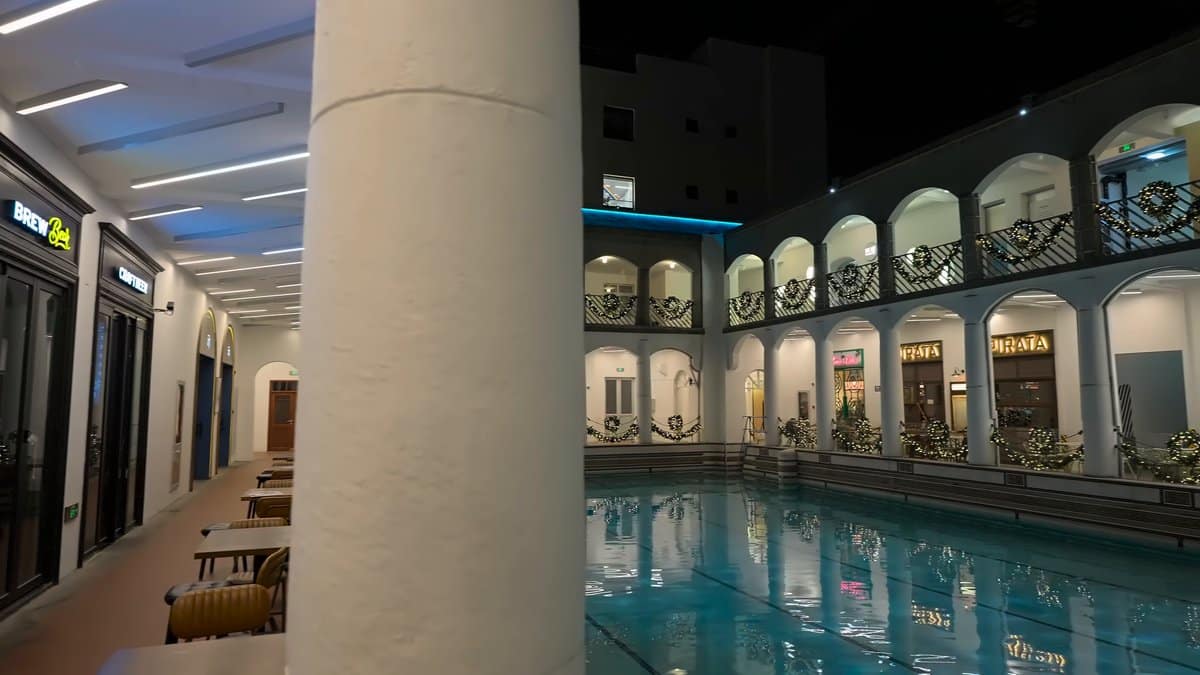
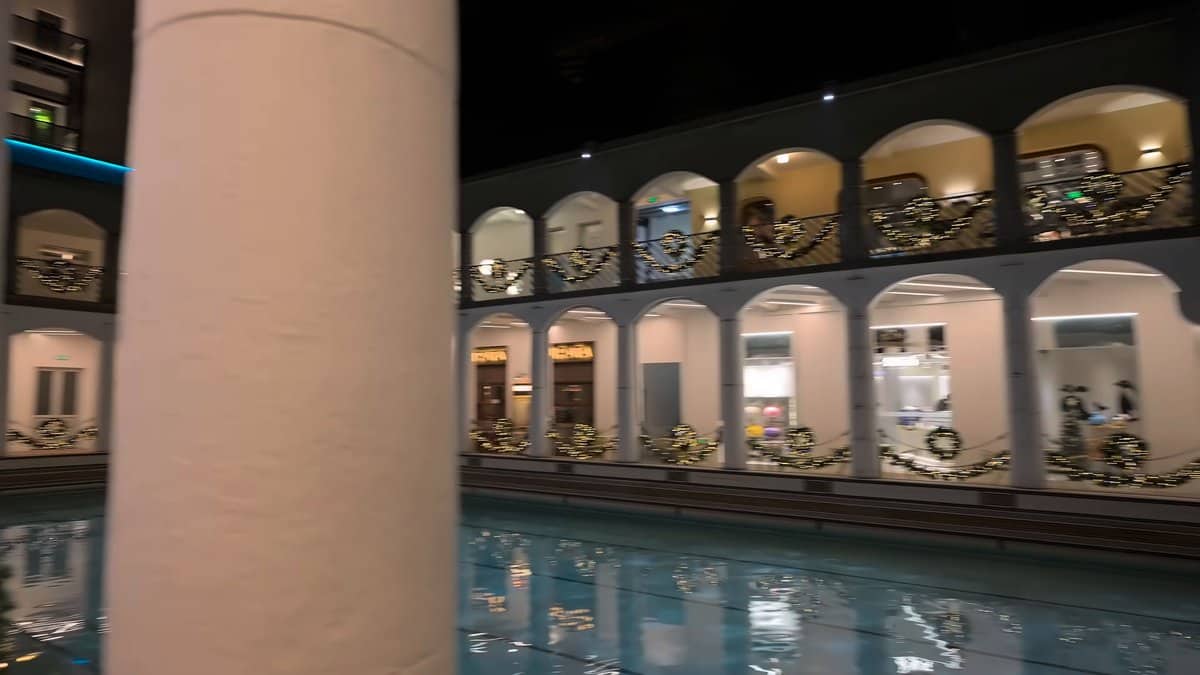
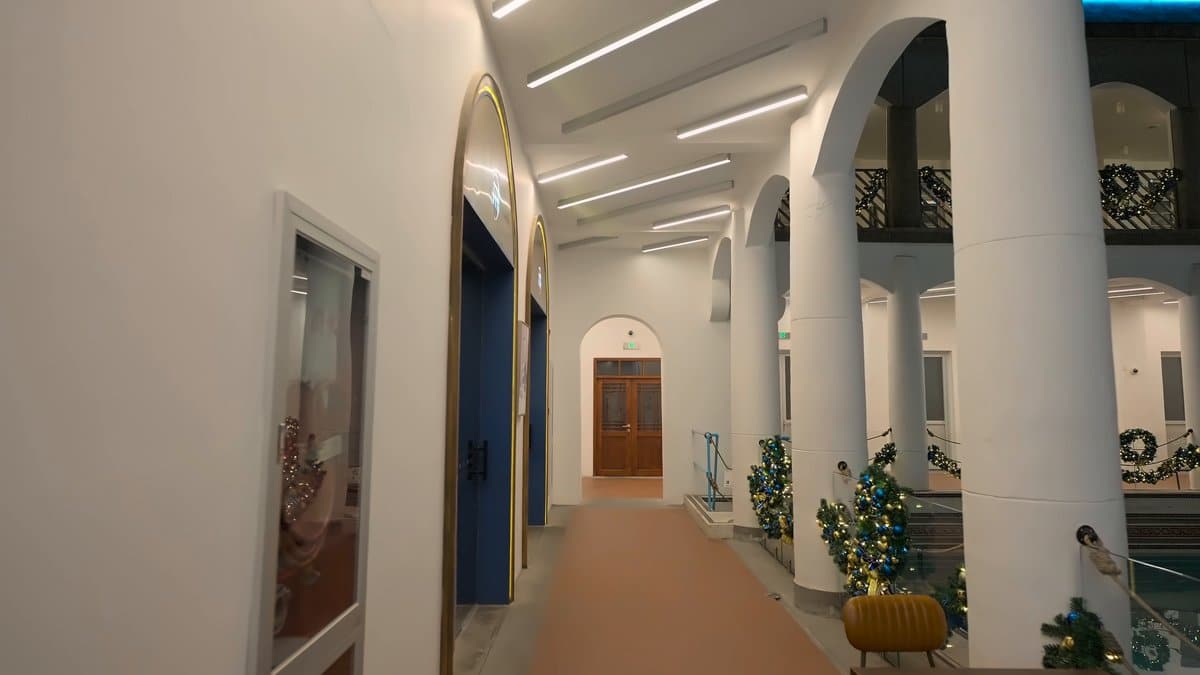
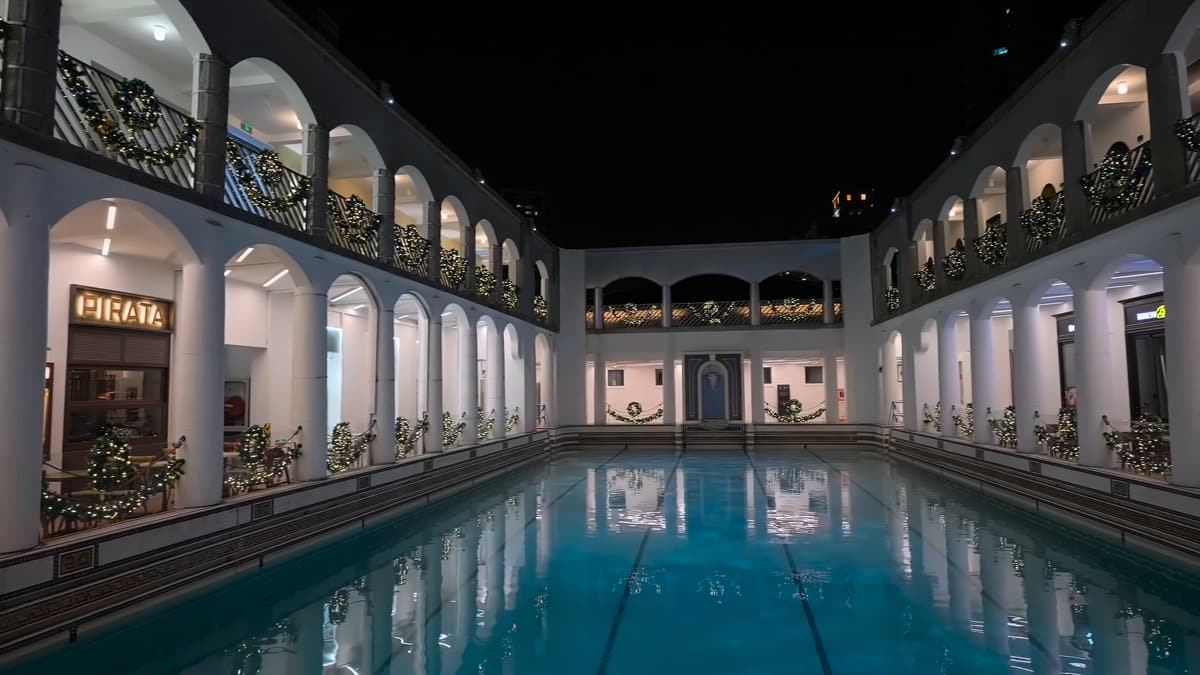
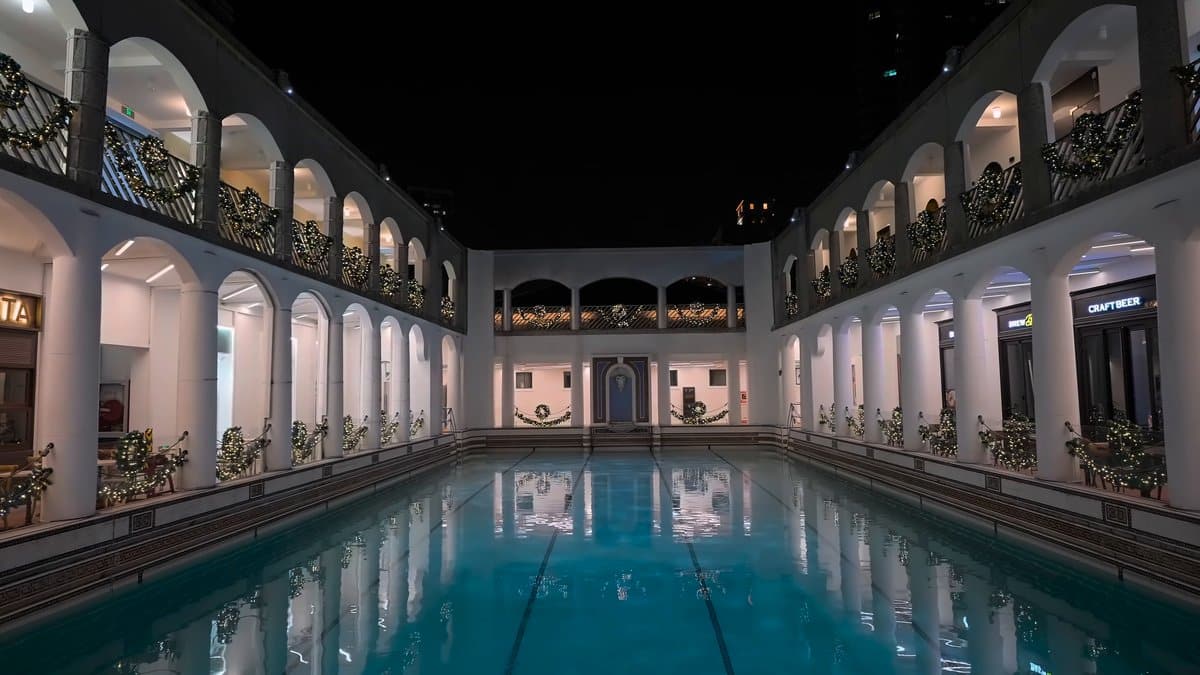
What remains is its centerpiece: the swimming pool. Built in the 1920s for the use of club members, the pool is still beautifully maintained (though sadly unused). At night, the water reflect the surrounding arcades.
On either side are two-level colonnades, and you can stroll around the top gallery, peering down at the courtyard below. The balustrades and arches has all been repainted and cleaned. In some seasons, garlands dangle from the columns, an unnecessary decorative element perhaps anywhere else, but which seems to suit this theater-like space.
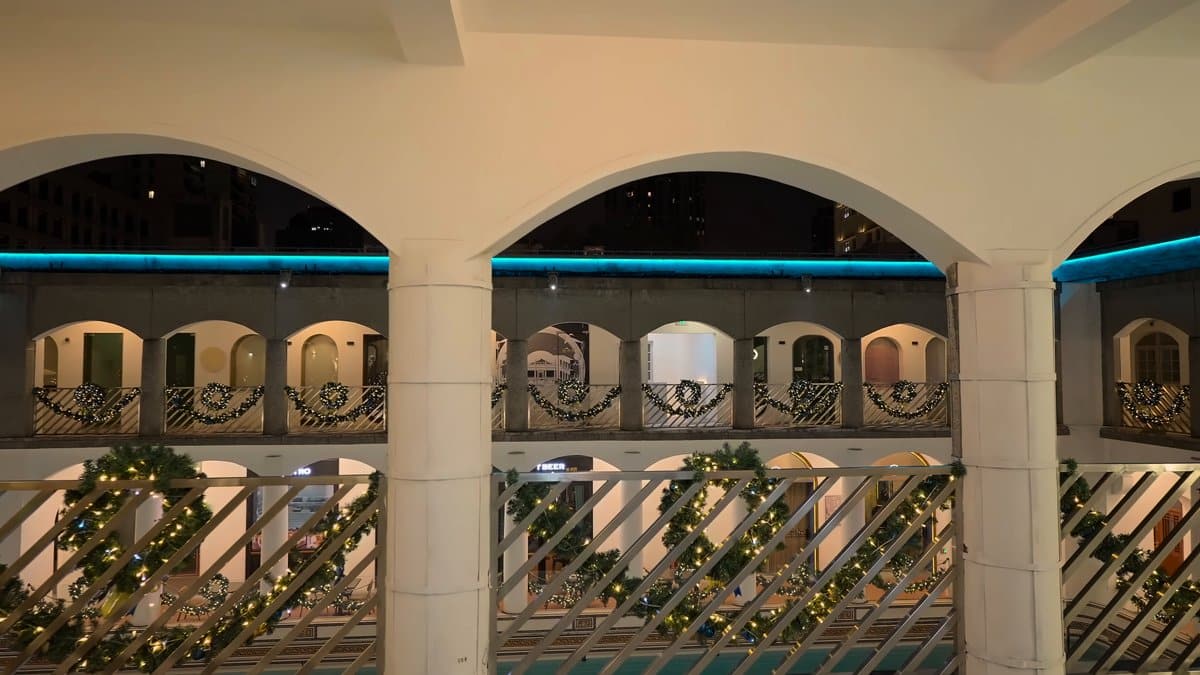
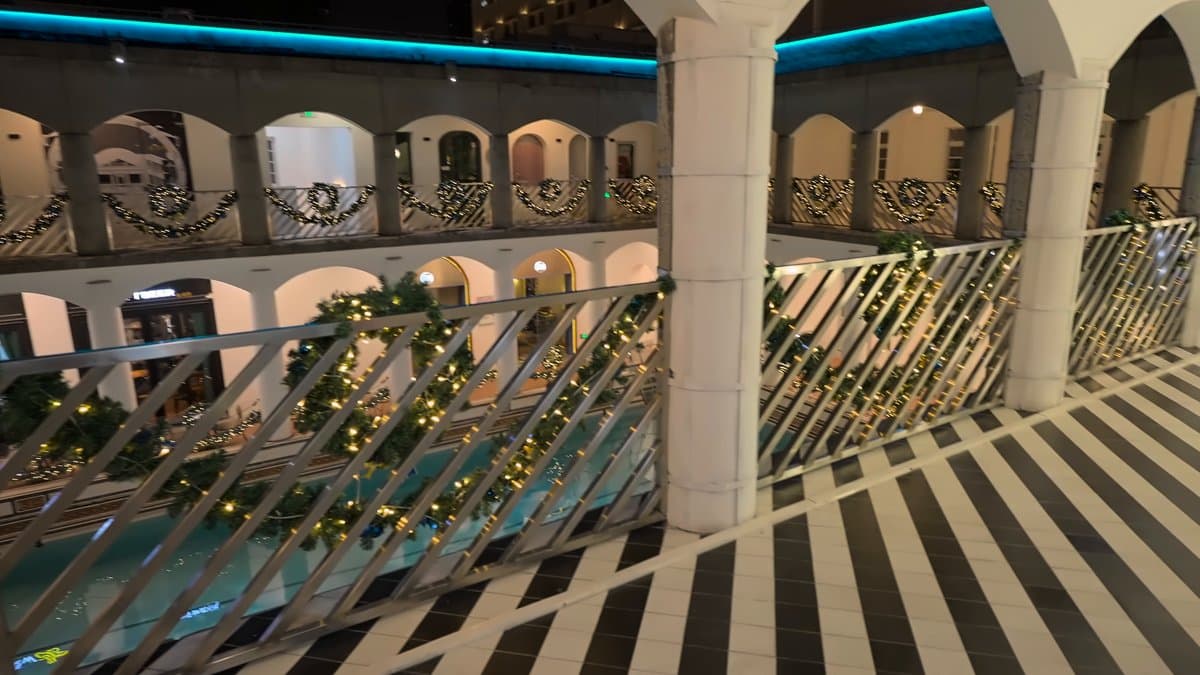
The floor of the upper gallery feature a striped tile design that looks great in black-and-white photos. While you can’t dine in the pool courtyard, a handful of cafe tables has been placed along the arcades.
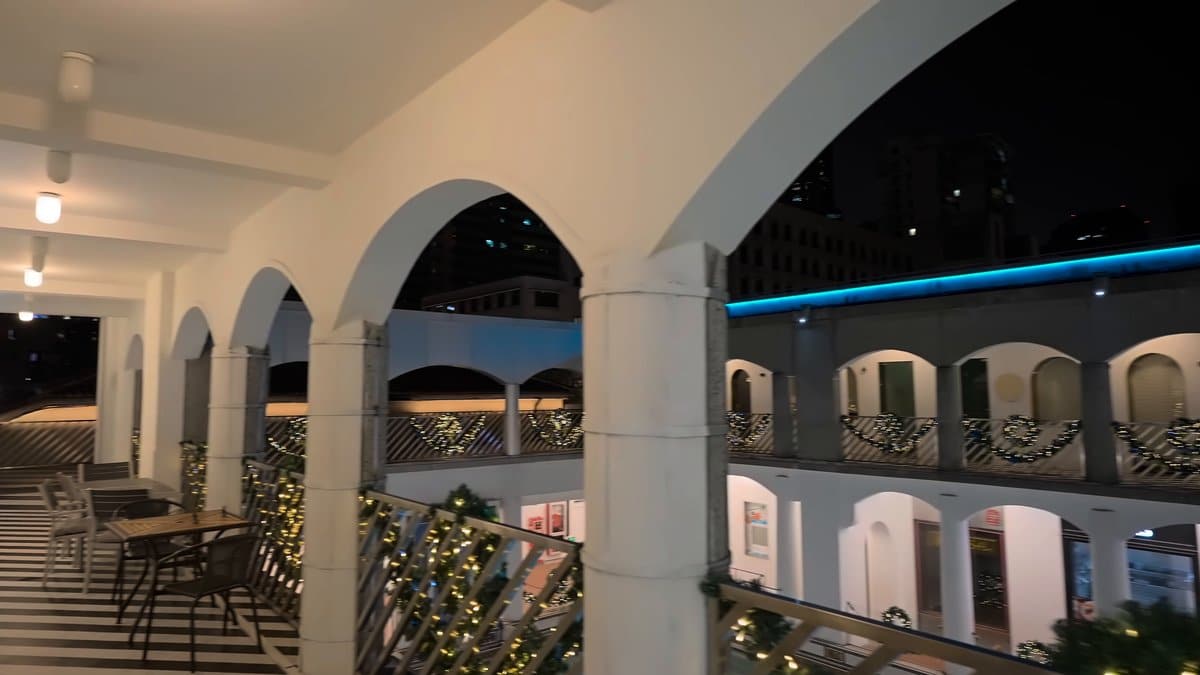
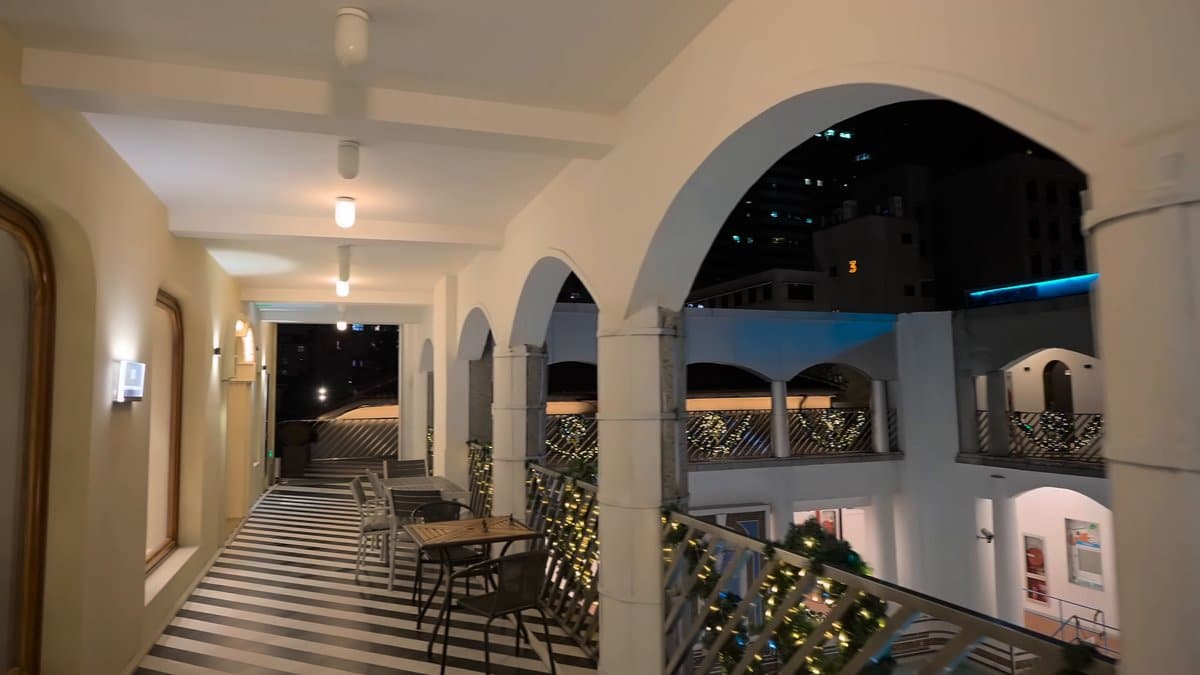
There isn’t much seating, and on weekends they tend to get filled up. You can grab a coffee and take a seat facing the water.
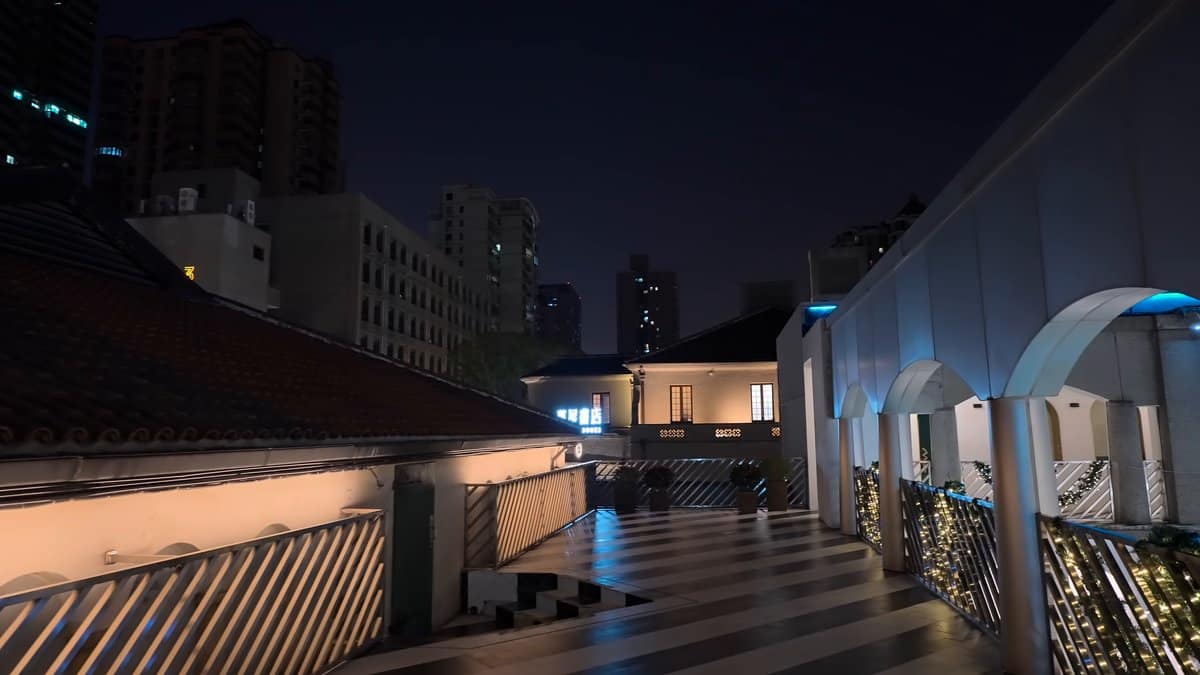
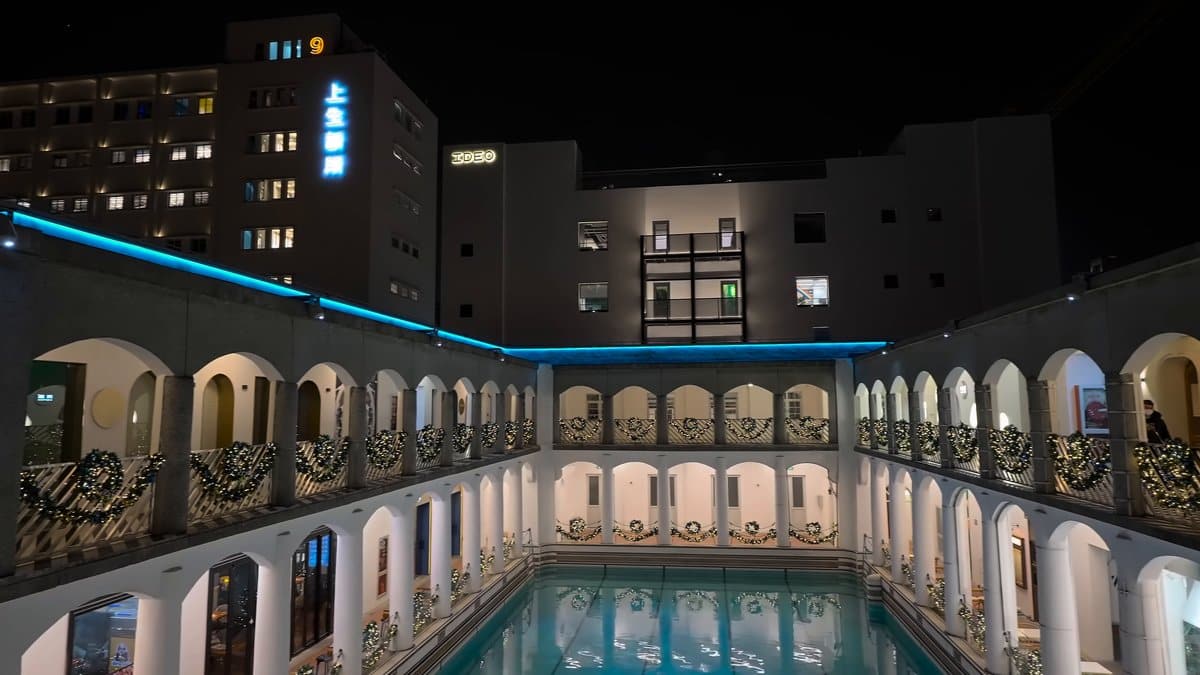
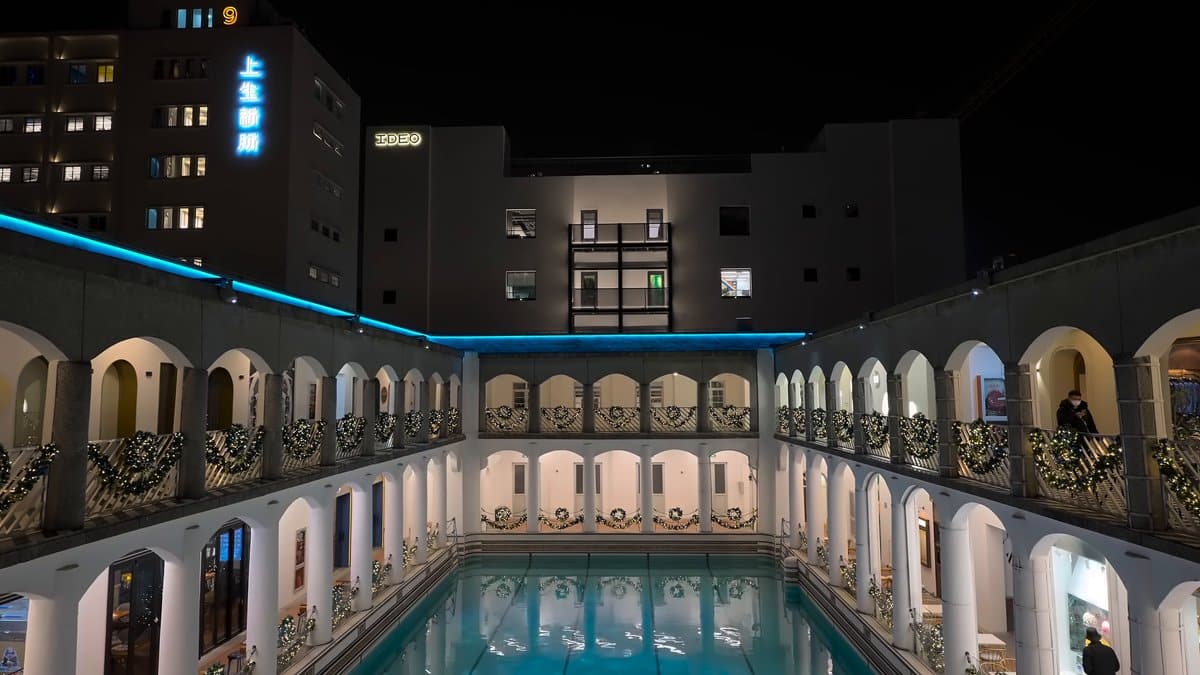
The entire complex fits together nicely, and this is where you can see the layout of the pool courtyard from the rooftop. Beyond the tiled rooftops is the city skyline. Note that access to the roof may not be open.
Ask at one of the cafes or shops about getting up there for the elevated view.
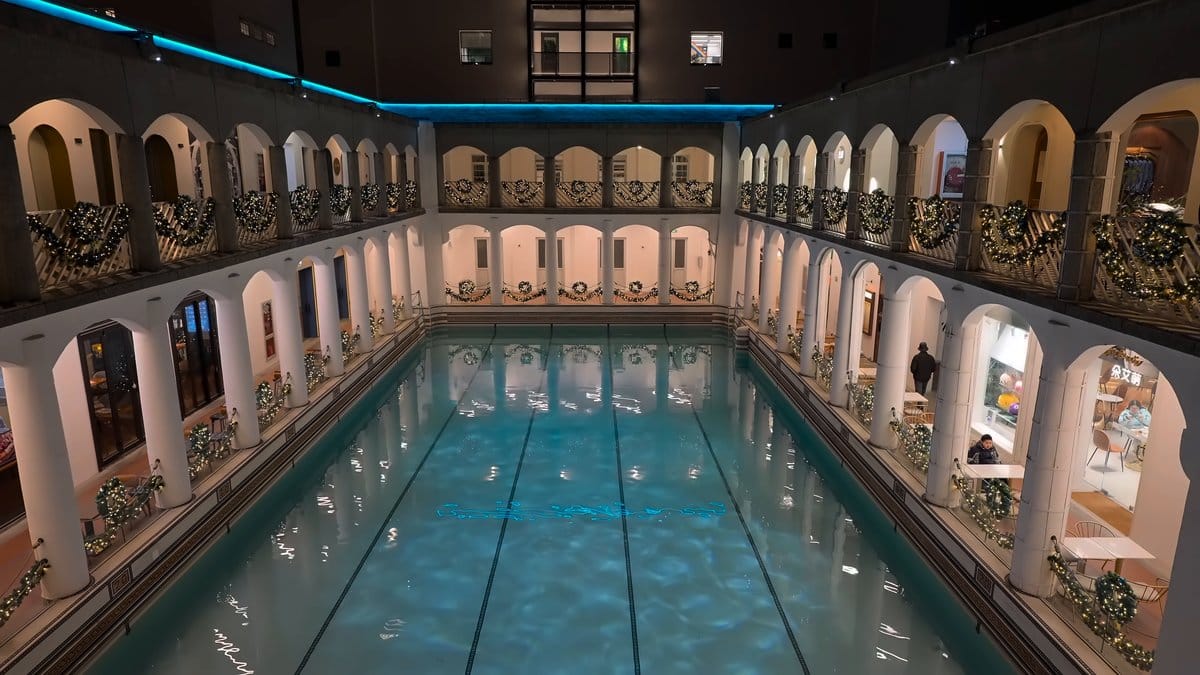
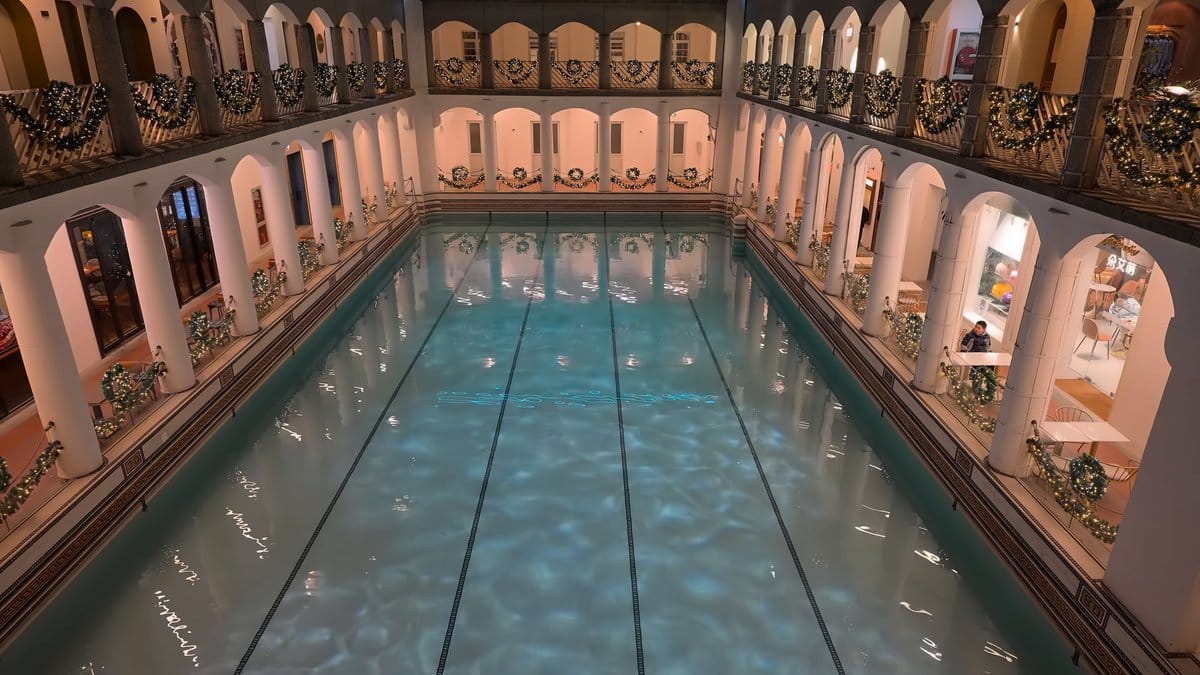
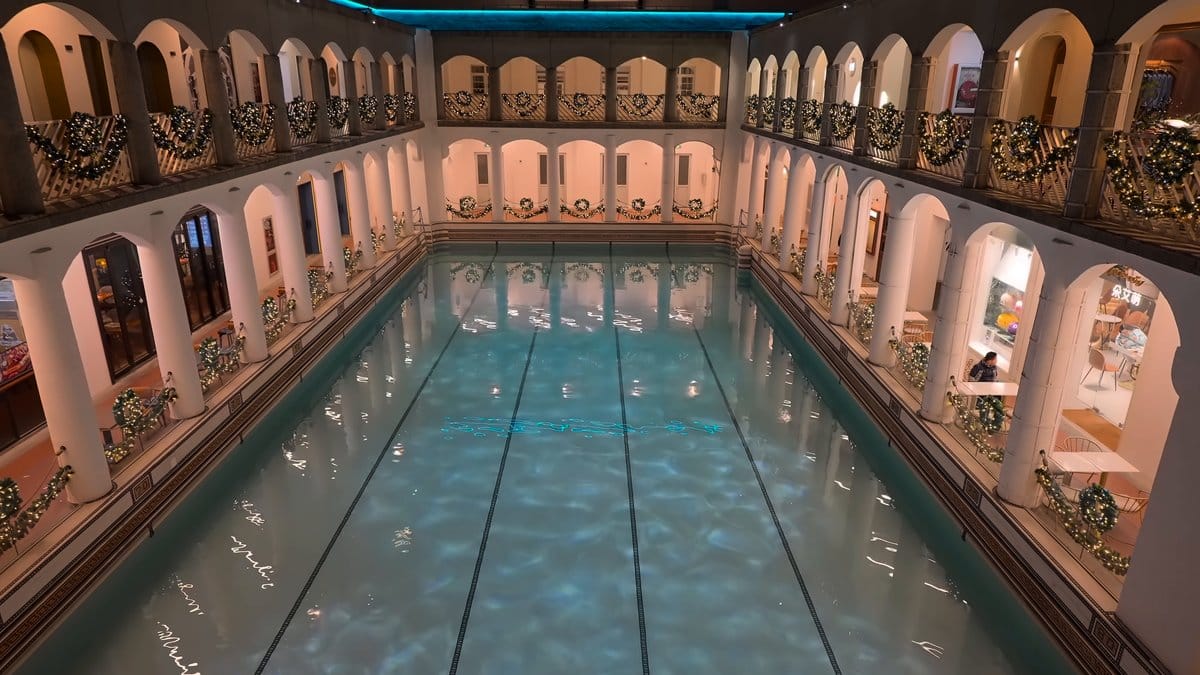
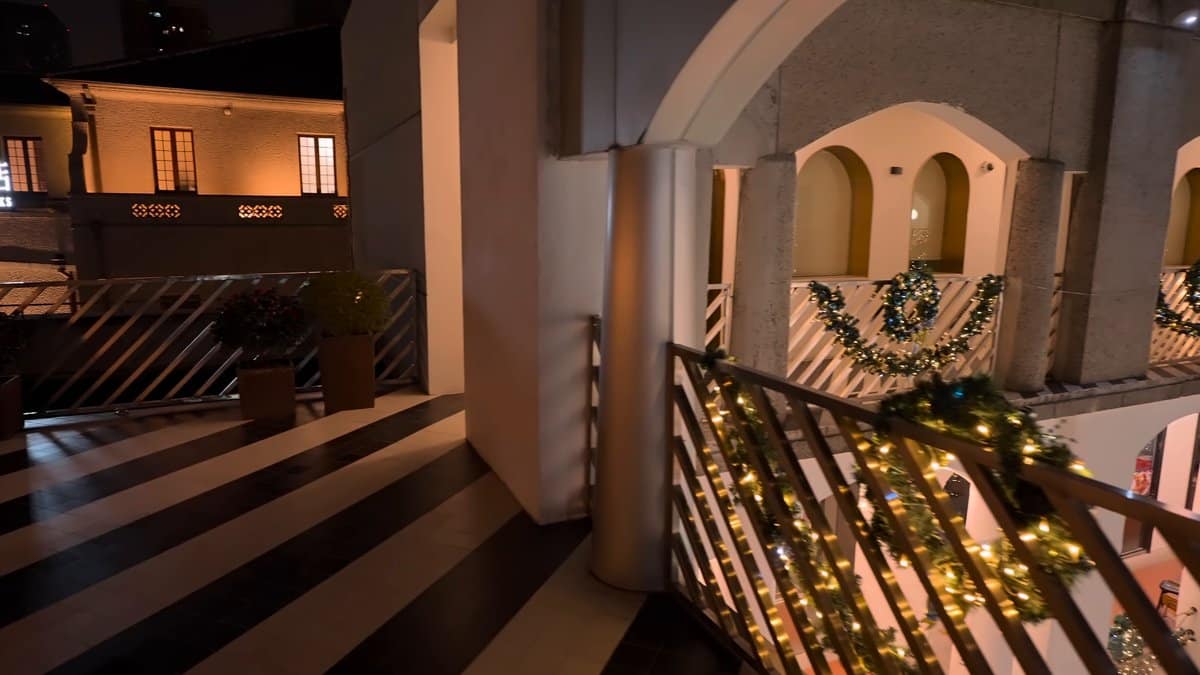
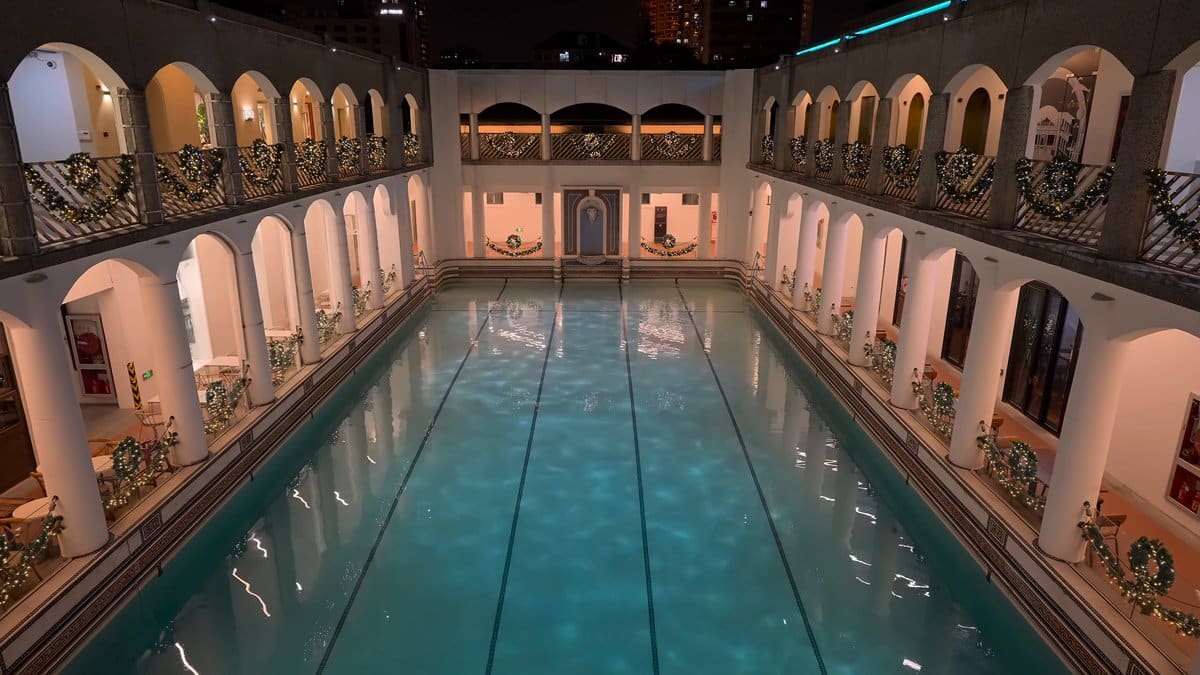
Two gallery levels is connected by staircases. The stairways has a decorative touch thanks to the return of the garlands along their balustrades.
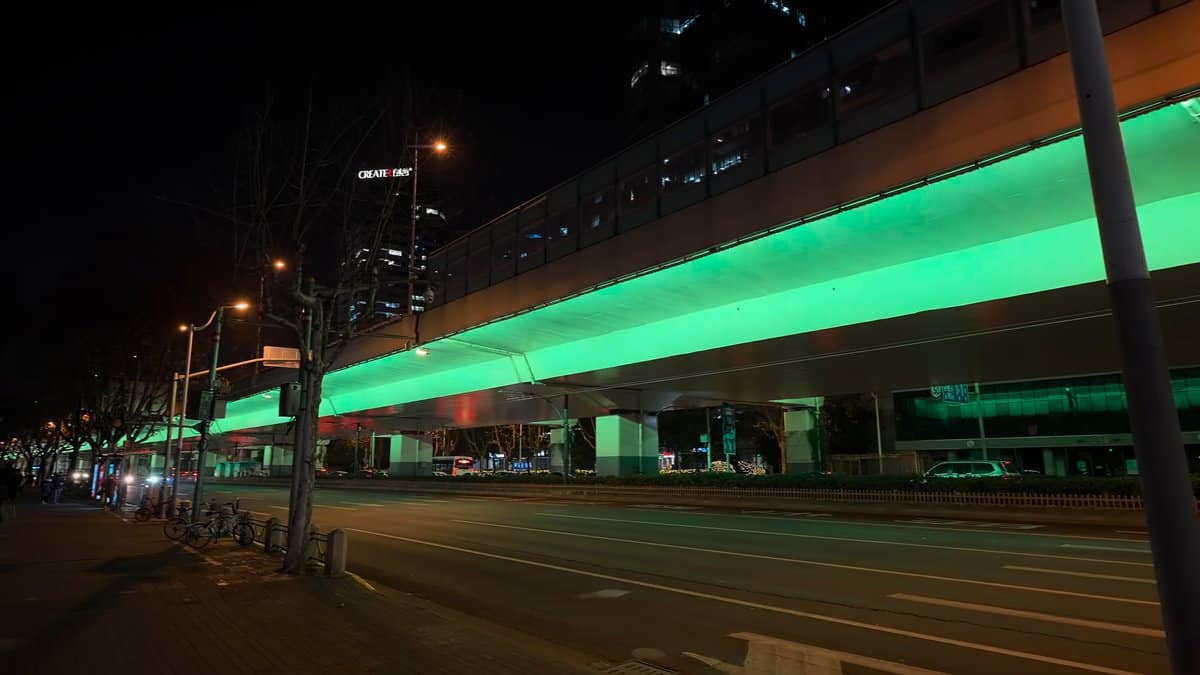
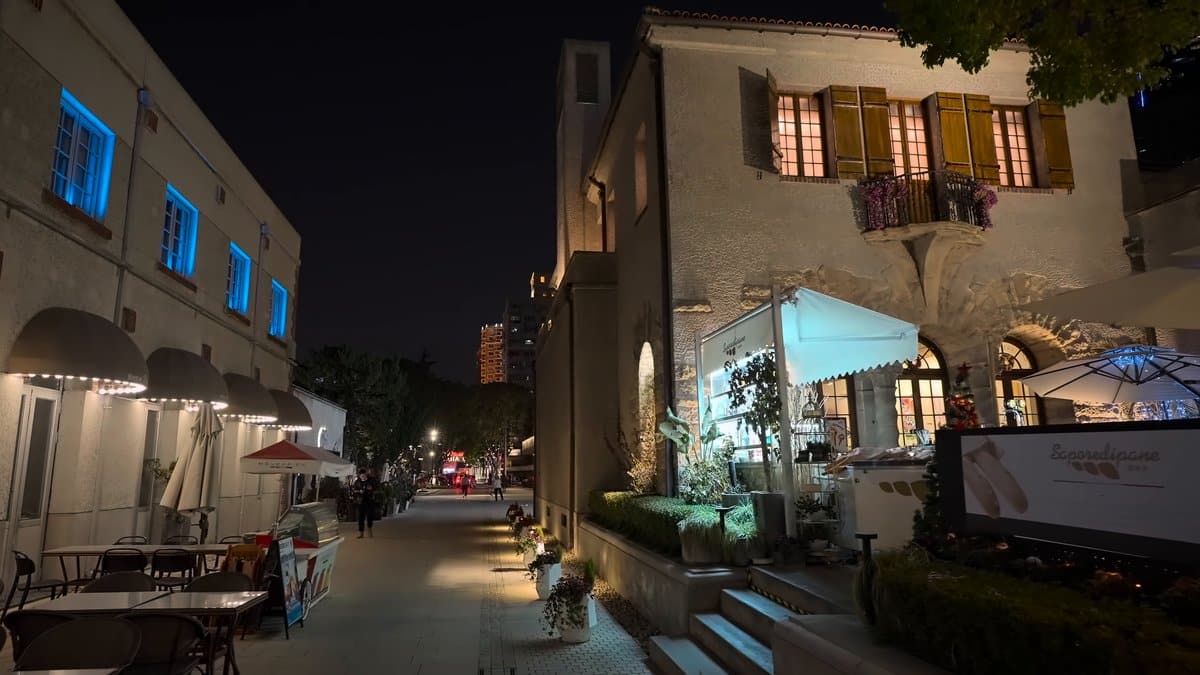
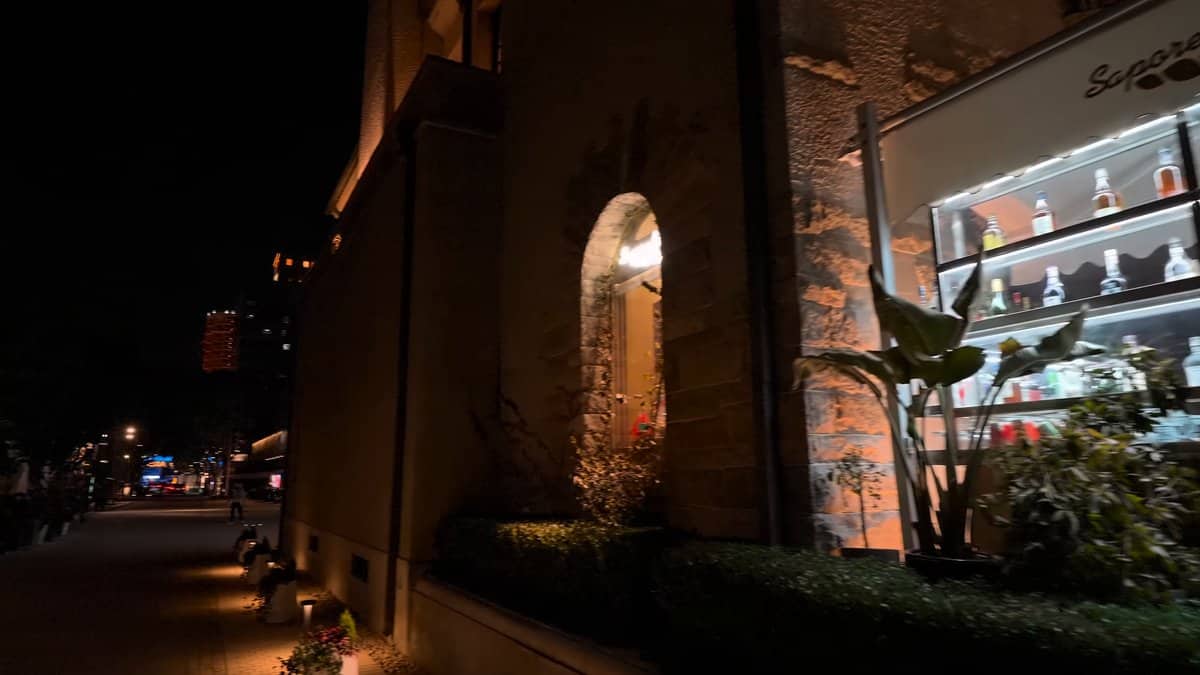
A couple of smaller shops and cafes is tucked away outside the main compound in converted villas and brick archways. Quieter streets make for a more relaxed walk than the promenade atmosphere that fills the central plaza.
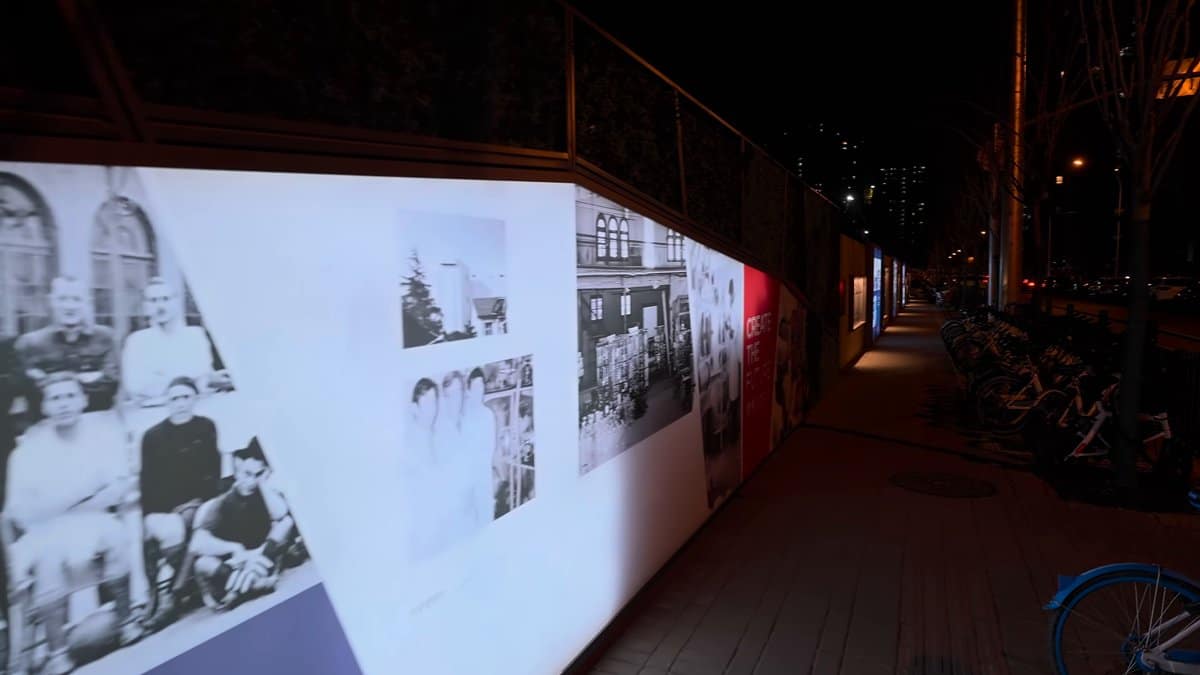
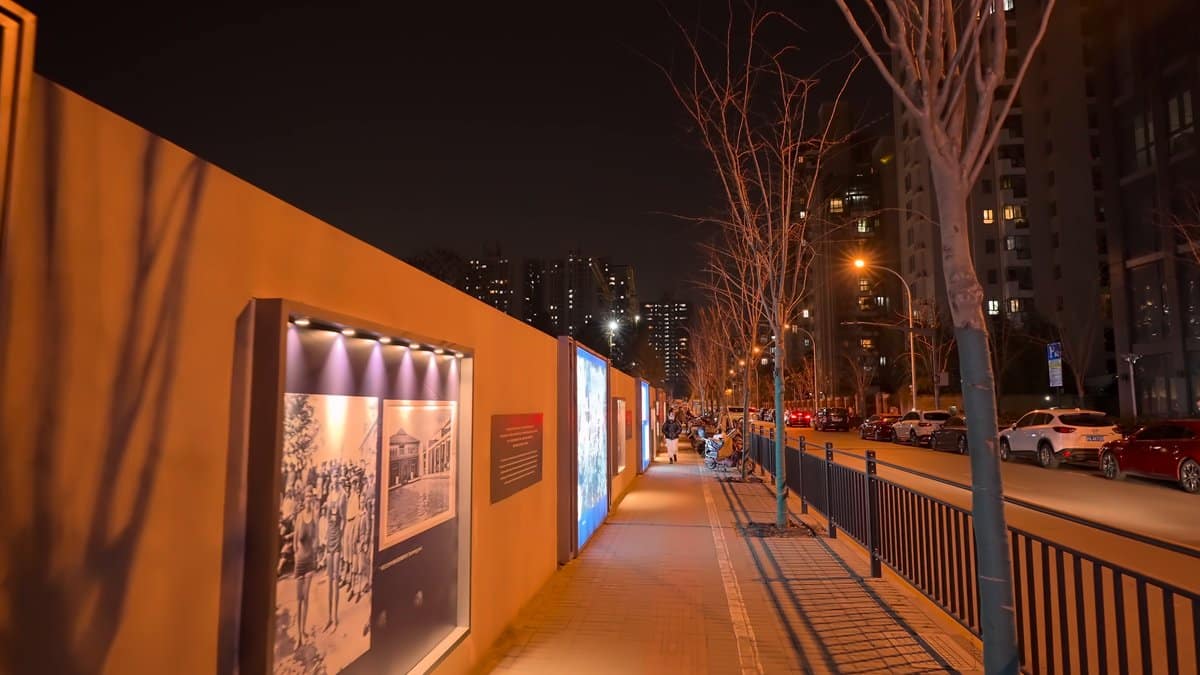
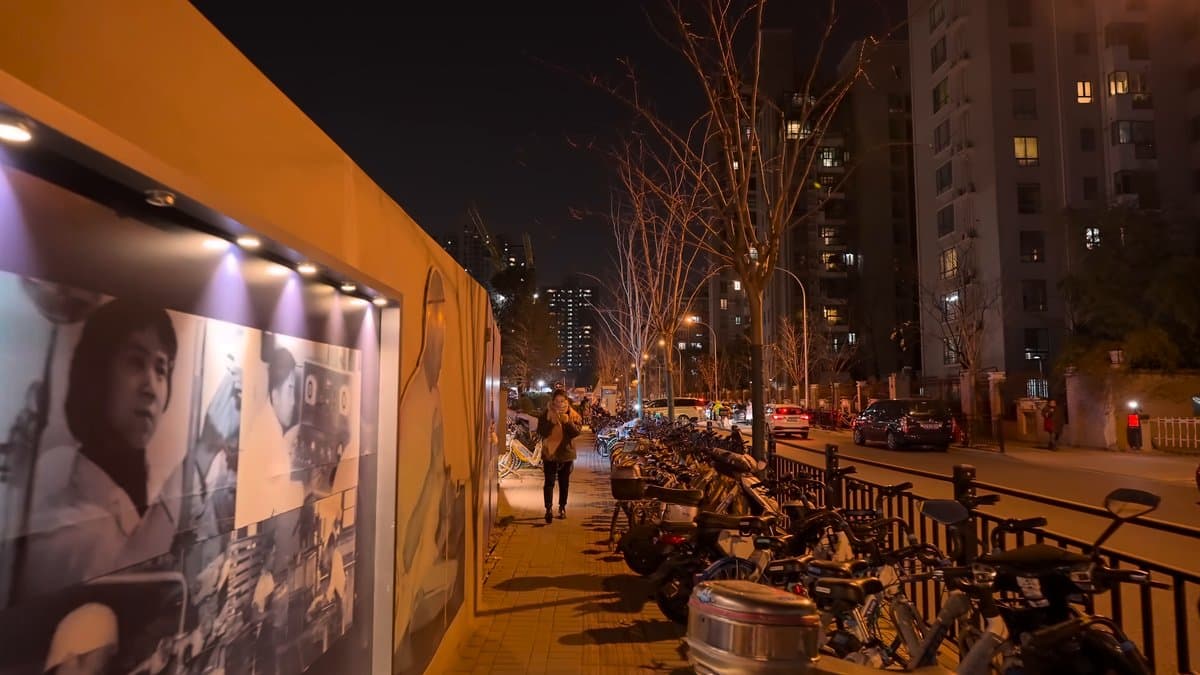
Along part of the perimeter, an outdoor photography exhibition run. Large-format prints are mounted on display boards. Subject matter varies, often portrait or documentary work.
If you’re walking the outer circuit, it’s worth a quick detour.
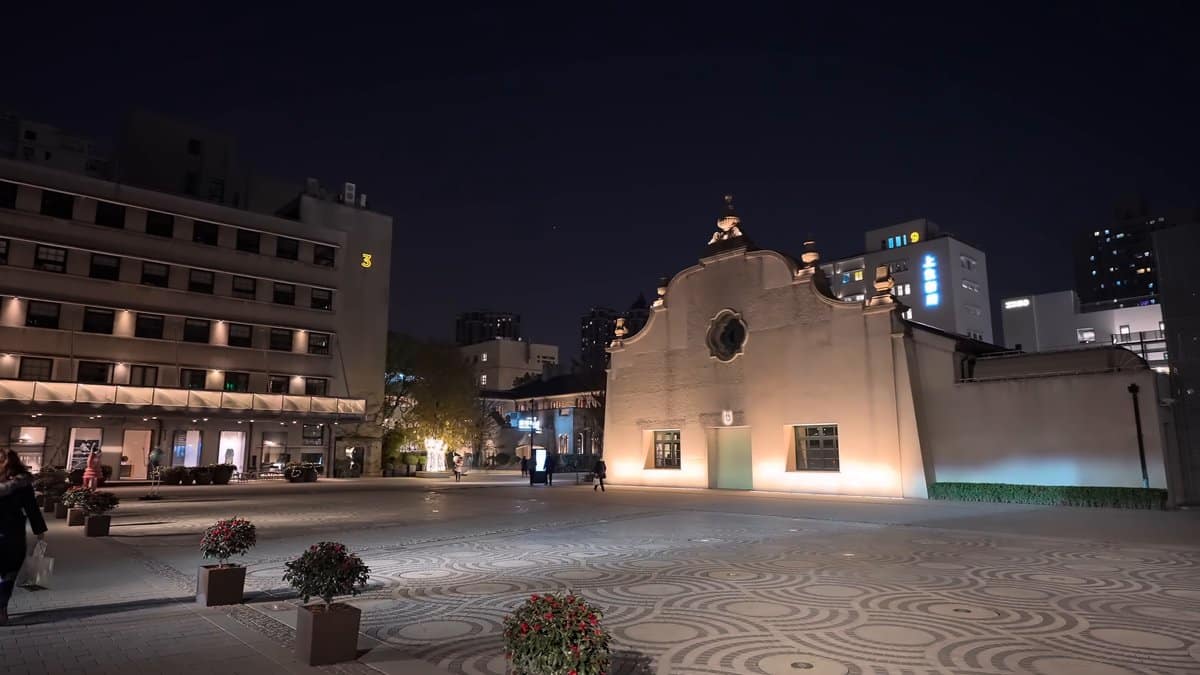
Fronting the main clubhouse, the plaza opens up. From here, you get the full view of the mission-style gable, which is particularly striking when floodlights come on at dusk.
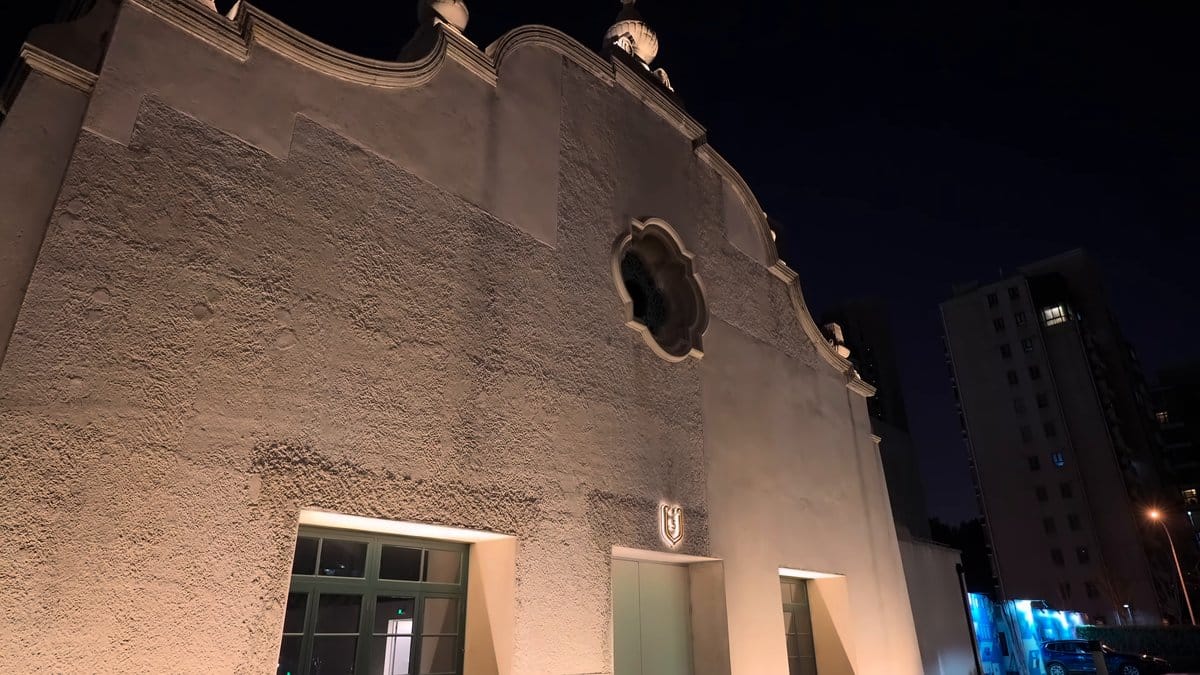
Up close, the detail remains crisp, as seen in the crest and oculus above the entrance. Careful restoration work has been done.
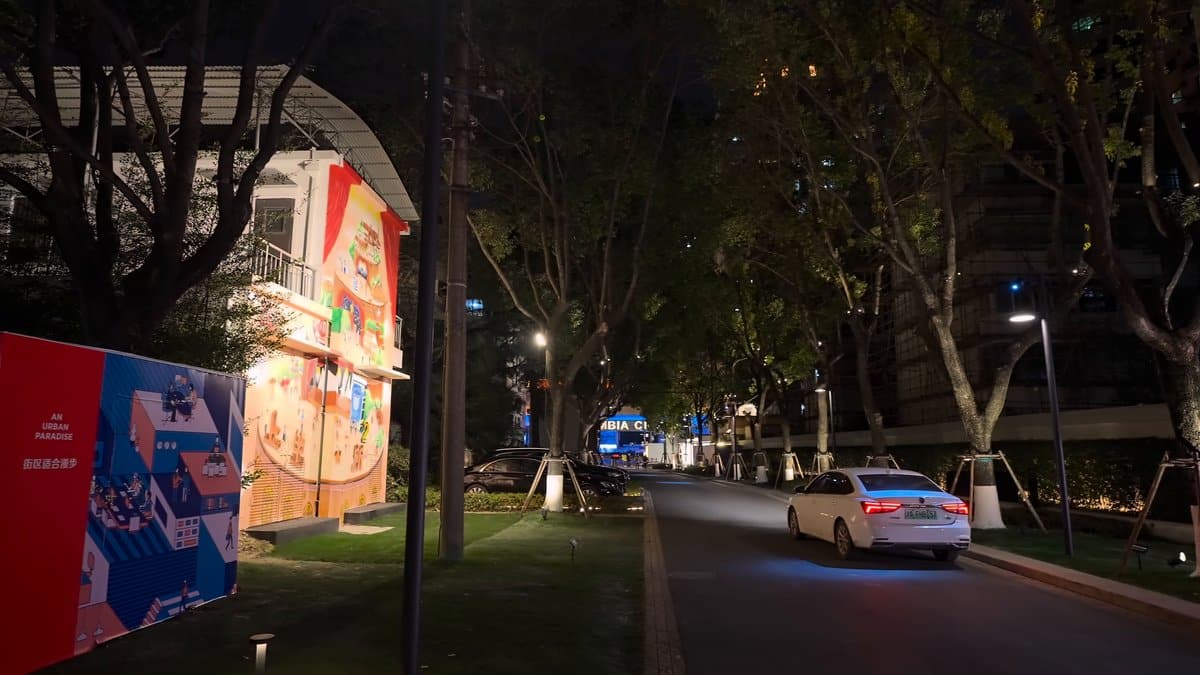
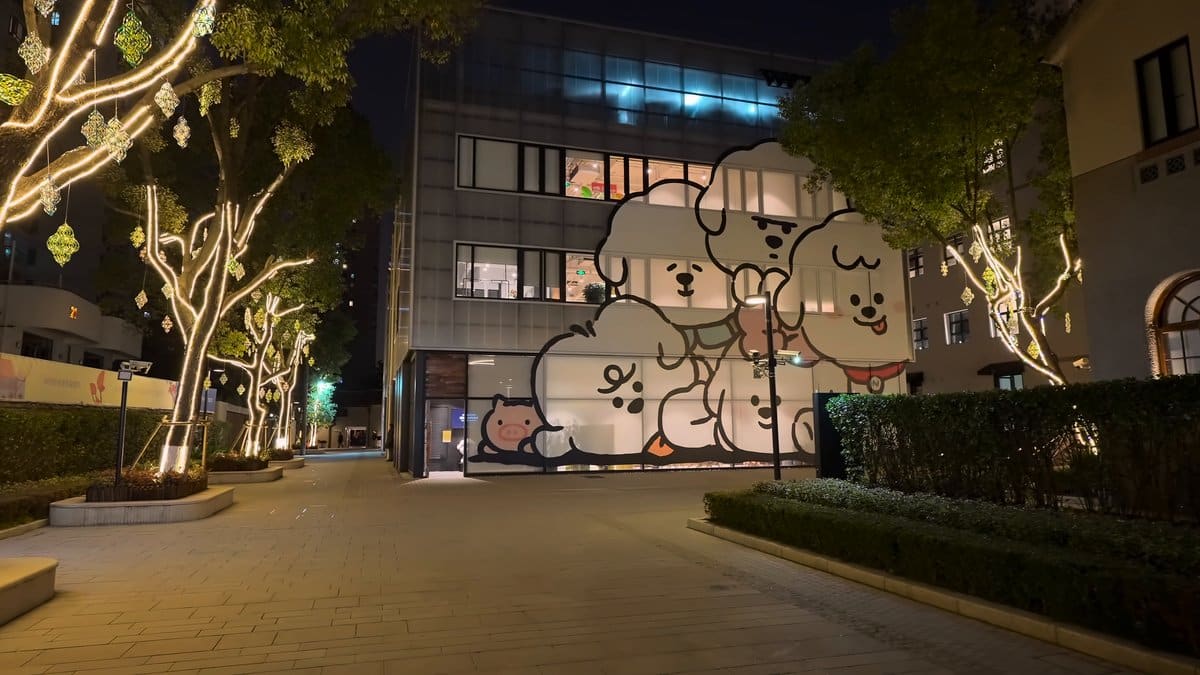
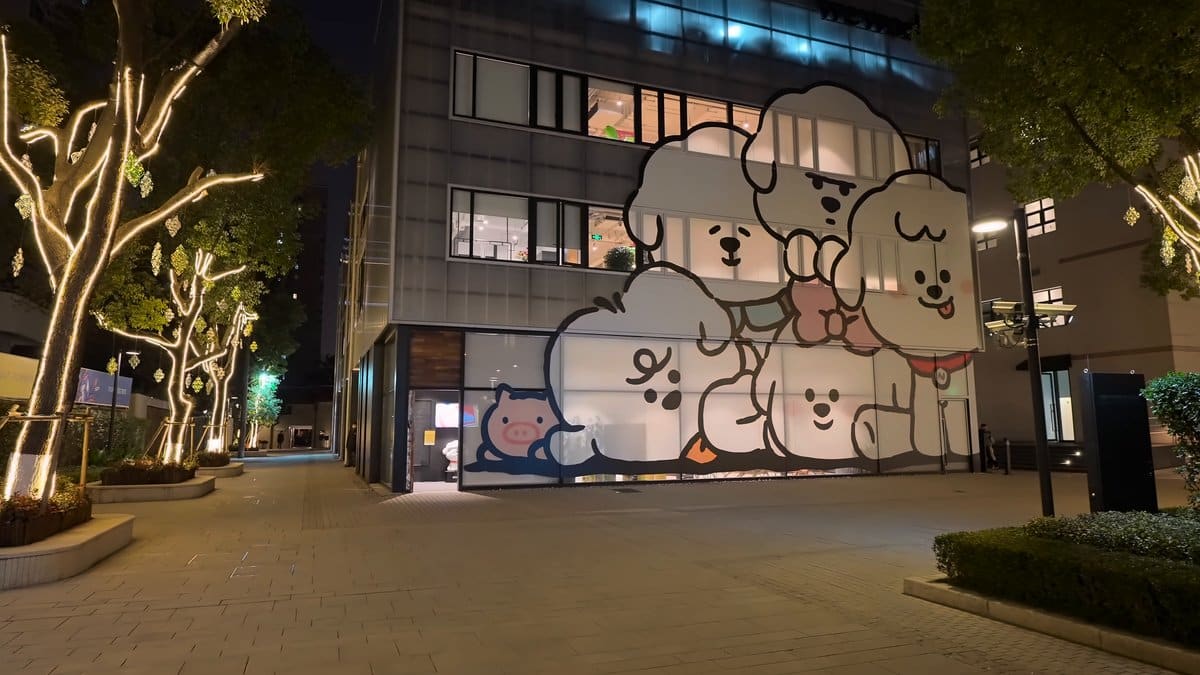
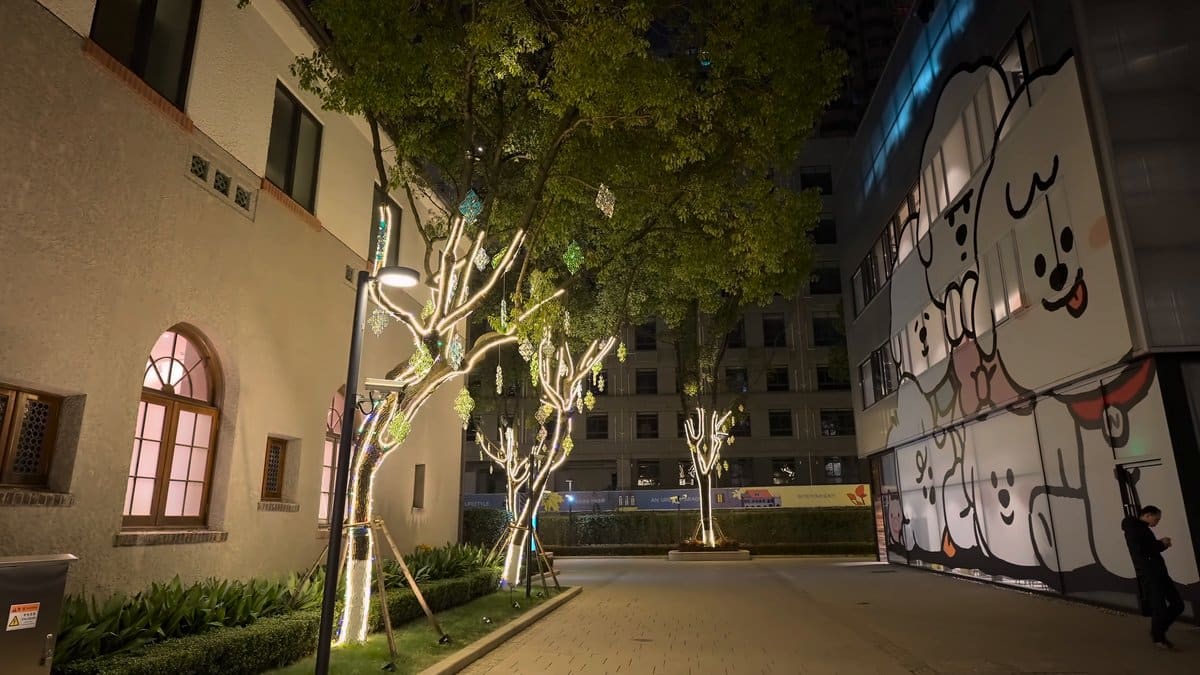
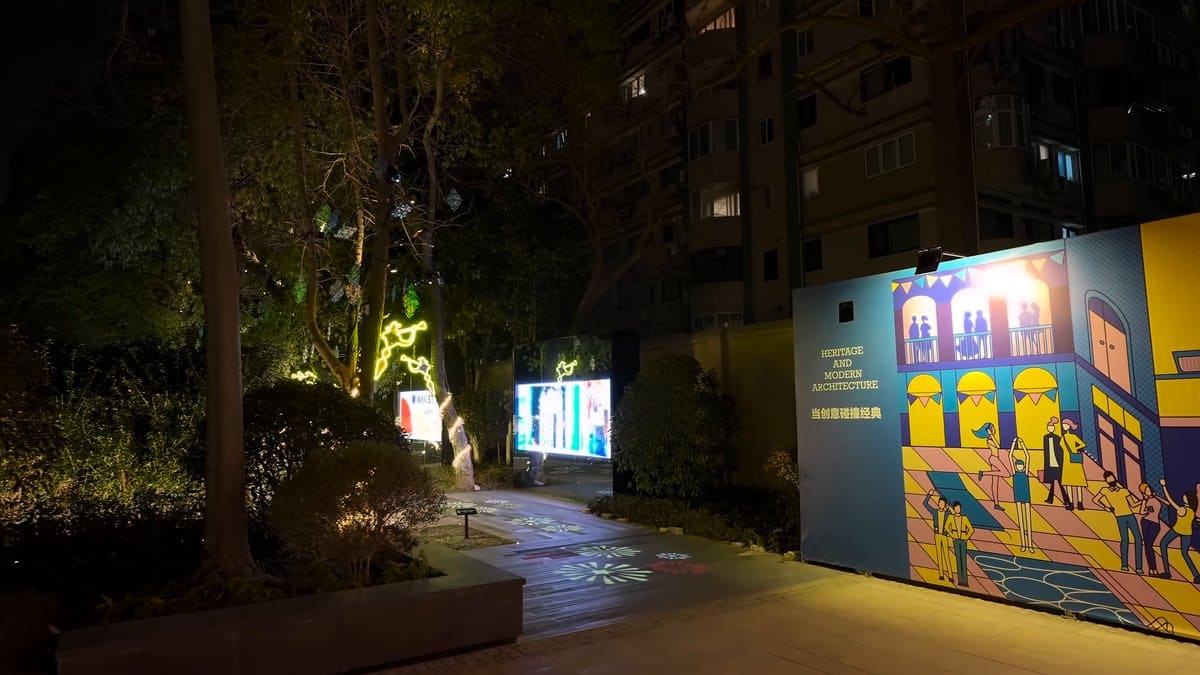
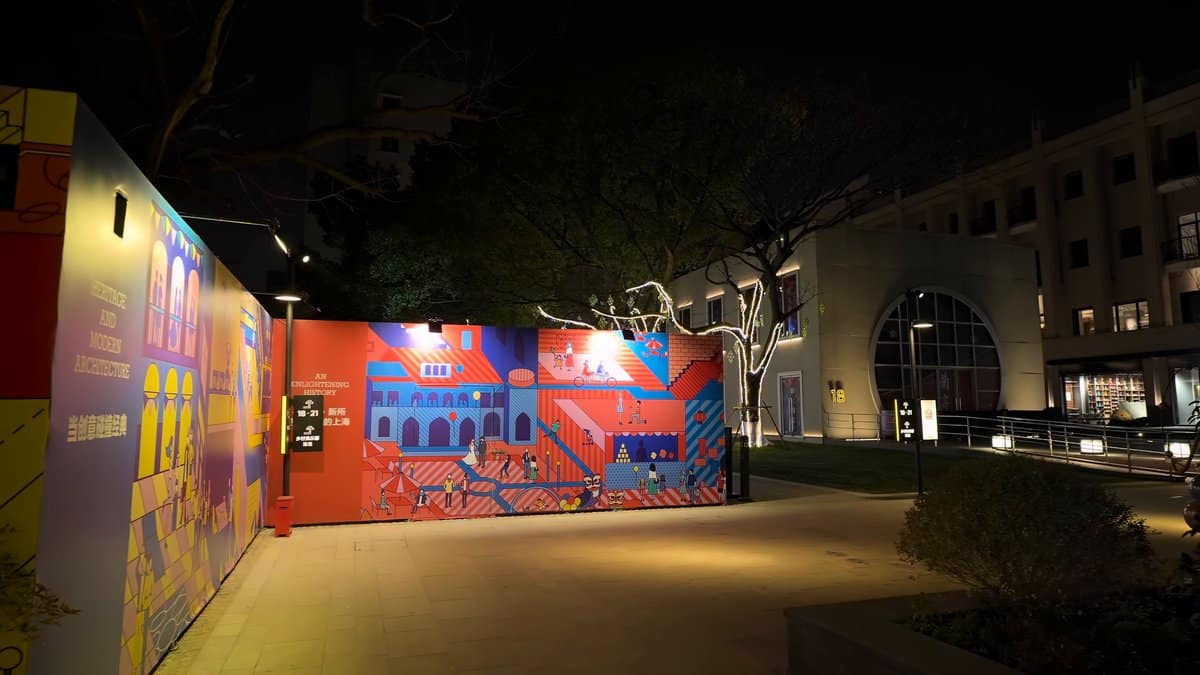
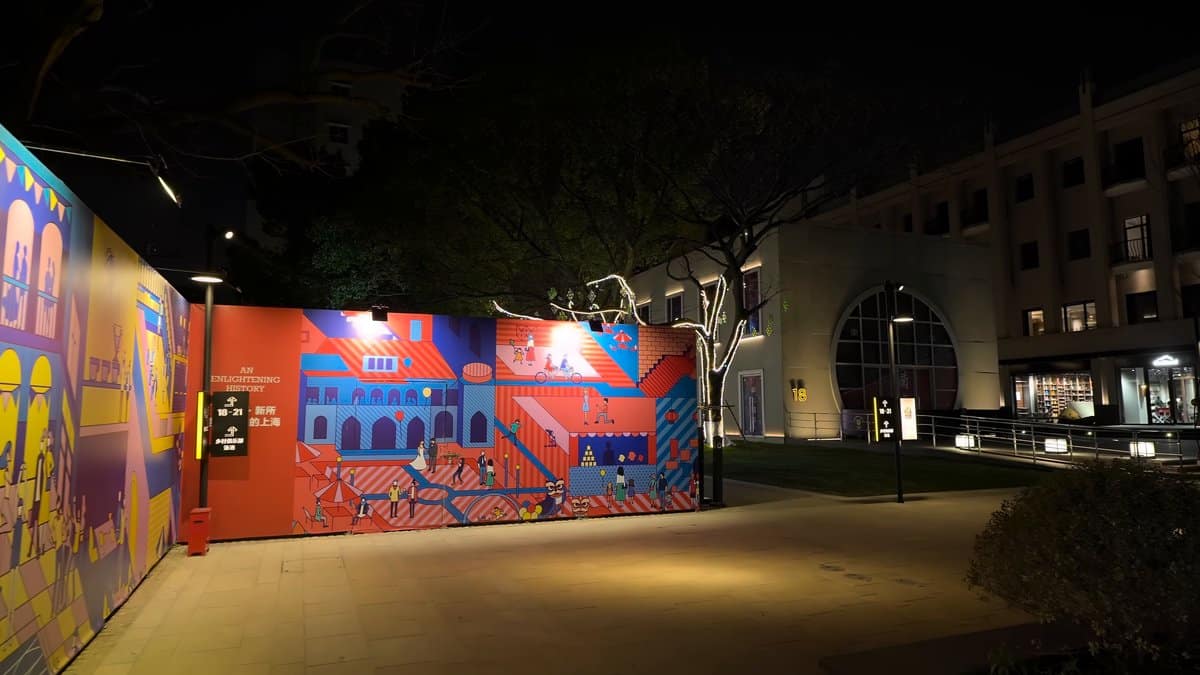
However, instead of just letting it remain empty, they’ve used the space for printing illustrations and murals that cover the construction hoardings lining a number of streets and plaza edges. They’re stylized drawings of old buildings, or cartoon figures. It’s all temporary art, which softens what would of otherwise be stretches of plain plywood.
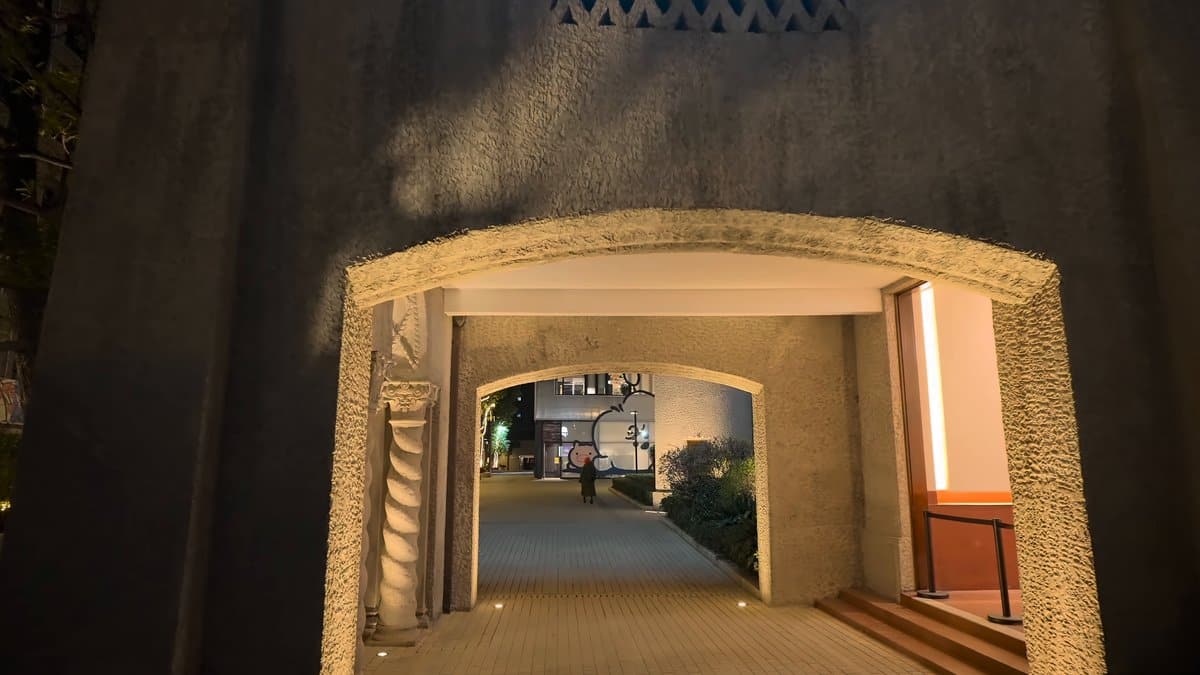
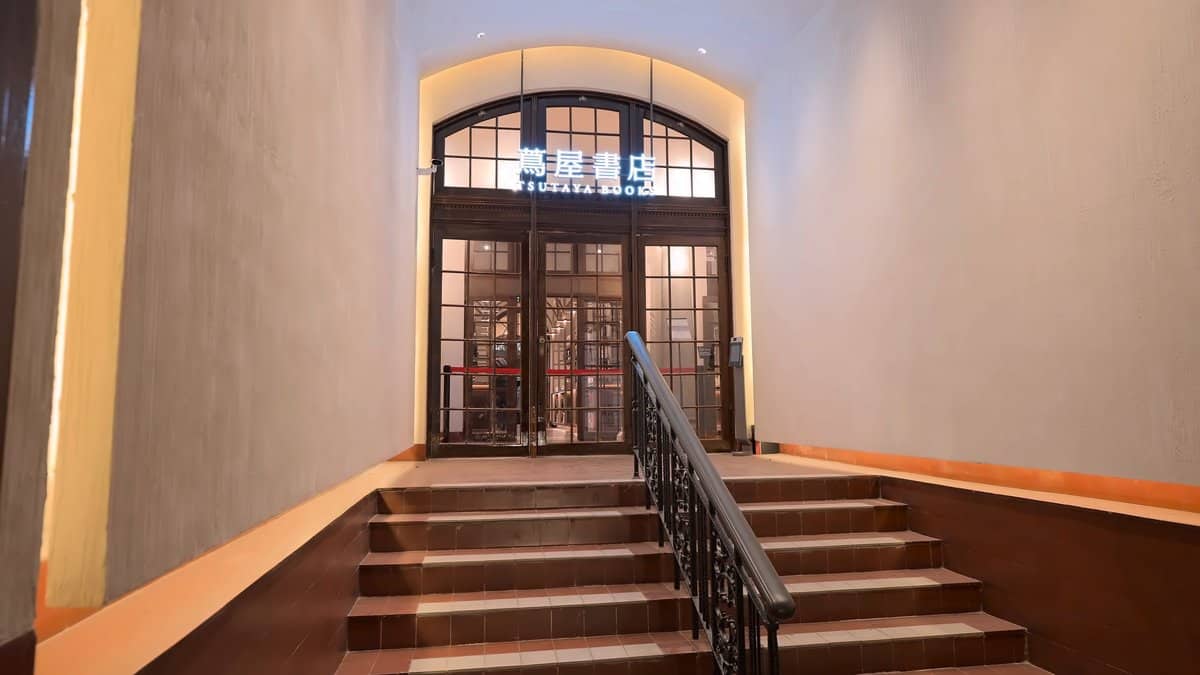
There are passages cut through the buildings, many of them lit at night from within. Arched doorways lead up stone steps, giving hints about how the layered movement of the original club might have been.
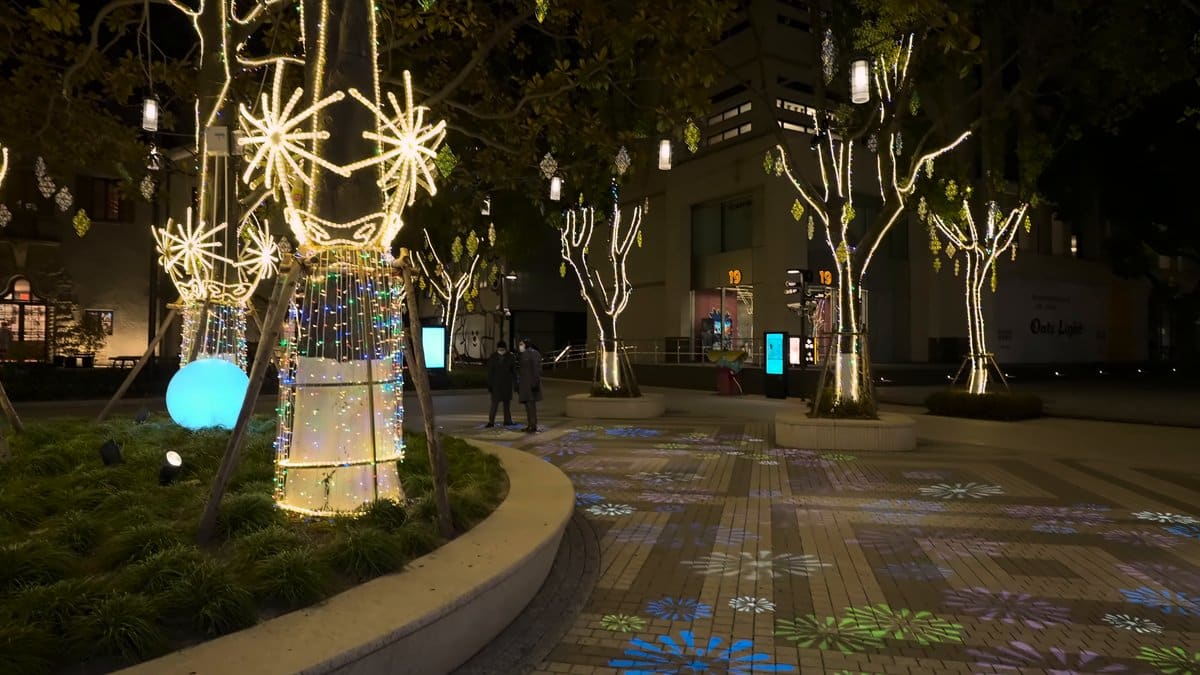
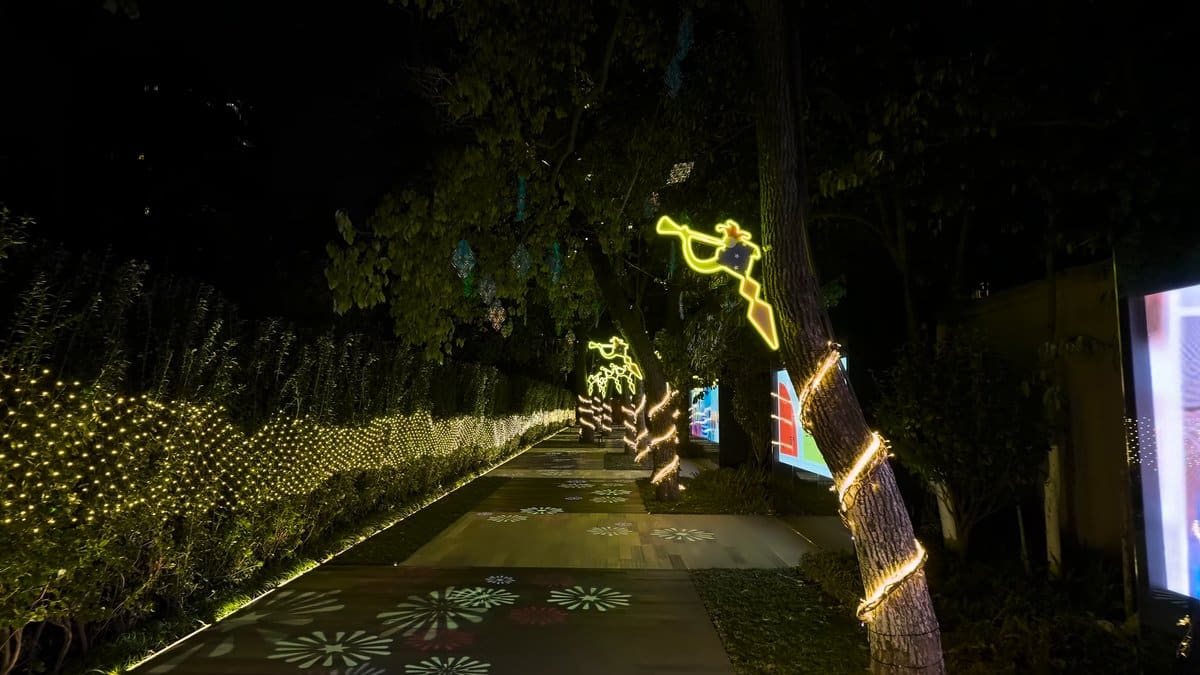
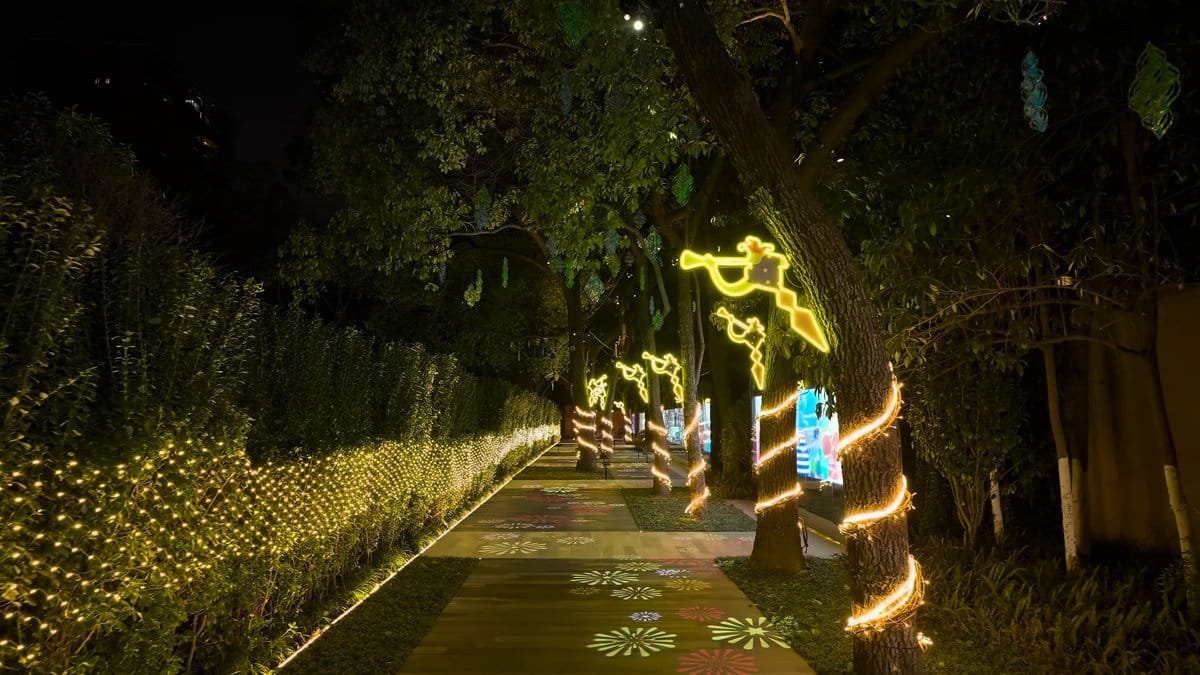
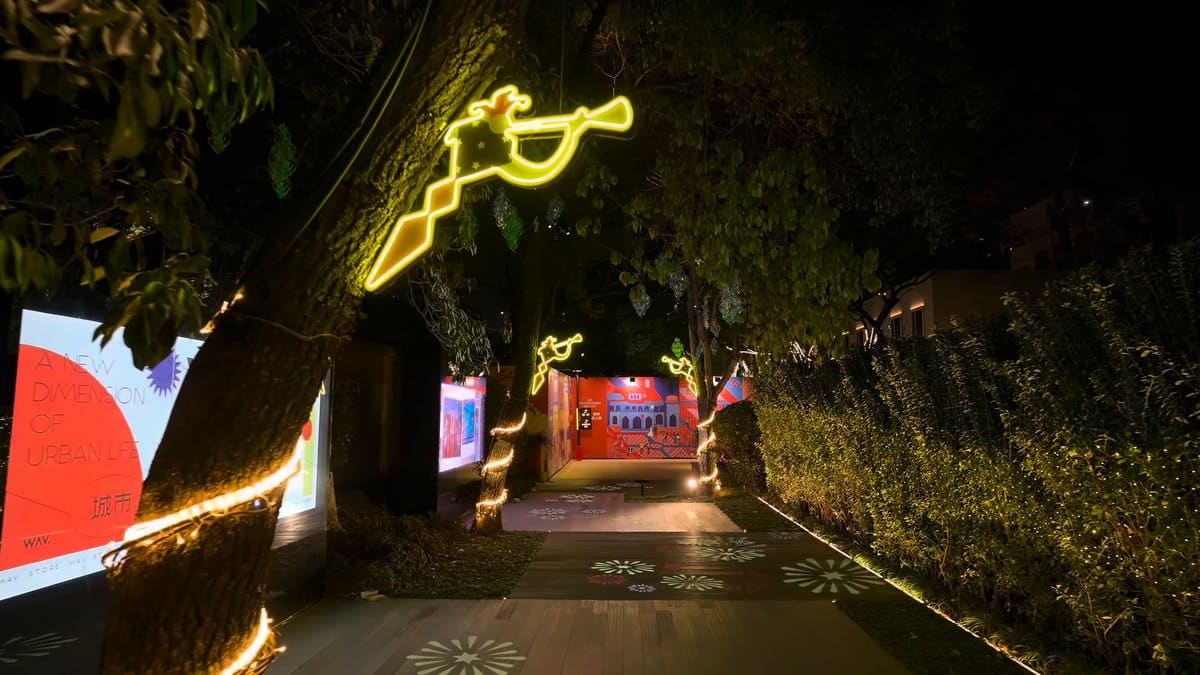
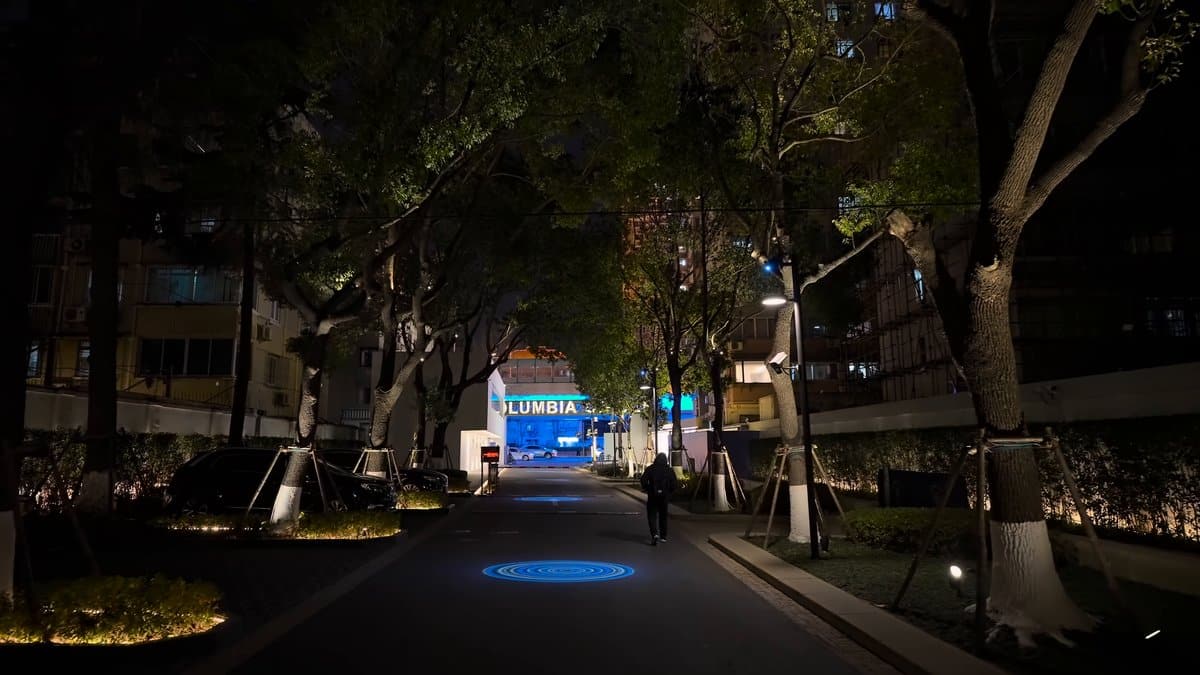
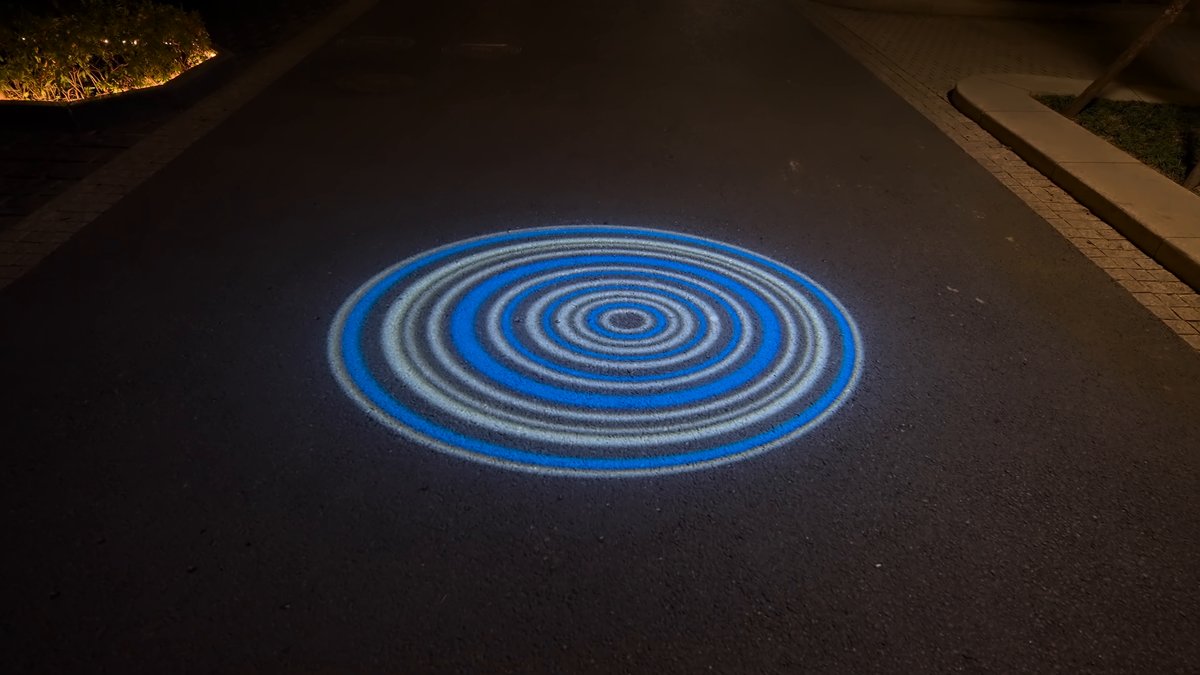
At night, lights project onto some of the paved surfaces. Installations above project rings and spirals down onto the pavement. There is also a series of illuminated screens and border lighting set into the garden paths, making them stand out.
It borders on excessive, but that seems to be the intended effect. The biggest crowds is at night.
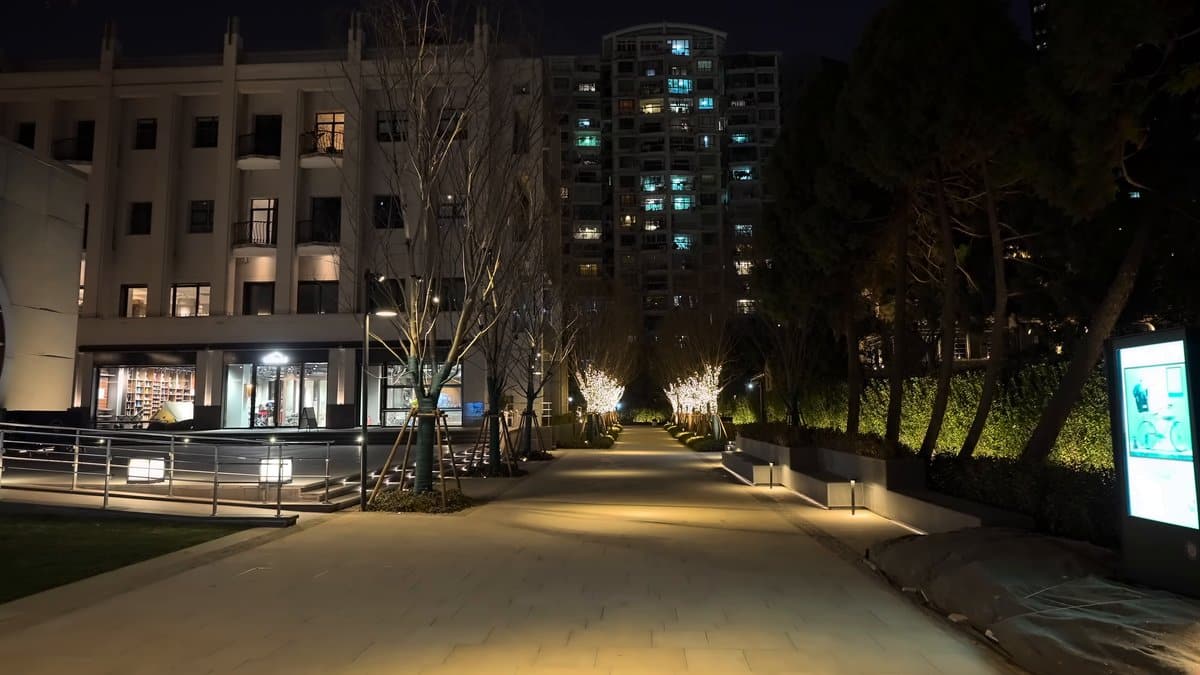
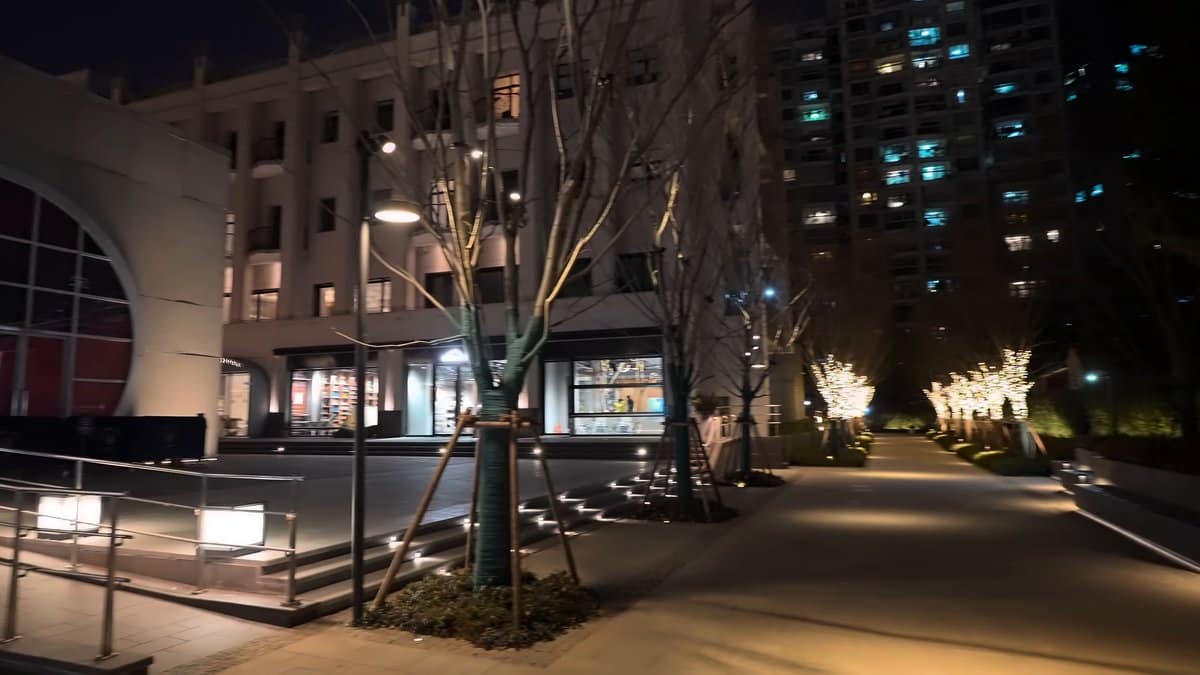
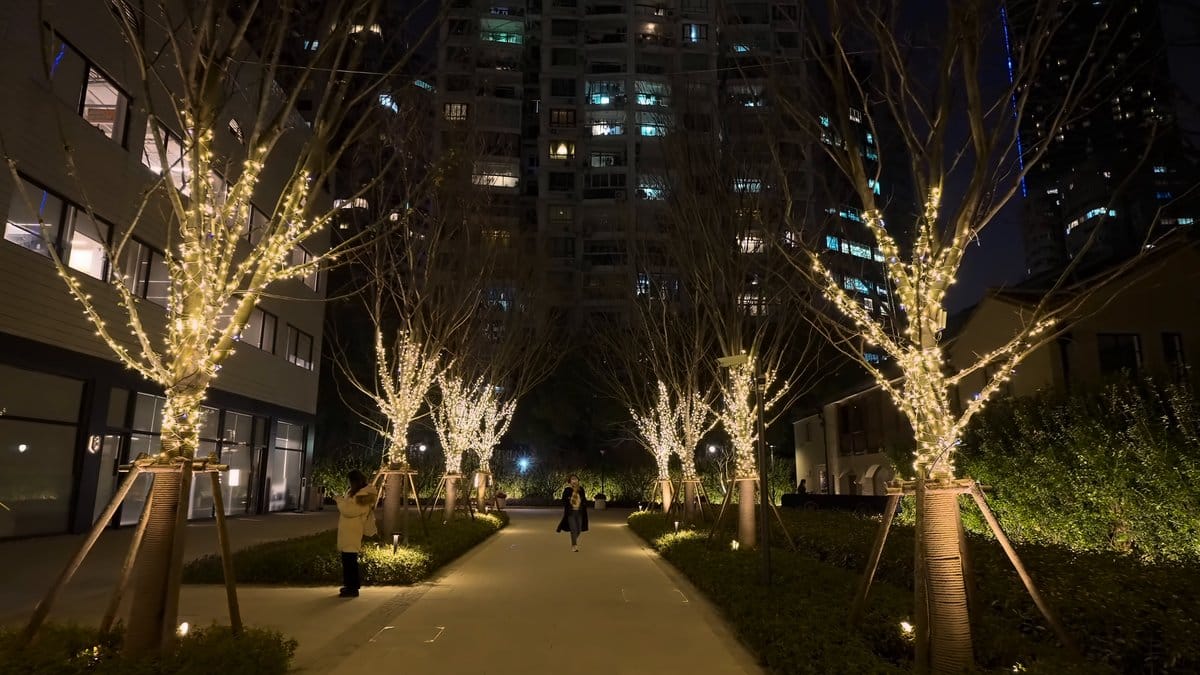
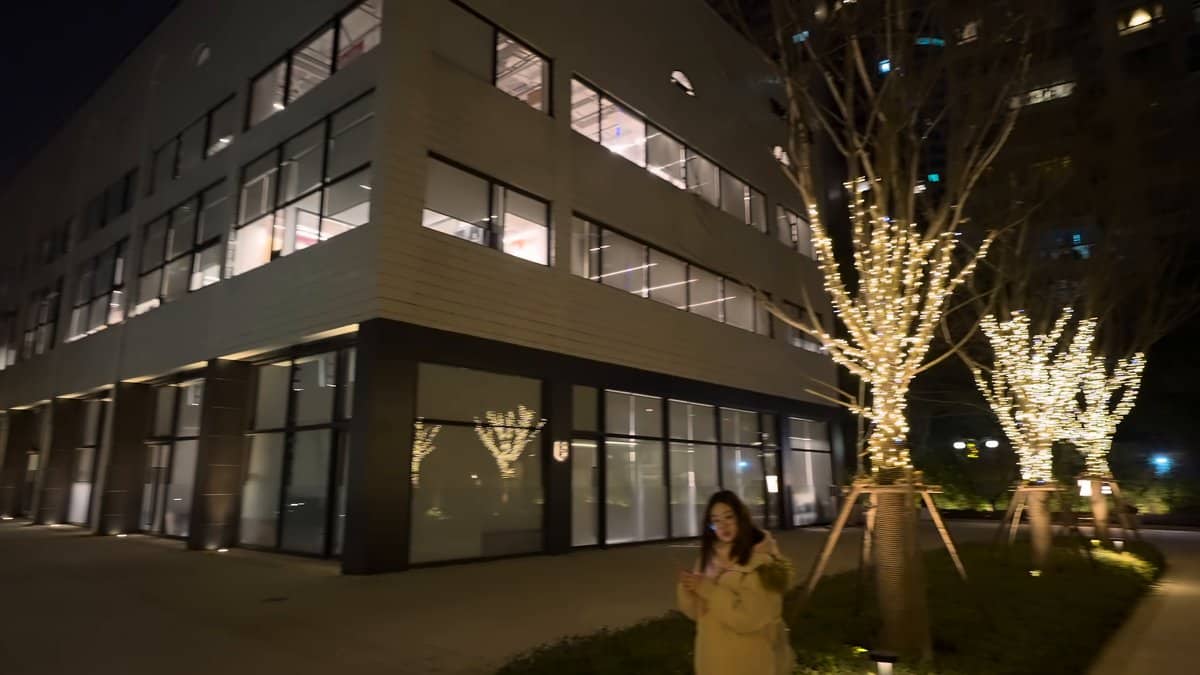
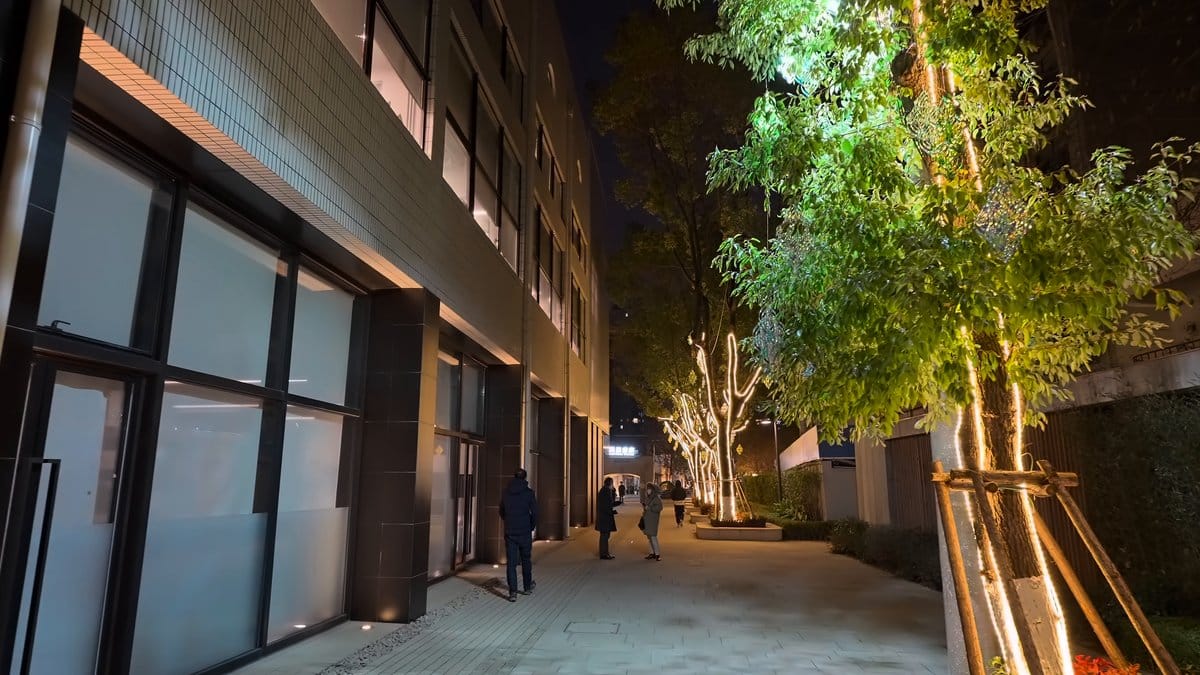
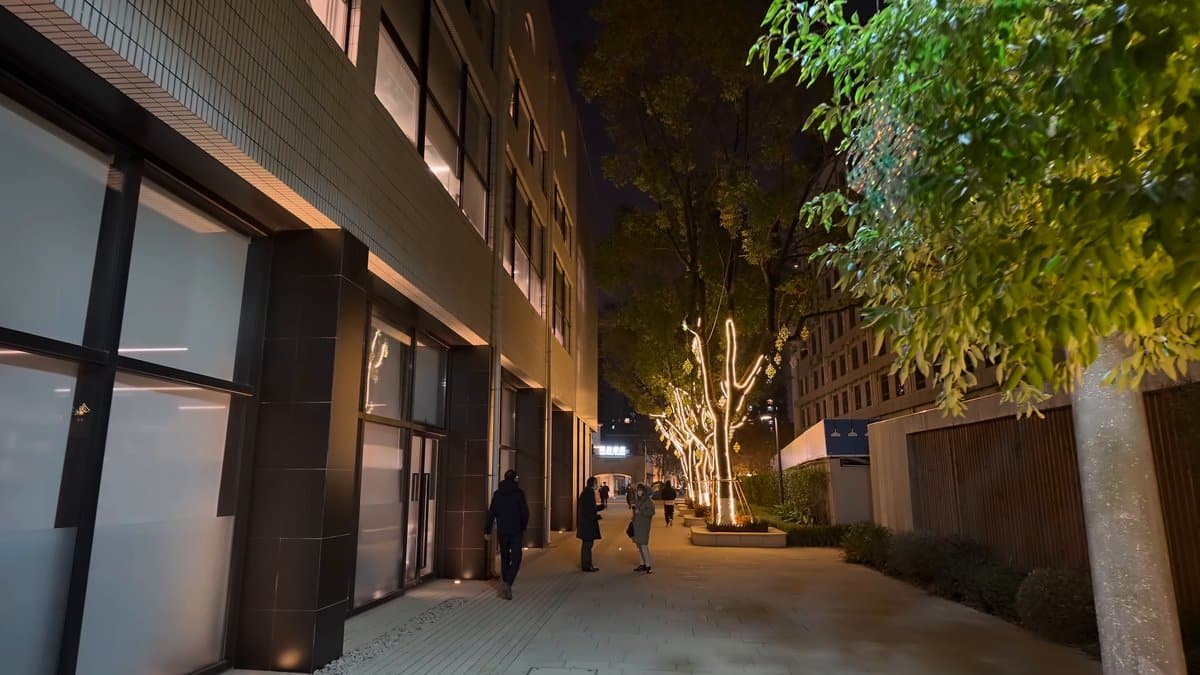
People wander in from the lit courtyards, walk around the cafes and shops, and then leave again. Behind the historical center, moddern buildings have been built; their first-floor spaces converted into more retail space. In spots, the contrast between old and new couldn’t be greater, especially where the original stucco walls face modern, all-glass facades.
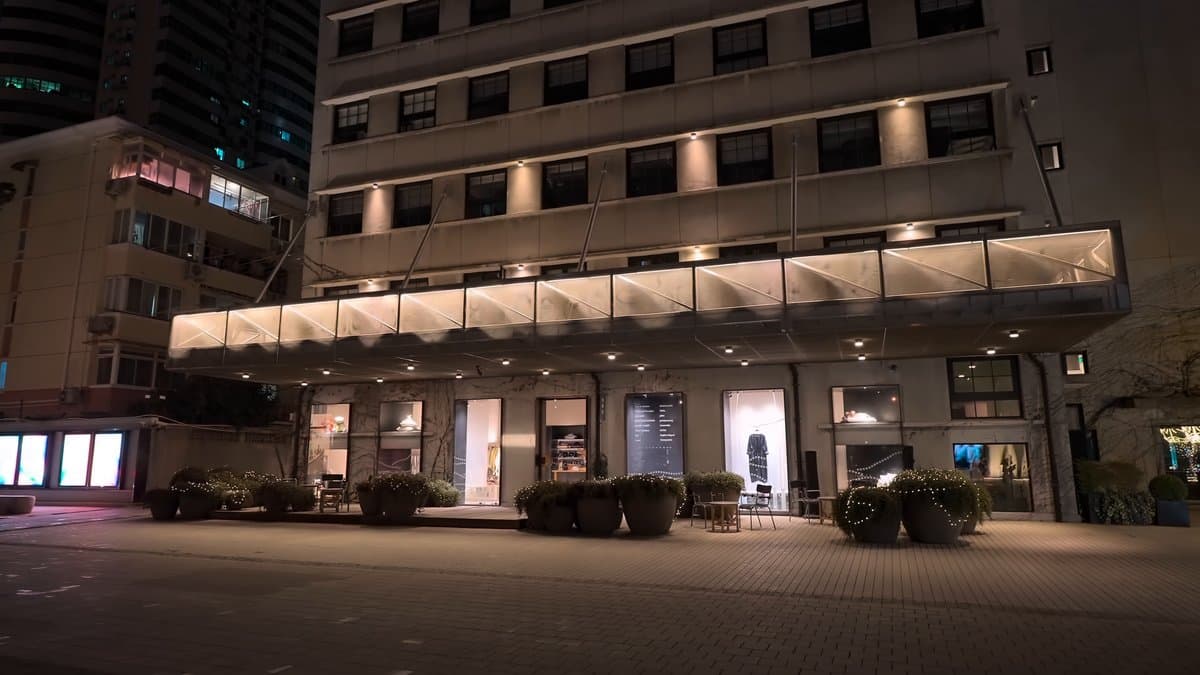
Just off the central plaza is one of the newer buildings. Its glassed-in lower level opens up to reveal the interior shops. There’s no attempt to blend the past with the present here; it helps keep things defined by era.
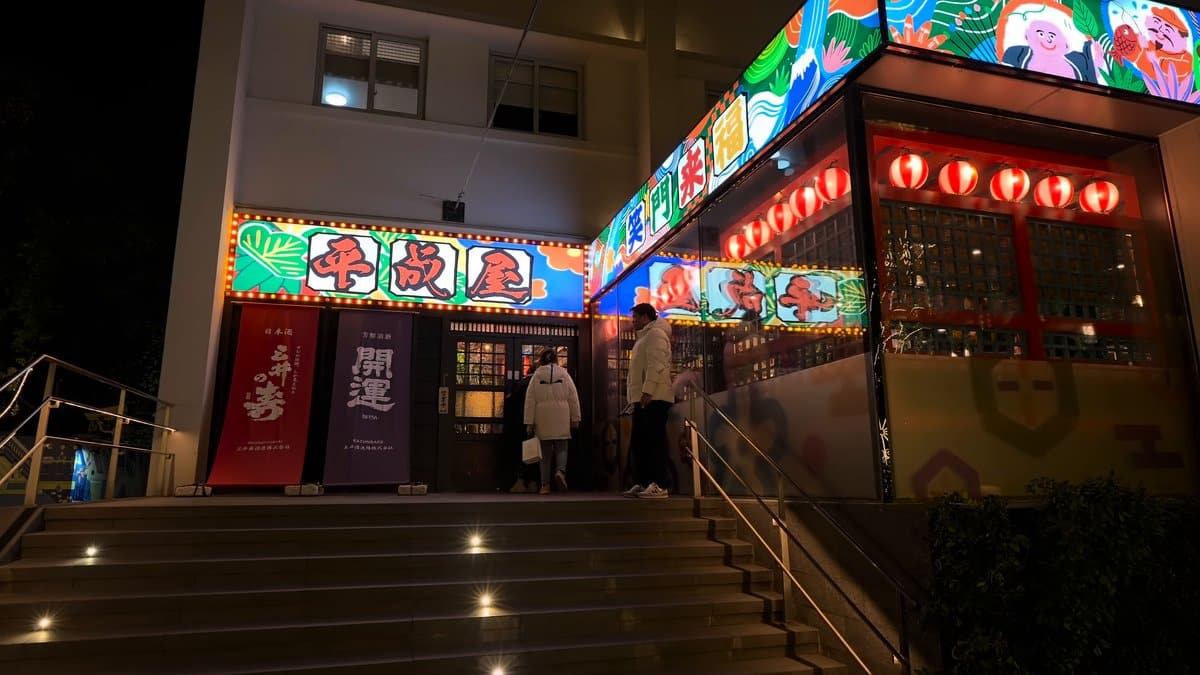
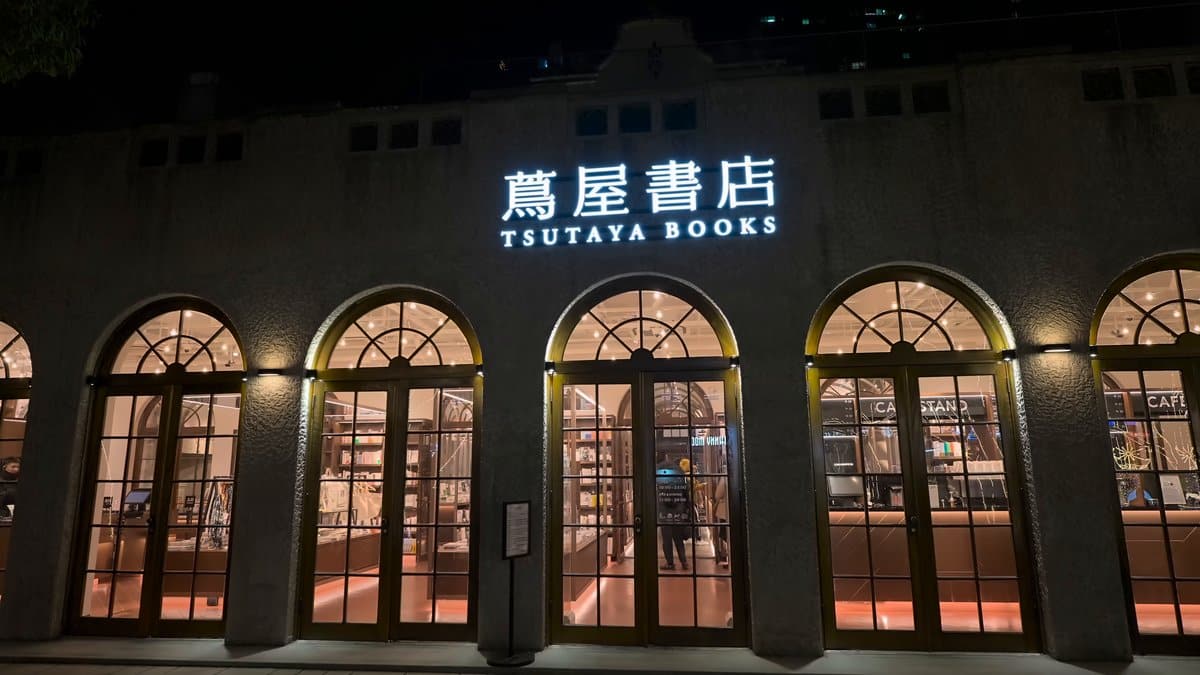
Tsutaya Books has its signature signage over arched windows, announcing its arrival. The interior follows the standard format. There are magazines on one wall, design items, books grouped around themes, and a tiny cafe counter.
There’s nothing radically new here, just another good branch if you’re already an admirer of the chain.
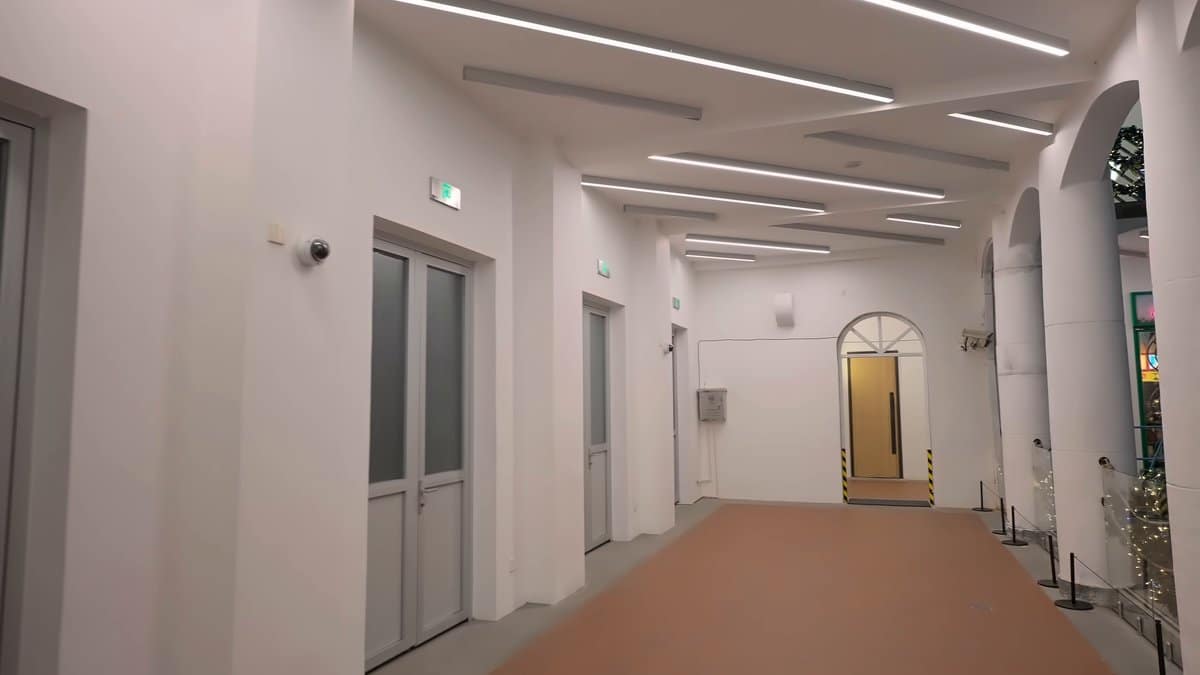
And behind the scenes it’s just as practical: service corridors is still functional and unadorned. Unless you get lost trying to locate the restroom, you’ll never notice. But it reminds you that this is a functioning retail space underneath all the thoughtful styling.
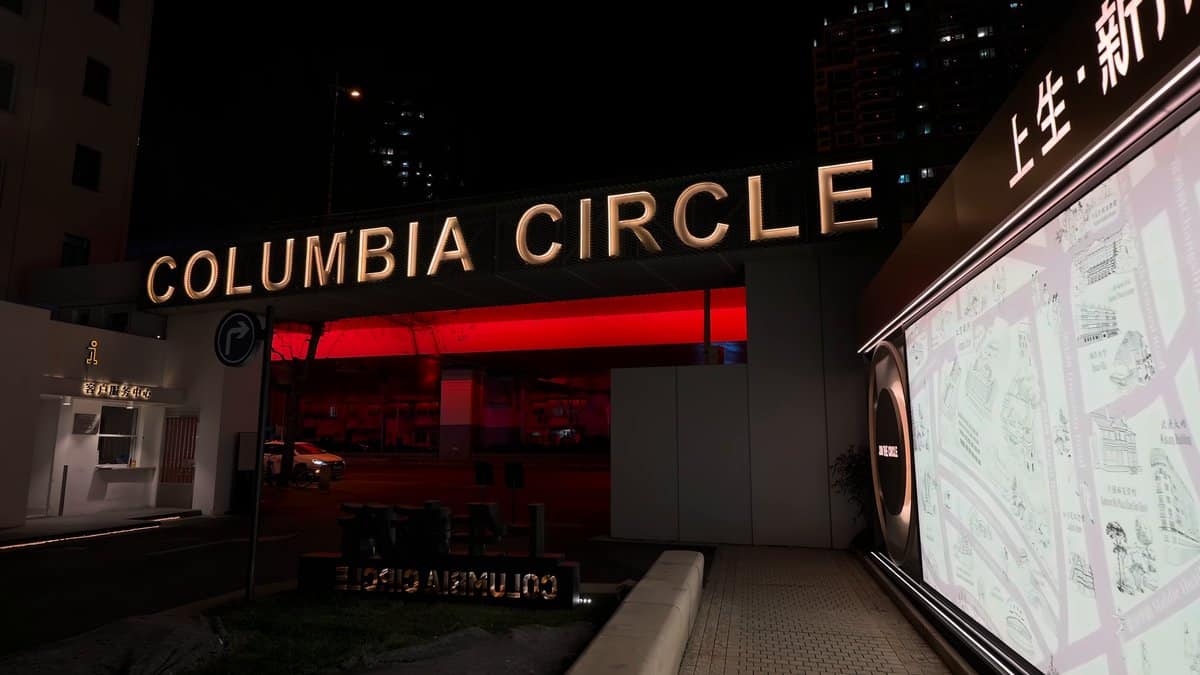
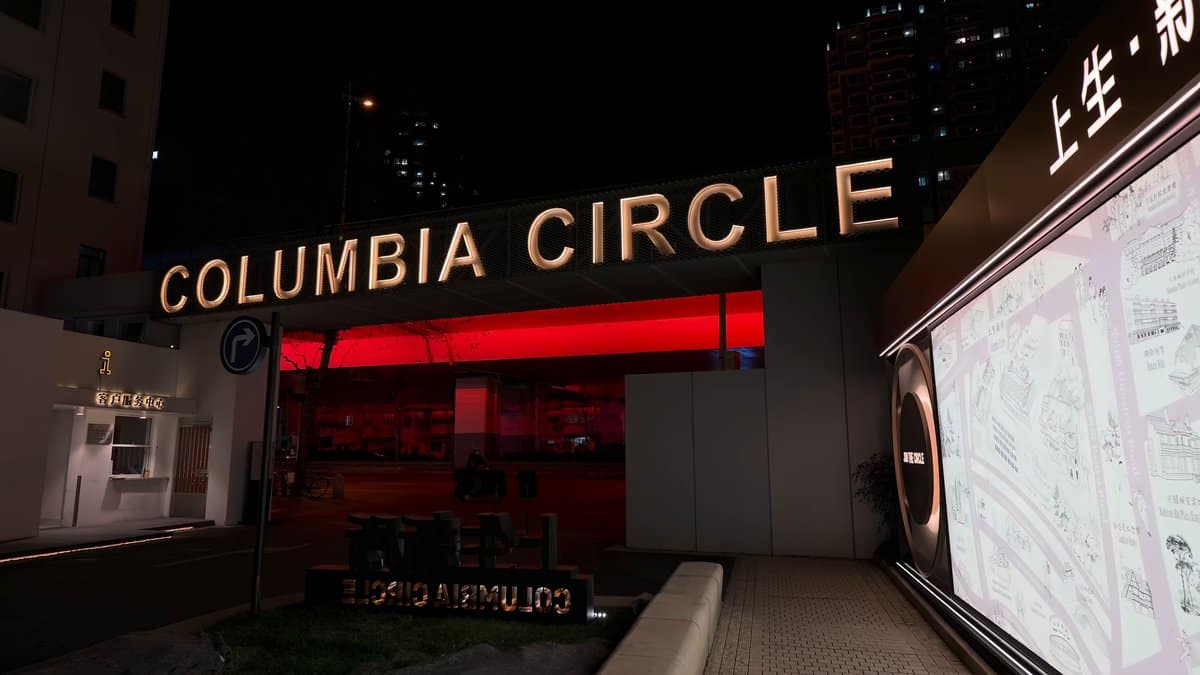
One of the entrances has a sign that lights up with illuminated map panels showing the site layout. This is helpful if it’s your first visit; otherwise, they’ll get you oriented before sending you into the fray. Keep in mind that the entire complex spreads out beyond what meets the eye, so it’s easy to miss parts of it if you just stay on the main plaza.
If you are in the neighborhood, Columbia Circle is a good place to spend an evening. There’s enough visual interest here (the restored pool courtyard and light displays) to spend an hour or two, and there are enough cafes and shops to make it worth hanging out. Some areas will be cordoned off as they continue restoration work on parts of the site.
While not everyone will agree with the balance between commercialization and preservation, at least this project has ensured that these buildings was preserved and made accessible instead of being torn down. Do you know of other restored heritage sites in Shanghai that have found ways to integrate old architecture with new uses? What did/didn’t work about their approach?