In general, there are only two fates for Shanghai’s old garden villas: they’re either bulldozed (long ago), or they remain closed off behind their gates as private homes. Sinan Mansions are an unusual third type of place. It is a group of 1920s/30s houses in the French Concession that has been beautifuly restored and opened up as a public area, where the historic shells has become home to bookshops, cafes, and even the odd Starbucks.
Walk its lanes, look through its courtyards, and perch beneath its parasols at spots where well-heeled family members would take tea in their own private gardens. South of Fuxing Park, a couple of pedestrianised blocks are taken up by the precinct. Don’t expect architectural consistency.
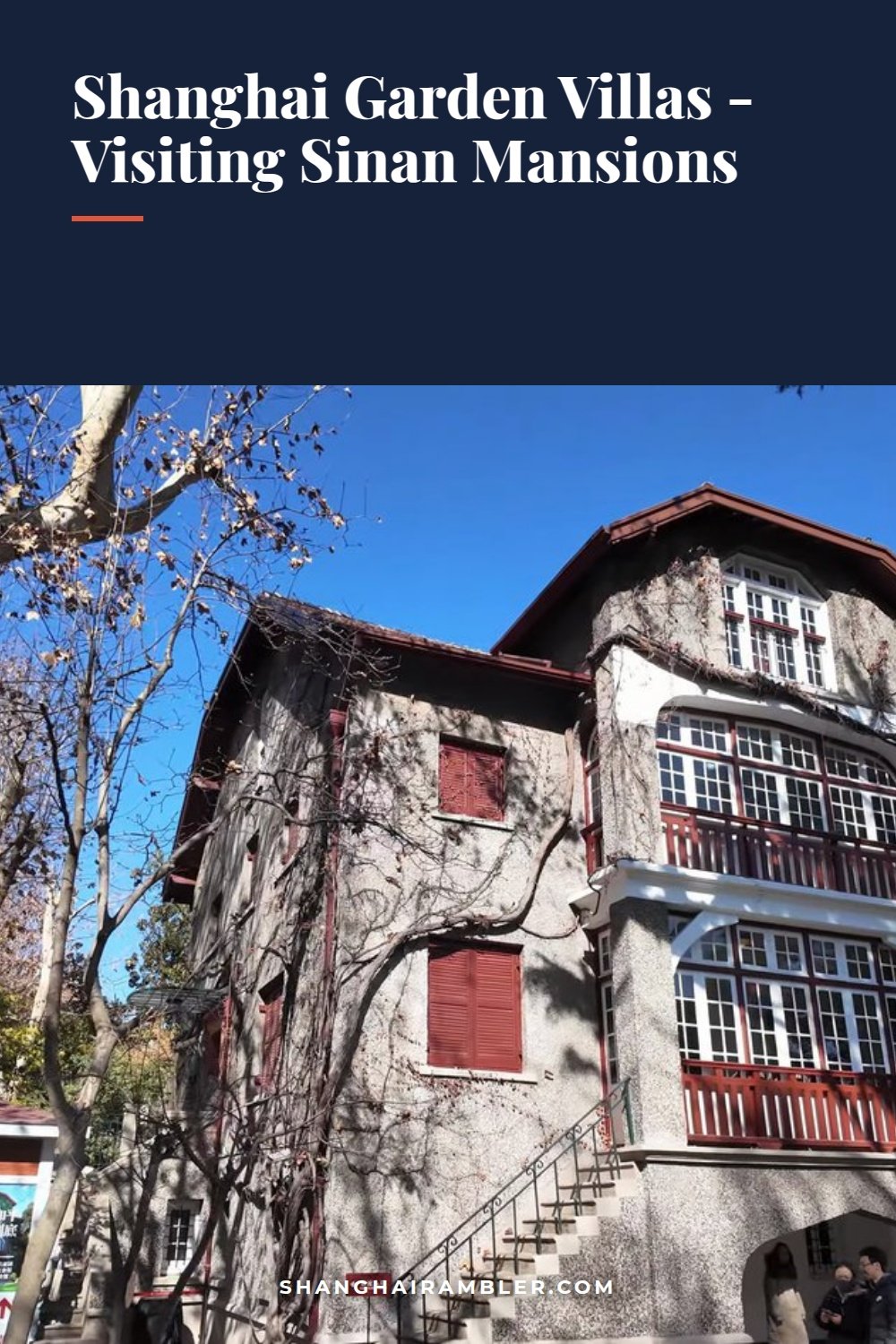
Tudor revival gables rubs shoulders with pebbledash Art Deco, and ivy-hung brick arcades sit alongside the occasional modernist addition that doesn’t really belong. Weekday mornings see it quiet, with whole lanes sometimes to yourself; weekend days is busy as locals queue for coffee and browse the stores.
A Walk Through Sinan Mansions
Sinan Mansions Shanghai
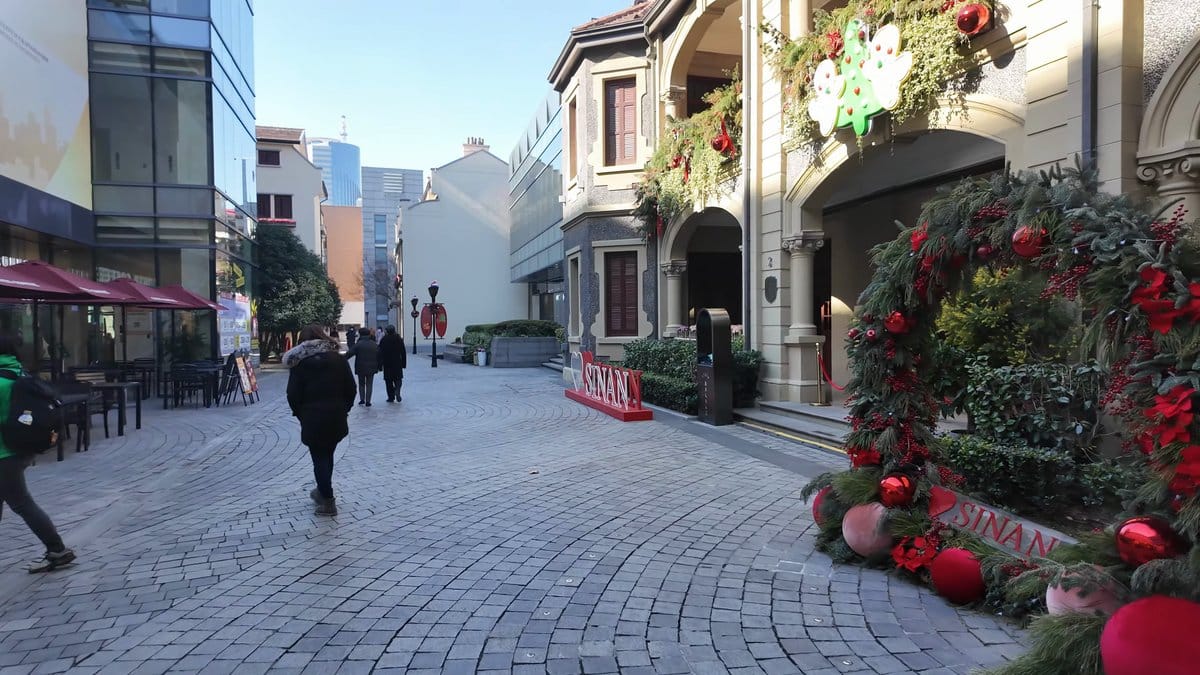
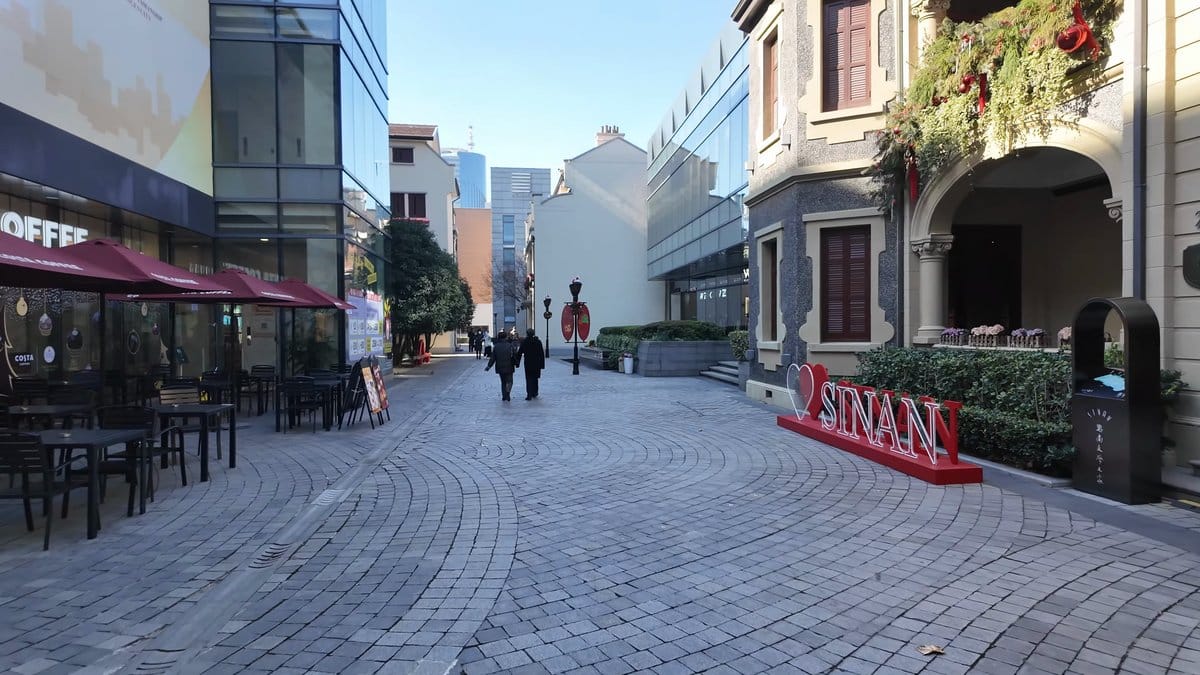
Red lettering spelling SINAN in giant letters marks the main lanes… It’s an exercise in branding that seems a little over-the-top but at least makes it easy to find your way around. There’s outdoor seating on the pavements and cafes spilling out into them (though most of the chairs gets stacked up through the week).
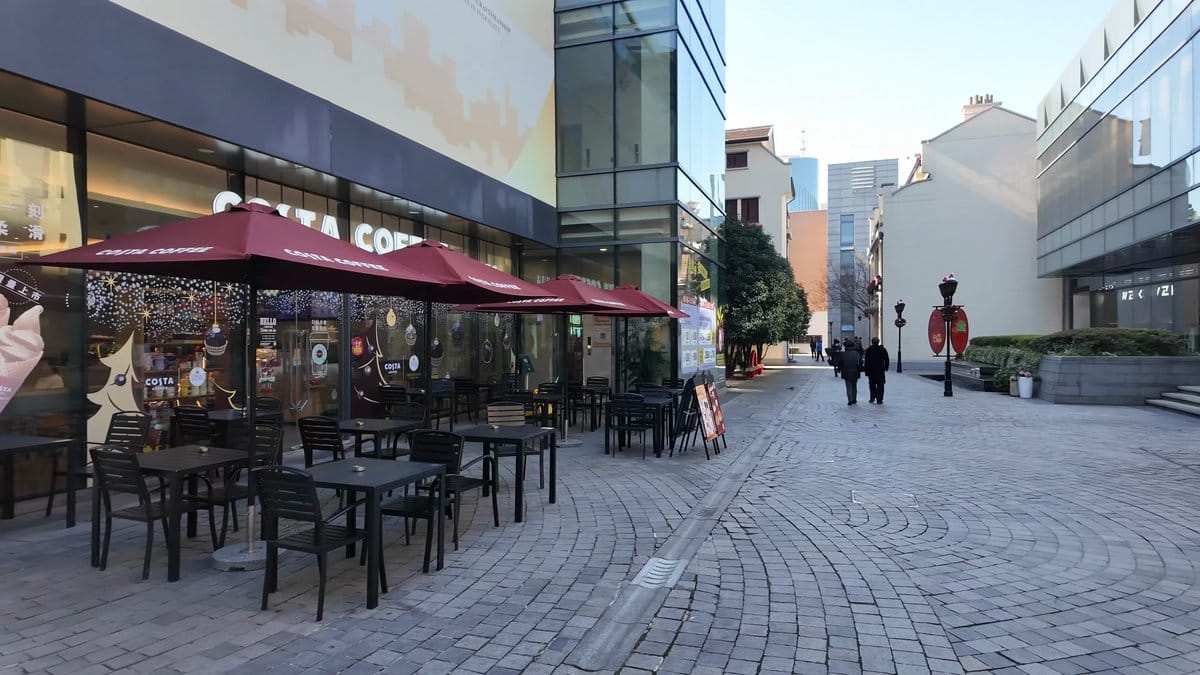
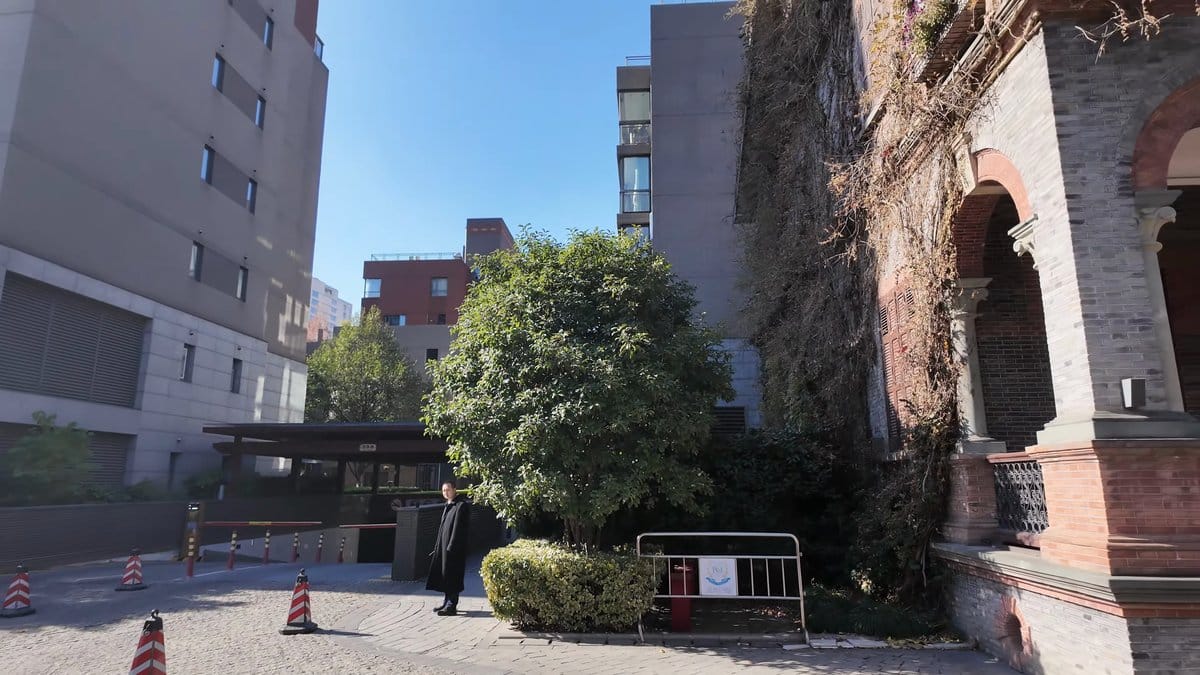
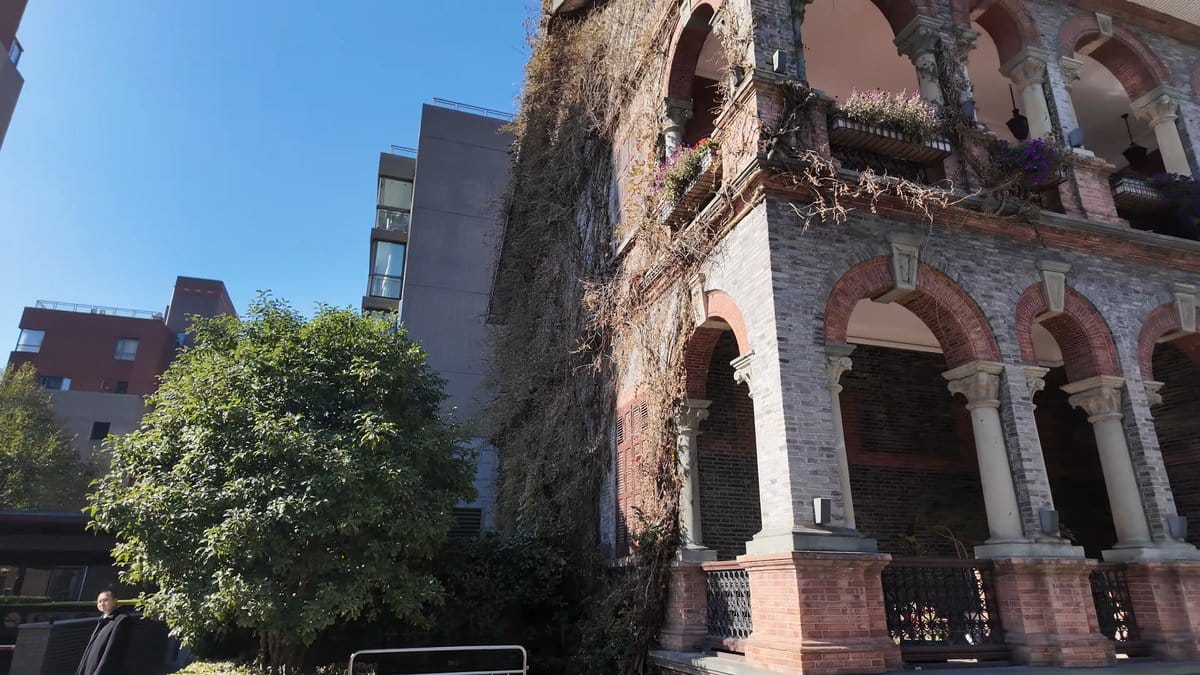
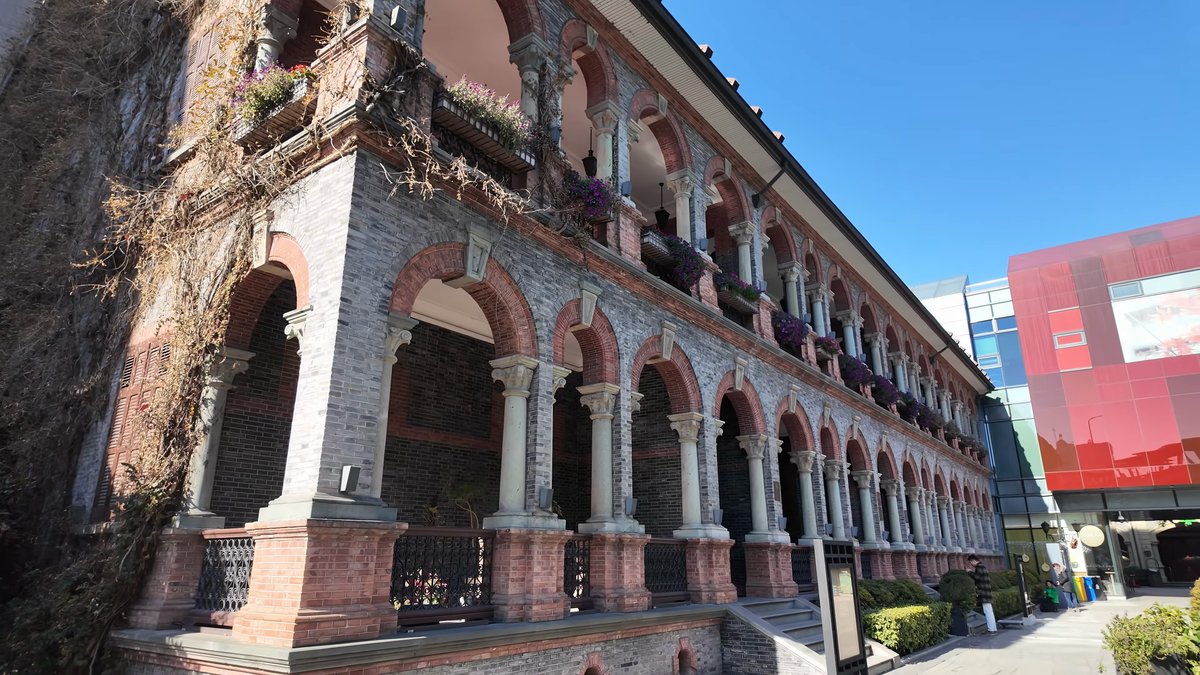
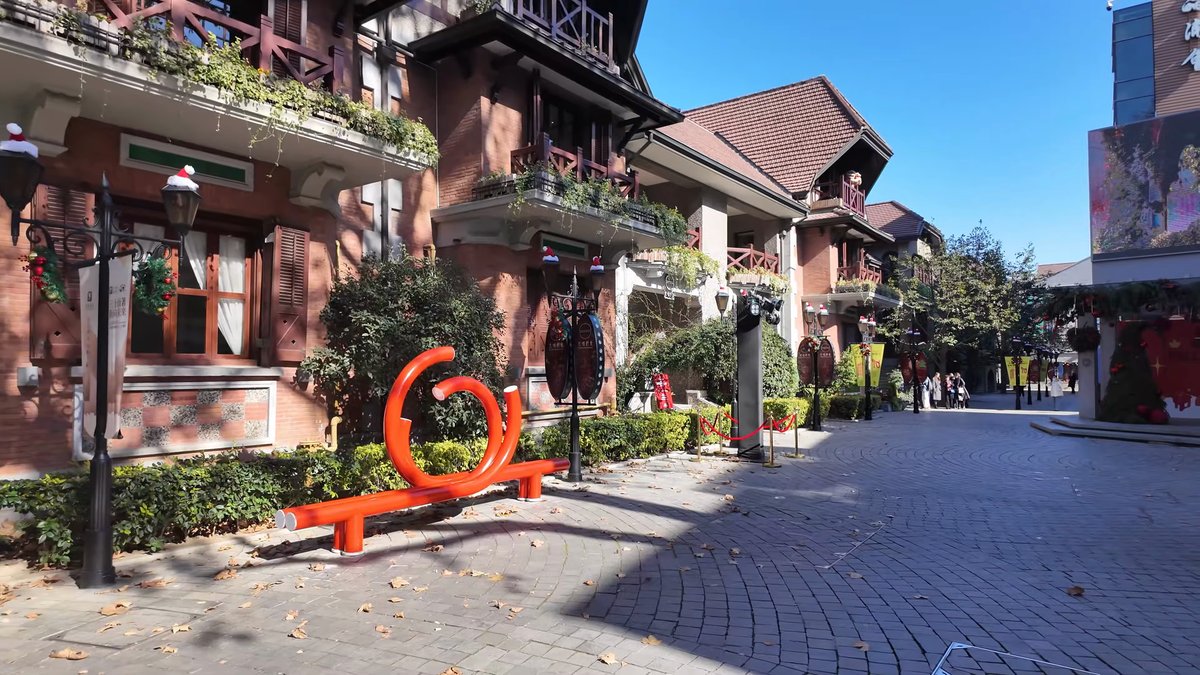
Some of the bigger buildings has brick arcades running down them, which are cool on a hot day and hung thick with creeper. The ivy’s been kept back from the windows but let to grow in a controlled manner. Enough to soften the brickwork but not so much as to obscure it.
Here and there you see construction tape and safety barriers. They remind you that maintaining heritage is an ongoing process, and it is never tidy.
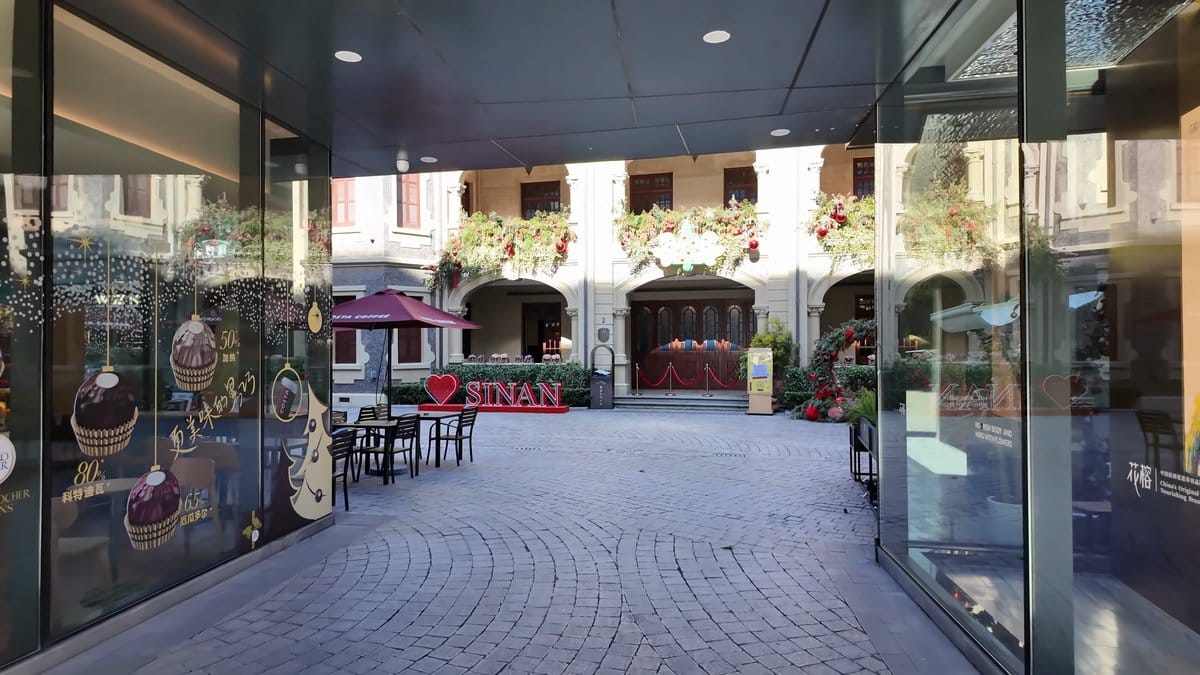
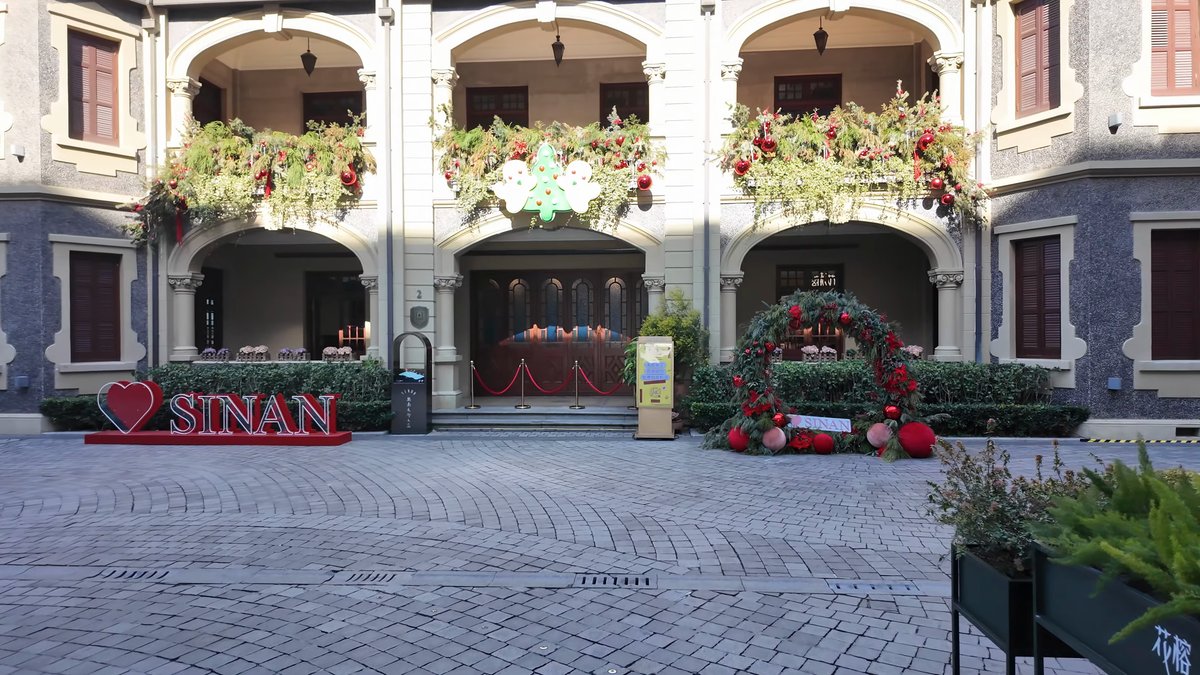
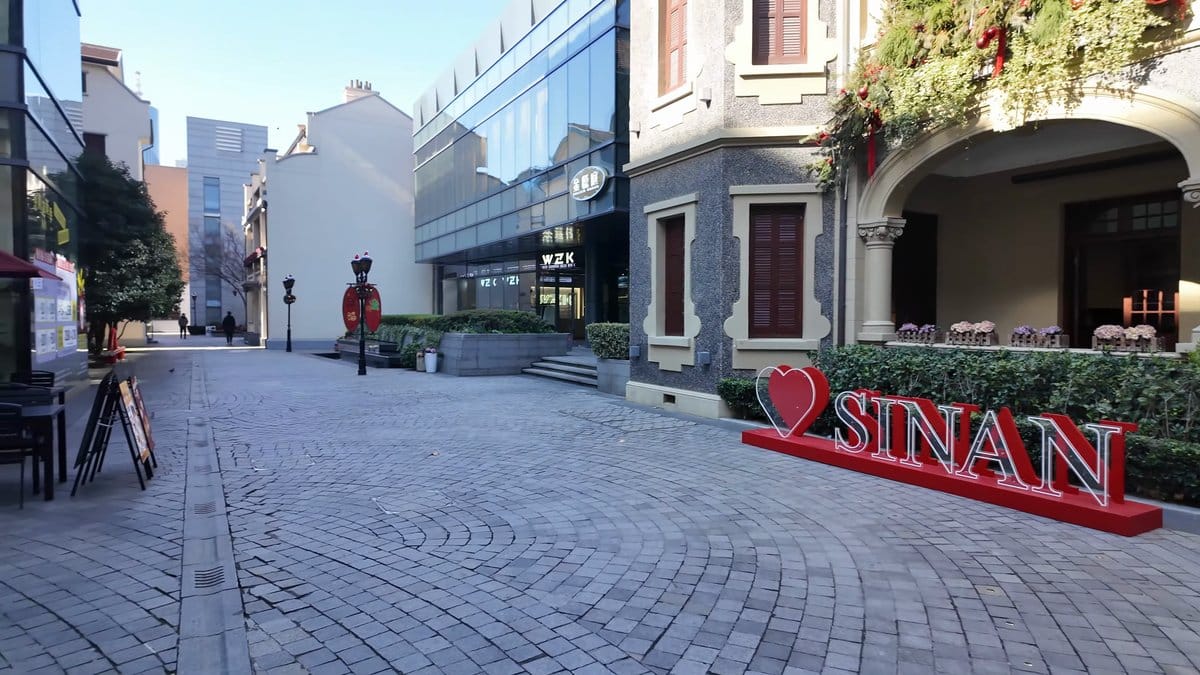
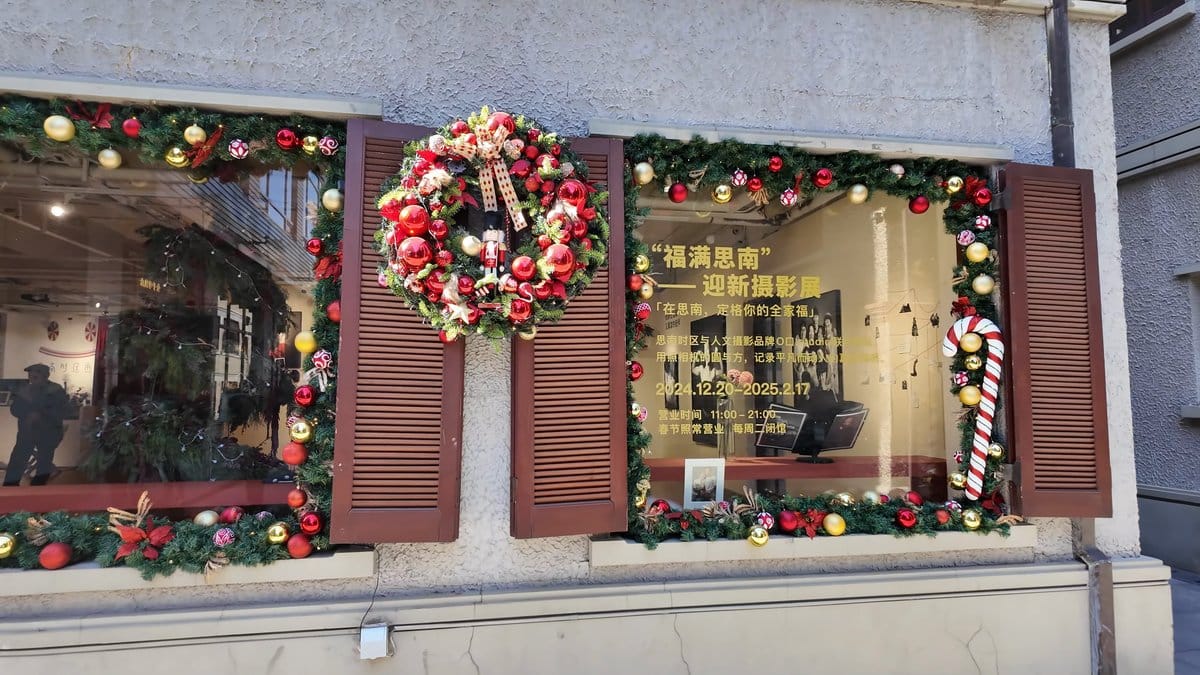
Between the villas, courtyards open up, some decorated for the season with lanterns or other festival decorations. More SINAN lettering lines the walls, directing your view back toward the houses beyond. At Christmas or Chinese New Year, the precinct lean hard into the theme, draping wreaths and stringing lights from any available surface.
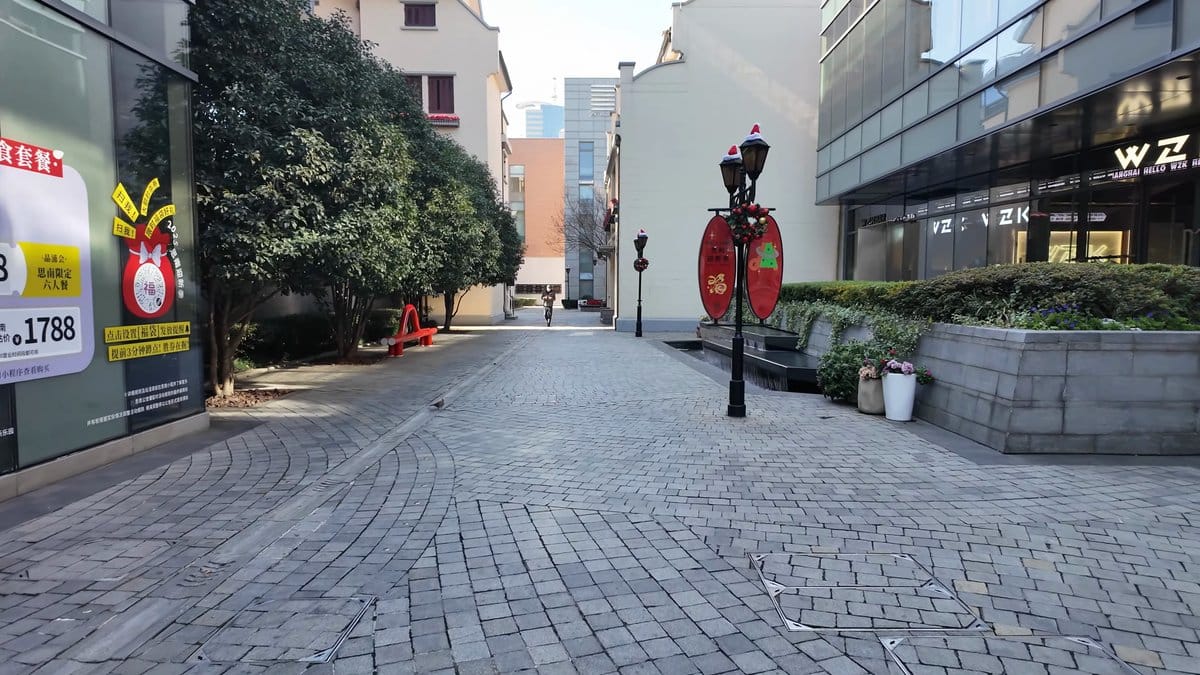
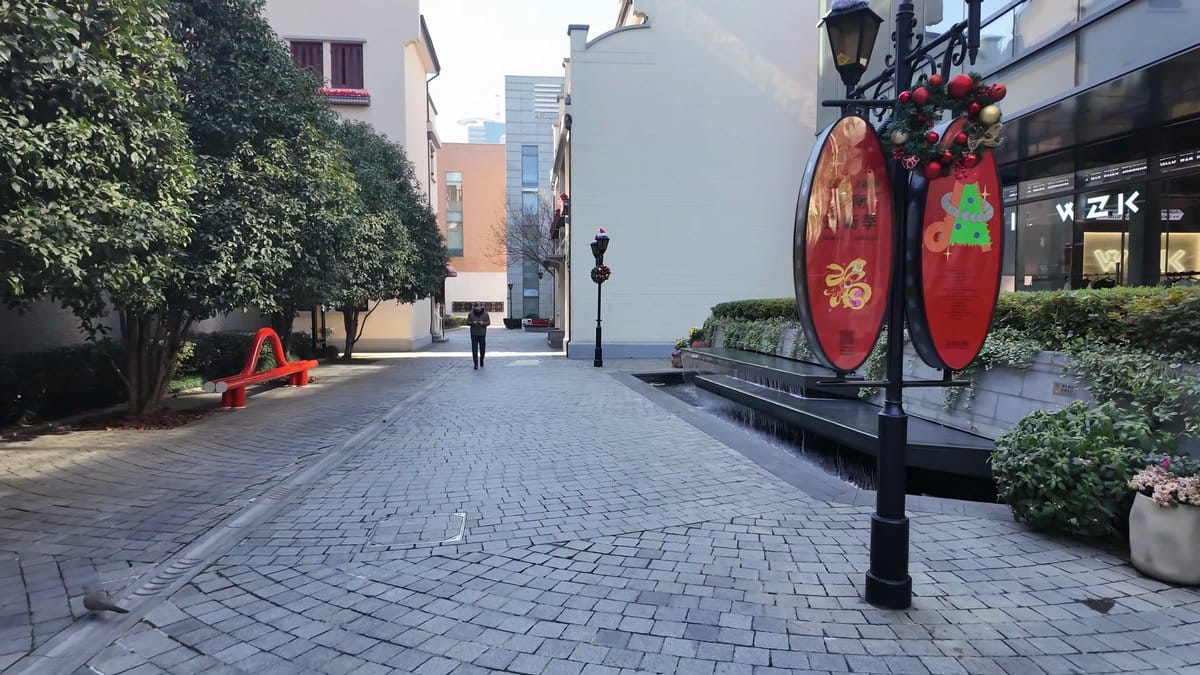
The narrower lanes are lined by hedges, their edges clipped into neat lines as a border leading you from building to building.
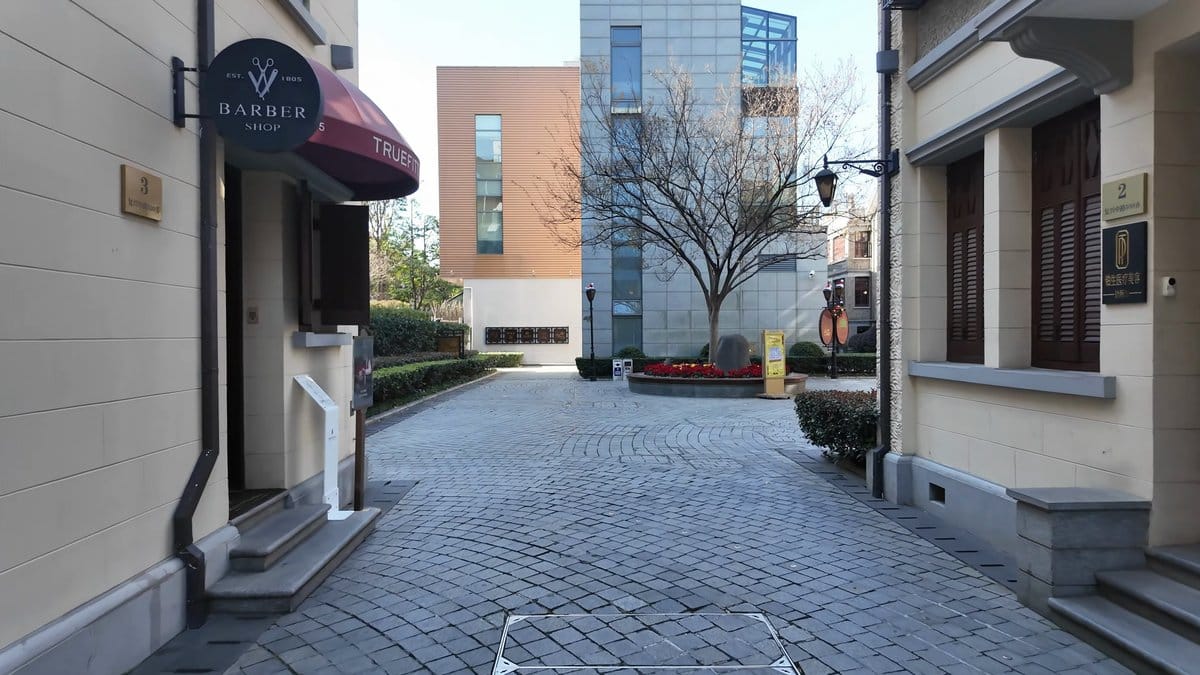
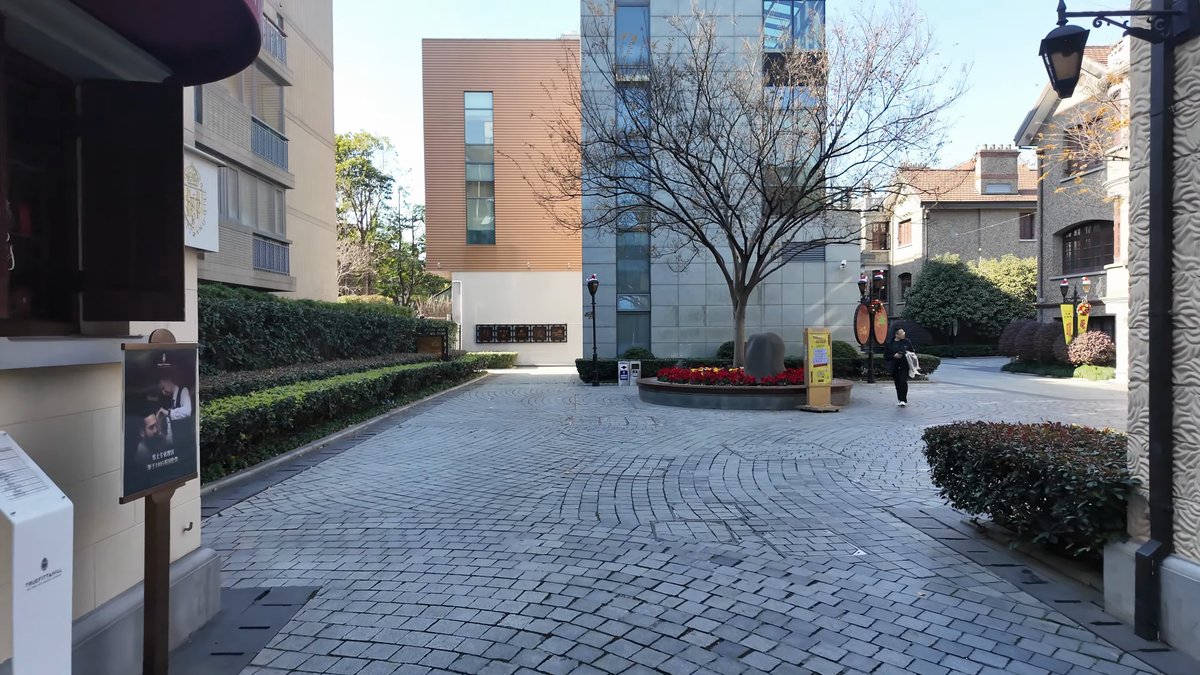
But turn another corner and you see the patchwork nature of the precinct’s history. At one end of a lane sits a modern residential tower, its glass facade standing in stark contrast to the low-rise villas. One of the old buildings house a barber shop whose awning is strung across the pavement in a weak nod to street life.
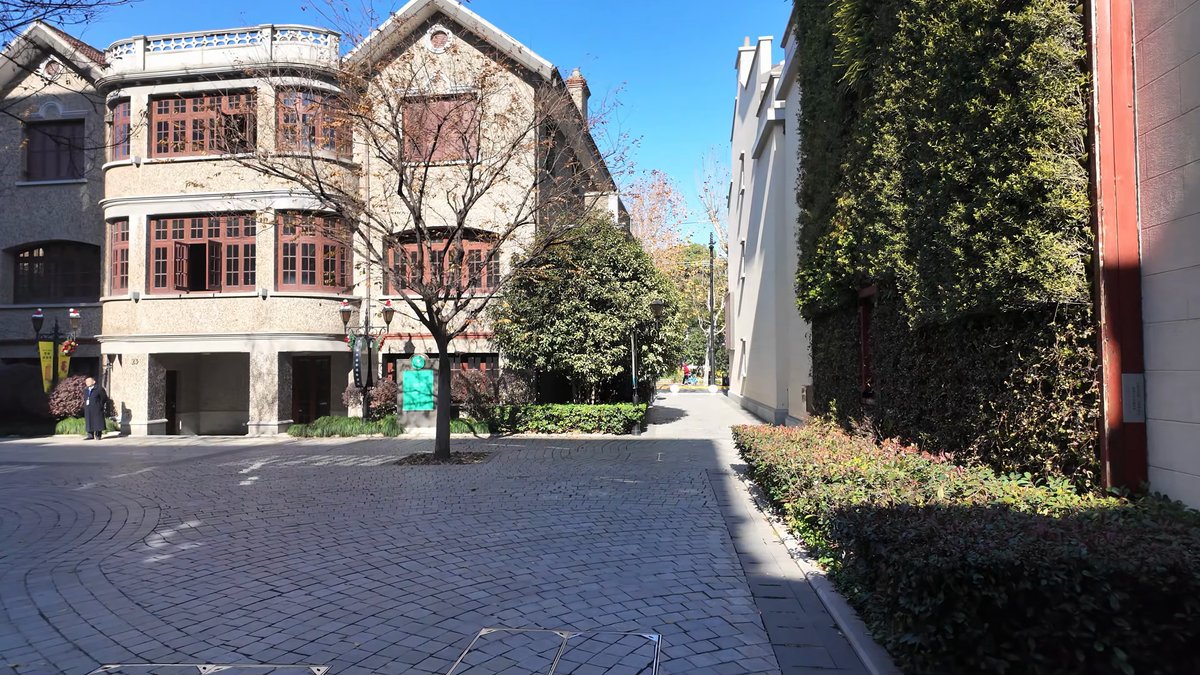
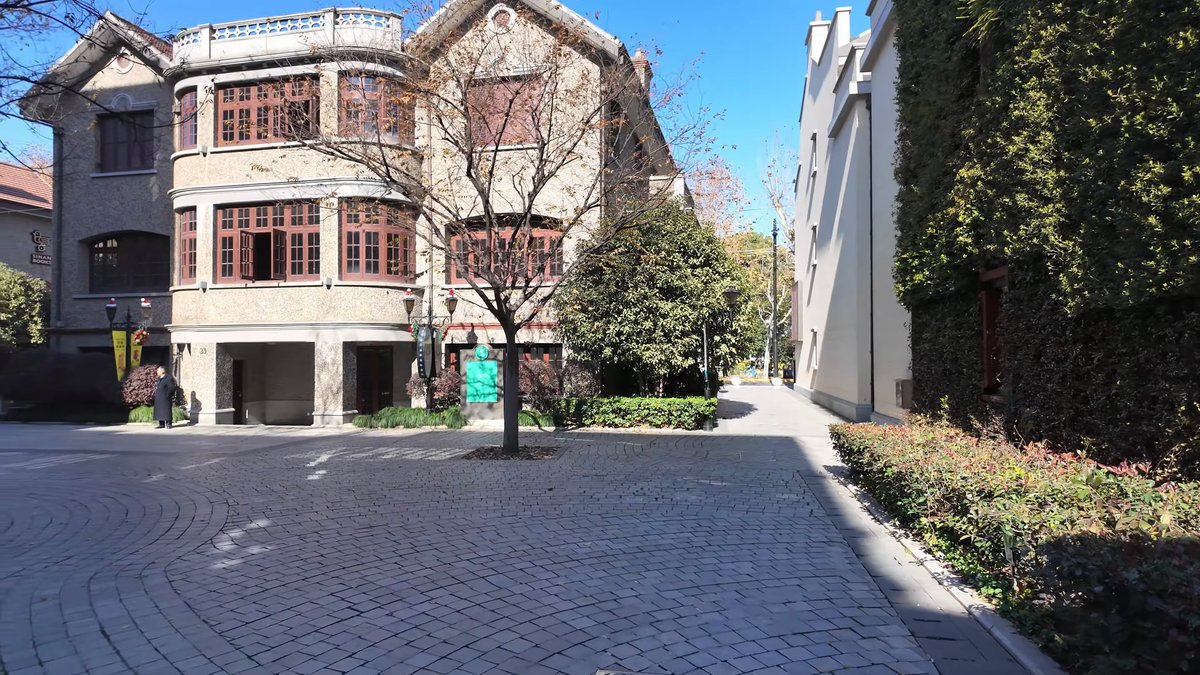
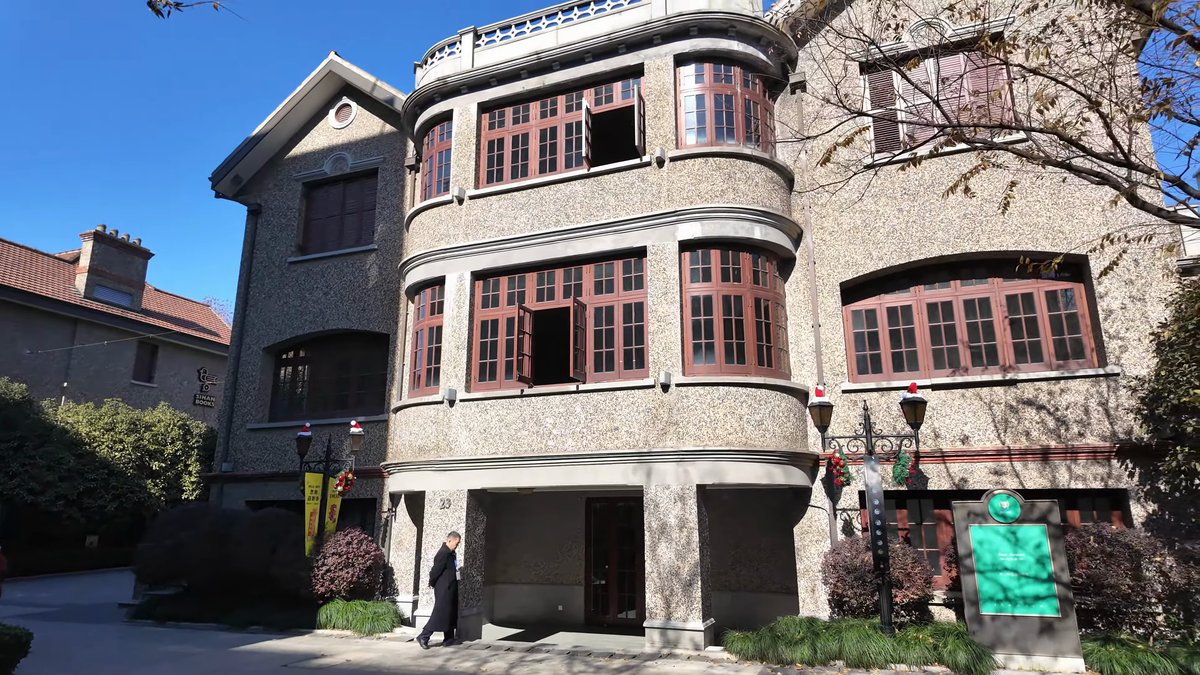
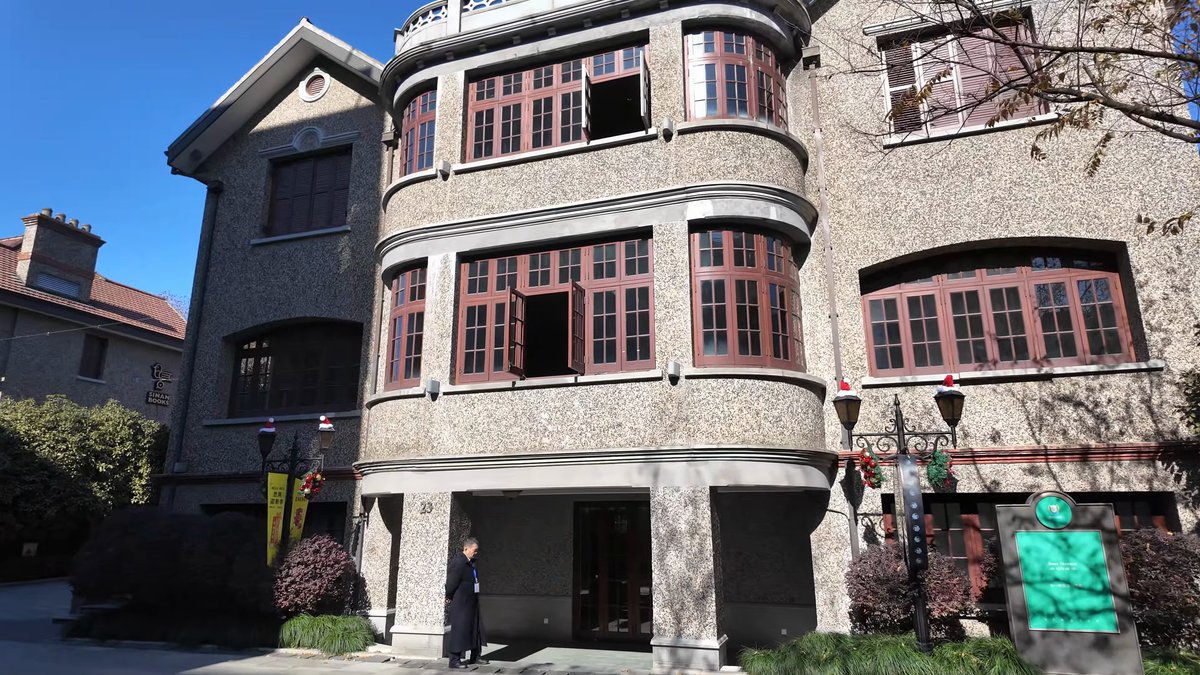
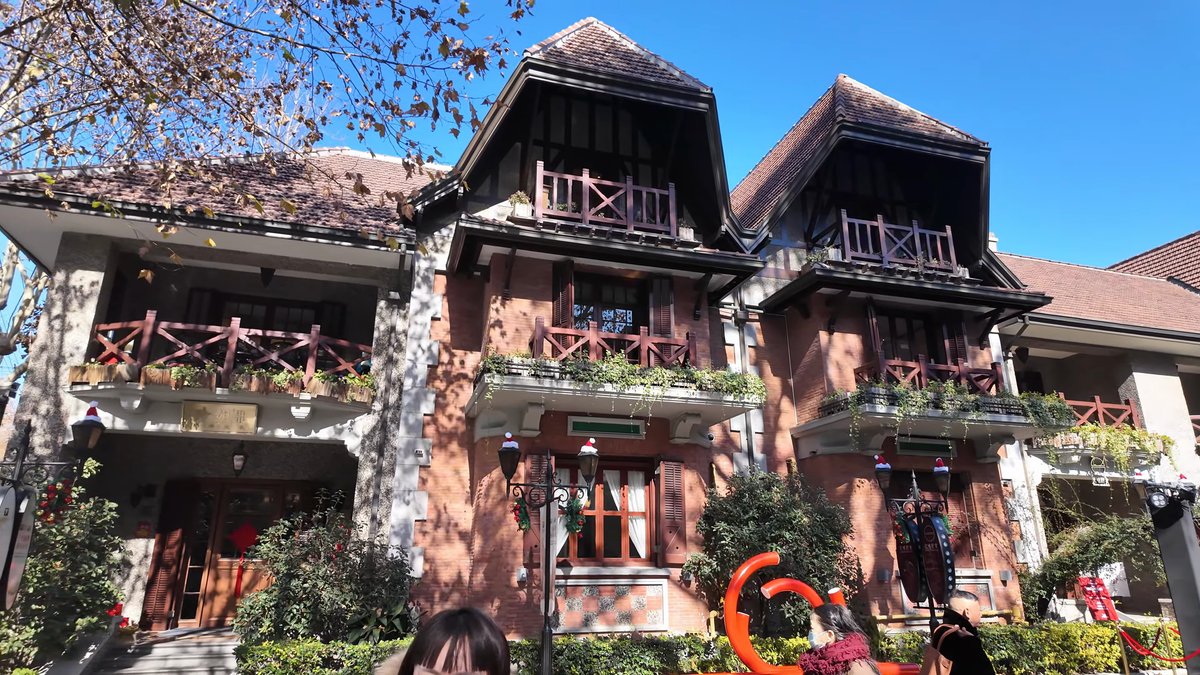
And then there are the villas themselves: some have half-timbering and stepped gables you’d be forgiven for thinking were in suburban Surrey; others feature pebbledash render and bay windows. Once-surrounding gardens has been pruned back to narrow beds and small hedges, just enough greenery to set one building apart from another. Where ivy has been allowed to climb the walls, it adds texture but doesn’t obscure the architecture.
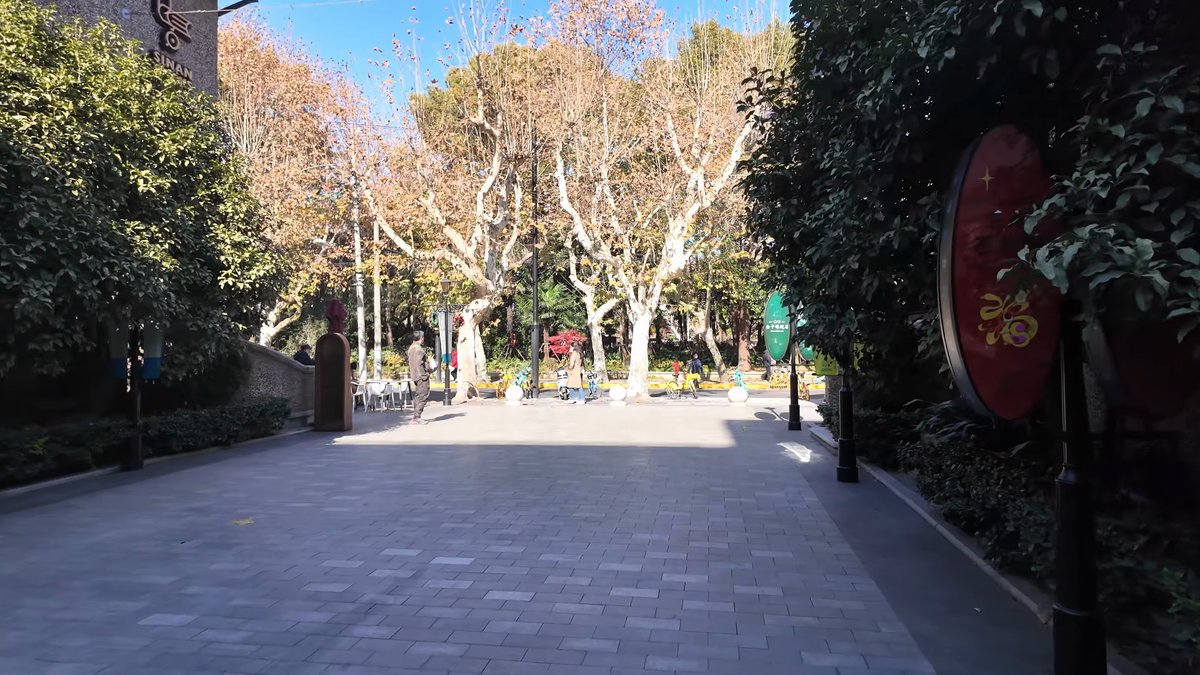
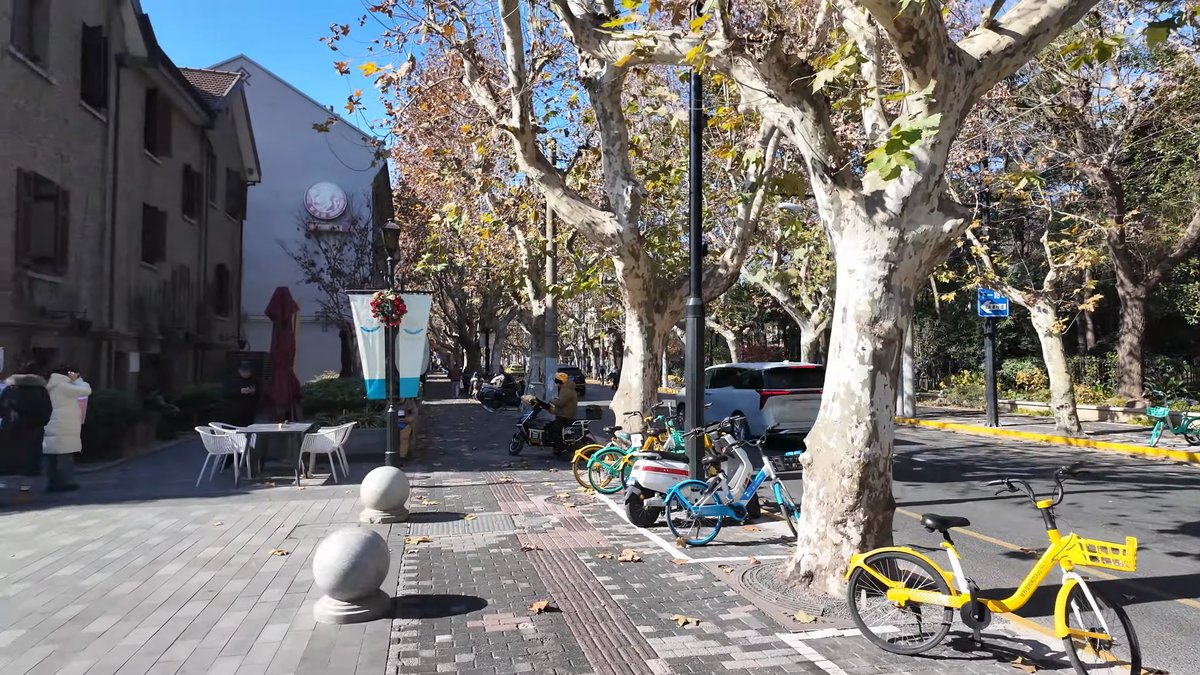
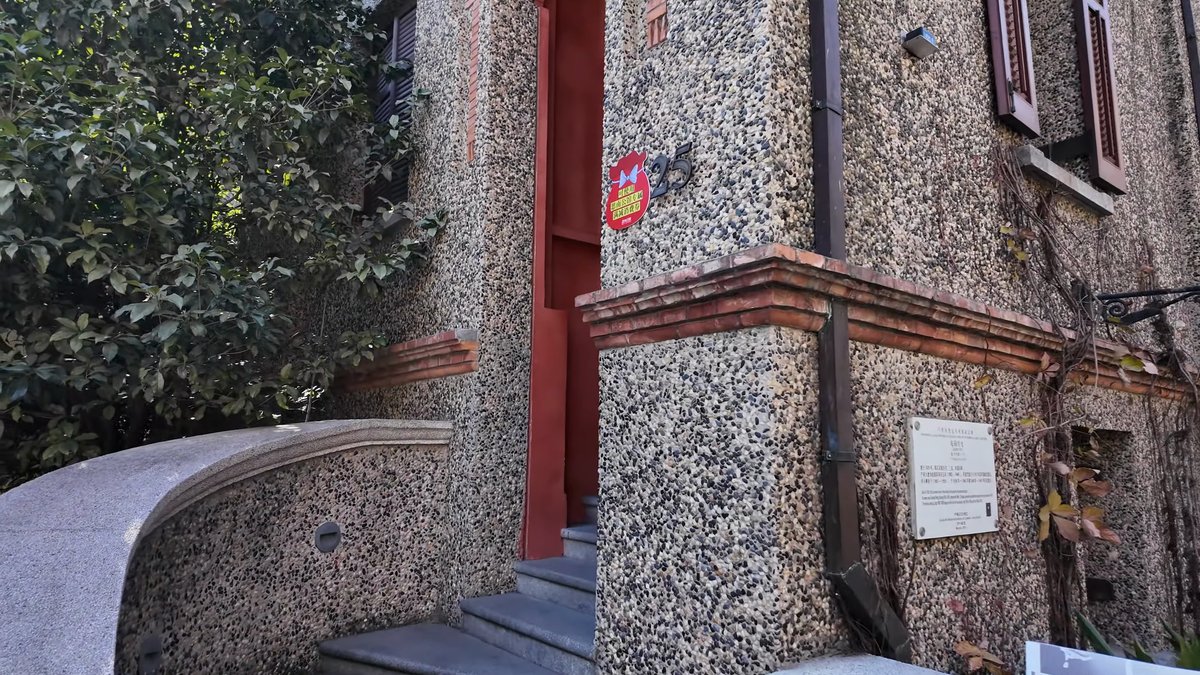
The pedestrian streets is shaded by plane trees whose wide canopies filter the light and spot the trunks. There are shared bicycles clustered on the kerbs. It’s not a heritage theme park but a working neighbourhood.
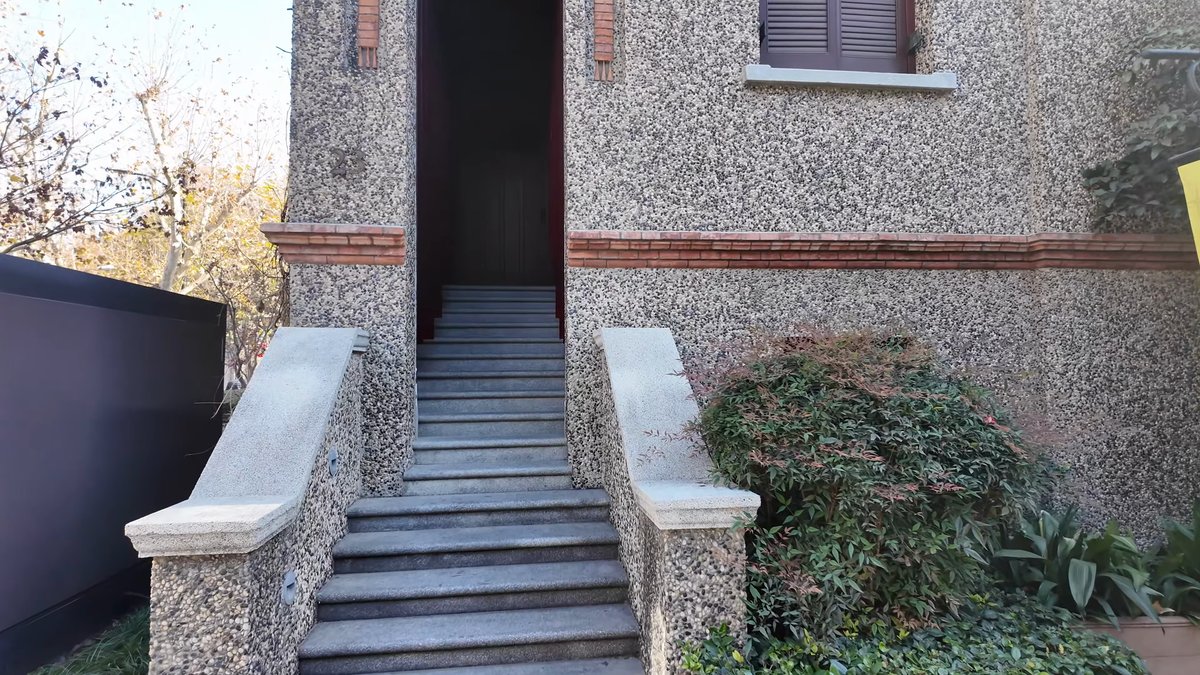
Up stone steps go doorways of villas which has been converted for commercial use; most of them are now equipped with modern intercom panels and locks for the commercial tenants inside.
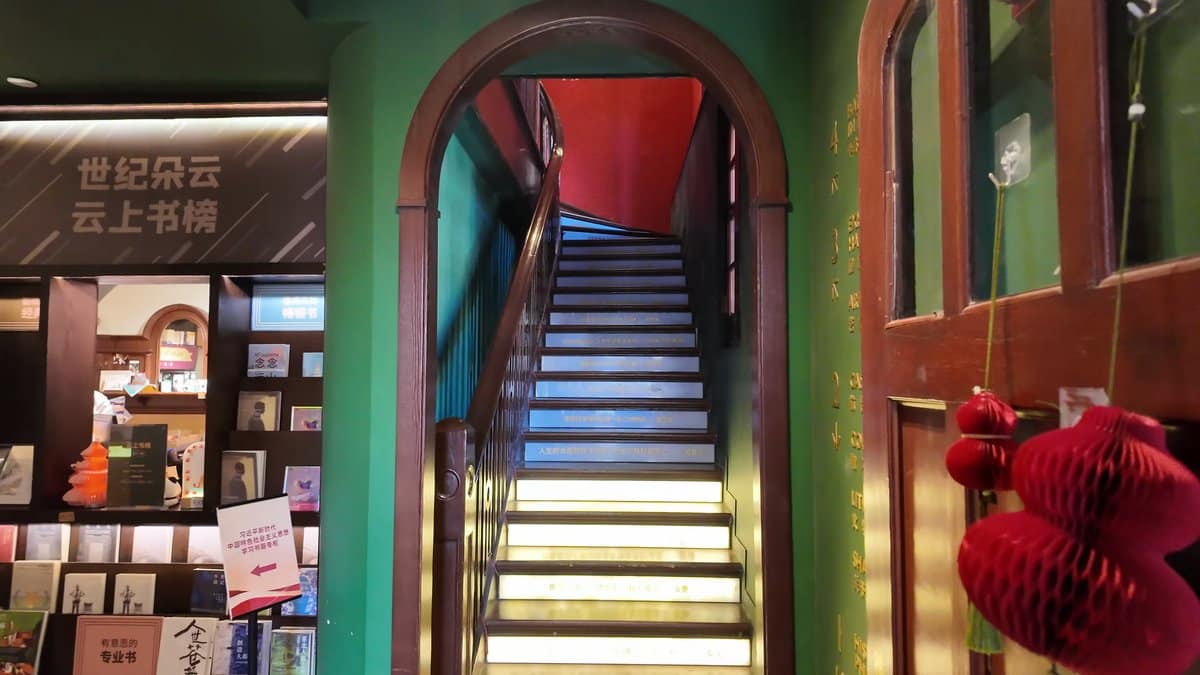
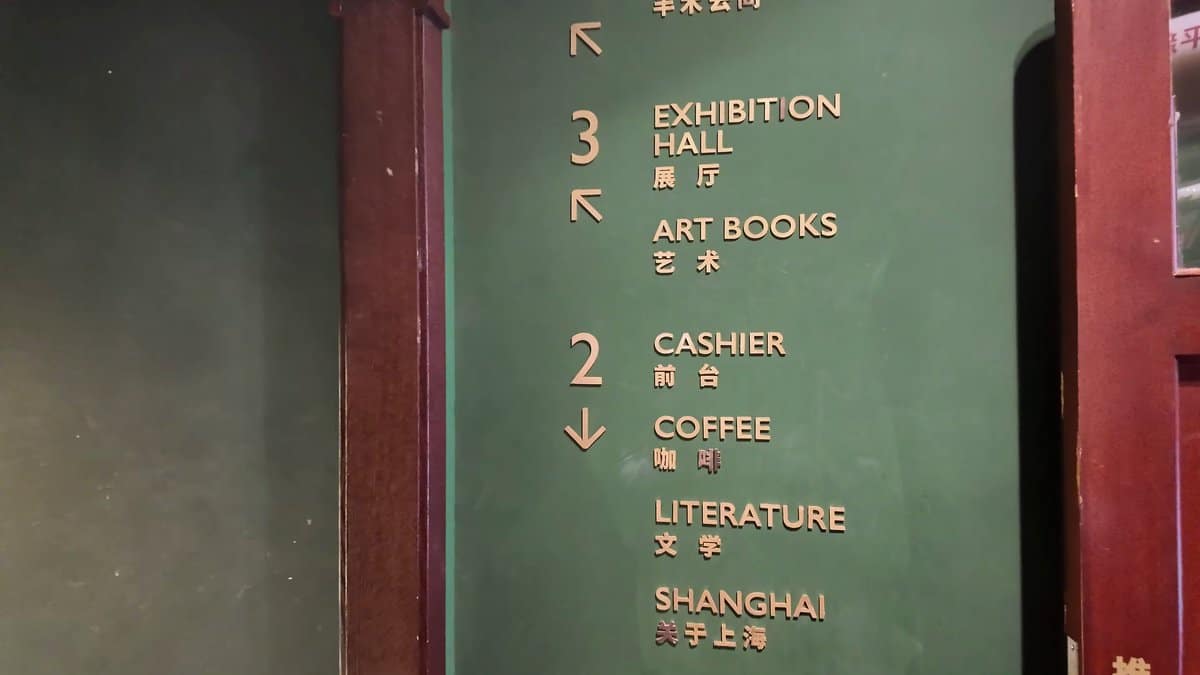
One of the houses has become a bookshop whose interior has been fitted out with a directory board and staircase. Its signage is minimal: the sort of understated design that implies you’re supposed to already know what goes on in there.
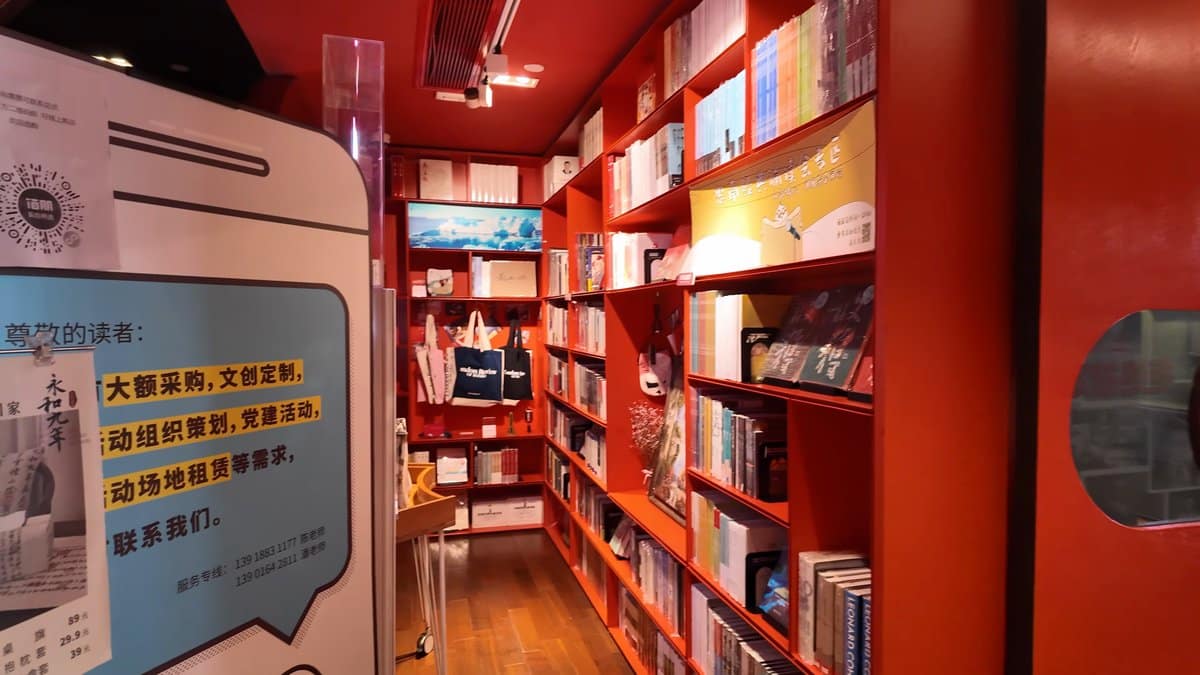
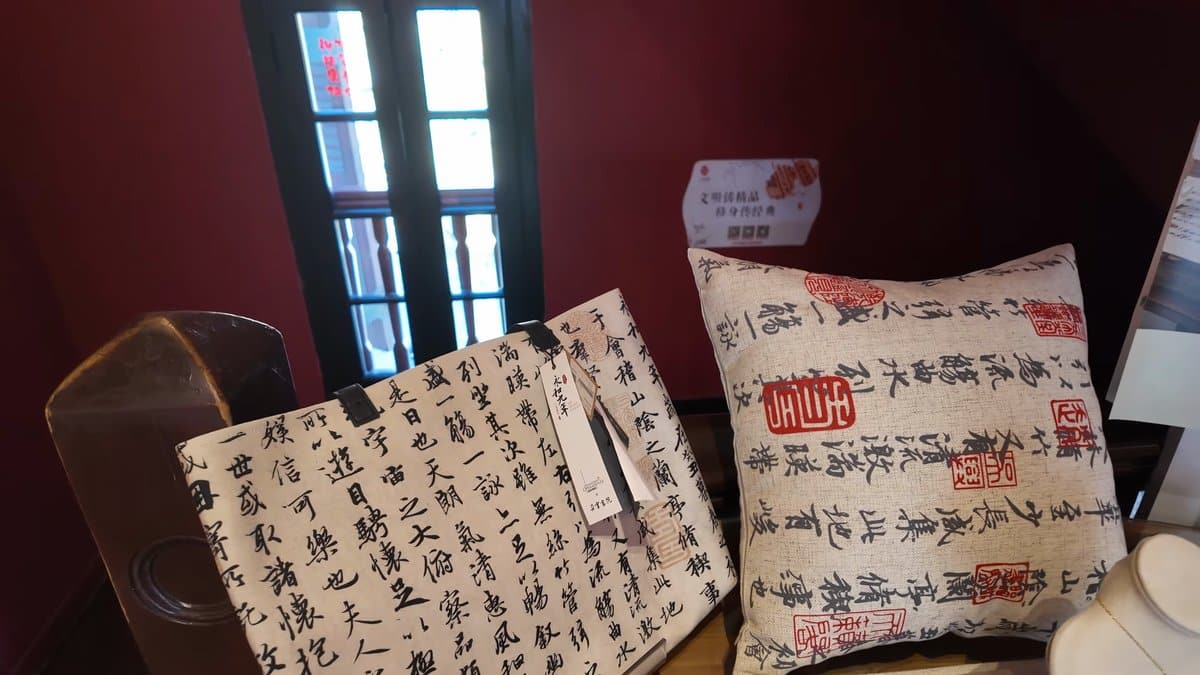
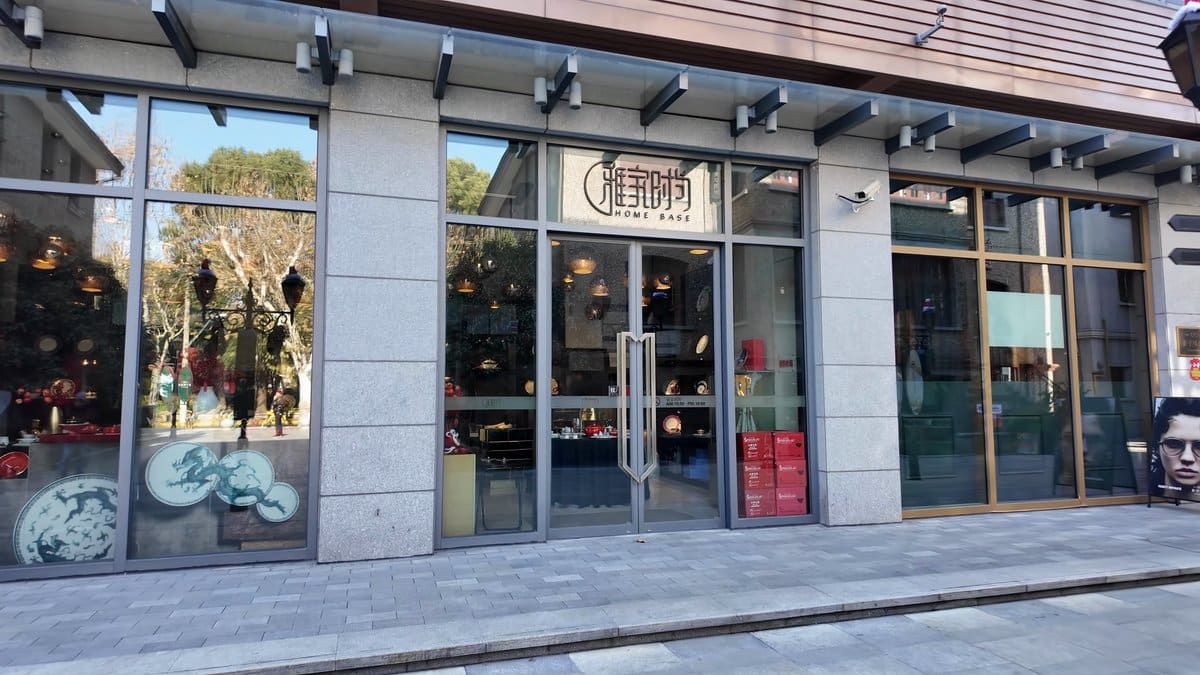
It’s tasteful enough, if a bit predictable: merchandise for sale on the ground floor, ceramics in the shop window, tote bags and cushions. Upstairs is a reading room with shelves from floor to ceiling, and the furniture are kept simple so the books do the talking.
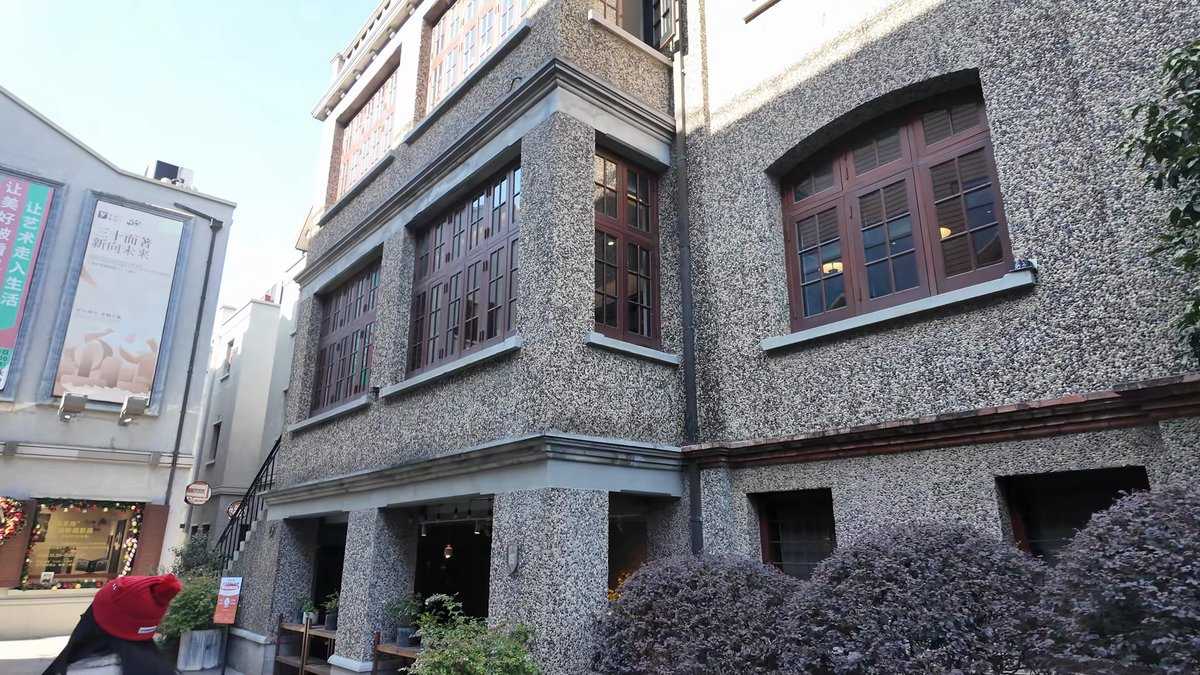
Behind iron railings, other villas stand. Their front gardens are visible but off-limits.
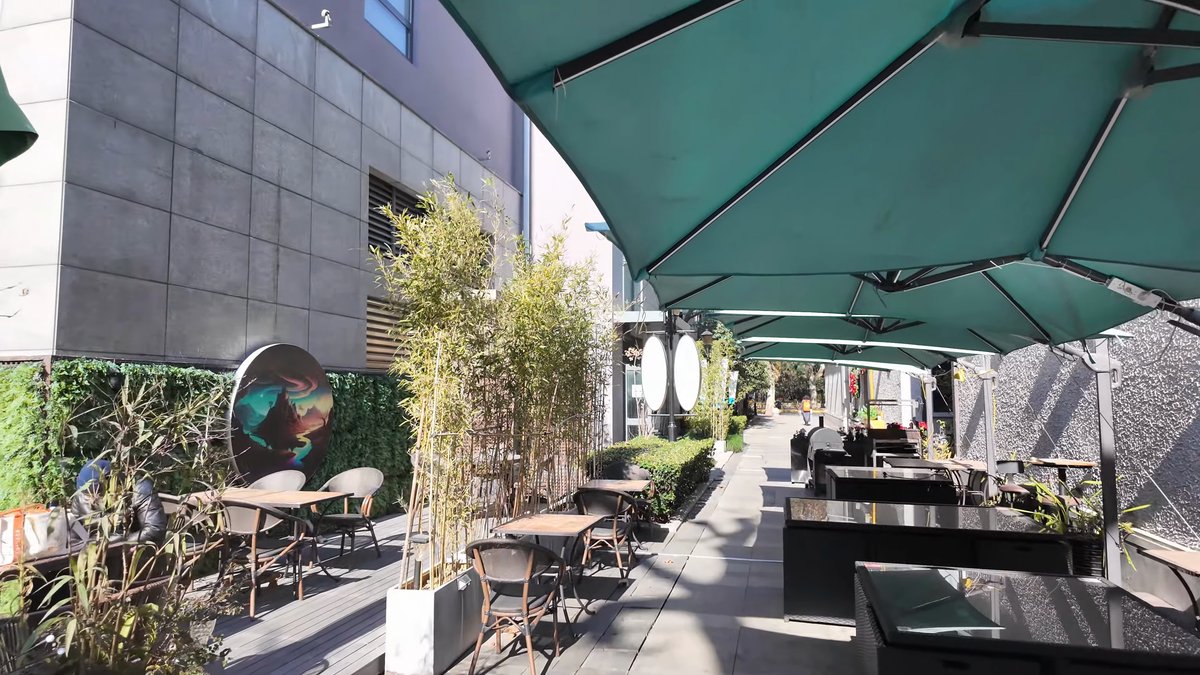
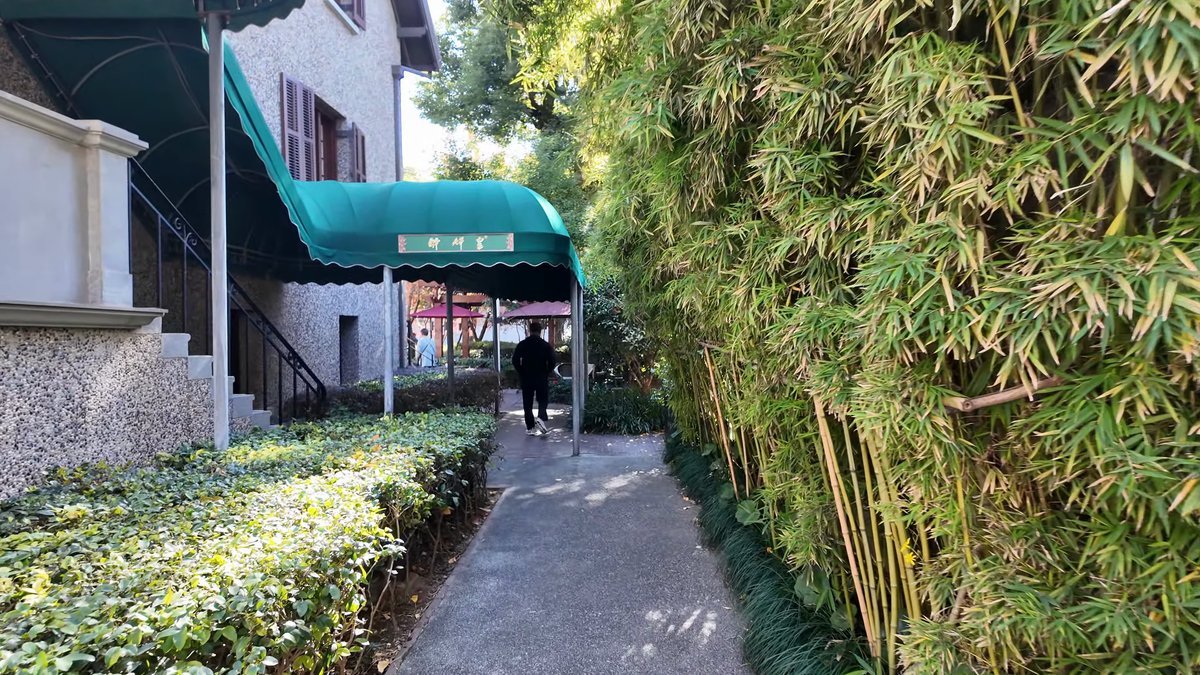
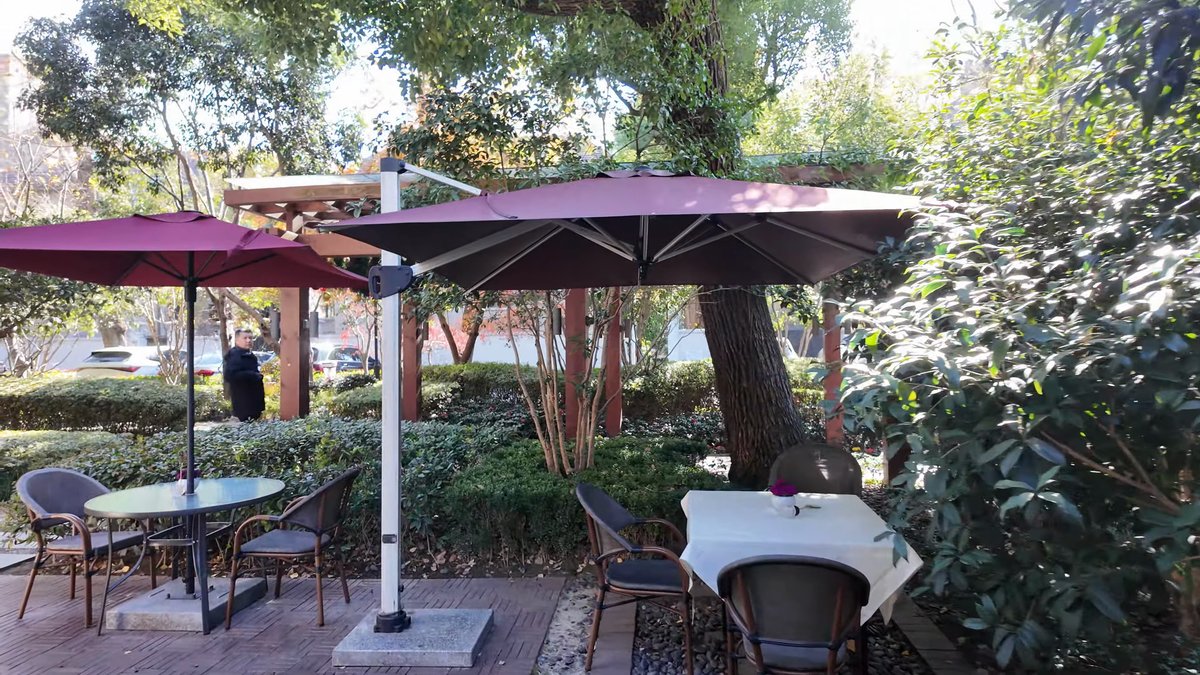
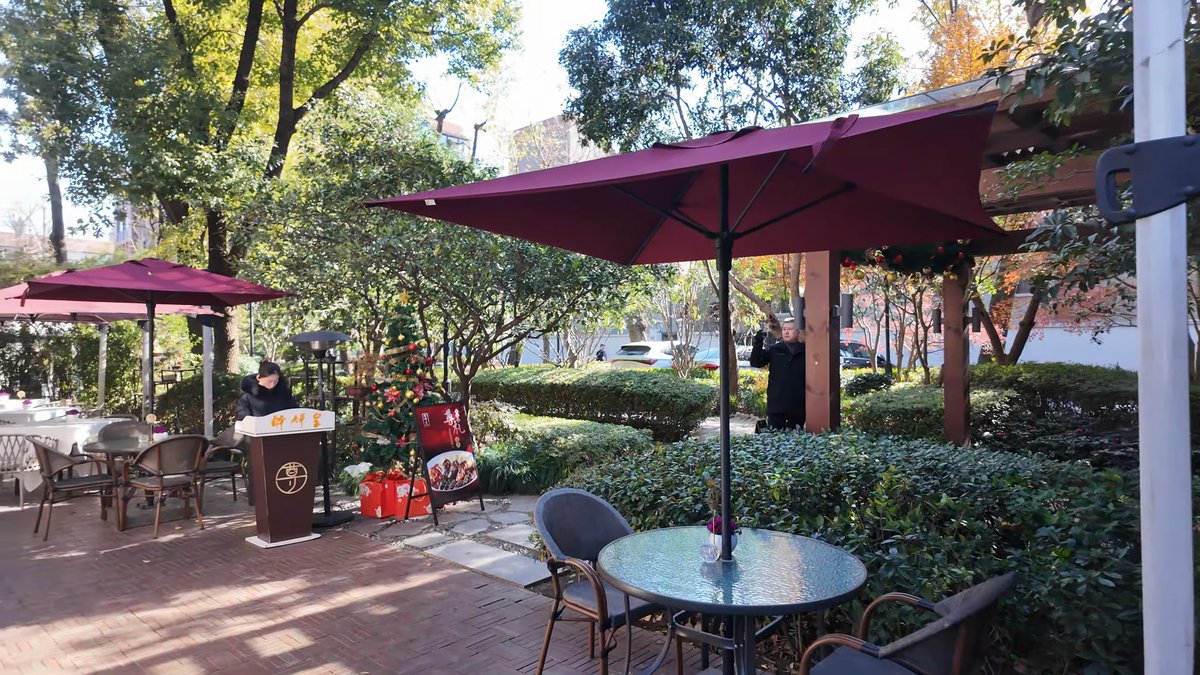
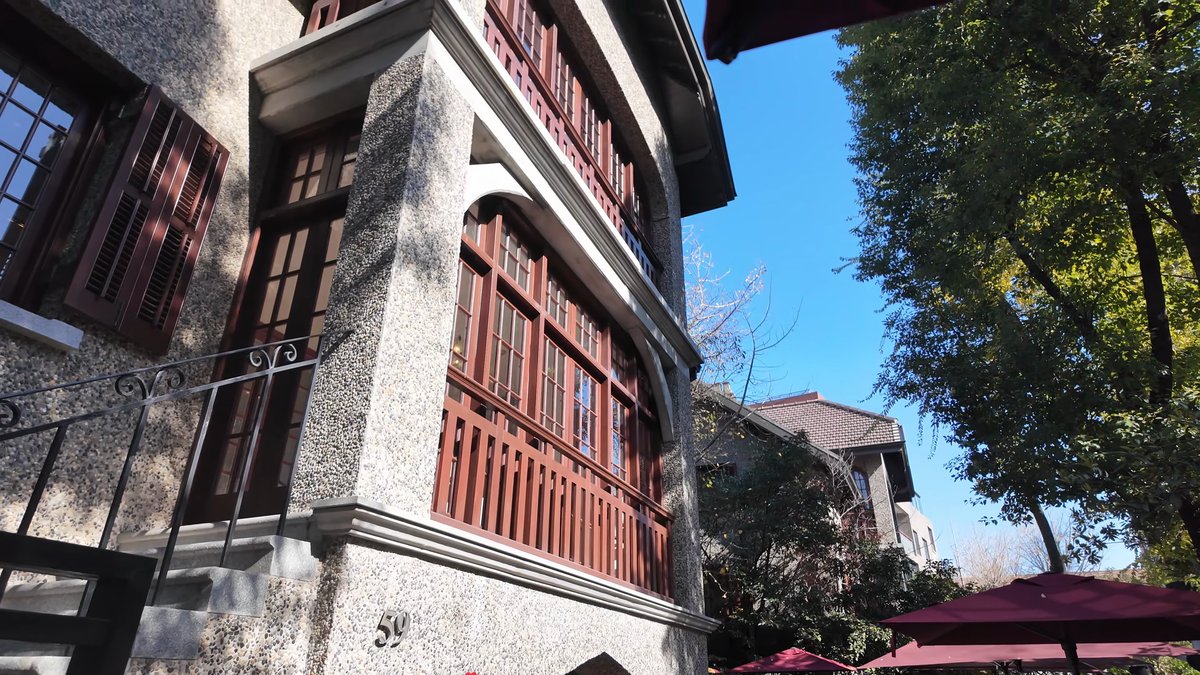
The gardens are full of cafe terraces with groups of tables shaded by parasols. And then there’s the bamboo growing along their edge, dividing them from the pathways, which are lined by clipped hedges. It’s all very pleasant for a coffee, but sometimes you get the feeling that someone has set up this whole scene, every hedge trimmed identically to the next, every table placed exactly where it should.
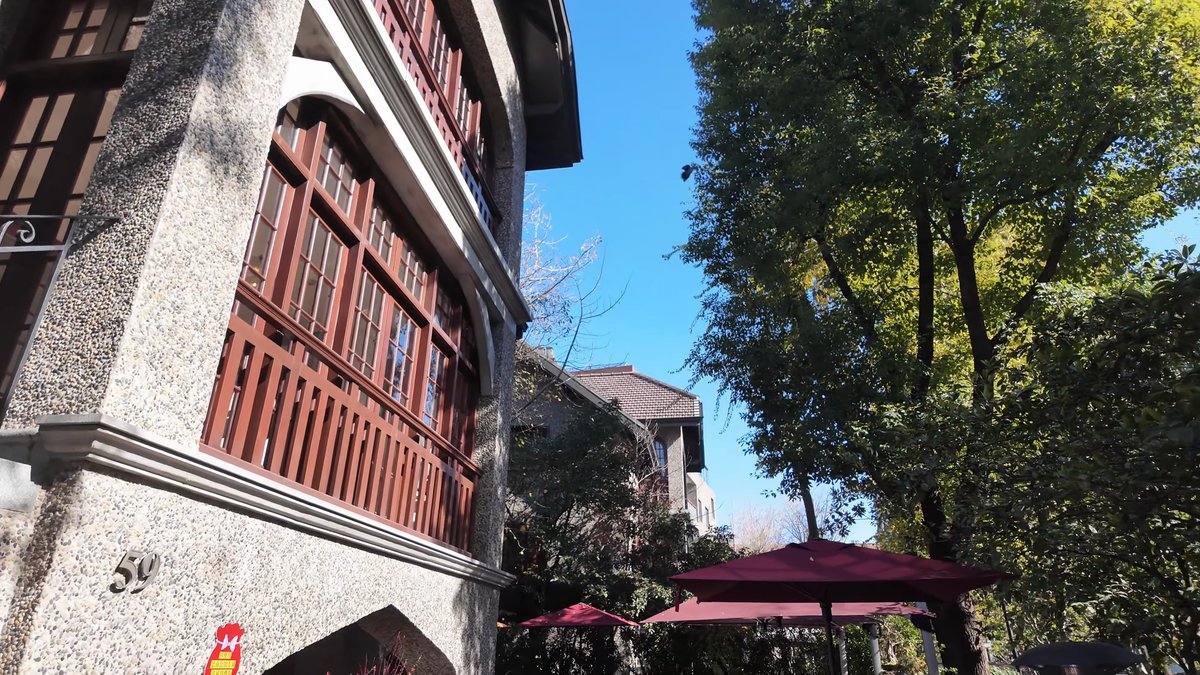
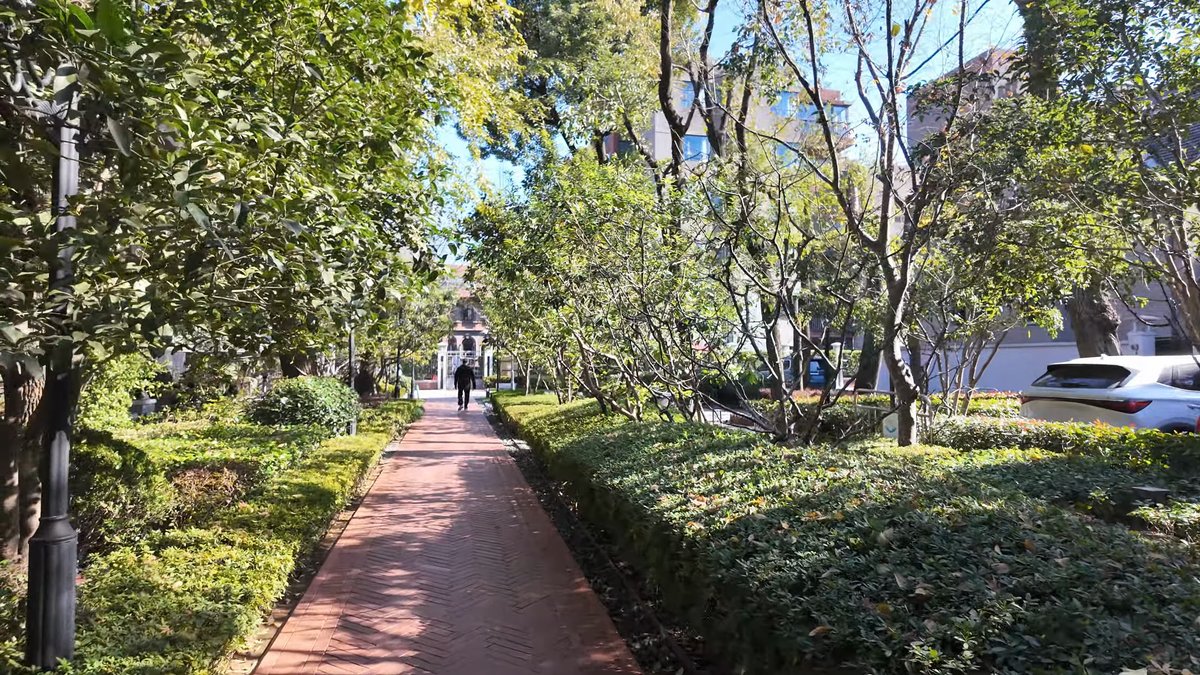
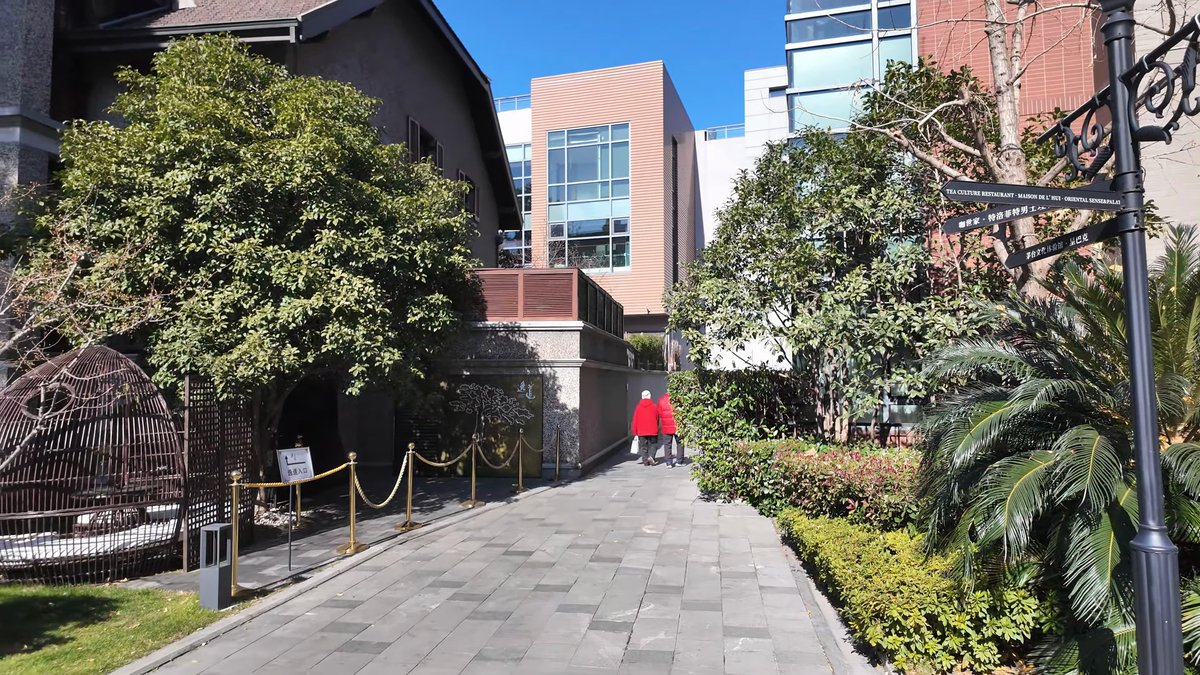
Brick paths meander through the hedges, linking one villa to another. Everything is neat to the point of rigidity, but it certainly makes things easy to wander around.
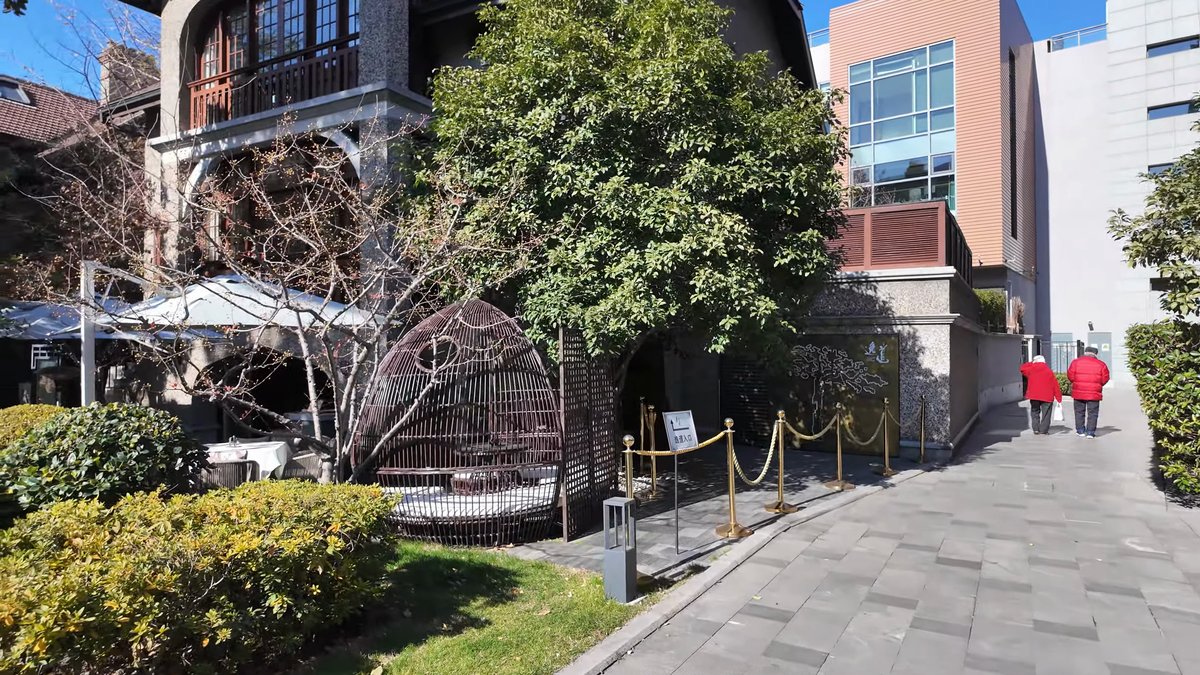
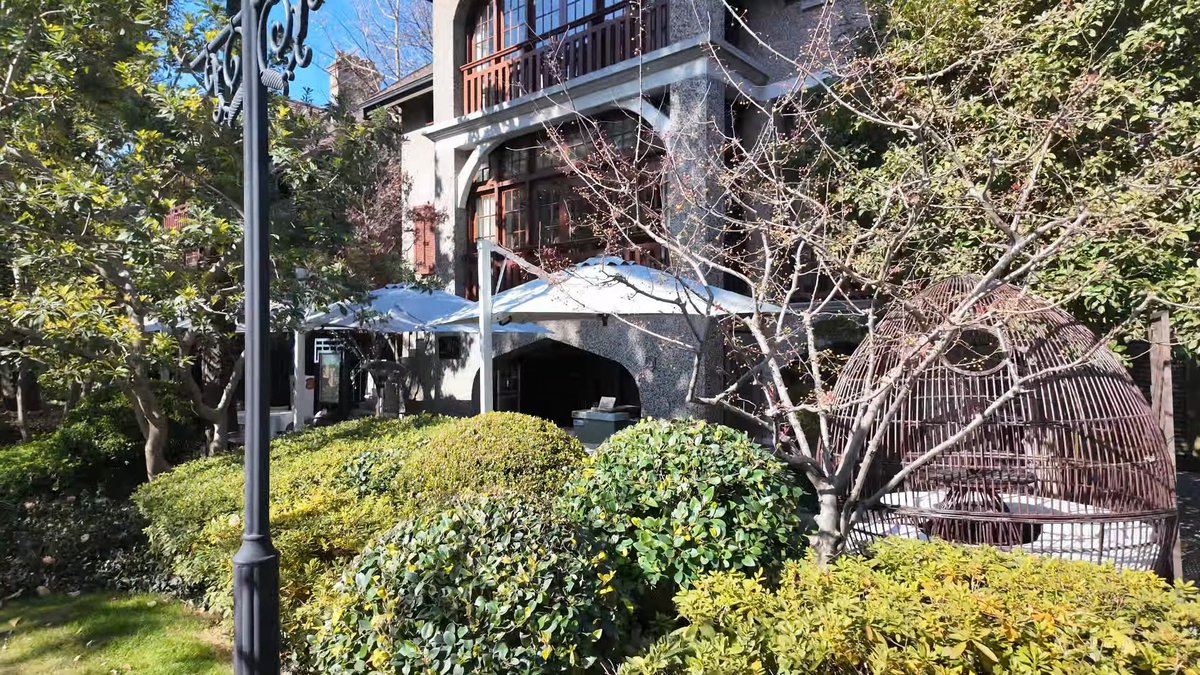
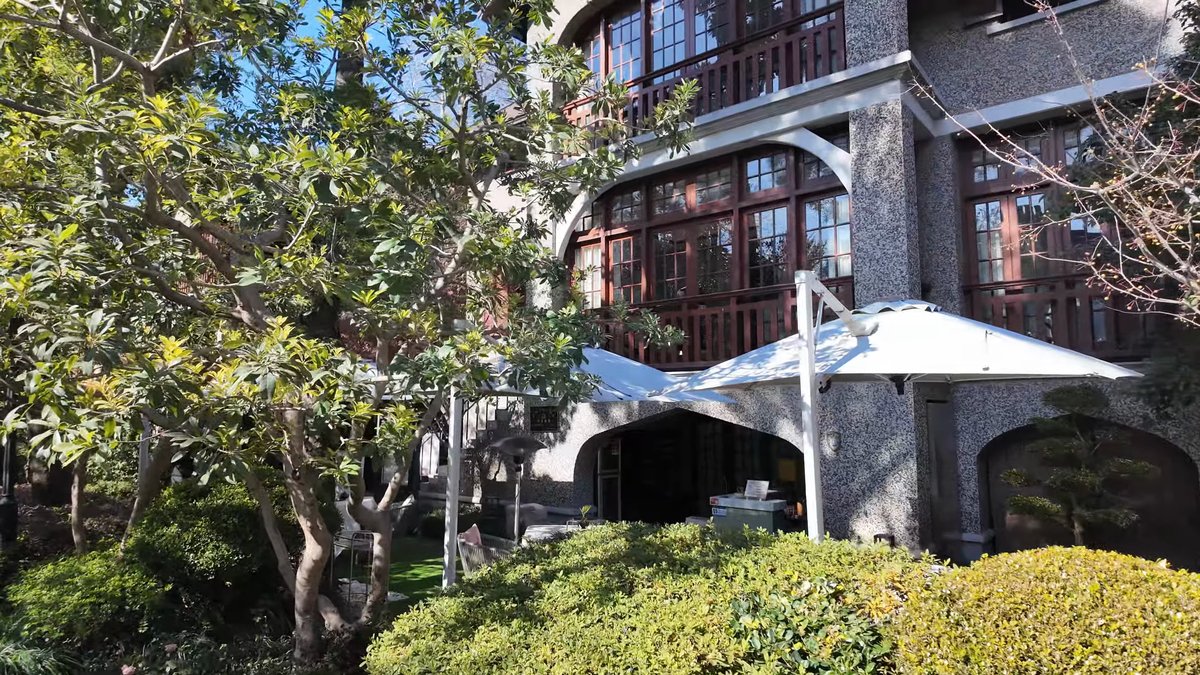
Lanes is lined with more parasols, indicating the location of the restaurants and cafes that has taken over the ground floor spaces. Arched doorways lead into the interiors of villas that have been gutted and refitted with commercial kitchens.
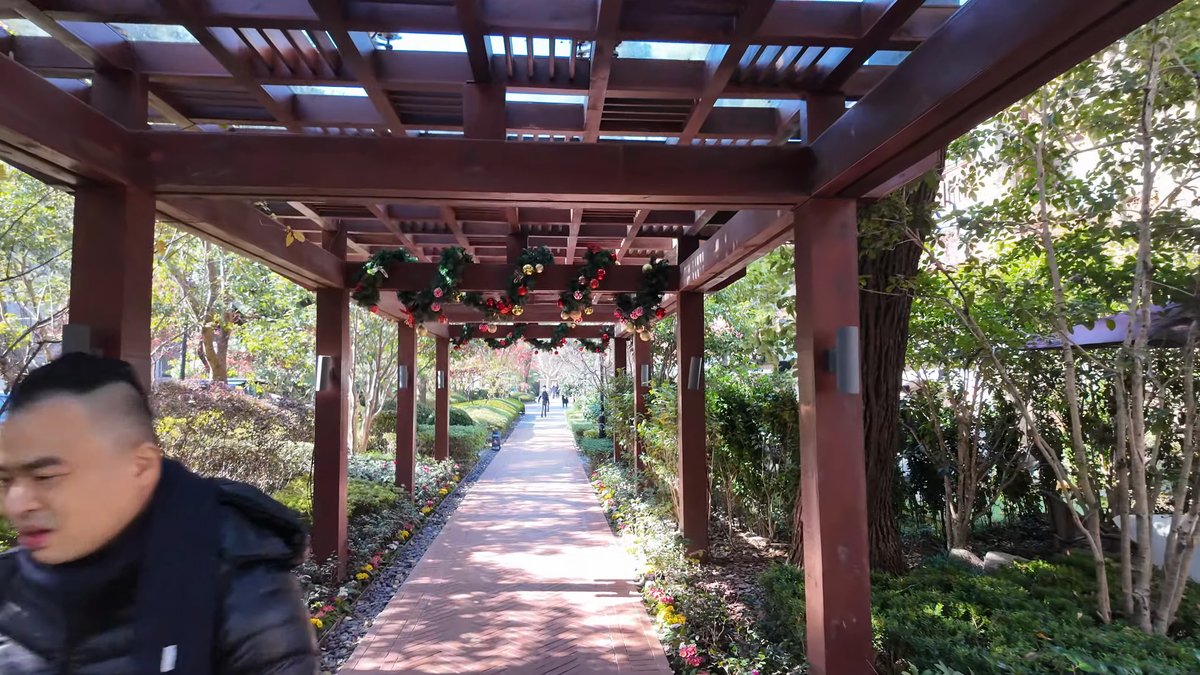
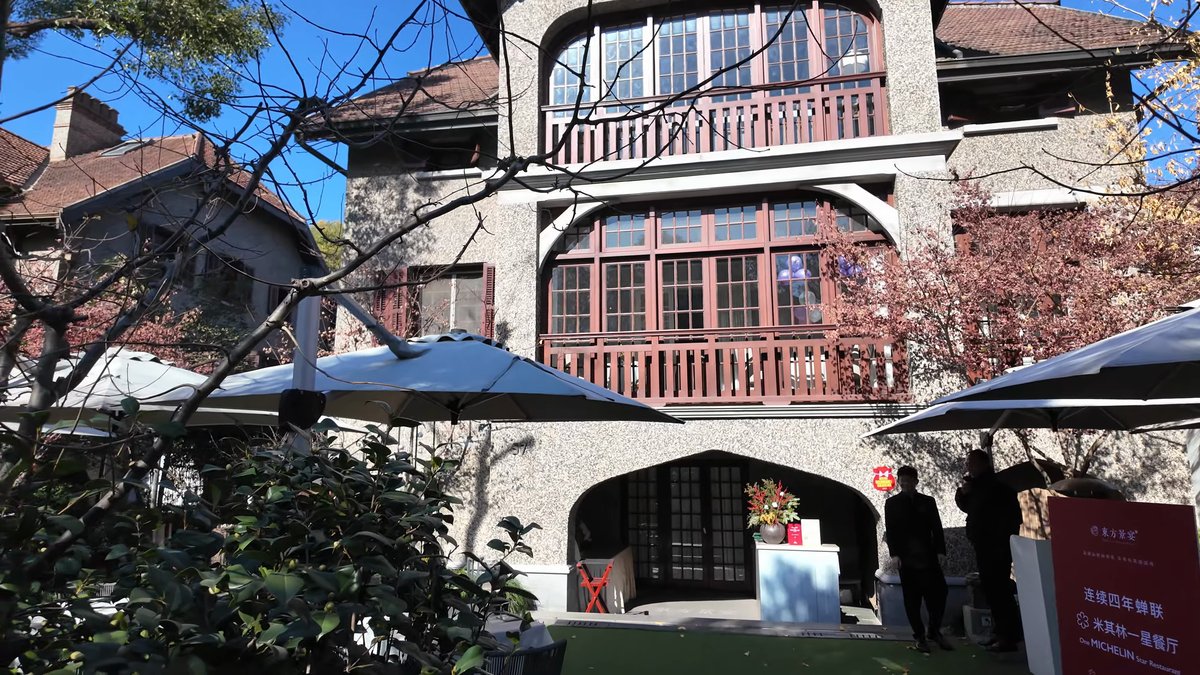
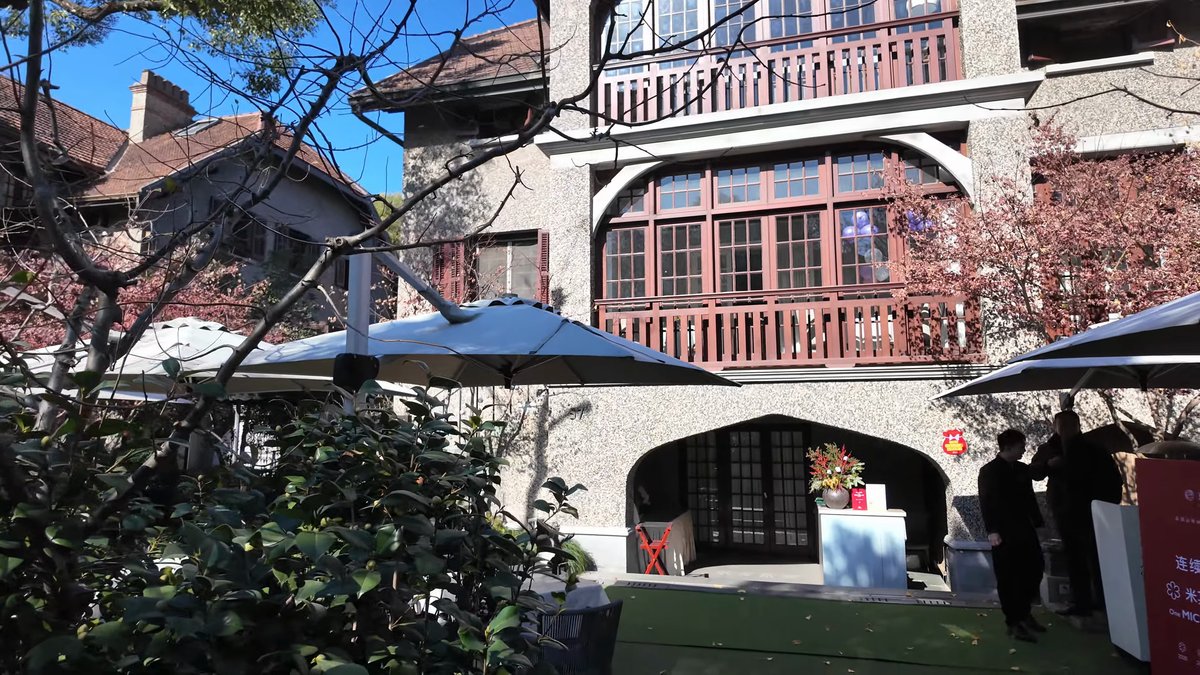
One path is shaded by a timber pergola. Its facade is carefully maintained: dark gables and half-timbered detailing. Under the eaves people wait for tables or flip through menus pinned up outside the doors of the villa behind.
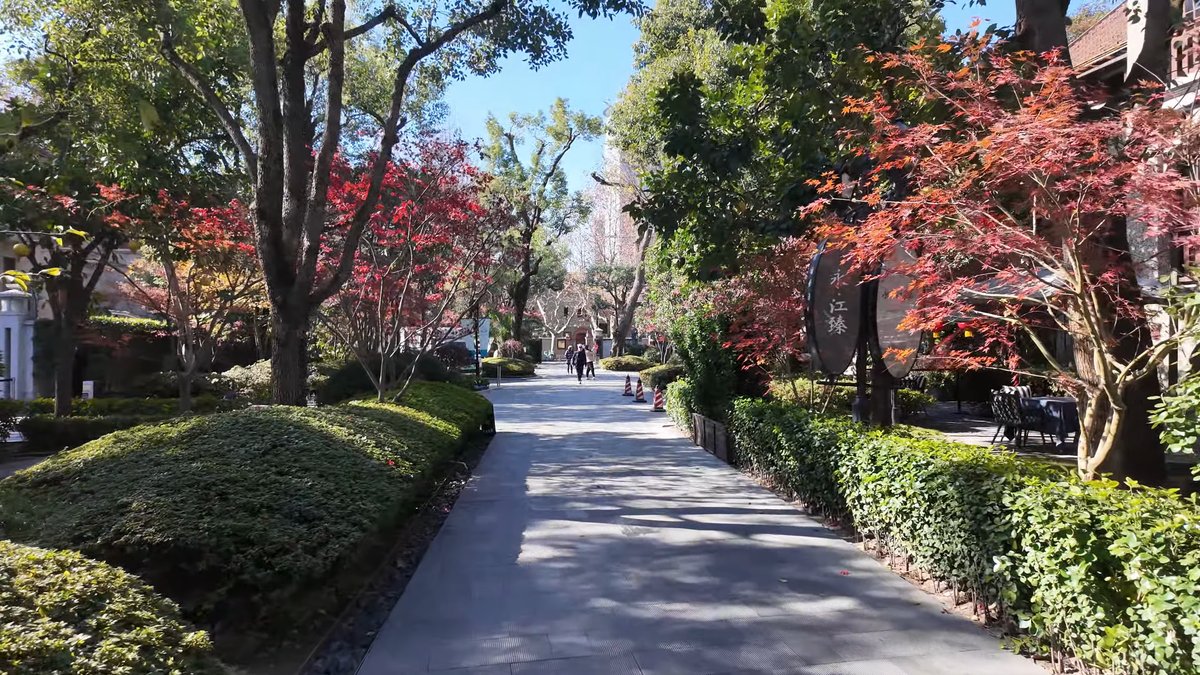
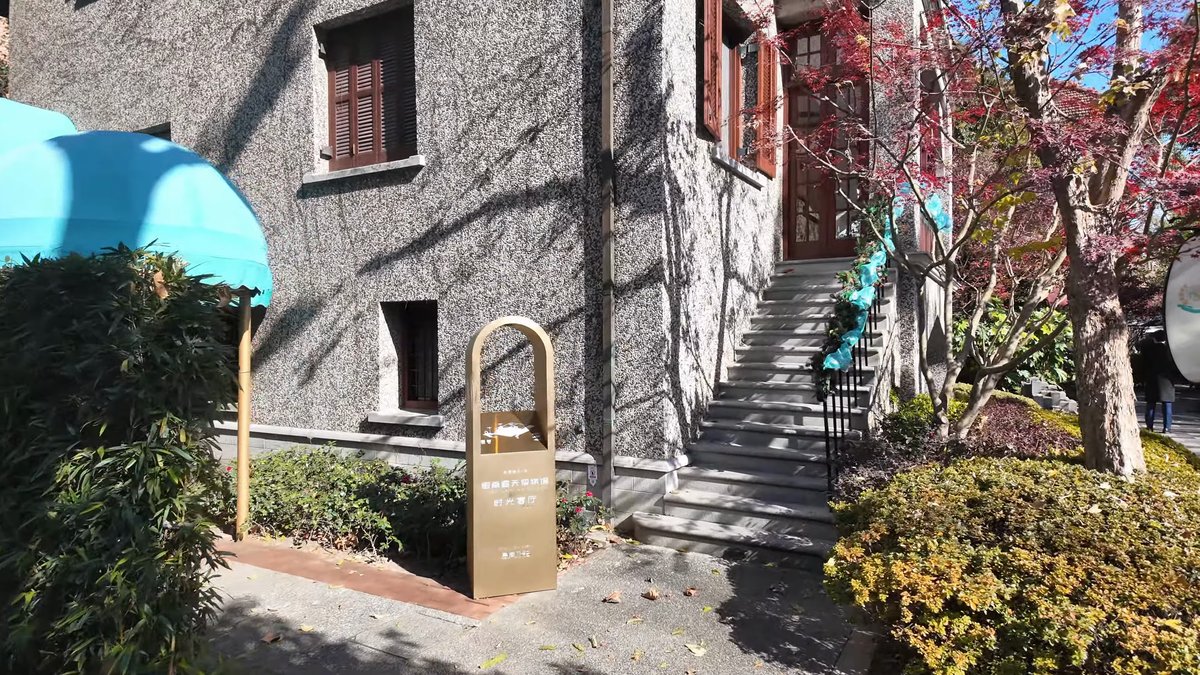
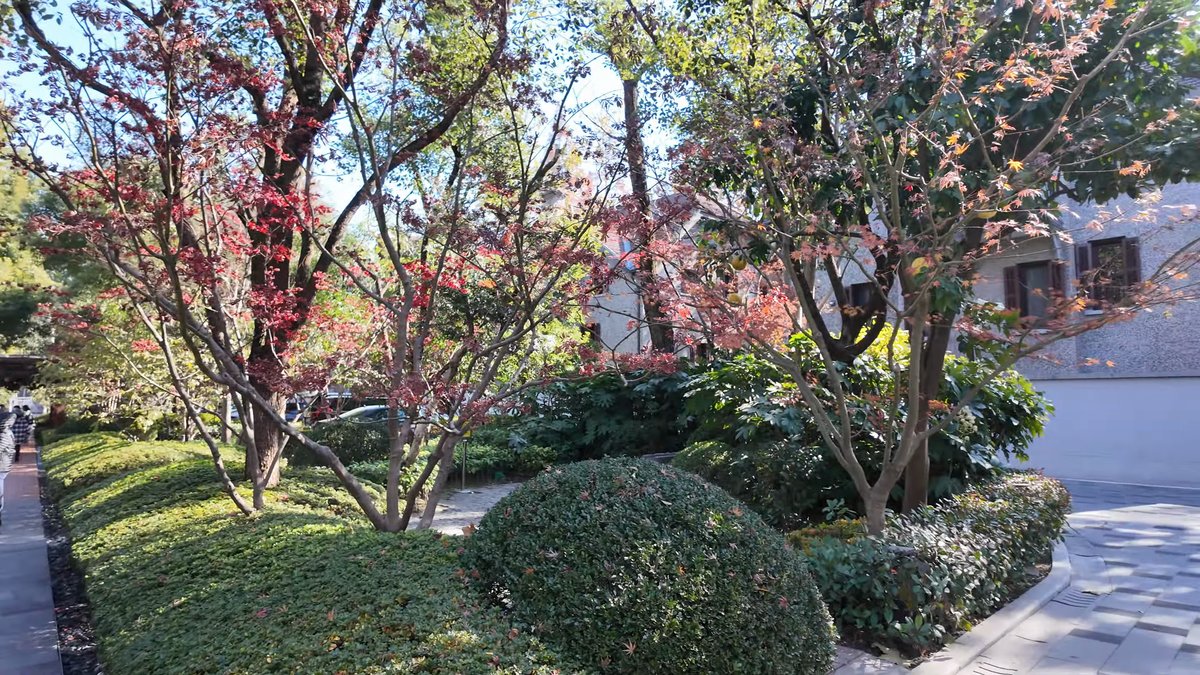
In autumn the gardens feature maples whose canopies stand out from all the evergreen shrubs. Some villas sport external staircases climbing the side walls; stone steps leading up to upper floors now subdivided into separate tenancies.
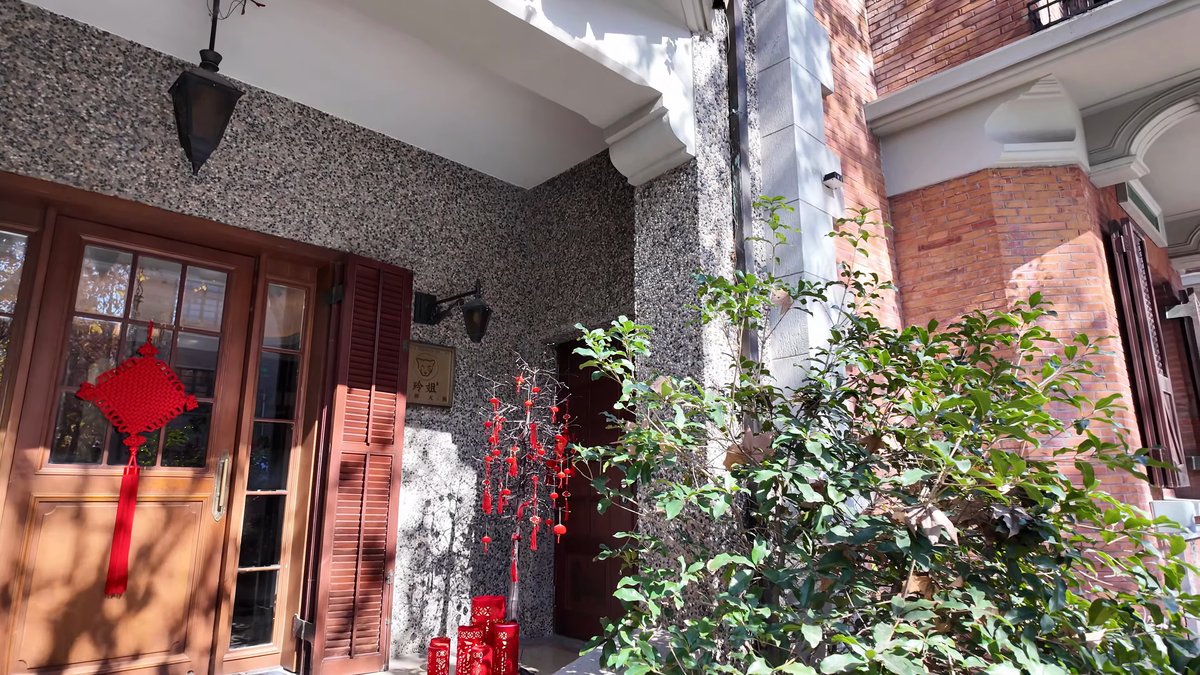
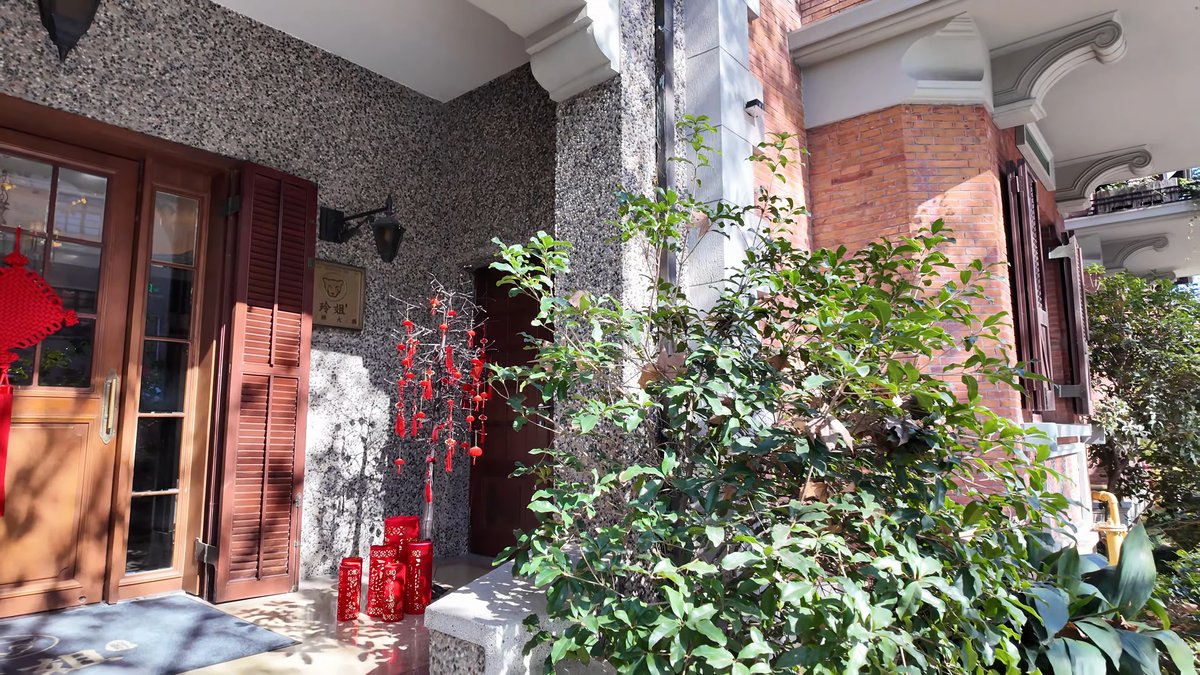
At festival time, the doorways are decorated with garlands at Christmas and knotted cords at New Year. The villas themselves is bland enough to take any theme the precinct managers throw at them.
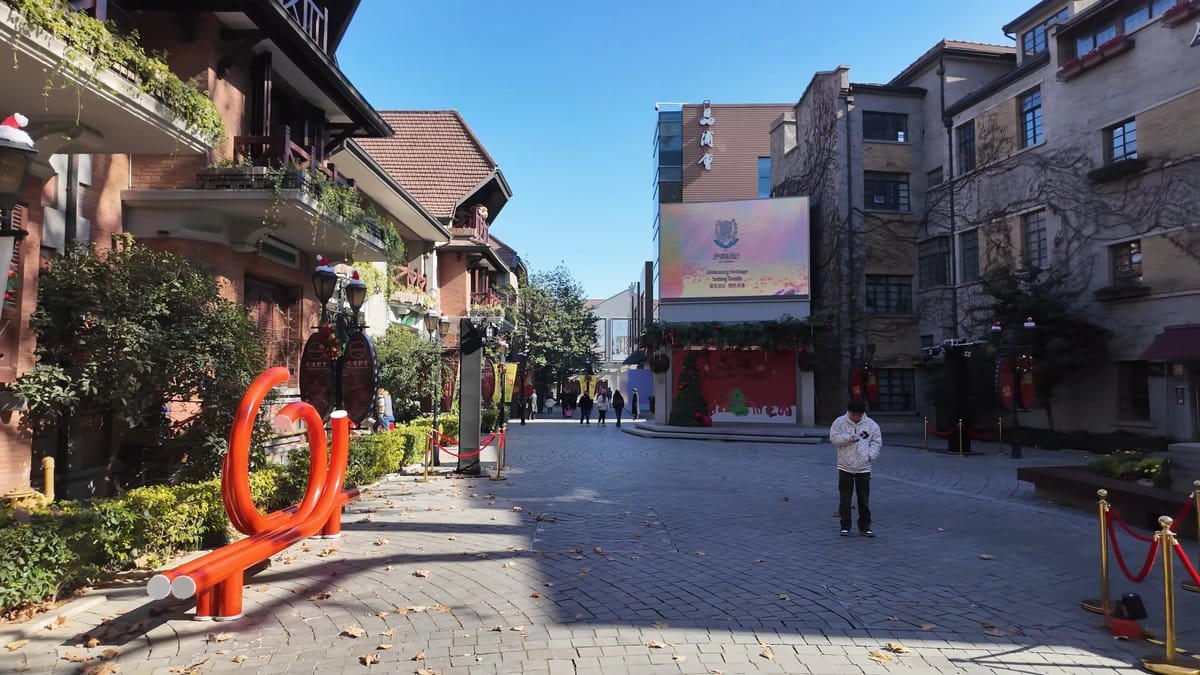
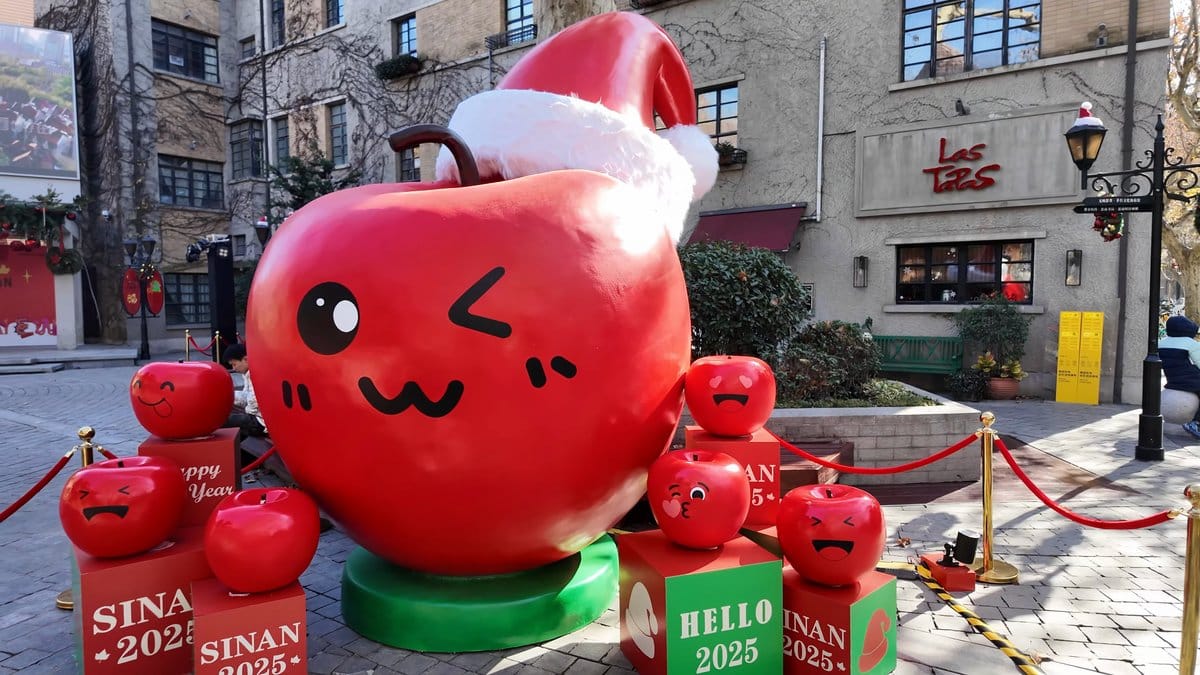
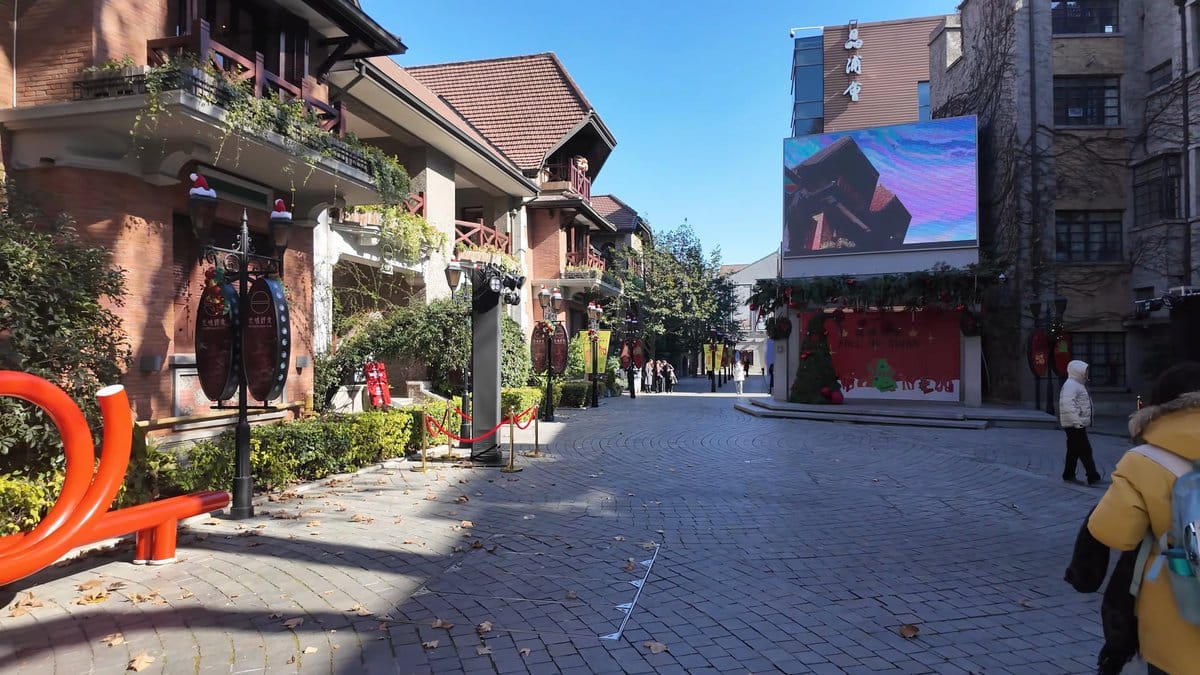
One end of the precinct is anchored by an open plaza, outfitted with a big screen and some seasonal sculptures. One December, there was a giant apple dressed as a Santa hat; it’s the sort of prop that draws weekend crowds for selfies.
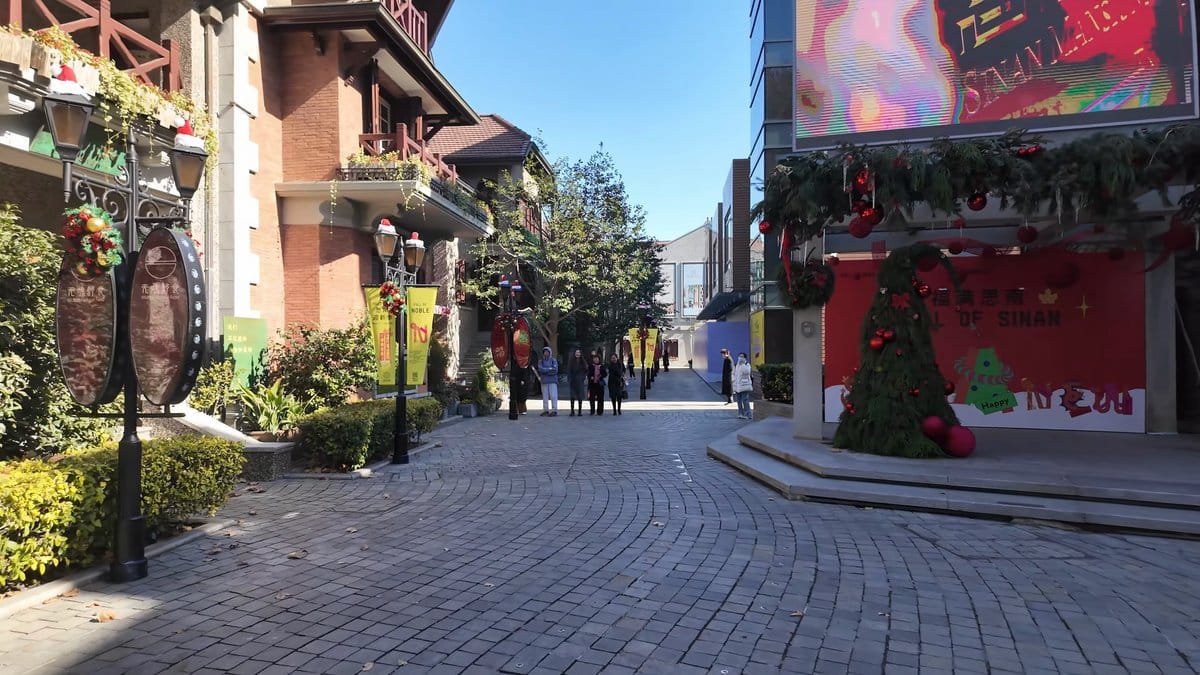
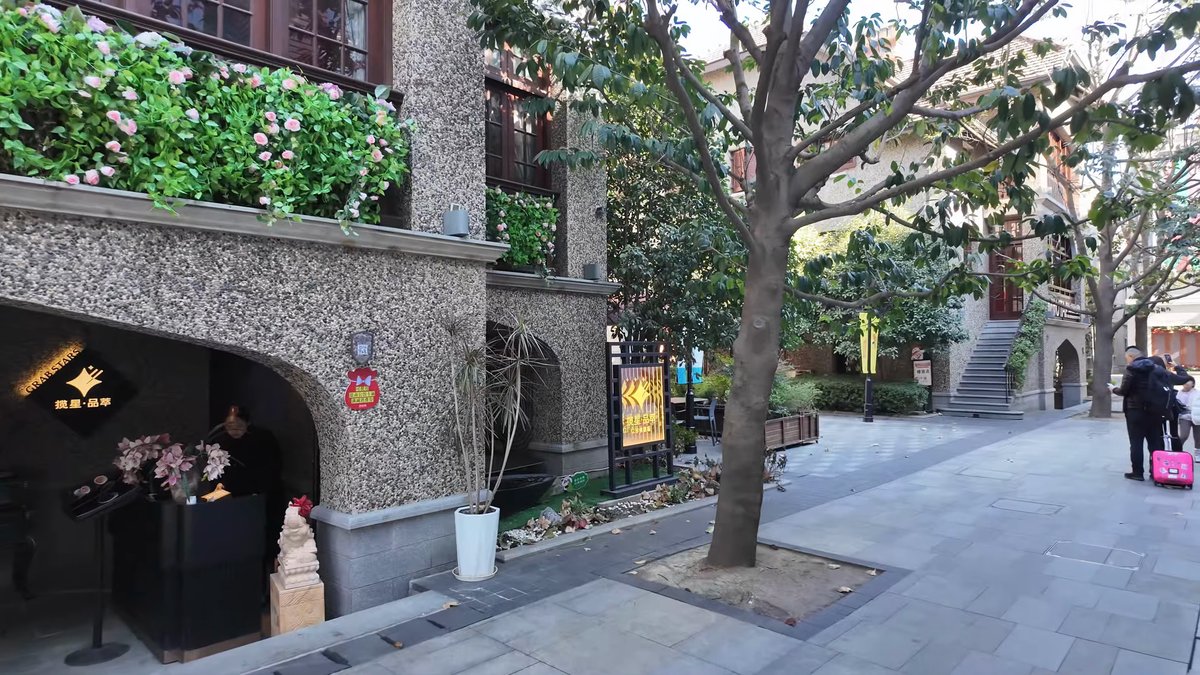
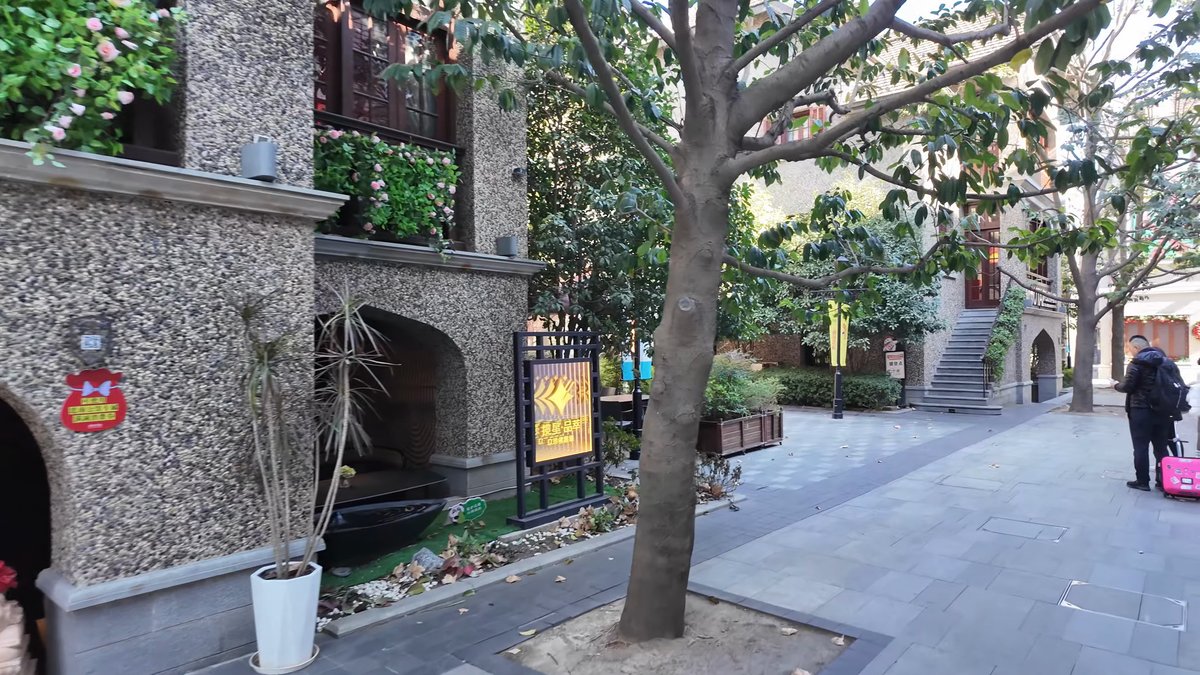
Lamp posts glow at dusk. The plane trees arch overhead in the lanes like a ready-made backdrop.
Really, the precinct play to its strengths, and honestly, that’s what it does best.
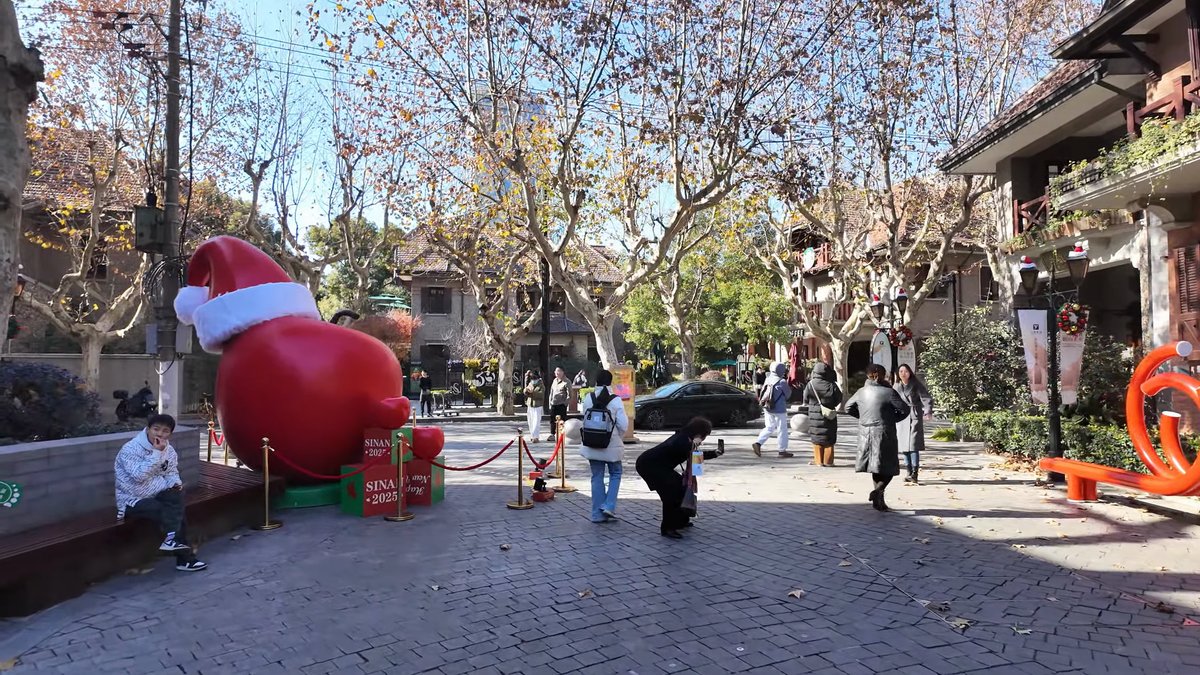
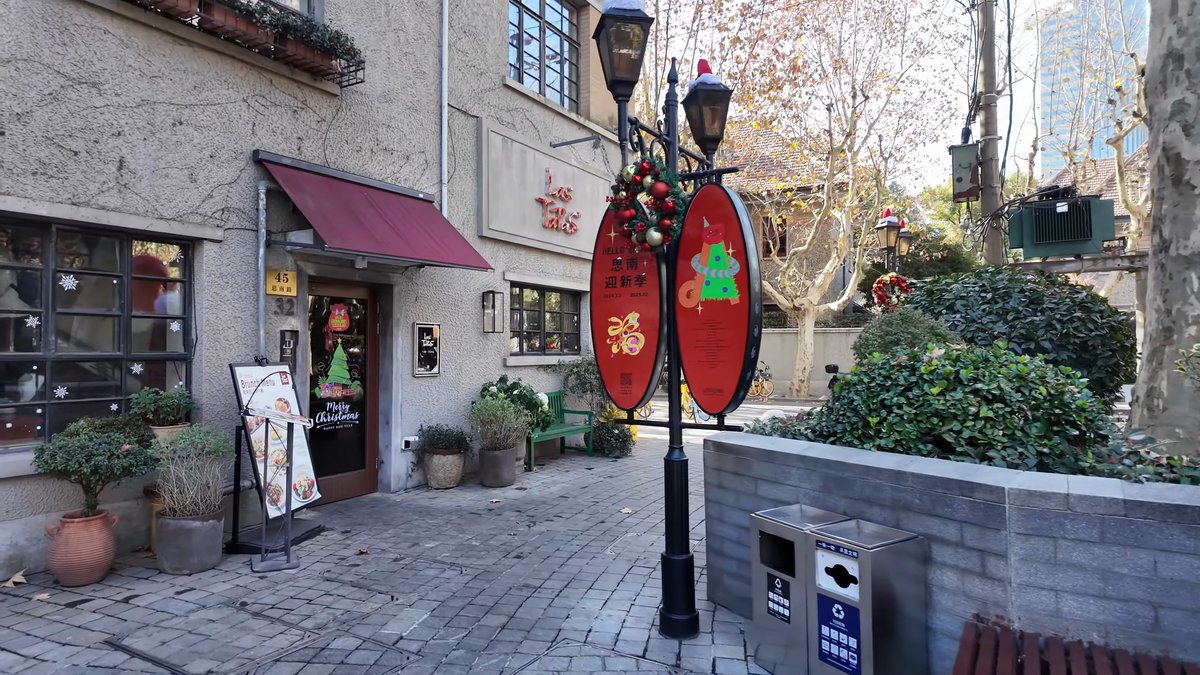
The plaza fills up in the evenings, with couples and families circling the sculpture installations and ducking into the shops that ring the square.
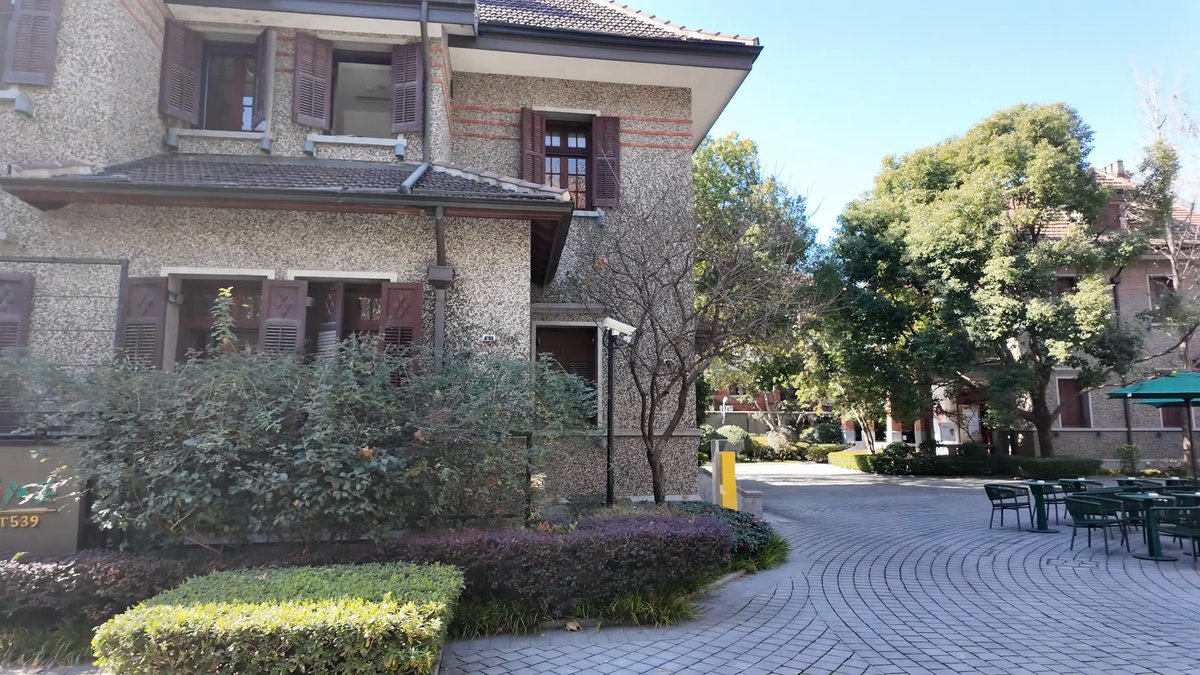
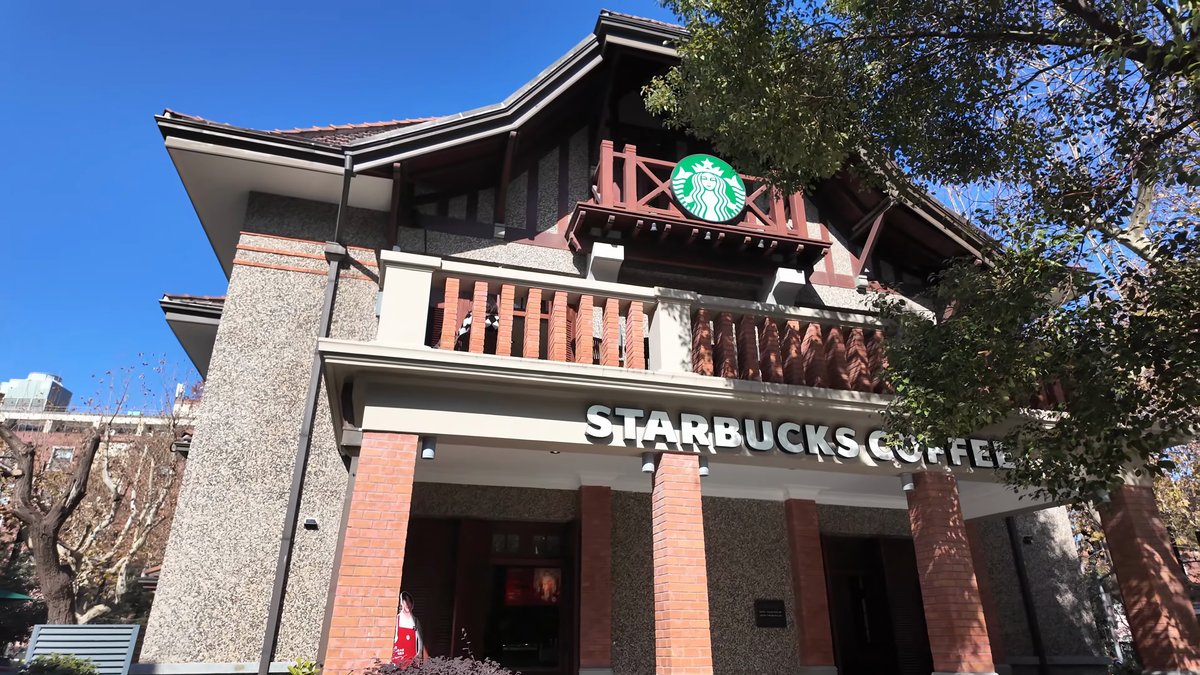
The villas that sit further back in their gardens is accessed via short paths through the hedges, one housing a Starbucks whose green logo is posted by the door in case the smell of the coffee didn’t give it away.
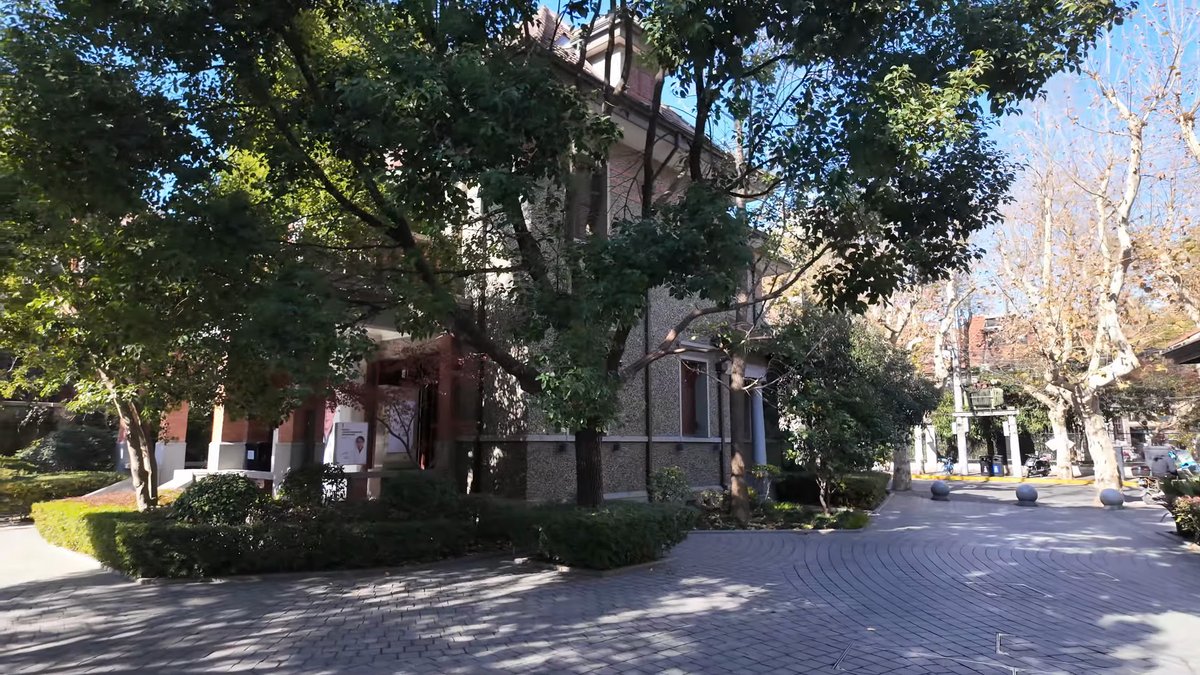
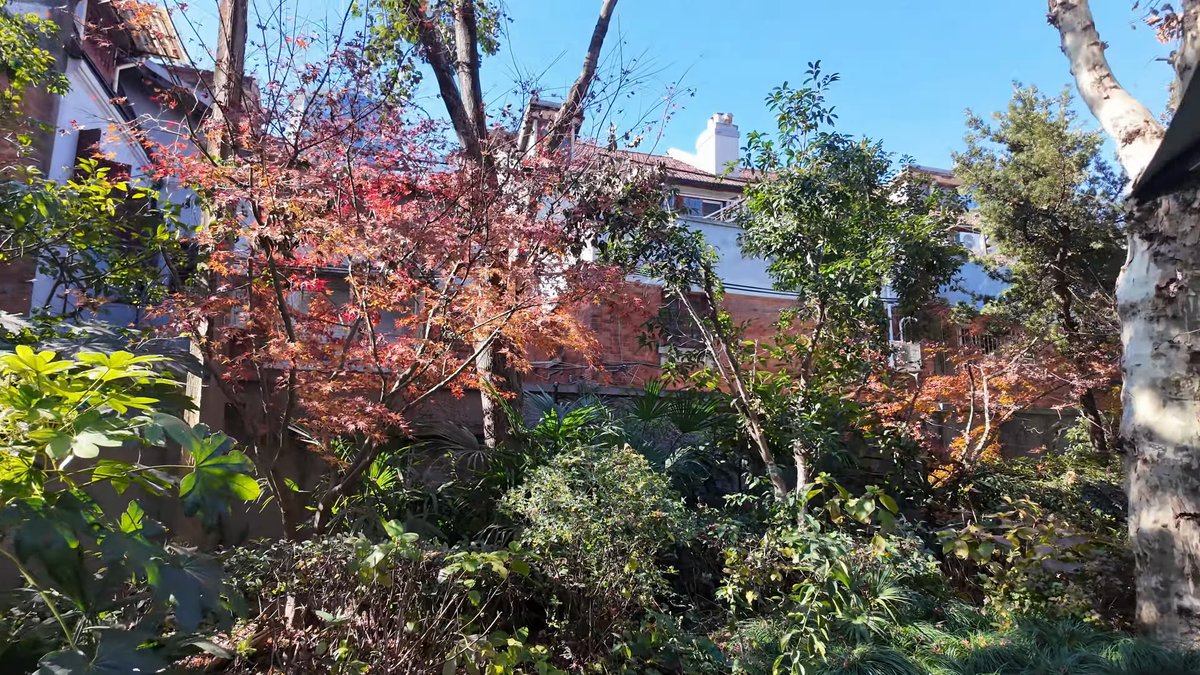
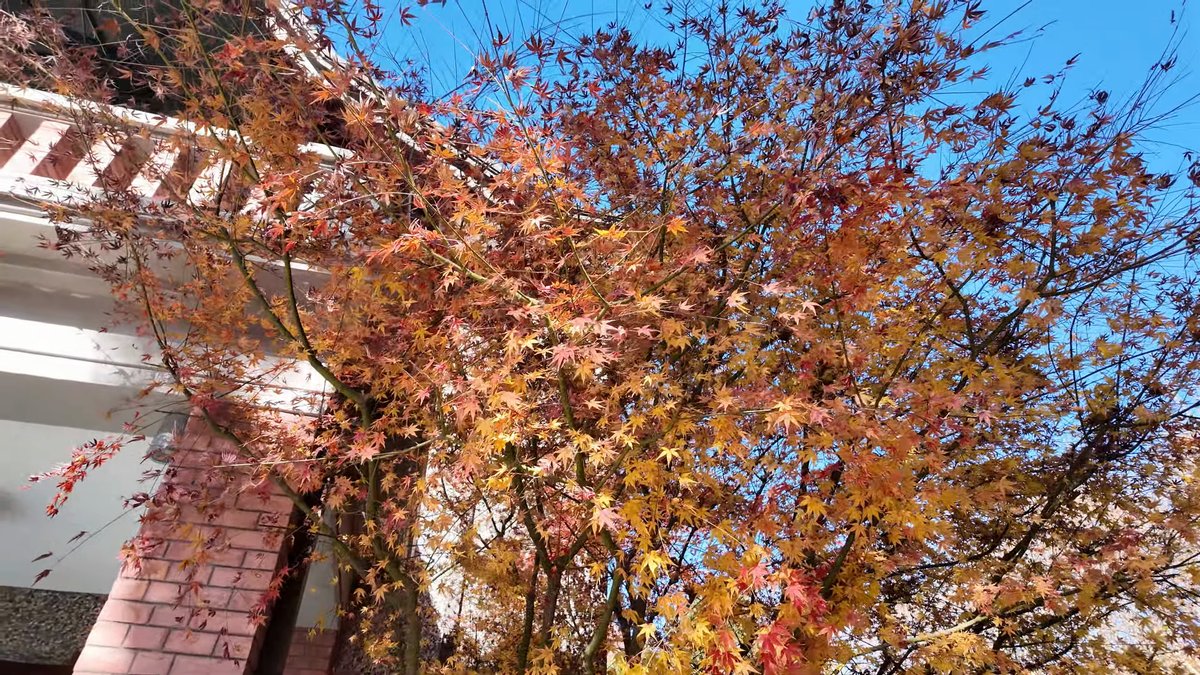
The planting formula is all too familiar, and the gardens are small, but it still works.
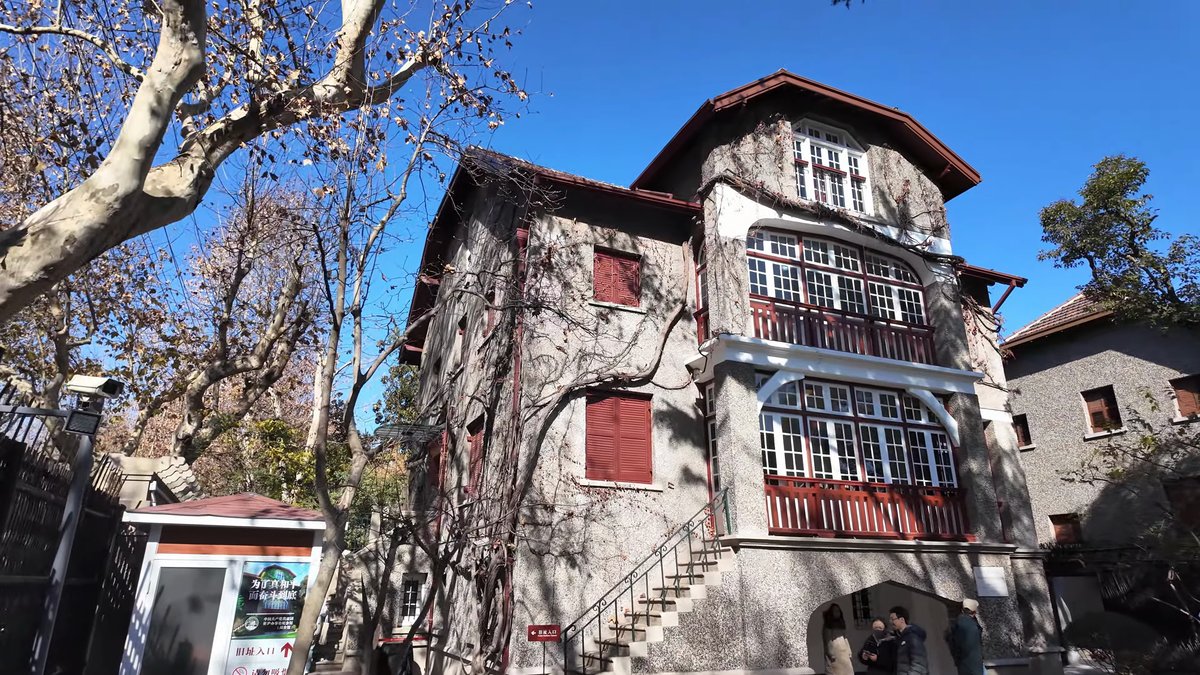
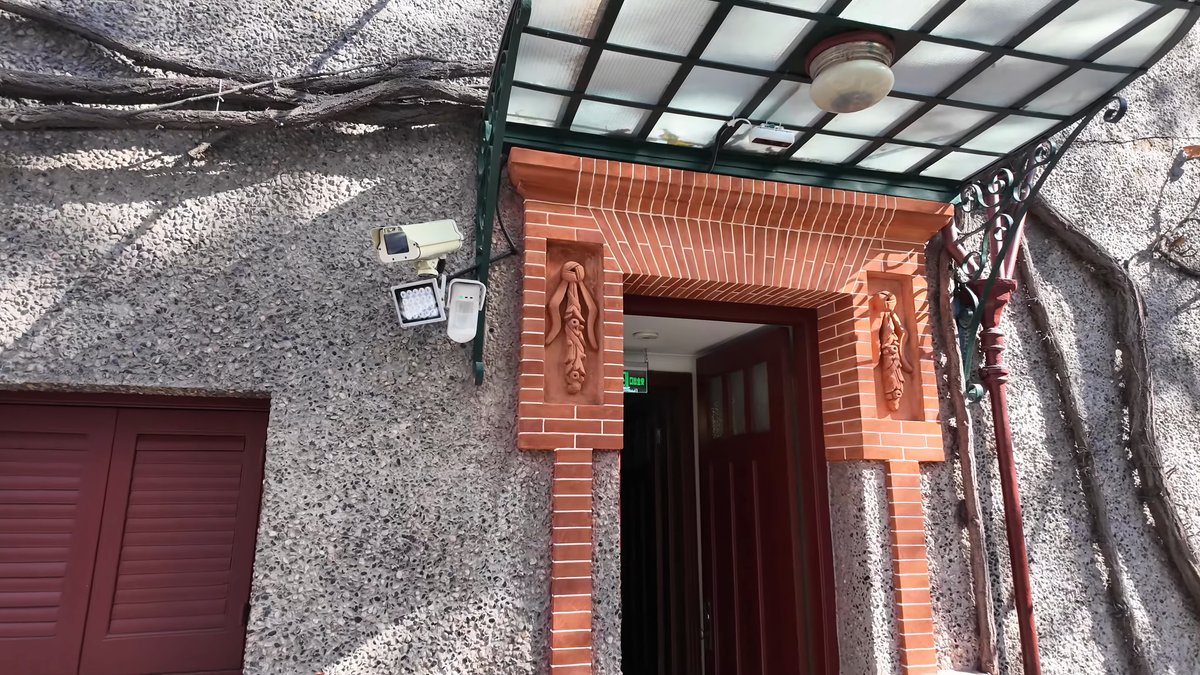
Vines grow up over doorways; garden steps lead to side doors; bay windows project from facades. Enough of the original details remain intact that you can still look at these houses and see them as houses, though the insides have been gutted and repurposed. That’s either preservation or simply good set dressing depending on your point of view.
If you’re in the French Concession and fancy seeing some old architecture but don’t want to chase down addresses and peer through locked gates, Sinan Mansions is an easy afternoon. The heritage has been cleaned up enough for walking in leather-soled shoes, the shops aren’t remarkable, and the cafes are fine. If you like wandering around villa gardens that would otherwise be off-limits, it’s one of the only places in Shanghai where you can do that freely.
It’s worth a look if you’re curious about the city’s 1930s housing stock. Do you have any favourite restored villa districts in Shanghai? Or do you prefer the less polished neighbourhoods where the old houses are still lived in?