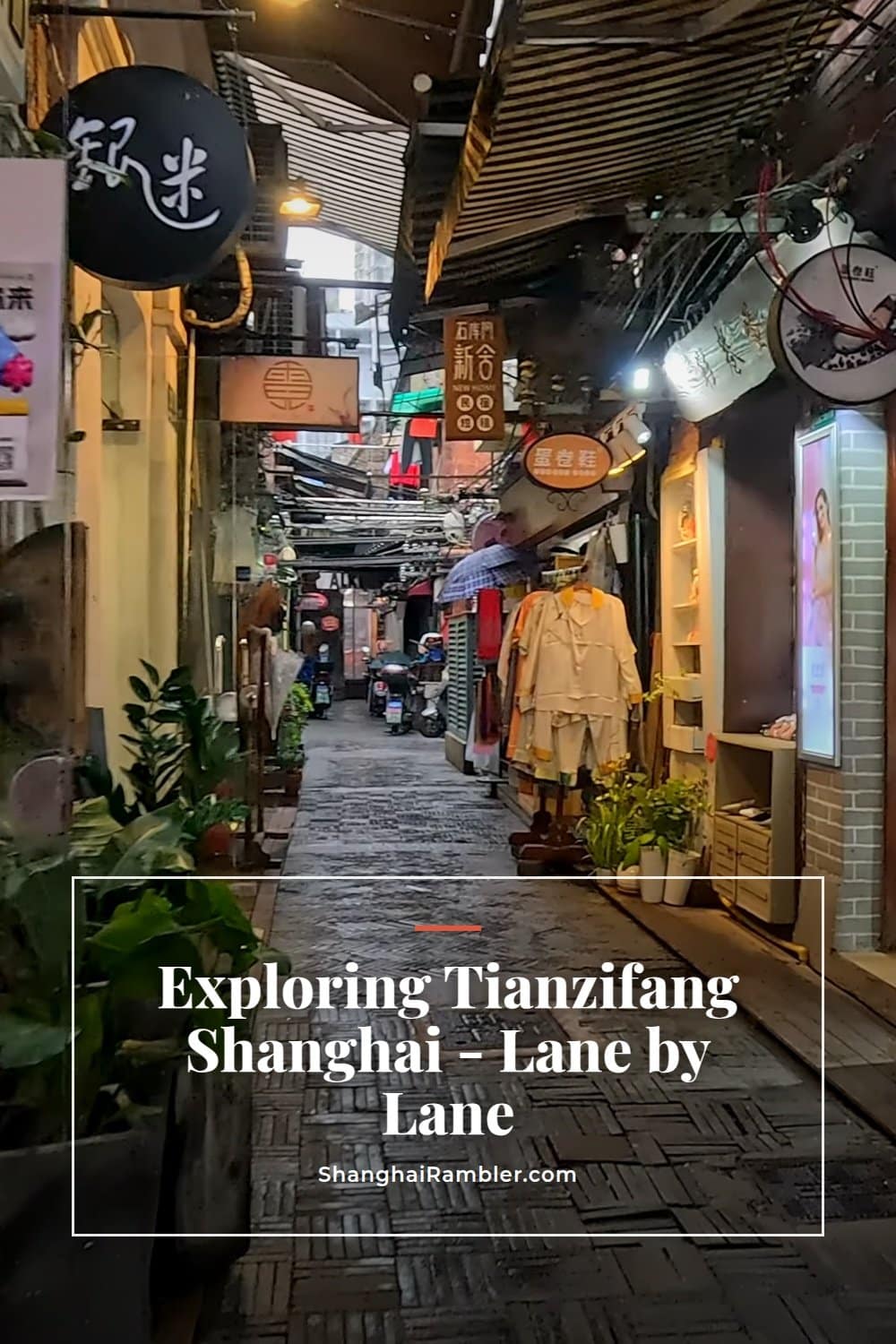
In the heart of Shanghai‘s French Concession lies Tianzifang, a maze of converted shikumen houses that has been transformed into galleries, studios, cafés and shops. The alleys splits off and turn back on themselves with little apparent sense, which only adds to the fun of getting a little lost along the way. It retains the feel of a real neighbourhood (rather than a purpose-built shopping area), and what was once home to residents now holds jewellery ateliers and dumpling counters.
Weekends are crowded, midweek mornings are quiet, and locals and tourists alike browse and catch up with friends over coffee. It’s all about wandering, there’s nothing to see in itself, just little corner and discoveries that make it worth taking your time.
What to See in Tianzifang
Tianzifang Shanghai
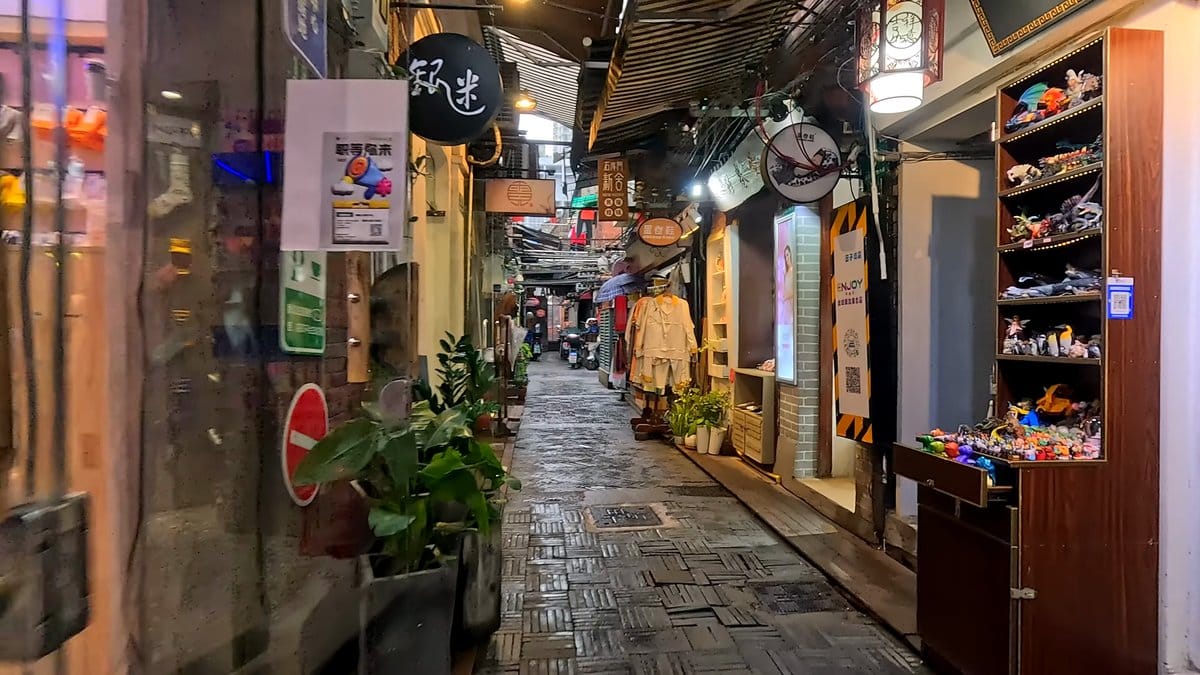
It’s narrow enough to allow people walking the other way to step around you. In the warmer months it can be bearable thanks to cooler air and shiny stone slabs after rain. The lanes are narrow, most of the shop fronts open right into the walkway with no buffer, so you’re inches from displays and doorways as you move through.
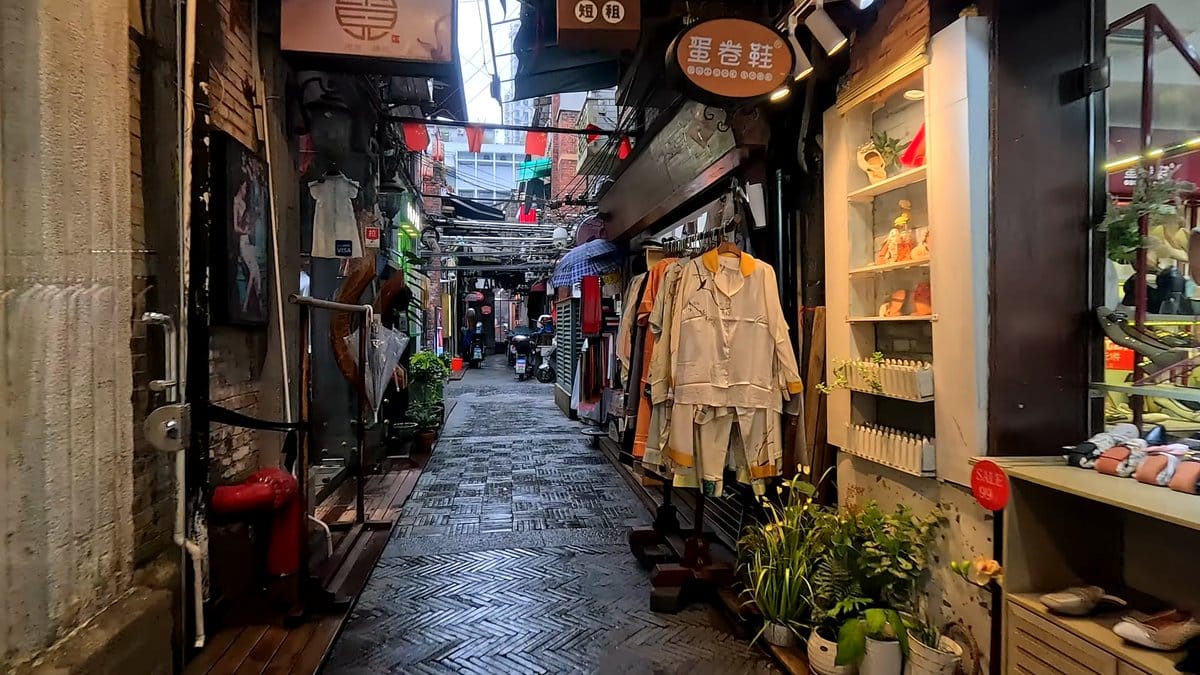
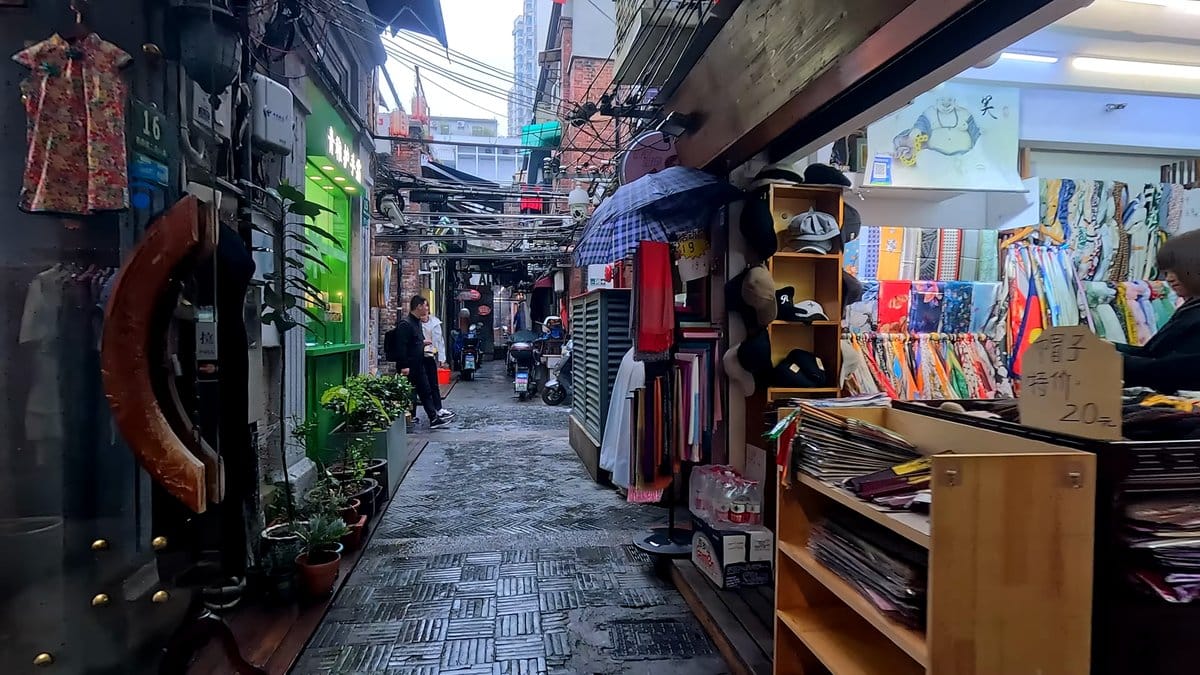
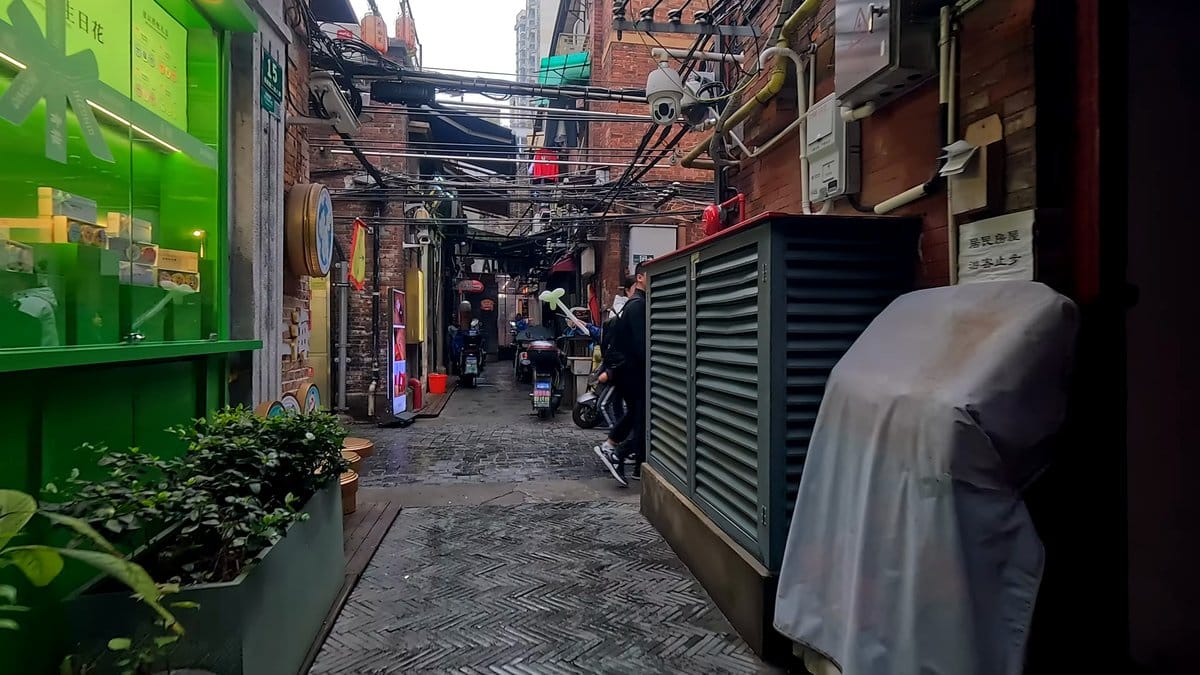
Outside, clothing shops will have their racks and hangers spilling onto the pavement. Stores retain their weathered brick and metal shutter fronts or paint them in solid blocks of colour to make themselves stand out. Rather than chain brands you’ll find a lot of one-off pieces, handmade accessories and independent fashion labels.
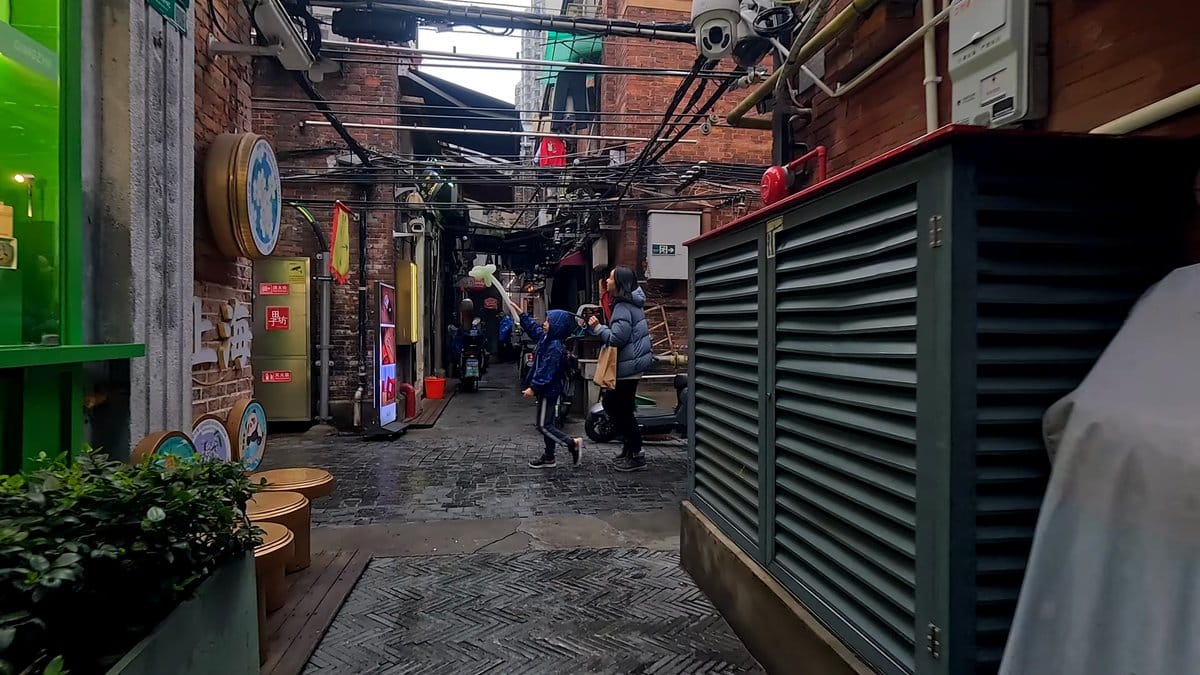
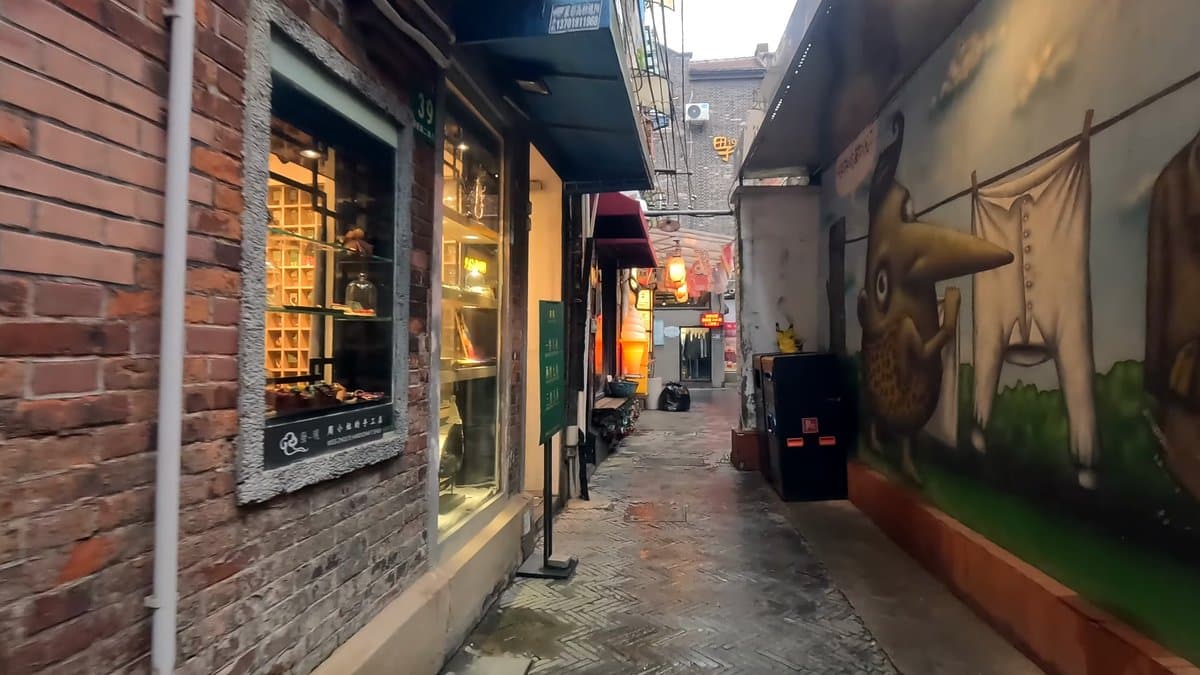
At intersections, the brick walls seem to close in, and it’s easy to get lost in repetition… Until you look more closely: a hand-painted sign, a mural next to a window, a shopkeeper’s stool jammed into a doorframe. Depending on when you visit and which store lamps is lit, the lighting is all over the place.
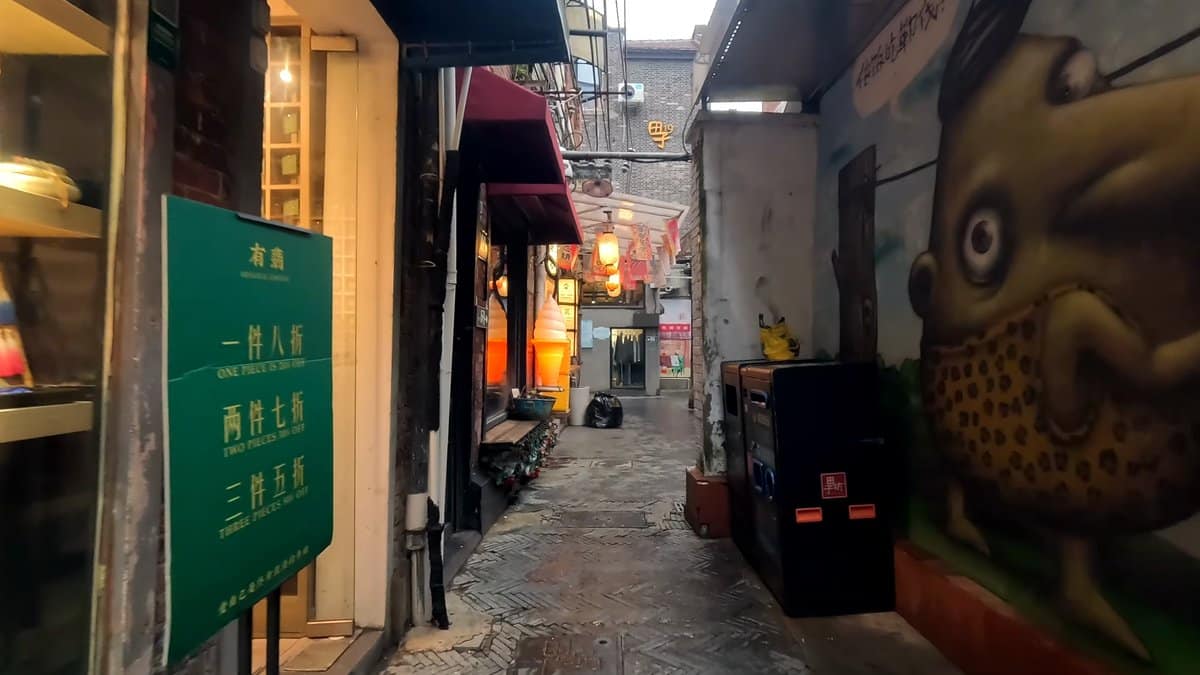
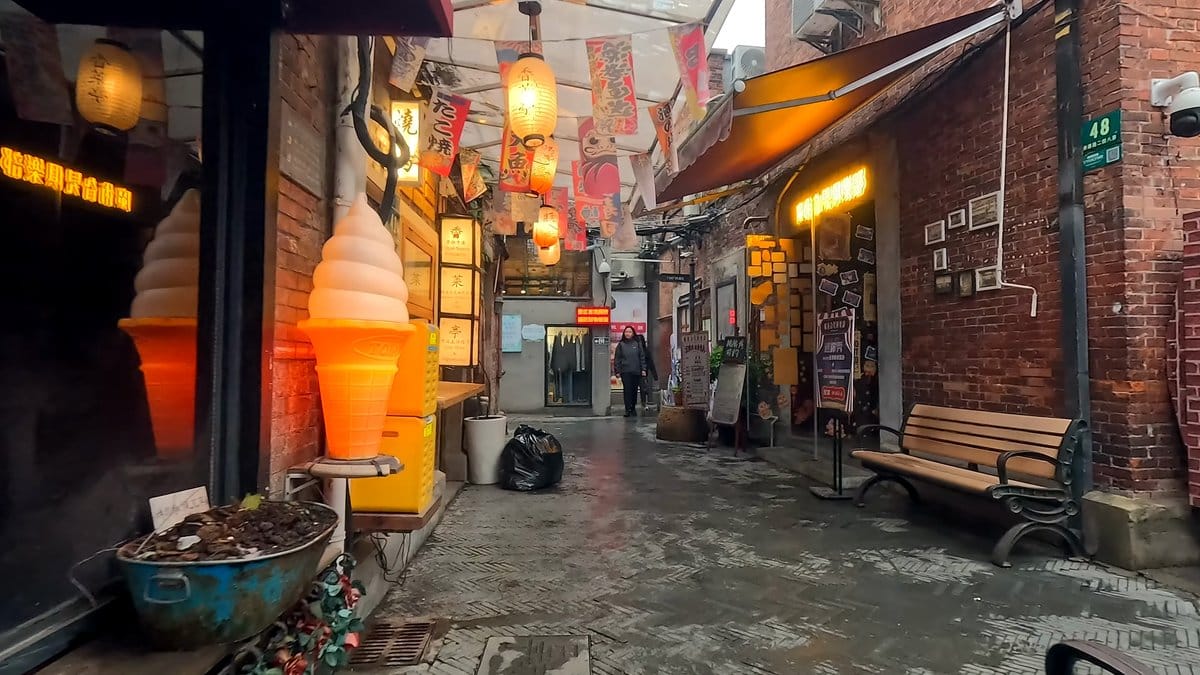
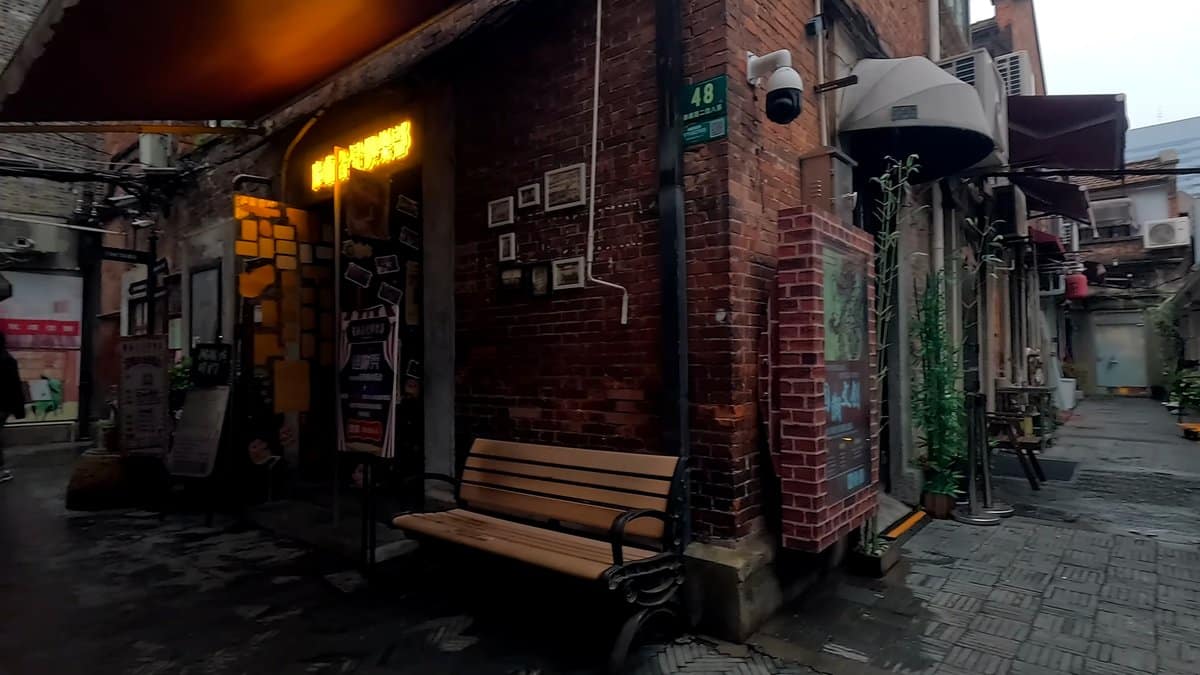
Outside small restaurants, menu boards are nailed up on walls. One sweetshop is marked by an enormous ice-cream cone that’s impossible to ignore. Benches appear in random locations.
Some are under posters and prints where you can rest your legs for a while if they are tired.
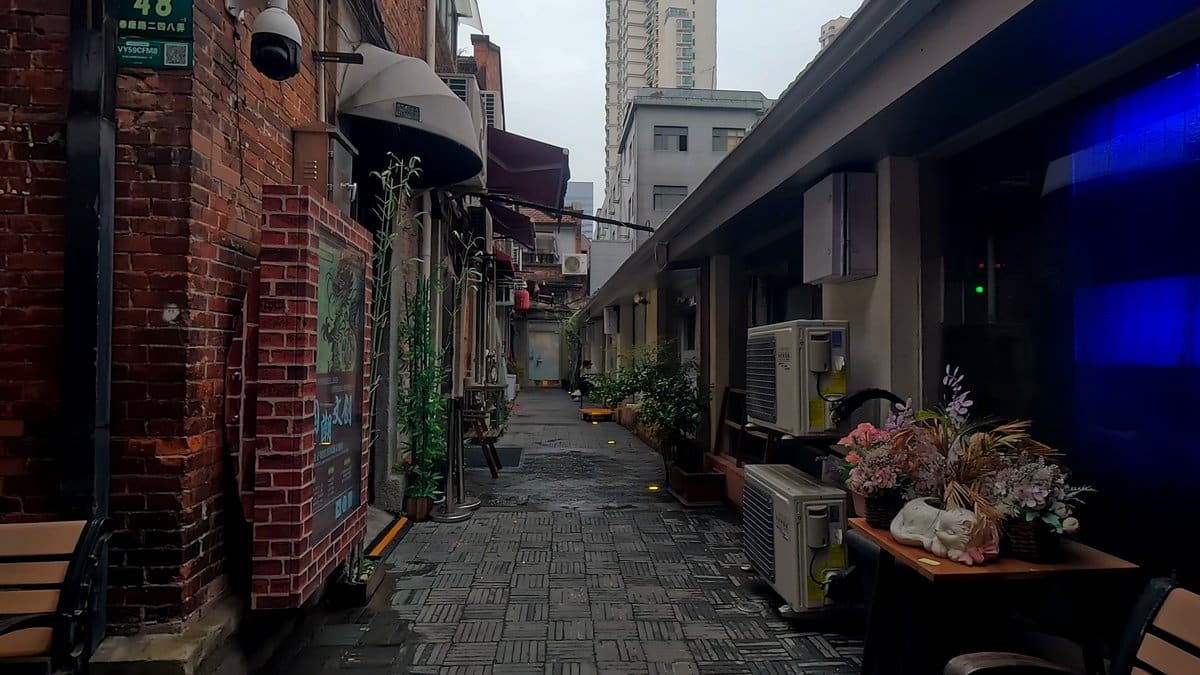
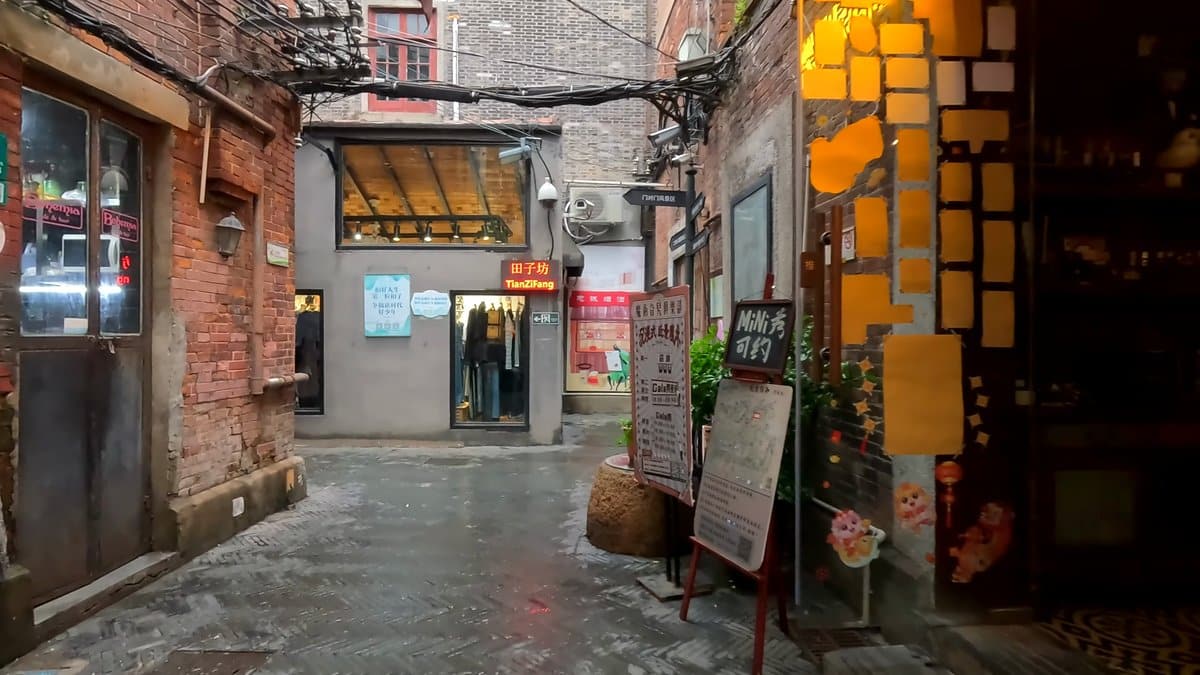
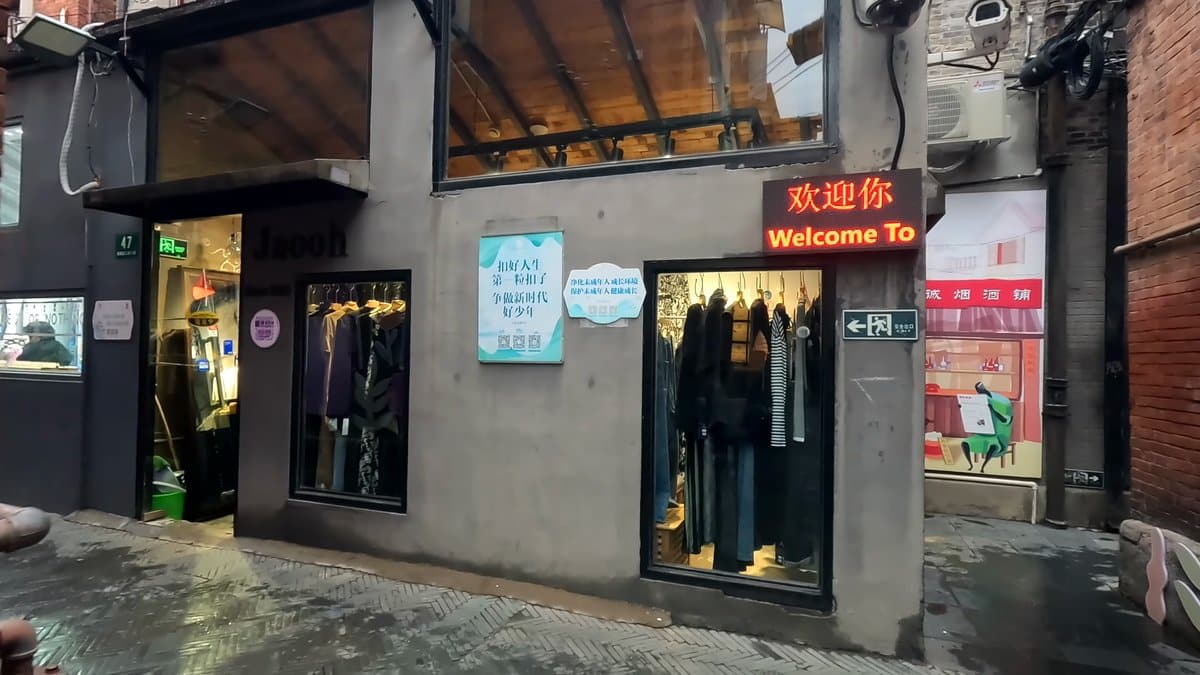
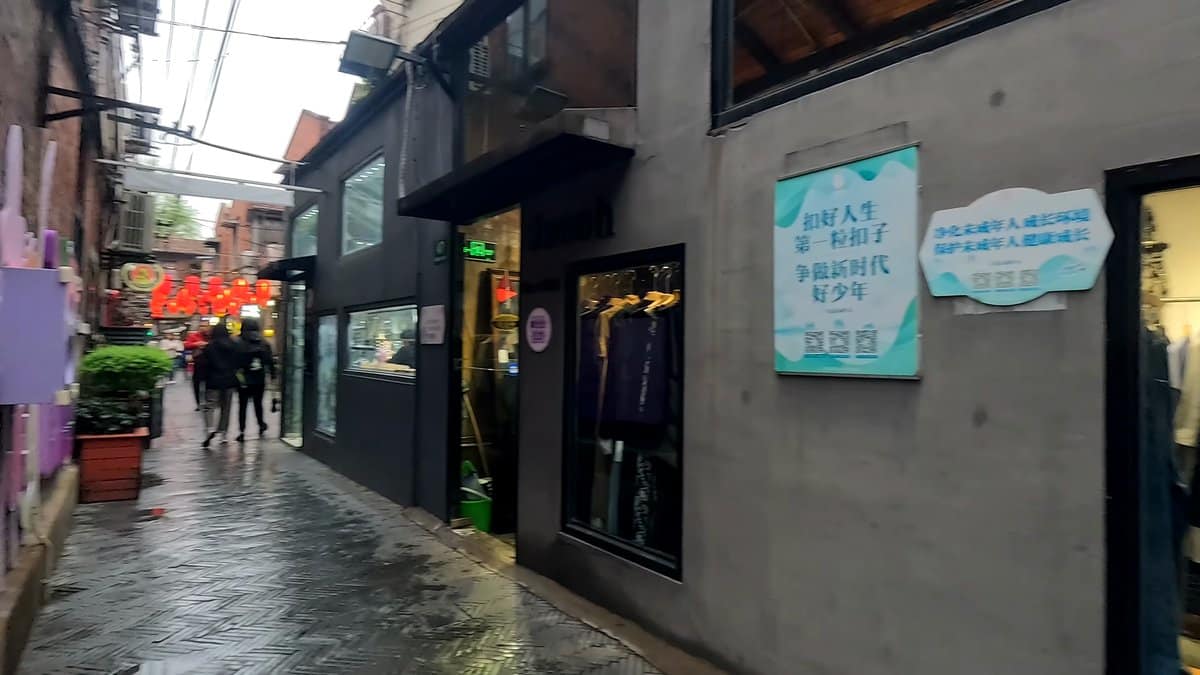
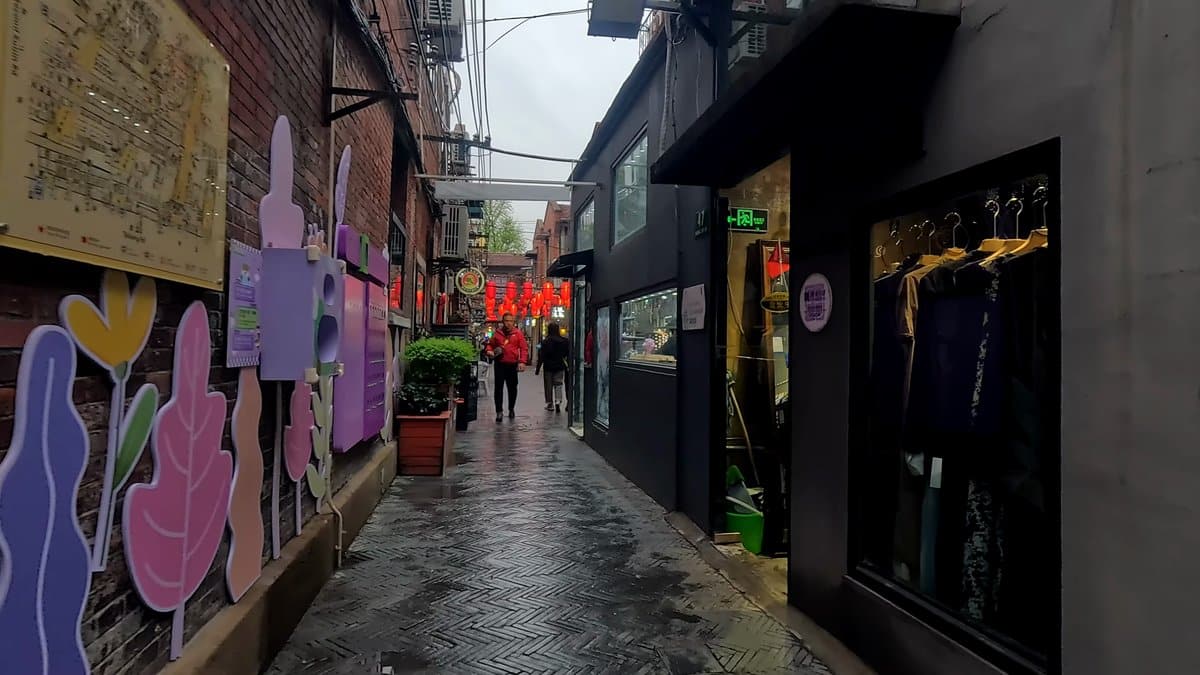
The color depends on which shops decide to light up: some choose warm tones (orange) or cool ones (teal). Mannequins in windows, print shops, and vintage clothing. Posters cover walls; new art covers old paper, which is laid atop cut-outs.
It’s all patched together over the years, like a collage.
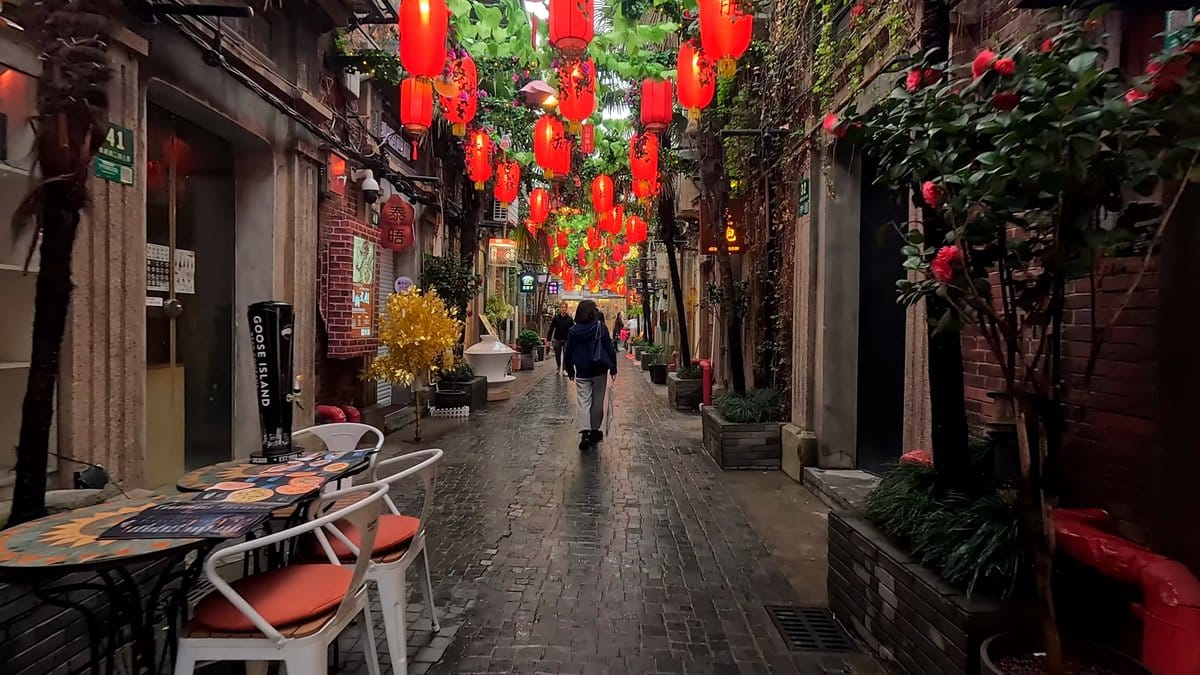
In one part, lanterns hang from above, strung out so that you can barely see down the lane. It’s best at night. Evening light enhances the set-up but attracts the largest crowds.
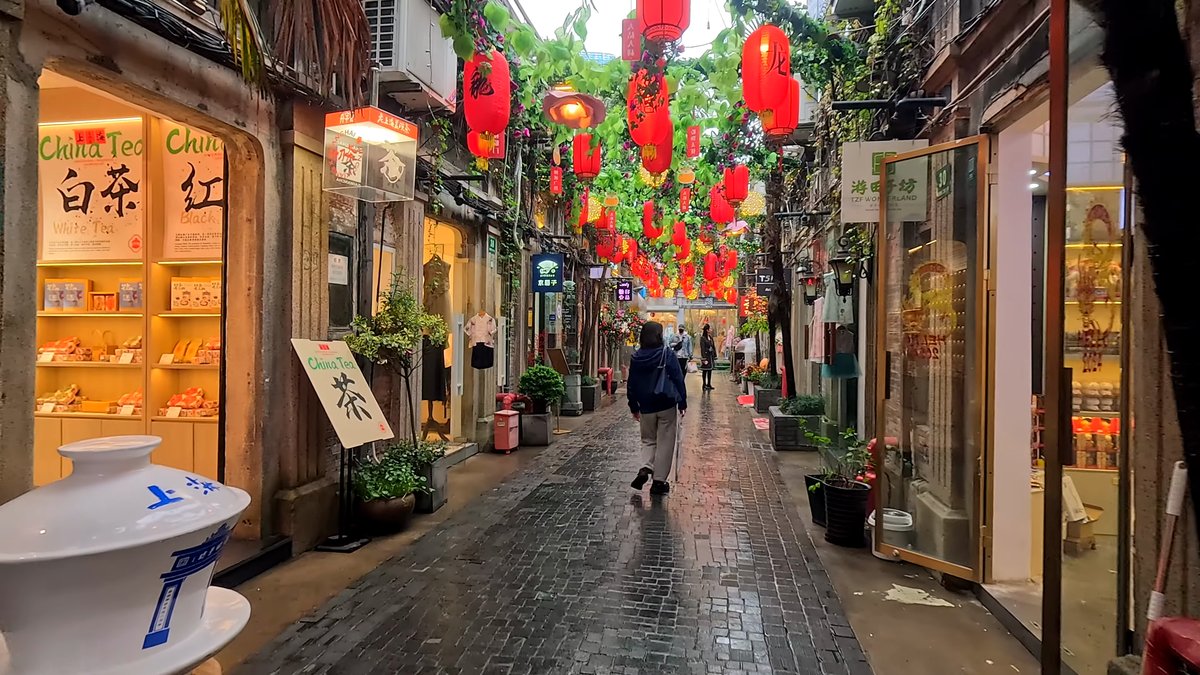
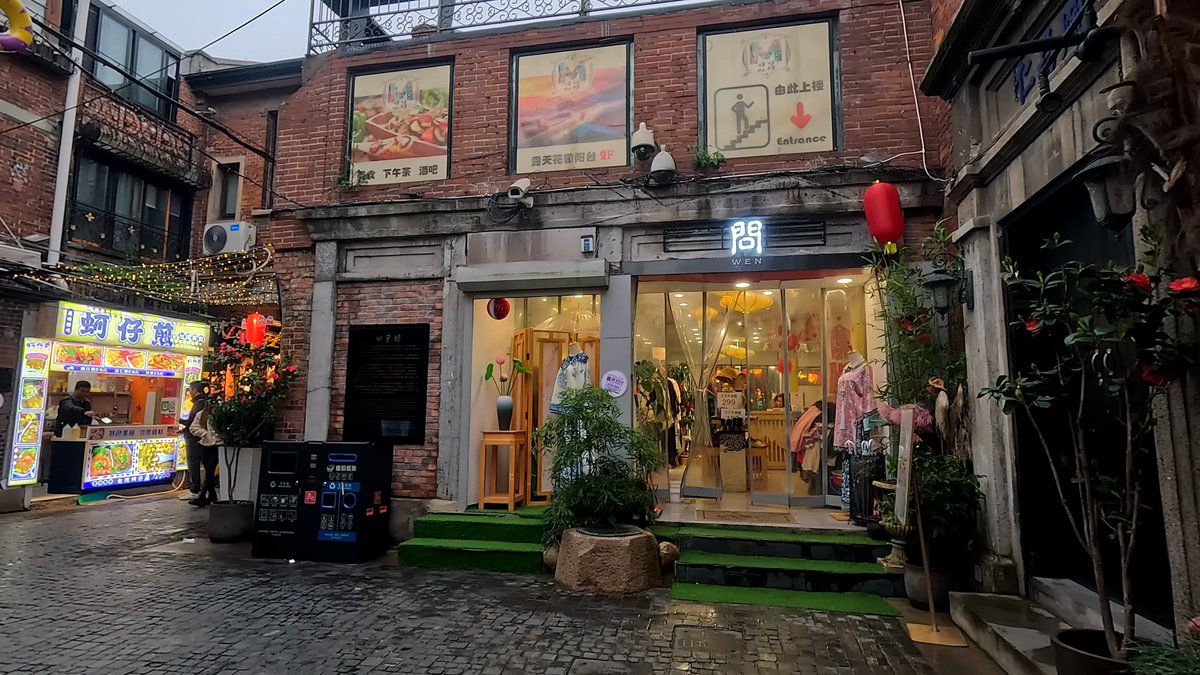
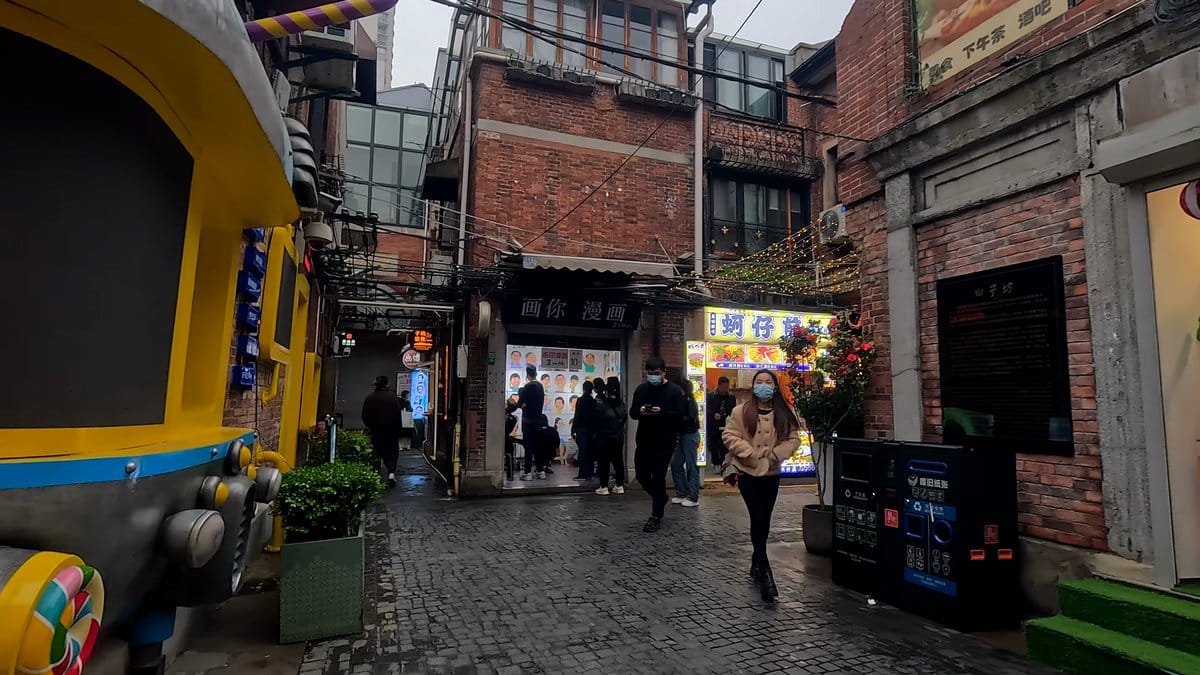
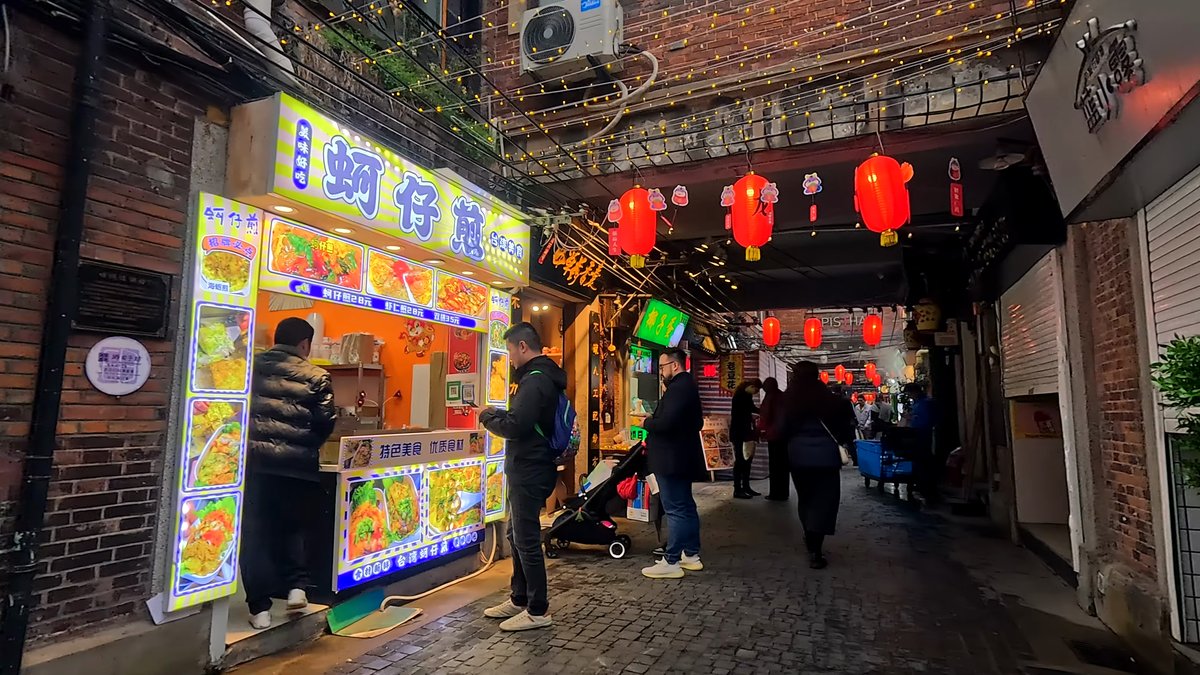
There’s a giant porcelain bowl left outside a tea shop, a novelty prop turned into a landmark. Printed menus are on boards or laminated sheets posted by the door. Noodle bowls, steamed buns, bubble tea, and fried snacks is sold from counters about as wide as a kitchen counter.
At lunchtime there are lines, and again in the evening. Take what you want, eat it as you walk, perch on a stool if the vendor offers one.
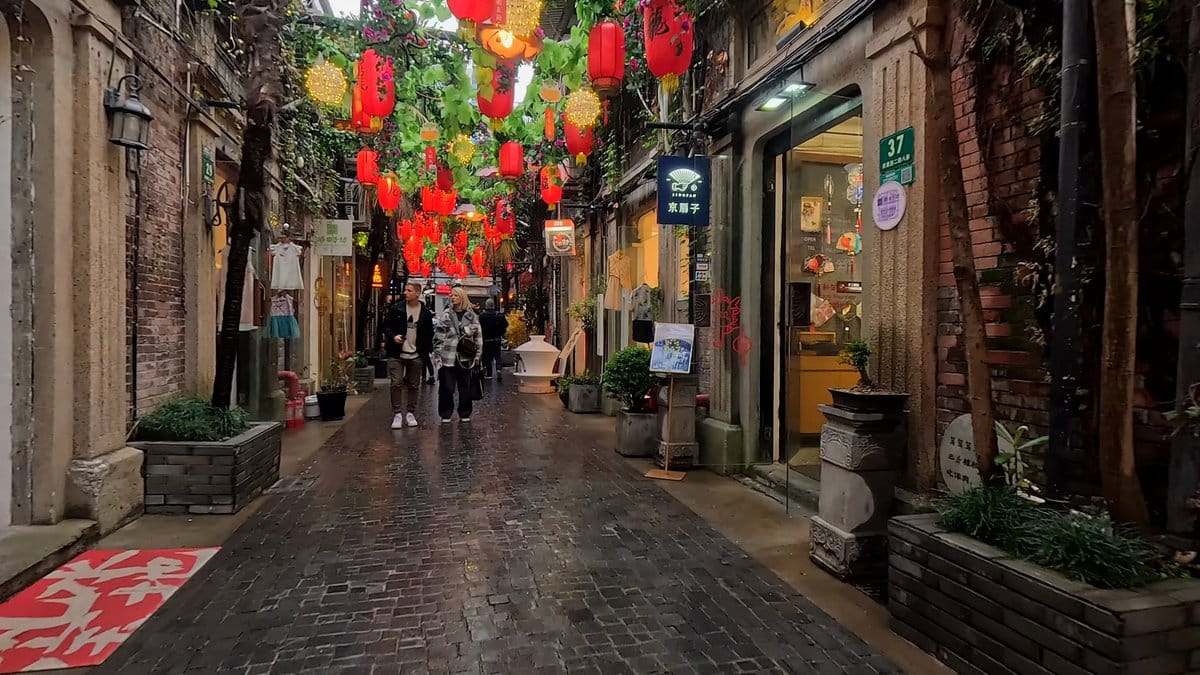
After dark the shopfronts’ glow is doubled when it hits the wet pavement, and makes the lanes seem busier then they are. When the sun drops, the mood changes, less browsing, more socializing; people meet for drinks, finish work.
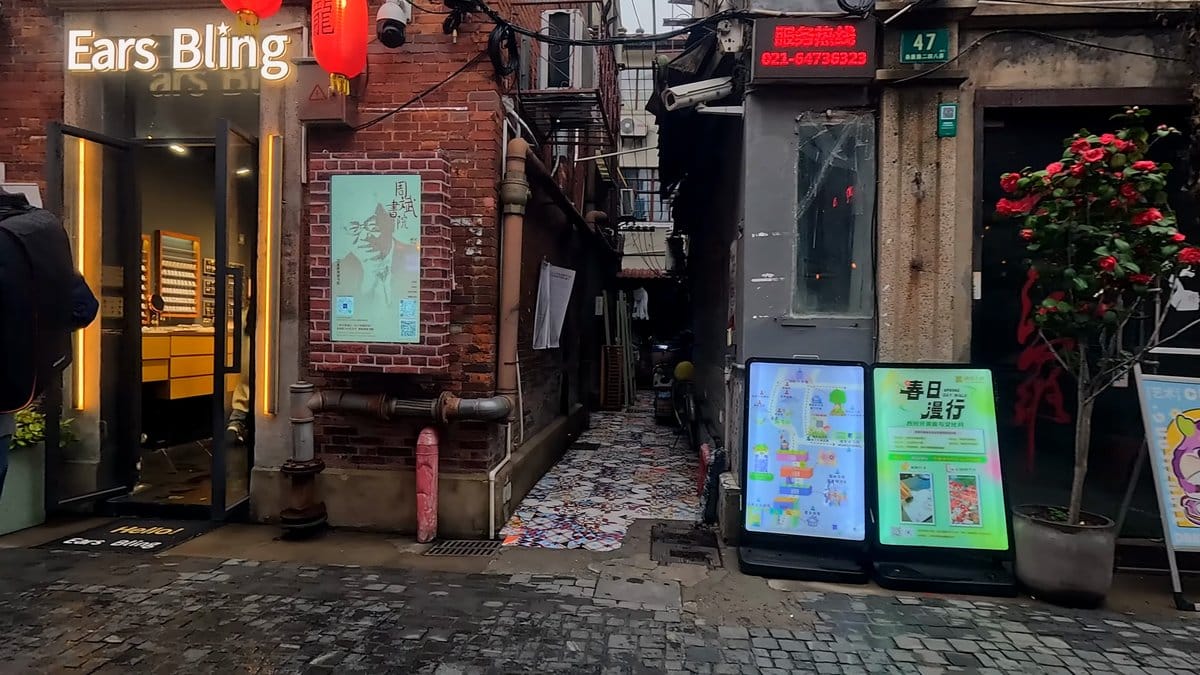
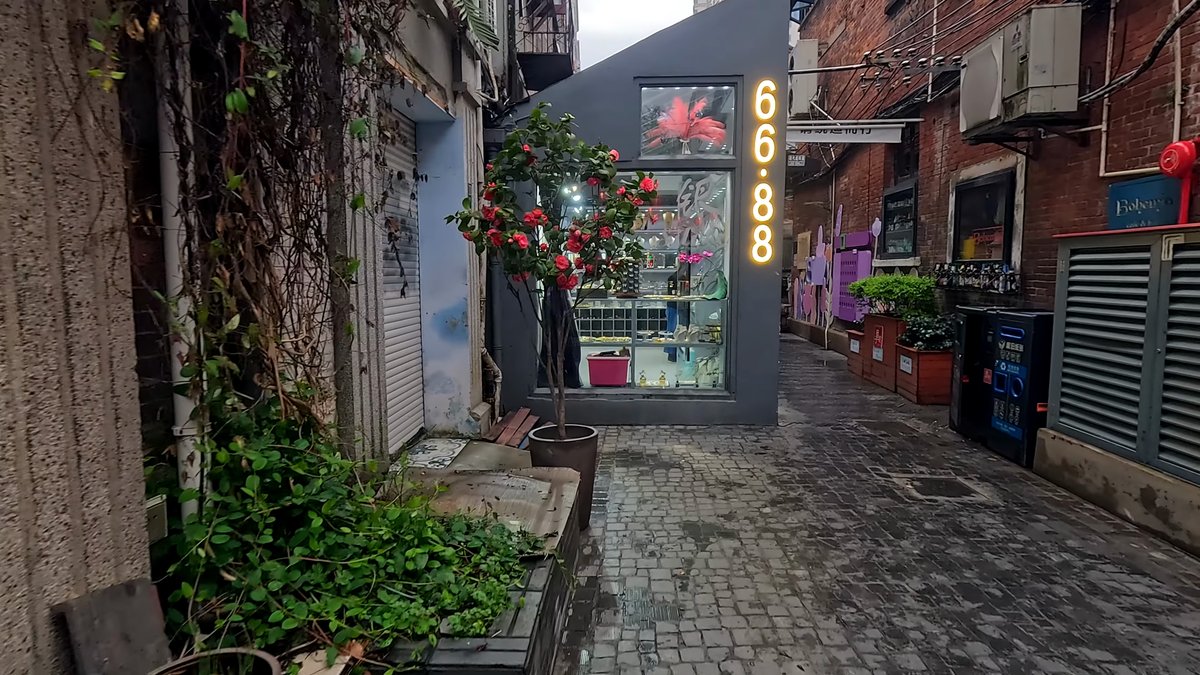
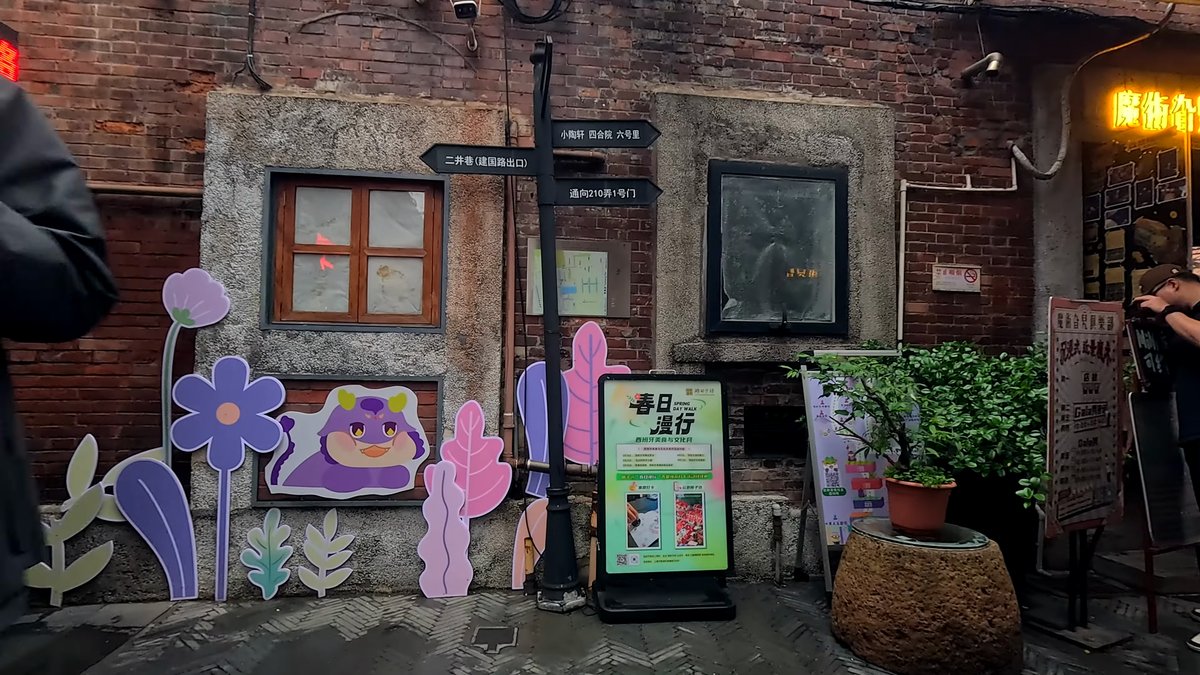
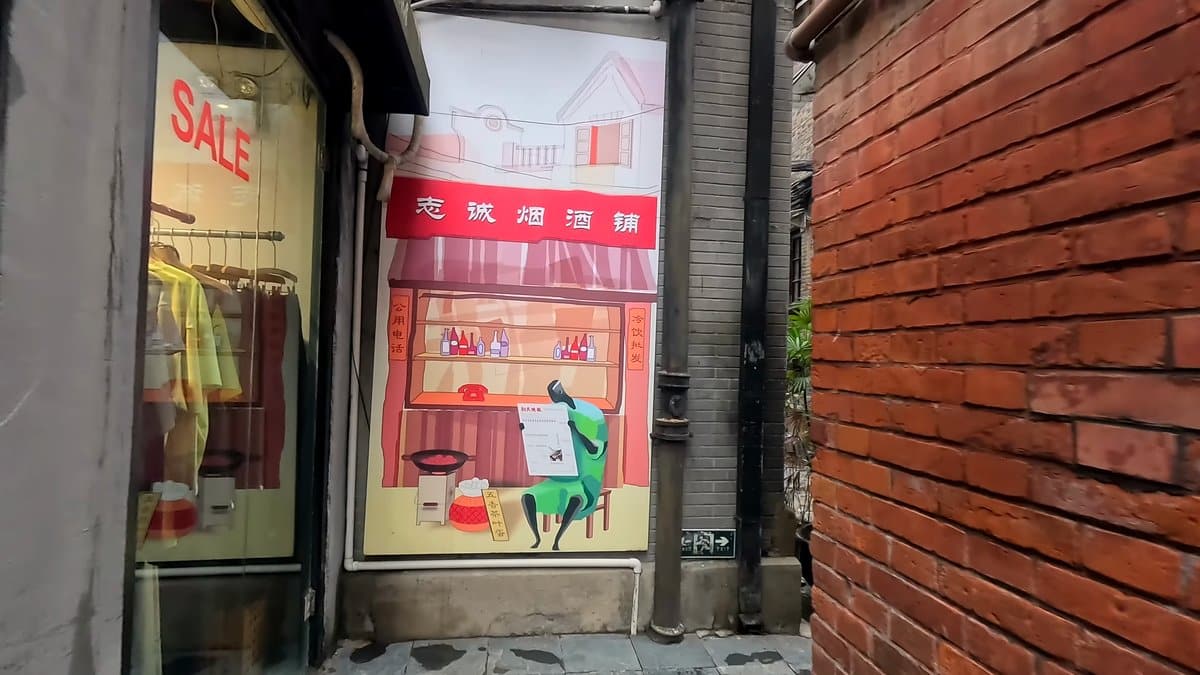
An accessories shop called Ears Bling sits on a corner. There are places where no one saw fit to cut back climbing plants that spill over walls. Old tobacco shop murals remind you this was once not a place for visitors.
Cut-out flowers decorate timber panels.
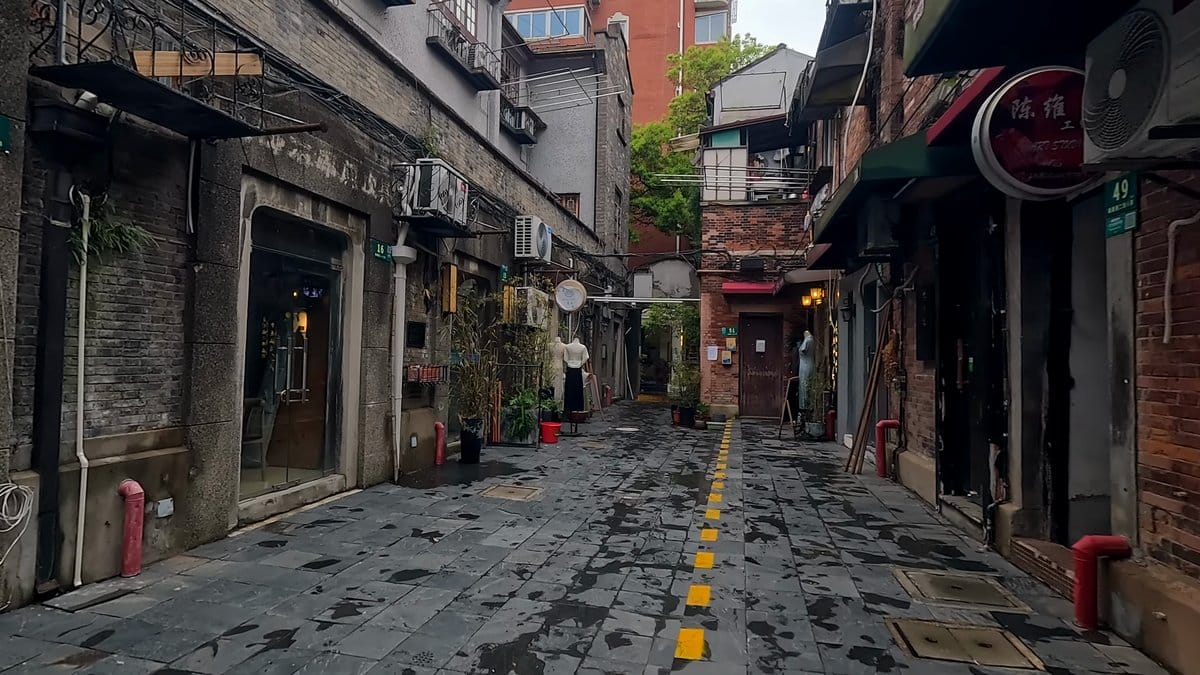
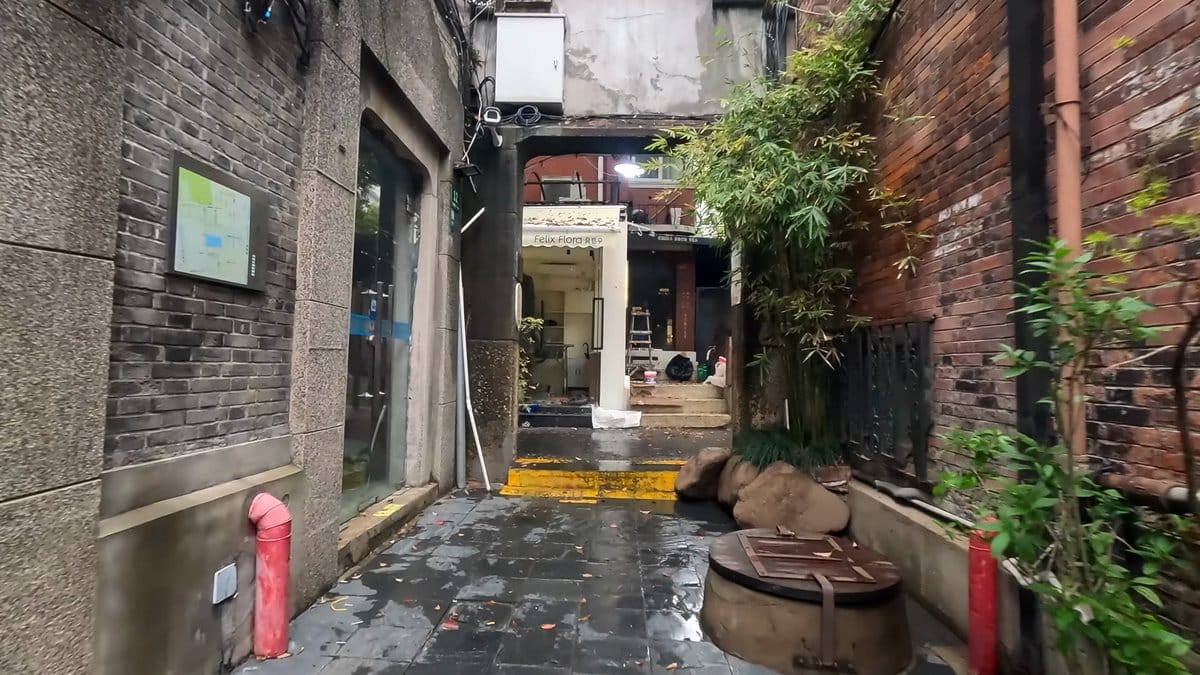
Between the major alleys, there are wider service lanes that aren’t as nice but can be handy when trying to get your bearings. You might see a fire hydrant, a place to drop off deliveries, or an occasional scooter leaning against the wall. They’re less decorated, quieter, just the district’s working bones.
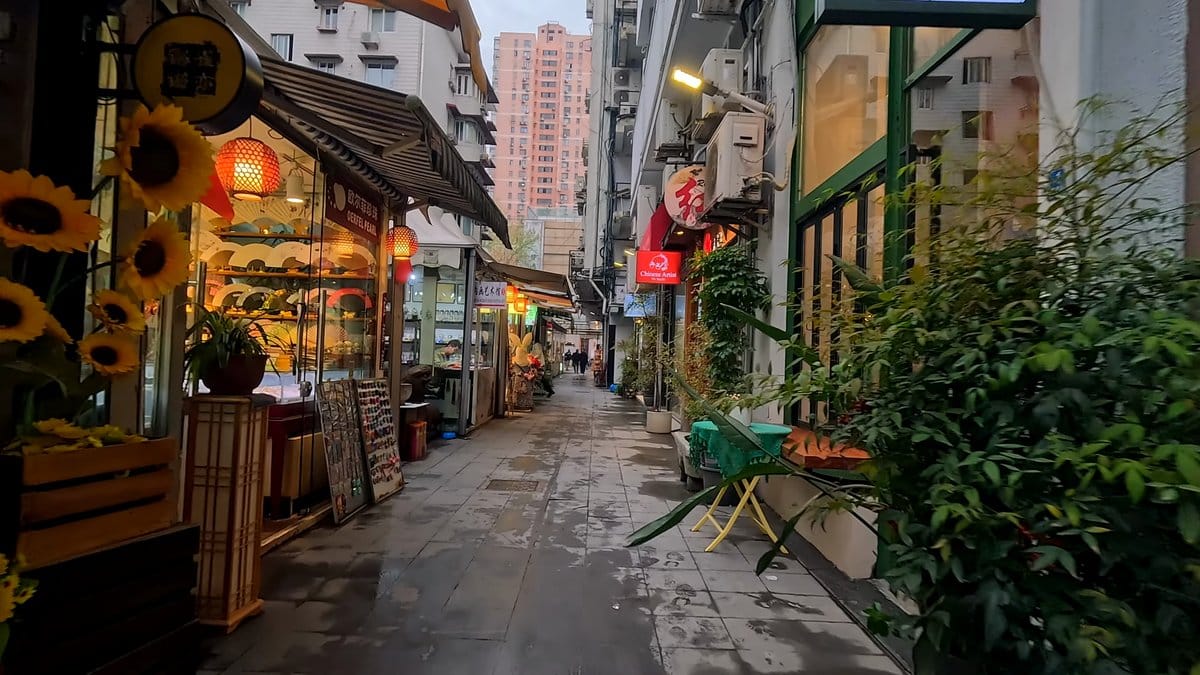
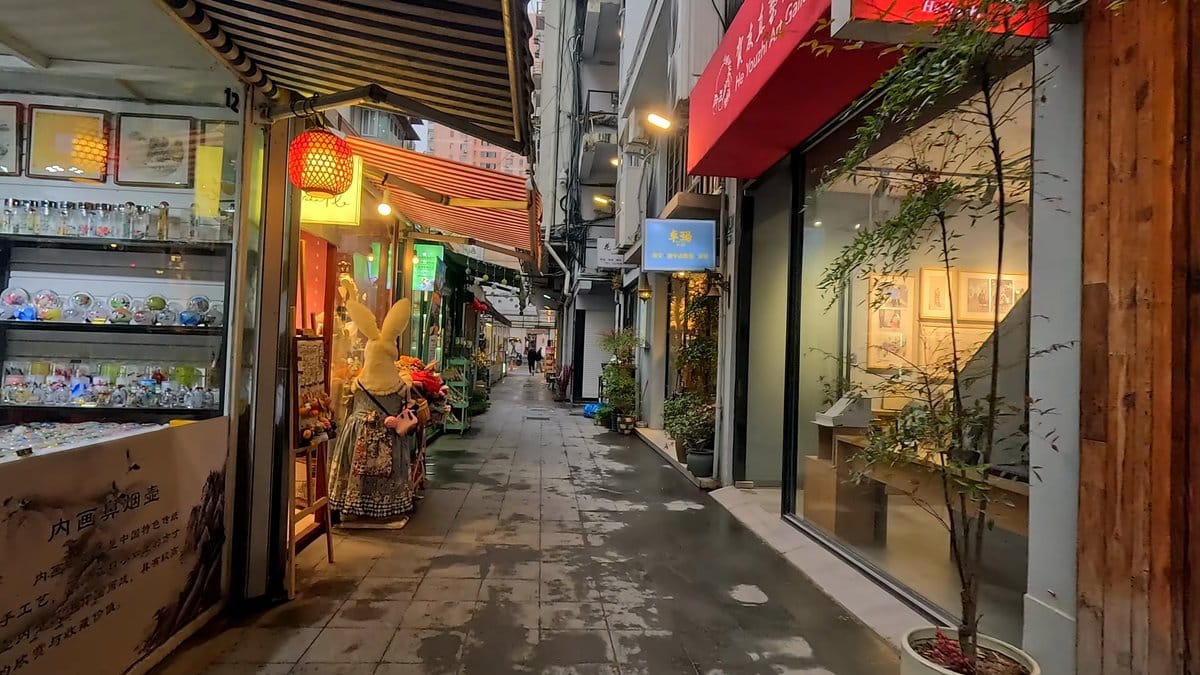
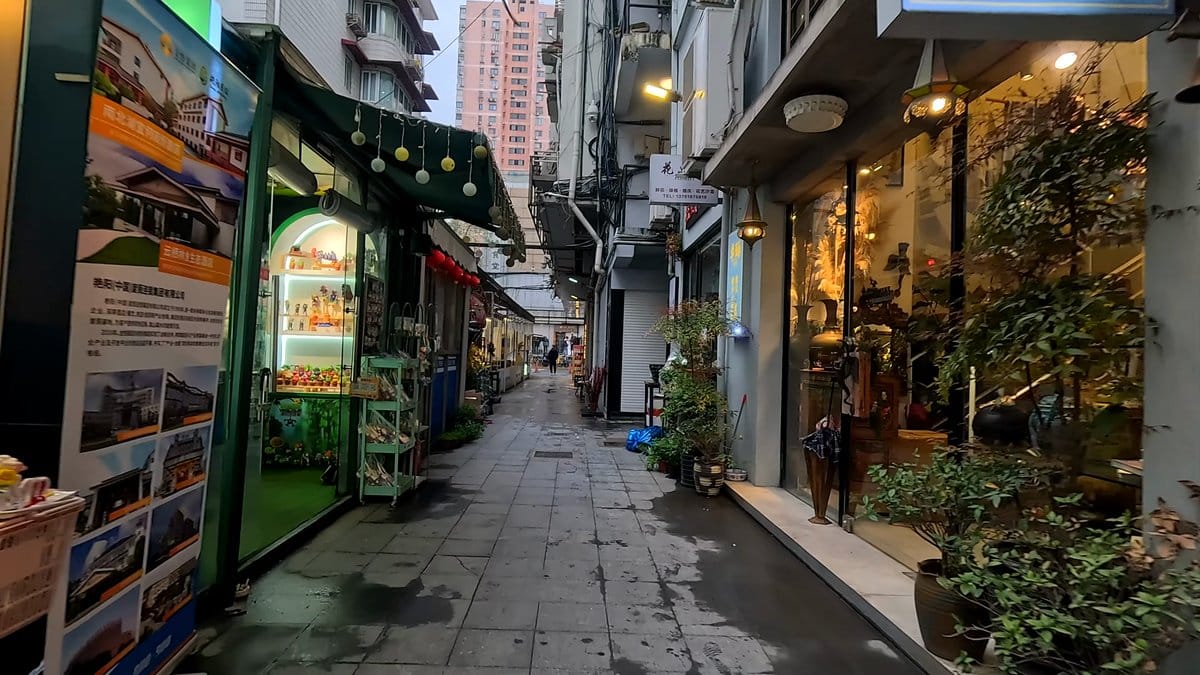
Timber benches is placed on the street outside ground-floor rooms where cafés wedge themselves in. Wherever they can fit in between, the lanes are lined with potted plants, some kept neat and tidy, others allowed to run riot. It doesn’t make for lush greenery, just sufficient to soften the concrete and brick a little.
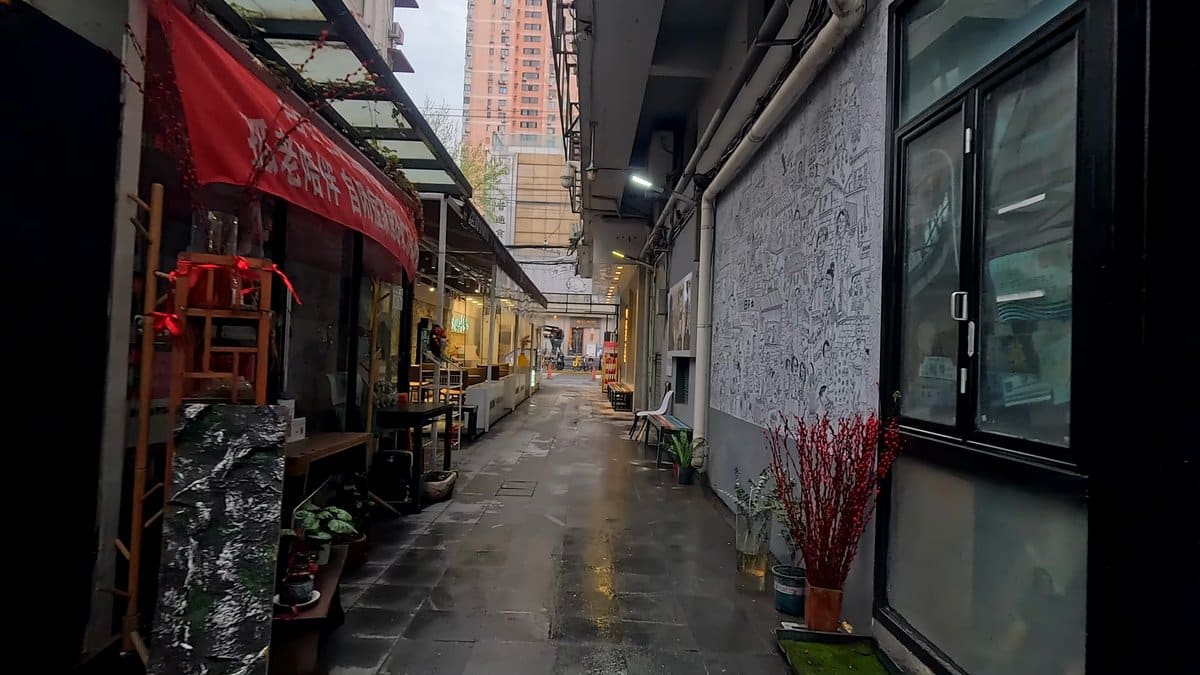
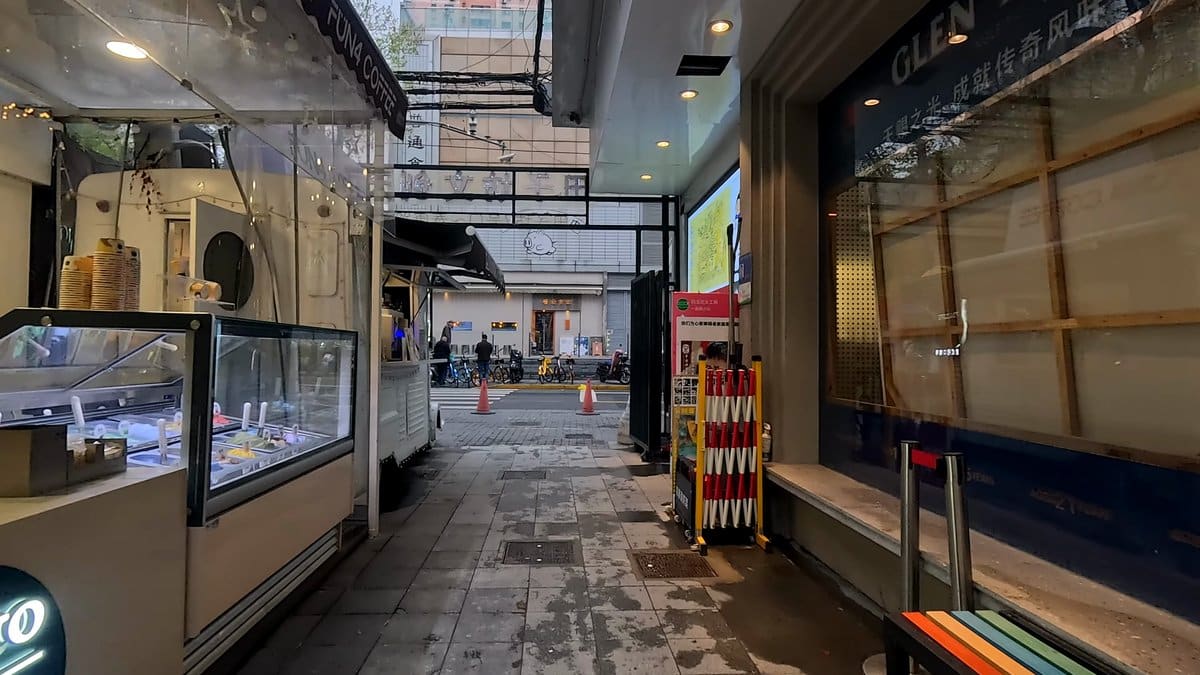
Tianzifang is an exception to a city where much of the old housing stock was demolished. The low rooflines is dwarfed by moddern high-rises. Many units have been recently renovated, with polished finishes and glass display cabinets.
Others bear the scars of decades of use.
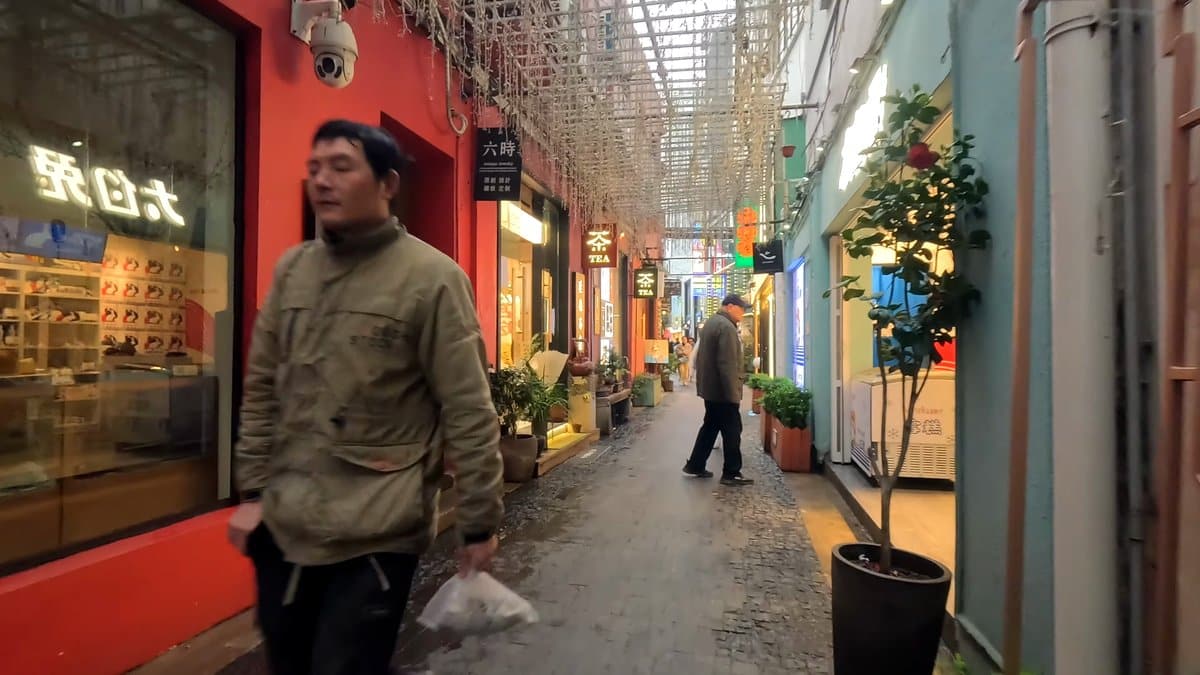
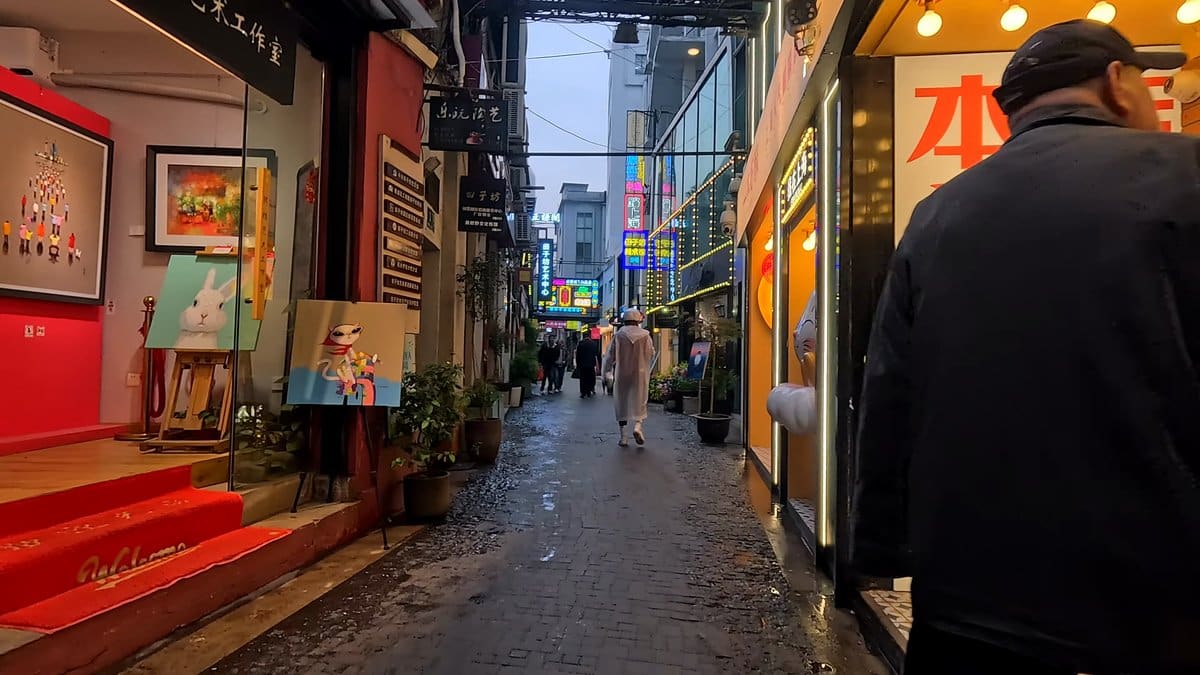
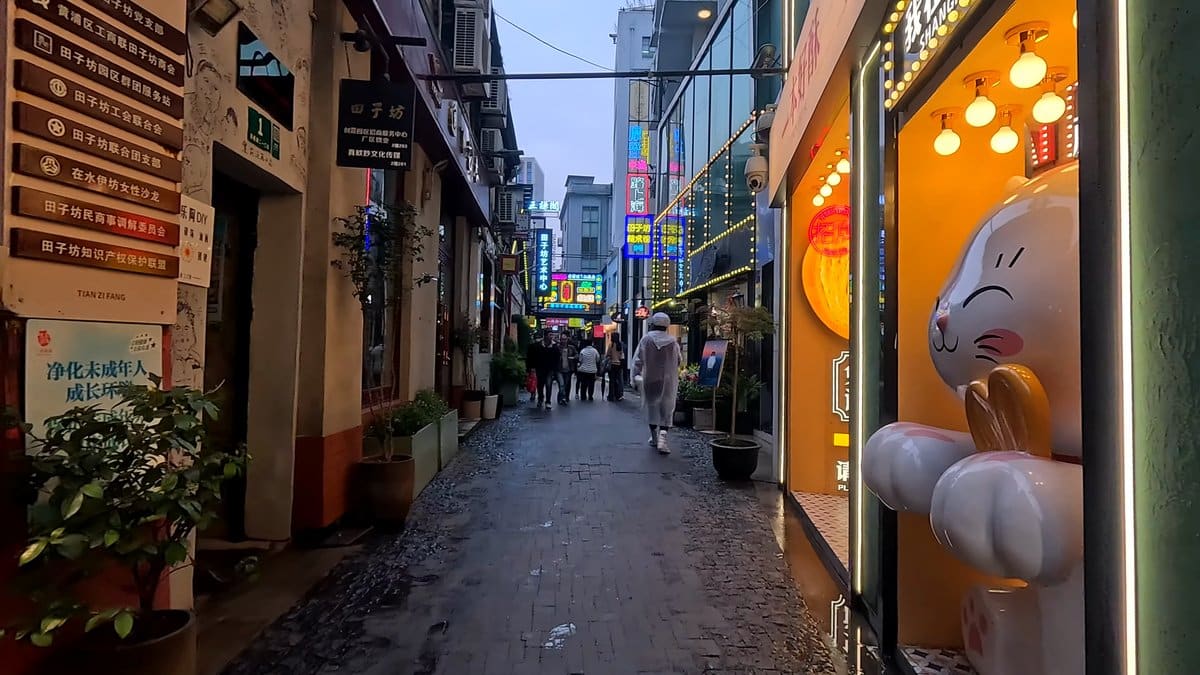
Depending on which direction you turn your head, shopfronts go all-in on either nostalgia or kitsch. Look out for vintage furnitures, old-school soda ads, ceramic cat figures in the window. It’s all staged for the camera (some), but also genuinely lived-in (some).
The effect is far more lived-in than a scrubbed-clean shopping mall.
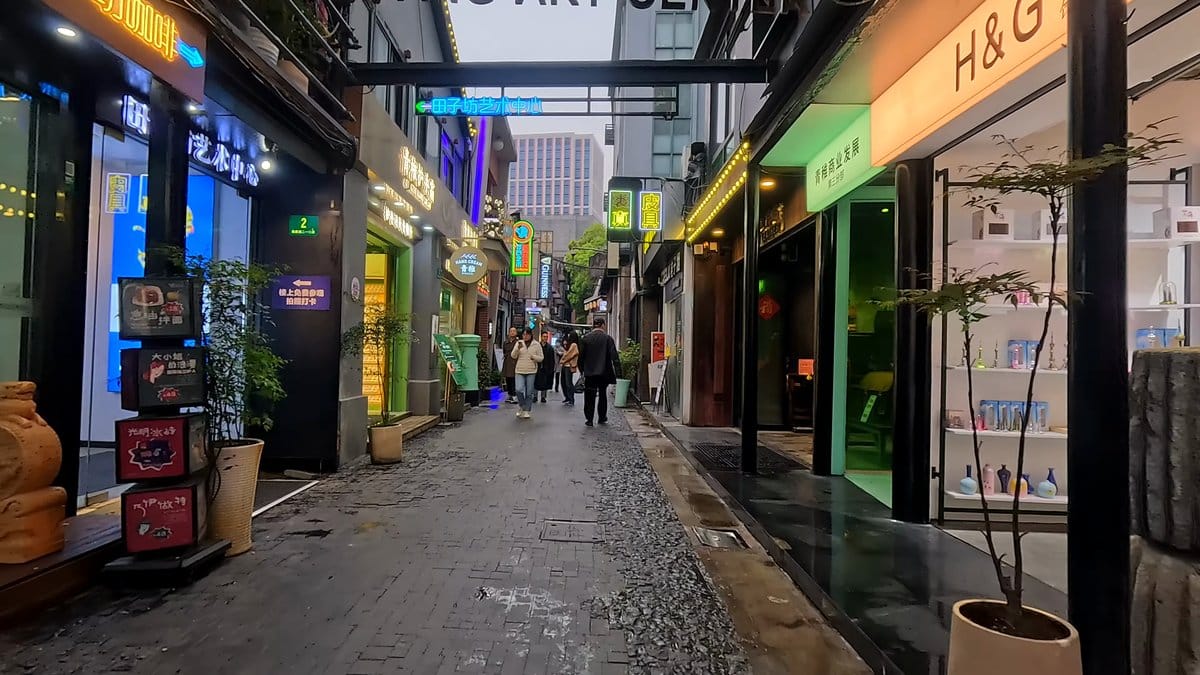
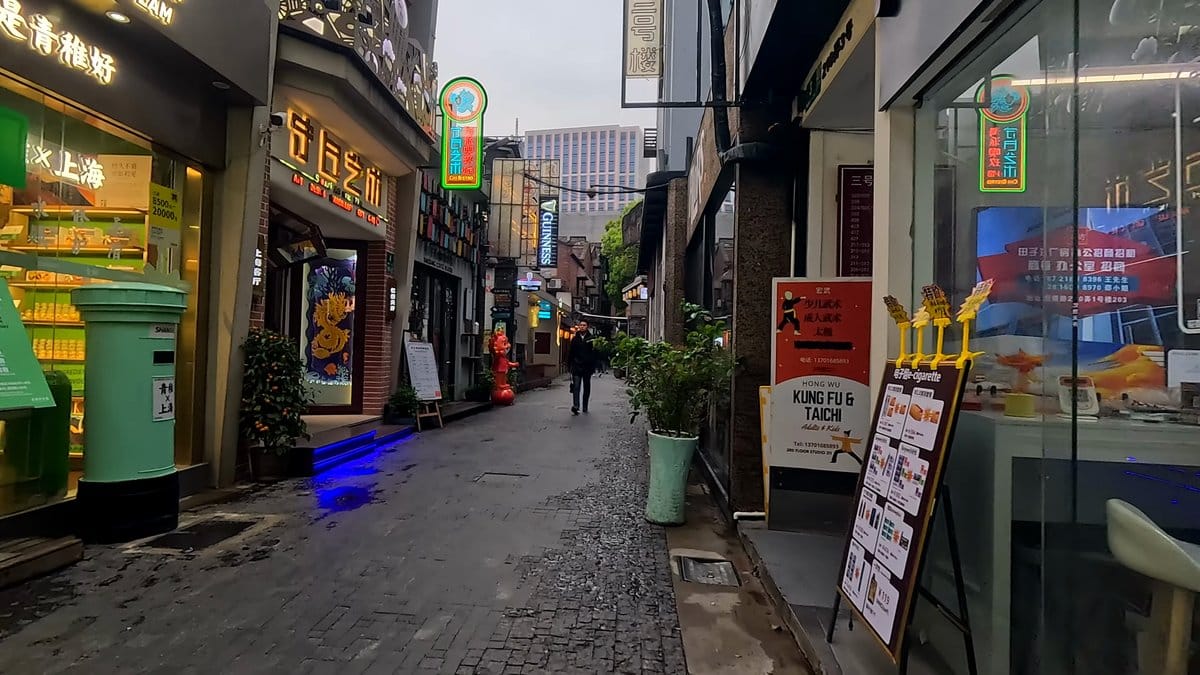
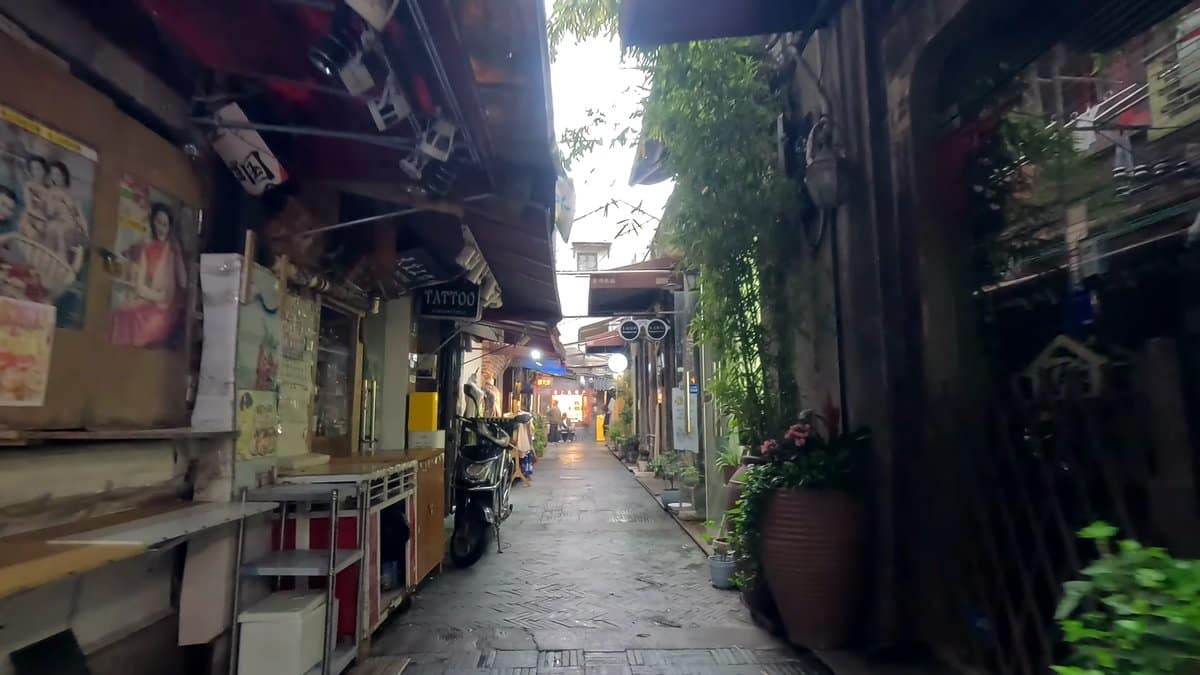
By mid-afternoon, there’s a bit of a crowd on the streets, with people shopping at H&G and ducking in and out of smaller shops. Some have potted plants outside their door, and you can find a quiet spot here and there if you get off the main streets. The key is to go down the side branches that few others bother to turn into.
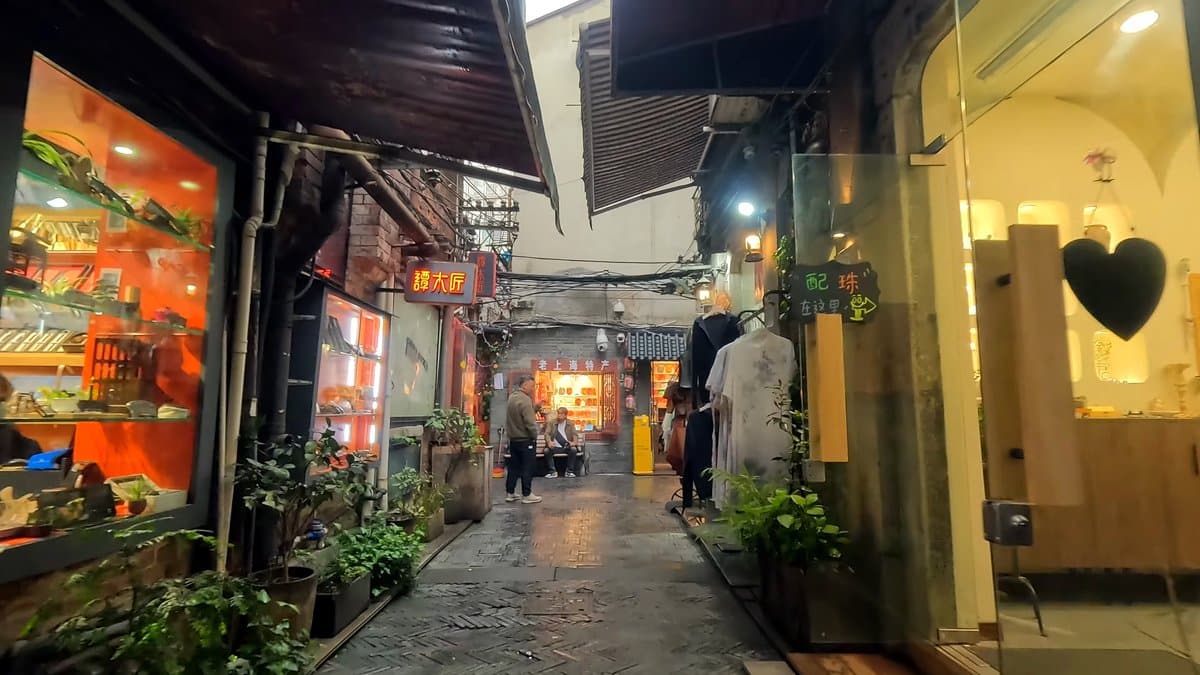
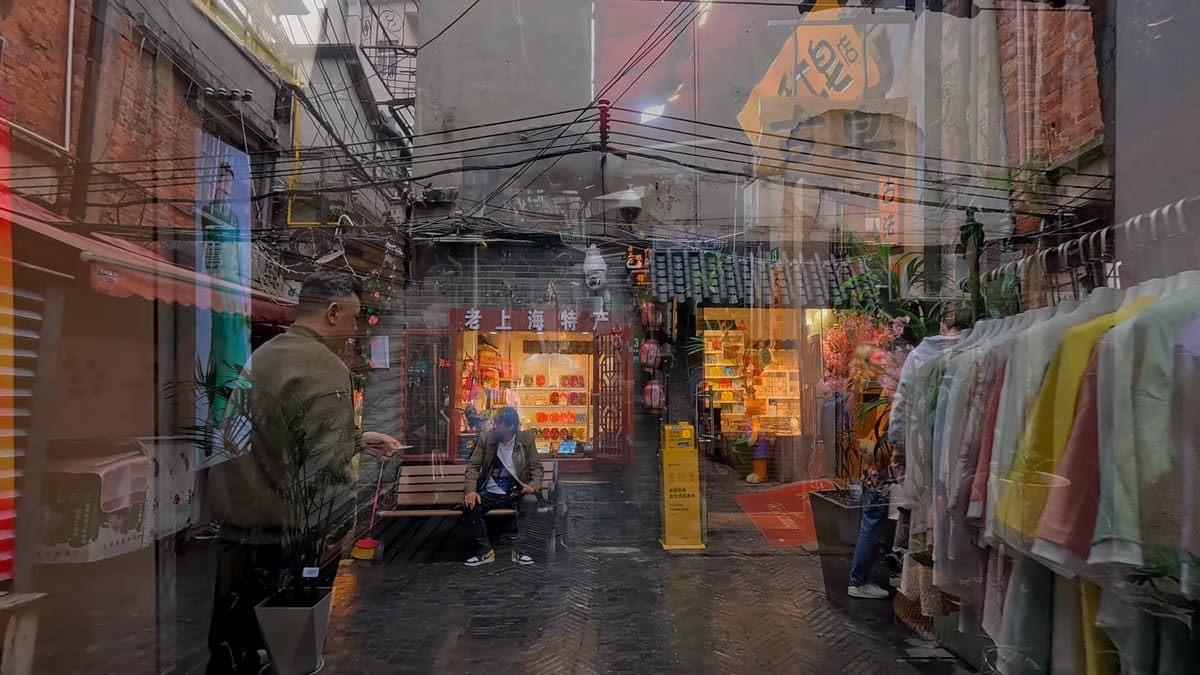
Lit storefronts display food through panes of glass, pastries or perhaps some dumplings. People prop drinks on windowsills or balance plates on their laps as they plop down outside to claim a seat if one’s available. It’s a little cramped and casual.
But that’s the vibe.
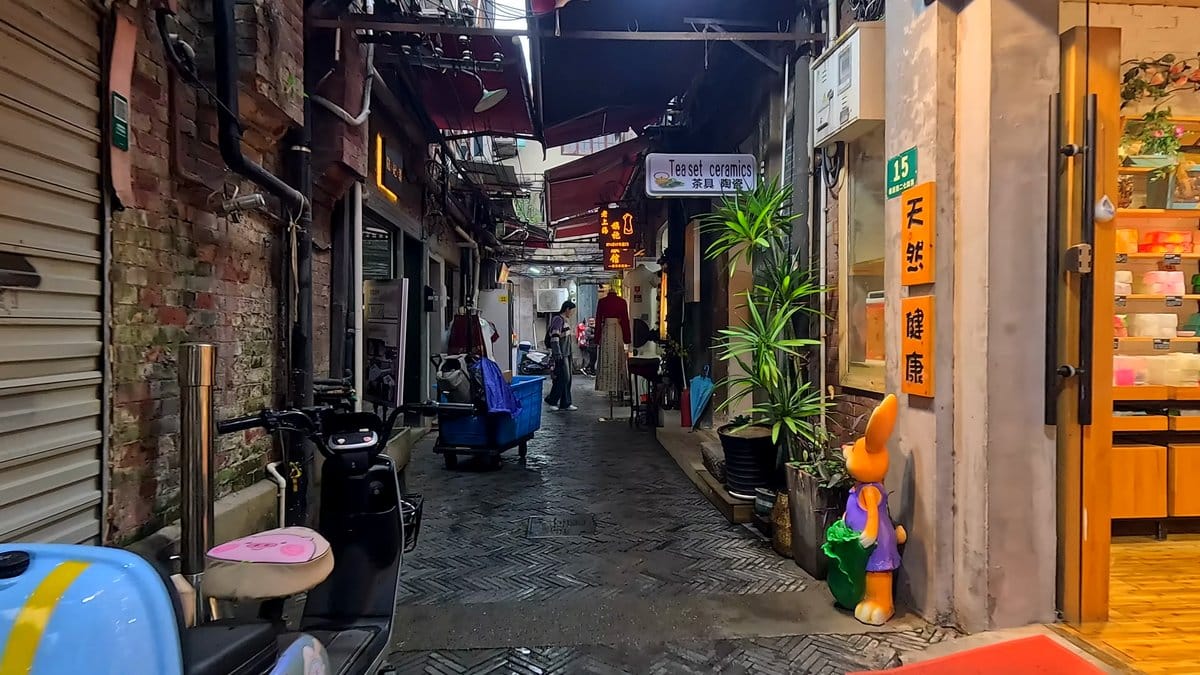
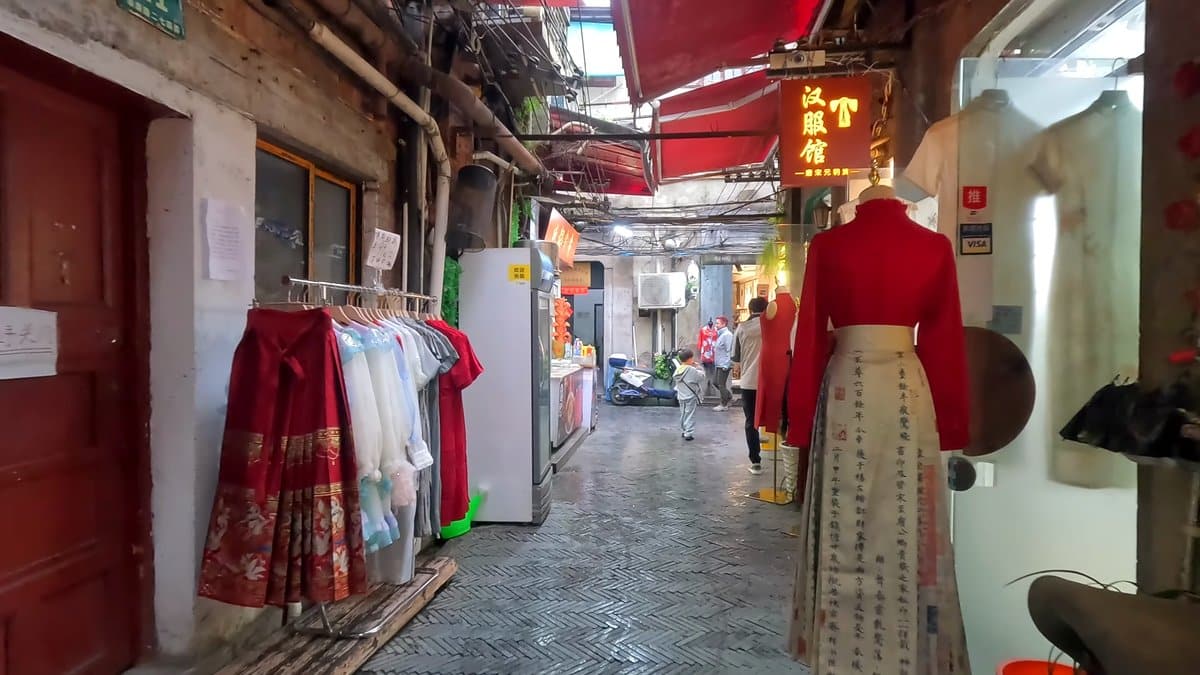
In the lanes, clothing rails are wheeled in, their hangers jammed full of dresses and jackets. At costume rental shops, mannequins stand wearing traditional hanfu costumes. This is particularly popular for tourists who wish to have their photo taken in period dress.
The outfits themselves are complex things that tend to attract attention. Particularly at weekends. The key to enjoying Tianzifang is to forget about having a plan and simply wander down whatever lane catches your interest.
You’ll find some shops that catch your eye, while others will not. The entire experience depends on your willingness to turn around at dead ends and your level of tolerance for crowds. While it isn’t perfectly preserved nor is it pristine, it does provide a taste of old Shanghai that has been adapted for commerce, yet not entirely sanitized.
Is there a similar neighbourhood in your city that strikes this balance between heritage and tourism?